
LI AUTO-W(02015)

Search documents
理想汽车:2025年第四季度营收288亿元,同比下降35.0%
Di Yi Cai Jing· 2026-03-12 08:37
Core Insights - The company reported a revenue of 28.8 billion yuan for the fourth quarter of 2025, representing a year-on-year decline of 35.0% [1] - The net profit for the fourth quarter was 20.2 million yuan [1] Financial Performance - Fourth quarter revenue: 28.8 billion yuan, down 35.0% year-on-year [1] - Fourth quarter net profit: 20.2 million yuan [1]

理想汽车第四季度营收287.8亿元人民币,同比下降35%,预估288.4亿元人民币。调整后每ADS收益0.25元人民币,上年同期3.79元人民币
Hua Er Jie Jian Wen· 2026-03-12 08:32
市场有风险,投资需谨慎。本文不构成个人投资建议,也未考虑到个别用户特殊的投资目标、财务状况或需要。用户应考虑本文中的任何 意见、观点或结论是否符合其特定状况。据此投资,责任自负。 风险提示及免责条款 理想汽车第四季度营收287.8亿元人民币,同比下降35%,预估288.4亿元人民币。调整后每ADS收益 0.25元人民币,上年同期3.79元人民币。 ...
理想汽车(02015) - 2025 Q4 - 季度业绩
2026-03-12 08:30
香港交易及結算所有限公司及香港聯合交易所有限公司對本公告的內容概不負責,對其準確性 或完整性亦不發表任何聲明,並明確表示概不會就本公告全部或任何部分內容而產生或因倚賴 該等內容而引致的任何損失承擔任何責任。 Li Auto Inc. 理想汽車 (於開曼群島註冊成立以不同投票權控制的有限責任公司) (股份代號:2015) 內幕消息 截至2025年12月31日止季度及全年的 未經審計財務業績 本公告乃根據《香港聯合交易所有限公司證券上市規則》第13.09條及《證券及期 貨條例》(第571章)第XIVA部刊發。 理想汽車(「本公司」或「理想汽車」)欣然公佈本公司及其附屬公司以及併表聯 屬實體截至2025年12月31日止三個月及全年的未經審計簡明合併業績。 本公司欣然公佈根據美國證券交易委員會(「美國證交會」)的適用規則刊發的本公 司及其附屬公司以及併表聯屬實體截至2025年12月31日止三個月及全年的未經審 計簡明合併業績(「第四季度及全年業績」)。 第四季度及全年業績乃根據不同於國際財務報告準則的美國公認會計準則編製。 本文附表一為本公司於2026年3月12日(美國東部時間)刊發的有關第四季度及全 年業績的新聞稿 ...
Li Auto Inc. Announces Unaudited Fourth Quarter and Full Year 2025 Financial Results
Globenewswire· 2026-03-12 08:30
Core Viewpoint - Li Auto Inc. reported a significant decline in both quarterly and full-year financial results for 2025, with total revenues and vehicle sales decreasing year-over-year, reflecting challenges in the new energy vehicle market and operational adjustments made during the year [2][7]. Financial Highlights for Q4 2025 - Total revenues reached RMB28.8 billion (US$4.1 billion), a decrease of 35.0% from RMB44.3 billion in Q4 2024, but an increase of 5.2% from RMB27.4 billion in Q3 2025 [4][20]. - Vehicle sales amounted to RMB27.3 billion (US$3.9 billion), down 36.1% from RMB42.6 billion in Q4 2024, but up 5.4% from RMB25.9 billion in Q3 2025 [4][20]. - Gross profit was RMB5.1 billion (US$733.7 million), a decrease of 42.8% from RMB9.0 billion in Q4 2024, but an increase of 14.8% from RMB4.5 billion in Q3 2025 [4][20]. - Net income was RMB20.2 million (US$2.9 million), compared to RMB3.5 billion in Q4 2024 and a net loss of RMB624.4 million in Q3 2025 [4][27]. Financial Highlights for Full Year 2025 - Total revenues for the year were RMB112.3 billion (US$16.1 billion), down 22.3% from RMB144.5 billion in 2024 [7][9]. - Vehicle sales totaled RMB106.7 billion (US$15.3 billion), a decrease of 23.0% from RMB138.5 billion in 2024 [7][9]. - Gross profit for the year was RMB21.0 billion (US$3.0 billion), down 29.2% from RMB29.7 billion in 2024 [7][9]. - Net income for 2025 was RMB1.1 billion (US$162.9 million), an 85.8% decrease from RMB8.0 billion in 2024 [7][9]. Operational Highlights - As of December 31, 2025, Li Auto operated 548 retail stores in 159 cities and had 3,907 supercharging stations with 21,651 charging stalls [3]. - The company launched its AI glasses, Livis, in December 2025, enhancing its product offerings beyond vehicles [11]. - Li Auto expanded its market presence by entering Egypt, Kazakhstan, and Azerbaijan in December 2025 [12]. Management Comments - The CEO highlighted improvements in organizational efficiency and sales systems, indicating a positive outlook for 2026 with the launch of new models [16]. - The CFO noted the company's strong cash position of RMB101.2 billion (US$14.5 billion) as of year-end 2025, which supports future growth initiatives [16][27].

获英伟达20亿美元投资,这只股票暴涨16%!甲骨文大反弹,涨幅14%;理想汽车涨超4%,黄金白银急跌,油价巨震|美股开盘
Mei Ri Jing Ji Xin Wen· 2026-03-11 14:17
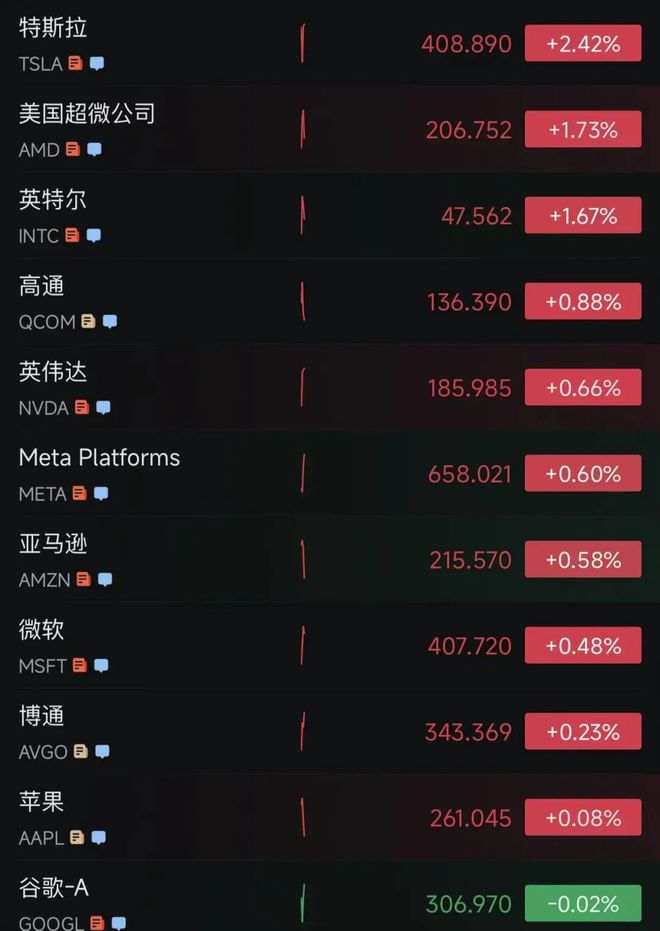
Market Overview - US stock indices showed mixed performance at the opening, with the Dow Jones down 0.16%, Nasdaq up 0.3%, and S&P 500 up 0.13% [1] - By the time of reporting, the Dow Jones had decreased by 0.67%, while the Nasdaq rose by 0.16%, and the S&P 500 fell by 0.1% [1] - A total of 1789 stocks advanced, while 3195 stocks declined [1] Notable Stock Movements - Tesla shares increased by 2.42%, closing at $408.89 [2] - Advanced Micro Devices (AMD) rose by 1.73%, closing at $206.75 [2] - Intel shares gained 1.67%, closing at $47.56 [2] - Oracle Corporation's stock surged over 14% after reporting strong quarterly results and raising its revenue forecast for fiscal year 2027, with adjusted earnings per share of $1.79 against an expectation of $1.70, and revenue of $17.19 billion, a 22% year-over-year increase [2] Chinese Stocks Performance - The Nasdaq China Golden Dragon Index fell by 0.25%, with most popular Chinese stocks declining [7] - Li Auto shares rose by 4.56%, closing at $18.57 [8] Commodity Market - Gold and silver prices experienced a pullback, with spot gold dropping to $5173.67 per ounce, down 0.32% [10] - Spot silver fell by 3.46%, trading at $85.28 per ounce [10] Inflation and Oil Prices - The US Consumer Price Index (CPI) for February rose by 2.4% year-over-year, with core CPI increasing by 2.5% [13] - WTI crude oil prices saw significant volatility, initially rising over 6% before narrowing to a 2.58% increase [13] - The G7 energy ministers expressed support for measures to address the current energy situation, including the potential use of strategic energy reserves [16]


瑞银:油价波动令电动车总持有成本变吸引 比亚迪股份、宁德时代与理想汽车具良好风险回报
智通财经网· 2026-03-11 09:55
Group 1 - UBS reports that some Chinese automotive and new energy stocks have risen, with Geely Automobile's stock price increasing by 8.5% to HKD 17.44 and CATL rising by 7.5% to HKD 591 [2] - The current geopolitical situation, similar to the 2022 Russia-Ukraine conflict, is causing a rise in oil and lithium prices, which increases the operating costs of fuel vehicles and the manufacturing costs of electric vehicles [2] - UBS maintains a "buy" rating on BYD, CATL, and Li Auto, citing favorable risk-return characteristics [2] Group 2 - The estimated increase in manufacturing costs for electric vehicles compared to 2025 is approximately RMB 7,000 for BEVs, RMB 6,000 for EREVs, RMB 5,000 for PHEVs, and RMB 3,000 for ICE vehicles; fuel vehicle operating costs may rise by about RMB 2,000 annually if oil prices remain stable [2] - In 2022, oil prices surged from USD 80 to USD 130 per barrel, and current oil prices have fluctuated from approximately USD 60 to a peak of USD 120, potentially leading to a retail gasoline price increase in China from RMB 7.5 to about RMB 9 per liter [3] - Compared to four years ago, the current situation shows a milder increase in metal prices, improved competitiveness of electric vehicle products, and increased overseas sales, which help alleviate commodity cost pressures [3] Group 3 - UBS notes that Chinese electric vehicle stocks have underperformed the Hang Seng Index by about 10% this year, with the first quarter's weak demand already reflected in stock prices [4] - The volatility in oil prices makes electric vehicles more attractive from a total cost of ownership perspective, and if inflation expectations regarding commodity costs are realized, demand may recover faster than investors anticipate [4]


瑞银:油价波动令电动车总持有成本变吸引 比亚迪股份(01211)、宁德时代(03750)与理想汽车(02015)具良好风险回报
智通财经网· 2026-03-11 09:48
Group 1 - UBS reports that some Chinese automotive and new energy stocks have risen, with Geely Automobile's stock price increasing by 8.5% to HKD 17.44 and CATL rising by 7.5% to HKD 591 [1] - The current situation regarding the Israel-Hamas conflict is similar to the 2022 Russia-Ukraine war, which led to spikes in oil and lithium prices, increasing the operating costs of fuel vehicles and the manufacturing costs of electric vehicles [1] - UBS maintains a "buy" rating on BYD, CATL, and Li Auto, citing favorable risk-return characteristics [1] Group 2 - The report estimates that the manufacturing costs for a pure electric vehicle (BEV), extended-range electric vehicle (EREV), plug-in hybrid electric vehicle (PHEV), and internal combustion engine vehicle (ICE) have increased by approximately RMB 7,000, RMB 6,000, RMB 5,000, and RMB 3,000 respectively compared to autumn 2025 [1] - If oil prices remain at current levels, the annual operating cost for fuel vehicles may increase by about RMB 2,000, slightly improving the economic viability of electric vehicles relative to fuel vehicles [1] - The report highlights that the current situation differs from four years ago due to a more moderate increase in metal prices, significantly improved competitiveness of electric vehicle products, and increased overseas sales helping to alleviate commodity cost pressures [2] Group 3 - UBS notes that Chinese electric vehicle stocks have underperformed the Hang Seng Index by about 10% this year, with the first quarter's weak demand already reflected in stock prices [3] - The upward pressure on commodity prices has been partially absorbed by investors, and current oil price fluctuations make electric vehicles more attractive from a total cost of ownership perspective [3] - If market expectations regarding the transmission of commodity costs to vehicle prices lead to inflation, demand may recover faster than investors anticipate, warranting renewed attention [3]
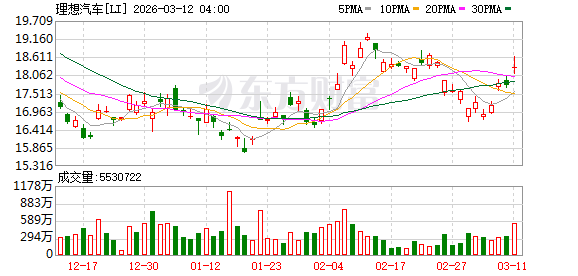
美股异动丨理想汽车盘前涨2.5% 明日盘前发财报 机构前瞻:Q4或成业绩触底拐点
Ge Long Hui A P P· 2026-03-11 09:00
Core Viewpoint - Li Auto (LI.US) is expected to report its financial results on March 12, 2023, with a pre-market stock price increase of 2.48% to $18.20, indicating market optimism about the upcoming earnings report [1]. Group 1: Financial Performance - Q4 is anticipated to be a critical turning point for Li Auto's performance, despite a year-over-year decline in delivery volume and revenue [1]. - Gross margin is projected to improve slightly to between 16% and 18%, compared to 16.3% in Q3 [1]. - The company is expected to see a recovery in sales and profits from 2025 to 2027, with GAAP and non-GAAP net profit margins expected to increase annually [1]. Group 2: Stock Performance - The closing price on March 10 was $17.76, with a slight decrease of 0.39% [1]. - The pre-market price on March 11 reached $18.20, reflecting a gain of $0.44 [1]. - The stock has a total market capitalization of $18.127 billion and a price-to-earnings ratio of 26.55 [1].

理想汽车-W(02015):理想汽车点评:1-2月销量5.4万辆,同比微降,期待后续新车周期
Changjiang Securities· 2026-03-10 13:14
Investment Rating - The investment rating for the company is "Buy" and is maintained [6][7]. Core Insights - In February 2026, the company sold 26,421 vehicles, representing a year-on-year growth of 0.6% but a month-on-month decline of 4.5%. Cumulatively, sales for January and February reached 54,000 vehicles, a year-on-year decrease of 3.7% [2][4][9]. - The company's product advantages and brand design are well recognized, and the "Dual Energy Strategy" is expected to further enhance its competitive edge. Future models are anticipated to significantly expand sales potential [6][9]. - The company is focusing on improving its organizational structure, product layout, and technological innovation to build competitiveness for the next decade, aiming for a transformation towards embodied intelligence in vehicles [9]. Summary by Sections Sales Performance - February 2026 sales were 26,421 vehicles, with a year-on-year increase of 0.6% and a month-on-month decrease of 4.5%. Total sales for the first two months of 2026 were 54,000 vehicles, down 3.7% year-on-year [2][4][9]. Product and Strategy - The company is set to launch new models, including the upgraded L series and the pure electric SUV i9, which are expected to enhance product competitiveness and open new sales avenues [6][9]. - The "Dual Energy Strategy" has led to the establishment of over 4,000 charging stations and a significant increase in charging services, with over 145 million charging sessions provided [9]. Financial Projections - Projected net profits for the company from 2025 to 2027 are estimated at 12.1 billion, 56.7 billion, and 83.7 billion respectively, with corresponding PE ratios of 106.2X, 22.7X, and 15.4X for GAAP profits, and 29.1 billion, 71.7 billion, and 98.7 billion for Non-GAAP profits, with PE ratios of 44.2X, 18.0X, and 13.0X [6].
Nio vs Li Auto: Two Chinese EV Giants at a Crossroads
247Wallst· 2026-03-10 11:17
Core Insights - Nio and Li Auto have reported contrasting Q3 2025 earnings, with Nio showing significant growth while Li Auto is experiencing a decline in deliveries and revenue [1] Group 1: Company Performance - Nio delivered 87,071 vehicles, representing a 40.8% year-over-year increase, with revenue of $3.06 billion, up 16.7% [1] - Li Auto delivered 93,211 units, down 39% year-over-year, with revenue falling 36.2% to $3.96 billion [1] - Nio's gross margin was reported at 13.9%, while Li Auto's gross margin was 16.3%, adjusted to 20.4% before a recall impact [1] Group 2: Strategic Approaches - Nio is pursuing horizontal expansion with three brands and a focus on volume growth, while Li Auto is transitioning vertically towards BEV technology and autonomous driving [1] - Nio's CEO highlighted the ONVO L90 as the top-selling large BEV SUV for three consecutive months, indicating strong market performance [1] - Li Auto's VLA Driver autonomous driving model achieved a 91% monthly usage rate in October, showcasing strong adoption of its technology [1] Group 3: Future Outlook - Nio's Q4 guidance anticipates deliveries between 120,000 to 125,000 units, a potential increase of 65% to 72% year-over-year, aiming for a new quarterly record [1] - Li Auto's Q4 guidance projects deliveries of 100,000 to 110,000 units, reflecting a decline of 31% to 37% year-over-year, indicating ongoing challenges during its transition [1] - Both companies face execution risks in the upcoming quarters, with Nio's cash burn and Li Auto's transition strategy being critical factors to monitor [1]

