
ZTO EXPRESS(02057)

Search documents
国泰海通|交运:快递单价降幅收窄,反内卷持续扩散
国泰海通证券研究· 2025-08-22 09:08
Core Viewpoint - The article highlights a narrowing decline in express delivery prices in July, indicating a stronger-than-expected effort to combat "involution" in the industry, leading to a temporary easing of competitive pressure. The outlook remains positive for leading express delivery companies with confirmed performance growth and potential valuation recovery opportunities in e-commerce logistics [1][3][4]. Group 1: Industry Performance - In July 2025, the total express delivery volume increased by 15.1% year-on-year, with SF Express leading the growth at 33.7% [1]. - For the first seven months of 2025, the total express delivery volume reached 1,120.5 billion pieces, reflecting an 18.7% year-on-year increase, surpassing the postal administration's forecast of over 8% for the entire year [1]. - The e-commerce express delivery sector saw significant growth, with YTO, Yunda, and Shentong reporting year-on-year increases of 20.8%, 7.6%, and 11.9% respectively in July 2025 [1]. Group 2: Market Concentration - The concentration of the express delivery industry continues to increase, with the CR8 (concentration ratio of the top 8 companies) reaching 86.9 in the first seven months of 2025, up by 1.7 compared to the previous year [2]. - In Q2 2025, the market shares of leading e-commerce express companies were as follows: Zhongtong at 19.5%, YTO at 16.0%, Yunda at 13.2%, Shentong at 12.9%, and Jitu at 11.1%, all showing an increase from Q1 [2]. Group 3: Pricing and Revenue Trends - The express delivery industry's revenue in July 2025 grew by 8.9% year-on-year, while the average revenue per ticket decreased by 5.3% [3]. - For the first seven months of 2025, the industry's revenue increased by 9.9%, with a 7.4% decline in average revenue per ticket [3]. - The decline in average revenue per ticket is seen as a sign of reduced price competition, supported by regulatory efforts to combat "involution" in the industry [3]. Group 4: Investment Recommendations - The article suggests that the ongoing "anti-involution" measures will effectively ease competitive pressures in the industry, leading to a recovery in e-commerce express delivery profitability in the second half of the year [4]. - Future profitability will depend on the sustainability of price increases, with a focus on regulatory strength from the postal administration [4].




国泰海通:7月快递单价降幅收窄 反内卷持续扩散
Zhi Tong Cai Jing· 2025-08-22 05:56
国泰海通主要观点如下: 7月价格降幅收窄,快递"反内卷"力度超预期,短期竞争压力趋缓,中长期继续保障良性竞争 7月快递件量同比+15.1%;顺丰深化落实激活经营,业务量同比+33.7%,增速持续领跑 1)全行业:2025年7月全国快递企业件量164.0亿件,同比+15.1%;2025年1-7月件量1120.5亿件,同比 +18.7%。小件化趋势持续、电商促销且退换货便捷,共同驱动2025年前7个月件量增速超过邮管局对 2025年全年件量增速超8%的预测。2)电商快递:圆通/韵达/申通2025年7月业务量分别同比 +20.8%/+7.6%/+11.9%;1-7月业务量分别同比+21.6%/+15.1%/+19.3%。3)直营快递:顺丰2025年7月业务 量同比+33.7%;1-7月业务量同比+26.9%,得益于落实激活经营策略,加大对前线业务的授权与激励,顺 丰件量增速3-7月连续领跑行业。 行业集中度持续集中,头部公司Q2市场份额环比提高 2022年初到2024年末,由于政策监管下价格竞争相对温和,份额向头部集中较缓慢。1)全行业:2025年 1-7月快递行业CR8为86.9,同比提升1.7,反映出2025年 ...

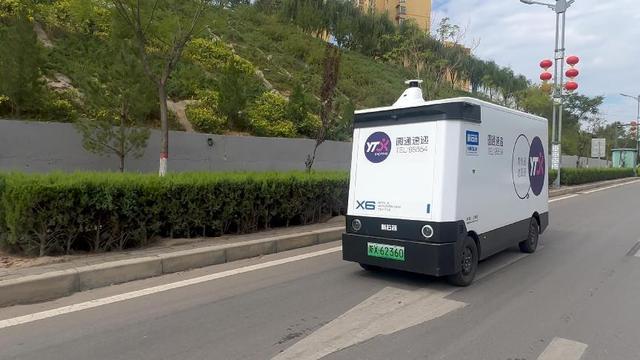
无人快递车亮相陕西神木街头 智能转运开启物流新篇
Huan Qiu Wang Zi Xun· 2025-08-22 05:00
Core Viewpoint - The introduction of autonomous delivery vehicles in Shenmu City marks a significant step towards the intelligent transformation of the logistics industry, enhancing efficiency and service quality in package delivery. Group 1: Autonomous Delivery Vehicles - Autonomous delivery vehicles are now operating in Shenmu City, capable of navigating streets without human drivers and delivering packages to various points [1][3]. - These vehicles have a cargo capacity of 6 cubic meters, allowing them to carry 600 to 700 packages at once, equivalent to the load of three traditional delivery tricycles [3]. Group 2: Operational Efficiency - Zhongtong Express has implemented two autonomous delivery vehicles, which deliver over 2,000 packages daily to three locations, significantly reducing delivery time and costs compared to manual delivery [5][6]. - YTO Express has also deployed an autonomous delivery vehicle for specific cargo transfers, currently in trial operation, with a maximum daily transport capacity of 700 packages [8][10]. Group 3: Technology and Monitoring - The autonomous delivery vehicles are equipped with multiple high-definition cameras and millimeter-wave radar, enabling 360-degree environmental awareness and precise recognition of pedestrians, vehicles, and traffic signals [8]. - The vehicles can travel up to 150 kilometers on a single charge, sufficient for two days of operations, and are monitored in real-time by staff to ensure safety [8]. Group 4: Impact on Logistics - The arrival of autonomous delivery vehicles has streamlined operations at delivery stations, improving package transfer efficiency and enhancing the overall delivery experience for residents [10]. - The integration of these vehicles addresses challenges such as the difficulty in hiring truck drivers, while also providing a more efficient service to the community [10].

西部证券晨会纪要-20250822
Western Securities· 2025-08-22 01:22
Group 1: Zhongtong Express (中通快递) - Profitability under pressure, adjusted net profit for Q2 2025 decreased by 26.8% YoY, with a single ticket net profit of 0.21 CNY, down 12 cents YoY [2][7][10] - Revenue for Q2 2025 reached 11.8 billion CNY, a 10.3% increase YoY, while H1 2025 revenue was 22.7 billion CNY, up 9.8% YoY [7][9] - Market share increased to 19.5% in Q2 2025, with a package volume of 9.85 billion pieces, up 16.5% YoY [9][10] - Capital expenditure for 2025 expected to remain flat or slightly decrease, with H1 2025 capital expenditure at 3.1 billion CNY [9][10] - Mid-term dividend of 0.3 USD per share, with a payout ratio of 40% [9][10] Group 2: Yuanda Pharmaceutical (远大医药) - Revenue for H1 2025 was 6.107 billion HKD, a 1.0% increase YoY, with net profit of 1.169 billion HKD, slightly down by 5.9% YoY [3][12] - The nuclear medicine segment saw a revenue increase of 105.5% YoY, contributing significantly to overall growth [12][13] - Revenue projections for 2025-2027 are 12.254 billion, 13.376 billion, and 14.779 billion HKD, with net profits of 2.185 billion, 2.462 billion, and 2.706 billion HKD respectively [14] Group 3: Yuandong Bio (苑东生物) - H1 2025 revenue was 654 million CNY, down 2.3% YoY, with net profit of 137 million CNY, down 6.8% YoY [4][16] - The company is focusing on self-research and strategic investments to accelerate innovation [16][17] - Revenue projections for 2025-2027 are 1.501 billion, 1.795 billion, and 2.202 billion CNY, with net profits of 282 million, 345 million, and 431 million CNY respectively [18] Group 4: Pop Mart (泡泡玛特) - H1 2025 revenue reached 13.876 billion CNY, a 204.4% increase YoY, with net profit of 4.574 billion CNY, up 396.5% YoY [19][20] - The company is expanding its global presence, with significant growth in the Americas and Asia-Pacific regions [19][20] - Revenue projections for 2025-2027 are 11.128 billion, 15.332 billion, and 20.295 billion CNY, with substantial YoY growth rates [21] Group 5: Nanjing Steel (南钢股份) - H1 2025 revenue was 28.944 billion CNY, down 14.06% YoY, while net profit increased by 18.63% to 1.463 billion CNY [23][24] - High-end products contributed significantly to profit, with advanced steel materials accounting for 29.77% of total sales [24] - The company is expanding its overseas operations, including a new coke production base in Indonesia [24] Group 6: Huayang Group (华阳集团) - H1 2025 revenue was 5.311 billion CNY, a 26.65% increase YoY, with net profit of 341 million CNY, up 18.98% YoY [26][27] - The automotive electronics and precision die-casting segments are driving growth, with significant new orders from major global clients [26][27] - Revenue projections for 2025-2027 are 12.71 billion, 15.89 billion, and 19.17 billion CNY, with net profits of 870 million, 1.15 billion, and 1.43 billion CNY respectively [27] Group 7: Shenhuo Co. (神火股份) - H1 2025 revenue was 20.428 billion CNY, up 12.12% YoY, while net profit decreased by 16.62% to 1.904 billion CNY [29][30] - The aluminum business is the main contributor to revenue, while coal business faced significant price declines [30][31] - Revenue projections for 2025-2027 are 2.41, 2.67, and 2.96 CNY per share, with corresponding PE ratios of 8, 7, and 7 [31] Group 8: Beixin Building Materials (北新建材) - H1 2025 revenue was 13.558 billion CNY, a slight decrease of 0.29% YoY, with net profit down 12.85% [33][34] - The gypsum board business is under pressure, while waterproof and paint businesses are showing growth [34][35] - Revenue projections for 2025-2027 are 3.935 billion, 4.464 billion, and 4.952 billion CNY, with corresponding EPS of 2.33, 2.64, and 2.93 CNY [35]





中通快递-W(02057.HK):二季度价格战利润承压 行业反内卷背景下关注公司战略变化
Ge Long Hui· 2025-08-21 20:01
Core Viewpoint - ZTO Express reported its Q2 2025 earnings, achieving a revenue of 11.832 billion yuan, a year-on-year increase of 10%, while adjusted net profit was 2.053 billion yuan, a year-on-year decrease of 27%, meeting expectations [1] Group 1: Business Performance - In Q2 2025, the company handled 9.847 billion parcels, reflecting a year-on-year growth of 16.5%, indicating a recovery in parcel volume growth [2] - The adjusted net profit of 2.053 billion yuan in Q2 represents a decline of 27% year-on-year, with profit per parcel dropping to 0.21 yuan, down 0.12 yuan year-on-year, primarily due to the impact of price wars [2] Group 2: Industry Trends - The express delivery industry is experiencing a price increase driven by a reversal of the previous competitive environment, with both top-down and bottom-up pressures for price hikes [2] - The linkage between Guangdong and Yiwu demonstrates a commitment to eliminating price disparities, which is expected to support delivery fees and stabilize the industry [2] Group 3: Profit Forecast and Rating - The company has adjusted its profit forecasts for 2025-2027, now expecting adjusted net profits of 8.993 billion, 9.527 billion, and 10.689 billion yuan respectively, reflecting year-on-year changes of -11%, 6%, and 12% [2] - The average valuation of comparable companies in the industry is higher than that of ZTO Express, leading to a maintained "buy" rating despite the downward adjustment in profit expectations [2]
中通快递-W(02057.HK):单票收入同比下降 Q2净利短暂承压
Ge Long Hui· 2025-08-21 20:01
Core Insights - Zhongtong Express reported a revenue of 11.83 billion yuan for Q2 2025, representing a year-on-year growth of 10.3%, while adjusted net profit decreased by 26.8% to 2.05 billion yuan [1][2] Revenue Analysis - The revenue growth of 10.3% in Q2 2025 was driven by an increase in business volume, which reached 9.85 billion parcels, a year-on-year increase of 16.5%. However, the average revenue per parcel decreased by 4.7% to 1.18 yuan due to increased subsidies and lighter parcel weights [1][2] - The market share of Zhongtong Express was 19.5%, showing a slight year-on-year decline of 0.1 percentage points but a quarter-on-quarter increase of 0.6 percentage points [1] Cost and Profitability - The core cost per parcel decreased by approximately 0.07 yuan, with transportation costs down by 0.06 yuan to 0.33 yuan, attributed to economies of scale and lower oil prices. However, the overall cost per parcel increased by 9% to 0.89 yuan due to rising other costs [2] - The gross margin fell by 8.9 percentage points to 24.9%, and the adjusted net margin also decreased by 8.9 percentage points to 17.3% due to a larger decline in revenue per parcel compared to costs [2] Future Outlook - The company has revised its full-year parcel volume growth target to between 38.8 billion and 40.1 billion parcels, reflecting a year-on-year growth of 14%-18%, down from the previous estimate of 20%-24% [2] - The board approved a mid-term dividend of $0.30 per share, with a payout ratio of 40% [2] Profit Forecast and Rating - The profit forecasts for 2025-2027 are maintained at 9 billion yuan, 9.7 billion yuan, and 10.6 billion yuan respectively, with a "Buy" rating upheld [2]
中通快递-W(02057.HK):盈利能力承压 2025Q2市占率环比提升
Ge Long Hui· 2025-08-21 20:01
Core Viewpoint - Zhongtong Express-W reported its Q2 and H1 2025 performance, showing a revenue increase but a significant decline in adjusted net profit, indicating pressure on profitability and margins [1][4]. Financial Performance - Q2 2025 revenue reached 11.8 billion yuan, a year-on-year increase of 10.3%, while adjusted net profit was 2.1 billion yuan, down 26.8% year-on-year [1]. - H1 2025 revenue totaled 22.7 billion yuan, up 9.8% year-on-year, with adjusted net profit at 4.3 billion yuan, a decrease of 14.3% year-on-year [1]. - Adjusted net profit per ticket for Q2 2025 was 0.21 yuan, down 12 cents year-on-year, and for H1 2025, it was 0.23 yuan, down 9 cents year-on-year [1]. Profitability and Cost Analysis - Q2 2025 gross margin was 24.9%, a decline of 8.9 percentage points year-on-year, while H1 2025 gross margin was 24.8%, down 7.2 percentage points year-on-year [1]. - The increase in operating costs, particularly other costs, was the main reason for the decline in gross margin, with other costs rising by 134.9% in Q2 2025 [2]. - Q2 2025 core single ticket revenue was 1.18 yuan, down 6 cents year-on-year, while single ticket operating cost was 0.89 yuan, up 7 cents year-on-year [2]. Market Position and Guidance - Q2 2025 package volume was 9.85 billion pieces, a year-on-year increase of 16.5%, with a market share of 19.5%, up 0.6 percentage points quarter-on-quarter [3]. - The company has lowered its full-year package volume guidance to a range of 38.8 billion to 40.1 billion pieces, corresponding to a year-on-year growth rate of 14.0% to 18.0% [3]. Capital Expenditure and Dividends - Capital expenditure for H1 2025 was 3.1 billion yuan, an increase of approximately 100 million yuan compared to H1 2024, with expectations for 2025 capital expenditure to remain flat or slightly decrease [3]. - The company announced an interim dividend of 0.3 USD per share for H1 2025, with a payout ratio of 40% [3]. Valuation and Rating - Despite the downward adjustment in package volume guidance leading to revised profit forecasts, the overall valuation level of the e-commerce express delivery industry is expected to rise, leading to an upgrade to a "buy" rating [4]. - Projected EPS for 2025-2027 are 11.10, 12.07, and 13.28 yuan per share, with corresponding PE ratios of 12.74, 11.73, and 10.66 times based on the closing price on August 20, 2025 [4].
ZTO Express Q2 Earnings Down Y/Y, 2025 Parcel Volume View Lowered
ZACKS· 2025-08-21 18:46
Core Insights - ZTO Express reported second-quarter 2025 earnings of 35 cents per share, a decline from the previous year, while total revenues increased to $1.65 billion [1][8] - The company revised its 2025 parcel volume guidance down to 38.8 billion to 40.1 billion, reflecting a year-over-year growth of 14-18%, from a prior estimate of 40.8 billion to 42.2 billion, which indicated 20-24% growth [1][8] Financial Performance - Revenues from the core express delivery business rose by 11% year over year, driven by a 16.5% increase in parcel volume, despite a 4.7% decrease in parcel unit price [3] - Gross profit decreased by 18.7% compared to the same quarter last year, with the gross margin rate falling to 24.9% from 33.8% [4][8] - Total operating expenses increased to RMB469.3 million ($65.5 million) from RMB405.3 million in the prior year [4] Operational Highlights - ZTO Express handled over 9.8 billion parcels in the second quarter, achieving an adjusted net income of 2.1 billion [2] - Retail volume growth remained strong, exceeding 50% compared to the previous year, positively impacting overall margins [2] - Revenue from KA (Key Accounts) increased significantly by 149.7% due to a rise in e-commerce return parcels [3] Cash Position - At the end of the second quarter, ZTO Express had cash and cash equivalents of $1.85 billion, up from $1.71 billion at the end of the previous quarter [5]
中通快递二季度单票收入净下降0.06元
Mei Ri Jing Ji Xin Wen· 2025-08-21 13:53
中通快递首席财务官颜惠萍表示,将全年业务量指引下调至388亿至401亿件区间,对应年业务量增速为 14.0%至18.0%。 "今年上半年,价格竞争还是非常惨烈。我们认为,行业要想持续稳定健康发展,一定是从价格战走向 价值战,一定是用服务品质去赢得市场。"8月20日上午,中通快递董事长兼首席执行官赖梅松在电话会 议上表示。 《每日经济新闻》记者注意到,8 月 20 日,中通快递(HK02057,股价149.800港元,市值1196亿港 元)公布2025年二季度业绩。 财报显示,2025年二季度,中通快递完成包裹量98.5亿件,同比增长16.5%,市场份额环比提升0.6%; 季度散件业务量同比增长超过50%;营收为118.3亿元,同比增长10.3%;调整后净利润为20.5亿元,同 比减少26.8%。 当前,快递行业挑战与机遇并存。一方面,激烈的价格战影响了企业业绩;另一方面,AI(人工智 能)等新技术布局与落地,考验着快递企业管理层的战略眼光。 "只有把服务品质做好,把用户服务提升(上去),从而促进整个行业健康发展才是正道。长期来看, 我相信行业一定会朝着正确的方向健康发展。"赖梅松说。 经营性现金流为22亿元 ...
大和:升中通快递-W(02057)评级至“买入” 目标价上调至180港元
Zhi Tong Cai Jing· 2025-08-21 09:55
Core Viewpoint - Daiwa has upgraded ZTO Express (02057) from "Outperform" to "Buy" and raised the target price from HKD 155 to HKD 180, citing lower package volume growth targets and improved industry pricing environment as key drivers for stock re-evaluation [1] Company Summary - ZTO Express's package volume growth target is considered low, which may positively influence its stock performance [1] - The improvement in the industry pricing environment is expected to further support the company's valuation [1] Industry Summary - The overall industry pricing environment is showing signs of improvement, which is beneficial for companies like ZTO Express [1]