China Life(02628)

Search documents
智通港股沽空统计|1月21日
智通财经网· 2026-01-21 00:23
Group 1 - The core viewpoint of the news highlights the top short-selling ratios and amounts for various companies, indicating significant market sentiment towards these stocks [1][2]. - AIA Group (81299) and JD Group (89618) have the highest short-selling ratios at 100.00%, while Ping An Insurance (82318) follows with a ratio of 82.04% [1][2]. - The top three companies by short-selling amount are Pop Mart (09992) with 1.008 billion, Xiaomi Group (01810) with 0.825 billion, and Meituan (03690) with 0.777 billion [1][2]. Group 2 - The top short-selling ratio rankings show that AIA Group and JD Group both have a short-selling amount of 73,700 and 50,600 respectively, with Ping An Insurance at 1.6862 million [2]. - The short-selling amount rankings indicate that Pop Mart leads with 1.008 billion, followed by Xiaomi Group at 0.825 billion and Meituan at 0.777 billion [2]. - The deviation values, which reflect the difference between current short-selling ratios and the average over the past 30 days, show Ping An Insurance at 49.32%, JD Group at 43.39%, and Wanwu Cloud (02602) at 34.47% [1][2].




地址变更公告
Xin Lang Cai Jing· 2026-01-20 21:54
Group 1 - The address of China Life Insurance Co., Ltd. Fangzheng Branch has been changed to the second and first floors of the residential building of the Urban Construction Bureau on Victory Street, Fangzheng Town, Fangzheng County, Harbin City, Heilongjiang Province [1] - The responsible person for the branch is Li Chunyu [1] - The institution code is 000005230124, and the license serial number is 00156967 [1]

贝莱德减持中国人寿约2079.18万股 每股作价约32.69港元
Zhi Tong Cai Jing· 2026-01-20 18:19
Group 1 - The core point of the article highlights that BlackRock has reduced its stake in China Life Insurance by selling approximately 20.79 million shares at a price of HKD 32.6945 per share, totaling around HKD 680 million [2] - Following the sale, BlackRock's remaining shareholding in China Life Insurance is approximately 516 million shares, representing a holding percentage of 6.94% [2] Group 2 - The stock price of China Life Insurance is currently at HKD 48.29, reflecting a daily increase of 0.77% [1] - The stock has shown various percentage changes over different time frames, including 1.62% for the past week, 2.78% for the past month, and 1.85% for the past three months [1]
港股通(深)净买入2.18亿港元
Zheng Quan Shi Bao Wang· 2026-01-20 15:44
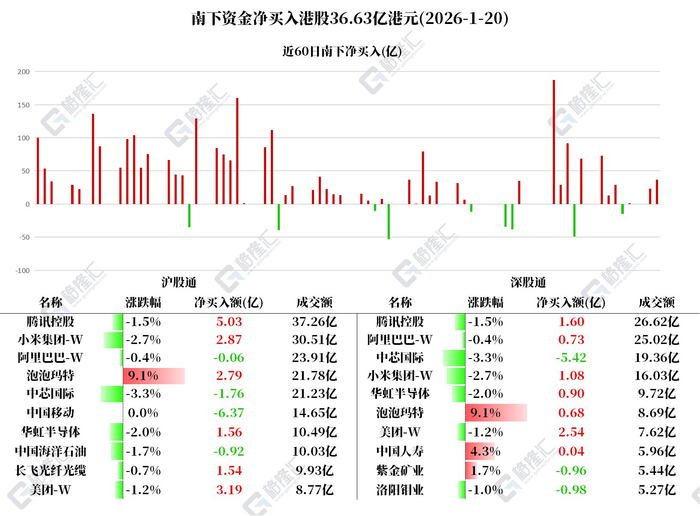
Core Viewpoint - On January 20, the Hang Seng Index fell by 0.29%, closing at 26,487.51 points, while southbound funds through the Stock Connect recorded a net buy of HKD 36.63 billion [1]. Group 1: Market Activity - The total trading volume for the Stock Connect on January 20 was HKD 972.83 billion, with a net buy of HKD 36.63 billion [1]. - The Shanghai Stock Connect accounted for HKD 594.79 billion in trading volume with a net buy of HKD 34.44 billion, while the Shenzhen Stock Connect had a trading volume of HKD 378.04 billion and a net buy of HKD 2.18 billion [1]. Group 2: Active Stocks - In the Shanghai Stock Connect, Tencent Holdings was the most actively traded stock with a transaction amount of HKD 37.26 billion, followed by Xiaomi Group-W and Alibaba-W with transaction amounts of HKD 30.51 billion and HKD 23.91 billion, respectively [1]. - Tencent Holdings had a net buy of HKD 5.03 billion, despite its closing price dropping by 1.48% [1]. - China Mobile recorded the highest net sell amount of HKD 6.37 billion, closing flat [1]. Group 3: Shenzhen Stock Connect Activity - In the Shenzhen Stock Connect, Tencent Holdings also led with a transaction amount of HKD 26.62 billion, followed by Alibaba-W and SMIC with transaction amounts of HKD 25.02 billion and HKD 19.36 billion, respectively [2]. - Meituan-W had the highest net buy amount of HKD 2.54 billion, although it closed down by 1.17% [2]. - SMIC experienced the largest net sell amount of HKD 5.42 billion, closing down by 3.25% [2].




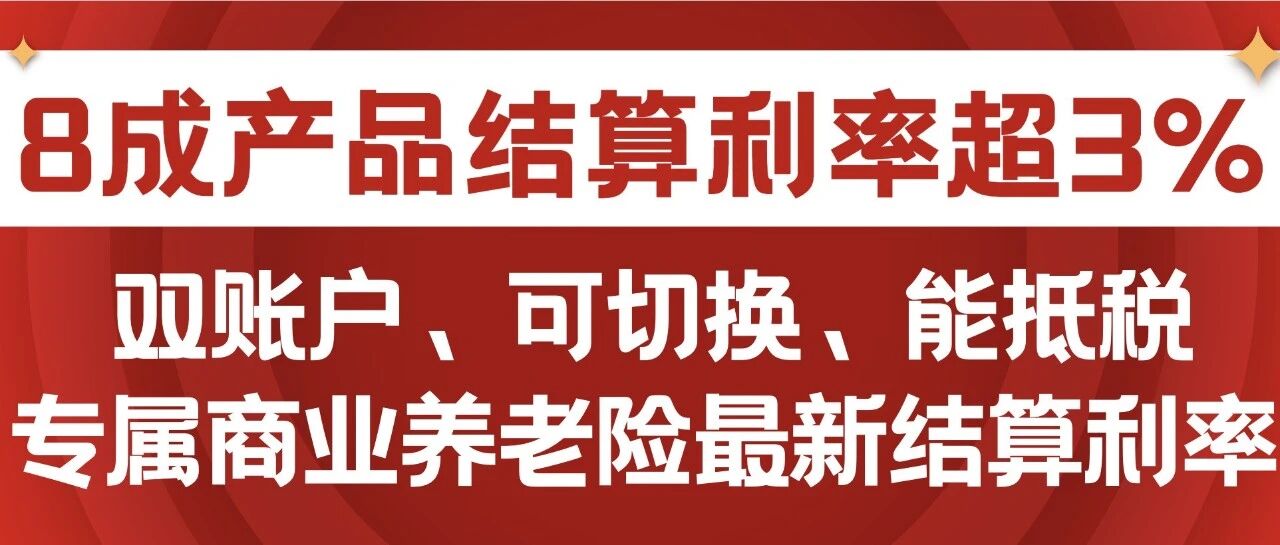
最高破4%!2025年专属商业养老保险结算利率:8成超3%,6款破4%,连续5年结算利率均值超3%...
13个精算师· 2026-01-20 15:43
Core Viewpoint - The article discusses the performance and prospects of exclusive commercial pension insurance products, highlighting their competitive settlement rates and the growing demand for stable, long-term investment options in the current market environment [1][6][8]. Summary by Sections Exclusive Commercial Pension Insurance - In 2025, 80% of exclusive commercial pension insurance accounts are expected to have settlement rates exceeding 3%, with 95% of accounts surpassing 2.75% [1][8]. - Six products from Agricultural Bank Life and National Pension have settlement rates exceeding 4% [9][10]. - The average settlement rate for 80 accounts in 2025 is projected to be 3.3%, an increase of 1 percentage point from the previous year [16][20]. Product Performance - The average settlement rate for exclusive commercial pension insurance has consistently been above 3% since 2021, with the first batch of products achieving an average of 4% over five years [13][17]. - The top six products with the highest settlement rates in 2025 include various offerings from Agricultural Bank Life and National Pension, all exceeding 4% [11][14]. Market Trends - The demand for long-term, stable, and higher-yielding products has surged due to external interest rate declines and the upcoming maturity of large deposits, estimated to be around 50 trillion yuan [6][8]. - The insurance industry is actively promoting the development of dividend insurance and "guaranteed + floating yield" products to enhance competitiveness and improve liability quality [6][8]. Consumer Insights - Exclusive commercial pension insurance products offer several advantages, including flexible investment options, guaranteed minimum returns, and tax benefits for personal pension contributions [24][27]. - The products feature both conservative and aggressive account types, allowing consumers to switch between them during the contract period [27][30].



内险股盘中拉升 个险和银保开门红均超预期 上市险企首份业绩预告出炉
Zhi Tong Cai Jing· 2026-01-20 14:43
Group 1 - The insurance stocks experienced a significant increase, with China Life rising by 4% to HKD 33.3, China Pacific up by 3.51% to HKD 23.6, China Taiping increasing by 2.41% to HKD 39.06, and Ping An rising by 1.61% to HKD 69.5 [2] - In the first week of January 2026, listed insurance companies reported impressive premium income from the bancassurance channel, with China Life, Ping An Life, and PICC Life achieving over 100% year-on-year growth [2] - Individual insurance premium income also saw a general increase of over 30% year-on-year [2] Group 2 - On January 19, China Taiping released the first earnings forecast among listed insurance companies, projecting a substantial net profit increase of 215% to 225% for the year 2025 [2] - According to Open Source Securities, the performance of individual insurance and bancassurance exceeded expectations, indicating a potential continuation of catalysts on both the liability and asset sides [2] - Citigroup's research report anticipates a historic opportunity for the life insurance industry in 2026, driven by retail investors seeking higher reinvestment returns for maturing bank deposits [2] - Citigroup favors industry leaders such as China Life and Ping An in their 2026 outlook [2]

中銀做客觀點:基本面與資金面共振,中國人壽長線邏輯解析
Ge Long Hui· 2026-01-20 13:13
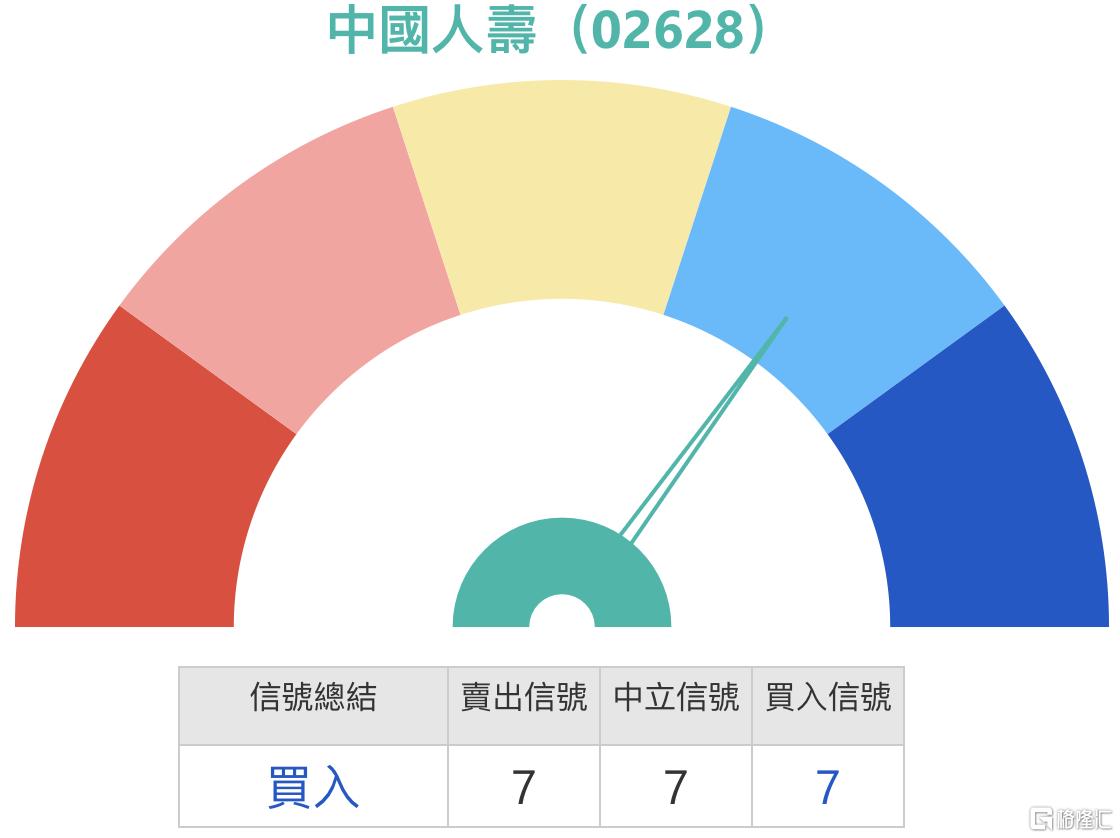
Core Viewpoint - China Life Insurance's stock price has entered a critical technical consolidation phase after significant previous gains, with the market balancing short-term pullback pressures against long-term industry recovery logic [1] Technical Analysis - As of 14:29, the stock price is reported at HKD 32.12, remaining above key moving averages of HKD 29.32 (30-day) and HKD 27.70 (60-day), indicating that the medium-term upward trend structure is intact [2] - Multiple technical indicators signal a need for short-term consolidation, with the Relative Strength Index (RSI) at 69, nearing overbought territory, suggesting that short-term buying momentum may be temporarily exhausted [2] - The first key support level is at HKD 29.7, coinciding with the 30-day moving average; if this level is breached, the stock may seek support at the more critical level of HKD 27.7, which aligns with the 60-day moving average [2] - The immediate resistance target is at HKD 33, with a potential challenge of HKD 35.2 if this level is effectively broken [2] Market Perspective Integration - The market view on China Life Insurance reflects a dual scenario of "long-term positive trends" and "short-term performance verification," closely tied to the overall development of the insurance industry [5] - Positive long-term trends and fundamental improvements are noted, with a significant year-on-year increase of 205% in regular premium income reported for the insurance channel [5] - The consensus acknowledges that the industry environment for China Life Insurance is experiencing dual benefits from market support and fundamental improvements, while short-term technical indicators suggest caution [5] Derivative Product Review and Strategy Value - Recent performance of warrants and structured products shows the leverage characteristics of derivatives amid stock volatility; for instance, certain bearish products gained significantly during a 2.32% decline in the underlying stock [6] - The core strategic value of warrants and structured products lies in their flexibility and customizable risk-return structure, allowing investors to participate in stock price fluctuations without committing full capital [9] Current Market Conditions for Derivative Tool Deployment - For investors confident in the long-term logic and expecting a rebound after price adjustments, warrants with lower premiums and implied volatility, such as UBS call warrants, are recommended [9] - For bearish investors anticipating further adjustments, put warrants close to key support levels are suggested, allowing for potential gains as the stock tests these critical levels [9][13]
智通港股通活跃成交|1月20日
智通财经网· 2026-01-20 11:01
Core Insights - On January 20, 2026, Tencent Holdings (00700), Xiaomi Group-W (01810), and Alibaba-W (09988) were the top three companies by trading volume in the Southbound Stock Connect, with trading amounts of 3.726 billion, 3.051 billion, and 2.391 billion respectively [1] - In the Shenzhen-Hong Kong Stock Connect, Tencent Holdings (00700), Alibaba-W (09988), and SMIC (00981) led the trading volume, with amounts of 2.662 billion, 2.502 billion, and 1.936 billion respectively [1] Southbound Stock Connect Trading Activity - The top active companies in the Southbound Stock Connect included: - Tencent Holdings (00700) with a trading amount of 3.726 billion and a net buying amount of +0.503 billion [2] - Xiaomi Group-W (01810) with a trading amount of 3.051 billion and a net buying amount of +0.287 billion [2] - Alibaba-W (09988) with a trading amount of 2.391 billion and a net selling amount of -5.778 million [2] - Other notable companies included Pop Mart (09992) and SMIC (00981) with trading amounts of 2.178 billion and 2.123 billion respectively [2] Shenzhen-Hong Kong Stock Connect Trading Activity - The top active companies in the Shenzhen-Hong Kong Stock Connect included: - Tencent Holdings (00700) with a trading amount of 2.662 billion and a net buying amount of +0.160 billion [2] - Alibaba-W (09988) with a trading amount of 2.502 billion and a net buying amount of +7.257 million [2] - SMIC (00981) with a trading amount of 1.936 billion and a net selling amount of -5.420 billion [2] - Other notable companies included Xiaomi Group-W (01810) with a trading amount of 1.603 billion and a net buying amount of +0.108 billion [2]



1794亿投资 + 123.5亿赔付 中国人寿河北分公司:金融活水润燕赵 民生保障护平安
Zhong Guo Jin Rong Xin Xi Wang· 2026-01-20 10:23
Core Viewpoint - China Life Insurance Company Hebei Branch is committed to integrating its development with local strategies, providing quality financial insurance services to contribute to the modernization of Hebei province [1] Group 1: Party Building and Organizational Development - The company leads the pilot work for party organization in Hebei, establishing a leadership group and work team to promote a new pattern of party building [2] - It has organized training sessions to interpret the spirit of the 20th National Congress, resulting in 26 high-quality research papers [2] - The company emphasizes collaboration between provincial and local levels to enhance the effectiveness of party building activities [2] Group 2: Professional Services and Social Contributions - The company has provided insurance services to over 34 million clients in the province, with 10.22 million new clients and a risk coverage amount of 11.7 trillion yuan [3] - It supports rural revitalization with over 7.98 million insured service participants in agricultural insurance [3] - The company has contributed over 50% to the personal pension market and provided risk coverage of 164.48 billion yuan for technology and emerging industries [3] Group 3: Investment and Economic Development - China Life Group has invested 179.4 billion yuan in Hebei, supporting the construction of the Xiong'an New Area and other infrastructure projects [4] - The company has initiated a 10 billion yuan fund for the silver economy, with an initial scale of 5 billion yuan [4] Group 4: Customer Experience and Service Enhancement - The company operates 160 customer service outlets and employs 857 service personnel, leading the industry in Hebei [5] - It has implemented various upgrades to enhance customer experience, including accessibility improvements for elderly clients [5] - The company has organized themed activities to support students during exam seasons, providing dedicated services at multiple outlets [5] Group 5: Compliance and Risk Management - The company prioritizes compliance and has established a robust risk management framework to prevent and mitigate various risks [6][7] - It has implemented a "1st Project" for risk inspection and monitoring illegal financial activities [7] - The company is actively involved in social responsibility initiatives, including insurance donations totaling 18 billion yuan for organ donation families and children in need [7]
图解丨南下资金连续10日净买入腾讯,连续12日净卖出中国移动
Ge Long Hui A P P· 2026-01-20 10:07
Group 1 - Southbound funds net bought Hong Kong stocks worth HKD 3.663 billion today [1] - The top net purchases included Tencent Holdings at HKD 663 million, Meituan-W at HKD 573 million, and Xiaomi Group-W at HKD 395 million [1] - Continuous net buying trends were observed for Tencent over 10 days totaling HKD 10.62116 billion and Alibaba over 7 days totaling HKD 4.75655 billion [1] Group 2 - Southbound funds net sold shares of SMIC at HKD 717 million and China Mobile at HKD 637 million [1] - China Mobile has seen continuous net selling for 12 days, amounting to HKD 9.29936 billion [1] - Hua Hong Semiconductor and Xiaomi also experienced net buying trends over multiple days, with Hua Hong totaling HKD 1.33901 billion over 4 days and Xiaomi HKD 1.42914 billion over 3 days [1]