
CICC(03908)

Search documents
中金公司:2026年龙头猪企有望持续跑赢行业
Ge Long Hui· 2025-12-19 00:12
Group 1 - The core viewpoint is that by 2026, a new paradigm in the pig industry is expected to strengthen, characterized by shorter cycle lengths, reduced amplitude, and decreased volatility in prices [1] - In terms of price, it is anticipated that pig prices may gently decline in 2026, while leading companies are expected to maintain profitability throughout the year [1] - The growth paradigm for leading pig companies is entering an opportunity phase, with both growth and value attributes expected to rise [1] Group 2 - The investment paradigm is shifting from a purely cyclical perspective to a combination of cyclical and value considerations, leading to a continuous reshaping of the valuation system for low-cost, large-scale leading enterprises [1] - Leading companies are likely to continue outperforming the industry due to this evolving investment approach [1]
中金公司:预计2026年煤价将呈现前低后高走势
Zheng Quan Shi Bao Wang· 2025-12-19 00:05
Group 1 - The core viewpoint of the report is that coal prices are expected to show a trend of low prices in the first half of 2026 followed by a recovery in the second half, with the annual average likely to remain similar to that of 2025 [1] - Demand is anticipated to be the main drag on coal prices, while supply-side constraints are expected to be relatively strong [1] - In the first half of the year, coal demand may be subdued due to policy transmission delays and seasonal effects, leading to potential pressure on coal prices [1] Group 2 - A marginal improvement in demand is expected in the second half of the year, which could drive coal prices upward [1]
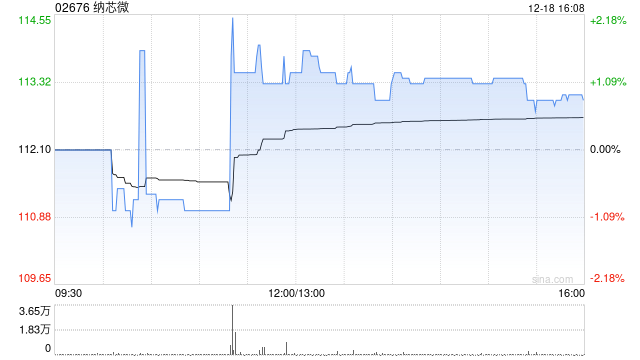
纳芯微获中金公司增持14.42万股 每股均价约112.66港元

Xin Lang Cai Jing· 2025-12-18 23:37
Group 1 - CICC increased its stake in Naxin Microelectronics (02676) by 144,200 shares at an average price of HKD 112.6601 per share, totaling approximately HKD 16.2456 million [1] - After the increase, CICC's total shareholding in Naxin Microelectronics reached approximately 3.4799 million shares, representing a holding percentage of 18.24% [1]

早报吴清发声,事关资本市场;商务部:已批准部分稀土出口通用许可申请
Sou Hu Cai Jing· 2025-12-18 23:13
Company News - GuoDun Quantum's chairman, Lv Pin, unexpectedly passed away [7] - CICC announced a cash dividend of 434 million yuan for the first half of 2025, with the record date set for December 26 [8] - Haitian Flavoring announced that its cash dividend ratio will not be less than 80% annually for the next three years (2025-2027) [9] - Sichuan Road and Bridge announced that China Post Insurance has increased its stake to 5% [10] - Zhongwei Company announced plans to acquire Hangzhou Zhonggui's equity, leading to a stock suspension [11] - WuXi AppTec reported that 18 shareholders, including the third, fourth, and sixth largest, collectively reduced their holdings by 29.5 million shares between November 26 and December 17 [11] - Lida Xin announced that shareholder Li Chunhua reduced his stake by 1.56% between December 10 and December 17 [12] - Visionox plans to sign an investment cooperation agreement to advance the Hefei 8.6-generation AMOLED production line project, with a second-phase capital of 9.443 billion yuan [12] - Western Mining announced that its wholly-owned subsidiary, Geermu West Mining Resources, has obtained a mining license, with gold reserves of 2.86 tons [13] - Yidong Electronics announced that a related party reduced its holdings by 2.3463 million shares between December 10 and December 17 [14] - Shandong Highway plans to provision for a long-term equity investment impairment of approximately 690 million yuan in Dongxing Securities [15] - GuoAo Technology's former actual controller, Chen Chongjun, was sentenced to six years in prison for manipulating the securities market, with a fine of 4 million yuan [16] Industry News - The Hong Kong Stock Exchange is consulting market opinions on optimizing the framework for trading units, with potential adjustments affecting about 25% of issuers [5] - The Ministry of Commerce responded to the latest developments in export controls on rare earth-related items, indicating that some Chinese exporters have met the basic requirements for applying for general licenses [5] - The National Digital Exchange System Engineering Technology Research Center, in collaboration with China Mobile and China Unicom, has achieved breakthroughs in resource scheduling efficiency and reliability through a "multi-modal on-the-fly computing" model [5] - The scale of China's biomanufacturing industry has continued to grow, reaching a total scale of 1.1 trillion yuan, with biopharmaceutical product output accounting for over 70% of the global total [5] - Platinum has become a highly sought-after asset, with the price of pure platinum reaching 815 yuan per gram, and futures contracts seeing a significant increase of 5.32% on December 18 [6]




【早报】吴清发声,事关资本市场;商务部:已批准部分稀土出口通用许可申请
财联社· 2025-12-18 23:10
Industry News - The State Council issued opinions on cracking down on illegal tobacco activities, emphasizing strict regulation of e-cigarettes and severe penalties for illegal production, wholesale, transportation, and sales [2][7] - Wu Qing attended a meeting to discuss the capital market's 14th Five-Year Plan, focusing on risk prevention, strong regulation, and promoting high-quality development [6][7] - The Ministry of Commerce responded to the European Commission's investigations into Chinese companies, highlighting the discriminatory nature of these actions and affirming China's commitment to protecting its enterprises [2][7] Company News - GuoDun Quantum's chairman, Lv Pin, unexpectedly passed away [10] - China International Capital Corporation announced a cash dividend of 434 million yuan for the first half of 2025, with the record date set for December 26 [10] - Li Chunhua, a shareholder of Lida Xin, reduced his stake by 1.56% between December 10 and December 17 [10] - Visionox plans to sign an investment cooperation agreement to advance the Hefei 8.6-generation AMOLED production line project, with a capital requirement of 9.443 billion yuan [10] Investment Opportunities - Micron Technology reported a booming demand for High Bandwidth Memory (HBM), with a projected compound annual growth rate (CAGR) of approximately 40%, increasing from about $35 billion in 2025 to around $100 billion by 2028 [20] - The persistent demand for memory in AI computing highlights the critical role of HBM, as the need for memory capacity and bandwidth continues to grow significantly [20]



中金等开盘大涨 头部券商合并潮将起
Bei Jing Shang Bao· 2025-12-18 16:00
发布换股吸收合并预案后的第二天,中金公司、东兴证券、信达证券复牌后大涨并领涨行业个股,展现 出市场对于头部券商合并的向好预期。截至12月18日10时30分,3只个股仍维持涨超5%的态势。从股价 看,中金公司为36.76元/股,东兴证券和信达证券分别为14.44元/股和18.7元/股。在业内人士看来,券 商合并大幕拉开只是开始,凭借各方资源的有机结合,合并后公司的财务结构韧性有望增强。从行业角 度看,近年来头部券商并购潮兴起、行业洗牌加快,后续中大型券商进行战略重组可行性、必要性提 升。 从12月17日披露的预案来看,本次交易定价以各方董事会决议公告日前20个交易日均价作为基准价,吸 收合并方中金公司作为存续主体,换股价为36.91元/股,被吸收合并方东兴证券的换股价为16.14元/ 股,信达证券的换股价为19.15元/股。在业内人士看来,该交易方案充分体现了两家公司的资产价值, 并有利于平衡各方股东利益。 此外,为保护中小投资者权益,预案内容显示,中金公司A股及H股异议股东可行使收购请求权,东兴 证券与信达证券的异议股东享有现金选择权。此外,包括中央汇金、中国东方、中国信达在内的主要股 东已出具长期承诺,将其 ...



重组股的价值重估是长期过程
Bei Jing Shang Bao· 2025-12-18 16:00
中金公司携重组方案复牌,复牌首日高开低走的表现似乎不及部分投资者的预期。但实际上,重组股的 估值重估不会一蹴而就,短期股价走势并不影响中长期投资价值的改变,尤其对于优质蓝筹股而言,在 重组初期股价涨幅过大或许并非好事。 从长期来看,优质重组股的中长期投资价值取决于公司能否通过重组实现业务的优化和竞争力的提升。 如果重组方案能够有效地整合资源、拓展市场、提高经营效率,那么公司的盈利能力和市场地位将会得 到显著提升,其内在价值也会在未来逐渐得以体现。投资者更应该关注公司的基本面变化,如业绩增 长、市场份额扩大、客户美誉度提升等因素,而不是被短期的股价波动所左右。 实际上,重组股的价值重估是一个漫长的过程。在重组初期,估值重估不可能一步到位,这与重组的不 确定性、市场环境的变化都有一定的关系。而且,在重组初期,市场对于重组股的价值增长预期也可能 存在差异化判断,这些因素可能会导致重组股的新估值标准难以统一。 但是,当重组正式成功之后,市场的预期开始逐步统一,而且随着重组后公司的盈利能力发生重大改 变,公司的估值认可度会迅速提升,届时公司股价也会跟随业绩增长预期的改变而重新估值。 对待重组股,投资者应该保持多一点理性 ...
每日投行/机构观点梳理(2025-12-18)
Jin Shi Shu Ju· 2025-12-18 14:35
Group 1: Gold as a Core Asset - Gold is increasingly viewed as a cornerstone asset in a fragmented, fiscally constrained, and geopolitically uncertain world, reflecting deeper changes in the global financial system where trust, diversification, and resilience are as important as returns and growth [1] - Despite strong momentum, risks to gold in the near term stem from positioning and capital flows, with significant short-term volatility expected due to a major commodity index rebalancing in 2025 [1] Group 2: Euro and Dollar Outlook - The euro is expected to maintain a range-bound movement against the dollar in 2026, despite potential economic recovery in Germany, as the market has already priced in these developments [2] - The Federal Reserve's upward revision of U.S. economic growth forecasts for 2025 and 2026 is likely to support capital inflows into the U.S., limiting the euro's upward potential [2] Group 3: Thailand's Economic Growth Challenges - Lowering interest rates alone will not resolve Thailand's economic growth issues, with growth in the second half of 2025 impacted by reduced short-term tourism and flooding in southern Thailand [3] - Structural factors, including slowing income growth and export pressures on household consumption, will affect Thailand's economic outlook for 2026 [3] Group 4: UK Monetary Policy - The Bank of England is unlikely to signal a clear dovish stance due to persistent inflation above target, with any potential rate cuts framed as a gradual risk management shift rather than a full easing cycle [4] Group 5: U.S. Treasury Yield Projections - U.S. 10-year Treasury yields are projected to trade within a range of 4.0%-4.5% in 2026, with the possibility of reaching the upper limit in the second half of the year due to deteriorating deficit prospects [5] Group 6: Chinese Baijiu Industry Outlook - The Chinese baijiu industry is expected to see improved financial statements and clearer upward turning points in 2026, driven by a gradual recovery in consumer demand and innovative supply-side strategies [6] Group 7: Social Services Sector Stabilization - The social services sector in China is showing signs of stabilization and bottoming out after experiencing price pressures and same-store sales declines in 2024, with potential recovery in sub-sectors like hotels and duty-free shops [7] Group 8: Debt Market Projections - The central tendency of bond market interest rates is expected to rise slightly in 2026, with a forecasted range of 1.6%-2.0% for 10-year government bonds, influenced by neutral monetary policy and marginal improvements in the economic fundamentals [8] Group 9: Green Hydrogen Industry Development - Recent high-level meetings have set the tone for China's green development goals, emphasizing the acceleration of the green hydrogen industry as part of the broader transition to a low-carbon economy [9] Group 10: Liquid Cooling in Servers - 2025 is anticipated to be a breakout year for server liquid cooling, with significant shipments expected and increased participation from domestic manufacturers in the supply chain [10]
据港交所文件:科郦有限公司向港交所提交上市申请书,独家保荐人为中金公司。
Xin Lang Cai Jing· 2025-12-18 13:55
据港交所文件:科郦有限公司向港交所提交上市申请书,独家保荐人为中金公司。 ...
南向资金今日成交活跃股名单(12月18日)
Zheng Quan Shi Bao Wang· 2025-12-18 13:46
今日上榜个股中,小米集团-W、长飞光纤光缆、腾讯控股等8只股同时上榜港股通(深)、港股通 (沪)成交活跃股, 小米集团-W合计成交额32.50亿港元,成交净买入9.04亿港元,长飞光纤光缆合计 成交额28.51亿港元,成交净买入3.70亿港元。盈富基金合计成交额16.28亿港元,成交净卖出14.22亿港 元,中国移动合计成交额24.67亿港元,成交净卖出12.94亿港元。 从连续性进行统计, 有3只股获南向资金连续3天以上净买入,连续净买入天数较多的有小米集团-W、 美团-W、腾讯控股,连续净买入天数分别为15天、7天、3天。以其间净买入金额统计,净买入金额最 多的是小米集团-W,合计净买入为147.52亿港元,其次是美团-W合计净买入为59.92亿港元,腾讯控股 合计净买入为7.63亿港元。有2只股获连续净卖出,净卖出金额居前的有中国移动、中国海洋石油等, 合计净卖出金额分别为28.86亿港元、20.91亿港元。(数据宝) 12月18日南向资金成交活跃股 12月18日恒生指数上涨0.12%,南向资金全天合计成交金额为734.95亿港元,其中,买入成交373.76亿 港元,卖出成交361.19亿港元,合计净买 ...


