
MICROSOFT(04338)

Search documents
微软(MSFT.US)终止支持Windows 10,或成百思买(BBY.US)增长推力
智通财经网· 2025-10-09 13:45
Core Insights - Microsoft will stop supporting Windows 10 on October 14, leading to potential growth in computer sales for Best Buy as users seek to upgrade their systems [1][2] - The discontinuation of support for Windows 10 increases security risks for users who continue to operate on this outdated system [1] - The demand for commercial laptops and desktops has been rising, partly due to the Windows update cycle, with a 9.4% increase in global PC shipments in Q3 2025 [1] Company Insights - Best Buy is expected to benefit from the ongoing demand for Windows 10 device upgrades, which will support its computer sales in the coming quarters [2] - During a recent earnings call, Best Buy management noted a surge in desktop purchases during the pandemic, which has sustained usage demand over the past five years, indicating a shift towards a new upgrade cycle [2] Industry Insights - As of the end of last month, 61% of U.S. Windows users are on Windows 11, while 35% are still using Windows 10, with 4% on other versions, marking a historically high percentage of users on the soon-to-be unsupported system [1] - The current update cycle for PCs is expected to drive stronger-than-anticipated demand for desktop and laptop upgrades [2]


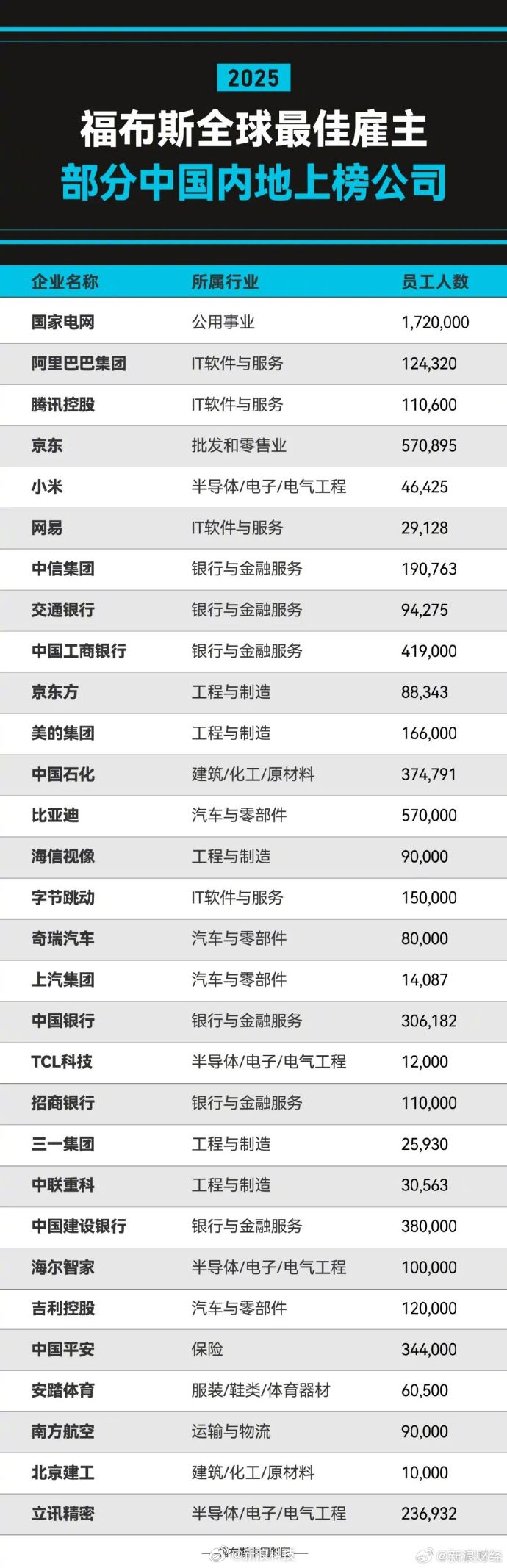
微软蝉联福布斯全球最佳雇主榜首,53家中国内地公司上榜
Xin Lang Ke Ji· 2025-10-09 12:11
半导体/电子/电气工程 236,932 【#2025福布斯全球最佳雇主#】#微软连续两年蝉联全球最佳雇主榜首#今年一共有53家中国内地公司入 选福布斯全球最佳雇主榜单。在全球榜单前五名中有三家来自IT软件与服务行业,其中微软连续两年蝉 联榜首,谷歌母公司Alphabet位列第三,Adobe排名第四。(福布斯)#53家内地公司入选福布斯全球最 佳雇主# | 2025 | | | | --- | --- | --- | | 福布斯全球最佳雇主 | | | | 部分中国内地上榜公司 | | | | 企业名称 | 所属行业 | 员工人数 | | 国家电网 | 公用事业 | 1,720,000 | | 阿里巴巴集团 | IT软件与服务 | 124,320 | | 腾讯控股 | IT软件与服务 | 110,600 | | 京东 | 批发和零售业 | 570.895 | | 小米 | 半导体/电子/电气工程 | 46.425 | | 网易 | IT软件与服务 | 29,128 | | 中信集团 | 银行与金融服务 | 190,763 | | 交通银行 | 银行与金融服务 | 94.275 | | 中国工商银行 | 银行与金 ...

“AI+医疗”新范例!传微软(MSFT.US)与哈佛大学合作,Copilot接入权威医典数据
智通财经网· 2025-10-09 11:32
Core Insights - Microsoft is set to launch a significant update for its AI tool "Copilot" this month, marking its first collaboration with Harvard Medical School, which will provide healthcare information for the tool [1] - The updated "Copilot" aims to deliver more accurate and user-friendly healthcare information, particularly for complex conditions like diabetes, emphasizing the importance of reliable sources [1][2] - Microsoft is focusing on developing its own AI capabilities to reduce reliance on OpenAI, with plans to establish a dedicated consumer AI department and train its models independently [3][4] Group 1: Collaboration and Updates - The new version of "Copilot" will source information from Harvard Health Publishing to enhance its healthcare-related responses [1] - Microsoft will pay a fee to Harvard for the use of this information, although specific details on how the system will handle mental health queries remain undisclosed [2] - The update is part of a broader strategy to ensure users receive trustworthy health information tailored to their literacy and language needs [1][2] Group 2: AI Development and Market Position - Microsoft has reported that its AI tool's diagnostic accuracy is four times that of a team of doctors, with significantly lower costs [2] - The company is actively recruiting for its internal AI lab to compete with OpenAI, indicating a strategic shift towards building independent AI capabilities [3] - Despite the success of the "Copilot" app, which has reached 95 million downloads, it still lags behind ChatGPT, which has surpassed 1 billion downloads [3][4] Group 3: Financial and Strategic Implications - AI has become a major revenue source for Microsoft, particularly through its Azure cloud computing division, which supports AI computing tasks for various companies [4] - The collaboration with OpenAI is being redefined, with Microsoft indicating that OpenAI will continue to be a partner for cutting-edge models while it develops its own capabilities [3][4]
微软出了个“游戏搭子”,但劝你先别急着用
3 6 Ke· 2025-10-09 09:28
Core Viewpoint - The introduction of Microsoft's Gaming Copilot aims to enhance the gaming experience by providing real-time assistance to players, addressing a growing demand for AI-driven support in gaming [1][10]. Group 1: Product Features - Gaming Copilot operates through voice commands, allowing players to interact without interrupting their gameplay, unlike previous products that required switching applications [3][5]. - The integration with Windows Game Bar enables seamless access to game strategies while playing, leveraging advanced multimodal AI capabilities [6]. - The product is designed to cater to the interactive nature of games, which are often easy to start but challenging to master, thus fulfilling a critical need for players seeking guidance [6][8]. Group 2: Market Context - The rise of mobile gaming has shifted player demographics, with casual gamers becoming the majority, influencing game design towards more accessible experiences [8]. - There is a notable change in player attitudes towards game guides, with acceptance growing as developers also provide assistance, reflecting a shift in the gaming culture [8][10]. Group 3: Competitive Landscape - Gaming Copilot is not the first AI gaming assistant; similar products have been launched by Google and NVIDIA, but Microsoft's offering is distinguished by its real-time, non-intrusive support [3][5]. - The competitive edge lies in its ability to provide immediate assistance without disrupting gameplay, a significant improvement over existing solutions [5][6]. Group 4: Potential Concerns - Previous experiences with Microsoft's Edge Game Assistant raised concerns about performance issues during gameplay, leading to skepticism about the reliability of Gaming Copilot [10][11]. - The complexity of Gaming Copilot's functionality may increase the likelihood of performance-related problems, suggesting caution for early adopters [11].

AI吞电致碳排放上升 微软(MSFT.US)欲在东亚争夺清洁能源
智通财经网· 2025-10-09 08:35
据微软 2025 年可持续发展报告称,其对全球气候变暖的总体影响比 2020 年高出 23%。部分原因是其 大规模扩建了高排放量的数据中心。微软设定了到 2030 年实现碳中和的目标。 该公司面临的最大排放难题在于控制其"第三类排放"(Scope 3排放),这部分排放占其总碳足迹的 97%以 上。据Haig称,其中很大一部分来自日本、韩国和中国台湾地区的半导体制造环节。 Haig表示:"我们还需要让我们的供应商也采用 100% 的无碳能源。"微软正通过能源消费者联盟与供应 商展开合作,这些联盟致力于在亚洲推动增加可再生能源的选择。 智通财经APP获悉,微软(MSFT.US)警告称,尽管其实现 2030 年关键气候目标的窗口期正在缩短,但 该公司仍需在东亚部分地区争夺有限的清洁电力供应。该公司的困境与其位于东亚的几家主要芯片供应 商所面临的困境如出一辙,这些供应商同样依赖仍高度依赖化石燃料的电网,并且在迅速扩大可再生能 源方面面临重重困难。据绿色和平组织称,支撑人工智能服务的半导体生产所产生的排放量在 2024 年 增长了四倍以上。 微软日本政府事务高级主管Ken Haig周四在东京一场小组讨论中表示:"在中国 ...
微软计划构建自有人工智能体系
Guo Ji Jin Rong Bao· 2025-10-09 07:29
Core Insights - Microsoft is accelerating its strategy to establish an independent AI ecosystem, evidenced by its recent partnership with Harvard Medical School to enhance the medical Q&A capabilities of its AI assistant, Copilot [2][10] - This move signifies Microsoft's efforts to reduce reliance on OpenAI and build its own AI framework [5][10] Partnership with Harvard Medical School - Microsoft will utilize authoritative health content from Harvard Health Publishing to improve Copilot's responses to health-related inquiries, with the company paying for content licensing [4] - The aim is to provide users with information that is closer to what professional healthcare providers would offer, particularly in managing chronic diseases like diabetes [4] Strategic Focus on Healthcare - Microsoft views healthcare as a critical area for AI commercialization, developing features that help users find local healthcare providers based on their health needs and insurance coverage [6] - The AI health division has been prioritized, with an expanded team that includes top researchers from Google DeepMind [6] Independence from OpenAI - Despite extending its partnership with OpenAI, Microsoft is pushing for technological independence, having established a new "Consumer AI and Research Division" aimed at partially replacing OpenAI models in the coming years [6][7] - Microsoft has begun integrating other models, including Anthropic's Claude, and is testing its own AI models in various products [7] Market Position and Growth Strategy - Microsoft Copilot's download numbers are approximately 95 million, significantly lower than ChatGPT's over 1 billion downloads, indicating a gap in consumer AI market presence [9] - The company is employing a multi-faceted strategy to close this gap, including expanding the use of self-developed and multi-source models, extending Copilot's applications into healthcare and education, and leveraging its Azure cloud platform for AI computing power [9] Transformation into an AI Platform Company - The collaboration with Harvard Medical School not only enhances the quality and depth of Copilot's content but also reflects Microsoft's strategic shift from being an "integrator" of external models to becoming an "AI platform company" with its own technology and content ecosystem [10]
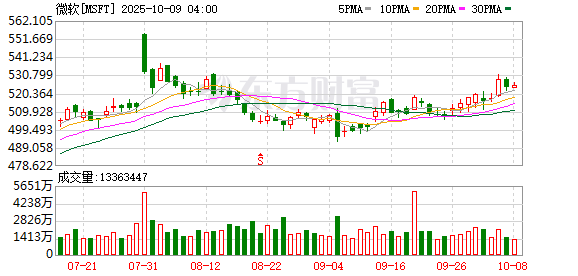
韦德布什:微软(MSFT.US)等三大云巨头AI需求旺盛,三季度科技财报将超预期
智通财经网· 2025-10-09 04:06
该公司由丹·艾夫斯领衔的分析师在致客户报告中指出:"基于实地调研,本季度云计算巨头微软、 Alphabet和亚马逊的AI企业需求非常旺盛,我们相信科技股将迎来由大型科技公司引领的强劲第三季度 财报季。尽管部分投资者仍对估值和科技支出增速存疑,但我们认为华尔街反而低估了AI支出轨迹的 规模,预计三季度科技财报将再次验证这一趋势,2026年前的初始资本支出预测数据有望翻倍。" 智通财经APP获悉,投行韦德布什证券表示,微软(MSFT.US)、Alphabet(GOOGL.US)和亚马逊 (AMZN.US)的人工智能与云计算服务正迎来"非常强劲"的企业需求。 据此,该机构预测未来三年企业和政府部门的AI技术及相关应用支出规模将达约3万亿美元。报告还预 计科技股年底前可能上涨7%以上,季度业绩将向投资者表明AI支出浪潮仍处于早期阶段。OpenAI近期 与英伟达和AMD的合作正是最佳例证。 分析师补充道:"我们认为OpenAI对英伟达和AMD的最新投资,印证了企业端正在发生的产能扩张与需 求驱动,这将为AI革命带来第二、第三乃至第四波衍生机遇,我们IVES AI 30榜单上的科技赢家正印证 这一趋势。" 微软、亚马逊和 ...


微软与哈佛医学院合作强化Copilot健康内容 以减少对OpenAI的依赖
Ge Long Hui A P P· 2025-10-09 03:01
格隆汇10月9日|据华尔街日报引述消息称,微软正与哈佛医学院合作,以强化人工智能助理Copilot的 健康内容,以配合减少对OpenAI的依赖。Copilot于预定最快本月进行的更新中,采用Harvard Health Publishing内容以回应健康护理提问,而微软将向哈佛支付授权费。Copilot一直以来在系列应用中采用 OpenAI的模型,为减少对OpenAI依赖,公司开始使用Anthropic的Claude模型,并正在开发自家人工智 能模型。 ...
微软 2025 年第三季度CIO调查要点 - 在生成式人工智能竞赛中扩大领先优势
2025-10-09 02:39
Summary of Microsoft 3Q25 CIO Survey Takeaways Company Overview - **Company**: Microsoft - **Market Capitalization**: $3,917.829 billion as of October 8, 2025 - **Current Stock Price**: $524.85 - **Price Target**: $625.00 - **Fiscal Year Ending**: June 2025 Key Industry Insights 1. IT Budget Growth Expectations - 2025 IT budget growth is expected to be stable at **+3.6%**, consistent with prior levels - Software is projected to grow at **+3.8%** in 2025, making it the fastest-growing sector - 2026 budget growth expectations show a modest acceleration to **+3.8%**, up **21 basis points** year-over-year, but still below the historical average of **+4.1%** [1][40][46] 2. Generative AI (GenAI) Spending - GenAI and AI/ML remain top priorities for CIOs, with Microsoft positioned as the leading vendor for GenAI deployment - **33%** of CIOs expect Microsoft to gain the largest incremental share of GenAI spend in 2025, significantly higher than the next vendor at **14%** - Over the next three years, **37%** of CIOs anticipate Microsoft will capture the largest share of GenAI spending [2][10][12] 3. Microsoft’s Competitive Position - Microsoft is viewed as the top IT budget share gainer, with **42%** of CIOs expecting share gains, up from **41%** in the previous survey - The company is also recognized for its strong alignment with key spending priorities such as AI/ML, security, and digital transformation [2][10][54] 4. Project and Task Management Solutions - Microsoft Teams and Planner are the most popular project management solutions, with **62%** of CIOs using them, up from **55%** in 3Q24 - **61%** of CIOs report their companies are standardized on a single project management solution, with Microsoft being the leading choice at **32%** [7][10][27] Financial Performance and Projections 1. Earnings Per Share (EPS) Estimates - EPS for fiscal year ending June 2025 is projected at **$13.64**, with estimates increasing to **$21.22** by June 2028 - The P/E ratio is expected to decrease from **36.5** in 2025 to **24.7** by 2028, indicating potential for multiple expansion [4][70] 2. Revenue Growth Drivers - Azure revenue growth is projected at **29.7%** for 2025, with a gradual decline to **22.4%** by 2028 - Operating margins are expected to expand from **45.6%** in 2025 to **47.2%** by 2028, driven by strong cloud adoption and operational efficiencies [82][89] Additional Insights 1. CIO Spending Priorities - Top spending priorities for CIOs include AI/ML, security software, and digital transformation, indicating strong demand for Microsoft’s offerings in these areas [54][56] - Security software is viewed as the most defensive area of IT spend, with **15%** of CIOs indicating it is least likely to be cut [56] 2. Market Positioning - Microsoft is seen as underpriced relative to peers, with a valuation at less than **26x** GAAP CY27 EPS multiple compared to the large-cap software average of **33x** [8][70] 3. Risks and Opportunities - Risks include potential macroeconomic impacts on IT spending and competition in the cloud space - Opportunities lie in the continued adoption of AI technologies and cloud services, which are expected to drive revenue growth [89][90] This summary encapsulates the key findings from the Microsoft 3Q25 CIO Survey, highlighting the company's strong positioning in the software and cloud markets, particularly in relation to GenAI and project management solutions.
资本市场加持!MSTR囤的比特币规模已逼近亚马逊、谷歌和微软的账面现金
Hua Er Jie Jian Wen· 2025-10-08 07:15
Core Insights - MicroStrategy's significant investment in Bitcoin is elevating its asset value to levels comparable to major tech companies like Amazon, Google, and Microsoft, highlighting the growing acceptance of Bitcoin as a corporate treasury asset [1][3] - The number of publicly traded companies incorporating Bitcoin into their balance sheets has surged from under 100 at the beginning of the year to over 200, indicating a potential paradigm shift in corporate financial strategies [1][7] Group 1: MicroStrategy's Bitcoin Holdings - MicroStrategy's Bitcoin holdings, amounting to 640,031 BTC, reached a value exceeding $80 billion, closely rivaling the cash reserves of major tech firms [1] - The company purchased its Bitcoin at an average cost of $73,981, resulting in a substantial paper profit of approximately $30.4 billion, reflecting a 65% return on investment [3] - Despite its impressive Bitcoin reserves, MicroStrategy's holdings still fall short of Berkshire Hathaway's cash reserves, which stand at about $344 billion [3] Group 2: Bitcoin as a Hedge Against Inflation - Bitcoin is increasingly recognized as a hedge against currency devaluation, with prominent financial figures advocating for its role in corporate treasury management [2][4] - Analysts from JPMorgan and BlackRock have positioned Bitcoin alongside gold as a viable option for mitigating inflation risks, suggesting a transformative shift in corporate financial strategies [2][4] - Concerns over cash devaluation and low bond yields have prompted discussions on Bitcoin's potential to protect corporate profits from inflationary pressures [4] Group 3: Corporate Adoption Trends - The year 2025 is projected to be a breakthrough year for corporate adoption of Bitcoin, with a significant increase in companies integrating it into their financial strategies [6][7] - The successful case of MicroStrategy serves as a model for other companies, signaling a growing trend towards Bitcoin as an alternative reserve asset in the current macroeconomic environment [7] - Major tech companies like Microsoft and Meta have faced criticism for their reluctance to adopt Bitcoin, missing out on substantial gains as Bitcoin prices surged [5][7]
