JD(09618)

Search documents
全国招募,京东整治幽灵食堂动真格了
Sou Hu Cai Jing· 2025-12-29 16:45
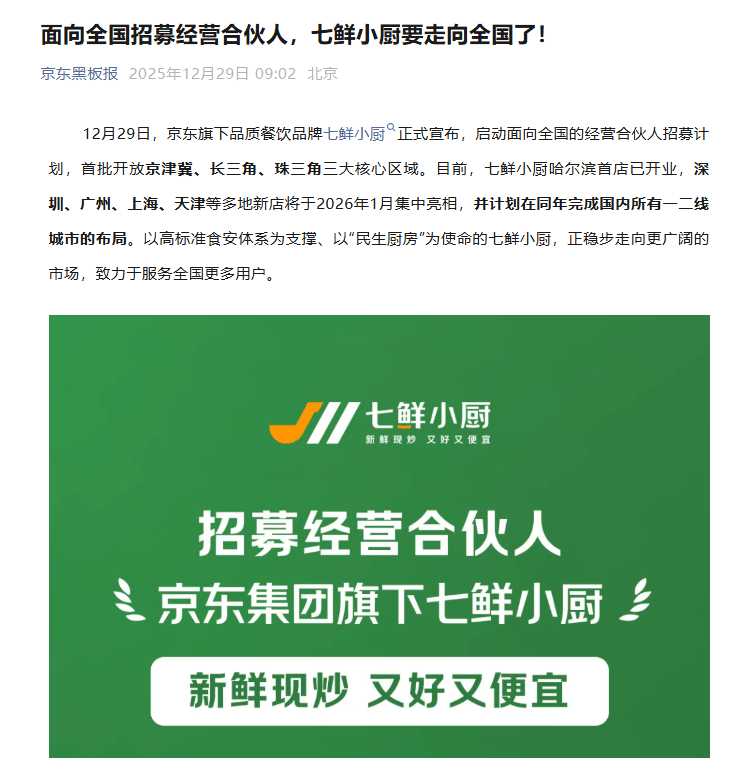
Core Viewpoint - JD's quality dining brand, Qixian Xiaochu, is accelerating its national expansion by launching a partner recruitment plan, targeting major economic regions and aiming for first and second-tier cities in China [1][4]. Group 1: Expansion Strategy - Qixian Xiaochu's expansion focuses on the most economically robust and high-demand delivery areas, employing a strategy of "core city breakthroughs and economic zone coverage" [4]. - The brand has already opened its first store in Harbin, with additional locations in Shenzhen, Guangzhou, Shanghai, and Tianjin set to launch in January 2026 [1][10]. Group 2: Quality and Transparency - The brand emphasizes transparency and quality, addressing issues in the delivery market by ensuring fresh cooking, ingredient transparency, and live kitchen broadcasts [4][6]. - Qixian Xiaochu's pricing strategy targets a range of 10 to 20 yuan, balancing quality and cost-effectiveness to differentiate itself in the competitive first-tier city market [4]. Group 3: Performance and Consumer Engagement - In Beijing, Qixian Xiaochu opened 30 stores within four months, achieving significant market penetration [6]. - A recent promotional event resulted in a surge of 16,000 orders within three hours, demonstrating the brand's ability to drive local dining consumption [6]. Group 4: Innovative Partnership Model - The brand utilizes an innovative "cooperation" model rather than traditional franchising, where Qixian Xiaochu provides comprehensive support, including supply chain management and operational standards, while partners focus on local operations [8]. - This clear division of responsibilities ensures consistent quality across locations while adapting to local consumer preferences, enhancing the efficiency of expansion [8]. Group 5: Future Outlook - With the opening of the Harbin store and the upcoming launch of multiple new locations, Qixian Xiaochu is transitioning from a regional to a national brand [10]. - The national partner recruitment plan signals the brand's intent to extend its quality dining experience across China, marking the beginning of its expansion journey [10].

DeepSeek一夜爆火、Labubu引爆全球抢购潮、“史诗级”外卖大战……2025年中国十大商业事件全盘点
硬AI· 2025-12-29 14:24
Core Viewpoint - The year 2025 marks a transformative period for Chinese business, driven by technological advancements and strategic market maneuvers, including DeepSeek's cost paradigm shift in AI, the establishment of a "stabilization fund" by state-owned enterprises, and fierce competition in various sectors like food delivery and consumer products [2][3][4]. Group 1: AI and Technology - DeepSeek's R1 model demonstrated a significant cost advantage, achieving comparable performance to OpenAI's models at a fraction of the cost, leading to a reevaluation of AI asset values globally [10]. - The Chinese stock market reacted positively to the implications of DeepSeek's success, with the Nasdaq China Golden Dragon Index rising over 4% shortly after [10]. - The launch of L3 autonomous driving vehicles in China signifies a major milestone in the commercialization of advanced driving technologies, with expectations of a market size exceeding 1 trillion yuan by 2030 [49][51]. Group 2: Market Stability Measures - In response to external economic pressures, the "national team" intervened in the stock market by establishing a "stabilization fund," which included significant investments from state-owned enterprises to restore market confidence [12][14][18]. - The People's Bank of China supported these efforts by promising sufficient liquidity to stabilize the market, reinforcing the government's commitment to maintaining financial security [14][18]. Group 3: Consumer and Service Sector Developments - JD.com entered the food delivery market, intensifying competition with Alibaba and Meituan, leading to aggressive pricing strategies and significant order volume growth [26][30]. - Pop Mart's Labubu character achieved global popularity, resulting in a revenue surge of 170%-175% in Q1 2025, with notable growth in international markets [20][22]. - The competition in the food delivery sector is characterized by substantial subsidies and promotional offers, indicating a shift towards efficiency and market share acquisition among major players [28][30]. Group 4: Capital Market Movements - The collective IPO efforts of China's "four little dragons" in the GPU sector highlight a significant moment for domestic chip manufacturers, with substantial market valuations and growth expectations [52][54]. - The stock prices of Pop Mart surged over 200% in the first half of 2025, reflecting strong market interest and future growth potential, despite a subsequent correction [22][25]. Group 5: Breakthroughs in Energy and Aerospace - China achieved significant milestones in nuclear fusion research, with advancements in plasma physics and the development of the next-generation fusion energy experimental device [58][59]. - The successful test flights of reusable rockets by both private and state-owned enterprises mark a new era in China's commercial space industry, aiming for cost reductions and increased launch frequency [60][63].




刘强东在英国大搞物流,野心藏不住了
Xin Lang Cai Jing· 2025-12-29 13:46
Group 1 - JD Logistics has launched its first overseas "Smart Wolf" warehouse in the UK, covering over 3,000 square meters and deploying nearly 200 smart robots, resulting in a fourfold increase in efficiency [2][17] - The warehouse has undergone modifications to increase shelf height and density, allowing for more storage capacity within the same footprint, enhancing operational efficiency [4][19] - The Smart Wolf warehouse is part of JD's broader overseas intelligent logistics network, with nine high-standard logistics parks established in the UK, improving local logistics experiences and showcasing Chinese logistics technology [7][22] Group 2 - JD has faced challenges in international expansion, initially struggling to replicate its domestic model in markets like Russia and Southeast Asia, leading to significant losses [8][23] - The company has shifted its strategy to focus on local e-commerce, utilizing local teams and sourcing local products, moving away from a purely cross-border e-commerce platform model [10][25] - Recently, JD acquired a controlling stake in European consumer electronics giant Ceconomy for approximately 18.5 billion RMB, gaining access to a mature retail network across Europe, aligning with its localization strategy [10][25] Group 3 - In the Middle East, JD is addressing last-mile delivery challenges in Saudi Arabia by testing its sixth-generation smart delivery vehicle, "Wolf," which can carry up to 1,000 kg and features L4 autonomous driving capabilities [12][27] - A recent incident involving theft at a JD warehouse in Paris raised concerns, but the company clarified the situation and emphasized its ongoing global network expansion, with over 130 overseas warehouses established in 23 countries [14][29] - JD's approach to international expansion may appear slower but is designed to be more stable and sustainable, focusing on building a controllable intelligent logistics network and deep local sourcing systems [14][29]
全员涨薪潮
36氪· 2025-12-29 13:45
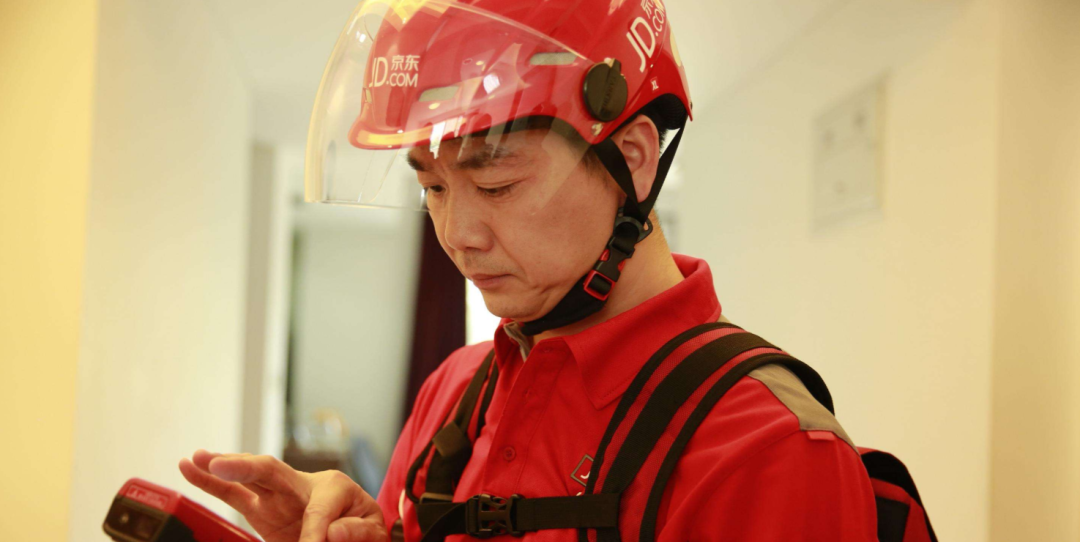
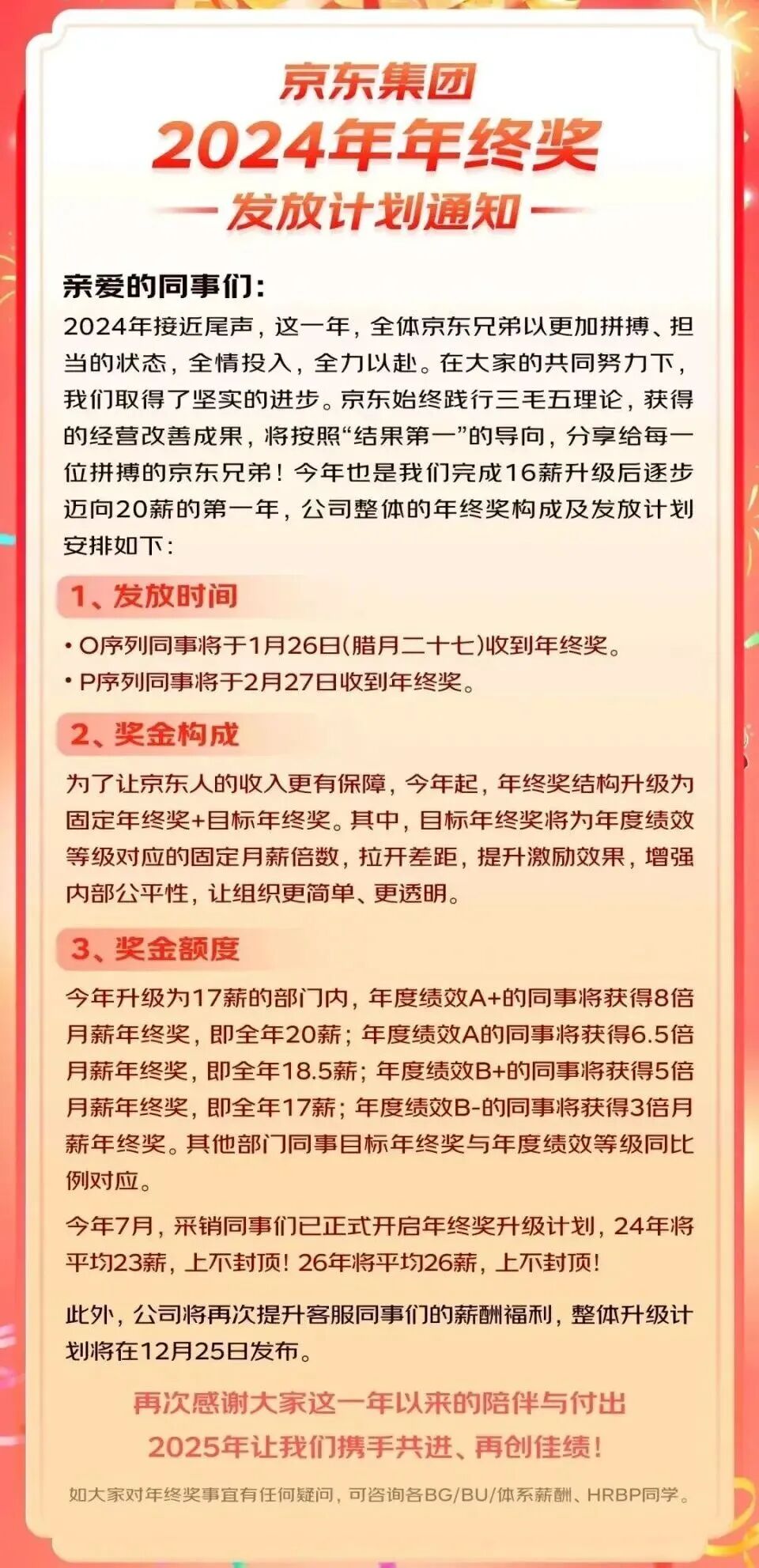
Core Viewpoint - Major companies in China, including JD.com and ByteDance, are significantly increasing employee salaries and bonuses, reflecting a broader trend aimed at boosting consumer spending and addressing income inequality in the economy [6][7][20]. Group 1: Salary Increases and Bonuses - JD.com announced that 92% of its employees will receive full or exceeding year-end bonuses, with total bonus investment increasing by over 70% year-on-year for 2025 [6][11]. - ByteDance revealed a 35% increase in bonus investment and a 1.5 times increase in salary adjustment investment for 2025, aiming to attract and retain talent [7][12]. - Other major companies like BYD and CATL are also raising salaries, with CATL increasing basic wages for frontline workers by 150 yuan starting January 1, 2026 [16][19]. Group 2: Industry Trends and Economic Context - The central economic work conference emphasized the need for a plan to increase urban and rural residents' income, indicating a shift towards implementing concrete measures rather than just proposals [21][22]. - The increase in salaries by major companies is seen as a direct method to enhance consumer spending power, which is crucial for driving domestic demand [20][23]. - The overall trend of salary increases across various sectors, including technology, manufacturing, and pharmaceuticals, signals a collective effort to improve employee compensation and stimulate economic growth [19][24].




复盘2025外卖“三国杀”,烧钱千亿后的市场何去何从
3 6 Ke· 2025-12-29 13:11
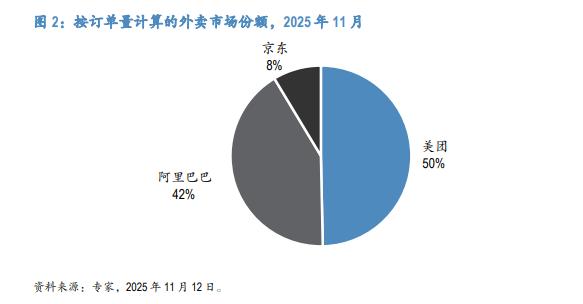
Core Insights - The food delivery industry has been significantly reshaped by a fierce competition initiated by JD.com, leading to a substantial financial outlay of nearly 100 billion yuan and a reconfiguration of market dynamics [1][2] - The future of the food delivery sector hinges on long-term ecological restructuring rather than short-term traffic battles, with each platform focusing on redefining relationships among platforms, merchants, delivery personnel, and consumers [1] Group 1: Differentiated Strategies - JD.com adopted a high-profile entry strategy into the food delivery market, leveraging a "0 commission" model to attract over 2 million merchants and implementing a 10 billion yuan subsidy plan [3] - Alibaba transitioned from a passive response to an active restructuring, rebranding Ele.me to Taobao Flash Purchase and integrating its logistics and supply chain to enhance its competitive edge [4][5] - Meituan, as the industry leader, focused on defensive strategies, increasing marketing expenditures by 90.9% to retain core users while enhancing its delivery network efficiency [6] Group 2: Gains and Losses - JD.com achieved rapid growth in food delivery orders, reaching 25 million daily orders within 90 days, but faced significant losses, with new business losses expanding to 15.736 billion yuan in Q3 [8][9] - Alibaba's integration of instant retail and e-commerce led to a 60% year-on-year revenue increase in instant retail, but it also incurred substantial marketing costs, resulting in an 85% drop in operating profit [9][10] - Meituan maintained its market leadership with a 50% market share and high customer retention rates, but reported a record net loss of 16 billion yuan in Q3 due to increased marketing expenses [11] Group 3: 2026 Outlook - The intense competition is expected to cool down, with platforms likely to shift from aggressive subsidy strategies to value-based competition, focusing on user experience and operational efficiency [12][13] - The instant retail market is projected to exceed 1 trillion yuan in 2026, indicating that competition will persist as platforms seek to secure their positions [12] - Analysts predict that Meituan may achieve breakeven by mid-2026, while Alibaba's food delivery business may continue to face challenges until late 2026 [13]

京东掀起一场风暴
Hua Er Jie Jian Wen· 2025-12-29 13:06
Core Insights - JD.com has launched a nationwide recruitment plan for its quality dining brand, Qixian Xiaochu, aiming to expand its operations across major cities by the end of 2026, marking a significant shift in the food delivery industry [1][5] - The company is adopting a differentiated strategy in the competitive food delivery market, focusing on direct involvement in food preparation rather than engaging in subsidy wars like its competitors [1][2][6] Expansion Plans - Qixian Xiaochu plans to open new stores in cities such as Shenzhen, Guangzhou, Shanghai, and Tianjin by January 2026, with a goal to cover all first- and second-tier cities in China by the end of 2026 [1][5] - The brand has already established 30 stores in Beijing, achieving significant market penetration within the city [4][5] Business Model Innovation - The core innovation of Qixian Xiaochu lies in its "Dish Partner" model, which allows partners to provide recipes while JD.com handles the cooking and quality control, thus creating a collaborative platform for restaurant brands and individual chefs [3][4] - This model includes features like 24-hour kitchen live streaming, enhancing transparency and consumer trust [3] Market Performance - Qixian Xiaochu has shown promising operational metrics, with daily orders exceeding 1,000 in its first week and reaching 1,500 within two months [5] - A promotional event led to over 16,000 orders across 30 stores in Beijing during a three-day period [5] Strategic Partnerships - The brand has demonstrated openness to cross-platform operations, having launched on Meituan and formed strategic partnerships with hotel chains like Jinjiang [5] Challenges Ahead - The rapid expansion faces challenges such as balancing standardization with regional taste preferences and managing the complexities of a centralized kitchen model [6] - The competitive landscape remains uncertain, with potential counteractions from rivals as the food delivery market evolves [6]
大厂“抢人”战,从涨薪开始
3 6 Ke· 2025-12-29 12:23
Core Insights - Major companies in the tech and automotive sectors, including ByteDance, JD.com, BYD, and CATL, have announced salary increases and year-end bonuses, indicating a shift in compensation strategies despite a backdrop of layoffs in other firms [1][2][4] - The current wave of salary increases is seen as a strategic response to competitive pressures and a need to attract and retain top talent in a tightening labor market, particularly in AI and technology sectors [17][18] Group 1: Salary Increases and Bonuses - JD.com reported that 92% of its employees received full or exceeded year-end bonuses, with total bonus investment increasing by over 70% year-on-year [1] - ByteDance announced a 35% increase in bonus investment and a 1.5 times increase in salary adjustment budget, raising both the lower and upper limits of salary packages [1][12] - BYD and CATL also implemented salary increases for a large number of grassroots employees, reflecting a broader trend across industries [1] Group 2: Competitive Landscape - The salary increase trend is not new; JD.com initiated a 20 salary upgrade plan in September of the previous year, indicating a long-term strategy rather than a reactionary measure [2] - Companies like Tencent, Alibaba, and ByteDance have also been increasing salaries since last year, suggesting a collective shift in the industry towards higher compensation [4][6] - The competition for talent has intensified, particularly in AI, with companies like Tencent reportedly offering double salaries to attract talent from ByteDance [16][17] Group 3: Structural Changes in Compensation - The current salary adjustments are aimed at rewarding high-performing employees rather than those who simply wait for promotions, addressing inefficiencies within large organizations [13][14] - Alibaba has restructured its job grading system to eliminate the previous "P series" levels, allowing for a more merit-based approach to promotions and compensation [13] - ByteDance has expanded its job grading system to provide more opportunities for salary increases, reflecting a need to address "talent inflation" [14] Group 4: Future Investment Strategies - The salary increases are part of a broader strategic investment in talent, moving away from cost-cutting measures towards enhancing workforce capabilities [18] - Companies are recognizing the importance of both high-end technical talent and the stability of grassroots employees, with JD.com planning significant investments in employee housing [22][23] - The shift in focus from user engagement to talent acquisition highlights the changing competitive landscape in the tech industry, particularly as AI technologies redefine market dynamics [20][21]
宇树科技全球首店落地京东MALL北京双井店
Xin Lang Cai Jing· 2025-12-29 11:56
Group 1 - The core point of the article is that Yushu Technology has launched the world's first offline store, which is currently in trial operation at JD MALL Beijing Shuangjing store and will officially open on December 31 [1] - This initiative signifies the acceleration of JD's omnichannel layout for robot products, integrating online and offline experiences [1] - The store allows users to experience the practical applications of robots in various scenarios such as home, education, entertainment, and elderly care through real-time interaction and feedback, which will aid in product iteration and optimization [1] Group 2 - The store features a concentrated display of several flagship products, including the Yushu Go2 quadruped robot dog and the G1 humanoid robot [1]
宇树科技全球首店将于12月31日落地北京京东MALL
Zheng Quan Shi Bao Wang· 2025-12-29 11:36
人民财讯12月29日电,12月29日,宇树官方微信公众号发布消息称,其全国首店将于12月31日在北京京 东MALL开业。该门店是京东与宇树科技全球首店。 ...
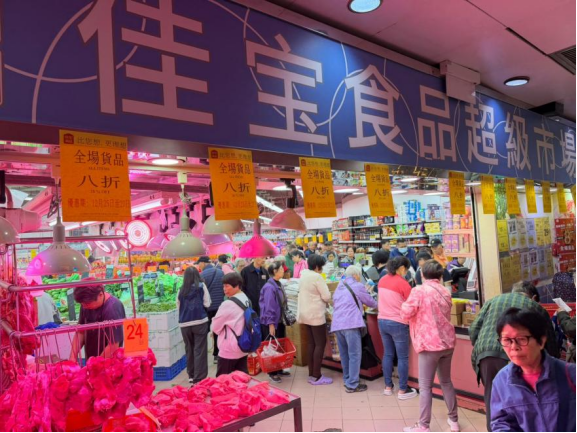
年末留港消费旺!京东佳宝日销翻倍,粮油成港人首选
Jin Rong Jie Zi Xun· 2025-12-29 09:17
Core Insights - JD Jiaobao launched a significant year-end promotion from December 25 to 27, offering a 20% discount across all stores in Hong Kong, which successfully stimulated local consumer spending [1][3] - Daily sales during the event doubled compared to the previous period and increased by 150% year-on-year, showcasing the brand's strong market presence [1][5] Sales Performance - Key categories such as grains, oils, fresh produce, and daily necessities saw explosive growth, with JD's private label products like Seven Fresh paper towels and dumplings being particularly popular [1][5] - The 5KG Long Pearl rice became a best-seller, achieving sales 15 times higher than usual, indicating strong consumer preference for high-quality and cost-effective products [5][7] Consumer Behavior - The promotion attracted a large number of shoppers, with long queues in various sections of the store, reflecting the high demand for affordable products [3][5] - Many consumers noted that prices were significantly lower than competitors, with some canned goods being over 30% cheaper than those at major retailers [3] Supply Chain Advantage - The success of the promotion is attributed to JD's robust supply chain, which ensures product freshness and quality while minimizing costs, allowing for competitive pricing [5][7] - The event not only met the holiday shopping needs of consumers but also reinforced JD Jiaobao's market position in Hong Kong [5][7] Future Outlook - JD Jiaobao aims to continue leveraging its supply chain advantages to cater to local consumer demands, planning to introduce more promotions and quality products to enhance the shopping experience [7]