NIO(09866)

Search documents
蔚来取得车门组件专利
Jin Rong Jie· 2026-01-23 03:33
Group 1 - The core point of the article is that NIO Automotive Technology (Anhui) Co., Ltd. has obtained a patent for a "door component," with the authorization announcement number CN119894700B, and the application date is September 2023 [1] - NIO Automotive Technology (Anhui) Co., Ltd. was established in 2020 and is located in Hefei City, primarily engaged in technology promotion and application services [1] - The registered capital of NIO Automotive Technology (Anhui) Co., Ltd. is 2,600 million RMB [1] Group 2 - The company has made investments in 5 enterprises and participated in 29 bidding projects [1] - NIO Automotive Technology (Anhui) Co., Ltd. has 2,334 trademark information entries and 3,351 patent information entries [1] - The company holds 30 administrative licenses [1]
合肥蔚电科技公司更名蔚来能源
Sou Hu Cai Jing· 2026-01-23 02:54
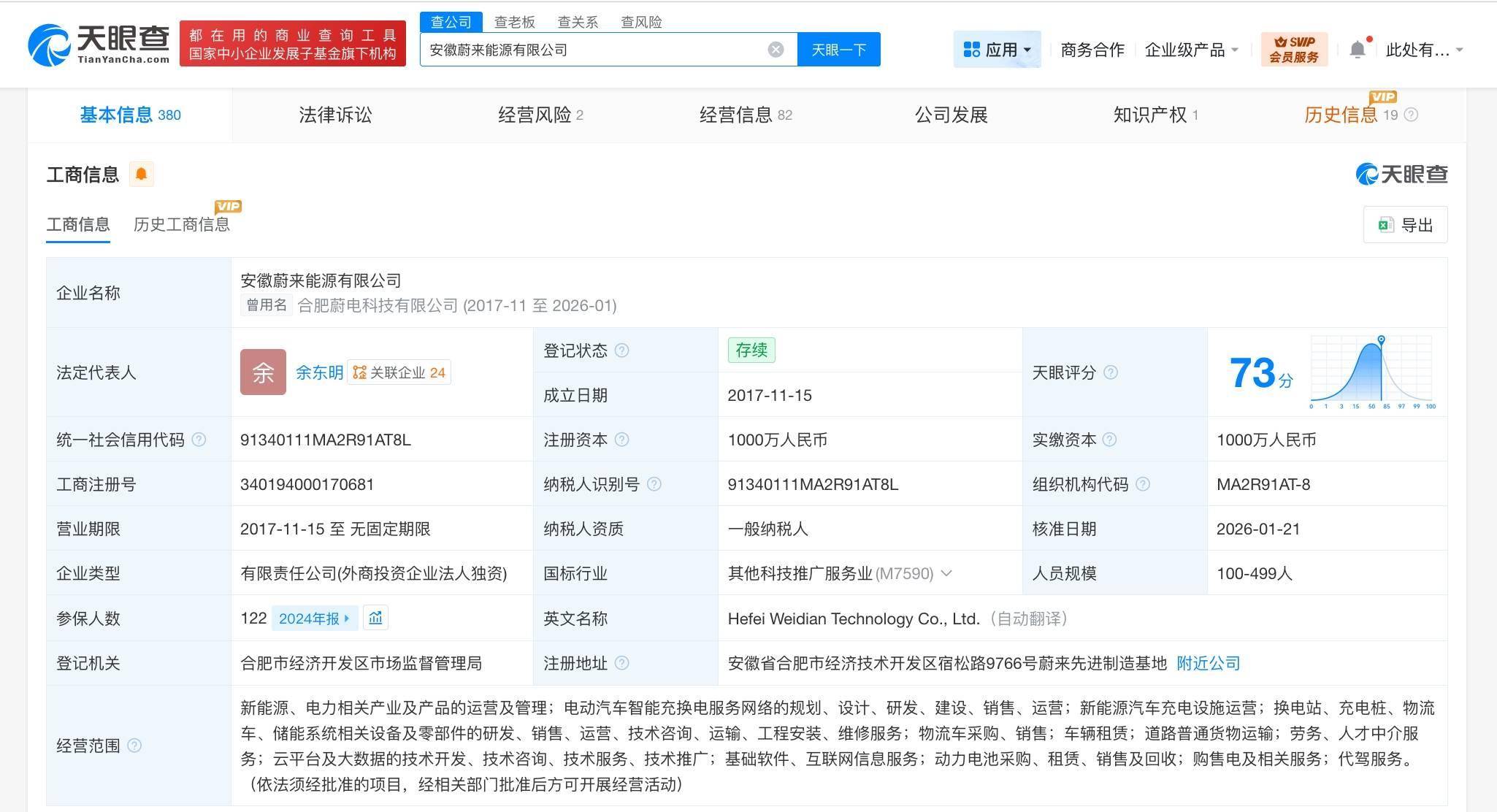
天眼查工商信息显示,近日,合肥蔚电科技有限公司发生工商变更,企业名称变更为安徽蔚来能源有限公司,同时,部分高管也发生变更。 该公司成立于2017年11月,法定代表人为余东明,注册资本1000万人民币,经营范围含新能源、电力相关产业及产品的运营及管理,电动汽车智能充换电服 务网络的规划、设计、研发、建设、销售、运营等。股东信息显示,该公司由武汉蔚来能源有限公司全资持股。 | | 省公司 查老板 查关系 查风险 都在用的商业资 间工具 | | --- | --- | | | 安徽蔚来能源有限公司 × 国家中小企业发展子基金旗下机构 | | 基本信息 380 | 法律诉讼 经营风险2 经营信息 82 | | 工商信息 4 MIP | | | 工商信息 历史工商信息 | | | | 安徽蔚来能源有限公司 | | 企业名称 | 曾用名 合肥蔚电科技有限公司 (2017-11 至 2026-01) | | 法定代表人 | 登记状态 2 作写 余 余东明 猛关联企业 24 | | | 成立日期 2017-11-1 | | 统一社会信用代码 ○ | 91340111MA2R91AT8L 注册资本 2 1000万人[ | | ...

中国资产大涨 阿里巴巴涨超5%!美国公布重磅数据 特斯拉市值一夜增超4100亿元!国际金价银价同创历史新高
Mei Ri Jing Ji Xin Wen· 2026-01-22 23:21
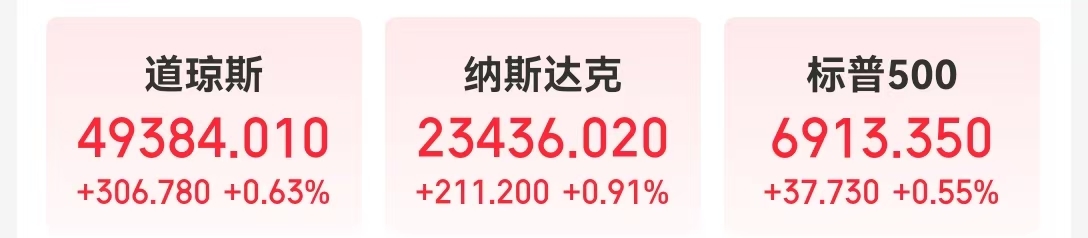
Group 1: Market Performance - US stock markets closed higher on January 22, with the Dow Jones up 0.63%, Nasdaq up 0.91%, and S&P 500 up 0.55% [1] - Technology stocks saw significant gains, with Meta rising 5.7%, Oracle up over 2%, and Tesla increasing by over 4% [2][3] Group 2: Tesla Developments - Tesla's market value increased by $59.6 billion (approximately 415.6 billion RMB) in one night [3] - CEO Elon Musk announced that Tesla may start selling its humanoid robot "Optimus" to the public by the end of next year, with the robots currently performing simple tasks in factories [4] - Musk predicts that by the end of 2026, these robots will be capable of completing more complex tasks [5] Group 3: Intel Financials - Intel reported fourth-quarter revenue of $13.67 billion, a year-over-year decrease of 4.1%, with adjusted earnings per share of $0.15, up from $0.13 the previous year [6] - The company expects first-quarter adjusted earnings per share of $0.00, with revenue projected between $11.7 billion and $12.7 billion [6] Group 4: Economic Indicators - The US third-quarter GDP annualized growth rate was revised to 4.4%, slightly above the expected 4.3% [9] - Initial jobless claims for the previous week were reported at 200,000, below the expected 210,000 [8]


阿布扎比将CYVN及所持蔚来股权并入国有L"imad控股,为蔚来经营发展注入新动能
Jin Rong Jie· 2026-01-22 08:33
Group 1 - The UAE's Abu Dhabi has officially integrated CYVN and its holdings in NIO Inc. into the state-owned investment platform L'imad Holding [1] - L'imad Holding is recognized as the "fourth sovereign wealth pillar" of Abu Dhabi, chaired by the Crown Prince and includes several senior government officials [1] - The institution, established less than a year ago, has completed transactions worth billions of dollars across various sectors including infrastructure, real estate, financial services, advanced industries, and smart cities [1] Group 2 - Market analysis indicates that this move not only continues Abu Dhabi's long-term support for NIO but also highlights the Middle Eastern capital's sustained optimism towards the Chinese smart electric vehicle industry [1] - The strategic integration by Abu Dhabi is expected to further strengthen the sovereign wealth fund's long-term outlook and strategic resource support for NIO, injecting new momentum into its operational development [1] - This integration is anticipated to provide NIO with a more stable shareholder structure and financial backing [1]
阿布扎比将CYVN及所持蔚来股权并入国有L‘imad控股,为蔚来经营发展注入新动能
智通财经网· 2026-01-22 08:28
Core Insights - Abu Dhabi has officially integrated CYVN and its holdings in NIO Inc. into the state-owned investment platform L'imad Holding [1] - L'imad Holding is recognized as the "fourth sovereign wealth pillar" of Abu Dhabi, chaired by the Crown Prince and includes senior government officials [1] - The establishment of L'imad Holding has facilitated several billion-dollar transactions within its first year, focusing on sectors such as infrastructure, real estate, financial services, advanced industries, and smart cities [1] Company and Industry Summary - The move signifies continued long-term support from Abu Dhabi capital for NIO, highlighting the Middle Eastern capital's optimism regarding the prospects of the Chinese smart electric vehicle industry [1] - The strategic integration is expected to strengthen the sovereign wealth fund's long-term outlook and resource support for NIO, injecting new momentum into its operational development [1] - This integration aims to provide NIO with a more stable shareholder structure and financial backing [1]
提效千万、降本百万:飞书安徽峰会解码奇瑞、蔚来们“AI成绩单”
Sou Hu Cai Jing· 2026-01-22 07:08
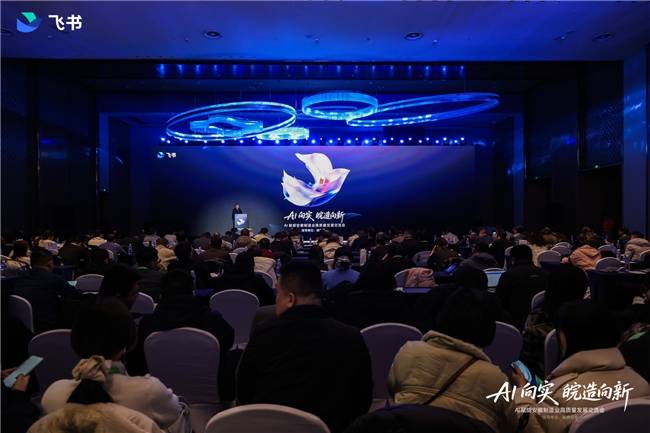
Group 1 - The summit in Hefei focused on the integration of AI technology in manufacturing, highlighting Hefei's position as a significant center for technological innovation and its strategic industrial layout of "chip, display, automobile, and integration" [1][2] - The event attracted over 200 executives, government leaders, and industry experts from sectors such as new energy vehicles, high-end equipment, and semiconductors to discuss how AI can drive high-quality development in Anhui's manufacturing [1][2] Group 2 - The summit served as an important platform for discussing practical paths for organizational transformation and technology implementation, with emphasis on the need for AI to move beyond strategic presentations to real business applications [5] - The launch of the "Anhui Feichanghao Efficiency Acceleration Plan" marked a significant step in making AI a widespread productivity tool in Anhui, aiming to help local enterprises transition from merely hearing about AI to effectively utilizing it [5][14] Group 3 - Four representative Anhui companies shared their successful experiences in integrating AI and digital tools in complex business scenarios, showcasing practical results and efficiency improvements [6] - Chery Jietu utilized AI and Feishu's multi-dimensional tables to enhance international collaboration, achieving significant cost savings and efficiency gains through innovative solutions [6] - NIO adopted a modular approach to business system development using Feishu's capabilities, significantly reducing development time and improving operational efficiency [8] Group 4 - Huafu Technology emphasized the importance of AI in strengthening midstream enterprises, successfully creating a smart closed-loop for safety management that drastically reduced manpower and response times [10] - Anhui Ruineng Technology shared lessons learned about execution gaps and how integrating Feishu helped ensure strategic alignment and improved data flow across systems [12]
趋势研判!2026年中国智能设备行业发展历程、政策、发展现状、重点企业及未来趋势:全场景智能化生态加速形成,引领智能设备规模达万亿级别[图]
Chan Ye Xin Xi Wang· 2026-01-22 01:07
Core Insights - The smart device industry is experiencing significant growth driven by increasing consumer demand and advancements in technology, with the market size in China projected to grow from 5,133 billion yuan in 2018 to 17,157 billion yuan by 2024, representing a compound annual growth rate (CAGR) of 22.28% [1][14][15] - The industry is categorized into three main segments: smart home, smart wearables, and smart mobility, each with distinct applications and market dynamics [3][16][17] Industry Overview - Smart devices integrate hardware, software, and internet technologies, enabling them to perform tasks such as data collection and self-optimization [1][14] - The market is expected to reach 20,979 billion yuan by 2025, indicating continued growth and innovation in the sector [1][14] Industry Development Stages - The smart device industry in China has evolved through three phases: the initial stage (1990s to early 2000s), the development stage (2000 to 2015), and the explosive growth stage (2015 to present), with significant technological advancements and market expansion occurring in the latter two phases [6][8] Industry Policies - The Chinese government has implemented various policies to support the smart device industry, including initiatives to promote digital transformation and the development of smart products across multiple sectors [8][9] Industry Value Chain - The smart device industry value chain consists of upstream raw materials, hardware, and software systems; midstream manufacturing; and downstream applications in sectors such as healthcare, education, and transportation [10][11] Market Segmentation - The smart home market is characterized by diverse competition among traditional appliance manufacturers and tech companies, with a focus on integrated solutions and consumer experience [15] - The smart wearable segment includes products like smart glasses and smartwatches, with significant growth potential driven by consumer acceptance and technological advancements [16][17] - The smart mobility sector, particularly smart cars, is rapidly expanding, with the market size projected to grow from 777 billion yuan in 2020 to 2,152 billion yuan by 2024, reflecting a CAGR of 29% [17][18] Competitive Landscape - The smart device industry is marked by an ecosystem of competition, with leading companies leveraging core technologies and brand advantages to create comprehensive solutions across various applications [18][19] Future Trends - The industry is expected to see innovations in human-computer interaction, moving towards more natural and multi-modal interfaces [21] - There will be a shift from single-product intelligence to integrated scene intelligence, enhancing cross-device collaboration and user experience [22] - Smart devices will increasingly focus on personalized health management, evolving into digital health assistants capable of providing tailored recommendations [24]





存储芯片价格暴涨好几倍,雷军在关注,蔚来李斌直言“根本抢不过”
Mei Ri Jing Ji Xin Wen· 2026-01-21 15:05
TrendForce集邦咨询公布的数据显示,2025年9月以来,DDR5内存价格上涨超300%,DDR4涨幅也超 150%;PCPartPicker平台数据则显示,消费级DDR4与DDR5内存条价格已翻两至三倍,部分面向数据中 心的高端服务器内存条单价更是逼近5万元。 "相较之下,上游动力电池原材料的价格波动对车价的影响,反而不如近期存储芯片等关键电子元器件 价格变化对整车成本和定价的影响更为显著。"日前,Omdia高级分析师刘运程在接受《每日经济新 闻》记者采访时道出了汽车行业当前面临的一项难题。 动态随机存取存储器(DRAM)广泛应用于智能汽车的信息娱乐系统、高级驾驶辅助功能以及日益集中 的电子架构中。而与此同时,作为电子设备的核心运行内存,DRAM能实现数据随机高速存取,被广泛 应用于服务器、手机、PC等各类需要高速数据处理的场景。 摩根士丹利在近日发布的研究报告中指出,传统存储芯片供需缺口正持续扩大,2025年第二季度至2026 年,行业将迎来新一波超级周期,DDR4(一种计算机内存规格)、DDR3、NOR Flash(一种非易失性 闪存)及SLC/MLC NAND(闪存的两种存储单元)等内存产品供应 ...
价格暴涨好几倍,雷军在关注,蔚来李斌直言“根本抢不过”!华尔街巨头:恐慌性购买迹象已现,车企要留心
Mei Ri Jing Ji Xin Wen· 2026-01-21 14:39
Group 1 - The automotive industry is facing significant cost pressures due to rising prices of memory chips, which are critical for vehicle electronics and smart systems [5][6][8] - Demand for DRAM and NAND flash memory is surging, driven by the growth of AI applications and data centers, leading to a supply shortage that affects automotive manufacturers [2][3][4] - Major semiconductor manufacturers are prioritizing high-margin clients in the AI and cloud sectors over automotive clients, exacerbating the supply challenges for the automotive industry [2][5] Group 2 - The price of DDR4 memory has increased by over 150% since September 2025, with predictions of further increases of 40% to 50% by the end of Q1 2026 [3][8] - Automotive manufacturers are struggling to secure memory supplies, with reports indicating that supply satisfaction rates may fall below 50% in the near future [8][9] - The automotive sector's share of the global DRAM market is less than 10%, placing it at a disadvantage compared to other industries [2][5] Group 3 - The transition to new memory technologies like LPDDR5 is being hindered by the high demand from AI applications, leading to a mismatch between automotive memory needs and available supply [7][9] - Companies in the automotive sector are unlikely to fully pass on the increased costs to consumers due to competitive market conditions, which may lead to internal cost absorption strategies [8][9] - Experts suggest that automotive companies should consider long-term agreements with local memory manufacturers to stabilize supply and mitigate price volatility [9]

价格暴涨好几倍 雷军在关注 蔚来李斌直言“根本抢不过”!
Mei Ri Jing Ji Xin Wen· 2026-01-21 14:34
Core Insights - The automotive industry is facing significant cost pressures due to rising prices of memory chips, which are critical for smart vehicle systems, as demand from AI and data centers outpaces supply [1][2][6][8]. Group 1: Market Dynamics - The demand for DRAM and NAND flash memory is surging, driven by AI applications and data centers, leading to a supply shortage that is expected to worsen [2][4]. - Memory chip prices have seen dramatic increases, with DDR5 prices rising over 300% and DDR4 over 150% since September 2025 [3]. - The automotive sector, which accounts for less than 10% of the global DRAM market, is at a disadvantage as chip manufacturers prioritize higher-margin clients in the AI and cloud sectors [2][6]. Group 2: Supply Chain Challenges - Major semiconductor manufacturers are reallocating production capacity to meet the growing demand from AI, leaving automotive manufacturers to compete for limited resources [6][7]. - The transition to new memory technologies, such as LPDDR5, is hampered by the ongoing demand from AI, leading to a mismatch between automotive needs and available supply [7][8]. Group 3: Cost Implications - Automotive manufacturers are currently unable to fully pass on the increased costs of memory chips to consumers due to competitive market pressures [8][10]. - There are concerns that the supply of memory chips may not meet automotive production needs, with forecasts suggesting that supply satisfaction could fall below 50% [8][9]. Group 4: Strategic Recommendations - Industry experts suggest that automotive companies should consider long-term agreements with local memory manufacturers to secure supply and stabilize prices [10]. - A balanced approach to product memory configuration and transparent communication with consumers regarding pricing adjustments is recommended to manage cost pressures effectively [10].