BABA(09988)

Search documents
SpaceX宣布将收购xAI,多地推动存量房收购工作 | 财经日日评
吴晓波频道· 2026-02-04 00:30
Group 1: US Manufacturing and Trade Developments - The US ISM Manufacturing PMI for January recorded at 52.6%, significantly above the expected 48.5%, marking a year-on-year increase of 4.7 percentage points, the fastest growth since 2022 [2] - Key sub-indices showed strong performance, with the New Orders Index at 57.1%, up nearly 10 points from the previous value of 47.7%, and the Employment Index reaching a one-year high of 48.1% [2] - The US and India reached a trade agreement reducing tariffs, with the US lowering its "reciprocal tariff" on India from 25% to 18%, while India will also reduce its tariffs on US goods, potentially increasing procurement of over $500 billion in US products [3][4] Group 2: Real Estate and Housing Market Initiatives - Shanghai has initiated a program to acquire second-hand housing for affordable rental projects, with financial support from local banks, aiming to stabilize the second-hand housing market [6] - Other cities like Hangzhou and Haikou are also implementing similar policies to support the real estate market, focusing on acquiring existing properties to convert into affordable housing [6] Group 3: Corporate Developments and Market Reactions - SpaceX announced the acquisition of AI startup xAI, with a projected valuation of $1.25 trillion, aiming to address the growing demand for computational power and energy in advanced AI systems [7] - Zhou Dasheng plans to engage in gold leasing business, allowing transactions up to 80% of its gold inventory, which is a common practice in the jewelry industry to mitigate price volatility [8][9] - The Hang Seng Tech Index briefly entered a technical bear market, dropping over 20% from its peak, influenced by market rumors regarding tax rate increases for internet companies [10][11] Group 4: Market Performance and Sentiment - On February 3, the Shanghai Composite Index and other indices saw gains, recovering from previous declines, with significant trading volume and a broad increase in stock prices across various sectors [14][15] - The market experienced volatility due to unfounded rumors affecting investor sentiment, but quickly rebounded as these rumors were debunked [15]





红包里的国产AI芯片,才是未来
3 6 Ke· 2026-02-04 00:07
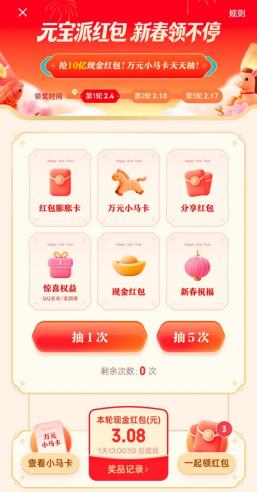
Group 1 - The core point of the article highlights the significant escalation in AI promotion during the Spring Festival, with major companies like Tencent, Baidu, and Alibaba launching massive cash red envelope campaigns to engage users and showcase AI capabilities [1][2][10] - Tencent's Yuanshuo APP initiated a record-breaking 1 billion yuan red envelope campaign, while Baidu followed with a 500 million yuan initiative, and Alibaba's Qianwen APP announced a 3 billion yuan "Spring Festival Treat" plan [2][5][7] - The competition among these tech giants is not just about user acquisition but also about establishing a strong foothold in the AI landscape, with the outcomes of user retention post-festival being crucial for determining market leadership [10][12] Group 2 - The article discusses the underlying "chip war" that supports the AI applications, emphasizing that the high concurrency demands during these promotional events are met by domestic AI chips rather than Nvidia's GPUs [12][13] - The landscape of the Chinese AI chip market is undergoing a dramatic shift, with Nvidia's market share in high-end training chips dropping from 95% to 0% due to U.S. export restrictions, allowing domestic companies to gain ground [14][15][16] - Predictions indicate that by 2026, Huawei is expected to dominate the Chinese AI chip market with a 50% share, while other companies like AMD, Cambricon, and Haiguang will follow with significantly smaller shares [17][18] Group 3 - The rise of domestic AI chips is marked by several companies achieving substantial order volumes, with Huawei Ascend and Baidu Kunlun being among the largest suppliers [23][24] - Despite the rapid growth of domestic AI chips, there remains a significant performance gap compared to Nvidia, prompting a focus on optimizing chip usage and system architecture to enhance competitiveness [25][26][30] - The article concludes that while the promotional activities may end, the advancements in AI chip technology are just beginning, indicating a potential shift in the global AI semiconductor landscape [32][34]

盘前必读丨“十五五”首个中央一号文件来了;美股收跌贵金属逆势大涨
Di Yi Cai Jing Zi Xun· 2026-02-04 00:01
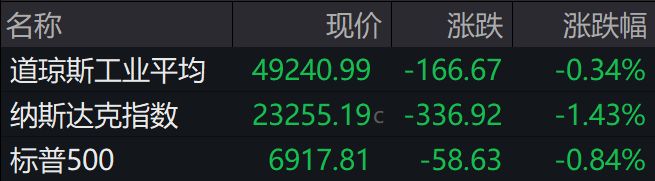
Group 1 - The Chinese central bank announced a reverse repurchase operation of 800 billion yuan to maintain liquidity in the banking system, with a term of 3 months [2] - The Shanghai Stock Exchange reported a significant increase in new A-share accounts, with 4.9158 million new accounts opened in January 2026, a month-on-month increase of approximately 89% and a year-on-year increase of about 213% [2] - The Paris prosecutor's office conducted a search of the office of the social media platform X, owned by Elon Musk, as part of an investigation into cybercrime [3] Group 2 - Major U.S. stock indices experienced declines, with the Dow Jones down 0.34%, S&P 500 down 0.84%, and Nasdaq down 1.43%, nearly erasing gains made since the beginning of the year [3][4] - Large technology stocks faced pressure, with Nvidia down 2.84%, Microsoft down 2.87%, and Amazon down 1.79% [4] - The Nasdaq Golden Dragon China Index fell by 0.94%, with Alibaba down 2.81% and Tencent Holdings ADR down 3.33% [4] Group 3 - Commodity markets saw a rebound in gold and silver prices after two days of significant declines, with spot gold rising 5.2% to $4,906.82 per ounce [5] - Crude oil prices slightly rebounded, with WTI crude oil futures increasing by 1.72% to $63.21 per barrel [5] - Several companies announced significant developments, including a change in controlling shareholder for Jiatang and a fundraising plan for Xuguang Electronics [5]


Alibaba (BABA) Sees a More Significant Dip Than Broader Market: Some Facts to Know
ZACKS· 2026-02-03 23:46
Company Performance - Alibaba's stock closed at $163.65, reflecting a -2.81% change from the previous day's closing price, underperforming compared to the S&P 500's loss of 0.84% [1] - The stock has increased by 7.76% over the past month, outperforming the Retail-Wholesale sector's gain of 6.19% and the S&P 500's gain of 1.8% [1] Earnings Expectations - Analysts anticipate Alibaba will report an EPS of $1.91, indicating a 34.81% decline compared to the same quarter last year, with a projected revenue of $41.26 billion, reflecting a 7.49% increase year-over-year [2] - Full-year estimates predict earnings of $5.98 per share and revenue of $147.21 billion, representing year-over-year changes of -33.63% and +6.57%, respectively [3] Analyst Sentiment - Recent consensus EPS projections have decreased by 6.93% over the past 30 days, and Alibaba currently holds a Zacks Rank of 5 (Strong Sell) [5] - Positive estimate revisions are indicative of analyst optimism regarding the company's business and profitability [3][4] Valuation Metrics - Alibaba's Forward P/E ratio stands at 28.18, which is a premium compared to the industry average Forward P/E of 16.34 [5] - The company has a PEG ratio of 3.26, significantly higher than the industry average PEG ratio of 1.07 [6] Industry Context - The Internet - Commerce industry, part of the Retail-Wholesale sector, has a Zacks Industry Rank of 179, placing it in the bottom 27% of over 250 industries [6] - Research indicates that the top 50% rated industries outperform the bottom half by a factor of 2 to 1 [7]
阿里千问开源Qwen3-Coder-Next模型
Xin Lang Cai Jing· 2026-02-03 23:37
Core Insights - Alibaba's Qwen announced the open-source release of a high-efficiency mixture of experts (MoE) model, Qwen3-Coder-Next, designed for programming agents and local development, featuring a total of 80 billion parameters with only 3 billion activated per inference [1] Group 1 - The Qwen3-Coder-Next model is available in two versions: Qwen3-Coder-Next (Base) and Qwen3-Coder-Next (Instruct), supporting research, evaluation, and commercial applications [1]
国产大模型密集发布 开源生态加速完善
Zheng Quan Ri Bao· 2026-02-03 22:55
Core Insights - Major Chinese tech companies, including Baidu, Jiyue Xingchen, Alibaba, DeepSeek, and Kimi, have recently launched self-developed large models across various advanced fields such as OCR recognition, multimodal understanding, embodied intelligence, and reasoning capabilities, with most opting for an open-source approach [1][2][4] Group 1: Model Releases - The release pace of domestic large models has significantly accelerated, with Jiyue Xingchen launching Step 3.5 Flash on February 2, featuring a sparse mixture of experts (MoE) architecture with a total parameter count of 196 billion, activating only about 11 billion parameters per token for enhanced efficiency [2] - Zhizhu opened its GLM-OCR model on February 3, a lightweight model with only 0.9 billion parameters, supporting mainstream inference frameworks and lowering deployment barriers [2] - Baidu's PaddleOCR-VL-1.5, released on January 29, also features a lightweight architecture with 0.9 billion parameters, achieving the highest global performance in the OmniDocBench V1.5 document parsing evaluation with an overall accuracy of 94.5% [2] Group 2: Industry Trends - The concentrated release of models is attributed to three years of technological accumulation, leading to a mature technical system in domestic large models, capable of high-quality model output [3] - The demand for specialized, lightweight, and efficient models is driven by clear application scenarios ranging from industrial robots to smart offices and financial risk control [3] - The current global AI competition emphasizes that domestic large models are not just technological products but also crucial components of national strategic technological power [3] Group 3: Open Source Movement - The trend of open-sourcing models, as seen with GLM-OCR, Step 3.5 Flash, Kimi K2.5, and DeepSeek-OCR2, indicates a shift from "closed-source competition" to "open-source collaboration" in the Chinese AI industry [4] - Open-sourcing helps quickly validate model capabilities and expand influence, allowing companies to leverage community support for testing, adaptation, and iteration [4] - The development of a robust domestic AI ecosystem is facilitated by open-source models, reducing innovation barriers for SMEs and research institutions while ensuring technological sovereignty [4][5] Group 4: Future Outlook - The flourishing open-source ecosystem contributes to the continuous evolution of models through community-driven data, optimization solutions, and tools [5] - The rapid release and comprehensive open-sourcing of domestic large models signify a path of technological innovation and ecosystem co-construction, marking an important milestone for the maturity of the Chinese AI industry [5] - The ongoing open-source wave is accelerating the formation of a more open, collaborative, and efficient domestic AI ecosystem [5]
2026网上年货节有“新”意 尽显新春消费活力
Zhong Guo Zheng Quan Bao· 2026-02-03 20:27
Group 1 - The "2026 National Online New Year Goods Festival" has shown a vibrant online consumption market since its launch on January 19, highlighting the integration of AI technology and the rise of emotional consumption as new characteristics of this year's festival [1] - AI technology has been deeply integrated into the entire process of the festival, including product selection, user matching, supply chain fulfillment, and live sales, allowing platforms to adopt differentiated innovation paths [1] - Alibaba's marketing department has utilized AI for deep demand matching, enabling brands to achieve a closed loop from external promotion to internal conversion, with data indicating that 100 precise promotions can lead to over 31 effective search conversions [1] Group 2 - JD.com has focused on supply chain optimization by launching the industry's first "AI New Year Goods Map," which enhances delivery efficiency by predicting sales and helping merchants with inventory management [2] - JD.com has also extended AI technology to live sales, introducing AI-native digital personas for brand executives to enhance consumer experience during the festival [2] - The shift in consumer behavior among younger generations (90s and 00s) has moved from traditional bulk purchasing to experience-oriented and self-appreciation consumption, as evidenced by a 50% increase in trophy search volume on Taobao [2] Group 3 - Young consumers are increasingly seeking emotional resonance in their purchases, favoring products with emotional warmth and fun attributes over traditional auspicious items during the festival [3] - Popular products include the "Full Throttle" series from Pop Mart and the "One Horse Ahead" toy from Wentongzi, which have seen significant sales, indicating a trend towards playful and culturally infused items [3] - New types of food and beverages, such as creative pastries and themed products, are gaining popularity among young consumers, reflecting their desire to express emotions and create festive atmospheres [3]

2025-2026智能客服市场全景解析:全链路智能赋能与选型指南
Sou Hu Cai Jing· 2026-02-03 19:31
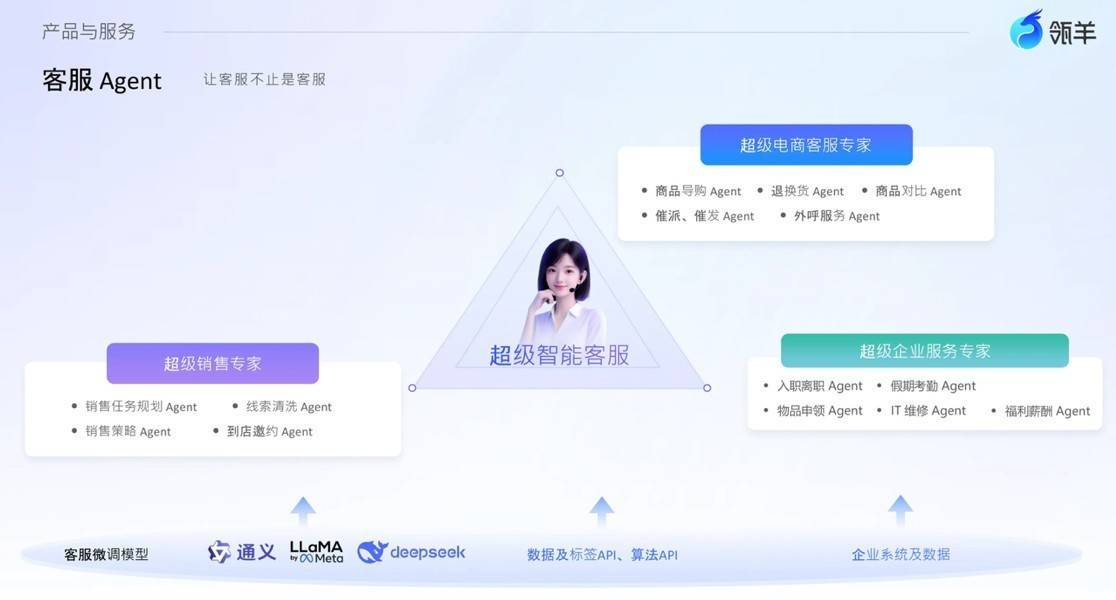
Core Insights - The intelligent customer service market is evolving from a supportive tool to a core infrastructure driving business efficiency and growth, supported by government policies and technological advancements [1][11] - The global intelligent customer service market is projected to exceed $32 billion by 2025, with a compound annual growth rate (CAGR) of 28.6%, while the domestic market in China is expected to reach 3.6 billion yuan by 2025, with a staggering CAGR of 107% from 2023 to 2027 [1] Market Trends - The intelligent customer service market is characterized by three clear development trends: 1. Transition from single-point intelligence to full-link agentization, enhancing service automation rates [4] 2. Full-channel integration becoming a standard requirement for businesses [4] 3. Value positioning shifting from cost reduction to efficiency and growth enhancement [4] Product Tiers - The market is segmented into four product tiers based on technical strength, industry application, and market feedback: 1. **First Tier: Leaders** - Example: Lingyang Quick Service, which integrates advanced models and offers comprehensive solutions for various enterprises [2] 2. **Second Tier: Strong Competitors** - Products in this tier have notable advantages in specific fields or scenarios [6] 3. **Third Tier: Niche Experts** - These products focus on specific industries or enterprise sizes, providing tailored solutions [7] 4. **Fourth Tier: Cost-Effective Options** - Targeting small and medium enterprises with simpler needs [8] Selection Guidelines - Companies should evaluate potential products based on six core dimensions, including AI capability, channel integration, business adaptability, data value closure, deployment and integration, and total cost of ownership [10] - Special attention should be given to internal service applications, sensitive information security, service level agreement (SLA) customizability, and ecosystem compatibility [10] Future Outlook - The development of intelligent customer service systems will focus on four key directions: 1. Emotional computing and empathetic service capabilities [9] 2. Predictive proactive service based on user behavior analysis [9] 3. Integration with enterprise knowledge bases for real-time updates [10] 4. Automated generation of service content [10] Conclusion - The competition in the intelligent customer service market has shifted from mere technology comparison to a comprehensive evaluation of full-link capabilities, industry adaptability, and value creation [11] - The market structure provides clear selection references for enterprises of different sizes and industries, emphasizing the importance of aligning technology strength, implementation effectiveness, and cost investment with long-term business needs [11]
一键导航40条精品线路,“云南数字旅游地图”重磅上线
Xin Lang Cai Jing· 2026-02-03 17:46
Core Insights - The "Yunnan Digital Tourism Map" has been launched with strong support from the Yunnan Provincial Department of Culture and Tourism, aiming to enhance the tourism experience through digital means [1] - The project features a comprehensive service system including a provincial map, city maps, and numerous key attractions, catering to diverse travel needs [1] - Yunnan's tourism industry is rapidly evolving from traditional sightseeing to deep experiential travel, driven by its natural beauty and rich cultural resources [1] Group 1 - The digital map includes a dynamic "live map" to reduce trial-and-error costs for tourists [2] - It provides comprehensive information on food, parking, and gas stations along travel routes, enhancing the efficiency of self-driving trips [2] - The integration of LBS location services and AI technology allows for precise recommendations of nearby attractions, food, and hotels [2] Group 2 - The project incorporates the "Gaode Street Ranking," which identifies local delicacies and unique shops based on real navigation behavior and AI technology [2] - This combination of official guidance and local insights ensures reliable and vibrant recommendations for tourists [2] - Future plans include establishing a long-term operational mechanism for the tourism map, facilitating continuous feedback and interaction between online and offline channels [2] Group 3 - The "Yunnan Digital Tourism Map" can be accessed via the Gaode Map app or by scanning an official QR code [3] - Gaode will distribute travel vouchers worth a total of 10 million yuan to encourage tourism [3]

千问冠名四台春晚 30亿请全国吃喝玩乐
Xin Lang Cai Jing· 2026-02-03 17:23
Core Insights - The anticipation for the Spring Festival Gala has significantly increased in recent years, evolving from a background event to a more engaging and innovative experience [1] - This year, AI has taken a central role in the gala, not only performing but also being involved in the production aspects [3][7] Group 1: AI Integration - Qianwen APP has uniquely sponsored the Spring Festival Galas of four major TV stations, marking a shift in traditional sponsorship methods [3][7] - The integration of AI in the gala includes participation in special effects, stage design, and script generation, showcasing a modernized "cyber New Year" theme [7][10] - Qianwen has launched a 3 billion yuan "Spring Festival Treat Plan" to encourage nationwide participation in festive activities, representing the largest investment by Alibaba in a Spring Festival initiative [7][10] Group 2: Cultural and Technological Innovations - The gala has seen a variety of new attempts beyond technology, with local stations like Henan TV presenting visually stunning performances that celebrate Chinese culture [11][12] - Performances such as "Tang Palace Night Banquet" and "Water Dance of the Goddess" have captivated audiences, blending traditional elements with modern presentation styles [12][14] - The use of AI to animate static cultural artifacts in performances has attracted younger viewers, indicating a successful fusion of tradition and modernity [12][14] Group 3: Overall Experience - The essence of the Spring Festival Gala remains in its ability to bring families together, creating cherished moments during the festive season [15] - The involvement of AI is seen as a means to enhance cultural transmission, making it more relatable and engaging for the audience [15] - The gala serves as a reflection of broader societal changes, where technology enriches daily life while preserving cultural heritage [15]