POP MART(09992)

Search documents
泡泡玛特再赴进博会
Huan Qiu Wang· 2025-11-07 09:12
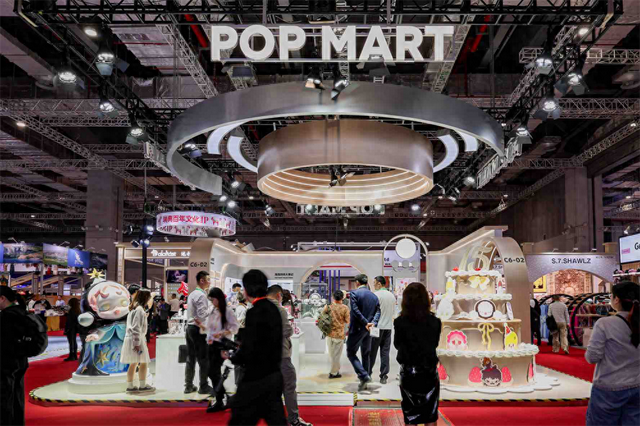
Core Viewpoint - The eighth China International Import Expo (CIIE) is being held in Shanghai from November 5 to 10, showcasing the global leading trend culture and entertainment group, Pop Mart, which highlights its popular IPs SKULLPANDA and CRYBABY, creating an immersive experience for attendees [1][3]. Group 1: Event Highlights - Pop Mart's exhibition theme is "Creating Trends, Boundless Play," featuring a birthday celebration design to commemorate the company's 15th anniversary, creating a warm and festive atmosphere [3]. - The exhibition booth includes a giant birthday cake adorned with various IP characters that have accompanied the brand's growth, symbolizing the connection to a beautiful life [3]. Group 2: IP Showcase - Pop Mart emphasizes its popular IPs SKULLPANDA and CRYBABY, with SKULLPANDA designed by artist 熊喵, representing the aesthetic of "boundless imagery" and encouraging self-exploration [5]. - CRYBABY, created by Thai artist Molly, focuses on emotional expression and resonates deeply with global audiences, advocating for facing emotions and moving forward [5]. - The exhibition also features limited edition products that incorporate local cultures, enhancing the connection with global consumers [5]. Group 3: Product Innovation - Pop Mart showcases a variety of products, including figurines and plush toys, allowing attendees to experience the brand's unique culture and service [6]. - The company continues to innovate product categories, expanding consumer engagement through the use of PVC plush toys that enhance expression and display [6]. - Pop Mart has developed a diverse product matrix and is exploring new business areas such as building blocks, desserts, and jewelry, breathing new life into its IPs [6]. Group 4: Future Outlook - The company reports that all four major regions achieved over 100% growth in the first half of 2025, with the Americas experiencing a tenfold increase, indicating a successful internationalization strategy [8]. - Pop Mart aims to maintain its brand essence and collaborate with artists to create a better trend lifestyle in the future [10].


泡泡玛特,股价重挫!回应直播事故→
证券时报· 2025-11-07 09:09
Core Viewpoint - The recent incident involving a live broadcast at Pop Mart has sparked significant discussion, leading to a drop in the company's stock price, despite strong revenue growth reported for Q3 2025. Group 1: Incident and Response - A live broadcast incident occurred where two staff members discussed the high price of a product, leading to public outcry and trending discussions online [1] - Reports indicate that the involved staff members were not terminated, and the company is conducting an internal investigation [1] Group 2: Financial Performance - For Q3 2025, Pop Mart reported an overall revenue growth of 245%-250% year-on-year, with the Chinese market growing by 185%-190% and overseas markets by 365%-370% [3] - The Americas saw a remarkable growth of over 12 times, while Europe experienced a growth of over 7 times [3] Group 3: Expansion and Market Strategy - Pop Mart opened its first store in the Middle East at Hamad International Airport in Doha, which operates 24/7, highlighting its focus on tourism-related retail as a key expansion strategy [3] - The company has established over 570 physical stores globally, indicating a strong commitment to international growth [3] Group 4: Market Potential - According to CICC, China's diverse IP sources from various sectors provide fertile ground for the development of creative and culturally rich IP derivatives, which is crucial for the growth of domestic IP and the introduction of foreign IP [3]
泡泡玛特直播称盲盒贵遭用户不满
Xin Lang Cai Jing· 2025-11-07 08:33
Core Viewpoint - The live broadcast by Pop Mart revealed dissatisfaction among users regarding the pricing of blind boxes, specifically a DIMOO blind box priced at 79 yuan, which was deemed expensive by staff during the live session [1] Group 1: User Reactions - Users expressed strong dissatisfaction after a staff member commented that the 79 yuan price for the DIMOO blind box was "a bit expensive" during a live broadcast [1] - The comment was made in real-time, leading to immediate backlash from viewers [1] Group 2: Company Response - Another staff member in the live broadcast reassured that "there will be people willing to pay," indicating a belief in continued consumer demand despite the criticism [1]

把消费者当大冤种?1820亿王宁掌舵的泡泡玛特,直播翻车了
3 6 Ke· 2025-11-07 07:51
Core Viewpoint - The incident involving a live broadcast by Pop Mart has sparked significant consumer backlash, leading to a decline in the company's stock price and raising concerns about its brand perception [8][6]. Group 1: Incident Details - On November 6, during a live stream showcasing the DIMOO blind box priced at 79 yuan, a staff member remarked that the price was indeed high, to which another responded that "someone will buy it anyway" [5][3]. - This exchange was broadcast live and has been interpreted by many as the company mocking consumers, leading to widespread dissatisfaction [6][8]. Group 2: Consumer Sentiment - Influential commentator Hu Xijin noted that the dialogue directly impacts consumer emotions, potentially leading to disastrous consequences for Pop Mart if such sentiments spread [8]. - Many consumers expressed feelings of being treated as "fools" by the brand, criticizing the increasing prices and declining product quality [6][8]. Group 3: Company Performance and Background - Pop Mart, founded in 2010, initially faced losses but saw a dramatic turnaround post-2017, with revenues soaring from 158 million yuan in 2017 to 1.683 billion yuan in 2019, marking a growth rate of 225.4% and 227.2% in consecutive years [12][13]. - The blind box sales have been a major revenue driver, contributing significantly to the company's overall income, with blind box sales reaching 6.887 billion yuan in the first half of 2020, accounting for 84.2% of total revenue [13]. Group 4: Recent Financial Highlights - As of October 21, Pop Mart reported a revenue increase of 245% to 250% year-on-year for Q3 2025, with domestic revenue growing by 185% to 190% and overseas revenue skyrocketing by 365% to 370% [15]. - The company's founder, Wang Ning, has seen his wealth rise to 182 billion yuan, ranking him 17th on the Hurun Rich List, with a year-on-year increase of 562% [16].

热搜第一!泡泡玛特直播“翻车”,最新回应
Sou Hu Cai Jing· 2025-11-07 06:56
Core Viewpoint - The incident involving "Bubble Mart live streaming accident" has gained significant attention on social media, particularly on Weibo, where it became a trending topic on November 7 [1]. Group 1: Incident Details - On November 6, during a live stream showcasing the DIMOO pendant blind box priced at 79 yuan, a staff member made an inappropriate comment about the product's price, which sparked dissatisfaction among viewers [2]. - Following the incident, there were rumors that the two involved staff members had been fired, but internal sources from Bubble Mart confirmed that while an investigation is ongoing, no employees would be dismissed [4]. Group 2: Product Information - The DIMOO pendant blind box is part of a newly launched series by Bubble Mart, which includes 6 regular items and 1 hidden item, with the regular item probability being 1:6 and the hidden item probability being 1:72. The price for a single blind box is 79 yuan, while a full box costs 474 yuan [5][6].

泡泡玛特直播“大翻车”:股价应声跌近5% 官方暂未回应
Xin Hua Cai Jing· 2025-11-07 06:28
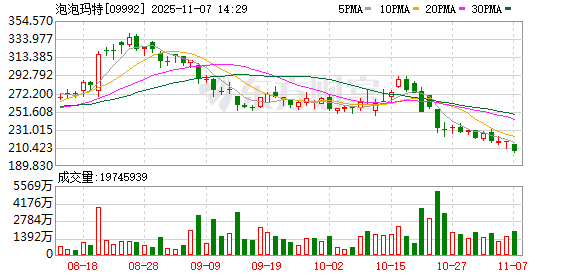
Group 1 - The core incident involved a "live streaming failure" during a session by Pop Mart, where staff inadvertently commented on the high price of a product, leading to negative market reactions [2] - Following the incident, Pop Mart's stock price fell nearly 5%, reaching 207 HKD, with a total market capitalization of 278.2 billion HKD. The stock has seen a decline of over 17% in September and over 16% in October [2] - Pop Mart's third-quarter revenue showed significant growth, with overall revenue increasing by 245%-250% year-on-year, driven by a 185%-190% increase in China and a 365%-370% increase in overseas revenue [2] Group 2 - The company is strategically promoting a new IP called "Star People," which is expected to become a significant revenue driver, having generated 390 million CNY in the first half of 2025 [3] - "Star People" is recognized as one of the fastest-growing new IPs under Pop Mart, with expectations that it could rival the success of the LABUBU brand [3]
“没事,会有人买单的” 泡泡玛特直播间翻车
Zhong Guo Jing Ying Bao· 2025-11-07 06:25
Core Insights - The incident involving a conversation during a live stream for the "DIMOO New Birth Diary Series Blind Box" has sparked widespread discussion on "emotional consumption" across various social media platforms [2] Company Insights - DIMOO is an intellectual property (IP) created by Chinese designer Ayan Deng, which has been acquired by Pop Mart, making it part of the company's proprietary IP portfolio [2]
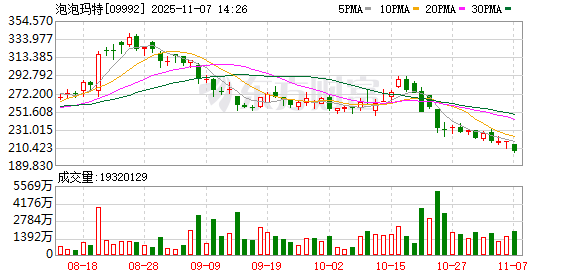
泡泡玛特跌超5%,最新回应直播事故:不会开除涉事员工
2 1 Shi Ji Jing Ji Bao Dao· 2025-11-07 06:25
Core Viewpoint - The incident involving Pop Mart's live streaming has sparked significant discussion, highlighting potential issues in product pricing and marketing strategies [1] Group 1: Incident Details - The incident occurred during a live stream promoting the "DIMOO New Birthday Diary Series - Blind Box," where two staff members were overheard discussing the product's price of 79 yuan, with one commenting it was "a bit expensive" [1][2] - Following the incident, there were rumors that the involved staff were fired, but internal sources confirmed that while an investigation is ongoing, no employees would be dismissed [4] Group 2: Product and Market Response - The "DIMOO New Birthday Diary Series - Blind Box" is priced at 79 yuan per unit and 474 yuan for a full box [2] - Despite the live stream incident, Pop Mart's "SKULLPANDA Dining Table Series" faced a separate issue with misprinted branding, which led to increased demand and rising prices in the secondary market [4] Group 3: Financial Performance - Pop Mart reported a remarkable revenue growth of 245% to 250% year-on-year for the third quarter of 2025, with Chinese revenue increasing by 185% to 190% and overseas revenue by 365% to 370% [4] - In terms of channel performance, offline sales grew by 130% to 135%, while online sales surged by 300% to 305% [4] Group 4: Stock Market Reaction - As of November 7, Pop Mart's stock price fell over 5%, trading at 206.6 HKD per share [4]
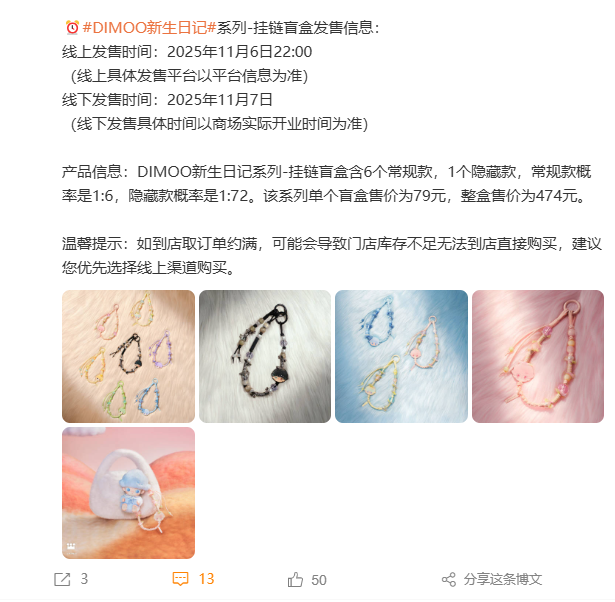
泡泡玛特直播出现意外,不妨平常心看待
Xin Lang Cai Jing· 2025-11-07 06:23
Core Viewpoint - The incident involving a staff member of Pop Mart commenting on the price of a DIMOO blind box during a live stream has sparked discussions about product pricing and consumer perception, highlighting the complexities of brand image management in the live commerce environment [1][3][4]. Group 1: Pricing Perception - The price of the DIMOO blind box, set at 79 yuan, is subjective, with varying opinions among consumers regarding its value [3]. - The market dictates that the perceived value of a product is determined by consumer willingness to pay, regardless of the actual cost of production [3]. Group 2: Brand Image and Employee Treatment - The incident has led to public sympathy for the employees involved, with many believing that their honest opinions should not negatively impact the brand's image [4]. - Companies face challenges in managing such "live stream accidents," as mishandling could affect public perception and brand reputation [4]. - The treatment of employees is crucial for companies, as those that show understanding and support towards their staff can enhance their competitive edge in the market [4]. Group 3: Market Dynamics - Pop Mart has experienced fluctuations in market demand and stock prices, reflecting the typical volatility in consumer goods markets [4]. - The incident serves as a reminder for both companies and the public to approach unexpected situations with a level-headed perspective [5].

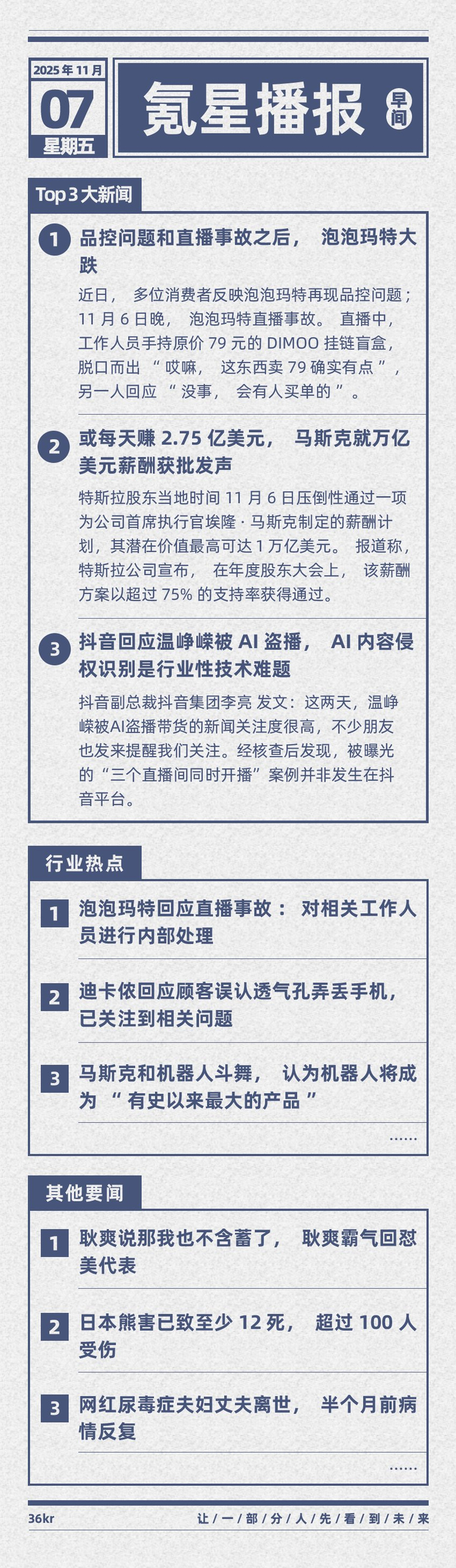
泡泡玛特直播事故后大跌,马斯克薪酬获批,抖音回应AI盗播
3 6 Ke· 2025-11-07 06:12
Group 1: Company News - Pop Mart faces significant backlash from consumers due to quality control issues and a recent live streaming incident where staff made inappropriate comments about a product priced at 79 yuan [4][5] - Pop Mart has announced internal measures to address the staff involved in the live streaming incident [5] - Tesla shareholders overwhelmingly approved a new compensation plan for CEO Elon Musk, potentially worth up to $1 trillion, with over 75% support at the annual shareholder meeting [4] Group 2: Industry Developments - Douyin (TikTok's Chinese counterpart) responded to concerns regarding AI content infringement, clarifying that a recent case involving a person named Wen Zhengrong was not related to its platform [4] - The automotive industry in China has seen a remarkable increase in sales in the UK, with a 235% rise, totaling 40,729 vehicles sold [4]