
Baosteel(600019)

Search documents
国运来了挡不住!30亿吨铁矿重见天日,美媒:中国将改写全球格局
Sou Hu Cai Jing· 2025-11-06 02:09
Core Viewpoint - The opening of the Simandou iron ore railway in Guinea marks a significant shift in the global iron ore supply chain, allowing China to establish a dominant position in high-grade iron ore sourcing and pricing, challenging the long-standing monopoly of Australia and Brazil [1][10][21]. Group 1: Project Development and Impact - The Simandou project, which has been dormant for nearly 30 years, is now operational, with the first shipment of iron ore set to depart soon [1][3]. - The total resource of the Simandou mine exceeds 3 billion tons, with an iron content of over 65%, making it one of the highest-grade "green mines" globally [3][4]. - The project involves a total investment of $23 billion and includes the construction of a dedicated railway to connect the mine to the port on Guinea's west coast [4][17]. Group 2: Strategic Shift in Pricing Power - China's involvement in the Simandou project allows it to transition from being a mere buyer to a resource owner and logistics builder, fundamentally altering the pricing dynamics in the iron ore market [10][12][19]. - The introduction of a "point-to-point pricing" model by Chinese companies is bypassing traditional pricing platforms, allowing for direct pricing based on source, tonnage, and port costs [13][15]. - The shift in pricing power is expected to provide Chinese steel companies with cost advantages, as higher-grade iron ore can reduce smelting costs significantly [15][19]. Group 3: Economic and Geopolitical Implications - The Simandou project is anticipated to contribute over 25% to Guinea's GDP growth in the next decade, creating new towns and improving local infrastructure and services [17][21]. - This initiative aligns with China's Belt and Road Initiative, emphasizing mutual benefits and industrial cooperation rather than mere resource extraction [17][21]. - The success of the Simandou project is seen as a model for China's broader strategy in global resource acquisition, moving from a "predatory" approach to one that emphasizes investment, infrastructure, and collaboration [19][23].



10月美国ADP就业数据超预期
Dong Zheng Qi Huo· 2025-11-06 00:50
1. Report Industry Investment Ratings - Gold: Short - term price in a callback trend [16] - US Dollar: Short - term oscillation [20] - Chinese Stock Index Futures: Long - position balanced allocation for each index [23] - US Stock Index Futures: Short - term high - level shock adjustment, with a bullish view considering profit support [27] - Treasury Bond Futures: Recently, the bond market is slightly bullish with limited upside, and long - positions should consider rhythm and odds [29] - Sugar: Chinese sugar market to oscillate, strict control on syrup and powder imports and reduced Q4 imports [34] - Steel: Adopt an oscillating approach to steel prices [41] - Live Pigs: Short - sell 03 contract after a sharp rebound, and keep an eye on long - positions in far - month contracts [44] - Red Dates: Wait and see, focus on price negotiation and acquisition progress in production areas [47] - Oils: If no major negative news, consider long - positions; wait for market sentiment to stabilize if negative [48] - Corn Starch: Band - trading [51] - Corn: 01 contract to oscillate weakly in the short - term and rebound in the long - term; be cautious about far - month contracts [53] - Thermal Coal: Price to remain strong in the short - term, watch policy changes after breaking through $800 [55] - Iron Ore: Downside space limited, consider negotiation and coking coal valuation [56] - Coking Coal/Coke: Short - term oscillation, watch for risks from declining hot metal production [57] - Copper: Oscillation, consider buying on dips [60] - Polysilicon: If the contract price corrects to par or discount to spot, consider long - positions; beware of options risks this weekend [63] - Industrial Silicon: Buying on dips may be more cost - effective [65] - Lead: Short - term strength, be cautious about chasing long; positive spread arbitrage available; be cautious in external trading [69] - Zinc: Speculative long - positions take profit on rallies; observe positive spread arbitrage opportunities; wait and see for external trading [74] - Lithium Carbonate: Short - term wide - range oscillation; consider short - selling on rallies in the medium - term [79] - Nickel: Wait and see for speculative single - side trading; bet on valuation recovery after risk release [81] - Crude Oil: Price to oscillate [85] - Asphalt: Short - term weak oscillation [87] - Methanol: Holders of short - positions add short after the rebound ends; conservative investors take profit [89] - Pulp: Limited upside space [90] - Urea: Oscillation due to sentiment support [92] - Caustic Soda: Short - term weak oscillation [94] - Soda Ash: Downside space depends on coal price and new capacity; bearish in the medium - term [95] - Float Glass: Wait and see due to intense market game [97] - Container Freight Rates: Short - sell after the rally [99] 2. Core Views of the Report - The US ADP employment data in October exceeded expectations, indicating a short - term recovery in the labor market, but the economic downward pressure persists, and the US dollar maintains an oscillating trend [2][19] - In the context of a global stock market correction, the A - share market showed unexpected resilience, and the stock index is expected to oscillate at a high level [3][22] - The prices of steel, copper, and other commodities are affected by factors such as macro - expectations, fundamentals, and supply - demand relationships, showing different trends [5][6] 3. Summaries by Relevant Catalogs 3.1 Financial News and Reviews 3.1.1 Macro Strategy (Gold) - The US ADP employment in October increased by 42,000, and the ISM non - manufacturing PMI was 52.4, both better than expected [14][15] - Gold prices rebounded slightly, and the market is waiting for the end of the US government shutdown. Gold is expected to consolidate and approach the 60 - day moving average [15] 3.1.2 Macro Strategy (Foreign Exchange Futures - US Dollar Index) - Trump blamed the government shutdown for the Democratic victory in local elections [17] - The US Supreme Court questioned the legality of Trump's tariff policy [18] - The ADP employment data exceeded expectations, but the economic downward pressure continues, and the US dollar maintains an oscillating trend [19] 3.1.3 Macro Strategy (Stock Index Futures) - China will firmly promote high - level opening - up [21] - The A - share market showed resilience, and the stock index is expected to oscillate at a high level [22] 3.1.4 Macro Strategy (US Stock Index Futures) - The US ADP employment in October increased by 42,000, and the ISM services PMI reached a new high [25][26] - The US economic data remained resilient, and the stock market's risk appetite recovered [26] 3.1.5 Macro Strategy (Treasury Bond Futures) - The central bank conducted 65.5 billion yuan of 7 - day reverse repurchase operations, with a net withdrawal of 492.2 billion yuan [28] - The bond market's upward space is limited, and it is expected to oscillate. Long - positions should consider rhythm and odds [29] 3.2 Commodity News and Reviews 3.2.1 Agricultural Products (Sugar) - India's 2025/26 sugar production season has started, and Brazil's sugar production estimate has been raised [30][31] - The expected high - yield of the two major producers has increased concerns about global supply surplus, which is negative for the market [34] 3.2.2 Black Metals (Rebar/Hot - Rolled Coil) - The retail sales of passenger cars in October increased year - on - year and month - on - month [35] - Steel prices continued to be weak, and the supply pressure is expected to ease in November - December [40] 3.2.3 Agricultural Products (Live Pigs) - The project of Wens Co., Ltd.'s subsidiary passed the environmental assessment, and Dabeinong signed a regulatory agreement [42][43] - The short - term spot market is bullish, but the medium - term supply is expected to be loose [43] 3.2.4 Agricultural Products (Red Dates) - The acquisition of red dates in Xinjiang is progressing, and the futures price declined [45][46] - The supply is increasing, and the demand is weak. It is recommended to wait and see [47] 3.2.5 Agricultural Products (Soybean Oil/Rapeseed Oil/Palm Oil) - Malaysia's palm oil production in October increased by 12.31% month - on - month [48] - The market expects inventory accumulation in October. Pay attention to actual data and November's high - frequency supply - demand data [48] 3.2.6 Agricultural Products (Corn Starch) - The开机率 of corn starch enterprises increased, and the inventory slightly rose [49][51] - The inventory pressure is expected to be acceptable in January, and enterprises may maintain profitability [51] 3.2.7 Agricultural Products (Corn) - The spot price of corn is generally stable, with some regional differences [51] - Substitute supply is expected to increase, and the 01 contract may oscillate weakly in the short - term and rebound in the long - term [52][53] 3.2.8 Black Metals (Thermal Coal) - The international thermal coal price was strong on November 5, and the domestic price has risen recently [54][55] - The price is expected to remain strong in the short - term, and watch policy changes after breaking through $800 [55] 3.2.9 Black Metals (Iron Ore) - The demand for concrete weakened slightly, and iron ore prices oscillated weakly [56] - The downside space is limited, considering negotiation and coking coal valuation [56] 3.2.10 Black Metals (Coking Coal/Coke) - The price of coking coal in Linfen Anze was strong [57] - The short - term market is tight, but the hot metal production has peaked, and it may oscillate [57] 3.2.11 Non - ferrous Metals (Copper) - Chile's Codelco's copper production in the first nine months increased by 2.1% year - on - year [58] - The short - term macro - expectations are volatile, and copper prices are expected to oscillate [60] 3.2.12 Non - ferrous Metals (Polysilicon) - The number of photovoltaic component project bids decreased last week, and the price of polysilicon was under pressure [61][62] - November is a critical point of policy and fundamental game. Consider long - positions on dips if the contract price corrects [63] 3.2.13 Non - ferrous Metals (Industrial Silicon) - The production of industrial silicon in Sichuan and Yunnan decreased, and the inventory is expected to be difficult to reduce in November [64] - Buying on dips may be more cost - effective [65] 3.2.14 Non - ferrous Metals (Lead) - The LME lead inventory decreased, and the domestic lead price trended upward [69] - The short - term supply is slowly recovering, and pay attention to delivery risks; consider short - selling at high levels in the long - term [69] 3.2.15 Non - ferrous Metals (Zinc) - The LME zinc showed a premium, and the domestic zinc production is expected to decline in November - December [73] - Zinc prices may oscillate at a high level in the short - term, and need demand improvement for further rise [73] 3.2.16 Non - ferrous Metals (Lithium Carbonate) - Hainan Mining's lithium concentrate has been shipped, and EVE Energy signed a cooperation agreement [75][76] - The short - term price may oscillate widely, and consider short - selling on rallies in the medium - term [79] 3.2.17 Non - ferrous Metals (Nickel) - Minmetals' acquisition of a nickel business entered the second - stage review [80] - The short - term price may be under pressure, and bet on valuation recovery after risk release [81] 3.2.18 Energy Chemicals (Crude Oil) - Kazakhstan's oil field production decreased due to maintenance, and the EIA crude oil inventory increased [82][84] - Oil prices are expected to oscillate [85] 3.2.19 Energy Chemicals (Asphalt) - The capacity utilization rate of domestic heavy - traffic asphalt decreased [86] - The asphalt price may oscillate weakly in the short - term [87] 3.2.20 Energy Chemicals (Methanol) - The Chinese methanol port inventory increased slightly [88] - The rebound does not indicate a fundamental reversal. Holders of short - positions add short after the rebound ends [89] 3.2.21 Energy Chemicals (Pulp) - The import pulp price was stable, and the futures price rose [90] - The upward space of the pulp price is limited [90] 3.2.22 Energy Chemicals (Urea) - The urea enterprise inventory increased, and the price oscillated upward due to export quota rumors [91] - The urea price may oscillate due to sentiment support [92] 3.2.23 Energy Chemicals (Caustic Soda) - The caustic soda price in Shandong decreased locally, and the inventory decreased [93][94] - The caustic soda price may oscillate weakly in the short - term [94] 3.2.24 Energy Chemicals (Soda Ash) - The soda ash price in Shahe oscillated, and the demand may be affected in the short - term [95] - The soda ash price may decline in the medium - term, and the short - term downside space depends on coal price and new capacity [95] 3.2.25 Energy Chemicals (Float Glass) - The float glass price in Shahe increased slightly, and the market game is intense [96][97] - It is recommended to wait and see due to intense market game [97] 3.2.26 Shipping Index (Container Freight Rates) - Shipping companies adjusted European - route freight rates [98] - The container freight rate may rise in the short - term, and consider short - selling after the rally [99]


小鹏开放机器人SDK,宝钢成生态合作伙伴
Bei Ke Cai Jing· 2025-11-05 09:28
Core Viewpoint - Xiaopeng Technology announced a partnership with Baosteel to develop applications for its humanoid robot, IRON, by opening its SDK to global developers [1] Group 1: Company Developments - Xiaopeng will collaborate with Baosteel as an ecological partner for the IRON robot, focusing on exploring application scenarios in complex industrial fields such as inspection [1] - The initiative aims to create a humanoid robot application ecosystem by engaging with global developers [1] Group 2: Industry Implications - The partnership signifies a move towards integrating robotics in industrial applications, potentially enhancing operational efficiency in sectors like manufacturing and inspection [1] - The collaboration may lead to iterative advancements in the IRON robot's capabilities, driven by real-world industrial applications [1]



小鹏汽车与宝钢官宣开展机器人合作
Xin Lang Cai Jing· 2025-11-05 09:01
Core Insights - Xpeng Motors announced the opening of the SDK for its humanoid robot IRON, aiming to build an application ecosystem with global developers [1] - Baosteel will become an ecological partner for Xpeng's IRON robot, exploring application scenarios in complex industrial fields such as inspection [1] Group 1 - Xpeng Motors is focusing on collaboration with global developers to enhance the capabilities and applications of its humanoid robot IRON [1] - The partnership with Baosteel signifies a strategic move to integrate robotics into industrial operations, particularly in inspection tasks [1]
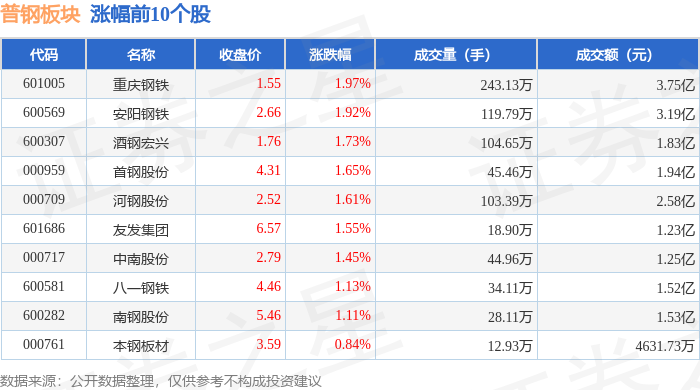
普钢板块11月5日跌0.08%,包钢股份领跌,主力资金净流出3.03亿元
Zheng Xing Xing Ye Ri Bao· 2025-11-05 08:42
Market Overview - On November 5, the steel sector experienced a slight decline of 0.08%, with Baogang Co. leading the losses [1] - The Shanghai Composite Index closed at 3969.25, up 0.23%, while the Shenzhen Component Index closed at 13223.56, up 0.37% [1] Individual Stock Performance - Notable gainers in the steel sector included: - Chongqing Steel: closed at 1.55, up 1.97% with a trading volume of 2.43 million shares [1] - Anyang Steel: closed at 2.66, up 1.92% with a trading volume of 1.20 million shares [1] - Jiuquan Iron & Steel: closed at 1.76, up 1.73% with a trading volume of 1.05 million shares [1] - Baogang Co. was the biggest loser, closing at 2.72, down 2.86% with a trading volume of 16.15 million shares [2] Capital Flow Analysis - The steel sector saw a net outflow of 303 million yuan from major funds, while retail investors contributed a net inflow of 322 million yuan [2] - The capital flow for specific stocks showed: - Hualing Steel: major funds net outflow of 34.43 million yuan, retail net outflow of 35.83 million yuan [3] - Chongqing Steel: major funds net inflow of 25.18 million yuan, retail net outflow of 1.06 million yuan [3] - Anyang Steel: major funds net inflow of 11.44 million yuan, retail net outflow of 3.71 million yuan [3]


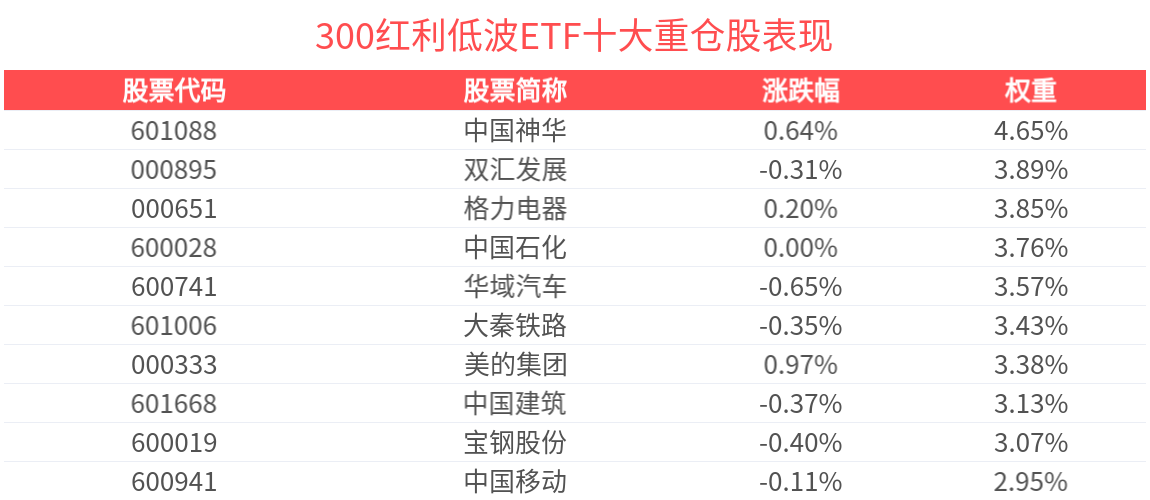
红利策略仍具配置价值,300红利低波ETF(515300)逆市红盘冲击3连涨!
Sou Hu Cai Jing· 2025-11-05 03:04
Group 1 - The core viewpoint indicates that the "insurance capital + industrial capital" may become an important source of incremental funds for the banking sector in the future [2] - The banking sector's holdings are at a historical low, revealing investment value, and the dividend strategy continues to hold allocation value [2] - The dividend sector shows greater allocation value during low interest rate periods, with excess returns negatively correlated with government bond yields [2] Group 2 - As of October 31, 2025, the top ten weighted stocks in the CSI 300 Dividend Low Volatility Index include China Shenhua, Shuanghui Development, Sinopec, Gree Electric Appliances, and others, accounting for a total of 35.78% [2] - The CSI 300 Dividend Low Volatility ETF has seen a net value increase of 59.42% over the past five years, ranking 81 out of 1033 index equity funds [1] - The ETF's highest single-month return since inception was 13.89%, with the longest consecutive monthly gain being five months and a maximum increase of 14.56% [1]





宝钢股份2025年三季度业绩网上说明会问答实录
Quan Jing Wang· 2025-11-05 00:59
Core Viewpoint - Baosteel's third-quarter performance shows significant growth, with a net profit increase of 130.31% year-on-year and a 23.1% quarter-on-quarter rise, indicating strong operational resilience despite industry challenges [21]. Group 1: Financial Performance - The company achieved a net profit of 40.6 billion yuan in the third quarter, driven by improved sales and effective cost management [21]. - Cash flow from operating activities has significantly improved due to enhanced working capital management, with a net cash flow increase attributed to better credit management and inventory control [12][28]. - The company has repurchased shares exceeding 10 billion yuan since its listing, demonstrating a commitment to shareholder returns [7]. Group 2: Strategic Initiatives - Baosteel is focusing on AI transformation, with plans to implement AI technologies across various production processes, aiming for significant efficiency gains [3][16]. - The company has set 2024 as the "AI Year," with substantial applications already in place, such as in ironmaking and steelmaking processes [3]. - The company is committed to green and low-carbon development, actively promoting sustainability across its supply chain and setting environmental standards for suppliers [8]. Group 3: Market Position and Competitiveness - Baosteel maintains a stable market share of 50%-55% in the automotive steel sector, with ongoing efforts to enhance product innovation and cost competitiveness [15]. - The company is exploring opportunities in high-end materials and lightweight solutions to meet the growing demand in the automotive industry [9]. - Baosteel's export order volume increased by 10.9% year-on-year, with a focus on optimizing the product mix and expanding into emerging markets [12]. Group 4: Future Outlook - The company is optimistic about future growth, citing the resilience of the Chinese economy and the potential for increased demand in the steel industry [21]. - Baosteel plans to continue its strategic investments in high-value products and green technologies to enhance its competitive edge [32]. - The company is also considering dynamic stock repurchase strategies based on market conditions and shareholder interests [14].
转型债券支持重点行业低碳转型——以钢铁行业为例
Zhong Guo Jin Rong Xin Xi Wang· 2025-11-04 13:07
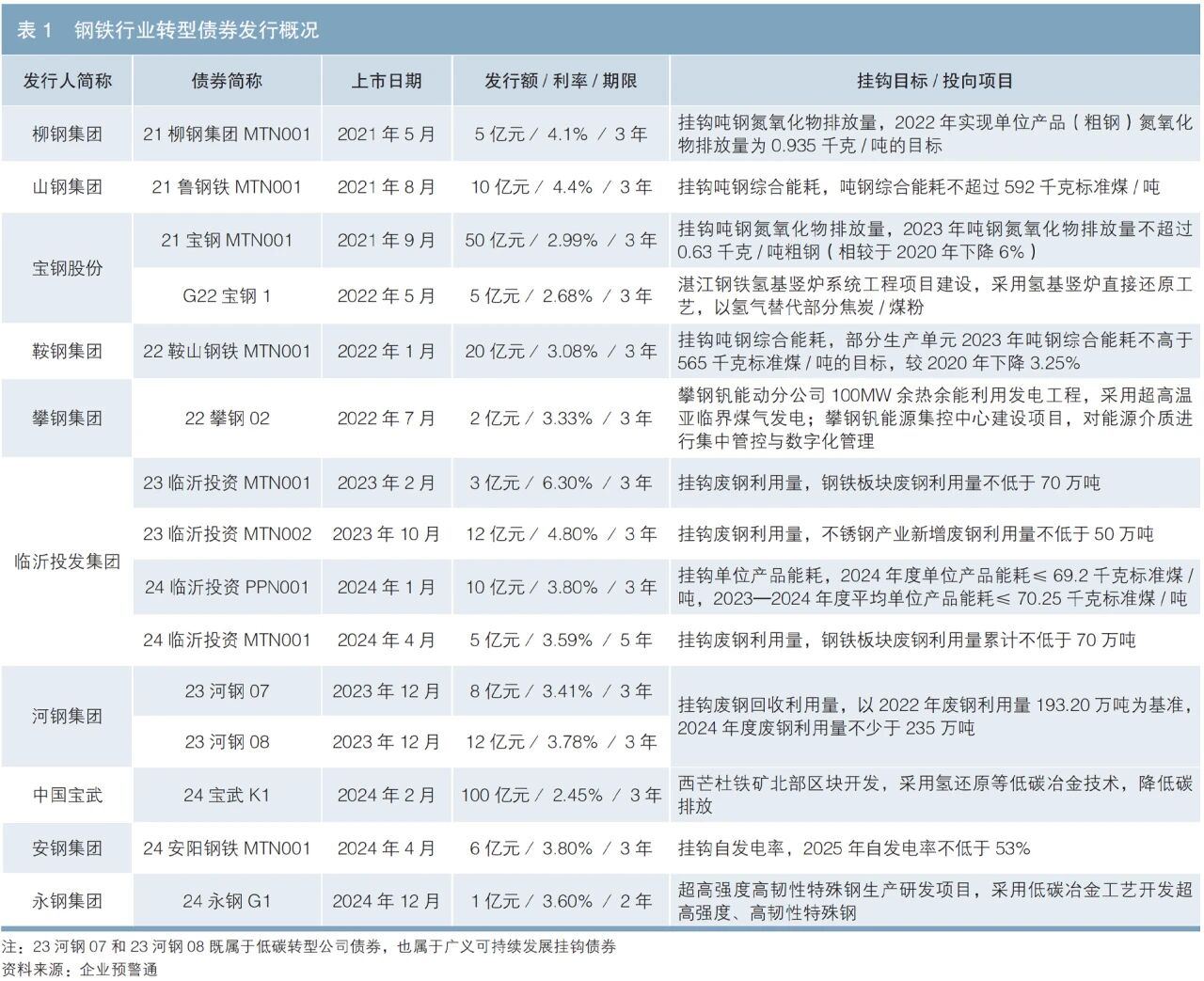
Core Viewpoint - The introduction of China's "dual carbon" goals necessitates a rapid transition from high-carbon to low-carbon industries, with transformation finance emerging as a critical support mechanism for this shift [1][2]. Group 1: Background of Transformation Finance - China's "dual carbon" goals set a clear timeline for a comprehensive green transition, placing unprecedented pressure on high-carbon industries, particularly the steel sector, which accounts for approximately 15% of national carbon emissions [2]. - Traditional green finance tools, such as green bonds, primarily support "pure green" projects and are inadequate for financing the transformation of existing high-carbon assets [2][3]. - Transformation finance aims to provide funding for high-carbon entities with clear emission reduction pathways but not yet meeting "deep green" standards, filling a crucial gap in the financial landscape [2]. Group 2: Development of Transformation Bonds - The policy framework for transformation bonds in China has evolved through three stages: the initial exploration phase, the pilot phase focusing on specialized products, and the current standardization phase aimed at unifying standards and enhancing policy coordination [4][5]. - The current transformation bond market includes various products, primarily transformation loans and bonds, which serve as essential tools for financing large-scale industrial transitions [3][6]. Group 3: Current Status of Transformation Bonds - As of the end of 2024, China has issued a total of 244 transformation bonds, amounting to 220.8 billion yuan, with the majority of issuers from high-carbon sectors like steel, coal, and construction materials [8]. - The funds raised through these bonds are primarily directed towards energy-saving technologies, clean production processes, and green production upgrades [8][12]. Group 4: Application of Transformation Bonds in the Steel Industry - The steel industry faces significant funding needs for equipment upgrades and technological advancements to achieve green low-carbon transformation, with estimates suggesting an annual investment requirement of around 500 billion yuan for the next 30 years to reach carbon neutrality [11][12]. - By the end of 2024, the steel sector had issued transformation bonds totaling 24.9 billion yuan, reflecting a growing trend in utilizing these financial instruments for low-carbon initiatives [12][14]. Group 5: Characteristics of Transformation Bonds - Transformation bonds in the steel industry exhibit significant variation in issuance scale, with terms primarily ranging from 2 to 3 years and interest rates between 2.45% and 6.30% [15][17]. - The funds raised are often earmarked for comprehensive project financing and debt optimization, targeting advanced decarbonization technologies [15][18]. Group 6: Challenges and Recommendations - The steel industry faces challenges such as funding gaps, high financing costs, and a lack of comprehensive transformation standards, which hinder the participation of smaller enterprises [20][21]. - Recommendations include enhancing the transformation finance standard system, promoting innovative financial tools, and improving information disclosure to increase market transparency and participation [21].
钢铁行业今日净流入资金1.30亿元 包钢股份等6股净流入资金超千万元
Zheng Quan Shi Bao Wang· 2025-11-04 09:24
Market Overview - The Shanghai Composite Index fell by 0.41% on November 4, with five industries experiencing gains, led by the banking and public utilities sectors, which rose by 2.03% and 0.24% respectively [1] - The sectors with the largest declines were non-ferrous metals and electrical equipment, which dropped by 3.04% and 2.05% respectively [1] - The steel industry saw a slight decrease of 0.03% [1] Capital Flow - The main capital outflow from the two markets totaled 79.259 billion yuan, with only three sectors seeing net inflows [1] - The banking sector had a net inflow of 3.054 billion yuan, while the steel sector and environmental protection sector saw net inflows of 130 million yuan and 7.007 million yuan respectively [1] - The electrical equipment sector experienced the largest net outflow, totaling 13.389 billion yuan, followed by the electronics sector with a net outflow of 10.649 billion yuan [1] Steel Industry Analysis - The steel industry had a net capital inflow of 130 million yuan, with 44 stocks in the sector, of which 11 rose and 29 fell [2] - Among the stocks with net inflows, Baogang Co. led with an inflow of 605 million yuan, followed by Fangda Carbon and Fushun Special Steel with inflows of 97.145 million yuan and 41.681 million yuan respectively [2] - The stocks with the largest net outflows included Dazhong Mining, Baosteel, and Hangang, with outflows of 124 million yuan, 115 million yuan, and 52.320 million yuan respectively [2][3]


宝钢股份:产能目标从“8000~10000万吨”调整为“8000万吨+”
Xin Lang Cai Jing· 2025-11-03 14:41
Core Viewpoint - Baosteel has adjusted its production capacity target from "80-100 million tons" to "80 million tons+" focusing on value extraction rather than pure scale expansion [1] Group 1: Production Capacity Strategy - The company emphasizes a more cautious and strategically oriented expansion principle [1] - In the domestic market, there are limited quality acquisition targets or low likelihood of mergers and acquisitions [1] - The long-term goal for overseas operations is to achieve a production capacity layout of "5 million tons+" while strictly controlling timing and investment returns [1]