
Sinopec Corp.(600028)

Search documents
2025中国企业ESG“金责奖”评选结果揭晓 共筑可持续发展新生态
Xin Lang Cai Jing· 2026-01-15 02:38
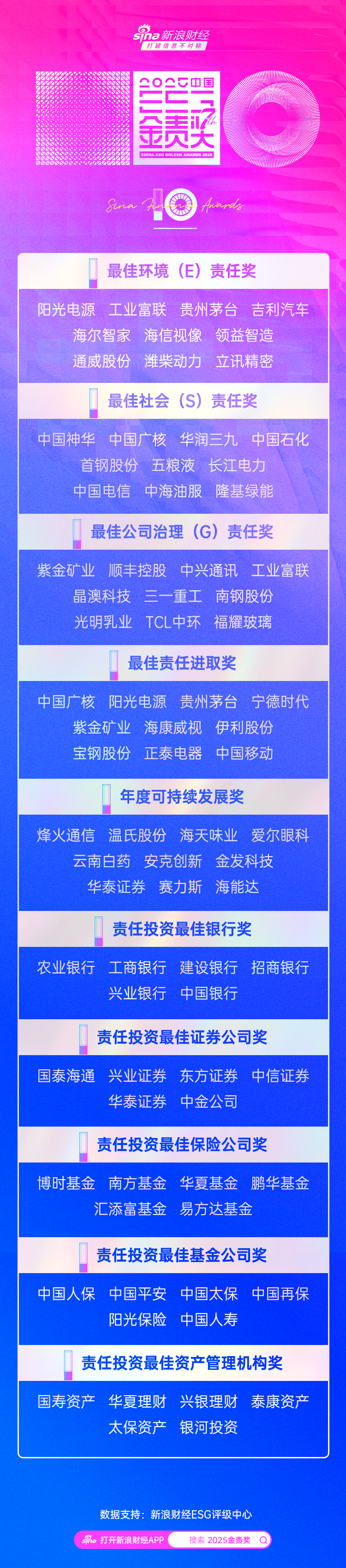
Core Viewpoint - The 2025 China Enterprise ESG "Golden Responsibility Award" aims to recognize companies and institutions that have made significant contributions to ESG initiatives in China, reflecting a shift from voluntary practices to compliance requirements in ESG performance [1][18]. Group 1: Award Categories and Winners - The award includes ten categories: Best Environmental Responsibility Award, Best Social Responsibility Award, Best Corporate Governance Responsibility Award, Best Responsibility Initiative Award, Annual Sustainable Development Award, Best Responsible Investment Bank Award, Best Responsible Investment Securities Company Award, Best Responsible Investment Insurance Company Award, Best Responsible Investment Fund Company Award, and Best Responsible Investment Asset Management Institution Award [1][18]. - The Best Environmental Responsibility Award winners include: Sungrow Power Supply, Industrial Fulian, Kweichow Moutai, Geely Automobile, Haier Smart Home, Hisense Visual Technology, Linyang Electronics, Tongwei Co., Weichai Power, and Luxshare Precision [10][28]. - The Best Social Responsibility Award winners include: China Shenhua, China General Nuclear Power, China Resources Sanjiu, Sinopec, Shougang, Wuliangye, Yangtze Power, China Telecom, China Oilfield Services, and LONGi Green Energy [10][28]. - The Best Corporate Governance Responsibility Award winners include: Zijin Mining, SF Holding, ZTE Corporation, Industrial Fulian, JA Solar, Sany Heavy Industry, Nanjing Steel, Bright Dairy, TCL Zhonghuan, and Fuyao Glass [10][28]. - The Best Responsibility Initiative Award winners include: FiberHome Technologies, Wens Foodstuff Group, Haitian Flavoring and Food, Aier Eye Hospital, Yunnan Baiyao, Anker Innovations, Kingfa Sci. & Tech., Huatai Securities, Silex, and Hainengda [11][28]. - The Annual Sustainable Development Award winners include: China General Nuclear Power, Sungrow Power Supply, Kweichow Moutai, Contemporary Amperex Technology, Zijin Mining, Hikvision, Yili, Baosteel, Chint Electric, and China Mobile [11][28]. Group 2: Responsible Investment Awards - The Best Responsible Investment Bank Award winners include: Agricultural Bank of China, Industrial and Commercial Bank of China, China Construction Bank, China Merchants Bank, Industrial Bank, and Bank of China [11][28]. - The Best Responsible Investment Securities Company Award winners include: Guotai Junan, Everbright Securities, CITIC Securities, Huatai Securities, and CICC [12][28]. - The Best Responsible Investment Insurance Company Award winners include: China Life Insurance, China Ping An, China Pacific Insurance, China Re, Sunshine Insurance, and China Life [13][28]. - The Best Responsible Investment Fund Company Award winners include: Bosera Funds, Southern Fund, China Asset Management, Penghua Fund, Huitianfu Fund, and E Fund [14][28]. - The Best Responsible Investment Asset Management Institution Award winners include: China Life Asset Management, Huaxia Wealth Management, Xingyin Wealth Management, Taikang Asset, Taikang Asset, and Galaxy Investment [15][28]. Group 3: ESG Development Context - By 2025, China's ESG development has transitioned from "setting standards" to "strengthening regulations," with a comprehensive disclosure standard system being established [1][18]. - The ESG performance of enterprises is now a compliance requirement, linking commercial value with social value [1][18]. - The ESG rating center aims to promote sustainable development and responsible investment, enhancing the ESG performance of listed companies [17][34].



石油ETF鹏华(159697)盘中净申购1000万份,冲刺连续5天净流入
Sou Hu Cai Jing· 2026-01-15 02:29
Group 1 - The oil sector is experiencing a capital inflow despite market conditions, with the Penghua Oil ETF (159697) seeing a net subscription of 10 million units, marking five consecutive days of net inflow [1] - Political tensions in Venezuela and Iran are increasing, contributing to a rise in regional political risk premiums for oil prices, while OPEC+ has decided to temporarily halt its production growth plan for the first quarter of 2026 [1] - As of January 15, 2026, the National Securities Oil and Gas Index (399439) shows mixed performance among its constituent stocks, with Hengtong Co. leading at a 3.61% increase, while Jiufeng Energy is down 4.45% [1] Group 2 - As of December 31, 2025, the top ten weighted stocks in the National Securities Oil and Gas Index (399439) include major companies such as China National Petroleum, Sinopec, and CNOOC, collectively accounting for 67.11% of the index [2]





海南炼化聚丙烯产品享加工增值免关税销往内地
Hai Nan Ri Bao· 2026-01-15 01:40
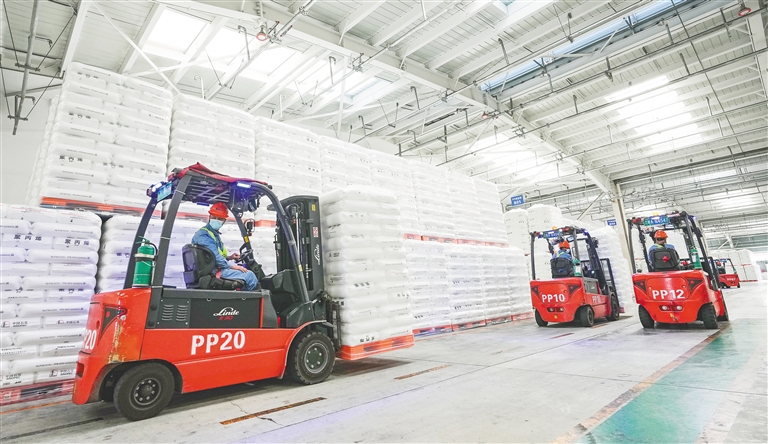
该产品适配家居日用品、包装容器等多领域,市场口碑良好,且加工增值超30%,进入内地免征进口关 税,大幅降本增效、提升竞争力。 海南日报全媒体记者 陈元才 通讯员 吴淑汕 摄 海南炼化聚丙烯产品 享加工增值免关税销往内地 近日,中国石化海南炼化公司乙烯区聚丙烯包装车间产销两旺,多条生产线满负荷运转,均聚产品PPH- M17经严格检验后批量打包出库,即将发往内地,全力保障民生及产业端多元需求。 ...
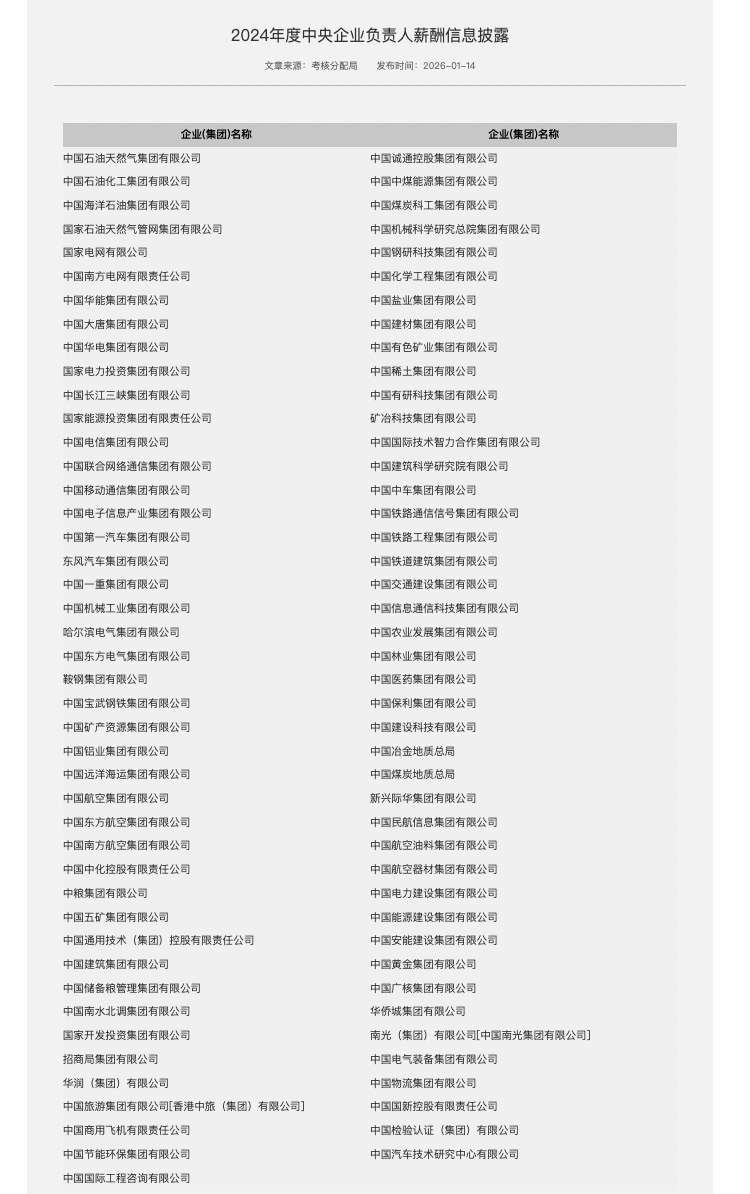
中石油、中石化、中国电信、中国联通等央企负责人年薪多少?国资委披露
Feng Huang Wang Cai Jing· 2026-01-15 00:54
Group 1 - The State-owned Assets Supervision and Administration Commission (SASAC) disclosed the salary information of over 80 central enterprise leaders for the year 2024, emphasizing the importance of transparency in key areas and responding to public concerns [1] - The disclosure includes a list of major central enterprises, such as China National Petroleum Corporation, China Petroleum and Chemical Corporation, and State Grid Corporation of China, among others [3][4] Group 2 - Notable salaries among central enterprise leaders include: - Dai Houliang, Chairman of China National Petroleum, with an annual salary of 978,500 yuan - Wang Dongjin, Chairman of China National Offshore Oil Corporation, with an annual salary of 966,900 yuan - Ma Yongsheng, Chairman of China Petroleum and Chemical Corporation, with an annual salary of 935,500 yuan - Ke Ruiwen, Chairman of China Telecom, with an annual salary of 953,500 yuan - Chen Zhongyue, Chairman of China Unicom, with an annual salary of 914,900 yuan [4]


化工周报:原油价格小幅上涨 中国石化与中国航油重组提升市场对SAF的关注
Xin Lang Cai Jing· 2026-01-15 00:27
Group 1 - Crude oil prices have seen a slight increase due to escalating geopolitical tensions in Venezuela and Iran, which have raised the geopolitical risk premium. OPEC+ has decided to temporarily halt its production growth plan for the first quarter of 2026, maintaining current production levels. This reflects OPEC+'s willingness to slow down production expansion since Q4 2025, aiming to alleviate market concerns about supply increases and keep oil prices at a reasonable level. As of January 11, WTI oil prices closed at $58.84 per barrel, and Brent oil prices at $63.02 per barrel, representing increases of 2.71% and 3.65% respectively from the previous week [1]. Group 2 - The restructuring of Sinopec and China National Aviation Fuel has heightened market attention towards Sustainable Aviation Fuel (SAF). Approved by the State Council on January 8, this merger allows Sinopec, the world's largest refining company and second-largest chemical company, to leverage its integrated refining and aviation fuel supply advantages, reducing intermediaries and lowering supply costs. This restructuring is expected to promote the application of SAF in China, creating a closed-loop for the entire industry chain of "production-certification-application," thereby driving rapid industry development [2]. Group 3 - The refining sector is expected to see a rebound due to stable oil prices influenced by geopolitical conflicts, OPEC+'s halt on production growth, and the upcoming demand peak. Companies to watch include Hengli Petrochemical, Satellite Chemical, Baofeng Energy, and Wanhua Chemical [3]. - Sustainable Aviation Fuel (SAF) is recognized as a renewable green energy source with significant future development potential, gaining increasing attention. Companies to monitor include Zhuoyue New Energy [3].
中经评论:中石化中航油重组的战略考量
Jing Ji Ri Bao· 2026-01-15 00:05
Core Viewpoint - The restructuring of China Petroleum & Chemical Corporation (Sinopec) and China National Aviation Fuel Group (CNAF) marks a significant event in the context of China's energy security and green transition strategy amid complex international circumstances [1][2]. Group 1: Impact on Aviation Fuel Industry - The restructuring aims to enhance the competitiveness of the aviation fuel industry, which is becoming the only growth area as China's refined oil consumption peaks [1]. - The merger addresses the historical separation between production and sales in China's aviation fuel sector, improving overall competitiveness against international giants [1][2]. Group 2: Integration of Resources - Sinopec, as the largest refined oil and aviation fuel producer in China, complements CNAF's extensive logistics network, creating a complete industry chain from crude oil refining to airport fueling [2]. - This integrated model is expected to enhance global bargaining power and risk resilience, positioning the combined entity as a competitive player in the international energy market [2]. Group 3: Green Transition in Aviation - The restructuring supports the aviation industry's green transition, with Sustainable Aviation Fuel (SAF) recognized as a key pathway for low-carbon development [2][3]. - Sinopec's leadership in SAF technology and production, combined with CNAF's logistics capabilities, facilitates the market entry of SAF, reducing costs and accelerating its adoption [3]. Group 4: Economic Stability and Supply Security - The merger is anticipated to stabilize aviation fuel prices by reducing supply chain fragmentation and internalizing transactions, thus controlling consumer travel costs and alleviating pressure on airline profitability [3]. - Strengthening domestic aviation fuel supply capabilities enhances national energy security, ensuring stable operation of civil aviation networks even in extreme international situations [3]. Group 5: Challenges and Governance - The success of the restructuring depends on achieving deep integration between the two large state-owned enterprises, which may have differing values and management styles [4]. - Concerns regarding market competition and potential monopolistic practices post-restructuring highlight the need for effective governance and regulatory oversight to ensure fair market participation and benefit to society [4].
央企重组大消息!中国石化与中航油集团合并,国务院国资委重磅公告引爆关注
Sou Hu Cai Jing· 2026-01-14 23:20
Core Viewpoint - The merger between Sinopec and China Aviation Oil marks a significant shift in the energy sector, representing a new era of state-owned enterprise (SOE) restructuring in China, which is expected to enhance the overall efficiency and competitiveness of the industry [1][3]. Group 1: Merger Implications - The merger is not merely a corporate consolidation but a strategic move to reshape the entire energy landscape in China, enhancing the bargaining power of Chinese companies in international markets [1][10]. - The integration of aviation fuel production and supply chains is expected to streamline operations, improve efficiency, and make fuel prices more competitive, benefiting both airlines and passengers [5][10]. - Historical precedents, such as the 2015 strategic cooperation between China Southern Airlines and China Aviation Oil, demonstrate the potential for improved operational efficiency and cost reduction through such collaborations [7][8]. Group 2: Strategic Goals - The restructuring aligns with national goals for energy upgrades and carbon reduction, particularly in the aviation sector, which is a significant contributor to carbon emissions [11][21]. - The partnership aims to promote green energy initiatives, including the development of hydrogen refueling stations and sustainable aviation fuel, which is projected to see a 30% annual growth in demand over the next five years [13][15]. - The merger is part of a broader trend of SOE collaborations that enhance technological innovation and market competitiveness, as seen in the chemical industry following the merger of Sinochem and China National Chemical Corporation [16][18]. Group 3: Future Outlook - The merger is expected to bolster China's competitive edge in the Belt and Road Initiative countries, with improved negotiation capabilities leading to lower costs and enhanced risk management [10][19]. - The restructuring is anticipated to drive significant advancements in green technology and sustainable practices within the aviation industry, contributing to national carbon reduction targets [21][22]. - Overall, the merger signifies a proactive approach by Chinese enterprises to enhance their global market presence and operational efficiency, paving the way for a more integrated and competitive energy sector [22][24].
中石化中航油重组的战略考量
Jing Ji Ri Bao· 2026-01-14 21:59
Core Viewpoint - The restructuring of China Petroleum & Chemical Corporation (Sinopec) and China National Aviation Fuel Group (CNAF) marks a significant event in the context of state-owned enterprise (SOE) reforms, aimed at enhancing energy security and seizing opportunities in green transformation amidst complex international circumstances [1] Group 1: Impact on Aviation Fuel Industry - The restructuring is expected to enhance the competitiveness of the aviation fuel industry, as the global energy landscape is undergoing unprecedented changes, with a shift towards clean energy and ongoing geopolitical conflicts affecting energy supply chains [1] - The integration of Sinopec's upstream refining capabilities with CNAF's logistics and supply network creates a complete industrial chain from crude oil refining to airport fueling, addressing the historical separation of production and sales in China's aviation fuel sector [2] Group 2: Green Transition in Aviation - The restructuring supports the green transition in the aviation sector, which is under significant pressure to reduce carbon emissions, with Sustainable Aviation Fuel (SAF) recognized as a key pathway for low-carbon development [2][3] - Sinopec's leadership in SAF technology and production, combined with CNAF's control over airport storage and fueling systems, facilitates the market entry of SAF, potentially lowering development costs and accelerating its large-scale application [3] Group 3: Economic and Stable Fuel Supply - The restructuring aims to create a more stable and economical aviation fuel supply by reducing the fragmented supply chain, which has historically made prices vulnerable to international market fluctuations [3] - By internalizing transactions and optimizing resource allocation, the restructuring is expected to stabilize fuel prices, making travel costs more manageable for consumers and alleviating financial pressures on airlines [3] Group 4: Strategic Importance and Challenges - The restructuring enhances domestic aviation fuel security, ensuring stable supply even in extreme international situations, which is crucial for national emergency response and defense transportation [3] - However, the success of the restructuring depends on achieving deep integration between the two large SOEs, addressing differences in values and management styles, and ensuring that the benefits of scale do not lead to monopolistic practices [4]
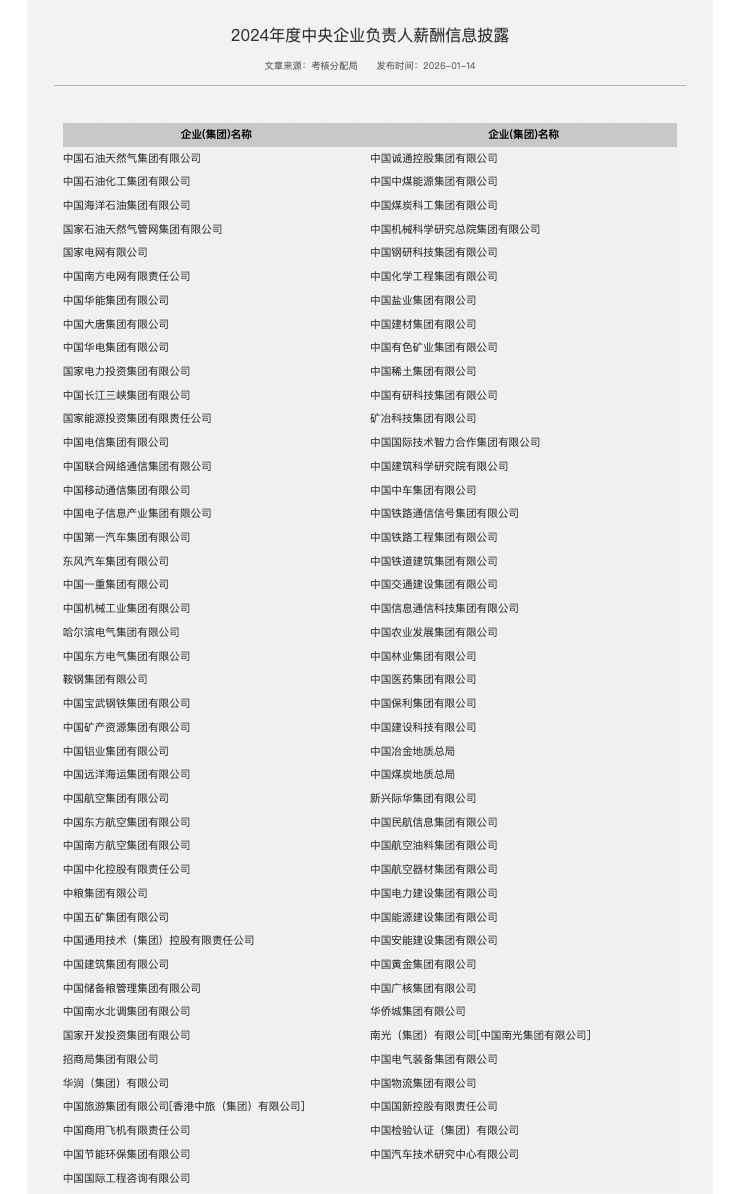
中石油、中石化等能源央企负责人年薪多少?国务院披露
Feng Huang Wang Cai Jing· 2026-01-14 12:23
Core Viewpoint - The State-owned Assets Supervision and Administration Commission (SASAC) has disclosed the salary information of over 80 central enterprise leaders for the year 2024, emphasizing the importance of transparency in key areas and responding to public concerns [1] Group 1: Salary Disclosure - The disclosure includes salary information for leaders of major state-owned enterprises, highlighting a commitment to transparency [1] - Notable energy central enterprises have leaders with annual salaries close to one million yuan [2] Group 2: Top Salaries - The highest salary is held by Dai Houliang, Chairman of China National Petroleum Corporation, with an annual salary of 978,500 yuan [3] - Wang Dongjin, Chairman of China National Offshore Oil Corporation, ranks second with a salary of 966,900 yuan [3] - Ma Yongsheng, Chairman of Sinopec, ranks third with a salary of 935,500 yuan [3] - Zhang Wei, Chairman of the National Oil and Gas Pipeline Network Group, ranks fourth with a salary of 872,900 yuan [3]
中国石化申请一步式炼油装置机理模型构建方法专利,提升模型准确率
Sou Hu Cai Jing· 2026-01-14 11:06
Group 1 - The core viewpoint of the news is that Sinopec has applied for a patent for a method and device for constructing a mechanism model of a one-step refining device, which aims to enhance model accuracy by directly generating a neural network proxy model without the need for extensive simulation data [1] Group 2 - Sinopec, established in 2000 and headquartered in Beijing, primarily engages in oil and gas extraction, with a registered capital of approximately 12.17 billion RMB [2] - Sinopec has made investments in 269 companies and participated in 5,000 bidding projects, holding 45 trademark records and 5,000 patent records [2] - Sinopec (Dalian) Petrochemical Research Institute, founded in 2022 in Dalian, focuses on research and experimental development, with a registered capital of approximately 338.46 million RMB [2] - The Dalian Research Institute has invested in 1 company, participated in 2,876 bidding projects, and holds 5,000 patent records [2]