CITIC Securities Co., Ltd.(600030)

Search documents
破发股*ST观典连亏两年 2022转板上市中信证券保荐

Zhong Guo Jing Ji Wang· 2026-02-02 03:22
Core Viewpoint - *ST Guandian (688287.SH) has announced a projected loss for the year 2025, indicating continued financial difficulties for the company, with significant declines in revenue and net profit expected compared to previous years [1][2]. Financial Performance - The company expects a total profit of approximately -189 million yuan for 2025, with a net profit attributable to shareholders of approximately -185 million yuan, indicating ongoing losses compared to the previous year [1]. - For 2024, the company reported an operating revenue of 90 million yuan, a year-on-year decrease of 57.58%, and a net profit attributable to shareholders of -136 million yuan [2]. - The expected operating revenue for 2025 is around 123 million yuan, with the possibility of revenue from non-core business activities being less than 100 million yuan, which poses a risk of triggering financial delisting standards [1]. Stock Market Activity - Guandian Defense was listed on the Beijing Stock Exchange and later transferred to the Sci-Tech Innovation Board, with a total share capital of 237.51 million shares at the time of the transfer [3]. - The stock opened at a reference price of 21.88 yuan per share after the transfer but is currently in a state of decline [3]. Corporate Actions - The company has undergone several capital increases and dividend distributions, including a cash dividend of 0.05 yuan per share and a capital reserve increase of 0.3 shares per share in 2021, and a cash dividend of 0.06 yuan per share with a capital reserve increase of 0.2 shares per share in 2022 [4].
大周期维度下的风格切换或来临,同类规模最大的自由现金流ETF(159201)打开低位布局窗口
Mei Ri Jing Ji Xin Wen· 2026-02-02 03:17
Group 1 - The A-share market experienced adjustments with the Guozheng Free Cash Flow Index dropping over 2%, while component stocks showed mixed performance, with companies like Fenghuo Communication, Pinggao Electric, and Huaren Health leading the gains [1] - The largest free cash flow ETF (159201) has seen continuous net inflows over the past 11 days, totaling 2.259 billion yuan, with its latest share count reaching 9.357 billion and total scale hitting 12.409 billion yuan, marking a new high since its inception [1] - Citic Securities suggests that historical trends indicate a rotation cycle of approximately 10 years between large and small caps, as well as quality and thematic stocks. Currently, the excess returns of small and thematic stocks are at extreme levels, which is deemed unsustainable [1] Group 2 - The free cash flow ETF (159201) and its linked funds (A: 023917; C: 023918) closely track the Guozheng Free Cash Flow Index, selecting stocks with positive and high free cash flow after liquidity, industry, and ROE stability screening, indicating high quality and strong risk resistance suitable for long-term investment [1] - The annual management fee for the fund is 0.15%, and the custody fee is 0.05%, both representing the lowest rates in the market, maximizing benefits for investors [1]


中信证券:地产链与消费链或预期交易先行,而不是等兑现
Mei Ri Jing Ji Xin Wen· 2026-02-02 01:38
Group 1 - The core viewpoint indicates that the recent movements in the consumer and real estate sectors are likely driven by expectations of a preemptive rally, with total market capitalization of real estate and pure consumer chains being only 8.6% of the total A-share market, which is inconsistent with the goals outlined in the "14th Five-Year Plan" [1] - CITIC Securities suggests that the recovery in the consumer and real estate sectors is expected to occur in spring, aligning with the broader market sentiment of recovery and confidence, indicating that sectors at relatively low levels with logical narratives could experience a round of expected trading and recovery [1] - JPMorgan highlights that the upcoming "Five-Year Plan" in early March is expected to set targets for the proportion of consumption in GDP, which may enhance expectations for supportive real estate policies, leading to a potential rotation of funds into the consumer sector, especially during the seasonal peak around the Spring Festival [1] Group 2 - The Food and Beverage ETF tracks the CSI sub-index for food, with leading stocks in first and second-tier liquor accounting for over 60% of its weight, currently offering low expectations, low positions, low valuations, and high dividend advantages [2] - The Consumer ETF from Huaxia tracks the main consumption industry index, providing balanced coverage across various consumer sub-sectors including liquor, dairy, condiments, soft drinks, and beer [2] - The Food ETF from Huaxia tracks the CSI All Food Index, focusing on essential food segments such as dairy, fermented products, meat products, and snacks, excluding liquor and beer, thus demonstrating resilience in demand [2] - The Optional Consumer ETF tracks the CSI All Optional Consumption Index, excluding food and beverage sectors, covering areas like automobiles, home appliances, and retail, benefiting from the continuation of "two new" national subsidy policies [2] - The Tourism ETF tracks the CSI sub-index for tourism, focusing on service consumption and excluding commodity consumption, covering sectors such as duty-free, airlines, and hotel dining [2]
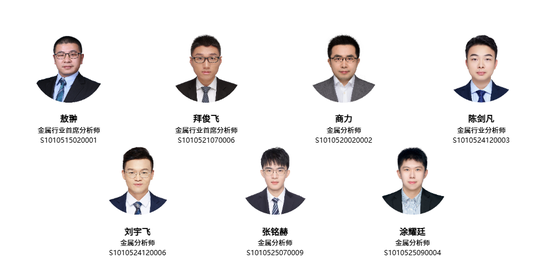
中信证券金属|迎接金属的溢价时代:2026年投资策略
Xin Lang Cai Jing· 2026-02-02 01:33
Core Viewpoint - The metal market is expected to enter a premium era in 2026, supported by strong price momentum from supply disruptions, localized high demand, and inventory accumulation, alongside increased trading activity due to loose liquidity and heightened geopolitical tensions [1][7]. Group 1: 2025 Market Performance - In 2025, the non-ferrous metal sector index rose by 98.6%, outperforming the CSI 300 index by 77.4 percentage points [2]. - Key segments leading the gains included tungsten (+144.8%), nickel-cobalt-tin-antimony (+130.7%), and copper (+123.9%) [2]. - Precious metals saw significant price increases, with gold and silver averaging over 70% higher year-on-year [2]. Group 2: Supply and Demand Dynamics - Supply disruptions in the metal industry are becoming more frequent and severe, with cobalt, tin, lithium, copper, and nickel prices significantly impacted [3][11]. - Factors such as resource depletion, insufficient investment, and resource nationalism contribute to a long-term normalization of supply constraints [3][11]. - Despite potential weaknesses in demand from sectors like real estate and home appliances, strong demand is expected from electric grid investments, energy storage batteries, and AI servers [3][11]. Group 3: Trading Activity and Price Elasticity - Increased trading activity is anticipated to amplify price elasticity, with precious metals reaching new highs and benefiting from heightened investor interest [4][12]. - Geopolitical conflicts have intensified, leading to increased risk aversion and price premiums across various metals, including copper, rare earths, tungsten, and natural uranium [4][12]. Group 4: Price Outlook for Major Metals in 2026 - Precious metals are expected to benefit from monetary attributes and risk aversion, with gold projected to reach $6,000 per ounce and silver potentially hitting $120 per ounce [5][12]. - Copper and aluminum prices are forecasted to average $12,000 per ton and 23,000 yuan per ton, respectively, supported by supply constraints and resilient demand [5][12]. - Lithium prices are expected to rise to 120,000-200,000 yuan per ton due to strong demand from energy storage, while cobalt and nickel prices are also projected to increase significantly [5][12].

中信证券:2025年有色金属行情领跑大盘 看好贵金属、工业金属等板块配置价值
智通财经网· 2026-02-02 01:21
Core Viewpoint - The report from CITIC Securities indicates that after a significant market surge in 2025, the momentum for the prices of non-ferrous metals and stocks remains strong, supported by supply disruptions, localized high demand, and inventory accumulation, with liquidity easing and geopolitical tensions likely amplifying price elasticity for metals [1] Group 1: Market Performance and Price Trends - In 2025, the CITIC non-ferrous metal sector index increased by 98.6%, outperforming the CSI 300 index by 77.4 percentage points [1] - The leading segments included tungsten (+144.8%), nickel, cobalt, tin, and antimony (+130.7%), and copper (+123.9%) [1] - Precious metals showed the most significant price increases, with average prices for gold and silver in 2025 rising over 70% year-on-year [1] Group 2: Supply and Demand Dynamics - Supply disruptions in the metal industry are expected to become more frequent and severe, with significant price increases for cobalt, tin, lithium, copper, and nickel due to these disturbances [2] - Structural demand resilience remains strong despite potential weaknesses in sectors like real estate and home appliances, with high demand expected in areas such as power grid investment, energy storage batteries, and AI servers [2] - Inventory accumulation driven by trade disputes is expected to amplify demand for copper, lithium, and rare earths, leading to price increases [2] Group 3: Trading Activity and Geopolitical Impact - The report anticipates that global liquidity will remain loose in 2026, with increased trading activity in precious metals likely leading to unexpected price surges for silver, copper, tin, and lithium carbonate [3] - Ongoing geopolitical conflicts are expected to elevate risk aversion, driving up prices for precious metals and extending to other non-ferrous metals like copper, rare earths, tungsten, and natural uranium [3] Group 4: Price Outlook for Major Metals in 2026 - Precious metals are expected to benefit from monetary attributes and sustained risk aversion, with gold projected to reach $6,000 per ounce and silver potentially rising to $120 per ounce due to extreme shortages and trading enthusiasm [4] - Supply constraints and resilient demand are expected to support strong price performance for copper and aluminum, with average prices projected at $12,000 per ton and 23,000 yuan per ton, respectively [4] - Battery metals like lithium are anticipated to rise to a price range of 120,000 to 200,000 yuan per ton, while cobalt prices are expected to be between 400,000 and 500,000 yuan per ton due to quota reductions [4] - Other metals such as rare earths, tungsten, tin, and natural uranium are expected to continue benefiting from supply-demand tightness, with price targets of 600,000 to 800,000 yuan per ton, 450,000 to 550,000 yuan per ton, 450,000 to 500,000 yuan per ton, and $100 per pound, respectively [4]
万兴科技:接受中信证券等投资者调研
Mei Ri Jing Ji Xin Wen· 2026-02-02 01:19
(记者 张喜威) 每经AI快讯,万兴科技发布公告称,2026年2月1日,万兴科技接受中信证券等投资者调研,公司董事 会秘书、副总经理刘江华等参与接待,并回答了投资者提出的问题。 每经头条(nbdtoutiao)——曾卖劳斯莱斯、保时捷等豪车,汽车销售巨头宝利德如今破产清算:杭州 总部已人去楼空,义乌子公司贴上了封条 ...

中信证券:2026年黄金有望涨至6000美元、白银120美元
Xin Lang Cai Jing· 2026-02-02 00:59
Core Viewpoint - The report from CITIC Securities predicts significant price increases for various metals by 2026, driven by factors such as monetary attributes, safe-haven demand, supply constraints, and structural low inventories [1] Group 1: Precious Metals - Precious metals are expected to benefit from the continued resonance of monetary attributes and safe-haven sentiment, with gold projected to reach $6,000 per ounce by 2026 [1] - Silver is anticipated to experience strong price elasticity due to extreme shortages and trading enthusiasm, with a price target of $120 per ounce by 2026 [1] Group 2: Base Metals - Supply constraints, resilient demand, and structural low inventories are expected to support strong price performance for copper and aluminum, with average prices projected at $12,000 per ton for copper and 23,000 yuan per ton for aluminum by 2026 [1] Group 3: Battery Metals - Lithium prices are expected to rise to a range of 120,000 to 200,000 yuan per ton by 2026, driven by strong demand from energy storage batteries [1] - Cobalt prices are projected to be in the range of 400,000 to 500,000 yuan per ton due to quota reductions [1] - Nickel prices are expected to rebound to $22,000 per ton, influenced by quota reductions in Indonesia [1] Group 4: Other Metals - Other metals such as rare earths, tungsten, tin, and natural uranium are expected to continue benefiting from supply-demand tightness and strategic metal premiums, with price targets of 600,000 to 800,000 yuan per ton for rare earths, 450,000 to 550,000 yuan per ton for tungsten, 450,000 to 500,000 yuan per ton for tin, and $100 per pound for natural uranium by 2026 [1]
“牛市旗手”证券业强者恒强格局凸显 中金最高预盈百亿港股IPO市场覆盖率45%
Chang Jiang Shang Bao· 2026-02-02 00:45
Core Viewpoint - The leading brokerage firms are demonstrating strong competitive advantages in the current bull market, with significant profit growth expected in 2025, particularly for China International Capital Corporation (CICC) [1][2]. Group 1: CICC's Performance Forecast - CICC anticipates a net profit attributable to shareholders of 8.542 billion to 10.535 billion yuan for 2025, representing a year-on-year increase of 50% to 85% [1][2]. - The net profit, excluding non-recurring items, is expected to be between 8.428 billion and 10.351 billion yuan, reflecting a growth of 49% to 83% compared to 2024 [1][2]. - CICC's performance is expected to surpass 10 billion yuan for the first time since 2021 [3]. Group 2: Revenue and Profit Growth - CICC's subsidiary, CICC Wealth Securities, is projected to achieve revenue of 8.349 billion yuan and a net profit of 1.76 billion yuan in 2025 [4]. - The company is focusing on supporting national strategic development and enhancing financial services, which has led to robust growth in investment banking, stock trading, and wealth management sectors [4]. - In the first three quarters of 2025, CICC's revenues were 5.721 billion yuan, 7.107 billion yuan, and 7.933 billion yuan, with year-on-year growth rates of 47.69%, 41.1%, and 74.78% respectively [4]. Group 3: Industry Trends and Mergers - The securities industry is experiencing accelerated mergers and acquisitions, with CICC currently pursuing a merger with Xinda Securities and Dongxing Securities, which will elevate it to a "trillion-level" brokerage [8][9]. - The merger is expected to enhance CICC's market position and operational capabilities, allowing for better service to national strategies [8]. - As of September 2025, the asset sizes of CICC, Dongxing Securities, and Xinda Securities were 764.941 billion yuan, 116.391 billion yuan, and 128.215 billion yuan respectively, with the merger expected to push CICC's total assets over one trillion yuan [9]. Group 4: Market Activity and IPOs - The A-share and Hong Kong IPO markets have regained vitality, with CICC participating in 53 out of 117 IPOs in the Hong Kong market, achieving a market coverage rate of 45% [1][9]. - CICC served as the sponsor for 42 projects, capturing a market share of 36% in the Hong Kong IPO market [9]. - In the A-share market, CICC ranked fourth in underwriting, with a total underwriting income of 580 million yuan and a market share of 7.35% in 2025 [9].




中信证券:贵金属预计将延续强势,黄金2026年有望涨至6000美元/盎司
Di Yi Cai Jing· 2026-02-02 00:44
Core Viewpoint - The report from CITIC Securities indicates that after a significant rally in 2025, the momentum for the rise in prices of non-ferrous metals and stocks remains strong, supported by supply disruptions, localized high demand, and inventory accumulation, with expectations of increased price elasticity due to loose liquidity and heightened risk aversion from geopolitical conflicts [1] Group 1: Precious Metals - Precious metals are expected to benefit from the resonance of monetary attributes and sustained risk aversion, with gold projected to reach $6,000 per ounce by 2026 [1] - The extreme shortage of spot silver and high trading activity may lead to strong price elasticity, with silver prices anticipated to reach $120 per ounce by 2026 [1] Group 2: Industrial Metals - Supply constraints, resilient demand, and structurally low inventories are expected to support strong price performance for copper and aluminum, with average prices projected at $12,000 per ton for copper and 23,000 yuan per ton for aluminum by 2026 [1] Group 3: Battery Metals - Lithium prices are expected to rise to a range of 120,000 to 200,000 yuan per ton by 2026, driven by strong demand from energy storage batteries [1] - Cobalt prices are projected to be in the range of 400,000 to 500,000 yuan per ton due to quota reductions [1] - Nickel prices are expected to rebound to $22,000 per ton by 2026, influenced by quota reductions in Indonesia [1] Group 4: Other Metals - Other metals such as rare earths, tungsten, tin, and natural uranium are expected to continue benefiting from supply-demand tightness and strategic metal premiums, with price targets of 600,000 to 800,000 yuan per ton for rare earths, 450,000 to 550,000 yuan per ton for tungsten, 450,000 to 500,000 yuan per ton for tin, and $100 per pound for natural uranium by 2026 [1]
中信、申万等头部券商最新发声:房地产市场现积极信号!利好
Zhong Guo Ji Jin Bao· 2026-02-02 00:29
Group 1 - The core viewpoint is that the worst period for the real estate industry is gradually passing, with positive signals emerging from the market and policy support in place for recovery [1][4] - According to CITIC Securities, 58 out of 78 listed real estate companies reported losses, with total net losses estimated between 206.04 billion and 239.75 billion yuan for 2025, while the net loss for 2024 was 161.4 billion yuan [1][2] - The average decline in new and second-hand housing prices in 70 major cities is 12.6% and 21.3% respectively from their peak, indicating a significant market adjustment [2][4] Group 2 - The report from Shenwan Hongyuan suggests that the fundamental bottom of the real estate market is approaching, with new construction down 75% since the peak in 2021, exceeding declines in the US, Japan, and Germany [4][6] - The pressure from inventory impairment for mainstream real estate companies is gradually being released, with cumulative asset and credit impairment losses reaching 8% of average inventory from 2019 to the first half of 2025 [4][6] - The central government emphasizes stabilizing the real estate market, with recent policy shifts indicating a more proactive approach to support the sector [5][6] Group 3 - The cash flow situation for households remains healthy, which supports the potential for continued recovery in corporate operating cash flow [3] - The shift in financing from credit bonds to project financing, such as REITs and property operation loans, is helping to resolve the mismatch between assets and liabilities for companies [3] - The introduction of commercial real estate REITs is expected to enhance the efficiency of issuance and accelerate the securitization of quality assets, benefiting the overall real estate sector [2][3]