SANY(600031)

Search documents
风能展解读及十五五风电展望
2025-10-22 14:56
Summary of Wind Power Industry Conference Call Industry Overview - The wind power equipment industry has entered a mature phase, with companies adopting more stable strategies and no longer showcasing large components on a large scale. The competitive landscape is stable, with companies like United Power and XJ Electric exiting the market, indicating no imminent large-scale eliminations in the short term [1][5] - Wind turbine prices are steadily increasing, with the State Power Investment Corporation's bidding results showing a year-on-year price increase of 200-300 RMB/kW for 6-8 MW products. The possibility of significant price reductions is low due to rising raw material costs and the trend towards larger products [1][5] Market Projections - It is expected that by 2026, China's wind power equipment exports will see significant growth, with a substantial increase in equipment delivery volumes [1][6] - The delivery scale for 2025 is projected to be between 120-130 GW, with approximately 10 GW from offshore wind. For 2026, the overall delivery level may adjust to 100-110 GW, with offshore contributions of about 12-15 GW [1][9] Technological Developments - Key component quality issues are gradually being resolved, which helps reduce costs for large, high-tower wind turbines and promotes the application of offshore wind turbines rated at 12-15 MW and above [1][7][8] - Innovations in component technology focus on sliding bearings, new materials, and domestic bearings, with high tower technology also receiving attention [1][23] Regional Insights - Zhejiang and Shandong provinces are leading in offshore wind development, with significant projects expected to be operational by 2025-2026. Coastal provinces are projected to meet 10% of their electricity demand from offshore wind by the end of 2027 [1][15][16] Economic Factors - The VAT refund policy significantly impacts cash flow for offshore wind companies, effectively raising electricity prices and aiding in technology optimization and scale expansion [1][20][21] - The pricing for various wind turbine models is as follows: 6.25 MW mixed tower turbines are priced at approximately 2,100-2,200 RMB/kW, while 10 MW turbines are around 1,200 RMB/kW, and offshore turbines rated at 12-16 MW are about 2,800 RMB/kW [1][11][12] Challenges and Opportunities - The offshore wind sector faces challenges such as military and navigation issues, but demonstration projects are gradually addressing these concerns. Local government negotiations with developers can also slow progress [1][19] - Chinese wind power companies are adopting localized manufacturing strategies to mitigate trade barriers and government demands, which helps maintain profit margins despite rising local labor costs [1][13] Future Outlook - The theoretical turning point for offshore wind power commercialization is expected by 2028, with significant advancements in cost, construction capacity, and average turbine capacity anticipated by then [1][18] - The competition in offshore wind primarily affects coastal economic provinces, with limited impact on land-based wind competition [1][22] Conclusion - The wind power industry is poised for growth, driven by technological advancements, stable pricing, and increasing export opportunities. However, challenges remain in terms of local regulations and market dynamics that will need to be navigated for sustained success [1][24][30]


市场占有率证明:反映企业市场占有率的重要证明文件-权威机构中金企信
Sou Hu Cai Jing· 2025-10-22 11:24
Core Insights - The article emphasizes the importance of market share proof for companies applying for "single champion," "specialized and innovative," and "small giant" designations, highlighting its role in enhancing application credibility and success rates [2][8]. Market Share Proof - Market share proof is a critical document that reflects a company's market position and is essential for applications in various competitive categories [2][4]. - It can be established through self-certification by the company or by citing data from third-party professional institutions, addressing challenges such as lack of data sources and inability to define niche markets [2][10]. Benefits for Companies - For companies, market share proof helps in defining market scope, obtaining reliable data, and strengthening data logic, ultimately improving the chances of successful applications [5][14]. - It also enhances trust among collaborators by providing insights into the company's market position, product competitiveness, and overall market share [7][16]. Industry Trends - The electric traction vehicle market in China is experiencing significant growth, with sales surpassing 85,100 units from January to August 2025, marking a year-on-year increase of 244% [10]. - The market is characterized by a concentration of leading players, with 28 participants and five companies holding over 10% market share, including Jiefang, Xugong, and Sany [11]. Future Directions - Key future trends in the industry include lightweight design, intelligent systems, and increased battery energy density, which are expected to enhance vehicle performance and expand market applications [11].


三一重工据称为香港上市提前截止过户
Xin Lang Cai Jing· 2025-10-22 07:14
Core Viewpoint - Sany Heavy Industry is reportedly set to expedite the transfer of its listing in Hong Kong [1] Group 1 - The company is taking steps to facilitate an earlier transfer of its listing to Hong Kong, indicating a strategic move to enhance its market presence [1]
“隐形冠军”神话终破灭
创业邦· 2025-10-22 04:06
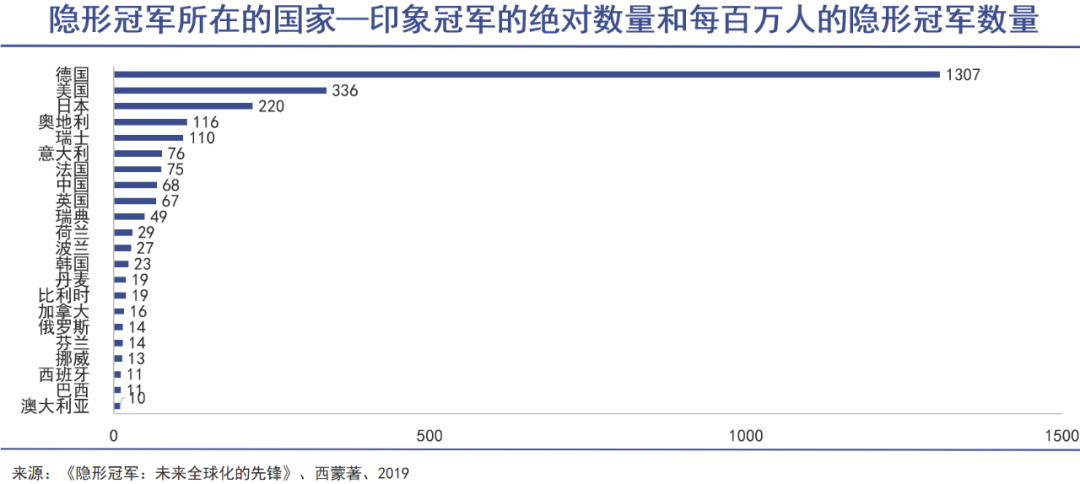
Core Insights - The article discusses the concept of "hidden champions," small and medium-sized enterprises (SMEs) that dominate niche markets but remain largely unknown to the public. These companies have been crucial to the economic success of countries like Germany, Japan, and the U.S. [5][7] - The number of hidden champions has increased significantly in China, with a growing number of SMEs emerging as global leaders in their respective fields. [33][34] Group 1: Definition and Characteristics of Hidden Champions - Hidden champions are defined as companies that hold a top two global market share position, have annual sales below $10 billion, and are not widely recognized by the public. This definition has evolved to include companies with annual revenues below $50 billion. [7][9] - As of 2023, there are 3,406 hidden champions globally, with Germany accounting for 1,573, nearly half of the total. The U.S. has 350, and Japan has 283. [7][9] Group 2: Current Challenges Faced by Hidden Champions - The article highlights a decline in the manufacturing sector in Germany, particularly in the automotive industry, which has seen an 80% increase in bankruptcies since 2021. [16][19] - Major automotive companies like Bosch and Volkswagen are implementing significant layoffs, with Bosch planning to cut 13,000 jobs and Volkswagen aiming to reduce 35,000 positions by 2030. [19][21] - The hidden champions that have historically supported these larger manufacturers are now facing severe challenges due to rising costs, supply chain disruptions, and increased competition from Chinese companies. [22][31] Group 3: The Rise of Chinese Hidden Champions - China has seen a rapid increase in the number of hidden champions, with over 14,000 specialized SMEs and 1,500 "single champion" companies. [33] - Chinese companies are increasingly entering the global market, with 15 Chinese firms now listed among the top 100 automotive suppliers, showcasing a shift in the competitive landscape. [31][32] - The article notes that the number of identified hidden champions in China has grown from about 100 to 300 in the past five years, indicating a robust growth trajectory. [33] Group 4: The Future of Hidden Champions - The article suggests that the traditional models of success for hidden champions in Germany and Japan are becoming outdated, as these companies struggle to adapt to new technological advancements and market demands. [34] - The rise of Chinese technology and innovation is reshaping the global industrial landscape, with Chinese firms increasingly dominating sectors like AI and renewable energy. [22][34]





工程机械行业点评报告:卡特收购矿业软件公司RPMGlobal,重视矿山机械投资机会
ZHESHANG SECURITIES· 2025-10-21 13:47
Investment Rating - The industry investment rating is "Positive" [7] Core Views - Caterpillar announced the acquisition of Australian software company RPMGlobal to enhance its mining software portfolio, with the deal expected to close in Q1 2026. RPM shareholders will receive A$5 per share, valuing the equity at A$1.12 billion (approximately US$730 million) [2] - The mining machinery market is projected to reach US$125.91 billion in 2024 and US$207.37 billion by 2033, with a CAGR of 5.7% from 2023 to 2033. The market is supported by rising prices of gold, silver, and copper, which have increased by 62%, 76%, and 22% respectively since the beginning of 2025 [3] - The Chinese construction machinery industry is experiencing a recovery, with excavator sales in September 2025 reaching 19,858 units, a 25% year-on-year increase. Domestic sales were 9,249 units, up 22%, while exports rose by 29% to 10,609 units [4] Summary by Sections Acquisition and Market Dynamics - Caterpillar's acquisition of RPMGlobal aims to strengthen its position in the mining software sector, with the transaction expected to complete in early 2026 [2] - The mining machinery market is currently valued at US$119.12 billion in 2023, with significant growth anticipated due to rising metal prices and increased capital expenditure from mining companies [3] Sales Performance and Recovery - The excavator sales data indicates a robust recovery in the construction machinery sector, with significant growth in both domestic and export markets. The overall sales for the first nine months of 2025 reached 174,039 units, marking an 18% increase year-on-year [4][5] - The recovery is driven by improved domestic demand from infrastructure projects and a global push for market share expansion [4] Company Listings and Incentives - Major construction machinery manufacturers are planning to list on the Hong Kong stock exchange, which is expected to enhance their international brand presence and provide efficient financing channels [6] - XCMG has announced a stock incentive plan for 2025, aiming to grant rights to up to 4.7 million shares, representing approximately 4% of the company's total equity [6]


工程机械板块10月21日涨2.36%,恒立钻具领涨,主力资金净流入9.08亿元
Zheng Xing Xing Ye Ri Bao· 2025-10-21 08:30
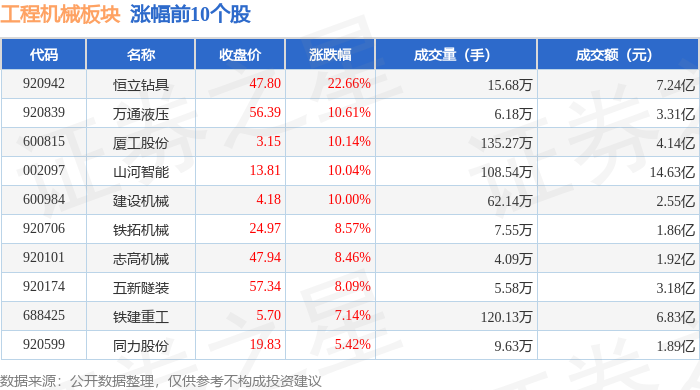
Core Insights - The engineering machinery sector experienced a significant increase of 2.36% on October 21, with Hengli Drilling Tools leading the gains [1] - The Shanghai Composite Index closed at 3916.33, up 1.36%, while the Shenzhen Component Index closed at 13077.32, up 2.06% [1] Engineering Machinery Sector Performance - Hengli Drilling Tools (code: 920942) saw a closing price of 47.80, with a remarkable increase of 22.66% and a trading volume of 156,800 shares, amounting to a transaction value of 724 million yuan [1] - Other notable performers included Wantong Hydraulic (code: 920839) with a 10.61% increase, closing at 56.39, and XGMA (code: 600815) with a 10.14% increase, closing at 3.15 [1] - The total net inflow of main funds in the engineering machinery sector was 908 million yuan, while retail investors experienced a net outflow of 451 million yuan [2][3] Fund Flow Analysis - The main net inflow for Shanhua Intelligent (code: 002097) was 487 million yuan, representing 33.29% of its trading volume, while it faced a net outflow of 227 million yuan from retail investors [3] - XGMA (code: 600815) had a main net inflow of 107 million yuan, accounting for 25.84% of its trading volume, with retail investors also experiencing a net outflow of 48 million yuan [3] - The overall trend indicates that while main funds are entering the sector, retail investors are withdrawing, suggesting a divergence in investment strategies [2][3]


港股丨香港迎来IPO热潮,三一重工领衔
Sou Hu Cai Jing· 2025-10-21 07:20
Core Viewpoint - Hong Kong Stock Exchange is set to become a top global financing venue again with the upcoming IPOs of four stocks, including SANY Heavy Industry, which plans to raise up to HKD 12.36 billion (USD 1.59 billion) [1] Group 1: Upcoming IPOs - SANY Heavy Industry, China's largest construction machinery manufacturer, plans to issue 580.42 million shares, with approximately 10% allocated for public offering in Hong Kong [1] - Other companies going public include Shanghai Cambridge Technology Co., aiming to raise HKD 4.62 billion, DeepTrust Technology with a target of HKD 710 million, and Baima Tea aiming for HKD 450 million [1] - The share price for SANY Heavy Industry is set between HKD 20.30 and HKD 21.30, with final pricing to be determined on Friday [1]
三一重工H股将挂牌上市 推动国际化战略加速前行
Zheng Quan Ri Bao Zhi Sheng· 2025-10-21 06:37
Core Viewpoint - Sany Heavy Industry Co., Ltd. is set to launch its H-share listing in Hong Kong, with a total of approximately 580 million shares available for global issuance, indicating a positive signal for the internationalization of quality Chinese assets [1][2] Group 1: Company Overview - The company plans to issue around 580 million H-shares, with 58.04 million shares allocated for public offering in Hong Kong, representing 10% of the total issuance [1] - The H-share price range is set between HKD 20.30 and HKD 21.30, with trading expected to commence on October 28 [1] - Sany Heavy Industry has a strong market presence and brand recognition in both domestic and international markets, which has facilitated investor confidence during the H-share issuance process [2] Group 2: Industry Implications - The rapid listing of Sany Heavy Industry is seen as a positive signal for the engineering machinery sector, reflecting optimism from global capital markets regarding future industry growth [2] - The ongoing demand for infrastructure development, particularly in emerging markets, presents significant growth opportunities for the engineering machinery industry [2] - Sany Heavy Industry's listing is expected to set a benchmark for other companies in the sector, potentially attracting more capital investment into the industry [2]
三一重工6031-IPO点评:日本政局重塑、美国财政僵局迎转机
Guosen International· 2025-10-21 05:16
Group 1: Market Overview - The Hong Kong stock market saw a collective rebound with the Hang Seng Index rising by 2.42%, the Hang Seng China Enterprises Index increasing by 2.45%, and the Hang Seng Tech Index up by 3% [2] - The total market turnover was HKD 239.16 billion, with short selling amounting to HKD 34.39 billion, representing 16.59% of the total turnover [2] - Northbound capital transactions amounted to HKD 234.73 billion, accounting for 13.51% of the total market turnover [3] Group 2: Company Overview - The specific company under review, SANY Heavy Industry, focuses on the engineering machinery sector and is a leading innovative enterprise globally [8] - SANY Heavy Industry is the largest engineering machinery company in China and the third largest globally, with significant sales in excavators and concrete machinery [8] - The company achieved revenues of CNY 80.84 billion, CNY 74.02 billion, and CNY 78.38 billion for the years 2022, 2023, and 2024 respectively, with a compound annual growth rate (CAGR) of 17.2% [8] Group 3: Industry Status and Outlook - The global engineering machinery market is projected to reach USD 213.5 billion in 2024 and grow to USD 296.1 billion by 2030, with a CAGR of 5.6% [9] - The core engineering machinery market is expected to grow from USD 150.5 billion in 2024 to USD 218.9 billion by 2030, with excavators being the largest segment [9] - The top five engineering machinery companies are expected to hold a market share of 45.7%, indicating a trend towards oligopoly in the industry [9] Group 4: Competitive Advantages and Opportunities - SANY Heavy Industry has over 9,100 global patents and invests an average of 7.8% of its revenue in R&D from 2022 to 2024 [10] - The company operates two "lighthouse factories" and has a comprehensive global manufacturing footprint with 30+ domestic and 16 overseas manufacturing bases [10] - The company plans to utilize 45% of its IPO proceeds to enhance its global sales and service network, 25% for R&D, and 20% for expanding overseas manufacturing capabilities [12] Group 5: Investment Insights - The IPO price range is set at HKD 20.3-21.3 per share, with a total issuance amount of HKD 11.783-12.363 billion, leading to an expected market capitalization of HKD 183.813-192.868 billion post-IPO [13] - The IPO pricing reflects a discount of approximately 13-17% compared to SANY's A-share closing price, indicating a reasonable valuation for investors [13] - The report recommends investors to subscribe to the IPO, assigning a score of 5.4 out of 10 [13]
“隐形冠军”神话终破灭
Hu Xiu· 2025-10-21 04:59
Core Insights - The article discusses the concept of "hidden champions," small and medium-sized enterprises (SMEs) that dominate niche markets but remain largely unknown to the public, particularly in Germany, Japan, and the U.S. [2][3][4] - The number of hidden champions has significantly increased in China, with a unique survival and operational philosophy that differs from Western companies [5][54] - However, the myth of hidden champions is facing challenges due to structural economic issues in Germany and Japan, leading to a decline in their prominence [6][23][36] Group 1: Definition and Characteristics of Hidden Champions - Hermann Simon defines hidden champions as companies that hold the top two global market shares, have annual sales below $1 billion, and are not widely recognized [8] - The number of hidden champions globally is estimated at 3,406, with Germany accounting for 1,573, nearly half of the total [9][13] - These companies often operate in overlooked industries, focusing on specialized products like fasteners and pet leashes, and maintain a low profile as part of their business model [14][15] Group 2: Economic Context and Decline - Germany's economy is experiencing a structural crisis, with GDP shrinking for two consecutive years, a rare occurrence since 1950 [27][28] - The automotive industry, a cornerstone of Germany's manufacturing sector, is facing systemic decline, with a reported 80% increase in bankruptcies since 2021 [28][30] - Major automotive suppliers are also struggling, with significant layoffs announced by companies like Bosch and ZF [28][29] Group 3: Comparison with China - In contrast to the decline of hidden champions in Germany and Japan, China's hidden champions are on the rise, with over 14,000 specialized small and medium enterprises identified [53][54] - Chinese companies are increasingly entering the global market, with 15 firms listed among the top 100 automotive parts suppliers, showcasing higher profit margins than their European counterparts [52] - The article notes that the number of identified hidden champions in China has tripled in the past five years, indicating a robust growth trajectory [54][55] Group 4: Future Outlook - The article suggests that the traditional manufacturing powerhouses of Germany and Japan are losing their competitive edge due to slow digital transformation and a lack of innovation [39][42][46] - The rise of Chinese technology and manufacturing capabilities is reshaping the global industrial landscape, with a notable absence of German and Japanese firms in the emerging sectors like AI and renewable energy [36][37] - The future of hidden champions in Germany and Japan appears uncertain as they struggle to adapt to changing market dynamics and increasing competition from China [58]