CM BANK(600036)

Search documents
银行2025年三季报综述:息差筑底,手续费改善,国有行全部营利双增
China Post Securities· 2025-11-13 10:57
Industry Investment Rating - The industry investment rating is maintained at "Outperform" [2] Core Viewpoints - The overall operating income, pre-provision profit, and net profit growth rates for listed banks in the first three quarters of 2025 are 0.91%, 0.56%, and 1.48% respectively, indicating a recovery in performance driven by scale and an ongoing improvement in fee income [4][12] - The growth rate of interest-earning assets for listed banks is 9.40% year-on-year, with loans and debt investments increasing by 7.83% and 13.94% respectively [4][5] - The net interest margin for listed banks is stable at 1.35%, with a slight decline in state-owned banks, while other types of banks have stabilized [5] - Non-interest income has increased by 5.02% year-on-year, although it has seen a quarter-on-quarter decline due to adjustments in the bond market [5] - The asset quality is improving, with the non-performing loan ratio at 1.23%, showing a slight decrease from the previous half-year [5] Summary by Sections 1. Performance Recovery Driven by Scale and Fee Improvement - In the first three quarters of 2025, listed banks showed a growth in operating income, pre-provision profit, and net profit, with respective growth rates of 0.91%, 0.56%, and 1.48% [12] - City commercial banks outperformed other types of banks, while state-owned banks also showed positive growth [12] 2. Growth of Interest-Earning Assets and Slower Expansion of Liabilities - The year-on-year growth rate of interest-earning assets for listed banks is 9.40%, with loans and debt investments increasing by 7.83% and 13.94% respectively [4][5] 3. Stabilization of Net Interest Margin - The net interest margin for listed banks is stable at 1.35%, with a slight decline in state-owned banks [5] 4. Non-Interest Income Performance Affected by Bond Market Adjustments - Non-interest income increased by 5.02% year-on-year, but saw a quarter-on-quarter decline due to bond market adjustments [5] 5. Improvement in Asset Quality and Declining Credit Costs - The non-performing loan ratio for listed banks is 1.23%, showing a slight decrease from the previous half-year, with a significant decline in credit costs [5][12] 6. Investment Recommendations - Focus on banks with significant deposit maturities and potential for interest margin improvement, such as Chongqing Bank, China Merchants Bank, and Bank of Communications [6] - Attention to city commercial banks that will benefit from improvements in fixed asset investment, such as Jiangsu Bank, Qilu Bank, and Qingdao Bank [6]





【招银研究|宏观点评】淡化数量目标,强化利率比价——《2025年三季度货币政策执行报告》解读
招商银行研究· 2025-11-13 09:12
Core Viewpoint - The central theme of the report emphasizes the evolution of the central bank's monetary policy framework, highlighting the shift towards "diminishing quantity targets, strengthening interest rate comparisons, and optimizing structural tools" [1] Group 1: Economic Situation Assessment - The report indicates that the domestic economic recovery requires further consolidation, with a need to promote a smooth transition between old and new growth drivers and to transform the economic development model [2] - It acknowledges the complex international situation and the insufficient growth momentum in the global economy, while asserting that the long-term supportive conditions for China's economy remain unchanged [2] - The report shifts its focus on inflation from assessment to description, noting improvements in price movements and suggesting policies to positively influence reasonable price recovery [2] Group 2: Policy Stance - The monetary policy maintains a "moderately loose" tone, focusing on achieving a "fourfold balance" [3] - The report highlights the need for supportive monetary policy to stabilize growth and inflation, especially in light of the Federal Reserve's rate cuts and slowing domestic economic growth [3] - It notes that the non-performing loan ratio and net interest margin of commercial banks have not significantly improved, indicating that the loosening of monetary policy should remain moderate [3] Group 3: Policy Framework Evolution - The report details the evolution of the monetary policy framework, emphasizing the need for liquidity to remain ample and interest rates to be reasonably priced [4] - It states that the focus will shift from "financing and monetary aggregates" to "financial totals," indicating a reduced emphasis on quantity targets, particularly credit growth [5] - The report mentions that the growth rate of RMB loans has dropped to 6.6% in October, a decline of 4.1 percentage points compared to the average growth rate over the past five years [5] Group 4: Price Control Mechanisms - The report stresses the importance of price-based regulation in response to the anticipated decline in financial total growth and increased volatility [8] - It outlines five key interest rate relationships that need to be rationalized, including the relationship between central bank policy rates and market rates, and the relationship between different types of asset yields [8] - The report emphasizes the need for continuous evaluation of financial institutions' interest rate policies and self-regulatory agreements [8] Group 5: Structural Adjustments - The report calls for continued support for key financial initiatives and emphasizes the importance of enhancing data development and utilization in the fintech sector [9] - It reviews the achievements in financial support for the digital economy during the 14th Five-Year Plan period and outlines plans for the 15th Five-Year Plan, focusing on the integration of digital technology and data elements [9]


鲁大师附属认购5000万元的结构性存款产品
Zhi Tong Cai Jing· 2025-11-13 09:00
Core Viewpoint - The company, Lu Master (03601), has announced a strategic move to utilize its idle funds for better returns by entering into a structured deposit agreement with China Merchants Bank (600036) [1] Group 1: Financial Agreement - The subsidiary Chengdu Mijia You has agreed to subscribe to a structured deposit product worth RMB 50 million with China Merchants Bank [1] - The subscription funds are derived from the redeemed principal under a previous structured deposit agreement [1]
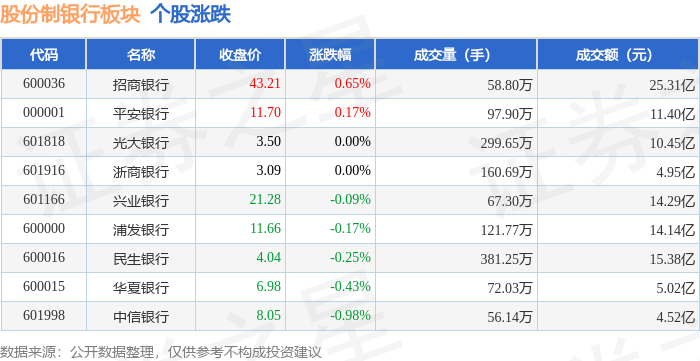
股份制银行板块11月13日涨0.04%,招商银行领涨,主力资金净流入5684.08万元
Zheng Xing Xing Ye Ri Bao· 2025-11-13 08:45
Core Insights - The banking sector saw a slight increase of 0.04% on November 13, with China Merchants Bank leading the gains [1] - The Shanghai Composite Index closed at 4029.5, up 0.73%, while the Shenzhen Component Index closed at 13476.52, up 1.78% [1] Banking Sector Performance - China Merchants Bank (600036) closed at 43.21, with a rise of 0.65% and a trading volume of 588,000 shares, amounting to a transaction value of 2.531 billion [1] - Ping An Bank (000001) closed at 11.70, up 0.17%, with a trading volume of 979,000 shares and a transaction value of 1.14 billion [1] - Other banks like Everbright Bank (601818) and Zhejiang Commercial Bank (601916) remained flat, while Industrial Bank (601166), Shanghai Pudong Development Bank (600000), and Minsheng Bank (600016) experienced slight declines [1] Capital Flow Analysis - The banking sector saw a net inflow of 56.84 million from institutional investors, while retail investors experienced a net outflow of 72.83 million [1] - Industrial Bank (601166) had a significant net outflow of 78.00 million from retail investors, despite a net inflow of 12.90 million from institutional investors [1] - China Merchants Bank had a net inflow of 24.99 million from institutional investors, with retail investors contributing a net inflow of 15.79 million [1]



长期定存不香了?
Xin Jing Bao· 2025-11-13 07:58
Core Insights - The recent announcement by Inner Mongolia's Tongyu Mengyin Village Bank to cancel its 5-year fixed deposit product marks a significant shift in the banking sector, reflecting a broader trend of declining deposit rates and the market's response to interest rate adjustments [1][3][6] Deposit Rate Trends - Many banks are suspending or lowering the rates on 5-year fixed deposit products, with some banks like China Merchants Bank offering only a 1.3% interest rate for 5-year deposits, which is lower than the 1.4% for 2-year deposits [2][4] - The phenomenon of longer-term deposit rates being lower than shorter-term rates has become common, with several banks reporting that their 5-year deposit rates are less attractive compared to 3-year options [3][5] Market Dynamics - The market for 3-year specialty fixed deposit products is highly competitive, with customers needing to "抢" (grab) limited quotas, indicating a scarcity of available products [1][2] - Banks are adjusting their deposit products in response to market conditions, with some banks increasing the entry thresholds for 3-year deposits, reflecting a shift in customer demand and risk appetite [3][4] Future Outlook - Industry experts predict that deposit rates will continue to decline, driven by banks' need to reduce funding costs and maintain profitability amid shrinking net interest margins [6][7] - The ongoing adjustments in deposit products and rates are seen as necessary for banks to manage their liabilities effectively, especially for smaller banks that may struggle with long-term deposits [8][9]


长期定存不香了?实探多家银行5年定存产品下架 利率倒挂成常态
Xin Jing Bao· 2025-11-13 07:27
Core Insights - The announcement from Inner Mongolia's Tongyu County Mengyin Village Bank regarding the cancellation of 5-year fixed deposits has drawn market attention, marking the first instance of such a move by a bank [1] - Many banks are suspending or have already removed 5-year specialty fixed deposit products, while 3-year specialty fixed deposits are becoming competitive and require prior reservation to secure [2][3] - The phenomenon of long-term deposit rates being lower than short-term rates has become commonplace, with several banks offering lower rates for 5-year deposits compared to 3-year deposits [4][5] Summary by Sections Deposit Rate Adjustments - Mengyin Village Bank has reduced its 5-year fixed deposit rate to 1.9%, which is only 0.5% higher than its 3-year fixed deposit rate before adjustments [1] - Other banks, including China Merchants Bank, have also suspended their 5-year specialty fixed deposit products, offering only standard fixed deposits at lower rates [2][3] Market Trends - The trend of long-term deposit rates being lower than short-term rates is evident, with banks like China Merchants Bank and SPDB offering 5-year fixed deposits at rates below 1.4% [4][5] - The average rate for 3-year specialty fixed deposits can reach up to 1.75%, making them more attractive compared to 5-year options [4] Future Outlook - Industry experts predict that deposit rates will continue to decline, leading banks to adjust their deposit products and strategies to manage costs effectively [6][7] - The narrowing of net interest margins across the banking sector is a significant concern, prompting banks to reconsider their long-term deposit offerings [8]

手机银行竞争格局深化 微众、网商银行淡出TOP50
Jing Ji Guan Cha Wang· 2025-11-13 04:14
Core Insights - The overall monthly active users (MAU) of mobile banking apps in China remained stable between 650 million and 720 million in Q3 2025, indicating a saturation in market growth and a shift towards intensified competition among existing players [2][16] - User engagement metrics, such as daily usage time and app launch frequency, continued to decline, highlighting a decrease in user stickiness [2][16] - The competitive landscape is undergoing significant restructuring, with state-owned banks solidifying their dominance, while private banks struggle to maintain relevance [2][15] State-Owned Banks - The six major state-owned banks captured six of the top seven spots in the mobile banking MAU rankings, with Agricultural Bank of China leading at over 250 million MAU [3][6] - All major state-owned banks reported positive MAU growth, with Industrial and Commercial Bank of China leading at a 6.1% quarter-on-quarter increase [6][10] - The robust performance of state-owned banks is attributed to their strong digital strategies and comprehensive service offerings, enhancing user engagement [6][10] Joint-Stock Banks - Joint-stock commercial banks showed overall stability, with China Merchants Bank leading this category with over 70 million MAU, ranking fifth overall [7][9] - There is a noticeable internal differentiation among joint-stock banks, with some like Everbright Bank and CITIC Bank showing significant growth, while others like Minsheng Bank faced declines [10][15] - The competitive edge of China Merchants Bank stems from its focus on digital transformation and wealth management services [10] City Commercial Banks - City commercial banks emerged as a highlight in Q3 2025, with 17 banks entering the top 50 list, led by Ningbo Bank with a remarkable 43.9% growth in MAU [11][14] - The growth of city commercial banks is linked to their targeted regional strategies and tailored services for specific customer segments [14][16] - However, some city banks experienced declines in MAU, indicating that regional advantages do not guarantee growth [14] Private Banks - Private banks are facing a collective decline, with no representatives in the top 50 MAU rankings for Q3 2025, marking a significant shift in the competitive landscape [15][16] - The challenges faced by private banks are attributed to their inability to compete with traditional banks that have strengthened their digital capabilities and customer trust [15][16] - The decline of private banks signals a transition in the industry from rapid user acquisition to deepening engagement with existing customers [15][16] Agricultural and Rural Banks - Seventeen agricultural and rural banks made it to the top 50 list, with Fujian Rural Credit leading at 781.6 million MAU [16] - Most of these banks reported positive growth, indicating a successful strategy in their respective markets [16] - The performance of agricultural banks reflects the ongoing restructuring and competitive dynamics within the banking sector [16]

沪深300ETF中金(510320)涨0.64%,半日成交额418.23万元





Xin Lang Cai Jing· 2025-11-13 03:46
Core Viewpoint - The performance of the CSI 300 ETF managed by CICC shows a slight increase, with notable movements in its constituent stocks, indicating a mixed market sentiment [1] Group 1: ETF Performance - As of the midday close on November 13, the CSI 300 ETF (510320) rose by 0.64%, priced at 1.259 yuan, with a trading volume of 4.1823 million yuan [1] - The performance benchmark for the CSI 300 ETF is the return rate of the CSI 300 Index, with a total return of 24.78% since its inception on April 16, 2025, and a return of 0.78% over the past month [1] Group 2: Constituent Stocks Performance - Notable stock movements include: - Ningde Times increased by 8.18% - Kweichow Moutai decreased by 0.32% - Ping An Insurance rose by 1.08% - China Merchants Bank fell by 0.23% - Zijin Mining increased by 4.95% - Xinyi Semiconductor decreased by 1.85% - Zhongji Xuchuang fell by 2.19% - Midea Group decreased by 0.73% - Dongfang Fortune rose by 0.57% - Yangtze Power fell by 1.19% [1]
央企ETF(159959)开盘涨0.44%,重仓股澜起科技跌0.55%,中芯国际跌0.53%
Xin Lang Cai Jing· 2025-11-13 03:19
Core Viewpoint - The Central Enterprise ETF (159959) opened with a slight increase of 0.44%, priced at 1.602 yuan, reflecting the performance of its underlying assets and market conditions [1] Group 1: ETF Performance - The Central Enterprise ETF (159959) has a benchmark performance index of the CSI Central Enterprise Structural Adjustment Index [1] - Since its establishment on October 22, 2018, the fund has achieved a return of 59.39% [1] - The fund's return over the past month has been -0.19% [1] Group 2: Major Holdings - Key stocks in the ETF include: - 澜起科技 (Lianqi Technology) down 0.55% - 中芯国际 (SMIC) down 0.53% - 海康威视 (Hikvision) down 0.10% - 国电南瑞 (Guodian NARI) down 0.29% - 招商银行 (China Merchants Bank) up 0.09% - 宝钢股份 (Baosteel) up 0.26% - 中国神华 (China Shenhua) up 0.21% - 长安汽车 (Changan Automobile) up 0.16% - 中国电信 (China Telecom) unchanged - 中国建筑 (China State Construction) unchanged [1]




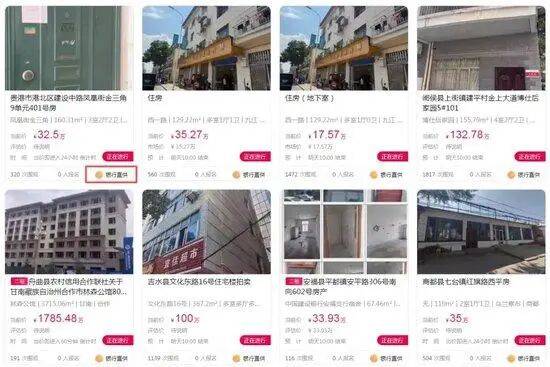
银行亲自下场卖房了,谁都扛不住房价
Sou Hu Cai Jing· 2025-11-13 02:22
Core Viewpoint - Banks are accelerating their real estate direct sales business, indicating a shift in strategy to manage non-performing assets and respond to declining property values [2][6][14]. Group 1: Bank Actions - Multiple banks, including major ones like Agricultural Bank and Construction Bank, as well as smaller regional banks, are actively selling properties, with some banks listing over 1,000 units for sale [2][4][5]. - The official narrative is to "activate non-performing assets," but the reality suggests banks are offloading properties that are unlikely to appreciate in value [6][11]. - Banks are not only selling repossessed homes but also offloading non-core assets like office buildings and employee dormitories, signaling a broader strategy to minimize liabilities [12][14]. Group 2: Market Conditions - The real estate market is experiencing a decline, with banks facing increasing non-performing loan rates, particularly in the real estate sector, which has surpassed 9% for some banks [11]. - The number of properties in the auction market has decreased slightly, indicating a potential saturation in the foreclosure market [6]. - The overall trend is towards asset devaluation, with banks prioritizing cash recovery over profit maximization in the current economic climate [13][14]. Group 3: Implications for Homeowners - Homeowners are left with limited options as banks flood the market with discounted properties, creating pressure on existing homeowners [14][15]. - The actions of banks may lead to a significant shift in the real estate market dynamics, affecting homeowners' strategies in either holding onto their properties or exiting the market [15][16].