CM BANK(600036)

Search documents
“二选一”阳谋:“排他性销售”引发公募基金代销合规战事
2 1 Shi Ji Jing Ji Bao Dao· 2025-09-16 06:01
Core Viewpoint - The recent controversy surrounding exclusive sales practices in the fund distribution industry, particularly involving China Merchants Bank (CMB), has raised questions about the fairness of sales channels and investor choice [1][2][4]. Fund Sales Practices - Several funds are reported to be "suspended for sale" on third-party platforms like Ant Financial and Tiantian Fund, while still available for purchase at CMB with standard fees [2][3]. - The phenomenon of exclusive sales is common in the fund industry, especially in a bank-dominated market [8][11]. - The new regulatory draft issued on September 5 aims to reform fund sales fee structures, potentially reducing the viability of exclusive sales practices [1][15]. Regulatory Changes - The new regulations propose to lower the maximum subscription fees for different fund types, which could diminish the profit margins for banks and encourage competition based on service rather than pricing [15][16]. - Industry insiders believe that the new rules will likely reduce the prevalence of exclusive sales and shift the focus towards service innovation among distribution channels [16][17]. Competitive Landscape - CMB's exclusive sales practices have been criticized as abnormal, with some funds only available through CMB while being unavailable on major platforms [4][6]. - The competition between CMB and internet platforms like Ant Financial is intensifying, with both sides employing different pricing strategies for fund sales [8][11]. - The operational costs associated with bank channels are higher, leading to a reluctance to offer discounts compared to internet platforms, which typically have lower costs [12][13]. Industry Dynamics - Fund companies face a dilemma in choosing sales channels, often having to decide between CMB and internet platforms based on product compatibility and market potential [9][10]. - The ongoing competition has led to a situation where fund companies may feel pressured to choose exclusive partnerships with banks or internet platforms, impacting their distribution strategies [10][11]. Future Outlook - The implementation of the new regulations is expected to create a more level playing field among distribution channels, potentially leading to a reduction in exclusive sales practices [16][17]. - The industry may see a shift towards enhanced service offerings and innovative solutions as channels adapt to the new regulatory environment and competitive pressures [17].

积极应对数字时代新挑战 招行聚焦“一老一少”开展多样化金融教育
Jin Rong Shi Bao· 2025-09-16 04:12
Core Insights - The article highlights the importance of financial education for both the elderly and youth, emphasizing the need for targeted initiatives to enhance financial literacy and risk awareness [1][4][5] Group 1: Financial Education Initiatives - A financial and cultural education event was held in Gansu Province, organized by China Merchants Bank and the Gansu Provincial Museum, aimed at educating the elderly and youth about financial risks [1] - The event received positive feedback from participants, indicating a successful approach to engaging the community in financial literacy [1] - China Merchants Bank is actively responding to the National Financial Regulatory Administration's call for a "2025 Financial Education Promotion Week" by implementing educational activities [1][4] Group 2: Demographic Challenges - The elderly population in China is particularly vulnerable to financial scams, with over 3.1 billion people aged 60 and above, making them prime targets for fraudsters [2] - A recent case highlighted the exploitation of elderly individuals through fraudulent investment schemes, with 95% of participants being over 60 years old [2] - The youth, especially university students, face challenges such as predatory lending practices, leading to significant debt accumulation [3] Group 3: Innovative Educational Approaches - China Merchants Bank is developing a comprehensive financial education system that is systematic, targeted, and engaging, covering the entire financial lifecycle of the elderly and youth [4][5] - The bank is utilizing digital tools, such as a user-friendly mobile app for the elderly and interactive content for youth on platforms like Bilibili and Douyin, to enhance financial literacy [4][5] - The bank's initiatives include community-based programs and partnerships to provide localized financial education, such as the "Silver Guard Team" to assist the elderly in understanding financial risks [4][5]
透视9家上市股份行零售金融业务:招商银行、浦发银行、光大银行个人客户数位列前三
Jin Rong Jie· 2025-09-16 03:54
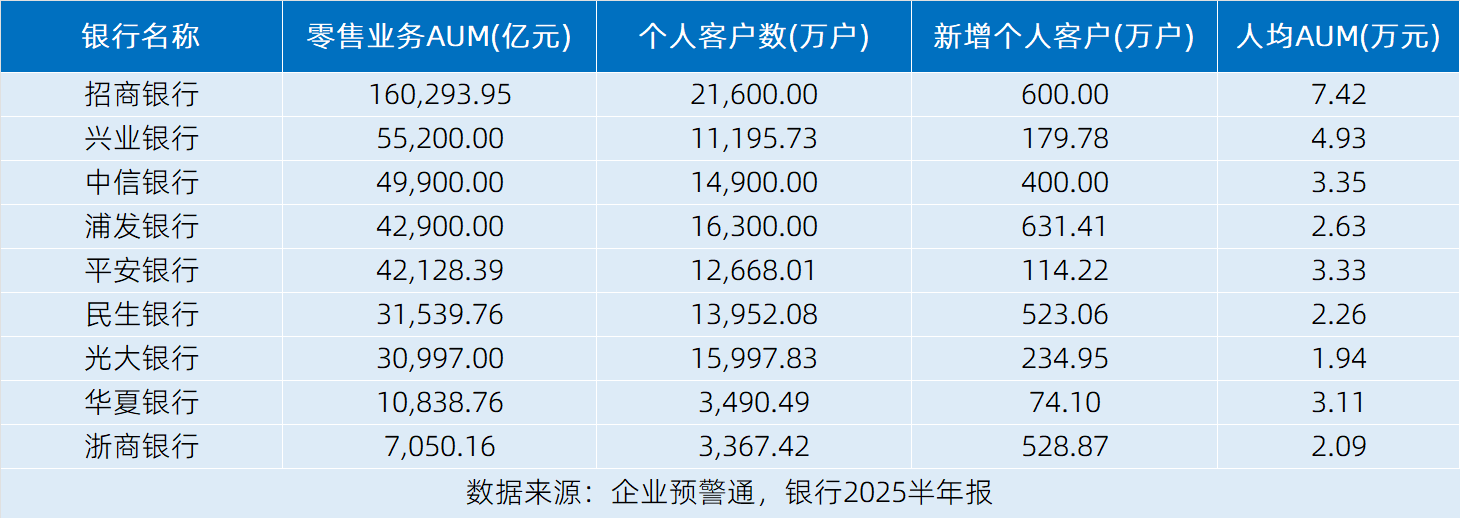
Core Viewpoint - The retail transformation in the financial industry emphasizes personal financial services as a key strategy for banks to adjust their business structure and build differentiated competitive advantages [1] Group 1: Personal Financial Asset (AUM) - China Merchants Bank leads the industry with a retail AUM of 16.03 trillion yuan, significantly ahead of its competitors by over 1 trillion yuan [3] - Industrial Bank ranks second with a retail AUM of 5.52 trillion yuan, showing an 8% increase from the previous year [3] - CITIC Bank, with a retail AUM of 4.99 trillion yuan, has adopted a "retail first strategy" and achieved a 6.52% growth [4] Group 2: Number of Personal Customers - China Merchants Bank has the largest personal customer base with 216 million customers, enhancing its cross-selling opportunities [5] - Shanghai Pudong Development Bank follows with 163 million customers, leveraging online and offline channels for customer acquisition [5] - China Everbright Bank ranks third with 160 million customers, utilizing precise marketing strategies to attract specific customer segments [5] Group 3: New Personal Customer Acquisition - Shanghai Pudong Development Bank leads in new customer acquisition with 6.31 million new customers, continuing its online and offline customer acquisition strategy [6] - China Merchants Bank ranks second with 6 million new customers, indicating a lower growth rate relative to its existing customer base [6] - Zhejiang Commercial Bank reported a growth of 5.29 million new customers, focusing on various targeted customer segments [6] Group 4: Average AUM per Customer - China Merchants Bank has the highest average AUM per customer at 74,200 yuan, reflecting its strong wealth management capabilities [7] - Industrial Bank ranks second with an average AUM of 49,300 yuan, maintaining a strong position in customer asset management [7] - CITIC Bank, Ping An Bank, and Huaxia Bank have average AUMs ranging from 30,000 to 40,000 yuan, indicating a need for improvement in high-net-worth service capabilities [8]




中国企业五百强榜单发布 八家深圳企业跻身百强
Xin Lang Cai Jing· 2025-09-16 03:34
Group 1 - The "China Top 500 Enterprises" list was released on September 15 by the China Enterprise Confederation and the China Enterprise Directors Association, highlighting the performance of Chinese companies based on their 2024 revenue [1] - Shenzhen has 27 companies listed, with 8 of them making it into the top 100, including notable firms such as Ping An Insurance, Huawei, BYD, Tencent, China Merchants Bank, Vanke, SF Express, and Shenzhen Investment Holding [1] - The selection criteria for the list is based on the operating revenue of the companies for the year 2024 [1]



基金代销:蚂蚁、招行断层式领先,银行、第三方加码指数基金
Nan Fang Du Shi Bao· 2025-09-16 03:27
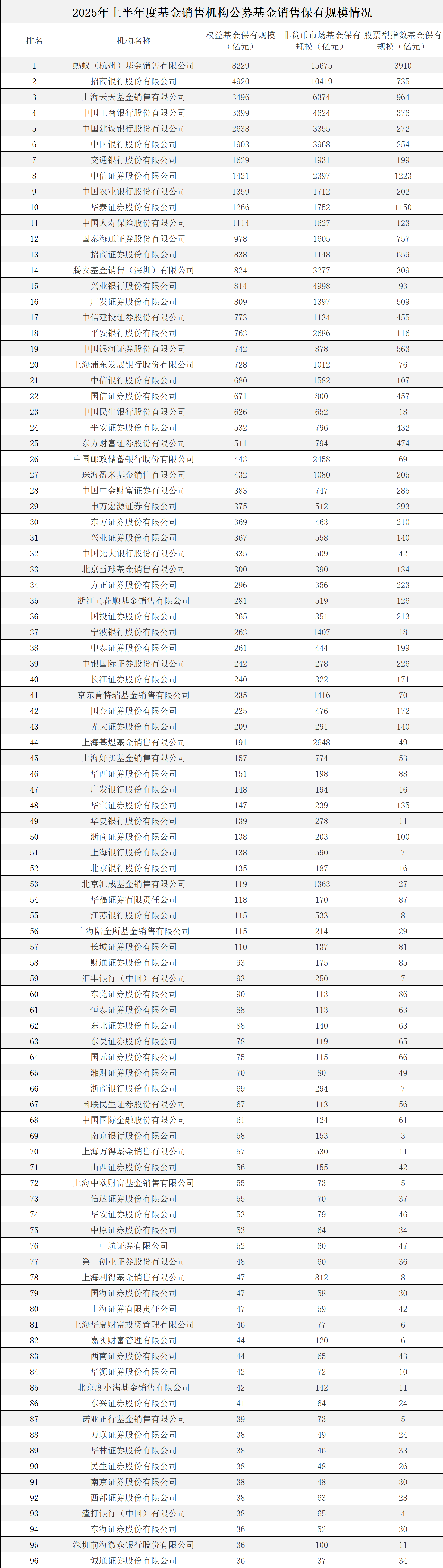
Core Insights - The China Securities Investment Fund Industry Association released the Top 100 list of public fund sales and retention scale for the first half of 2025, highlighting significant market players and trends in fund distribution channels [2][3]. Fund Sales Overview - The total non-monetary fund retention scale among the Top 100 institutions reached 10.2 trillion yuan, an increase of 6.9% compared to the end of the previous year [4]. - The equity fund scale was 5.1 trillion yuan, up 5.9%, while the fixed-income fund scale also reached 5.1 trillion yuan, increasing by 8.1% [4]. Channel Analysis Bank Channel - Banks maintained their leading position in the distribution of non-monetary funds, holding a 43% share, although this was a decline of 1.2 percentage points from the previous year [6]. - The non-monetary fund retention scale for banks was led by China Merchants Bank at 1.04 trillion yuan, followed by Industrial and Commercial Bank of China at 462.4 billion yuan [8]. - The bank channel saw significant growth in index funds, with a 38.7% increase in retention scale, outpacing third-party channels (16.0%) and securities firms (9.9%) [6]. Third-Party Channel - The third-party channel accounted for 35% of the total non-monetary fund retention scale, totaling 3.56 trillion yuan, with a growth of 8.9% [9]. - Ant Fund led the third-party channel with a retention scale of 1.57 trillion yuan, growing by 7.9%, while its fixed-income funds remained the strongest segment [9][10]. Securities Firm Channel - Securities firms held a total non-monetary fund retention scale of 2.09 trillion yuan, representing 20.4% of the market, with a slight increase of 0.4 percentage points [11]. - The stock index fund retention scale among securities firms reached 1.08 trillion yuan, growing by 9.9%, although their market share declined by 2.3 percentage points [11]. Fund Performance - The stock index fund scale reached 1.95 trillion yuan, increasing by 14.6%, while active equity funds saw a modest growth of 1.2% to 3.2 trillion yuan [5]. - The performance of active equity funds lagged behind the market index, with many investors still in recovery or redemption phases [5]. Regulatory Changes - The China Securities Regulatory Commission has proposed a revision to the management regulations for public fund sales fees, indicating a potential shift in focus towards equity products and the development of ETFs [13].


惠博普(002554)披露为全资子公司提供担保公告,9月15日股价上涨3.55%
Sou Hu Cai Jing· 2025-09-15 14:41
Core Points - The stock of Huibo Technology (002554) closed at 3.21 yuan on September 15, 2025, marking a 3.55% increase from the previous trading day, with a total market capitalization of 4.281 billion yuan [1] - The company announced that it approved a guarantee for its wholly-owned subsidiary, Kate Smart Technology Co., Ltd., for a credit limit of 10 million yuan from China Everbright Bank and another 10 million yuan from China Merchants Bank [1] - The guarantee period for the loans is set for three years from the debt performance deadline and will extend accordingly if the loans are renewed [1] Financial Performance - The stock opened at 3.11 yuan, reached a high of 3.28 yuan, and a low of 3.11 yuan on the same day, with a trading volume of 2.42 billion yuan and a turnover rate of 5.67% [1] Board Decisions - The fifth meeting of the fifth board of directors was held, where the proposal to provide guarantees for the subsidiary was unanimously approved with 8 votes in favor and no opposition or abstentions [1]


中国企业500强发布:深圳26家企业上榜,8家企业进入百强
Sou Hu Cai Jing· 2025-09-15 14:23
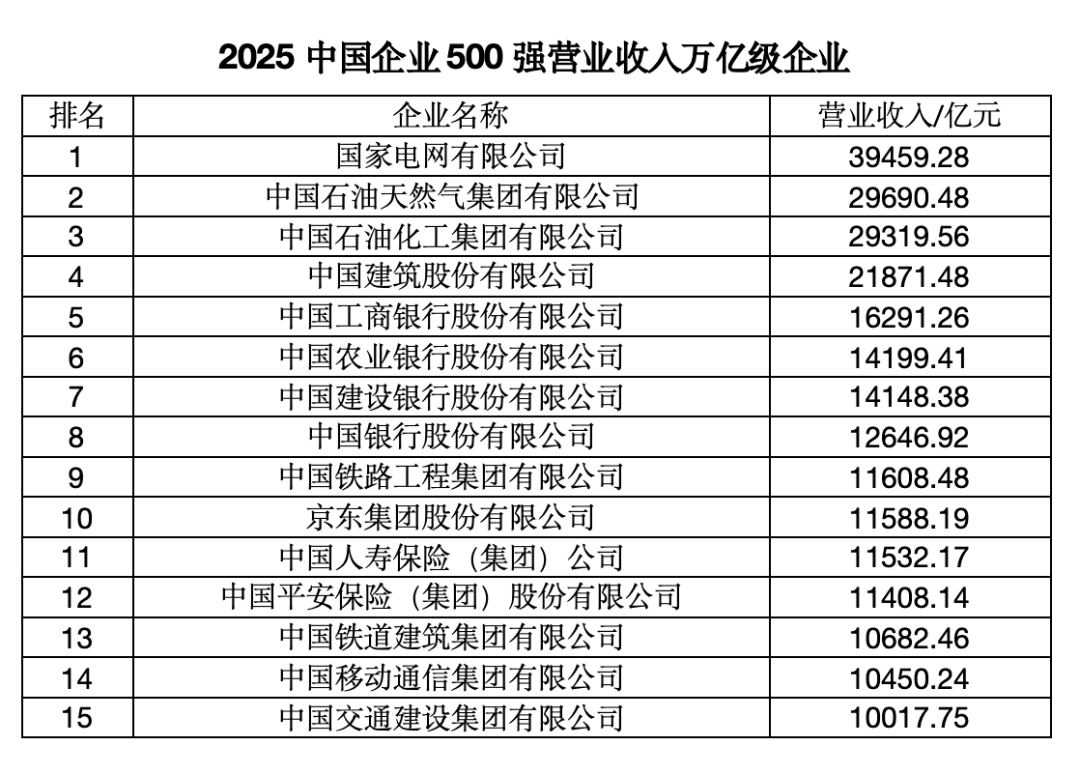
Core Insights - The "China Top 500 Enterprises" list was released on September 15, 2023, with Shenzhen having 26 companies listed, including 8 in the top 100 [1][7] - The total revenue of the top 500 enterprises reached 110.15 trillion yuan, marking an increase from the previous year, with the entry threshold rising for 23 consecutive years to 47.96 billion yuan [1][7] - China Ping An ranked 12th with a revenue of 1,140.814 billion yuan, maintaining stable overall performance and a recovery in core business [1][3] Company Rankings - The top 10 companies by revenue include State Grid Corporation (39,459.28 billion yuan), China Petroleum & Chemical Corporation (29,319.56 billion yuan), and China Ping An (1,140.814 billion yuan) [3][6] - Huawei ranked 23rd with a revenue of 862.1 billion yuan and a net profit of 62.6 billion yuan, leading in R&D investment at 179.687 billion yuan [3][4][6] - BYD ranked 26th with a revenue of 531.95 billion yuan in R&D investment, emphasizing its commitment to innovation in the electric vehicle sector [4][6] R&D Investment - Huawei leads in R&D spending with 179.687 billion yuan, followed by BYD with 53.195 billion yuan [4][6] - BYD has consistently invested heavily in R&D, exceeding its annual net profit for 13 out of the last 14 years, employing over 120,000 R&D personnel [4][6] - Other notable companies in R&D spending include China Construction Corporation (45.459 billion yuan) and China Mobile (38.066 billion yuan) [6] Industry Overview - Shenzhen's companies span various sectors, including electronics, power, telecommunications, and new energy, contributing to the city's economic development [7] - The city is accelerating its transformation into a global advanced manufacturing hub, focusing on high-quality industrial upgrades and the integration of advanced manufacturing with modern services [7]
招商银行:2025年中期净利润749.3亿元 同比增长0.25%
Sou Hu Cai Jing· 2025-09-15 10:20
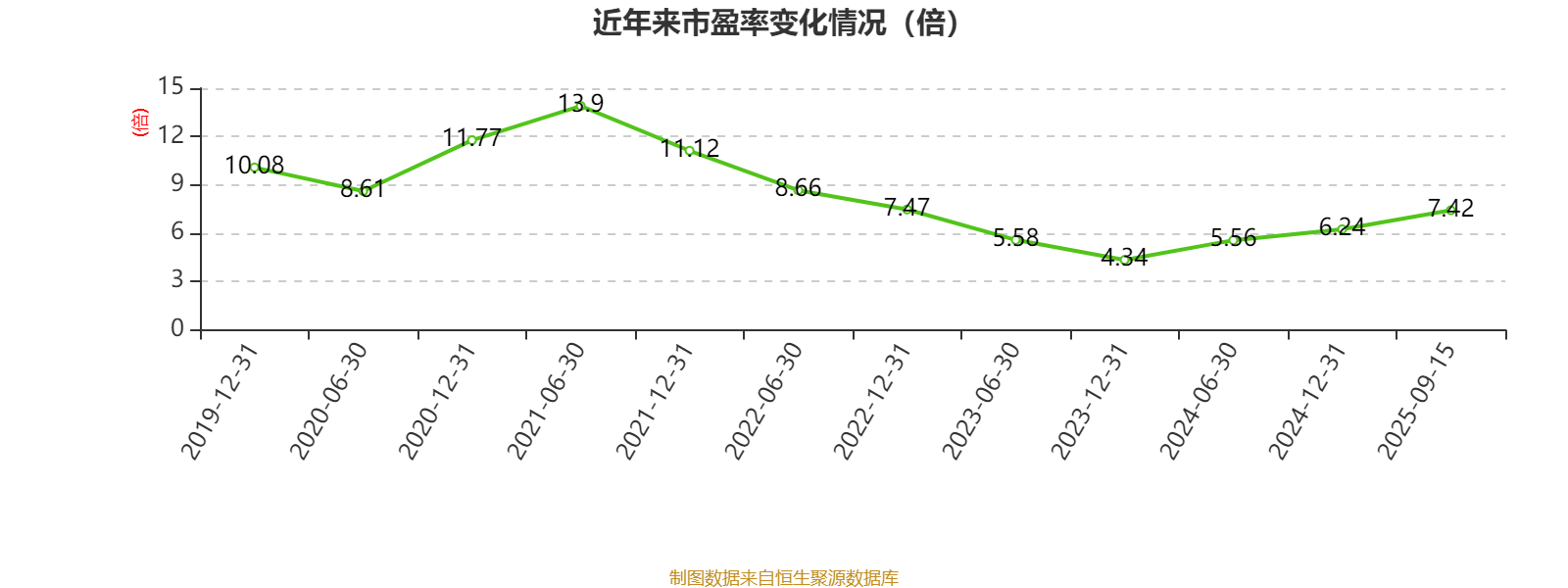
Core Viewpoint - The company is engaged in various financial services including public deposit absorption, loan issuance, settlement services, and foreign exchange operations, indicating a diversified business model in the financial sector [7]. Financial Performance - The company's revenue and net profit growth rates have shown fluctuations over the years, with a notable decline in 2023, where the revenue growth rate was 0.63% and the net profit growth rate was -1.64% [9][11]. - In the first half of 2025, the company reported a revenue of 1,800 billion and a net profit of 1,200 billion, reflecting a significant performance in the financial market [9]. Revenue Composition - For the first half of 2025, the revenue composition included retail financial services contributing 703.01 billion, wholesale financial services at 1,353.93 billion, and other business segments [10][12]. Asset and Liability Changes - As of the first half of 2025, the company experienced a 15.38% increase in other debt investments, while interbank placements decreased by 6.92% [25]. - The company's bond payables decreased by 26.73%, while deposits and interbank deposits increased by 3.64% [28]. Cash Flow Analysis - The net cash flow from operating activities for the first half of 2025 was 1,344.61 billion, while financing and investment activities showed negative cash flows of -213.65 billion and -1,743.91 billion respectively [20]. Return on Equity - The average return on equity for the first half of 2025 was reported at 6%, which is a decrease of 0.81 percentage points compared to the same period last year [17].
内外兼修、多措并举 招行信用卡创新构筑“黑灰产”防治网
Xin Hua Wang· 2025-09-15 10:08
Core Viewpoint - The rise of financial "black and gray industries" posing significant risks to consumer information and financial security, with fraudulent companies offering debt relief services while charging high fees and employing deceptive practices [1][2]. Group 1: Consumer Protection Initiatives - Financial institutions are actively engaging in consumer education to help identify and prevent "black and gray industry" scams, with notable efforts from China Merchants Bank (CMB) Credit Card [1][2]. - CMB Credit Card has implemented various outreach programs, including activities in schools, rural areas, and communities, to disseminate knowledge on recognizing scams and protecting against fraud [1][2]. Group 2: Law Enforcement Collaboration - CMB Credit Card has established a regular "police-bank cooperation" model to combat financial "black and gray industries," facilitating a comprehensive mechanism for intelligence sharing and proactive detection of fraudulent activities [3][5]. - A recent case involved the conviction of three individuals for forging government seals, highlighting the effectiveness of CMB's collaboration with law enforcement in addressing such crimes [3]. Group 3: Technological Innovations - CMB Credit Card has developed an intelligent identification model for detecting "black and gray industry" activities, utilizing big data analysis and biometric recognition to enhance risk detection and prevention [4]. - The system operates in real-time, capable of analyzing data within milliseconds, and has achieved over 90% identification of telecom network fraud transactions [4]. Group 4: Collaborative Governance - The fight against malicious debt evasion requires a multi-faceted approach, with CMB Credit Card strengthening partnerships with other financial institutions and internet platforms to explore collaborative governance [5][6]. - In August 2023, CMB Credit Card established a governance mechanism with social media platforms to jointly assess and mitigate risks associated with "black and gray industry" information [6]. Group 5: Future Commitment - CMB Credit Card aims to continue its efforts in consumer protection and the fight against financial "black and gray industries," striving for a balanced dynamic between consumer rights and industry development [6].
公募销售机构保有规模百强榜单出炉 11家权益基金销售破千亿
Sou Hu Cai Jing· 2025-09-15 09:52
Core Insights - The public fund sales scale in China reached a new high in the first half of 2025, with the top 100 institutions collectively surpassing 10 trillion yuan in non-monetary fund sales, marking a growth of approximately 6.95% compared to the end of 2024 [1][2] Fund Sales Performance - Ant Fund maintained the highest non-monetary fund holding scale at 1,567.5 billion yuan by the end of the first half of 2025, followed by China Merchants Bank, which also crossed the 1 trillion yuan mark [1] - In terms of equity funds, Ant Fund again led with a holding scale of 822.9 billion yuan, while China Life's equity fund sales reached 111.4 billion yuan, an increase of 16.3 billion yuan from six months prior [1] Growth Rates - The top three institutions in non-monetary fund sales—Ant Fund, China Merchants Bank, and Tiantian Fund—experienced steady growth, with Tiantian Fund's growth rate exceeding 10% [1] - For equity funds, both Ant Fund and China Merchants Bank achieved double-digit growth, while Tiantian Fund's sales increased marginally by only 300 million yuan compared to the end of 2024 [1] Rankings - The rankings for equity fund sales remained unchanged for the top 11 institutions compared to the end of 2024, with Ant Fund, China Merchants Bank, and Tiantian Fund occupying the top three positions [2] - The merged entity of Guotai Junan and Haitong Securities rose to the 12th position, while several joint-stock banks and city commercial banks saw declines in their rankings within the top 50 [2]