CM BANK(600036)

Search documents
起存门槛提高利率下调 大额存单为啥突然不香了?
Yang Guang Wang· 2025-12-08 10:12
陆女士表示:"(利率)跟之前比,肯定没得比。我去年9月份存了一笔是(年利率)2.4%,三年 期的是2.4%。今年三年期的只有1.75%了。" 央广网北京12月8日消息(总台中国之声记者王逸群)据中央广播电视总台中国之声报道,五年期 大额存单集体"下架",三年期大额存单门槛上调,长期限存款产品为何"一单难求"?存款利率下行压力 下,普通储户如何配置资产? 近日,"六大国有银行集体下架五年期大额存单"的消息引发关注。不少居民反映,大额存单额度难 抢,利率下调。记者查询多家银行手机银行发现,五年期大额存单产品已经基本退市,部分三年期大额 存单也提高了办理门槛。那么,长期限存款产品越来越难买的背后,都有哪些原因?存款短期化是否会 成为未来趋势?面对存款利率下调,普通居民和银行业应当如何调整? 安徽马鞍山市民陆女士是一名财务人员,一直关注着理财方面的信息。她告诉记者,自己此前曾持 有三年期大额存单,今年到期后本想续存同类产品,却发现市场早已不是当初的模样。 董希淼介绍:"近年来,商业银行净息差明显下滑,通过提高门槛、压缩额度,一定程度上能降低 高成本负债规模,努力维持息差基本稳定。部分银行将稀缺的中长期存款额度,作为服 ...






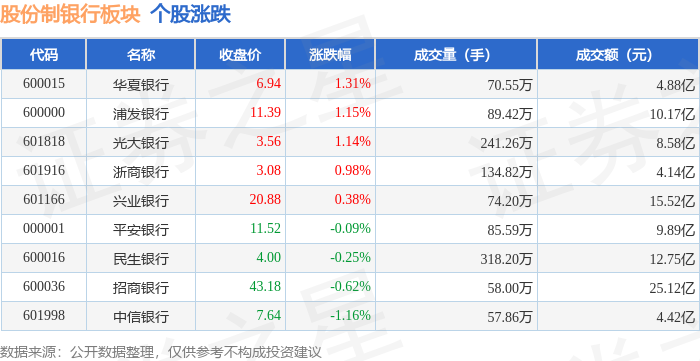
股份制银行板块12月8日涨0%,华夏银行领涨,主力资金净流入1.71亿元
Zheng Xing Xing Ye Ri Bao· 2025-12-08 09:09
Core Viewpoint - The banking sector showed a slight increase on December 8, with the Shanghai Composite Index rising by 0.54% and the Shenzhen Component Index increasing by 1.39% [1] Group 1: Stock Performance - The banking sector rose by 0.0% compared to the previous trading day, with Huaxia Bank leading the gains [1] - Key stock performances include: - Huaxia Bank: Closed at 6.94, up 1.31% with a trading volume of 705,500 shares and a turnover of 488 million [1] - Pudong Development Bank: Closed at 11.39, up 1.15% with a trading volume of 894,200 shares and a turnover of 1.017 billion [1] - Everbright Bank: Closed at 3.56, up 1.14% with a trading volume of 2.4126 million shares and a turnover of 858 million [1] - Other banks showed mixed results, with some experiencing slight declines [1] Group 2: Capital Flow - The banking sector experienced a net inflow of 171 million in main funds, while retail investors saw a net outflow of 1.44 billion [1] - Detailed capital flow for selected banks includes: - China Merchants Bank: Net inflow of 114 million, with a 4.53% share of main funds [2] - Huaxia Bank: Net inflow of 69.04 million, with a 14.13% share of main funds [2] - Minsheng Bank: Net inflow of 65.87 million, with a 5.17% share of main funds [2] - Other banks like Ping An Bank and CITIC Bank experienced net outflows [2]





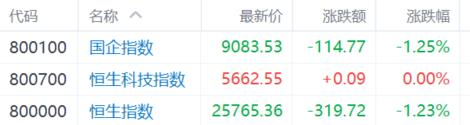
港股收评:恒指收跌1.23%,再失26000点,中资券商股逆势走高
Ge Long Hui· 2025-12-08 08:37
具体来看: 大型科技股多数呈现下跌行情但总体跌幅较小,腾讯、京东、网易、小米、京东跌幅在1%以内,阿里巴巴、快手、携程控股跌超 1%,百度逆市大涨3.45%。 | 代码 | 名称 | 最新价 | 涨跌额 | 涨跌幅 √ | | --- | --- | --- | --- | --- | | 09888 | 百度集团-SW.) | 125.800 | +4.200 | 3.45% | | 03690 | 美团-W | 99.500 | +0.450 | 0.45% | | 09626 | 時陣時陣-W | 203.600 | -0.200 | -0.10% | | 02015 | 理想汽车-W | 69.650 | -0.250 | -0.36% | | 01810 | 小米集团-W | 42.580 | -0.200 | -0.47% | | 099999 | 网易-5 | 216.800 | -1.200 | -0.55% | | 09618 | 京东集团-SW | 116.200 | -0.800 | -0.68% | | 00700 | 腾讯控股 | 605.000 | -5.000 | -0.82% ...





高息不再 “存款特种兵”沉默
Jing Ji Guan Cha Wang· 2025-12-08 08:08
Core Viewpoint - The current low interest rate environment has led to a significant reduction in the availability and attractiveness of large time deposits, with many banks discontinuing long-term products, prompting depositors to seek alternative investment options [1][3][4]. Group 1: Interest Rate Trends - The interest rate for large time deposits has decreased significantly, with major banks offering rates as low as 1.55% for 3-year deposits, compared to previous rates above 3% [2][3]. - Many banks, including state-owned and joint-stock banks, have stopped issuing long-term large time deposits, with 5-year products no longer available [3][4]. - The interest rates for traditional fixed deposits are now comparable to those of large time deposits, diminishing their competitive edge [3][4]. Group 2: Depositor Behavior - Depositors are increasingly turning to alternative investments such as gold and bank wealth management products due to the low returns on traditional deposits [1][9]. - There is a noticeable shift among depositors, with some opting for riskier investments while others remain conservative, preferring to keep their funds in banks despite lower interest rates [9][10]. - Social media and deposit communities have become platforms for sharing information about available products, with many depositors actively seeking higher yields [7][8]. Group 3: Bank Strategies - Banks are adopting proactive liability management strategies in response to the low interest rate environment, leading to a reduction in the issuance of long-term large time deposits [5][6]. - Some smaller banks are leveraging marketing strategies to attract depositors by offering competitive rates and promotional incentives [8]. - The trend of discontinuing long-term large time deposits reflects broader market conditions and the need for banks to manage their interest rate risk effectively [5][6].



内银股全线走低 建设银行跌超3% 工商银行跌近3%
Zhi Tong Cai Jing· 2025-12-08 06:27
银河证券则指出,险资股票投资风险因子下调落地,加力引导中长期资金入市,有望为银行板块带来增 量资金,相关指数权重股将受益。万科债券展期暂属个体事件,且银行房地产相关风险敞口占比低,资 产质量受影响基本可控,但房地产信用风险仍需关注。四大行中期分红派息在即,上市银行整体中期分 红力度不减、节奏提前,将于12月迎来一轮集中派息窗口期,红利价值凸显。 内银股全线走低,截至发稿,建设银行(601939)(00939)跌3.38%,报7.71港元;工商银行(601398) (01398)跌2.69%,报6.16港元;中国银行(601988)(03988)跌2.2%,报4.45港元;招商银行(600036) (03968)跌1.96%,报52.65港元。 中邮证券发布研报称,今年12月至次年3月末或将仍有大量定期存款到期,居民存量资产无风险利率将 进一步下行,居民存款或将继续向保险资产迁移,同时受益于新型政策性金融工具支持,重点省市固定 资产投资增速或将明显改善。 ...
大行ΔEVE指标测算及承接债券能力评估
KAIYUAN SECURITIES· 2025-12-08 05:46
Investment Rating - The industry investment rating is optimistic (maintained) [1] Core Insights - The report indicates that the ΔEVE (Economic Value of Equity) indicator for major banks has decreased compared to 2024, with some banks potentially exceeding the regulatory requirement of -15% [4][15] - The report highlights that for every 20 trillion yuan of local government bonds undertaken by banks, the ΔEVE/ Tier 1 capital ratio deteriorates by 0.65% to 1.73% [24][25] - The current regulatory buffer allows major banks to undertake approximately 666.8 billion yuan of 30-year local government bonds [33][34] - The report suggests a potential relaxation of regulatory requirements for interest rate risk indicators, which could facilitate banks' ability to manage long-term local government bonds [7] Summary by Sections ΔEVE Indicator Assessment - As of H1 2025, the ΔEVE/ Tier 1 capital ratio for major banks is as follows: ICBC at -16.66%, CCB at -17.26%, ABC at -14.89%, BOC at -12.28%, PSBC at -9.02%, and BC at -12.46% [15][16] - The report notes a decline in the ΔEVE indicator for these banks compared to 2024, with specific changes of -1.95pct for ICBC and -2.52pct for CCB [4][15] Local Government Bond Undertaking - The report estimates that major banks added 3.25 trillion yuan in local government bonds in H1 2025, with state-owned banks accounting for 1.86 trillion yuan, representing 57.2% of the total [5][32] - The duration of local government bonds is assumed to be distributed across various terms, with 30% of bonds being 10 years and 23% being 30 years [25][29] Debt Capacity Assessment - The current regulatory buffer allows major banks to support the undertaking of 30-year local government bonds up to 666.8 billion yuan, with potential increases if regulatory requirements are relaxed [33][34] - For every 1% relaxation in the ΔEVE/ Tier 1 capital ratio, banks could undertake an additional 593.4 billion yuan of 30-year local government bonds [34][35] Investment Recommendations - The report recommends a bottom-line allocation to large state-owned banks, with specific beneficiaries being ABC and ICBC [39] - Core allocations should focus on leading comprehensive banks, with recommended stocks including CMB and CCB [39] - For flexible allocations, regional banks with unique characteristics, such as JSB and CQB, are highlighted as potential beneficiaries [39][40]

银行业周度追踪2025年第48周:保险长钱入市,聚焦红利与科创-20251208
Changjiang Securities· 2025-12-08 05:32
Investment Rating - The report maintains a "Positive" investment rating for the banking sector [10] Core Insights - The banking sector has experienced a third consecutive week of decline, primarily due to a rebound in market risk appetite, leading to the outflow of previously defensive capital. The bond market has also adjusted, affecting investment returns. Despite short-term style changes, the report remains optimistic about the revaluation direction of bank stocks, particularly favoring large banks like Bank of Communications and China Merchants Bank, as well as leading city commercial banks such as Nanjing Bank, Jiangsu Bank, and Hangzhou Bank [2][7] - Recent adjustments in insurance risk factors encourage long-term allocations towards low volatility dividend stocks and technology innovation sectors. The National Financial Regulatory Administration has lowered risk factors for certain indices, which is expected to enhance the solvency of insurance companies and promote long-term investments in quality equity assets [4][39] Summary by Sections Market Performance - The banking index fell by 1.1% this week, underperforming the CSI 300 and ChiNext indices by 2.3% and 2.9% respectively. The average dividend yield for the six major state-owned banks in A-shares rose to 3.85%, with a 200 basis point spread over the 10-year government bond yield. H-shares maintain a 5% average dividend yield, with a 23% discount compared to A-shares [7][20][26] Credit Growth - As of the end of October 2025, credit growth across various regions remains differentiated, with major provinces like Jiangsu, Zhejiang, Shandong, Sichuan, and Anhui maintaining growth rates above 8%. Sichuan leads with a growth rate of 10.8%. Corporate loans continue to be the main growth driver, with Jiangsu and Sichuan showing growth rates of 13.6% and 13.3% respectively [6][34] Insurance Capital Allocation - Insurance capital is in a continuous process of increasing allocations to bank stocks, particularly during the third quarter adjustment period. The report outlines three core strategies for capital allocation: large insurance funds strategically investing in state-owned banks and leading city commercial banks, and smaller insurance companies seeking long-term equity investment opportunities in smaller banks [5][39]


央企ETF(159959)开盘涨0.45%,重仓股澜起科技涨0.65%,中芯国际涨0.03%
Xin Lang Cai Jing· 2025-12-08 01:39
Core Viewpoint - The Central Enterprise ETF (159959) opened with a slight increase of 0.45%, priced at 1.552 yuan, indicating a stable performance in the market [1] Group 1: ETF Performance - The Central Enterprise ETF (159959) has a benchmark performance comparison with the China Securities Central Enterprise Structural Adjustment Index return rate [1] - Since its establishment on October 22, 2018, the fund has achieved a return of 54.80% [1] - The fund's return over the past month has been -2.14%, reflecting a recent decline [1] Group 2: Major Holdings - Key stocks in the Central Enterprise ETF include: - 澜起科技 (Lianqi Technology) with an opening increase of 0.65% - 中芯国际 (SMIC) with a slight increase of 0.03% - 海康威视 (Hikvision) with an increase of 0.27% - 国电南瑞 (Guodian NARI) with an increase of 0.22% - 招商银行 (China Merchants Bank) with a decrease of 0.02% - 宝钢股份 (Baosteel) with a decrease of 0.14% - 中国神华 (China Shenhua) with a decrease of 0.10% - 长安汽车 (Changan Automobile) with an increase of 0.08% - 中国电信 (China Telecom) unchanged - 中国建筑 (China State Construction) unchanged [1]




金融行业周报:险资股票因子下调,看好券商板块盈利修复-20251207
Western Securities· 2025-12-07 12:26
Investment Rating - The report indicates a positive outlook for the insurance sector, with a recommendation to focus on strong insurance companies such as New China Life Insurance, China Ping An, China Life Insurance H, and China Taiping [2][17] Core Insights - The non-bank financial sector (Shenwan) index increased by 2.27%, outperforming the CSI 300 index by 0.99 percentage points, while the insurance sector saw a significant rise of 5.08% [1][9] - The insurance sector's growth is attributed to several factors, including a reduction in long-term stock holding risk factors, expected strong performance in dividend insurance products, and improved global liquidity due to anticipated interest rate cuts in the US [2][16] - The brokerage sector is expected to experience a valuation correction, with a current price-to-book (PB) ratio of 1.36x, indicating potential for recovery in profitability and valuation [2][19] - The banking sector has underperformed, with a decline of 1.18%, and is currently undervalued with a PB ratio of 0.55x, suggesting room for future valuation improvement [3][20] Summary by Sections Insurance Sector - The insurance index rose by 5.08%, significantly outperforming the CSI 300 index by 3.80 percentage points, driven by regulatory adjustments that lowered risk factors for long-term stock holdings [1][13] - The sector is expected to benefit from a favorable environment for dividend insurance products, with strong growth anticipated in the coming year [2][16] - Key recommendations include focusing on companies like New China Life Insurance and China Ping An, which are positioned for growth [17] Brokerage Sector - The brokerage index increased by 1.14%, with a current PB ratio of 1.36x, indicating a potential mismatch between profitability and valuation [2][19] - Regulatory changes are expected to enhance capital efficiency for leading brokerages, creating opportunities for investment in firms with strong fundamentals [2][18] - Recommended stocks include Guotai Junan, Huatai Securities, and Orient Securities, particularly those involved in mergers or restructuring [19] Banking Sector - The banking sector saw a decline of 1.18%, with a PB ratio of 0.55x, indicating that banks are currently undervalued [3][20] - Concerns about asset quality, particularly related to real estate and local government debt, have affected market perceptions, but there is potential for recovery as regulatory support continues [23][24] - Recommendations include focusing on high-quality city commercial banks in economically developed regions, such as Hangzhou Bank and Ningbo Bank [20][24]




银行业周报(20251201-20251207):数字人民币定位有望晋级,支付领域大有可为-20251207
Huachuang Securities· 2025-12-07 11:45
Investment Rating - The report maintains a "Recommended" investment rating for the banking sector, indicating a positive outlook for the industry in the near term [1]. Core Insights - The positioning of the digital RMB is expected to advance, with significant potential in the payment sector. The People's Bank of China (PBOC) is working on optimizing the management system for digital RMB, which may evolve from a cash-like payment instrument (M0) to broader monetary categories (M1, M2) [2][8]. - Infrastructure development for digital RMB is progressing, with the establishment of international and operational centers in Shanghai and Beijing, respectively. As of September 2025, the cumulative transaction amount in pilot areas reached 14.2 trillion yuan, with 2.25 billion personal wallets opened [3][8]. - The banking sector is expected to see a systematic recovery in valuations in 2026, transitioning from a defensive to a growth-oriented investment logic. Key investment themes include high dividend yields and low valuations, particularly as risk-free interest rates decline [9]. Summary by Sections Industry Overview - The banking sector comprises 42 listed companies with a total market capitalization of approximately 1.15 trillion yuan, representing 13.04% of the market [4]. - The average daily trading volume for A-shares was 10,583.60 billion yuan, reflecting a 0.65% increase from the previous week [8]. Performance Metrics - The absolute performance of the banking sector over the past month is 5.0%, with a relative performance of 2.8% compared to the benchmark [5]. - The report highlights that the banking index underperformed the CSI 300 index by 2.46 percentage points during the week [8]. Investment Recommendations - The report suggests focusing on three main investment lines: 1. State-owned banks and major commercial banks like China Merchants Bank. 2. Quality joint-stock banks and city commercial banks with improving net interest margins and credit costs. 3. City commercial banks benefiting from regional policies and showing significant performance potential [9]. - Specific banks recommended for investment include China Merchants Bank, CITIC Bank, and several city commercial banks such as Chengdu Bank and Chongqing Bank [9][10].