China Spacesat(600118)

Search documents
1月12日主题复盘 | A股成交额刷新纪录,AI应用、航天等多个方向掀涨停潮
Xuan Gu Bao· 2026-01-12 09:16
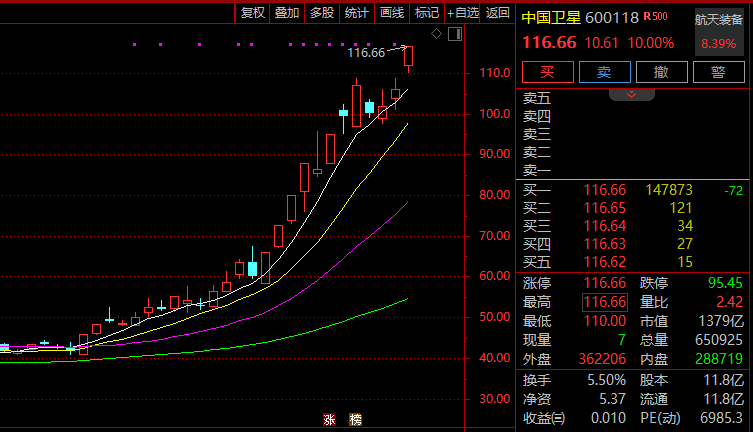
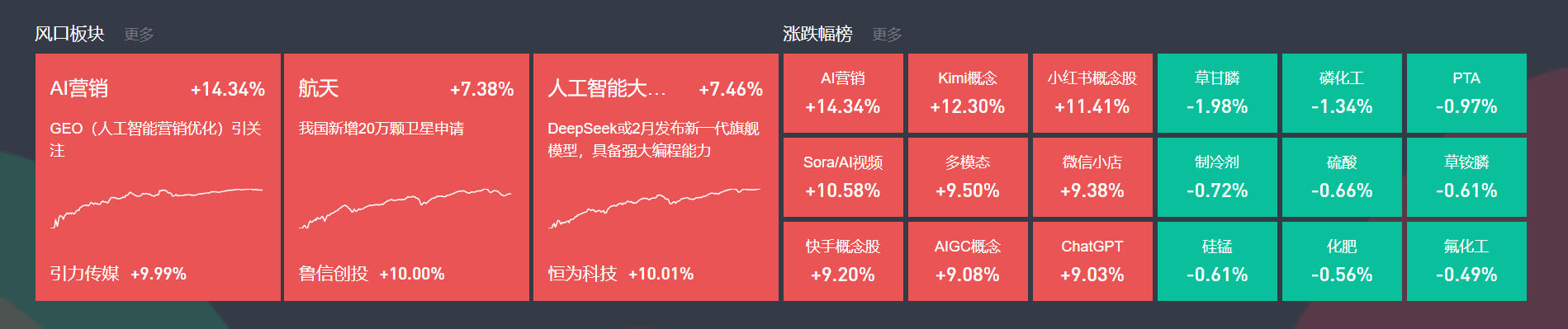
Market Overview - The market showed strong fluctuations throughout the day, with all three major indices rising over 1%, and the Shanghai Composite Index achieving a 17-day consecutive rise [1] - AI application sectors experienced a significant surge, with stocks like BlueFocus and Hand Information hitting the daily limit [1] - The commercial aerospace concept continued its strong performance, with China Satellite and China Satcom both reaching new highs [1] - The brain-computer interface concept was also active, with stocks like DaoTech and Yanshan Technology hitting the daily limit [1] - Over 4,100 stocks in the Shanghai, Shenzhen, and Beijing markets rose, with a total transaction volume of 3.64 trillion, setting a new record for daily trading in A-shares [1] AI Marketing - The AI marketing concept saw a wave of limit-up stocks, including Gravity Media, Leo Holdings, and BoRui Communication [4] - Elon Musk announced on social media that he would open-source the latest content recommendation algorithm for the X platform within a week, interpreted by the market as his entry into the GEO space [4] - DeepSeek is set to release its next-generation flagship AI model, DeepSeek V4, in February, which reportedly outperforms major models like Anthropic Claude and OpenAI GPT series in programming capabilities [4][7] - Anthropic's Claude Code received a significant update, marking a new phase in global AI programming competition [4] Aerospace Sector - The aerospace sector continued to rise, with stocks like Luxin Investment, Goldwind Technology, and Daye Shares hitting the daily limit [10] - China applied for frequency resources for over 200,000 satellites, indicating a strategic national-level initiative [11] - Experts believe that the establishment of the Radio Innovation Institute will accelerate the 6G process, integrating satellite networks with ground communication networks [14] AI Medical - The AI medical sector also performed well, with companies like Meinian Health and Dean Diagnostics seeing consecutive gains [15] - OpenAI launched "ChatGPT Health," a health-related dialogue space that connects electronic medical records and health applications [15] - The demand for AI in healthcare is expected to grow significantly, driven by an aging population and an increase in chronic disease patients [18]





收盘丨沪指涨超1%走出17连阳,市场成交额超3.6万亿
Di Yi Cai Jing· 2026-01-12 07:41
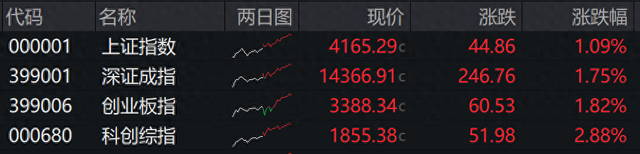
Market Performance - The A-share market showed strong fluctuations throughout the day, with the Shanghai Composite Index rising by 1.09%, the Shenzhen Component Index by 1.75%, the ChiNext Index by 1.82%, and the Sci-Tech Innovation Board Index by 2.88% [1][2]. Sector Highlights - AI application themes experienced a significant surge, with stocks such as BlueFocus, Hand Information, Puyuan Information, and Keda Guochuang hitting the daily limit [3]. - The commercial aerospace sector continued its strong performance, with China Satellite and China Satcom both reaching new highs [5]. Stock Performance - Notable stocks with significant gains included: - Zhongcheng Technology (+30.00% to 41.60) - Xingtai Measurement Control (+29.99% to 130.16) - Liujin Technology (+29.92% to 9.51) - Parallel Technology (+21.07% to 187.00) - Keda Guochuang (+20.01% to 48.52) [4][5]. Market Activity - Over 4,100 stocks rose, with the A-share trading volume exceeding 3.6 trillion yuan, setting a new historical high [5]. Capital Flow - Main capital inflows were observed in sectors such as computer, media, gaming, and securities, while outflows were noted in non-ferrous metals, electronics, and real estate [7]. - Specific stocks with net inflows included Dongfang Caifu, Lingyi Zhizao, and China Satellite, with net inflows of 1.655 billion yuan, 1.642 billion yuan, and 1.435 billion yuan respectively [7]. Institutional Insights - Citic Securities indicated that the A-share market is experiencing a rise in both volume and price, suggesting patience for future gains [7]. - Cailun Securities noted that the year-end market trend is likely to continue, although short-term technical correction risks are increasing [7].




超4100只个股上涨
第一财经· 2026-01-12 07:30
Market Overview - The A-share market showed a strong upward trend, with the Shanghai Composite Index rising by 1.09%, the Shenzhen Component Index by 1.75%, the ChiNext Index by 1.82%, and the Sci-Tech Innovation Index by 2.88% [3][4]. Sector Performance - AI application stocks experienced a significant surge, with multiple stocks hitting the daily limit up, including BlueFocus Communication Group, Hand Information, Puyuan Information, and Keda Technology [5]. - The commercial aerospace sector continued its strong performance, with China Satellite and China Satcom both hitting the daily limit and reaching new highs [6]. Stock Highlights - Notable stocks with substantial gains included: - Zhongcheng Technology (+30.00% to 41.60) - Xingtai Measurement Control (+29.99% to 130.16) - Liujin Technology (+29.92% to 9.51) - Parallel Technology (+21.07% to 187.00) - Keda Technology (+20.01% to 48.52) [6][7]. Capital Flow - Main capital inflows were observed in sectors such as computer, media, gaming, and securities, while outflows were noted in non-ferrous metals, electronics, and real estate [9]. - Specific stocks with significant net inflows included Dongfang Wealth (16.55 billion), Lingyi Intelligent Manufacturing (16.42 billion), and China Satellite (14.35 billion) [9]. Institutional Insights - Citic Securities indicated that the cross-year market trend is likely to continue, although short-term technical correction risks are rising [11]. - Flash Gold Asset Management noted that while short-term fluctuations are increasing, the positive trend in technology remains unchanged [12].


“天马-1000”首飞成功!
中国基金报· 2026-01-12 07:16
Group 1 - The core viewpoint of the article highlights the successful first flight test of the "Tianma-1000" unmanned transport aircraft developed by China North Industries Group Corporation, showcasing its multifunctional capabilities in logistics, emergency rescue, and material delivery [2] - The "Tianma-1000" is noted as the first domestic medium-altitude low-cost transport platform capable of adapting to high-altitude complex terrains, with features such as ultra-short takeoff and landing distances and rapid switching between cargo and air-drop modes [2] - Key specifications of the "Tianma-1000" include a maximum altitude of 8000 meters, a takeoff distance of less than 200 meters, a maximum range of 1800 kilometers, and a maximum payload of 1 ton, equivalent to the weight of a standard sedan [2] Group 2 - The aircraft's modular cargo bay allows for quick switching, making it adaptable for various mission requirements, which is particularly beneficial for remote area supply, emergency rescue, and urgent material transport [2] - The "Tianma-1000" can achieve large-scale transport in a single flight, meeting the critical supply needs for food, medicine, and equipment over several days in challenging regions [2]

A股收评:沪指17连阳!三大指数涨幅均超1%,两市成交额达到3.6万亿创历史新高,全市场超200只个股涨停
Jin Rong Jie· 2026-01-12 07:12
Market Overview - On January 12, A-shares experienced a strong rebound after an initial dip, with the Shanghai Composite Index rising by 44.86 points, or 1.09%, closing at 4165.29 points [1] - The Shenzhen Component Index increased by 246.76 points, or 1.75%, closing at 14366.91 points, while the CSI 300 Index rose by 30.99 points, or 0.65%, closing at 4789.92 points [1] - The ChiNext Index and the STAR 50 Index also saw gains of 1.82% and 2.43%, respectively [1] - The total trading volume in the two markets reached 3.6 trillion yuan, marking the second consecutive day of surpassing 3 trillion yuan, with an increase of 478.7 billion yuan from the previous trading day [1] Sector Performance AI Application Sector - The AI application concept saw a strong surge, with over twenty stocks, including Worth Buying and BlueFocus, hitting the daily limit [2] - Catalysts for this trend include announcements related to CES 2026, the launch of new algorithms by Elon Musk, and advancements in AI model capabilities [2] Commercial Aerospace Sector - The commercial aerospace concept continued to strengthen, with stocks like Tongyu Communication and China Satellite hitting the daily limit [3] - China applied for frequency resources for over 200,000 satellites, significantly outpacing SpaceX's application for 42,000 satellites [3] GEO Concept - The GEO concept remained strong, with stocks such as Liou Co. and Inertia Media hitting the daily limit [4] - Elon Musk's announcement to open-source the latest content recommendation algorithm on the X platform was interpreted as a move into the GEO space [4] Photovoltaic Sector - The photovoltaic sector saw renewed activity, with stocks like Maiwei Co. and Dongfang Risheng rising over 10% [5] - Companies in the photovoltaic sector are increasingly focusing on the application of perovskite technology in space [5] Institutional Insights Huaxi Securities - Huaxi Securities suggests that the market's trading volume exceeding 3 trillion yuan indicates a potential continuation of the bull market, supported by positive economic indicators and increased market participation [6] - The report emphasizes the importance of sectors like AI applications, commercial aerospace, and nuclear fusion for investment opportunities [6] Huatai Securities - Huatai Securities believes that the spring market may still have room for growth, recommending focus on sectors such as gaming, duty-free, and batteries [7] - The report highlights the need to consider fundamental expectations and identify high-value opportunities in less crowded themes [7] CITIC Securities - CITIC Securities notes that favorable investment and demand conditions are emerging, with significant government investment plans and policies aimed at boosting domestic demand [8] - The report recommends focusing on low-valuation cyclical sectors like steel structures and infrastructure, as well as industries with recent positive developments such as nuclear energy and storage [8]



军工股炸裂暴涨,军工ETF华宝(512810)狂飙逾7%,溢价同步冲高! 8股涨停,华力创通20CM封板
Xin Lang Cai Jing· 2026-01-12 06:24
Core Viewpoint - The military industry is experiencing significant growth, with the military ETF Huabao (512810) rising over 10%, indicating strong investor interest and potential for further gains in the sector [1][9]. Group 1: Market Performance - The military ETF Huabao (512810) saw a surge of over 10%, with its constituent stocks increasing to 15, including Huali Chuangtong, which hit the daily limit with a 20% increase [1][9]. - The ETF's trading volume exceeded 970 million yuan, with a premium rate rising over 1.3%, reflecting strong buying pressure [1][9]. - Key stocks such as China Satellite, Haige Communication, and China Longcheng also reached their daily limits, showcasing broad market enthusiasm [1][9]. Group 2: Catalysts for Growth - The growth of the military sector is driven by two main engines: commercial aerospace and AI applications, with the military ETF covering 24 commercial aerospace concept stocks, accounting for over 32% of its weight [4][12]. - The military sector is expected to benefit from increased demand for new combat capabilities and traditional components, which may amplify demand effects [5][13]. Group 3: Future Outlook - The military and civilian sectors are poised for growth, with commercial aerospace and gas turbines expected to benefit from industry trends and expanding market space [5][13]. - Global military trade demand is anticipated to grow due to ongoing geopolitical instability, with China's high-end equipment exports accelerating, potentially contributing to a second income growth driver [5][13].


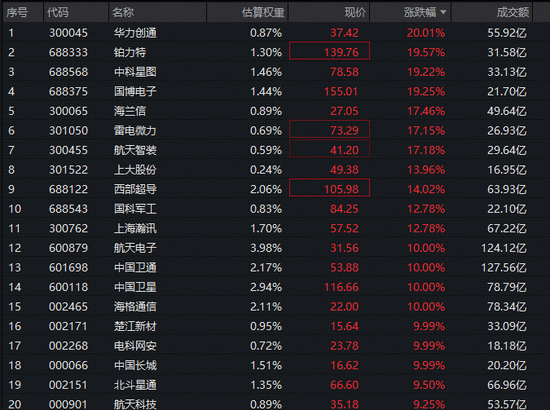
再创纪录!5亿资金狂扫,卫星产业ETF(159218)量价齐飙再刷新高,航天电子、中国卫星封死涨停
Jin Rong Jie· 2026-01-12 05:54
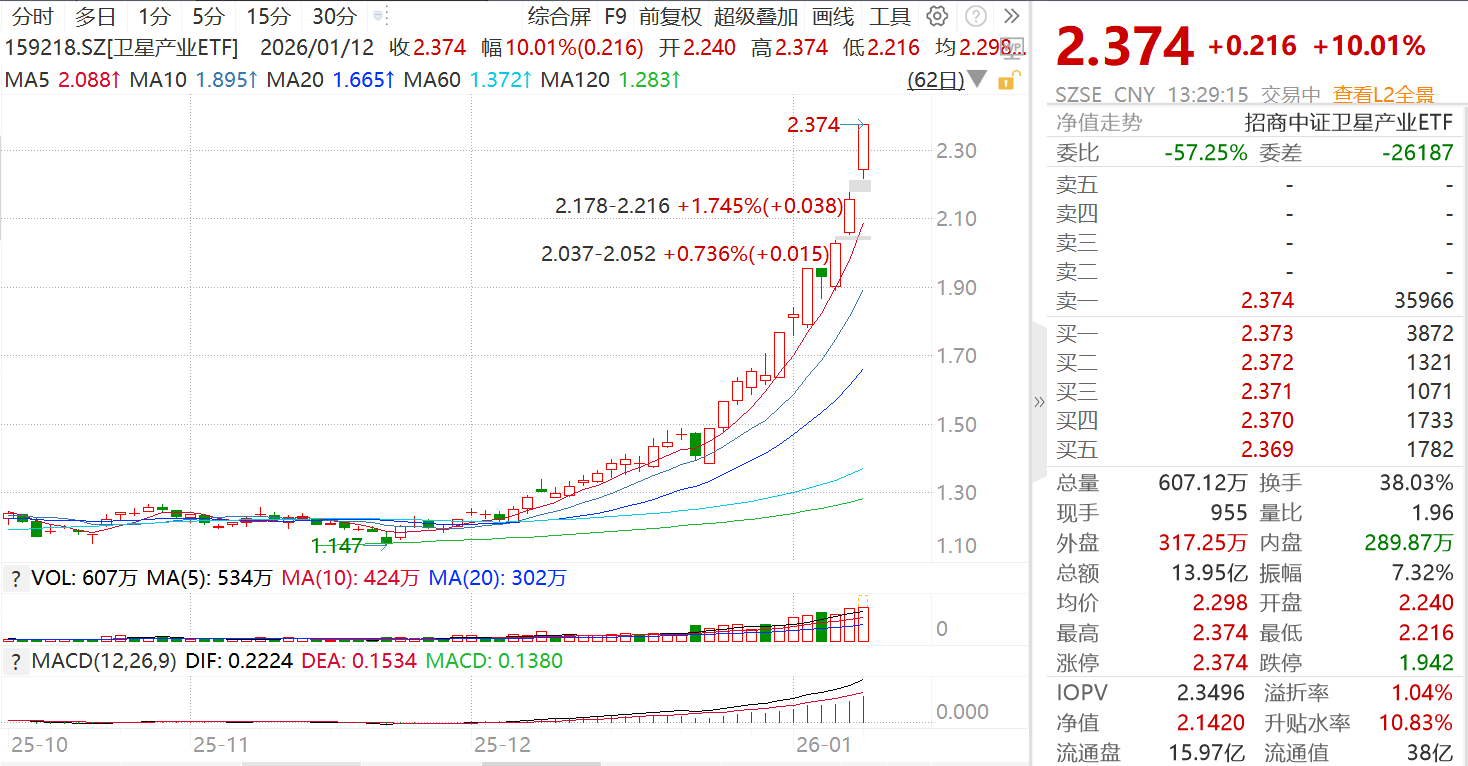
Core Insights - The satellite sector experienced a significant surge, with the largest satellite industry ETF (159218) reaching a 10% limit up, indicating strong investor interest and confidence in the sector [1] - Major stocks in the sector, including Aerospace Electronics and China Satellite, also hit the limit up, while other companies like Zhongke Xingtu and China Satcom saw substantial gains of 18.72% and 9.94% respectively [1] - The ETF has been officially included in the margin trading list by the Shenzhen Stock Exchange, marking it as the first satellite-themed ETF to double its returns since its listing, reflecting the capital market's recognition of commercial aerospace as a national strategic sector [1] Industry Dynamics - The current landscape of the satellite industry is characterized by a historic acceleration, driven by the intensifying space race between China and the U.S., with China recently applying for over 200,000 satellite frequency resources [1] - SpaceX has also received approval to deploy thousands of additional satellites, indicating a competitive environment [1] - The domestic reusable rocket industry is advancing rapidly, with significant developments in offshore launches and frequent test flights, showcasing the practical application of technology and the integration of aerospace capabilities [1] Investment Opportunities - The satellite industry has transitioned from a conceptual stage to a core arena of great power competition, with the satellite industry ETF serving as a key financial vehicle to capture the benefits of the "Space Economy 2.0" era [1]
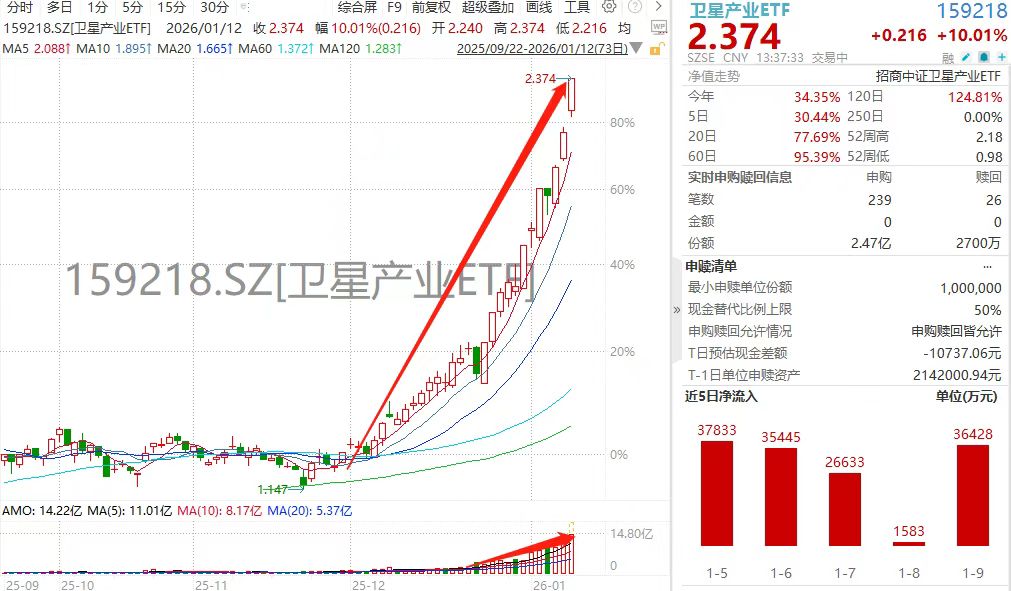
涨上外太空!卫星ETF何时回调?
Jin Rong Jie· 2026-01-12 05:54
Group 1 - The core viewpoint of the news is the significant increase in China's satellite constellation applications, which has raised the total number of satellites from approximately 51,300 to over 254,000, marking the largest application to date [2][3] - The urgency behind this expansion is driven by the need to secure orbital and frequency resources, as the U.S. currently holds nearly 76% of global spacecraft, while China only accounts for 9.4% [3] - The Chinese government has recognized commercial aerospace as a strategic emerging industry, with its importance highlighted in the government work reports for 2024 and 2025 [3] Group 2 - The satellite communication sector has seen significant stock price increases, with companies like Xinke Mobile and China Satellite hitting the daily limit up, and others like Zhongke Xingtou and Hailanxin rising over 10% [2] - The satellite industry ETF (159218) tracks the CSI Satellite Industry Index, which covers the entire industry chain from manufacturing to application, providing investors with a comprehensive investment tool [7] - The ETF has shown strong performance, with a 120-day increase of 124.81% and a significant surge in subscription volumes, indicating high investor sentiment [8]



A股超3800股上涨 139股涨停 商业航天多股爆发 中国卫星创历史新高
2 1 Shi Ji Jing Ji Bao Dao· 2026-01-12 05:14
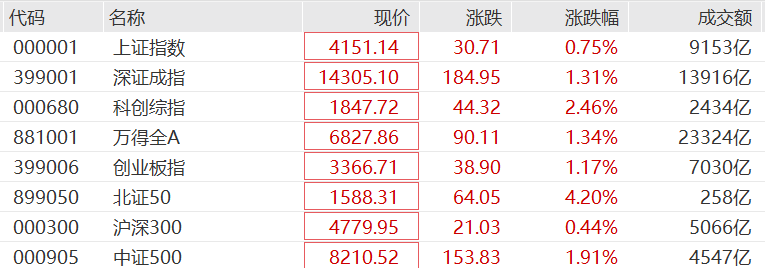
Market Overview - On January 12, A-shares saw a collective rise in the three major indices, with the Shanghai Composite Index up 0.75%, the Shenzhen Component Index up 1.31%, and the ChiNext Index up 1.17% [1] - The market's half-day trading volume exceeded 2.3 trillion yuan, an increase of over 478.1 billion yuan compared to the previous day [1] Stock Performance - The Shanghai Composite Index closed at 4151.14, with a rise of 30.71 points [2] - The Shenzhen Component Index reached 14305.10, increasing by 184.95 points [2] - The ChiNext Index was at 3366.71, up by 38.90 points [2] - Over 3800 stocks in the market rose, with 139 stocks hitting the daily limit up [1] Sector Performance - AI applications, commercial aerospace, photovoltaic, and retail sectors showed significant gains, while oil and gas, as well as coal sectors, experienced declines [2] - Notable stocks in the photovoltaic sector included Oriental Sunrise, Jiejia Weichuang, and Maiwei Shares, which saw increases of 16.08%, 12.71%, and 11.36% respectively [5] Lithium and Precious Metals - Lithium carbonate futures hit a high of 156,100 yuan per ton, marking a new peak since September 2023, with major lithium mining stocks also rising significantly [3] - Gold prices reached over $4600 per ounce, with a nearly 2% increase, and domestic gold jewelry prices also rose, leading to a collective rise in A-share gold stocks [3] Commercial Aerospace - The commercial aerospace sector remained active, with companies like China Satellite and Goldwind Technology seeing significant stock price increases [4] - China submitted an application for an additional 203,000 satellites, indicating a growing focus on satellite technology [4] AI Applications - AI application stocks surged, with companies like Worth Buying and Guangyun Technology hitting the daily limit up [7] - A significant breakthrough in AI-driven drug screening was reported by Tsinghua University, further boosting interest in AI-related stocks [7] Storage Market - The storage market is experiencing a price surge, with expectations of a 40-50% increase in prices by Q1 2026 due to rising demand from AI and server capacities [8] - Companies like Fudan Microelectronics and Aerospace Intelligence saw stock price increases of over 10% [8] Technology Sector Outlook - Recent reports suggest that China's technology sector is poised for significant growth, with expectations of surpassing the profitability of major US tech giants by 2026 [9]
600118,千亿龙头创新高,商业航天多股爆发
Zheng Quan Shi Bao· 2026-01-12 04:19
Group 1: Commercial Aerospace Sector - The commercial aerospace concept is experiencing renewed activity, with stocks like Tongyu Communication achieving a three-day consecutive rise, and China Satellite hitting a historical high with a market cap of 137.9 billion yuan and a trading volume exceeding 7 billion yuan [3]. - On January 10, the International Telecommunication Union (ITU) reported that China submitted an application for an additional 203,000 satellites, covering 14 satellite constellations, indicating significant growth potential in the sector [5]. Group 2: Photovoltaic Sector - The photovoltaic sector is active, particularly in perovskite batteries and space photovoltaic applications, with companies like Dongfang Risheng and Maiwei Shares showing notable gains. Recent focus on space photovoltaic technology has been highlighted by several listed companies [5]. - Institutional research indicates that space computing has gained consensus, with overseas giants planning to establish space data centers, suggesting a potential explosive growth phase for commercial aerospace in the coming years [5]. Group 3: AI Medical Sector - The AI medical and pharmaceutical sectors are strengthening, with stocks like Dean Diagnostics and Meian Health achieving consecutive gains. The development of an AI-driven high-throughput drug virtual screening platform by Tsinghua University has been a significant milestone [6][9]. - The GEO (Generative AI Optimization) concept continues to show strength, with companies like Liou Shares and Inertia Media hitting the limit up. Many domestic listed companies are entering the GEO field through investments and product line expansions [9]. Group 4: AI Programming Sector - The AI programming concept saw fluctuations but ultimately rose, with stocks like Zhuoyi Information hitting the limit up. The announcement by Elon Musk regarding the upcoming upgrade of xAI's Grok Code, which will support complex programming tasks, has generated market interest [11].