JAC(600418)

Search documents
江淮汽车今日大宗交易成交8.89万股,成交额425.56万元
Xin Lang Cai Jing· 2025-12-29 09:41
12月29日,江淮汽车大宗交易成交8.89万股,成交额425.56万元,占当日总成交额的0.18%,成交均价47.87元,较市场收盘价49.44元折价3.18%,其中最高 成交价49.44元,最低成交价46.47元。 | 交易日期 | 证券简称 | 证券代码 | | 成交价(元) 成交金额(万元) 成交量( * ) 买入营业部 | | | 卖出营业部 | | --- | --- | --- | --- | --- | --- | --- | --- | | 2025-12-29 | 江淮汽车 | 600418 | 49.44 | 207.15 | 中信证券股公有限 公司上海分公司 4.19 | 国泰海通证券股份 有限公司总部 | | | 2025-12-29 | 江淮汽车 | 600418 | 46.47 | 218.41 4.7 | 招商证券股份有限 公司深圳前海大道 证券营业部 | 东莞证券股绘畜限 公司上海广播 40 | | ...


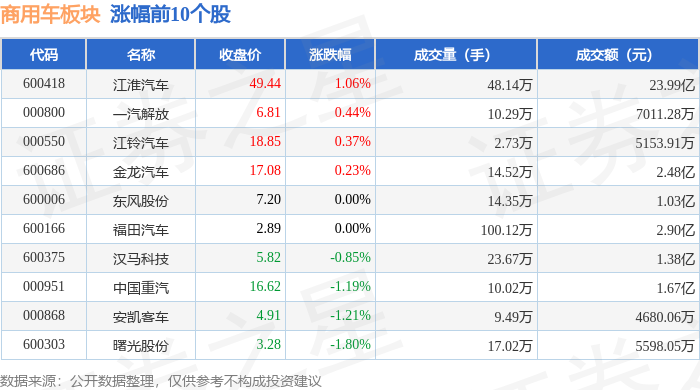
商用车板块12月29日跌0.33%,中集车辆领跌,主力资金净流出1.85亿元
Zheng Xing Xing Ye Ri Bao· 2025-12-29 09:06
证券之星消息,12月29日商用车板块较上一交易日下跌0.33%,中集车辆领跌。当日上证指数报收于 3965.28,上涨0.04%。深证成指报收于13537.1,下跌0.49%。商用车板块个股涨跌见下表: 从资金流向上来看,当日商用车板块主力资金净流出1.85亿元,游资资金净流入651.62万元,散户资金净 流入1.79亿元。商用车板块个股资金流向见下表: | 代码 | 名称 | | 主力净流入(元) | 主力净占比 游资净流入 (元) | | 游资净占比 散户净流入(元) | | 散户净占比 | | --- | --- | --- | --- | --- | --- | --- | --- | --- | | 600686 | 金龙汽车 | | > 290.77万 | 1.17% | 1878.38万 | 7.58% | -2169.14万 | -8.75% | | 000800 | 一汽解放 | | 182.52万 | 2.60% | -150.26万 | -2.14% | -32.26万 | -0.46% | | 000550 江铃汽车 | | | -114.89万 | -2.23% | 352.19万 ...




2025/12/22-2025/12/28汽车周报:补贴落地践行渐进,看好预期修复下的交易机会-20251229
Shenwan Hongyuan Securities· 2025-12-29 09:00
Investment Rating - The report maintains a positive outlook on the automotive industry, particularly focusing on the mid-to-high-end and used car markets, with specific recommendations for companies like BYD and Geely [1]. Core Insights - The upcoming subsidies are expected to alleviate previous concerns regarding the total market volume for 2026, enhancing demand for mid-to-low-end vehicles [1]. - The report highlights the potential for significant performance improvements in parts manufacturers due to subsidy support, recommending companies with strong fundamentals and low valuations [1]. - The report emphasizes the advantages of new energy vehicle companies like Xpeng, NIO, and Li Auto, as well as key Tier 1 suppliers such as Desay SV and Jingwei Hirain [1]. - The report notes a positive trend in the used car market, benefiting from the industry's recovery and improved profitability for dealers, recommending companies like Uxin [1]. Industry Update - According to the China Passenger Car Association, the average daily retail sales of passenger cars in the third week of December reached 77,000 units, a year-on-year decrease of 11% but a month-on-month increase of 9% [1]. - The automotive industry recorded a total transaction value of 582.81 billion yuan, with the automotive index rising by 2.74% during the week, outperforming the Shanghai Composite Index [1][4]. - The report indicates that 172 automotive stocks rose while 94 fell, with the largest gainers being Chaojie Co., Longi Machinery, and Zhejiang Sebao, which saw increases of 41.6%, 33.7%, and 33.3% respectively [1][9]. Market Conditions - The report highlights a rise in traditional and new energy raw material price indices, with traditional vehicle raw material prices increasing by 1.3% and 1.0% over the past week and month, respectively, while new energy vehicle raw material prices rose by 5.6% and 6.8% [1][54]. - The automotive industry’s price-to-earnings ratio stands at 29.17, ranking 19th among all primary industries, indicating a moderate valuation compared to the Shanghai Composite Index's 14.15 [6]. Key Events - The report discusses the optimization of toll road policies and the improvement of autonomous driving regulations, which are expected to enhance the operational efficiency of the transportation system [2][3]. - The report notes significant developments in the automotive sector, including the launch of new models and strategic partnerships aimed at enhancing market competitiveness [17][18][19].




研判2025!中国汽车镁合金轮毂行业市场政策、产业链图谱、市场规模、竞争格局及发展趋势分析:汽车轻量化浪潮席卷,未来大有可为[图]
Chan Ye Xin Xi Wang· 2025-12-29 02:35
Overview - The rapid rise of the new energy vehicle industry is driving the growth of the automotive magnesium alloy wheel hub sector, with increasing demand for lightweight components to alleviate range anxiety [1][9] - The market size of China's automotive magnesium alloy wheel hub industry is projected to reach 1.42 billion yuan in 2024, representing a year-on-year growth of 47.9%, although the current market share of magnesium alloy wheel hubs is less than 2% [1][9] Market Policies - China has implemented a series of policies to support the development of the automotive magnesium alloy wheel hub industry, creating a favorable policy environment [4] Industry Chain - The upstream of the automotive magnesium alloy wheel hub industry includes suppliers of magnesium alloys and coating materials, while the downstream primarily targets the automotive market, with new energy passenger vehicles being the largest demand source [5][7] Current Development - The automotive market in China is experiencing rapid growth, with production and sales of automobiles reaching 24.43 million and 24.36 million units respectively in the first nine months of 2025, showing year-on-year growth of 13.3% and 12.9% [7][8] Competitive Landscape - The industry is transitioning from "technical reserves" to "scale application," with few companies capable of mass production. Key players include Dewey Technology Co., Ltd., Baowu Magnesium Industry, and others [9][10] Development Trends - Continuous optimization of material formulations is expected, with a focus on combining magnesium with rare earths and carbon fibers to enhance performance [13] - Smart manufacturing processes will be integrated into production, utilizing AI and 3D printing technologies to improve efficiency [14] - Green production will become a core competitive advantage, with a focus on reducing carbon emissions and enhancing recycling systems [15] - Vertical integration of the industry chain will be pursued by leading companies to ensure supply stability and reduce costs [16]





人形机器人与具身智能标准委员会成立,自动驾驶加速迈向“量产应用”
Huaxin Securities· 2025-12-28 15:40
Investment Rating - The report maintains a "Recommended" rating for the automotive industry, indicating a positive outlook for investment opportunities [2][9]. Core Insights - The establishment of the "Humanoid Robot and Embodied Intelligence Standardization Committee" aims to accelerate the transition of humanoid robots from research to large-scale commercial applications, enhancing industry standards and reducing barriers between manufacturers [3]. - The humanoid robot sector is transitioning from technology development to large-scale commercialization and deep integration of industrial capital, presenting value reassessment opportunities for robot companies [6]. - The first batch of L3 autonomous vehicles has begun large-scale road testing, marking a significant step towards mass production applications in the automotive sector [7][8]. Summary by Sections Humanoid Robot Sector - The Huaxin Humanoid Robot Index increased by 5.17% this week, with a year-to-date return of 98.5% [18]. - Within the humanoid robot sector, components such as dexterous hands and actuators have shown strong performance, with increases of 9.7% and 3.7% respectively [21]. - Key stocks in the robot sector include Zhongjian Technology, which rose by 30.0%, and Zhongding Shares, which increased by 24.6% [25]. Automotive Sector - The CITIC Automotive Index rose by 2.7%, outperforming the broader market by 0.7% [34]. - The new energy vehicle index surged by 7.2%, indicating strong performance in the electric vehicle segment [37]. - Key companies in the automotive sector, such as Longji Machinery and Zhejiang Shibao, saw significant stock price increases of 33.7% and 33.3% respectively [43]. Company Announcements - UBTECH plans to acquire 43% of Fenglong Shares for approximately 1.665 billion yuan, marking a strategic move to gain control over the company [4]. - The establishment of the "Qingtian Rental" platform for robot leasing aims to make robot usage more accessible, with rental prices starting from 200 yuan [30]. - The release of a new six-dimensional force sensor by Fourier, priced below 5,000 yuan, aims to enhance production efficiency in humanoid robots [30].



解放/重汽/东风/潍柴等超20家企业“换帅”,对2026影响几何?| 头条
第一商用车网· 2025-12-28 12:05
Core Viewpoint - The commercial vehicle industry in 2025 has undergone significant leadership changes across major companies, indicating a strategic shift in management amidst intense market competition [1][46]. Group 1: Major Company Leadership Changes - FAW Jiefang appointed Li Sheng as the new chairman, replacing Wu Bilei, and also saw a significant marketing leadership change with Yu Guangjiang taking over as the head of the marketing headquarters [1][9]. - China National Heavy Duty Truck Group (CNHTC) saw multiple leadership adjustments, with Liu Hongyong becoming chairman and Liu Zhengtai appointed as president [9][10]. - Dongfeng Motor Corporation experienced a series of leadership changes, including Zhang Xiaofan becoming chairman and Liu Liceng taking over as general manager [15][16]. - Weichai Power's president, Li Pengcheng, resigned due to work changes [17]. - Anhui Jianghuai Automobile Group announced a new leadership team with Xiang Xingchu as chairman and Li Ming as general manager [18]. Group 2: Other Notable Changes - The China Ordnance Industry Group appointed Zhou Zhiping as chairman [20]. - Beiben Heavy Truck Group appointed Liu Xiaodong as general manager [23]. - Foton Motor renewed the contract of its general manager, Wu Xibin [23]. - Guangzhou Automobile Group saw Feng Xingya take over as chairman, succeeding Zeng Qinghong [25]. - Changan Automobile Group was established as a new central enterprise, with Zhu Huarong as chairman and Zhao Fei as vice chairman [28]. Group 3: International and Joint Ventures - Cummins China announced several managerial changes across its joint ventures, including new appointments for general managers in various subsidiaries [40]. - Volvo Group China appointed Francis Sum as president, overseeing strategic planning and operations [41]. - ZF Group announced a leadership change with Matthias Miedreich becoming the new chairman [42]. - MAN Truck & Bus appointed Andrew O'Brooks as the new president for Greater China [43].



汽车行业周报(20251222-20251228):多元催化有望带动板块预期修复,建议提前布局明年机会-20251228
Huachuang Securities· 2025-12-28 11:46
Investment Rating - The report maintains a "Buy" recommendation for the automotive sector, indicating a positive outlook for the upcoming year [1]. Core Insights - The automotive sector is expected to see a recovery in market expectations driven by three potential catalysts: the implementation of subsidy policies, better-than-expected export figures in Q1 (with November exports increasing by 45%), and stronger-than-expected retail sales post-Spring Festival [1]. - Retail sales for Q4 2025 have been revised downwards due to previous expectations of demand being pulled forward, with a forecast of a 14% decline in retail sales for Q4 2025, followed by a slight growth of 0.3% in 2025 [2]. - The report highlights the performance of key automotive companies, recommending Geely and JAC Motors due to their strong product cycles and potential for significant profit increases [5]. Data Tracking - In early December, discount rates slightly decreased, with an average discount amount of 22,156 yuan, reflecting a 0.4 percentage point decrease from the previous month [4]. - In October, wholesale vehicle sales reached 2.96 million units, a year-on-year increase of 7.5%, while retail sales fell by 9.2% year-on-year [4]. - The report provides detailed sales figures for new energy vehicle manufacturers, with BYD delivering 480,186 units in November, a 5.3% year-on-year decline but an 8.7% increase from the previous month [6]. Market Performance - The automotive sector index increased by 2.66% this week, ranking 12th out of 29 sectors [9]. - The report notes that the automotive sector's performance is improving, with a significant number of stocks showing positive growth [31]. - The average price-to-earnings (PE) ratio for the automotive sector is reported at 33, indicating a relatively high valuation compared to historical averages [31].

夯实数据根基,释放要素活力 江淮汽车数据资产管理获阶段进展
Zhong Guo Jin Rong Xin Xi Wang· 2025-12-28 02:53
Core Insights - The article discusses the significance of data as a key production factor driving industrial upgrades and transformations in the context of the booming digital economy. It highlights the pilot program for data asset management initiated by the Ministry of Finance, with Anhui Province being one of the first selected pilot regions [1]. Group 1: Company Initiatives - Anhui Jianghuai Automobile Group Co., Ltd. (Jiangqi Group) has actively responded to the policy by launching a data asset management pilot project in early 2025, successfully completing the initial phase of work verification [1]. - A summary meeting was held by Jiangqi Group to discuss the data asset project, attended by representatives from various organizations, focusing on the path to data assetization [1]. Group 2: Collaboration and Development - Jiangqi Group collaborated with the China Economic Information Agency to explore key aspects of data asset management, including resource inventory, management system construction, and digital talent development [2]. - The project aims to transform data from a "resource" into an "asset," with a focus on creating a data service system driven by strategic orientation and business needs [2]. Group 3: Talent and Organizational Capacity - The pilot project emphasizes the importance of talent and organizational capability development, providing systematic training to enhance understanding and collaboration across various departments [3]. - Jiangqi Group aims to further improve its data asset management system and deepen the application of data elements across the entire value chain, including R&D innovation and customer service [3].
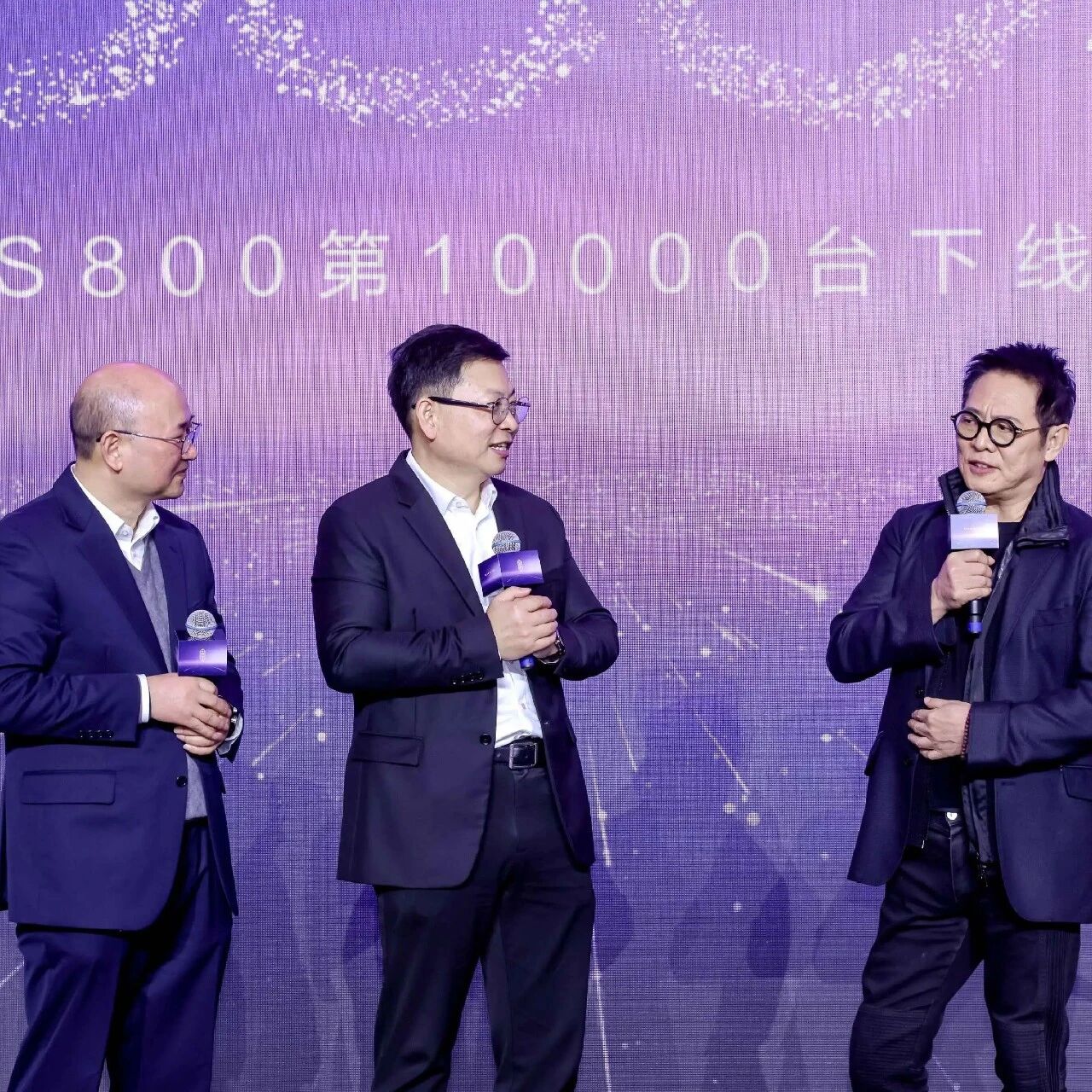
最快“百万级”交付破万 尊界跑出现象级“加速度”
Xin Lang Cai Jing· 2025-12-26 10:51
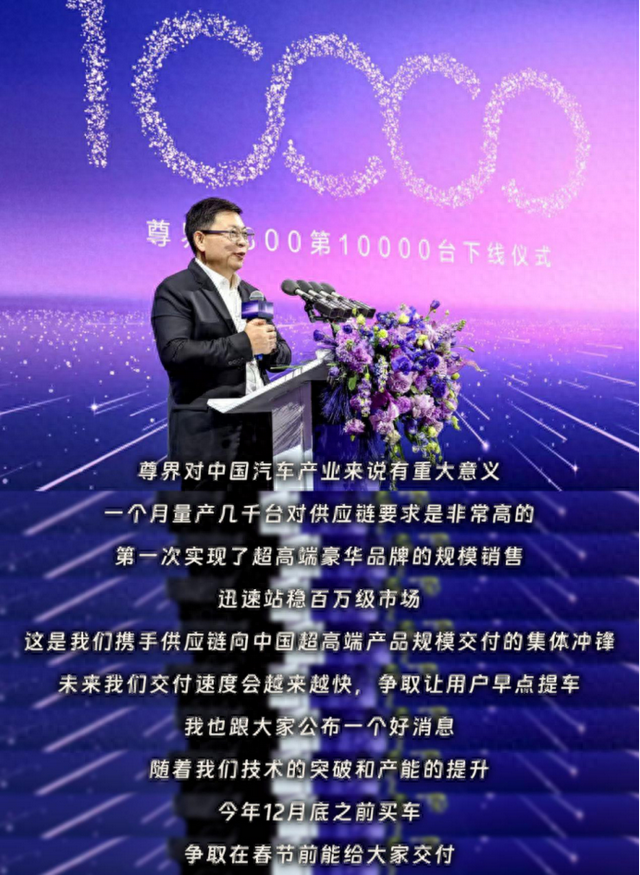
Core Insights - The launch of the ZunJie S800 marks a significant milestone in the Chinese automotive industry, achieving over 10,000 deliveries and setting a new record for luxury car delivery speed [1][2][3] - The ZunJie S800 has transformed consumer perceptions of ultra-luxury vehicles in China, creating a new market dynamic referred to as the "ZunJie Effect" [2][8] - The collaboration between Huawei and Anhui Jianghuai Automobile Group has matured, enhancing their strategic partnership and contributing to the success of the ZunJie S800 [11][14] Company Performance - The ZunJie S800 was launched at a price range of 708,000 to 1,018,000 yuan, and within 175 days, it achieved 18,000 pre-orders, with over 2,145 units delivered in November alone [3][10] - The vehicle's monthly delivery target is set to accelerate to 4,000 units, with expectations for timely deliveries before the Spring Festival for orders placed by December 31 [3] - The ZunJie S800 has outperformed competitors in the ultra-luxury segment, with sales of 4,872 units from August to October 2025, surpassing the combined sales of Porsche Panamera and BMW 7 Series [10] Market Dynamics - The ZunJie S800's rapid success indicates a shift in consumer priorities from brand prestige to product quality, design, and overall experience in the ultra-luxury car market [8][10] - The vehicle's appeal is bolstered by its innovative features, including the first autonomous intelligent digital chassis and advanced safety technologies [12][14] - The ZunJie S800 has gained traction among high-net-worth individuals, including celebrities and business leaders, enhancing its brand recognition and market presence [6][14] Future Outlook - The partnership between Huawei and Jianghuai is expected to drive further advancements in the ZunJie brand, with projections for Jianghuai's revenue to reach 51.56 billion yuan by 2025 [14] - The ZunJie S800 is positioned to redefine the luxury car market in China, emphasizing technological equality and a focus on consumer experience [14]
最快“百万级”交付破万 尊界跑出现象级“加速度”
财联社· 2025-12-26 10:16
Core Viewpoint - The launch and rapid success of the ZunJie S800 marks a significant milestone in the Chinese automotive industry, reshaping consumer perceptions of ultra-luxury vehicles and creating a new market dynamic known as the "ZunJie Effect" [2][7][12]. Group 1: ZunJie S800 Performance and Milestones - The ZunJie S800 has achieved over 10,000 deliveries, setting a new record for luxury vehicle delivery speed in China [1]. - Since its launch, the ZunJie S800 has seen significant sales growth, with 18,000 units ordered within 175 days and a monthly delivery target of 4,000 units [3][15]. - The vehicle's pricing ranges from 708,000 to 1,018,000 yuan, positioning it as a competitive option in the ultra-luxury segment [3]. Group 2: Consumer Reception and Market Impact - The ZunJie S800 has garnered positive consumer feedback, with many buyers appreciating its design, technology, and overall experience compared to traditional luxury brands [4][6]. - The vehicle has attracted high-profile endorsements from celebrities and business leaders, further enhancing its market presence [6]. - The ZunJie S800's sales performance has outpaced competitors, with 4,872 units sold between August and October 2025, surpassing the combined sales of Porsche Panamera and BMW 7 Series [11]. Group 3: Strategic Partnerships and Technological Advancements - The collaboration between Huawei and Jianghuai Automobile has matured, leading to a strategic partnership that enhances the ZunJie S800's market positioning [12]. - The vehicle features advanced technology, including the Tuling Longxing platform and a comprehensive safety system, showcasing significant innovation in the automotive sector [12][13]. - Recent OTA upgrades have added new functionalities, improving user experience and safety features [13]. Group 4: Future Outlook and Financial Projections - Jianghuai Automobile is committed to the ZunJie project, with plans to leverage its brand momentum for future sales growth [15]. - Financial forecasts predict revenue growth for Jianghuai Automobile, with expected revenues of 515.6 billion, 669.5 billion, and 879.5 billion yuan from 2025 to 2027 [15]. - The success of the ZunJie S800 is seen as a transformative event in the luxury car market, challenging traditional notions of luxury and brand prestige [15].