
BAIC BluePark(600733)

Search documents
一季度整车有望反弹,零部件聚焦新产业投资:汽车行业周报(20260112-20260118)-20260118
Huachuang Securities· 2026-01-18 12:26
Investment Rating - The report maintains a positive outlook for the automotive industry, expecting a rebound in vehicle sales in Q1 and focusing on investments in intelligent driving, robotics, and liquid cooling technologies [3]. Core Insights - The automotive sector is experiencing significant dynamics, including sales, pricing, exports, and robotics developments [2]. - The report highlights that January's early sales data shows a substantial year-on-year decline, primarily due to subsidy reductions and rising vehicle prices, leading to consumer hesitation [5]. - The report anticipates that the pressure on vehicle prices will be managed through strict enforcement of anti-competitive practices, aiming to stabilize prices and profit margins [5]. - The export market is expected to grow rapidly, supported by agreements that lower trade barriers for electric vehicles, enhancing profitability for manufacturers and dealers [5]. - The robotics sector is gaining traction, with the Optimus V3 generating market excitement and expectations for product launches [5]. Data Tracking - In early January, the average discount rate remained stable, with a 9.6% increase year-on-year, and the average discount amount reached 22,259 yuan, up by 2,192 yuan year-on-year [4]. - December's wholesale vehicle sales were reported at 2.85 million units, reflecting a year-on-year decline of 8.7% and a month-on-month decline of 6.3% [4]. - Notable sales performance in December included significant year-on-year growth for new energy vehicle manufacturers like NIO and Li Auto, while traditional automakers like SAIC and Changan showed mixed results [6]. Industry News - The report discusses various industry developments, including the price commitments for electric vehicles between China and Europe, which aim to facilitate trade [27]. - The Ministry of Industry and Information Technology is focusing on enhancing the competitiveness of the new energy vehicle sector and regulating market practices to prevent price wars [27]. - Recent data indicates a significant drop in retail sales of passenger vehicles in early January, with a 32% year-on-year decline [27]. Market Performance - The automotive sector saw a weekly increase of 0.71%, ranking 8th out of 29 sectors, while the overall market indices showed mixed results [10].




【联合发布】一周新车快讯(2026年1月10日-1月16日)
乘联分会· 2026-01-16 08:50
Core Viewpoint - The article provides an overview of new vehicle models set to launch in January 2026, detailing specifications, pricing, and market segments for various manufacturers, highlighting the competitive landscape in the automotive industry. Group 1: New Vehicle Launches - BYD's Song Pro DM-i is scheduled for release on January 10, 2026, positioned as an A SUV with a price range of 12.28 to 13.08 million yuan, featuring a 1.5L plug-in hybrid engine and a pure electric range of 220 km [9]. - Chery's QQ Ice Cream will also launch on January 10, 2026, classified as an A00 HB, with a price range of 4.39 to 4.99 million yuan, powered by a pure electric engine and offering a range of 220 km [17]. - The Chery Little Ant is set to debut on the same day, with a price range of 5.49 to 6.09 million yuan and a pure electric range of 271 km [25]. - Dongfeng Nissan's Qichen D V DD-i will launch on January 13, 2026, as an A SUV, priced between 12.99 and 14.99 million yuan, featuring a 1.5T plug-in hybrid engine [33]. - BAIC's ARCFOX Kaola S will also be released on January 13, 2026, as an A SUV, with prices ranging from 9.98 to 11.98 million yuan and a pure electric range of 520 km [41]. Group 2: Specifications and Features - The Song Pro DM-i has dimensions of 4,735 mm in length, 1,860 mm in width, and 1,690 mm in height, with a wheelbase of 2,712 mm [9]. - The QQ Ice Cream measures 3,030 mm in length, 1,496 mm in width, and 1,637 mm in height, with a wheelbase of 1,960 mm [17]. - The Little Ant has dimensions of 3,242 mm in length, 1,670 mm in width, and 1,550 mm in height, with a wheelbase of 2,150 mm [25]. - The Qichen D V DD-i features dimensions of 4,620 mm in length, 1,917 mm in width, and 1,629 mm in height, with a wheelbase of 2,700 mm [33]. - The ARCFOX Kaola S has dimensions of 4,500 mm in length, 1,870 mm in width, and 1,675 mm in height, with a wheelbase of 2,820 mm [41]. Group 3: Market Positioning - The Song Pro DM-i targets the A SUV segment, indicating a focus on the growing demand for hybrid vehicles in the SUV market [9]. - The QQ Ice Cream and Little Ant are positioned in the A00 HB segment, appealing to budget-conscious consumers seeking electric vehicles [17][25]. - The Qichen D V DD-i and ARCFOX Kaola S are also targeting the A SUV segment, reflecting the competitive nature of this market with multiple new entrants [33][41].




自动驾驶出行图景 加速“驶来”
Zhong Guo Zheng Quan Bao· 2026-01-15 21:12
Core Insights - The launch of the first L3-level conditional autonomous driving vehicles in China marks a significant milestone in the industry, indicating the transition to a new era of operational autonomous vehicles [1][4][8] Group 1: Industry Developments - The Ministry of Industry and Information Technology has granted approval for the first L3-level autonomous vehicles, allowing them to operate in designated areas of Beijing and Chongqing [1] - The L3-level vehicles are expected to achieve a penetration rate breakthrough by 2026, paving the way for higher-level autonomous driving technologies (L4) to enter large-scale commercial deployment [1][7] - The trial operation of L3 vehicles signifies a shift from "assisted driving" to "system-led" driving experiences in specific scenarios [2] Group 2: Technical and Operational Insights - The trial of L3 vehicles has already accumulated over 70,000 kilometers of autonomous driving mileage in complex urban environments, showcasing their capability in handling various driving scenarios [2][3] - The vehicles are currently being tested with enterprise users who possess professional skills, providing valuable feedback for system optimization [3] - The introduction of L3 vehicles establishes a legal framework for liability and safety standards, enhancing industry confidence and encouraging hardware deployment and data collection for future advancements [3][4] Group 3: Future Projections - By 2026, L2 technology is projected to become standard in mainstream vehicles, with a penetration rate exceeding 70%, while L3 technology is expected to accelerate in development and testing across major cities [6][7] - The Robotaxi sector is expanding, with a significant increase in fleet size anticipated, indicating a shift in user acceptance from novelty to regular use [7] - The ongoing advancements in AI and autonomous driving technologies present a strategic opportunity for the industry, with expectations for a more integrated and innovative future in transportation [8]
自动驾驶出行图景加速“驶来”
Zhong Guo Zheng Quan Bao· 2026-01-15 20:48
Core Insights - The approval of the first batch of L3-level conditional autonomous driving vehicles in China marks a significant milestone for the industry, allowing these vehicles to operate in designated areas of Beijing and Chongqing [1][2] - The introduction of L3-level vehicles is expected to catalyze the industry, with projections indicating a breakthrough in penetration rates by 2026, paving the way for higher-level autonomous driving technologies [1][5] Industry Developments - The L3-level vehicles are currently undergoing pilot testing, with 46 vehicles from Deep Blue having accumulated over 70,000 kilometers in autonomous driving over 19 days in Chongqing [1][2] - The pilot program is designed to gather real-world data and feedback from skilled enterprise users, which will help optimize the autonomous driving systems [2][3] Regulatory and Safety Framework - The pilot program establishes a legal framework for the responsibilities of manufacturers during the activation of the L3 systems, enhancing industry confidence and redefining safety standards [2][3] - The initiative is seen as a critical step towards addressing commercial challenges such as liability, insurance, and operational models for autonomous vehicles [3][4] Future Projections - By 2026, L2-level technology is expected to become standard in mainstream vehicles, with a penetration rate exceeding 70%, while L3-level technology is on the verge of mass production and commercial application [5][6] - The pilot testing of L3-level vehicles is anticipated to expand to more cities and complex traffic scenarios, further pushing the boundaries of L3 capabilities [5][6] Market Trends - The autonomous driving industry is experiencing rapid technological advancements and policy support, with Robotaxi services transitioning from pilot programs to broader market acceptance [6] - The growth of Robotaxi fleets, such as the one from Pony.ai, indicates a shift in user acceptance from novelty to regular use, with plans to expand fleet sizes significantly by 2026 [6]
乘用车板块1月15日跌0.58%,北汽蓝谷领跌,主力资金净流出8.72亿元
Zheng Xing Xing Ye Ri Bao· 2026-01-15 08:53
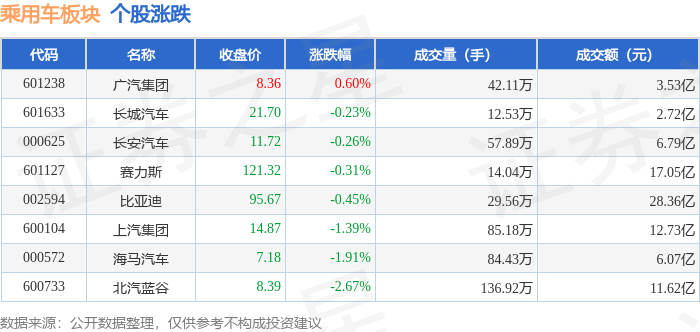
Core Viewpoint - The passenger car sector experienced a decline of 0.58% on January 15, with Beiqi Blue Valley leading the drop, while the Shanghai Composite Index fell by 0.33% and the Shenzhen Component Index rose by 0.41% [1]. Group 1: Market Performance - The closing price for GAC Group was 8.36, with an increase of 0.60% and a trading volume of 421,100 shares, amounting to 353 million yuan [1]. - Great Wall Motors closed at 21.70, down by 0.23%, with a trading volume of 125,300 shares and a transaction value of 272 million yuan [1]. - Changan Automobile's closing price was 11.72, decreasing by 0.26%, with a trading volume of 578,900 shares and a transaction value of 679 million yuan [1]. - The closing price for Seres was 121.32, down by 0.31%, with a trading volume of 140,400 shares and a transaction value of 1.705 billion yuan [1]. - BYD closed at 95.67, down by 0.45%, with a trading volume of 295,600 shares and a transaction value of 2.836 billion yuan [1]. - SAIC Motor's closing price was 14.87, down by 1.39%, with a trading volume of 851,800 shares and a transaction value of 1.273 billion yuan [1]. - Haima Automobile closed at 7.18, down by 1.91%, with a trading volume of 844,300 shares and a transaction value of 607 million yuan [1]. - Beiqi Blue Valley closed at 8.39, down by 2.67%, with a trading volume of 1,369,200 shares and a transaction value of 1.162 billion yuan [1]. Group 2: Fund Flow Analysis - The passenger car sector saw a net outflow of 872 million yuan from main funds, while retail funds had a net inflow of 540 million yuan [1]. - GAC Group experienced a net inflow of 23.84 million yuan from main funds, while retail funds had a net outflow of 46.64 million yuan [2]. - Great Wall Motors had a net outflow of 0.7565 million yuan from main funds, with a net inflow of 15.78 million yuan from retail funds [2]. - Changan Automobile faced a net outflow of 44.50 million yuan from main funds, while retail funds had a net inflow of 28.43 million yuan [2]. - Beiqi Blue Valley had a significant net outflow of 164 million yuan from main funds, with a net inflow of 91.78 million yuan from retail funds [2]. - BYD saw a net outflow of 32.57 million yuan from main funds, while retail funds had a net inflow of 301 million yuan [2].




北汽蓝谷高管集体增持超1450万元
Zheng Quan Ri Bao Wang· 2026-01-15 06:13
Core Viewpoint - Beiqi Blue Valley (600733) announced a share buyback plan involving its management and key personnel, reflecting confidence in the company's long-term investment value and development strategies [1][2] Group 1: Share Buyback Plan - The buyback will commence on January 14, 2026, and will last for six months, with a total investment amount between 14.5 million and 16.4 million yuan [1] - The buyback participants include 22 individuals, such as the Chairman of Beiqi Group and the Chairman of Beiqi Blue Valley, indicating strong leadership involvement [1] Group 2: Market Implications - The scale and level of this buyback plan are considered significant, as it involves both the group and the listed company’s leadership, which is rare in the Chinese automotive sector [2] - This initiative signifies a shift in management roles from being mere "professional managers" to stakeholders who are directly tied to the company's value growth, promoting a modern governance mechanism of risk-sharing and benefit-sharing [2]
北汽蓝谷跌2.09%,成交额6.69亿元,主力资金净流出7686.74万元
Xin Lang Cai Jing· 2026-01-15 05:32
Group 1 - The core viewpoint of the news is that Beiqi Blue Valley's stock has experienced fluctuations, with a recent decline of 2.09% and a total market capitalization of 47.04 billion yuan [1] - As of January 15, the stock price is reported at 8.44 yuan per share, with a trading volume of 669 million yuan and a turnover rate of 1.60% [1] - The company has seen a year-to-date stock price increase of 5.11%, with a 1.08% rise over the last five trading days and an 8.48% increase over the last 60 days [2] Group 2 - Beiqi Blue Valley's main business involves the research, production, sales, and service of pure electric new energy passenger vehicles and core components, with 90.72% of revenue coming from vehicle sales [2] - As of September 30, 2025, the company reported a revenue of 15.384 billion yuan, reflecting a year-on-year growth of 56.69%, while the net profit attributable to shareholders was -3.426 billion yuan, a year-on-year increase of 23.73% [2] - The number of shareholders decreased by 11.53% to 240,100, while the average circulating shares per person increased by 13.04% to 20,346 shares [2] Group 3 - As of September 30, 2025, Hong Kong Central Clearing Limited is the fourth largest circulating shareholder with 114 million shares, an increase of 46.5934 million shares from the previous period [3] - Xin'ao Xingyi Mixed A (011188) is the seventh largest circulating shareholder with 33.5217 million shares, having decreased by 7.309 million shares from the previous period [3] - Xin'ao New Energy Selected Mixed A (012079) has exited the list of the top ten circulating shareholders [3]
北汽新能源2025“逆天”领跑,做对了啥?
Xi Niu Cai Jing· 2026-01-14 13:01
Core Insights - The article highlights the remarkable growth of BAIC New Energy in the competitive electric vehicle market, achieving over 200,000 units sold in 2025, representing an 84% year-on-year increase, positioning it as a leader in the industry [4][9]. Group 1: Strategic Initiatives - BAIC New Energy's success is attributed to its dual-brand strategy, with the Arcfox brand focusing on mainstream markets and the Jiayuan brand targeting the high-end segment, creating a comprehensive strategic framework [4]. - The Arcfox brand aims to disrupt the A0 market by offering high-value experiences with competitive pricing, while the Jiayuan brand emphasizes "Chinese luxury + Huawei technology" to redefine luxury experiences [6][7]. Group 2: Market Performance - In 2025, the Arcfox brand achieved sales of over 160,000 units, marking a 99% year-on-year growth, while the Jiayuan brand saw explosive growth, with December sales surpassing 10,000 units, making it the top-selling luxury electric sedan [9]. - The combination of mainstream volume and high-end branding has allowed BAIC New Energy to enhance both its scale and brand image [9]. Group 3: Customer-Centric Approach - BAIC New Energy prioritizes user feedback in product development, leading to features like the Arcfox T1's high space utilization rate of 91.7%, significantly above the market average [10]. - The company has introduced innovative service commitments, such as lifetime warranties on key components and free maintenance, addressing common consumer pain points [10][12]. Group 4: Technological Advancements - BAIC New Energy has established a comprehensive value chain covering technology R&D, smart manufacturing, and supply chain collaboration, enabling it to maintain stable growth amid industry challenges [13]. - The company has been proactive in adopting advanced technologies, such as its "Yuanjing Smart" technology system, which supports L2 to L4 autonomous driving capabilities [15]. Group 5: Manufacturing and Supply Chain - The implementation of the "Smart Factory 4.0" initiative has improved production efficiency by 20% and reduced costs by 15%, ensuring high-quality manufacturing [17]. - BAIC New Energy collaborates with leading partners like Huawei and CATL to enhance its technological capabilities and streamline its supply chain processes [17][18]. Group 6: Long-Term Vision - The company focuses on building a robust system that balances agility and strategic depth, allowing it to navigate market fluctuations effectively [18]. - BAIC New Energy's approach combines the agility of a startup with the strategic stability of a state-owned enterprise, positioning it well for future challenges in the electric vehicle market [18].
革新者的征程:北汽新能源从“规模加法”迈向“价值乘法”
Jin Rong Jie· 2026-01-14 10:41
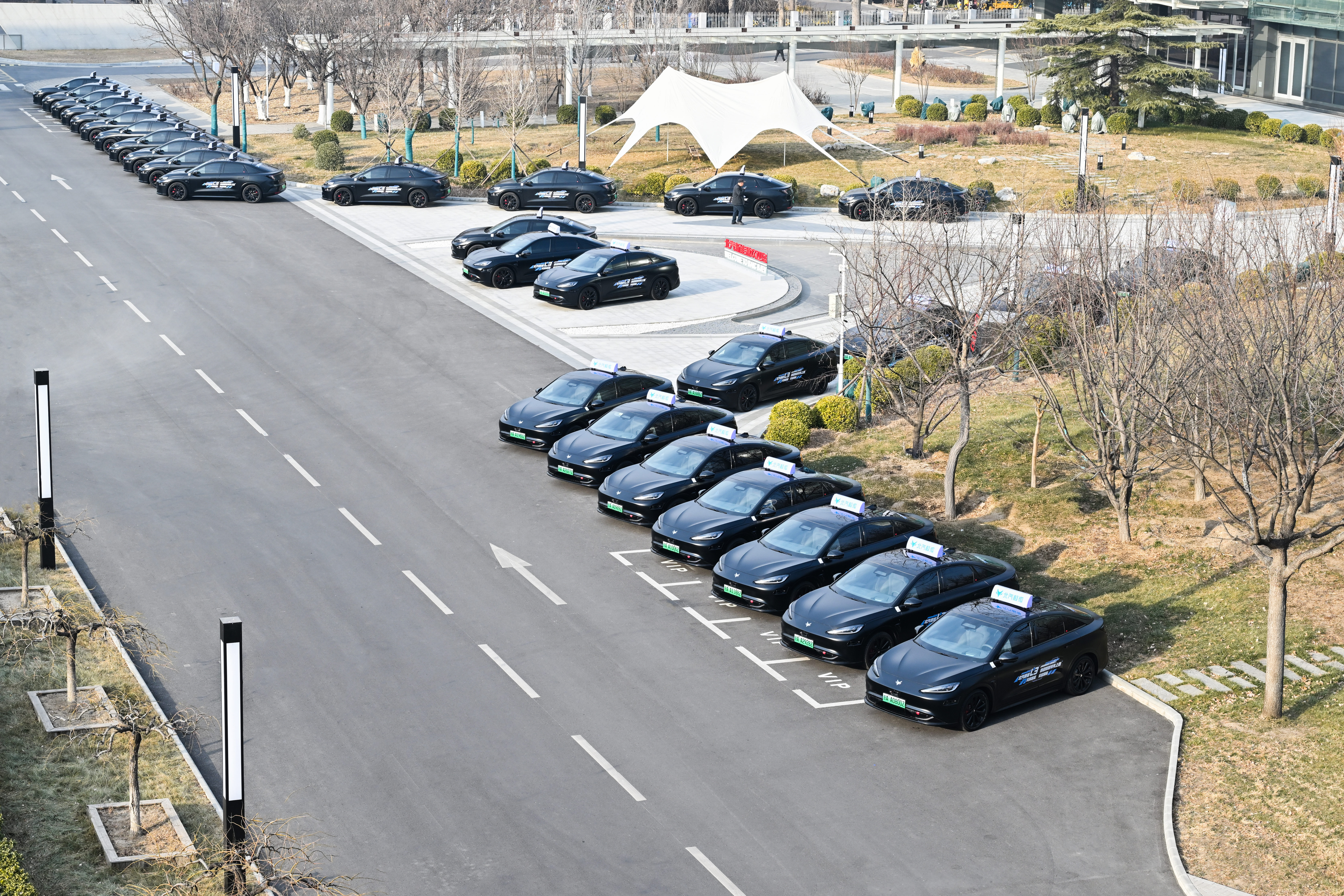
Core Insights - The article highlights the transformation of Beijing Automotive Group's New Energy Vehicle (NEV) division into a competitive player in the market, showcasing strategic determination and market agility [1][12] - In 2025, the company achieved significant sales milestones, with total sales exceeding 200,000 units, representing an 84% year-on-year growth [3][12] - The successful launch of the L3 autonomous driving model, Alpha S, marks a significant technological advancement and commercial viability in the autonomous driving sector [5][7] Sales Performance - In 2025, Beijing Automotive's NEV division sold 209,576 vehicles, surpassing its annual target and demonstrating strong market acceptance [3] - The company achieved a monthly sales record of over 30,000 units for three consecutive months, indicating sustainable growth and market penetration [3] - The Xiangjie brand reached a milestone of over 10,000 units sold in December 2025, ranking among the top three in the luxury sedan segment [3][10] Technological Advancements - The Alpha S L3 model received official approval for L3 autonomous driving, allowing it to operate in designated areas of Beijing [5][6] - The vehicle is equipped with 34 sensors, including three LiDARs, and features a full redundancy safety architecture, emphasizing safety in autonomous driving [6][7] - The company is advancing its technology through partnerships, such as the collaboration with Xiaoma Zhixing for L4 autonomous driving solutions [11] Financial Performance - In Q3 2025, the company achieved a historic gross margin of 1.8%, with revenue reaching 5.867 billion yuan, marking three consecutive quarters of positive growth [7][10] - The improvement in gross margin signals a transition from strategic losses to a sustainable business model, indicating effective growth with profitability [7][10] Market Strategy - The company has established over 500 sales and service outlets across various city tiers, creating a robust market network that supports future growth [4] - The dual focus on scaling operations and enhancing quality is driving a new growth engine for the company, allowing for better resource allocation and market feedback [8][10] - The strategic shift from a traditional state-owned enterprise model to a more agile, technology-driven approach is redefining the company's identity in the automotive industry [12][14]
北汽蓝谷1月14日现3笔大宗交易 总成交金额8325.25万元 溢价率为-10.44%
Xin Lang Zheng Quan· 2026-01-14 09:53
Summary of Key Points Core Viewpoint - On January 14, Beiqi Blue Valley's stock rose by 2.62%, closing at 8.62 yuan, with significant block trades occurring totaling 10.784 million shares and a transaction value of 83.2525 million yuan [1] Group 1: Block Trade Details - The first block trade occurred at a price of 7.72 yuan for 4.01 million shares, amounting to 30.9572 million yuan, with a discount rate of -10.44% [1] - The second block trade also took place at 7.72 yuan for 104.83 thousand shares, totaling 809.29 thousand yuan, maintaining the same discount rate of -10.44% [1] - The third block trade involved 572.57 thousand shares at 7.72 yuan, resulting in a transaction value of 44.2024 million yuan, again with a discount rate of -10.44% [1] Group 2: Recent Trading Activity - Over the past three months, Beiqi Blue Valley has recorded a total of four block trades, with a cumulative transaction value of 91.4925 million yuan [1] - In the last five trading days, the stock has increased by 3.48%, with a net inflow of 103 million yuan from major funds [1]