
CYPC(600900)

Search documents
长江电力控股股东增持超25亿元获不超过72亿元专项贷款支持
Zheng Quan Shi Bao Wang· 2025-10-25 00:30
Core Viewpoint - China Three Gorges Corporation, the controlling shareholder of Yangtze Power, has increased its stake by 2.5 billion yuan and secured a special loan of up to 7.2 billion yuan to support further share purchases [1][2] Group 1: Shareholding Increase - The shareholding increase plan initiated on August 23 aims to acquire between 4 billion yuan and 8 billion yuan worth of shares within 12 months through various trading methods [1] - As of October 23, China Three Gorges Corporation has cumulatively acquired approximately 90.7 million shares, representing about 0.37% of Yangtze Power's total share capital, with a total investment nearing 2.531 billion yuan [1] Group 2: Loan Support - China Three Gorges Corporation has received a loan commitment from Agricultural Bank of China for a special stock purchase loan not exceeding 7.2 billion yuan, with a term of 3 years [2] - The loan is strictly designated for the purpose of increasing the shareholding in Yangtze Power, enhancing the financial backing for the completion of the acquisition plan [2]


平安基金钱晶旗下平安中证A50ETF三季报最新持仓,重仓宁德时代
Sou Hu Cai Jing· 2025-10-24 21:13
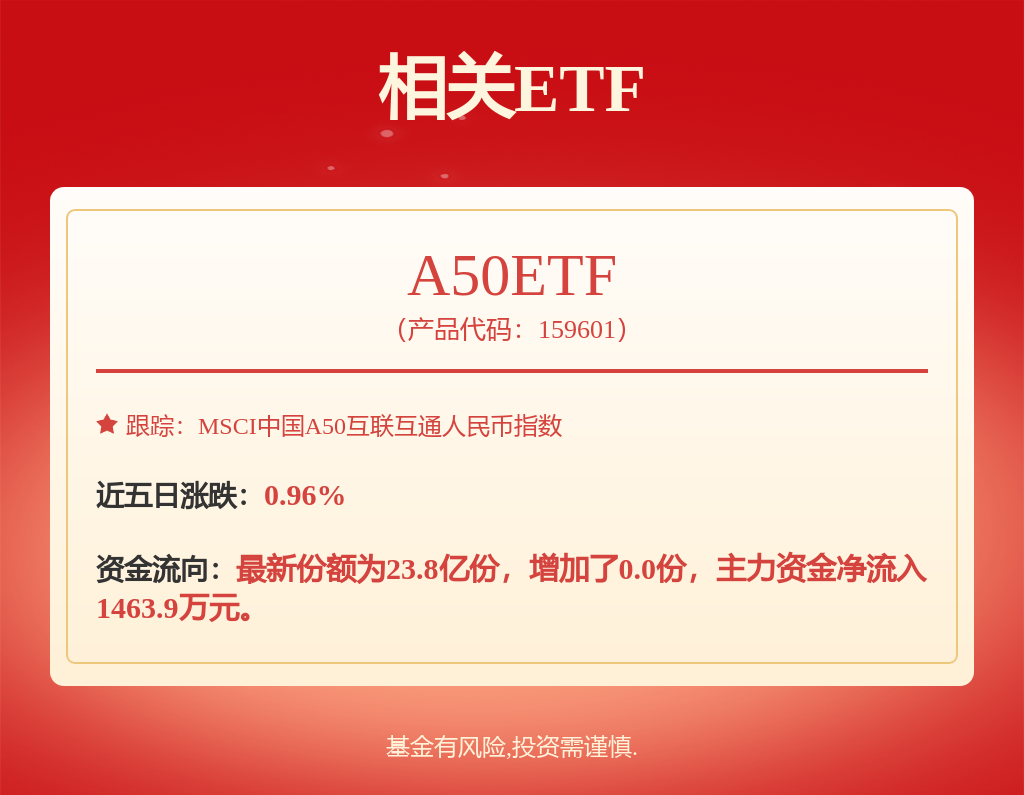
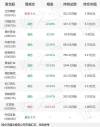
Group 1 - The core viewpoint of the article highlights the performance of the Ping An CSI A50 ETF, which reported a net value growth rate of 16.91% over the past year [1] - The fund's top ten holdings saw the addition of Luxshare Precision, while Citic Securities exited the top ten [1] - The largest holding in the fund is CATL, accounting for 11.08% of the total holdings, with a significant reduction in positions for several other stocks [1] Group 2 - The report provides detailed changes in the fund's top holdings, including a 22.68% reduction in CATL shares, a 22.5% reduction in Kweichow Moutai, and a 22.55% reduction in Ping An Insurance [1] - Luxshare Precision was newly added to the top ten holdings with 3.21 million shares valued at 208 million yuan [1] - The fund's recent performance includes a 0.96% change over the last five days, with a net inflow of 14.639 million yuan [3]






中国长江电力股份有限公司关于控股股东增持进展及获得增持专项贷款承诺函的公告
Shang Hai Zheng Quan Bao· 2025-10-24 18:45
Group 1 - The core point of the announcement is that China Three Gorges Group plans to increase its stake in China Yangtze Power Co., Ltd. by investing between RMB 4 billion and RMB 8 billion over the next 12 months through various trading methods [2] Group 2 - As of October 23, 2025, China Three Gorges Group has cumulatively acquired 90.7038 million shares, representing approximately 0.37% of the total share capital, with a total investment of RMB 253.09783 million [3] Group 3 - China Three Gorges Group has received a loan commitment letter from Agricultural Bank of China, which promises a special loan of up to RMB 7.2 billion for the purpose of increasing its stake in China Yangtze Power, with a loan term of 3 years [4]
10月24日晚间重要公告集锦
Shang Hai Zheng Quan Bao· 2025-10-24 14:53
Financial Performance Highlights - San Chuan Wisdom reported a net profit of 143.89 million yuan, a year-on-year increase of 101.23%, with total revenue of 827.84 million yuan, down 25.53% [1] - Dian Guang Media achieved a net profit of 132.11 million yuan, up 116.61%, with revenue of 3.19 billion yuan, an increase of 16.32% [1] - Jin Kai BioScience's net profit surged by 163.24% to 103.43 million yuan, with revenue of 487.72 million yuan, up 25.96% [2] - He Ren Technology's net profit skyrocketed by 1,292.86% to 12.94 million yuan, despite a slight revenue decline of 0.33% to 263.46 million yuan [3] - Ming Tai Aluminum's net profit for Q3 increased by 35.94% to 464 million yuan, while total revenue for the first three quarters was 25.87 billion yuan, up 9.38% [4] - Jin Cai Interconnect reported a staggering net profit growth of 1,697.84% to 57.52 million yuan, with revenue of 750.02 million yuan, down 17.32% [5] - Chi Feng Gold's Q3 net profit rose by 140.98% to 951 million yuan, with revenue of 3.37 billion yuan, up 66.39% [6] - Chu Jiang New Materials reported a net profit of 355.17 million yuan, a year-on-year increase of 2,089.49%, with revenue of 44.19 billion yuan, up 13.29% [8] - Guo Xuan High-Tech's net profit increased by 514.35% to 2.53 billion yuan, with revenue of 29.51 billion yuan, up 17.21% [16] - Sichuan Changhong's Q3 net profit grew by 690.83% to 50.7 million yuan, despite a revenue decline of 2.69% to 25.18 billion yuan [17] - Kewo Technology's Q3 net profit surged by 7,161% to 438 million yuan, with revenue of 4.20 billion yuan, up 29.26% [16] Strategic Developments - GreenMei signed a strategic cooperation framework agreement with Xiamen Xatong New Energy to supply 150,000 tons of battery materials annually from 2026 to 2028 [4] - Hunan Development plans to invest 2.4 billion yuan in a photovoltaic power generation project with a capacity of 800MW [9] - Weston intends to use 160 million yuan of raised funds to acquire and increase investment in Liangtou Technology, aiming for a controlling stake [7] - Zhaopin Technology announced a joint investment with Zhizhu and Yuankeshi to establish Shenzhen Zhixian Robot Technology Co., with a registered capital of 50 million yuan [12] - Jiangsu Long Power's controlling shareholder secured a loan of up to 7.2 billion yuan specifically for stock repurchase [22][23]


长江电力股东获得不超72亿元股票增持专项贷款;东方财富前三季度净利润同比增长51%丨公告精选
2 1 Shi Ji Jing Ji Bao Dao· 2025-10-24 14:35
Group 1 - China Three Gorges Group, the controlling shareholder of Yangtze Power, plans to increase its stake in the company with a loan of up to 7.2 billion yuan specifically for this purpose [2] - As of October 23, China Three Gorges Group has already acquired 90.7 million shares, representing 0.37% of the total share capital, with a total investment of 2.531 billion yuan [2] - The planned increase in shares is between 4 billion yuan and 8 billion yuan over the next 12 months [2] Group 2 - Yiwei Lithium Energy's shareholders plan to transfer up to 40.7768 million shares, accounting for 2% of the total share capital, to repay loans and for business development [3] - The minimum transfer price is set at 70% of the average stock price over the previous 20 trading days [3] Group 3 - Dongfang Fortune reported a 51% year-on-year increase in net profit for the first three quarters, with total revenue reaching 11.589 billion yuan, up 58.67% [4] - The company's third-quarter revenue was 4.733 billion yuan, a 100.65% increase year-on-year [4] Group 4 - Chifeng Gold's third-quarter net profit surged by 141% to 951 million yuan, benefiting from a significant rise in gold prices [5] - The company's revenue for the third quarter was 3.372 billion yuan, a 66.39% increase year-on-year [5] Group 5 - San Chuan Wisdom reported a 269% year-on-year increase in net profit for the third quarter, driven by rising prices in the rare earth oxide market [6] - The company's revenue for the first three quarters was 828 million yuan, a 25.53% decrease year-on-year [6] Group 6 - Greenme's strategic partnership with Xiamen Tungsten New Energy aims to address global demand for high-energy battery materials, with a projected supply of 450,000 tons over three years [7] - The collaboration will focus on various battery materials for applications in consumer electronics, power, and robotics [7] Group 7 - Zhujiang Piano reported a third-quarter revenue decline of 10.70% to 145 million yuan, resulting in a net loss of 80.4659 million yuan [8] - The company attributed the losses to a sluggish market for musical instruments and rising production costs [8] Group 8 - Luoyang Molybdenum's third-quarter net profit increased by 96.40% to 5.608 billion yuan, supported by higher product prices and increased copper sales [9] - The company's revenue for the third quarter was 50.713 billion yuan, a 2.36% decrease year-on-year [9] Group 9 - Gongjin Co. announced a potential change in control due to share transfer plans by major shareholders, leading to a temporary suspension of trading [10] - The stock is expected to be suspended for no more than two trading days [10] Group 10 - Wanhua Chemical reported a 17.45% decline in net profit for the first three quarters, totaling 9.157 billion yuan, despite new production facilities coming online [11] - The company's revenue for the first three quarters was 144.226 billion yuan, a 2.29% decrease year-on-year [11] Group 11 - Fangzheng Technology's third-quarter net profit increased by 139% to 144 million yuan, driven by higher PCB sales and improved product structure [12] - The company's revenue for the first three quarters was 339.8 million yuan, a 38.71% increase year-on-year [12]

长江电力股东获得不超72亿元股票增持专项贷款丨公告精选
2 1 Shi Ji Jing Ji Bao Dao· 2025-10-24 14:35
Group 1: Longjiang Power - The controlling shareholder, China Three Gorges Group, plans to increase its stake in Longjiang Power by investing between 40 billion and 80 billion yuan over the next 12 months [1] - As of October 23, China Three Gorges Group has already acquired 9,070,380 shares, representing 0.37% of the total share capital, with a total investment of 2.531 billion yuan [1] - Recently, China Three Gorges Group received a loan commitment from Agricultural Bank for up to 7.2 billion yuan specifically for purchasing Longjiang Power shares [1] Group 2: Yiwei Lithium Energy - Shareholders Liu Jincheng, Luo Jinhong, and Yiwei Holdings plan to transfer up to 40,776,800 shares, accounting for 2% of the total share capital, through an inquiry-based method [2] - The reason for the transfer is to repay loans and meet business development needs [2] - The minimum transfer price is set at 70% of the average stock price over the previous 20 trading days prior to sending the subscription invitation [2] Group 3: Dongfang Fortune - Dongfang Fortune reported a total revenue of 4.733 billion yuan in Q3, a year-on-year increase of 100.65% [3] - The net profit for Q3 reached 3.53 billion yuan, up 77.74% year-on-year [3] - For the first three quarters, total revenue was 11.589 billion yuan, a 58.67% increase, with net profit at 9.097 billion yuan, reflecting a 50.57% growth [3] Group 4: Chifeng Gold - Chifeng Gold's Q3 revenue was 3.372 billion yuan, a 66.39% increase year-on-year, with a net profit of 951 million yuan, up 140.98% [4] - For the first three quarters, revenue totaled 8.644 billion yuan, a 38.91% increase, and net profit reached 2.058 billion yuan, reflecting an 86.21% growth [4] - The significant profit increase is attributed to improved production organization and management, alongside a substantial rise in gold prices [4] Group 5: San Chuan Wisdom - San Chuan Wisdom reported a revenue of 828 million yuan for the first three quarters, a decrease of 25.53%, but net profit was 144 million yuan, up 101.23% [5] - In Q3, revenue was 338 million yuan, down 9.87%, while net profit reached 99.896 million yuan, a 268.99% increase [5] - The rise in net profit is linked to the increase in rare earth oxide market prices, which led to the reversal of some inventory impairment losses [5] Group 6: GreenMei - GreenMei signed a strategic cooperation framework agreement with Xiamen Tungsten New Energy to address global market demands for ultra-high energy density battery materials [6] - From 2026 to 2028, GreenMei expects to supply 150,000 tons of various battery raw materials and products annually to Xiamen Tungsten, totaling 450,000 tons over three years [6] - The partnership aims to establish a long-term supply chain for lithium battery materials across various sectors, including consumer electronics and robotics [6] Group 7: Zhujiang Piano - Zhujiang Piano reported a Q3 revenue of 145 million yuan, down 10.70%, with a net loss of 80.4659 million yuan [7] - For the first three quarters, revenue was 386 million yuan, a decrease of 26.72%, with a net loss of 218 million yuan [7] - The decline in performance is attributed to a sluggish consumer environment in the musical instrument market and rising production costs [7] Group 8: Luoyang Molybdenum - Luoyang Molybdenum's Q3 revenue was 50.713 billion yuan, a decrease of 2.36%, while net profit increased by 96.40% to 5.608 billion yuan [9] - For the first three quarters, total revenue was 145.485 billion yuan, down 5.99%, with net profit rising by 72.61% to 14.280 billion yuan [9] - The profit increase is primarily due to higher product prices and increased copper product sales [9] Group 9: Gongjin Shares - Gongjin Shares announced that its major shareholder is planning a share transfer that may lead to a change in company control, resulting in a temporary stock suspension [10] - The stock will be suspended from trading starting October 27, 2025, for no more than two trading days [10] - The company will fulfill its information disclosure obligations during the suspension period [10] Group 10: Wanhua Chemical - Wanhua Chemical reported a revenue of 144.226 billion yuan for the first three quarters, down 2.29%, with a net profit of 9.157 billion yuan, a decrease of 17.45% [11] - The decline in profit is attributed to lower sales prices of major products, which led to a narrowing of overall gross margins [11] - Despite the challenges, the company continues to expand its market presence and applications [11] Group 11: Fangzheng Technology - Fangzheng Technology reported a Q3 revenue of 1.258 billion yuan, a year-on-year increase of 44.34%, with a net profit of 144 million yuan, up 139.04% [12] - For the first three quarters, total revenue was 3.398 billion yuan, reflecting a 38.71% increase, and net profit reached 317 million yuan, up 50.81% [12] - The growth is primarily driven by increased sales volume in the PCB business and ongoing product structure optimization [12]



晚间公告丨10月24日这些公告有看头
第一财经· 2025-10-24 13:33
Core Viewpoint - The article summarizes significant announcements from various listed companies in the Shanghai and Shenzhen stock markets, highlighting investment opportunities and financial performance. Group 1: Major Announcements - Yueda Investment has established joint ventures with China Resources Power and others to invest in offshore wind power projects, holding 20% and 30% stakes in two projects with total investments of 2 billion and 3.9 billion yuan respectively, enhancing its position in the renewable energy sector [4] - Hunan Development plans to invest 2.4 billion yuan in a photovoltaic power generation project with a capacity of 800MW, scheduled for construction from 2026 to 2029 [8] - Longjiang Power's controlling shareholder has received a loan commitment of up to 7.2 billion yuan for stock repurchase, with 2.531 billion yuan already spent on acquiring shares [9] - Huitong Co. plans to invest 81 million yuan in a high-temperature nylon and PEEK polymerization project [10] - Wiston intends to acquire a 36.7483% stake in Liangtou Technology and increase its investment, making it a subsidiary [11] Group 2: Financial Performance - Jincai Hulin reported a net profit increase of 1697.84% year-on-year for the first three quarters, despite a revenue decline of 17.32% [15] - Guoxuan High-Tech's net profit surged by 1434.42% in Q3, with a revenue increase of 20.68% [16] - Tian'ao Electronics achieved a net profit growth of 1329.08% in Q3, despite a revenue decline [18] - Morning Light Bio's net profit increased by 385.3% year-on-year for the first three quarters, despite a slight revenue decline [19] - Donggang Co. reported a net profit increase of 373.51% in Q3, driven by growth in its smart card and printing businesses [20] Group 3: Other Notable Financial Results - Xinjiang Tianye's Q3 net profit rose by 363.19%, while its revenue increased by 8.6% [21] - Jinkai Biotechnology reported a net profit growth of 339.92% in Q3, with a revenue increase of 11.27% [22] - Antong Holdings saw a net profit increase of 311.77% in Q3, with a revenue growth of 18.85% [23] - Wen Tai Technology's net profit grew by 265.09% in Q3, despite a significant revenue decline [25] - Chahua Co. reported a 240.5% increase in Q3 revenue, driven by business restructuring [27]





A股公告精选 | 香农芯创(300475.SZ):公司股票或存非理性炒作 交易风险较大
智通财经网· 2025-10-24 12:37
Group 1: Financial Performance - Dongfang Caifu reported a Q3 revenue of 4.733 billion yuan, a year-on-year increase of 100.65%, and a net profit of 3.53 billion yuan, up 77.74% year-on-year [1] - Guoxuan High-Tech announced a Q3 revenue of 10.114 billion yuan, a 20.68% increase year-on-year, and a net profit of 2.167 billion yuan, soaring 1434.42% year-on-year [2] - Jiangsu Power's controlling shareholder received a loan commitment of up to 7.2 billion yuan for stock repurchase [3] - Yueda Investment reported a Q3 revenue of 789 million yuan, a 22.97% increase year-on-year, and a net profit of 615.22 million yuan, up 333.60% year-on-year [4] Group 2: Strategic Investments - Yueda Investment formed joint ventures with China Resources Power and others to invest in offshore wind power projects, holding 20% and 30% stakes in two projects [4] - Hunan Development signed an investment agreement for a photovoltaic power generation project with a total investment of approximately 2.4 billion yuan [7] - Wiston plans to acquire a 36.7483% stake in Liangtou Technology and increase its capital, making it a subsidiary [10] Group 3: Market Trends and Risks - Shannon Chip announced significant stock price volatility, with a cumulative deviation of over 200% in 30 trading days, indicating potential irrational speculation [5] - Cambridge Technology set its H-share issuance price at 68.88 HKD per share, with trading expected to start on October 28, 2025 [6] Group 4: Company-Specific Developments - Jin Cai Hulin reported a Q3 net profit increase of 1697.84% despite a revenue decline [11] - Morning Light Bio's Q3 net profit grew by 385.3% despite a revenue drop [12] - Donggang Co. reported a Q3 net profit increase of 373.51% with a revenue increase of 45.80% [13] - Xinjiang Tianye's Q3 net profit increased by 363.19% despite a revenue increase of only 8.6% [14]


晚间公告丨10月24日这些公告有看头
Di Yi Cai Jing· 2025-10-24 10:37
Investment Announcements - Yueda Investment has established a joint venture with China Resources Power and others to invest in offshore wind power projects, holding a 20% stake in a 308MW project and a 30% stake in a 407MW project, with total investments of 200 million yuan and 390 million yuan respectively [3] - Shannon Chip has announced significant stock price volatility, with a cumulative deviation of over 200% in closing prices over 30 trading days, indicating potential irrational speculation and high trading risks [4] - Cambridge Technology has set the final price for its H-share issuance at HKD 68.88, with plans to list on the Hong Kong Stock Exchange on October 28, 2025 [5] - Hunan Development plans to invest approximately 2.4 billion yuan in a photovoltaic power generation project in Jiahe County, with a planned capacity of 800MW, to be constructed in phases from 2026 to 2029 [6] - Changjiang Electric Power's controlling shareholder has received a loan commitment of up to 7.2 billion yuan for stock repurchase, with plans to buy back shares worth between 4 billion and 8 billion yuan over the next 12 months [7] - Huitong Co. plans to invest 81 million yuan in a high-temperature nylon and PEEK polymer project, leasing a facility in Shanghai for the project [8] - Weston plans to acquire a 36.7483% stake in Liangtou Technology and invest an additional 53.27 million yuan, resulting in a total investment of 160 million yuan, making Liangtou a subsidiary [9] - Huamai Technology has terminated plans for a change in control and will resume trading on October 27 [10] Financial Performance - Jincai Hulin reported a net profit increase of 1697.84% year-on-year for the first three quarters, with a net profit of 57.52 million yuan despite a revenue decline of 17.32% [13] - Morning Light Bio's net profit increased by 385.3% year-on-year for the first three quarters, with a net profit of 304 million yuan despite a slight revenue decline [14] - Donggang Co. reported a net profit increase of 373.51% year-on-year for the third quarter, with a net profit of 44.63 million yuan [15] - Xinjiang Tianye's net profit increased by 363.19% year-on-year for the third quarter, with a net profit of 15.76 million yuan [16] - Jinkai Biotechnology reported a net profit increase of 339.92% year-on-year for the third quarter, with a net profit of 31.67 million yuan [17] - Antong Holdings reported a net profit increase of 311.77% year-on-year for the first three quarters, with a net profit of 664 million yuan [18] - Wentai Technology reported a net profit increase of 265.09% year-on-year for the first three quarters, with a net profit of 1.513 billion yuan [19] - Pinming Technology reported a net profit increase of 267.42% year-on-year for the first three quarters, with a net profit of 48.43 million yuan [21] - Chahua Co. reported a revenue increase of 240.5% year-on-year for the third quarter, with a net profit of 9.55 million yuan [22] - Chuangyao Technology reported a net profit increase of 208.96% year-on-year for the third quarter, with a net profit of 36.82 million yuan [23] - Yueda Investment reported a net profit increase of 200.05% year-on-year for the first three quarters, with a net profit of 75.55 million yuan [24] - Chifeng Gold reported a net profit increase of 140.98% year-on-year for the third quarter, with a net profit of 951 million yuan [25] - Xiamen Tungsten reported a net profit increase of 109.85% year-on-year for the third quarter, with a net profit of 810 million yuan [26] - Luoyang Molybdenum reported a net profit increase of 72.61% year-on-year for the first three quarters, with a net profit of 14.28 billion yuan [27] - CITIC Securities reported a net profit increase of 37.86% year-on-year for the first three quarters, with a net profit of 23.16 billion yuan [28] - Hualuo Co. reported a net profit decline of 35.35% year-on-year for the first three quarters, with a net profit of 329 million yuan [29] - Quartz Co. reported a net profit decline of 56.81% year-on-year for the first three quarters, with a net profit of 135 million yuan [30] - Beiqi Blue Valley reported a loss of 3.43 billion yuan for the first three quarters [31] - Juxing Agriculture reported a loss of 74.02 million yuan for the third quarter [32] - Tongwei Co. reported a loss of 5.27 billion yuan for the first three quarters [33] Strategic Partnerships - Greeenmei has signed a strategic cooperation framework agreement with Xiamen Tungsten New Energy for the supply of advanced battery raw materials, with an expected supply of 150,000 tons annually from 2026 to 2028, totaling 450,000 tons [35]

长江电力(600900) - 长江电力关于控股股东增持进展及获得增持专项贷款承诺函的公告
2025-10-24 10:01
股票代码:600900 股票简称:长江电力 公告编号:2025-049 中国长江电力股份有限公司 1 关于控股股东增持进展及获得增持专项贷款承诺函 的公告 本公司董事会及全体董事保证本公告内容不存在任何虚假记载、 误导性陈述或者重大遗漏,并对其内容的真实性、准确性和完整性承 担法律责任。 一、增持计划主要内容 中国长江电力股份有限公司(以下简称公司)于 2025 年 8 月 23 日披露了《长江电力关于控股股东增持股份计划的公告》(公 告编号:2025-041),基于对公司未来发展的信心,公司控股股 东中国长江三峡集团有限公司(以下简称中国三峡集团)计划在 未来 12 个月内通过二级市场增持公司股份,包括集中竞价、大宗 交易等交易方式,增持金额不低于人民币 40 亿元、不高于人民币 80 亿元。 二、增持计划进展情况 截至 2025 年 10 月 23 日,中国三峡集团利用自有资金以集中 竞价方式累计增持公司股份 9,070.38 万股,占公司总股本比例约 为 0.37%,累计增持金额 253,097.83 万元。本次增持计划尚未实 施完毕。 三、控股股东获得增持专项贷款承诺函的情况 近日,中国三峡集团收到中 ...