HZBank(600926)

Search documents
银行高管思辨“反内卷”:在规范市场中提高客服硬实力
Zheng Quan Shi Bao· 2025-08-29 19:49
Core Viewpoint - The banking industry has reached a consensus on "anti-involution," transitioning from a slogan to actionable measures, as highlighted in recent semi-annual performance briefings [1]. Group 1: Industry Consensus and Policy - The 2024 Central Economic Work Conference and the 2025 Government Work Report have called for a "comprehensive rectification of 'involutionary' competition" [1]. - The sixth meeting of the Central Financial Committee emphasized the need to "legally and reasonably govern low-price and disorderly competition" [1]. Group 2: Impact on Banking Operations - Ping An Bank's president, Ji Guangheng, stated that competition that does not cover costs is detrimental and poses a potentially disruptive risk to the industry [1]. - Hangzhou Bank's vice president, Zhang Jianfu, noted that irrational price wars negatively affect normal banking development, leading to situations where business growth does not translate into revenue or profit [1]. - The long-term impact of such competition could weaken banks' ability to serve the real economy and accumulate risks that affect macroeconomic development [1]. Group 3: Benefits of "Anti-Involution" - Ping An Bank's vice president, Xiang Youzhi, believes that "anti-involution" will create a fairer and more vibrant market, enhance the effective allocation of financial resources, and maximize the interests of financial entities and society [1]. - The policy is expected to promote long-term, high-quality development in the financial industry and protect the legitimate rights of financial customers [1]. Group 4: Stabilization of Net Interest Margin - Citic Bank's president, Lu Wei, indicated that "anti-involution" policies and neutral monetary policies will help stabilize the banking industry's net interest margin [2]. - Zhang Jianfu echoed this sentiment, suggesting that combating irrational pricing will contribute to stabilizing bank interest margins [2]. Group 5: Addressing Malicious Competition - Industrial Bank's financial planning department general manager, Lin Shu, noted that "anti-involution" helps regulate malicious and disorderly competition in loan pricing, alleviating downward pressure on bank asset returns [2]. - However, Lin also pointed out potential inconsistencies in the implementation of "anti-involution" policies across different regions and banks [2]. Group 6: Focus on Customer Needs - As price competition diminishes, banks will need to compete based on their ability to meet customer needs, emphasizing the importance of enhancing professional service capabilities and optimizing business processes [2]. - Huaxia Bank's president, Qu Gang, stated the importance of adhering to regulatory and self-discipline requirements, shifting focus from price competition to value-based services centered around customer needs [2]. - Zhejiang Merchants Bank's president, Chen Haiqiang, mentioned the shift from price-based competition to differentiated comprehensive services, focusing on the entire customer lifecycle [2].





上市银行探路转型新增长极:扩资产规模 增非息收入
Zhong Guo Jing Ying Bao· 2025-08-29 19:36
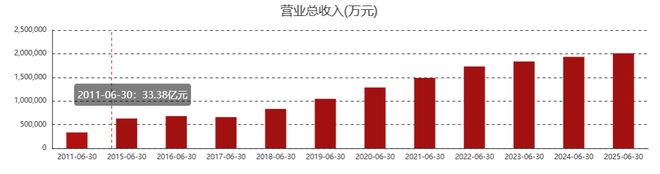
Core Viewpoint - The 2025 A-share banking mid-year report reveals significant profit differentiation among banks, with some city commercial banks achieving double-digit profit growth while others face negative growth due to narrowing interest margins and market volatility [1] Group 1: Profit Growth of City Commercial Banks - City commercial banks have emerged as the main contributors to profit growth among listed banks in the first half of 2025, with Hangzhou Bank reporting a net profit of 11.662 billion yuan, a year-on-year increase of 16.66% [2] - Factors contributing to the rapid profit growth of city commercial banks include stable asset scale growth, continuous optimization of asset-liability structure, and a recovery in fee and commission income driven by low base and wealth management growth [2][3] - Other city commercial banks such as Jiangyin Bank, Qilu Bank, and Qingdao Bank reported net profit growth rates of 16.63%, 16.48%, and 16.05% respectively [2] Group 2: Challenges Faced by Some Banks - In contrast, some banks like Guiyang Bank experienced negative profit growth, with a net profit of 2.474 billion yuan, a decrease of 7.20% year-on-year, attributed to declining interest income and weaker bond market performance [4] - The differentiation in profit performance among banks is largely due to variations in customer base, financing capabilities, risk preferences, and asset quality [4] Group 3: Interest Income and Margin Trends - The net interest margin for commercial banks narrowed to 1.42% in the first half of 2025, reflecting ongoing pressure on interest margins [7] - Strategies to manage interest margins include increasing the proportion of low-cost deposits and optimizing asset-liability management to improve net interest income [8][9] Group 4: Non-Interest Income and Business Diversification - Expanding non-interest income is seen as a crucial strategy for banks to mitigate the impact of declining interest margins, with a focus on enhancing middle business services such as custody, agency sales, and settlement [9] - Currently, non-interest income accounts for less than 30% of major listed banks in China, which is significantly lower than that of large international banks [9]



透视半年报|杭州银行个贷不良率攀升 净息差收窄至1.35%
Xin Jing Bao· 2025-08-29 11:20
Core Viewpoint - Hangzhou Bank reported a year-on-year increase in both revenue and net profit for the first half of 2025, with revenue growing by 3.90% to 20.093 billion yuan and net profit increasing by 16.66% to 11.662 billion yuan, marking eight consecutive years of growth in both metrics [1] Financial Performance - The bank's net interest income reached 13.090 billion yuan, a year-on-year increase of 9.38%, while non-interest income fell by 5% to 7.004 billion yuan [1][3] - The proportion of net interest income remained above 60%, with figures of 64.90%, 61.88%, and 65.14% over the past three years [3] - The net interest margin narrowed to 1.35%, a decrease of 0.07 percentage points year-on-year [4] Asset Quality and Risk - As of the end of the first half of the year, the bank's total assets reached 2.235595 trillion yuan, an increase of 5.83% from the previous year [5] - The non-performing loan (NPL) ratio stood at 0.76%, unchanged from the previous year, while the provision coverage ratio decreased by 20.56 percentage points to 520.89% [5][6] - The bank's total loans and advances amounted to 1.009418 trillion yuan, reflecting a growth of 7.67% [5] Loan Composition - Corporate loans totaled 710.039 billion yuan, up 12.41%, while personal loans decreased by 2.12% to 299.379 billion yuan [6] - The NPL ratios for corporate and personal loans were 0.65% and 1.02%, respectively, with the personal loan NPL ratio increasing by 0.25 percentage points [6] Shareholder Equity - Total shareholder equity reached 160.536 billion yuan, an increase of 18.00% from the previous year, driven by growth in capital reserves and retained earnings [6]

定增如何定价?如何把握增速和定价平衡?杭州银行业绩会回应来了!
Xin Lang Cai Jing· 2025-08-29 11:13
Core Viewpoint - Hangzhou Bank reported a solid performance in the first half of 2025, with a focus on maintaining asset quality and a sustainable growth strategy in a challenging banking environment [1][6]. Financial Performance - In H1 2025, Hangzhou Bank achieved operating income of 20.093 billion yuan, a year-on-year increase of 3.9% [1]. - The net profit attributable to shareholders reached 11.662 billion yuan, reflecting a growth of 16.66% compared to the previous year [1]. - The bank maintained a leading position in asset quality, with a non-performing loan ratio of 0.76% and a provision coverage ratio of 520.89% as of June 30, 2025 [1]. Capital Adequacy and Dividends - As of June 30, 2025, the capital adequacy ratio, tier 1 capital adequacy ratio, and core tier 1 capital adequacy ratio were 14.64%, 11.98%, and 9.74%, respectively, showing increases of 0.84, 0.93, and 0.89 percentage points from the end of the previous year [2]. - The bank plans to maintain the same cash dividend per share for the 2024 dividend despite an increase in total shares to 7.25 billion, resulting in a total cash dividend of 4.25 billion yuan, up 38% year-on-year [2][3]. Mid-Year Dividend Plans - Hangzhou Bank has committed to implementing cash dividends twice a year, aligning shareholder returns with the company's profitability [3]. - The board has been authorized to determine the mid-year profit distribution plan for 2025, which will be announced in due course [3]. Capital Increase and Pricing - The bank announced a plan to issue up to 900 million A-shares to raise no more than 8 billion yuan, aimed at supplementing core tier 1 capital [4]. - The pricing for the new shares will be determined based on the higher of 80% of the average trading price over the last 20 trading days or the latest audited net asset value per share [5]. Growth Strategy and Risk Management - In the context of an "asset shortage" in the banking sector, the bank emphasizes a balanced approach to growth and risk management, focusing on sustainable development rather than aggressive expansion [6]. - The bank's strategy includes maintaining a "light capital" approach and prioritizing effective growth over mere scale [6]. - Future plans involve a comprehensive review to develop a five-year growth strategy, focusing on customer development, structural adjustments, and risk control [6].
杭州银行(600926):利息加速上行,盈利、资产质量继续领跑
Changjiang Securities· 2025-08-29 09:12
Investment Rating - The investment rating for Hangzhou Bank is "Buy" and is maintained [9] Core Views - The bank's revenue growth rate for the first half of the year is 3.9%, with a year-on-year growth in net profit attributable to shareholders of 16.7%. The net interest income growth rate is 9.4%, with a rebound in Q2 driving revenue growth [2][6] - The bank's non-performing loan ratio remains stable at 0.76%, with a provision coverage ratio of 521%, indicating strong asset quality [2][6] - The bank's capital is effectively supplemented through convertible bonds, and it is expected that the dividend payout ratio will increase year-on-year in 2025, ensuring that the dividend per share (DPS) remains stable [2] Summary by Sections Revenue and Profitability - Revenue growth for the first half of the year is 3.9%, with Q1 at 2.2% and Q2 at 5.6%. Net profit attributable to shareholders grew by 16.7%, with Q1 at 17.3% and Q2 at 16.0%. Net interest income growth was 9.4%, with Q1 at 6.8% [2][6] - The net interest margin for the first half is 1.35%, down 6 basis points from 2024, while deposit costs are improving [2][6] Asset Quality - The non-performing loan ratio is stable at 0.76%, with a provision coverage ratio of 521%, which is leading in absolute terms [2][6] - The bank's non-credit impairment provisions are ample, supporting long-term sustainable profit growth [2] Loan and Deposit Growth - Total loans grew by 7.7% compared to the beginning of the year, with corporate loans increasing significantly by 13% [2] - Deposits increased by 5.2% compared to the beginning of the year, with a slight decrease in the proportion of demand deposits [2] Investment and Non-Interest Income - Non-interest income decreased by 5.0%, remaining stable compared to Q1. Investment income and other non-interest income saw a decline of 11.3% [2] - The bank's wealth management scale increased significantly by 17.3% compared to the beginning of the year [2] Future Outlook - The bank is expected to maintain high profit growth and asset quality leadership, with a significant undervaluation noted. The current price-to-book (PB) ratio is 0.86x, and the price-to-earnings (PE) ratio is 6.2x [2]
城商行板块8月29日跌0.92%,苏州银行领跌,主力资金净流出17.93亿元
Zheng Xing Xing Ye Ri Bao· 2025-08-29 08:48
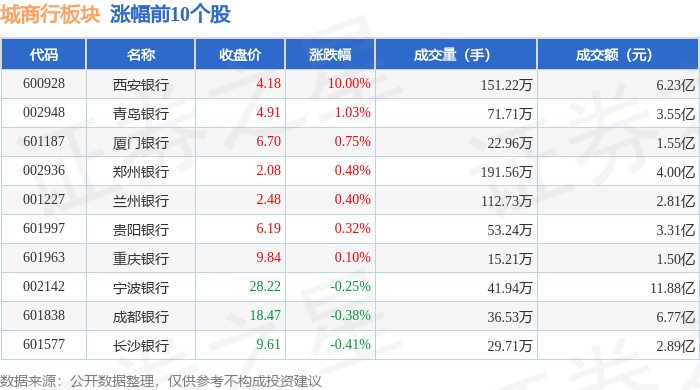
Market Overview - The city commercial bank sector experienced a decline of 0.92% on August 29, with Suzhou Bank leading the drop [1] - The Shanghai Composite Index closed at 3857.93, up 0.37%, while the Shenzhen Component Index closed at 12696.15, up 0.99% [1] Individual Stock Performance - Xi'an Bank saw a significant increase of 10.00%, closing at 4.18, with a trading volume of 1.51 million shares and a transaction value of 623 million yuan [1] - Qingdao Bank and Xiamen Bank also reported slight increases of 1.03% and 0.75%, respectively [1] - Conversely, Suzhou Bank experienced a decline of 2.40%, closing at 8.12, with a trading volume of 744,000 shares and a transaction value of 612 million yuan [2] Capital Flow Analysis - The city commercial bank sector had a net outflow of 1.793 billion yuan from institutional investors, while retail investors saw a net inflow of 913 million yuan [2] - The capital flow data indicates that retail investors are showing interest in the sector despite the overall decline [2] Detailed Capital Flow by Stock - Xi'an Bank had a net inflow of 99.76 million yuan from institutional investors, while it faced a net outflow of 42.89 million yuan from retail investors [3] - Hangzhou Bank also saw a net inflow of 61.29 million yuan from institutional investors, but retail investors withdrew 35.94 million yuan [3] - In contrast, Qilu Bank experienced a significant net outflow of 62.93 million yuan from institutional investors, while retail investors had a net inflow of 35.68 million yuan [3]




杭州银行回应分红关切:拟每年两次分红,2025年中期分红将适时实施
Quan Jing Wang· 2025-08-29 07:20
Core Viewpoint - Hangzhou Bank emphasizes its commitment to providing predictable and attractive dividend returns to investors, aligning with the new "National Nine Articles" policy and focusing on shareholder interests [1] Financial Performance - For the first half of 2025, Hangzhou Bank reported a net profit growth of 16.66%, maintaining a double-digit growth rate, which is fundamental for safeguarding shareholder interests and serves as the basis for dividends [1] Dividend Policy - The bank has announced a valuation enhancement plan in April 2025, stating that it will implement cash dividends twice a year to ensure alignment between shareholder returns and the company's profitability [1] - In June 2025, the annual shareholders' meeting approved a proposal to authorize the board to decide on the mid-year profit distribution plan, indicating that the mid-year dividend will be implemented in due course [1]
险资持续扫货银行股
Zheng Quan Shi Bao· 2025-08-29 04:36
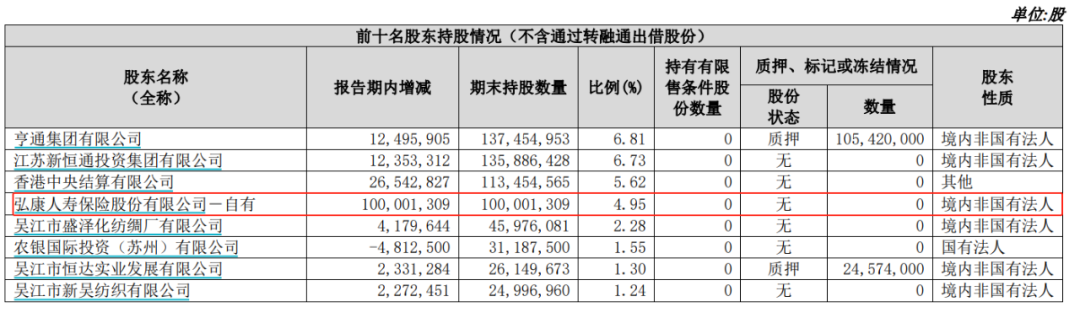
Core Viewpoint - Insurance capital has shown a sustained enthusiasm for increasing holdings in bank stocks since 2025, with notable examples including Su Nong Bank and Wuxi Bank, indicating a trend of insurance companies focusing on regional banks [1][5][14]. Group 1: Insurance Capital Involvement - Hongkang Life Insurance has become one of the top ten shareholders of Su Nong Bank, holding over 100 million shares, which is approximately 4.95% of the total shares, nearing the threshold for a significant stake [1][2]. - In 2023 and 2024, Wuxi Bank was also a target for insurance capital, with Changcheng Life Insurance increasing its stake to 4.95% by the end of 2023 [6][7]. - In 2025, Hongkang Life has been actively increasing its stake in Zhengzhou Bank, with its holdings exceeding 20% after multiple rounds of purchases [9][10]. Group 2: Financial Performance of Su Nong Bank - For the first half of 2025, Su Nong Bank reported a slight revenue increase, achieving an operating income of 2.28 billion yuan, a year-on-year growth of 0.21%, and a net profit of 1.178 billion yuan, up 5.23% [8]. - As of June 30, 2025, Su Nong Bank's total assets reached 223.249 billion yuan, reflecting a growth of 4.33% since the beginning of the year, with a non-performing loan ratio stable at 0.90% [8]. - The bank's mid-year profit distribution plan includes a cash dividend of 0.09 yuan per share, totaling approximately 182 million yuan, which represents 15.42% of the net profit attributable to shareholders [8]. Group 3: Market Trends and Valuation - The banking sector has become a popular investment target for capital markets, particularly for insurance capital, due to its high dividend yield and stable operational characteristics [14][15]. - As of August 26, 2025, the banking sector's dividend yield was 3.69%, making it an attractive investment compared to other high-dividend sectors [15]. - The implementation of new accounting standards allows insurance funds to account for profits when they acquire bank stocks above certain thresholds, further incentivizing investments in undervalued bank stocks [16].
国信证券晨会纪要-20250829
Guoxin Securities· 2025-08-29 02:24
Key Insights - The report highlights the significant growth in the nutritional products sector, with New Hope Liuhe (002001.SZ) achieving a revenue of 11.101 billion yuan, a year-on-year increase of 12.76%, and a net profit of 3.603 billion yuan, up 63.46% [10] - The report emphasizes the robust performance of the amino acid market, particularly methionine, with prices rising to 22,200 yuan per ton, reflecting a year-to-date increase of 12.98% [11] - The report notes the steady performance of the vitamin A and E segments, with revenue of 2.085 billion yuan and a net profit of 1.209 billion yuan, maintaining a net profit margin of 58% despite recent price declines [12] Company Analysis - New Hope Liuhe's nutritional products segment accounted for 64.86% of total revenue, with a gross margin of 47.79%, an increase of 11.93 percentage points year-on-year [10] - The company has expanded its methionine production capacity to 460,000 tons per year, positioning it as the third-largest producer globally [11] - The vitamin segment's revenue is expected to remain stable, with recent price adjustments indicating limited further declines [12] Industry Trends - The real estate sector is experiencing a downturn, with a 6.5% year-on-year decline in sales volume and a 4.0% decrease in sales area as of July 2025 [22] - The average price of new residential properties has decreased by 2.6% year-on-year, indicating ongoing pressure in the housing market [23] - Recent policy relaxations in major cities like Beijing and Shanghai are expected to provide some support to the real estate market, although the overall outlook remains cautious [24] Financial Performance - The report indicates that Beike-W (02423.HK) achieved a revenue of 26 billion yuan in Q2 2025, a year-on-year increase of 11%, although net profit declined by 32% [28] - Yuexiu Property (00123.HK) reported a revenue of 47.6 billion yuan, a 34.6% increase, but a net profit decline of 25.2% due to lower gross margins [31] - Zhou Dasheng (002867.SZ) experienced a 43.29% drop in revenue to 4.597 billion yuan, while net profit remained relatively stable, reflecting a 1.27% decline [32] Market Outlook - The report suggests that the non-bank financial sector is poised for growth, driven by a shift in deposit behaviors and increased demand for risk assets [25] - The overall market is in a recovery phase, with expectations of a gradual improvement in economic conditions and investment opportunities in various sectors [26] - The report maintains a positive outlook for companies with strong fundamentals and innovative product offerings, particularly in the nutritional and financial sectors [13][26]





杭州银行零售利润承压,财富管理如何抢占长三角城商行头部
Nan Fang Du Shi Bao· 2025-08-29 01:35
Core Viewpoint - Hangzhou Bank reported a revenue of 20.093 billion RMB and a net profit of 11.662 billion RMB for the first half of 2025, representing year-on-year growth of 3.9% and 16.7% respectively, with net profit growth significantly outpacing revenue growth due to a 43.9% reduction in credit impairment losses [2][3]. Financial Performance - The bank's net interest income reached 13.09 billion RMB, a year-on-year increase of 9.38%, accounting for 65.14% of total revenue, while the net interest margin was 1.35%, down 6 basis points from the previous year [3]. - As of June 30, 2025, the loan balance in Zhejiang accounted for 79.38% of total loans, with the Hangzhou region alone making up 42.03% [4][5]. Business Strategy - Hangzhou Bank emphasized its "Five Business Development Strategies," focusing on expanding retail finance and optimizing small and micro finance, particularly in wealth management and consumer credit [2][8]. - The bank's retail business revenue grew by 17.2% year-on-year to 3.033 billion RMB, although operating profit in this segment fell by 69.1% due to increased credit impairment [9][11]. Regional Performance - Revenue from Zhejiang reached 16.218 billion RMB, up 7.5% year-on-year, while revenue from regions outside Zhejiang declined by 11.8% [5][6]. - The bank's corporate loans increased by 12.41%, while personal loans decreased by 2.12%, indicating a strong reliance on corporate lending for growth [5][10]. Wealth Management and Investment - The bank's financial investment income was 4.577 billion RMB, a decrease of 6.4%, representing 25.3% of total revenue [7]. - As of June 30, 2025, the bank's retail wealth management products sold totaled 235.705 billion RMB, with a significant portion of its wealth management strategy relying on third-party products [11][12]. Risk and Asset Quality - The non-performing loan ratio remained stable at 0.76%, with a provision coverage ratio of 520.89%, indicating strong asset quality despite pressures in the retail segment [8][10]. - The bank's strategy of focusing on low-risk corporate loans, particularly in government-related sectors, has helped maintain a high provision coverage ratio [8][9].