
CHINA MOBILE(600941)

Search documents
通信行业周报2025年第42周:OCP峰会推动AI技术发展,国内卫星互联网组网加速-20251018
Guoxin Securities· 2025-10-18 12:08
Investment Rating - The report maintains an "Outperform" rating for the telecommunications industry [5]. Core Insights - The report highlights the acceleration of satellite internet networking in China, with a total of 116 satellites launched this year, including the successful launch of 12 low-orbit satellites on October 16 [1][12]. - The OCP summit has propelled the development of AI technologies, with the establishment of the ESUN project aimed at enhancing Ethernet as a foundational infrastructure for AI [2][20]. - TSMC reported a record net profit of 452.3 billion NTD for Q3 2025, a 39.1% year-on-year increase, driven by strong demand for AI chips [3][33]. - The report emphasizes the high growth potential in the computing power infrastructure sector, recommending continued investment in optical devices, communication equipment, and liquid cooling technologies [4]. Summary by Sections Industry News Tracking - The report notes the successful launch of the sixth batch of satellites for the Qianfan constellation, increasing the total number of satellites to 108, which enhances communication capabilities [1][16]. - The OCP summit introduced the ESUN project, which includes 12 industry players focusing on Ethernet for scale-up applications, indicating a strong consensus in the industry [2][20]. Company Performance - TSMC's Q3 2025 revenue reached 989.9 billion NTD, a 30.3% increase year-on-year, with a forecasted annual revenue growth of 35% [3][33]. - Shijia Photon reported a 102.5% year-on-year increase in revenue for Q3 2025, with a net profit growth of 242.52% [3][39]. Investment Recommendations - The report suggests focusing on the development of AI computing infrastructure, particularly in optical devices, communication equipment, and liquid cooling solutions [4]. - It recommends long-term investment in the three major telecom operators due to their stable operations and increasing dividend payouts [4]. Market Performance Review - The telecommunications index fell by 5.92% this week, underperforming compared to the broader market [50]. - Among sub-sectors, operators and satellite internet showed relatively better performance, while the overall sector faced declines [52].



2025年中国上市公司百强排行榜发布
Zhong Guo Xin Wen Wang· 2025-10-18 04:09
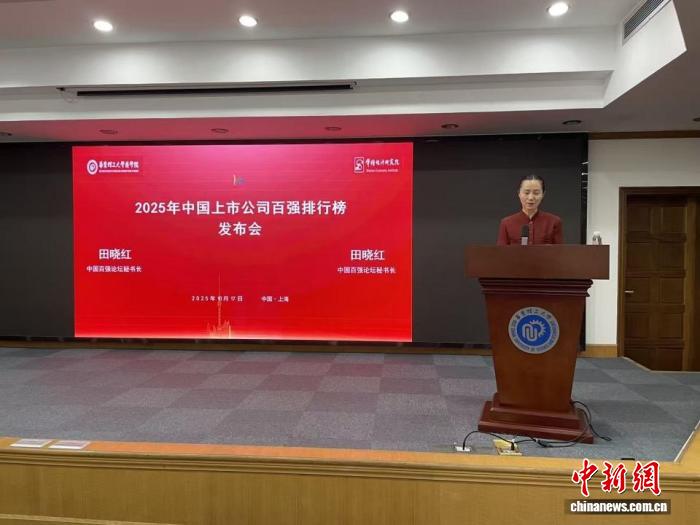
Core Insights - The 2025 China Top 100 Listed Companies Ranking was released, showing a total profit of 66,119.84 billion RMB for the 500 listed companies, an increase of 2,354.24 billion RMB from the previous year [1] - The top ten companies remain unchanged, with Industrial and Commercial Bank of China leading with a profit of 4,218.27 billion RMB, remaining stable compared to last year [2] - Despite a decrease in the profit threshold for the ranking, the total profit still grew by 3.69%, driven by significant profit increases among leading companies [3] Summary by Categories Top Companies - The top ten companies include Industrial and Commercial Bank of China, China Construction Bank, Agricultural Bank of China, Bank of China, China Petroleum, China National Offshore Oil Corporation, China Merchants Bank, China Mobile, Ping An Insurance, and Kweichow Moutai [2] - China National Offshore Oil Corporation saw a profit increase of 9.83%, moving up one rank, while China Merchants Bank dropped one rank [2] Profit Distribution - Among the 500 listed companies, 97 companies reported profits exceeding 10 billion RMB, a decrease of 5 from the previous year; 24 companies exceeded 50 billion RMB, an increase of 5; and 12 companies surpassed 100 billion RMB, an increase of 2 [2] - The profit threshold for the ranking (the profit of the 500th company) was 1.464 billion RMB, down 11.22% from the previous year's 1.649 billion RMB [2] Overall Market Performance - The profit growth of leading companies compensated for the general profit decline among lower-ranked companies, highlighting the importance of top firms in driving overall profitability [3] - The strong performance of leading companies is seen as a key driver of high-quality economic development in China, providing confidence and momentum to the market [4]







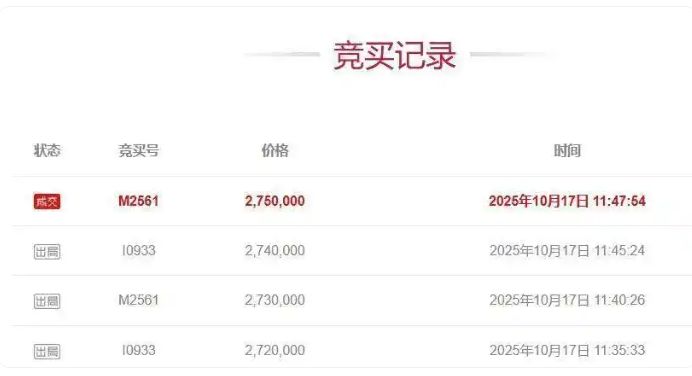
4人出价67次!有人花275万元拍到尾号66666666手机号!法官:若5天内悔拍,要扣40万保证金
Mei Ri Jing Ji Xin Wen· 2025-10-18 02:51
每经编辑|杜宇 10月17日,一个尾号为66666666的手机号拍卖活动,在众多网友的关注中落下帷幕。 片来源:拍卖页面截图 10月17日,大皖新闻联系上拍品咨询人,工作人员张先生证实,号码已被拍出,成交价275万元。 图片来源:拍卖页面截图 拍卖平台显示,该号码为中国移动手机号,归属地为山东枣庄,目前套餐为159元后付费新飞享+套 餐,截至2025年9月15日话费余额负11.74元,套餐外有彩信、来电提醒。 值得注意的是,页面上用显著字体标注了:电话号码过户后的套餐没有最低消费。 图片来源:拍卖页面截图 据钱江晚报,标的物介绍中也载明,因在拍卖期间手机号过户后的套餐及最低消费等产生变化的,由买 受人自行负责,由此产生的问题也不影响拍卖成交结果及成交价格。竞买人一旦作出拍卖决定,即表明 接受该电话号码过户后的套餐及最低消费,并自愿接受由此产生的一切经济损失和法律责任。 据潇湘晨报,标的物介绍显示,此次拍卖系司法拍卖,处置法院是郑州高新技术产业开发区人民法 院。"1**66666666"手机号归属地为山东枣庄,运营商是中国移动,拍品所有人系被执行人张某。目前 套餐费用为159元,截至2025年9月15日,话费余 ...
筑实数字经济发展底座 5G创新应用激活新动能
Zhong Guo Jing Ying Bao· 2025-10-17 18:28
Core Insights - The article emphasizes the significant role of 5G technology as a driving force for high-quality economic development in China during the "14th Five-Year Plan" period, highlighting its rapid growth and integration into various sectors [1][2][8] Industry Development - China's 5G network has become the largest and most advanced globally, with the number of 5G base stations expected to reach 4.55 million by June 2025, a fivefold increase from 2020 [1] - The number of gigabit broadband users is projected to grow 34 times, reaching 226 million households by 2025 [1] - The focus is shifting from building a robust network to maximizing its commercial value and providing digital services to the public [2][6] 5G New Calling Innovation - 5G New Calling is a key innovation that enhances traditional voice calls by integrating features like video calls, content sharing, and smart customer service, redefining communication experiences [2][3] - The goal is to have over 100 million users of 5G New Calling by the end of 2027, indicating a transition from basic capabilities to value-added services [2][6] Market Dynamics - Major telecom operators are leading the deployment of 5G New Calling, driven by the need to innovate and counter the competition from OTT applications [6][7] - The integration of data channels with voice and video streams in 5G New Calling creates a more interactive and intelligent communication platform [6][7] Challenges and Opportunities - Despite the rapid development, challenges remain, including the need for unified technical standards and a viable business model that balances consumer and enterprise needs [7][8] - The ongoing support from government policies and industry collaboration is expected to strengthen the foundation for 5G New Calling's growth and its role in the digital economy [8]


三大运营商eSIM商用启幕 哪些产业链企业受益?|eSIM重返系列观察①
Mei Ri Jing Ji Xin Wen· 2025-10-17 15:32
Core Insights - The three major telecom operators in China have officially launched eSIM mobile services, marking a significant advancement in the eSIM technology for smartphones and creating new growth opportunities for the eSIM industry chain [1] Industry Overview - The global eSIM chip shipment reached 446 million in 2023, with predictions of 1 billion eSIM smartphone connections by the end of 2025 and 6.9 billion by 2030, accounting for three-quarters of total smartphone connections [1][6] - The eUICC chip is central to eSIM technology, enabling remote SIM configuration and management, which enhances user experience and positions the industry chain for growth [2] Market Dynamics - The demand for eUICC chips is expected to surge due to the commercial launch of eSIM services by telecom operators, with 3.62 million eSIM users in China as of 2023, predominantly in smartwatches [3] - The eSIM technology is anticipated to drive supply chain optimization within the telecommunications industry [1] Company Developments - New Henghui, a semiconductor packaging and testing company, has the capability to adapt its existing IoT eSIM packaging technology for smartphones and other devices, indicating a broad application potential [1][5] - Huada Electronics has developed an eSIM operating system in collaboration with a global eSIM service provider, achieving GSMA eUICC Security Assurance certification, which enhances its market position [2] Technical Advancements - The etching lead frame is a critical material for eSIM chip packaging, with significant potential for domestic substitution as eSIM applications accelerate [4] - The WLCSP (Wafer-Level Chip Scale Package) technology is crucial for miniaturizing eSIM chips and is already adopted by major international manufacturers like Apple and Samsung [5] Future Outlook - Companies that proactively invest in technology development and establish strong ties with terminal manufacturers and telecom operators are likely to gain competitive advantages in the evolving eSIM industry [6]
2025年中国上市公司百强榜发布 北京利润份额抢眼
Zheng Quan Shi Bao Wang· 2025-10-17 15:27
Group 1 - The "2025 China Top 100 Listed Companies" ranking was released, with major companies like ICBC, CCB, ABC, and others dominating the top positions [1][2] - Among the 500 listed companies, 97 reported profits exceeding 10 billion yuan, a decrease of 5 from the previous year; 24 companies surpassed 50 billion yuan, an increase of 5; and 12 companies exceeded 100 billion yuan, an increase of 2 [1] - Key characteristics of the ranking include slight revenue decline with profit growth, significant support from leading enterprises, and a notable performance in the financial sector [1][3] Group 2 - Beijing leads in the number of listed companies with 78 firms achieving a profit of 33,773.91 billion yuan, accounting for 51.08% of the total profits of the top 500 [2] - The eastern coastal provinces remain dominant, with Guangdong, Zhejiang, Shanghai, Jiangsu, and Shandong following in the number of listed companies [2] - The distribution of the top 500 companies spans 148 cities, indicating a growth breakthrough for quality enterprises in more third and fourth-tier cities, reflecting a degree of regional balance in corporate development [2] Group 3 - Current economic challenges in China include overcapacity, insufficient demand, a downturn in real estate, heavy debt burdens, and international friction affecting economic circulation [3] - Proposed strategies to address these challenges include establishing three world-class innovation centers, promoting collaboration between top companies and universities, and enhancing the policy-based financial system [3]
全国算力“一张网”正由蓝图变现实
Zheng Quan Ri Bao· 2025-10-17 15:26
Core Insights - The construction of a national integrated computing network is essential for the rapid growth of the digital economy, likened to a "smart city" where computing power is the vital resource [1][2][8] - Recent government initiatives, including the "Millisecond Computing" action plan, aim to enhance the speed and accessibility of computing resources across the country [1][3] - The "East Data West Computing" project is a strategic effort to optimize resource allocation and strengthen technological collaboration, facilitating high-quality development [2][6] Group 1: Policy and Strategic Initiatives - The Ministry of Industry and Information Technology has launched a "Millisecond Computing" initiative to create a high-capacity, low-latency urban network for computing resources [1] - The "East Data West Computing" project has expanded its scope to include all provinces, aiming for efficient nationwide computing resource allocation [2] - The implementation of the "Computing Interconnection Action Plan" aims to establish a comprehensive standard and resource-sharing platform by 2026 [3] Group 2: Infrastructure Development - China Mobile has developed a national computing network with a focus on infrastructure, application empowerment, and technological innovation [6] - The company has established a data center layout covering all core hubs of the "East Data West Computing" initiative, including major intelligent computing centers [6] - The national computing internet service platform has achieved connectivity across 31 provinces, enhancing the efficiency of computing resource management [4] Group 3: Industry Collaboration and Challenges - The industry is moving towards a collaborative ecosystem, with telecommunications operators playing a crucial role in resource allocation and technological innovation [7][8] - Despite progress, challenges remain in integrating disparate computing resources and improving operational efficiency across various platforms [9][10] - Experts emphasize the need for a robust framework to address energy consumption, data security, and privacy concerns during the construction of the integrated computing network [10]

中国移动再次通过可转债转股增持浦发银行股份
Bei Jing Shang Bao· 2025-10-17 15:02
Core Viewpoint - On October 17, SPDB announced changes in its shareholding structure due to the conversion of convertible bonds held by China Mobile, impacting the total share capital and ownership percentages [1] Group 1: Shareholding Changes - As of October 13, 2025, SPDB's total share capital is approximately 31.829 billion shares, with China Mobile holding about 5.785 billion shares, representing an 18.18% stake [1] - Following the conversion of convertible bonds, SPDB's total share capital increased to approximately 32.503 billion shares, resulting in a dilution of China Mobile's stake to 17.80% [1] - On October 17, China Mobile converted 18.7407 million convertible bonds into approximately 150 million ordinary shares of SPDB, increasing its ownership percentage from 17.80% to 18.15% [1] Group 2: Convertible Bond Conversions - On October 13, SPDB announced that China Mobile converted 56.31454 million convertible bonds into 450 million ordinary shares [1]

工行蝉联榜首,2025年中国上市公司百强排行榜在沪发布
Guo Ji Jin Rong Bao· 2025-10-17 12:32
Core Insights - The 2025 China Top 100 Listed Companies Ranking was released, highlighting the performance of major companies in various sectors [1] Group 1: Overall Performance - The total profit of the top 500 companies reached 66,119.84 billion yuan, an increase of 2,354.24 billion yuan year-on-year, accounting for 96.93% of the total profits of all listed companies [2] - Total revenue for the top 500 companies decreased by 1.95% to 493,947.70 billion yuan, representing 68.70% of all listed companies' revenue [2] - Total assets grew by 6.81% to 4,055,553.95 billion yuan, maintaining a stable share of 90.35% of all listed companies' total assets [2] Group 2: Sector Performance - The financial sector showed outstanding profitability, with 82 financial companies generating a profit of 31,386.93 billion yuan, a year-on-year increase of 10.90%, representing 47.47% of the total profit of the top 500 [4] - The manufacturing sector saw a profit increase of 13.60%, with 241 companies contributing 14,425.03 billion yuan, reversing previous declines [4] - The construction and energy sectors faced challenges, with profits declining by 5.71% to 14,105.92 billion yuan, and the number of companies in this sector decreasing [4] Group 3: Company Rankings - The top ten companies included Industrial and Commercial Bank of China, China Construction Bank, Agricultural Bank of China, and China Petroleum, with ICBC leading with a profit of 421.83 billion yuan, remaining stable compared to the previous year [1] - The ranking of China National Offshore Oil Corporation improved by one position, with a profit increase of 9.83% [1] - The number of companies with profits exceeding 100 billion yuan decreased to 97, while those exceeding 500 billion yuan increased to 24 [1] Group 4: Regional Insights - Beijing accounted for 51.08% of the total profits of the top 500 companies, with 78 companies generating 33,773.91 billion yuan [7] - Eastern coastal provinces continued to dominate the rankings, with Guangdong, Zhejiang, and Shanghai following Beijing in the number of listed companies [7]
中国移动(600941) - 港股公告:须予披露的交易进一步转换浦发银行A股可转债
2025-10-17 11:30
香港交易及結算所有限公司及香港聯合交易所有限公司對本公告之內容概不負責,對 其準確性或完整性亦不發表任何聲明,並明確表示概不就因本公告全部或任何部分內 容而產生或因倚賴該等內容而引致之任何損失承擔任何責任。 CHINA MOBILE LIMITED 中國移動有限公司 (根據公司條例在香港註冊成立之有限公司) 股份代號:941(港幣櫃台)及80941(人民幣櫃台) 須予披露的交易 進一步轉換浦發銀行 A 股可轉債 進一步轉換浦發銀行 A 股可轉債 董事會宣佈,於 2025 年 10 月 17 日,廣東移動行使換股權將其持有的合計面值人民 幣 1,874,071,000 元(約合 2,053,753,931 港元)浦發銀行 A 股可轉債按照每股人民幣 12.51 元(約合 13.71 港元)之轉股價轉為約 149,805,835 股之浦發銀行 A 股。實際轉 換的浦發銀行 A 股股數可能會因清算及交收原因而有所差異。 香港上市規則之含義 就香港上市規則而言,本集團將被視為收購約 149,805,835 股之浦發銀行 A 股。由於 就轉換(與過去 12 個月內收購浦發銀行 A 股合併計算)根據香港上市規則第 14. ...