
SERES(601127)

Search documents
赛力斯:2026年1月新能源汽车销量同比增长140.33%
Mei Ri Jing Ji Xin Wen· 2026-02-01 08:57
每经AI快讯,2月1日,赛力斯公告称,2026年1月,公司新能源汽车销量43034辆,同比增长140.33%。 其中,赛力斯汽车销量40012辆,同比增长143.50%。公司合计销量45948辆,同比增长104.85%。最终 数据以2026年审计数据为准。 ...

赛力斯:1月新能源汽车销量4.3万辆,同比增长140.33%
Xin Lang Cai Jing· 2026-02-01 08:52
Core Viewpoint - The company reported significant growth in its electric vehicle production and sales for January 2026, indicating a strong upward trend in the new energy vehicle sector [1] Group 1: Production and Sales Data - In January 2026, the company's new energy vehicle production reached 44,098 units, representing a year-on-year increase of 121.72% [1] - The sales for the same period were 43,034 units, showing a year-on-year growth of 140.33% [1] - The company's total production amounted to 46,233 units, with a year-on-year increase of 104.36% [1] - Total sales reached 45,948 units, reflecting a year-on-year growth of 104.85% [1] Group 2: Specific Vehicle Performance - The company's specific vehicle production was 40,296 units, which is a year-on-year increase of 130.09% [1] - The sales of these specific vehicles were 40,012 units, marking a year-on-year growth of 143.50% [1]
赛力斯:1月整车总销售45948辆,同比增长104.85%
2 1 Shi Ji Jing Ji Bao Dao· 2026-02-01 08:50
Core Viewpoint - The company reported significant growth in vehicle sales and production for January 2026, indicating a strong performance in the electric vehicle sector [1] Group 1: Sales Performance - Total vehicle sales for January 2026 reached 45,948 units, with a total production of 46,233 units [1] - Year-to-date sales for January 2026 show a remarkable increase of 104.85% compared to the same period last year [1] Group 2: Electric Vehicle Sales - In January 2026, sales of new energy vehicles amounted to 43,034 units, reflecting a year-on-year growth of 140.33% [1] - Cumulative sales of new energy vehicles for January 2026 also increased by 140.33% compared to the same period last year [1]
赛力斯:2026年1月新能源汽车产销量同比大幅增长
Xin Lang Cai Jing· 2026-02-01 08:43
赛力斯公告称,2026年1月,公司新能源汽车产量44098辆,同比增长121.72%;销量43034辆,同比增 长140.33%。其中,赛力斯汽车产量40296辆,同比增长130.09%;销量40012辆,同比增长143.50%。其 他车型产量和销量均有下滑。公司合计产量46233辆,同比增长104.36%;销量45948辆,同比增长 104.85%。最终数据以2026年审计数据为准。 ...
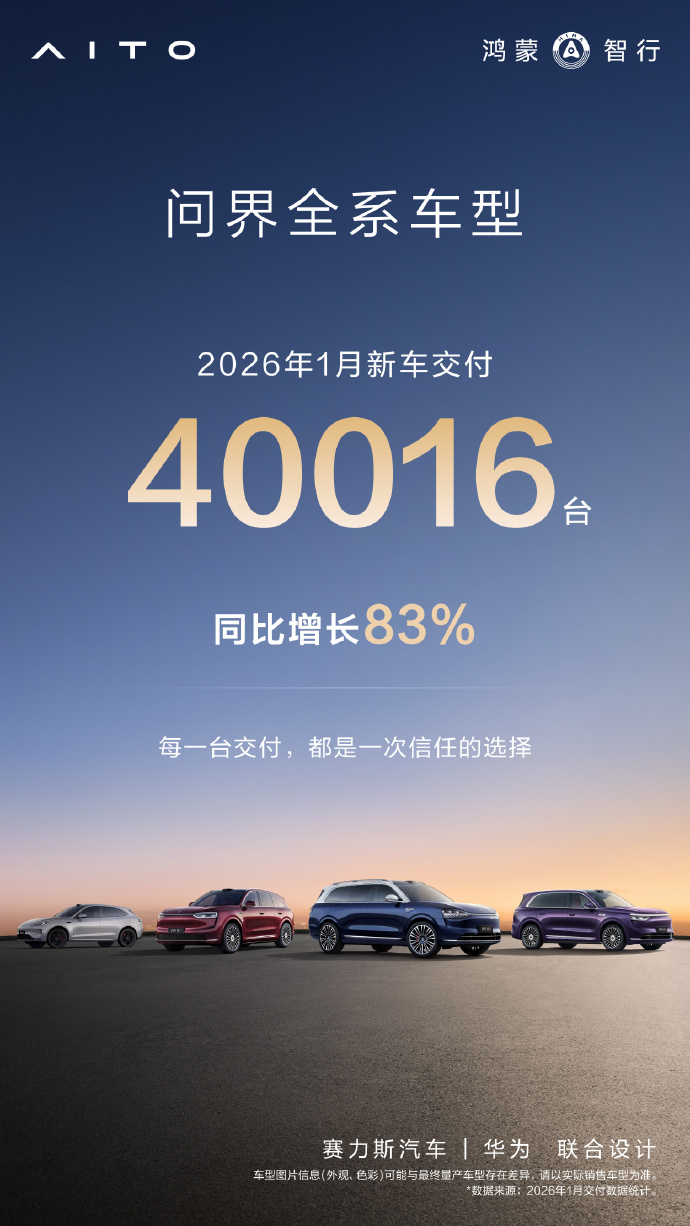
问界汽车:1月交付40016辆,同比增长83%
Mei Ri Jing Ji Xin Wen· 2026-02-01 05:52
Group 1 - The core point of the article is that Wanjie Automobile reported a significant increase in vehicle deliveries for January, reaching 40,016 units, which represents a year-on-year growth of 83% [1] Group 2 - The collaboration between Seres Automotive and Huawei is highlighted, indicating a joint design effort for new vehicle models, although the final production models may differ from the initial design images [3]

带电量提升能支撑多少国内动力装机增速?
Changjiang Securities· 2026-01-31 13:46
Investment Rating - The industry investment rating is "Positive" and maintained [7] Core Insights - The penetration rate of domestic new energy passenger vehicles has reached 55%, and future sales growth is expected to slow down. However, the increase in battery capacity is anticipated to significantly impact demand, with a projected double-digit growth in battery demand for passenger vehicles by 2026 [2][4] - The domestic new energy passenger vehicle market has entered a consumption-driven growth phase since the end of 2020, with penetration rates increasing from around 10% to an expected 55% by the end of 2025. This growth is accompanied by a slowdown in sales growth due to a higher base [4][17] - The increase in battery capacity is expected to support the growth of battery installations, with single-vehicle battery capacity projected to rise from 52.8 kWh in April 2025 to 61.2 kWh by December 2025 for EVs, and from 23.3 kWh to 33.7 kWh for PHEVs during the same period [4][18] Summary by Sections Market Trends - The market for new energy passenger vehicles is projected to see a slight decline in total vehicle numbers, while new energy vehicles are expected to achieve small single-digit growth due to increased penetration rates. Battery capacity per vehicle is expected to increase by approximately 7%-8%, supporting a battery installation growth rate of around 12% [6][34] Policy and Economic Factors - Positive factors for battery capacity enhancement include changes in the old-for-new policy, which sets a subsidy cap at 8% of the vehicle price in 2026, and changes in purchase tax standards that require PHEVs to have a pure electric range of 100 kWh to qualify for tax exemptions [5][23] - The trend towards larger batteries in range-extended and plug-in hybrid vehicles is expected to continue, addressing consumer concerns about range anxiety and enhancing the perception of electric vehicles' convenience and cost-effectiveness [24] Product Development - Major manufacturers are launching new models with increased battery capacities. For instance, BYD and Geely are introducing models with capacities ranging from 20.79 kWh to 36.62 kWh for their 2026 versions [27][30] - The introduction of large-capacity EVs and PHEVs is expected to further enrich the market, with new models like the Wanjie M9 and NIO ES9 expected to have battery capacities around 100 kWh [31][33]




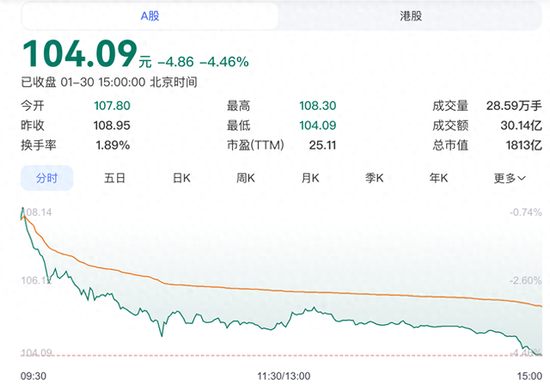
赛力斯股票再创新低,市值蒸发超千亿
Xin Lang Cai Jing· 2026-01-31 09:40
Core Viewpoint - The market is concerned about the declining market value of Seres despite its strong performance in sales and revenue, leading to a significant drop in stock price and market capitalization [1][15]. Sales Performance - In 2025, Seres is projected to achieve sales of 472,000 electric vehicles, a year-on-year increase of 10.63%, with the AITO brand accounting for over 420,000 units [3][17]. - The AITO M9 model has sold over 260,000 units, maintaining its position as the top-selling luxury vehicle in China for 20 consecutive months [3][17]. - For the first three quarters of 2025, Seres' revenue surpassed 110 billion yuan, with a net profit of 5.3 billion yuan and a gross margin of 29.37%, all showing year-on-year growth [3][18]. Market Concerns - Despite strong sales figures, the stock price has declined due to concerns over diluted channel advantages as the AITO brand's sales channels are shared with other brands under the HarmonyOS ecosystem [4][19]. - The proportion of AITO sales within the HarmonyOS ecosystem is expected to drop from 87% in 2024 to approximately 71% in 2025 [5][20]. - The initial advantage of Huawei's technology as the primary platform for AITO is diminishing, as new models are now competing for launch opportunities [6][21]. Brand Perception - Seres acquired all 919 trademarks of the AITO brand from Huawei for 2.5 billion yuan, indicating a shift from a supplier relationship to a more integrated strategic partnership [9][23]. - There is a growing recognition among consumers that AITO represents a combination of Seres manufacturing and Huawei technology, leading to a disconnect in brand perception [9][23]. Competitive Landscape - In the luxury vehicle market, AITO M9 captures 70% of the target demographic, but faces increasing competition from brands like Zeekr, Li Auto, and others targeting the same high-income consumer base [8][22]. - The competitive pressure is heightened as these brands are actively targeting consumers who are considering switching from traditional luxury brands [8][22]. Cost Structure Concerns - The gross margin of 29.37% is above the critical threshold of 20%, indicating a healthy financial position [10][24]. - However, the costs associated with Huawei's technology and marketing services are rising, with payments to Huawei for core components reaching 75 billion yuan from 2022 to mid-2025, averaging 136,000 yuan per vehicle [10][25]. - Marketing and service fees have surged from 4.036 billion yuan in 2022 to 18.111 billion yuan in 2024, indicating a heavy reliance on Huawei's brand for maintaining high margins [10][25]. Future Goals - Seres aims to produce its one-millionth vehicle by January 2026, with a target of achieving 550,000 to 600,000 units in 2026 [11][26]. - The company plans to expand its international presence, with 20% of its Hong Kong IPO proceeds allocated for overseas sales and charging network development [12][26]. - Increased investment in R&D, amounting to approximately 5.06 billion yuan in the first three quarters of 2025, is aimed at building a robust manufacturing foundation for future growth [13][26]. Strategic Challenges - As the Huawei brand's influence wanes, Seres must establish a sustainable competitive advantage in technology, distribution, and brand recognition to avoid being overshadowed by competitors [14][27].
A股头条:吴清发声!全力巩固资本市场稳中向好势头 特朗普提名前美联储理事沃什接替鲍威尔,美联储下一任主席人选出炉
Jin Rong Jie· 2026-01-31 01:11
Group 1: Capital Market Reforms - The China Securities Regulatory Commission (CSRC) aims to consolidate the positive momentum of the capital market, focusing on deepening comprehensive reforms in investment and financing [1] - CSRC will enhance the inclusiveness and adaptability of the regulatory framework, emphasizing risk prevention, strong regulation, and promoting high-quality development [1] - Key initiatives include advancing the reform of the ChiNext board, improving the convenience and flexibility of refinancing systems, and supporting the integrated development of the Beijing Stock Exchange and the New Third Board [1] Group 2: Strategic Investors - The CSRC plans to expand the types of strategic investors for listed companies, setting a minimum shareholding requirement of 5% for strategic investors [2] - Strategic investors are expected to hold a significant proportion of shares and participate in corporate governance, enhancing the company's market resource integration and core competitiveness [2] - Regulatory measures will be strengthened to prevent strategic investors from circumventing minimum shareholding and lock-up period requirements [2] Group 3: State-Owned Enterprises Performance - In 2025, state-owned enterprises are projected to achieve total operating revenue of 8,488.865 billion yuan, a year-on-year increase of 0.5% [3] - However, profits are expected to decline by 6.3% year-on-year, totaling 403.805 billion yuan [3] - The tax obligations of state-owned enterprises are anticipated to rise by 0.4%, reaching 587.829 billion yuan [3] Group 4: Market Monitoring and Regulation - The Shenzhen Stock Exchange has taken self-regulatory measures against investors exhibiting abnormal trading behaviors in certain fund products, including the "Guotou Silver (Core Stock) LOF" [4] - The Shanghai Stock Exchange is monitoring stocks with significant abnormal fluctuations and has reported multiple cases of irregular trading activities [5] Group 5: Company Earnings Forecasts - Zhongji Xuchuang expects a net profit increase of 89.50% to 128.17% in 2025, driven by strong demand for computing infrastructure [6][7] - Various companies, including Tianqi Lithium and Yihua Technology, have reported significant changes in their earnings forecasts for 2025, with some expecting substantial losses [15][17]

超七成乘用车企股价1月“开门黑”
Di Yi Cai Jing· 2026-01-30 13:37
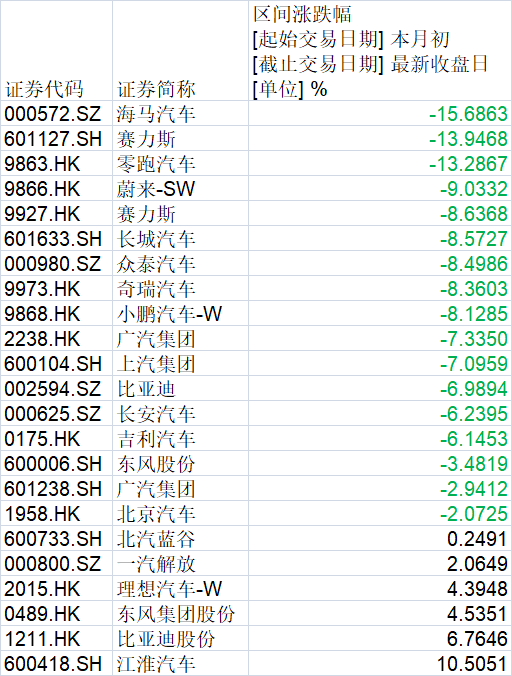
Core Viewpoint - In January, the stock prices of major listed passenger car companies in China experienced a significant decline, reflecting intensified competition and changing market sentiment in the automotive industry [2][7]. Group 1: Stock Performance - Among 23 major listed passenger car companies, over 70% saw their stock prices drop in January, with 17 companies reporting declines [2][3]. - Haima Automobile (000572.SZ) led the decline with a drop of over 15%, attributed to concerns over its lack of mainstream new energy models and ongoing low sales [3]. - Other notable declines include Seres (601127.SH) with a 13.95% drop, and several new energy and traditional car manufacturers like Leap Motor (9863.HK) and NIO (9866.HK) also experiencing significant decreases [4][5]. Group 2: Market Dynamics - The automotive industry is facing a historical low in sales profit margins, with the profit margin dropping to 4.1% in January, and a particularly low margin of 1.8% recorded in December [7]. - Wholesale sales of passenger cars in China from January 1 to 18 reached 740,000 units, a year-on-year decrease of 35%, while retail sales fell to 679,000 units, down 28% year-on-year [7]. - The competitive landscape is intensifying, with many companies resorting to discounts and price cuts to capture market share, leading to concerns about overall industry profitability [7].


赛力斯港股跌2.1%创新低 林园基金广发基金浮亏27%
Zhong Guo Jing Ji Wang· 2026-01-30 09:27
Group 1 - The stock price of Sais (Hong Kong stock code 09927.HK) closed at HKD 95.80, with a decline of 2.095%, reaching a new low since its listing [1] - Sais has experienced a cumulative decline of 27.15% since its listing on November 5, 2025, when it opened at HKD 128.9 [1] - The total number of shares offered globally by Sais was 108,619,000 H-shares, with 10,861,900 shares allocated for the Hong Kong offering and 97,757,100 shares for the international offering [1] Group 2 - The final offering price for Sais was HKD 131.50, raising a total of HKD 14,283.40 million, with a net amount of HKD 14,016.41 million after deducting estimated listing expenses of HKD 266.99 million [1] - Key cornerstone investors include Chongqing Industry Fund, Linyuan Fund, Huatai Capital, and several others, indicating a diverse investment base [2] - New China Asset Management, a cornerstone investor, is 99.6% owned directly and indirectly by New China Life Insurance Co., Ltd [3]