Seazen(601155)

Search documents
新城控股:1-10月公司累计实现合同销售金额约164.68亿元
Ge Long Hui· 2025-11-11 08:20
Core Insights - The company reported a total commercial operating revenue of approximately 1.186 billion yuan in October, representing a year-on-year increase of 7.65% [1] - For the period from January to October, the cumulative commercial operating revenue reached approximately 11.696 billion yuan, reflecting a year-on-year growth of 10.49% [1] Sales Performance - In October, the company achieved a contract sales amount of approximately 1.419 billion yuan, with a sales area of about 191,500 square meters [1] - From January to October, the cumulative contract sales amount was approximately 16.468 billion yuan, with a total contract sales area of around 2.1506 million square meters [1]

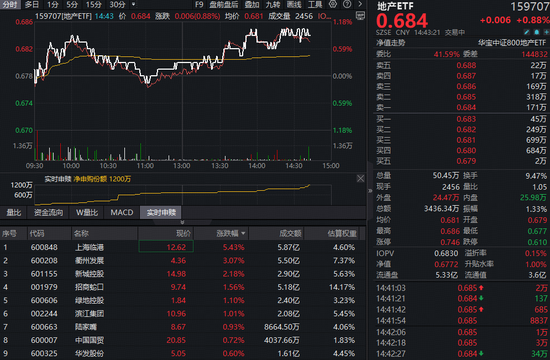
地产逆市修复!上海临港领涨超5%,全市场唯一地产ETF(159707)涨逾1%,资金净申购1200万份!
Xin Lang Ji Jin· 2025-11-11 07:09
Group 1 - The real estate sector is leading the market with the CSI 800 Real Estate Index rising over 1%, with Shanghai Lingang up 5.6% and several other companies like Quzhou Development and New Town Holdings increasing by over 2% [1] - The only ETF tracking the CSI 800 Real Estate Index, the real estate ETF (159707), saw a price increase of over 1% and a net subscription of 12 million shares, with a total transaction amount exceeding 33 million yuan [1][2] - In October 2025, the total bond financing in the real estate sector reached 51.24 billion yuan, marking a year-on-year increase of 76.9%, with credit bond issuance also showing significant growth [2] Group 2 - CITIC Securities predicts that 2026 may be a critical year for real estate companies to repair their balance sheets, with some firms potentially reaching the bottom of their profit cycles [3] - The real estate ETF (159707) is highlighted for its concentration on top-tier real estate companies, with over 90% of the weight in the top ten constituent stocks, indicating a strong focus on central state-owned enterprises and quality firms [3]




中国的新兴前沿-C-REITs:开启未来十年的投资新篇章
2025-11-11 02:47
Summary of C-REITs Conference Call Industry Overview - The Chinese real estate industry is transitioning from new residential construction to rental asset operations, coinciding with the development of the REIT market, which may reshape the competitive landscape for developers and redefine long-term investment logic in the sector [1][3][11]. Key Points Importance of Current Developments - Since Q3 2025, favorable policies have accelerated the issuance of domestic REITs (C-REITs), expanding the range of assets and issuing entities. C-REITs are expected to become a significant asset class over the next 10 to 20 years, with a market potential of approximately $1 trillion, which is over 30 times the current size [3][9]. - The limited trading volume of C-REITs suggests that listed developers are a good entry point into this rapidly expanding theme due to their large rental asset portfolios and low participation in REIT issuance [3][9]. Beneficiaries - In-depth analysis indicates that China Resources Land (1109.HK) has the highest short-term benefit potential, followed by Seazen Holdings (601155.SS) and Longfor Group (0960.HK), due to their substantial shopping center portfolios and high pledge ratios. Other companies like China Overseas Land & Investment (0688.HK), China Merchants Shekou (001979.SZ), Vanke (2202.HK), Poly Developments (600048.SS), and Gemdale (600383.SS) also have significant non-retail rental assets that could benefit in the medium term as REIT coverage expands [4][9]. Signals to Watch - The normalization of REIT issuance, especially with private developers' participation, the expansion of covered commercial asset types, and increased flexibility in capital recycling will strengthen confidence in the mid-term investment logic [4][9]. Regulatory Framework and Market Development - C-REITs have a more stringent regulatory framework compared to mature markets like the US and Japan, including requirements on structure, holding ratios, leverage levels, and initial yield [15][19]. - The development of C-REITs has progressed through four phases over the past 25 years, with significant milestones including the first public REITs listed in 2021 and the expansion of eligible asset types [11][12]. Market Size and Performance - As of September 2025, there are 75 publicly listed C-REITs with a total issuance size of approximately RMB 200 billion and a market capitalization of about RMB 220 billion. Despite significant growth since the first listings, C-REITs currently represent only 0.15% of the total market capitalization of China's stock market [20][29]. - The average trading yield of C-REITs has compressed to 4.4%, reflecting a price increase of about 10% since IPOs, with specific sectors like water facilities and new infrastructure seeing substantial price increases [21][40]. Long-term Potential - The potential market size for C-REITs could reach between $800 billion to $1 trillion, which is 28 to 33 times the current market size, driven by the growth of commercial REITs and the completion of new properties [41][43]. - The estimated total value of commercial properties completed since 2000 is approximately $4.9 trillion, indicating a significant opportunity for C-REITs to capture a larger market share in the future [41][42]. Conclusion - The C-REIT market in China is poised for significant growth, driven by favorable policies, a shift in investment focus, and the potential for substantial market capitalization increases over the next decade. Developers with large rental portfolios are well-positioned to benefit from this emerging asset class [3][4][9].



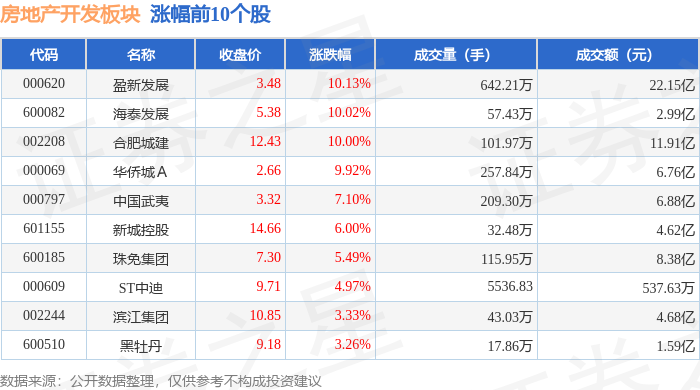
房地产开发板块11月10日涨1.21%,盈新发展领涨,主力资金净流入4亿元
Zheng Xing Xing Ye Ri Bao· 2025-11-10 08:48
Core Insights - The real estate development sector experienced a rise of 1.21% on November 10, with Yingxin Development leading the gains [1] - The Shanghai Composite Index closed at 4018.6, up 0.53%, while the Shenzhen Component Index closed at 13427.61, up 0.18% [1] Stock Performance - Yingxin Development (000620) closed at 3.48, with a gain of 10.13% and a trading volume of 6.42 million shares [1] - Haitai Development (600082) closed at 5.38, up 10.02%, with a trading volume of 574,300 shares [1] - Hefei Urban Construction (002208) closed at 12.43, gaining 10.00% with a trading volume of 1.02 million shares [1] - Other notable gainers include Huashang City A (000069) at 2.66 (+9.92%) and China Wuyi (000797) at 3.32 (+7.10%) [1] Capital Flow - The real estate development sector saw a net inflow of 400 million yuan from institutional investors, while retail investors contributed a net inflow of 15.49 million yuan [2] - Notable outflows included 416 million yuan from speculative funds [2] Individual Stock Capital Flow - Yingxin Development had a net inflow of 507 million yuan from institutional investors, while it faced a net outflow of 224 million yuan from speculative funds [3] - Hefei Urban Construction saw a net inflow of 306 million yuan from institutional investors, with a net outflow of 101 million yuan from speculative funds [3] - Huashang City A experienced a net inflow of 142 million yuan from institutional investors, but faced outflows from both speculative and retail investors [3]


新城控股股价涨5.35%,景顺长城基金旗下1只基金重仓,持有13.19万股浮盈赚取9.76万元
Xin Lang Cai Jing· 2025-11-10 06:01
11月10日,新城控股涨5.35%,截至发稿,报14.57元/股,成交3.17亿元,换手率1.00%,总市值328.64 亿元。 资料显示,新城控股集团股份有限公司位于上海市普陀区中江路388弄6号新城控股大厦A座,成立日期 1996年6月30日,上市日期2015年12月4日,公司主营业务涉及房地产开发与销售。主营业务收入构成 为:房地产开发销售68.63%,物业出租及管理29.06%,其他(补充)2.31%。 从基金十大重仓股角度 风险提示:市场有风险,投资需谨慎。本文为AI大模型自动发布,任何在本文出现的信息(包括但不 限于个股、评论、预测、图表、指标、理论、任何形式的表述等)均只作为参考,不构成个人投资建 议。 数据显示,景顺长城基金旗下1只基金重仓新城控股。景顺长城景骊成长混合A(010706)三季度增持 8100股,持有股数13.19万股,占基金净值比例为4.71%,位居第十大重仓股。根据测算,今日浮盈赚取 约9.76万元。 责任编辑:小浪快报 景顺长城景骊成长混合A(010706)基金经理为梁荣。 截至发稿,梁荣累计任职时间3年22天,现任基金资产总规模4551.62万元,任职期间最佳基金回报 2 ...
中国房地产调查,2025 年 10 月一线城市情绪进一步恶化China Property-AlphaWise China Property Survey, Oct-25 Sentiment Worsened More in Tier 1 Cities
2025-11-10 03:34
Summary of the Conference Call on China Property Market Industry Overview - **Industry**: China Property - **Survey Conducted**: October 24-28, 2025, with over 2,000 residents across Tier 1 to Tier 4 cities [7][11] Key Findings Housing Price Outlook - **Weaker Sentiment**: A net 42% of respondents expect home prices to fall in the next 12 months, up from 33% in July [2][15] - **Tier 1 Cities**: Confidence is particularly low, with a net 67% anticipating price declines, compared to 50% in July and 39% in April [2][15] - **Tier 2 Cities**: A net 45% expect price drops, an increase from 23% in July [15] Home Selling Plans - **Urgency to Sell**: 41% of potential sellers plan to sell within the next six months, down from 44% in July [3][18] - **Willingness to Accept Losses**: 52% of sellers are willing to take a loss on their sale, slightly down from 56% in July [3][19] - **Listing Behavior**: Increased listing volume with lower prices in the secondary market [3] Home Purchase Plans - **Weak Purchase Intent**: Only 48% of respondents are likely to consider buying property in the future, the lowest since the survey began in Q3 2023 [4][12] - **Extremely Likely Buyers**: Only 15% are "extremely likely" to purchase, down from 16% in July [4][12] - **Short-term Expectations**: Only 2% expect to make a purchase in the next 12 months [4][12] Investment Recommendations - **Cautious on POEs**: The recent industry pullback presents a potential entry point for quality State-Owned Enterprises (SOEs) [5] - **Preferred Stocks**: - **CR Land (1109.HK)**: Long-term market consolidator with attractive dividend yields [5] - **C&D International Investment Group Ltd (1908.HK)**: Strong fundamentals with a favorable valuation [26] - **Seazen Holdings Company Ltd (601155.SS)**: Noted for robust mall rental and private REIT divestment [5][27] Additional Insights - **Negative Feedback Loop**: Concerns about income and cautious buyer sentiment may exert further downward pressure on home prices [4] - **Market Dynamics**: The overall housing price outlook remains weak, particularly in Tier 1 cities, indicating a challenging environment for both buyers and sellers [17] Conclusion The survey indicates a significant decline in confidence regarding home prices in China, especially in Tier 1 cities. The urgency among sellers to divest their properties, coupled with weak buyer sentiment, suggests a challenging market ahead. Investment opportunities may arise in quality SOEs amidst the current market pullback.
新城控股涨2.02%,成交额1.51亿元,主力资金净流出1336.11万元
Xin Lang Cai Jing· 2025-11-10 02:49
Core Insights - New City Holdings' stock price increased by 2.02% on November 10, reaching 14.11 CNY per share, with a total market capitalization of 31.827 billion CNY [1] - The company has experienced a year-to-date stock price increase of 17.98%, but has seen declines of 0.42% over the last five trading days, 8.50% over the last 20 days, and 10.75% over the last 60 days [1] Financial Performance - For the period from January to September 2025, New City Holdings reported a revenue of 34.371 billion CNY, a year-on-year decrease of 33.34%, and a net profit attributable to shareholders of 0.974 billion CNY, also down 33.05% year-on-year [2] - Cumulative cash dividends since the company's A-share listing amount to 14.595 billion CNY, with no dividends distributed in the past three years [3] Shareholder Structure - As of September 30, 2025, the number of shareholders decreased by 12.34% to 43,200, while the average number of tradable shares per person increased by 14.07% to 52,155 shares [2] - The top ten circulating shareholders include Hong Kong Central Clearing Limited, which holds 16.6308 million shares, a decrease of 701,400 shares from the previous period, and ICBC Value Selection Mixed A, a new shareholder with 15.7412 million shares [3]
房地产行业2025年三季报综述:盈利结构性拐点可期,更加重视经营持续性
Changjiang Securities· 2025-11-09 15:24
Investment Rating - The report maintains a "Positive" investment rating for the real estate industry [14] Core Insights - The industry is currently experiencing downward pressure, but after over four years of adjustment, it may have entered the latter half of the cycle. Individual performance among companies is beginning to show significant differentiation. Structural turning points in profitability are expected due to optimized land reserves, with some high-quality companies already seeing performance improvements [22][12][20] Summary by Sections Profitability - Revenue decline has narrowed, with a year-on-year decrease of 2.7% for key real estate companies in Q1-Q3 2025. The gross profit margin improved by 0.1 percentage points to 9.3%. However, individual profitability is increasingly differentiated, with companies like Binhai Group and Urban Development seeing over 40% growth in net profit [8][21][26] Debt Management - Maintaining financial safety is crucial, with a slight increase of 0.6% in interest-bearing debt by the end of Q3 2025. The overall debt risk in the industry is being cleared, and companies are beginning to tilt towards operational sustainability while ensuring financial safety [9][48][49] Cash Flow - Operating cash receipts saw a year-on-year decline of 9.3%, but the decrease has narrowed significantly. Investment activities remain restrained, and financing activities continue to show net outflows. Companies are focusing on cash flow safety through stringent cash management [10][24][48] Operations - Sales decline has narrowed, with a year-on-year decrease of 12.2% in sales amount for key companies. However, land acquisition has become more aggressive, with a 110.4% increase in land acquisition amount. The focus is shifting towards land quality, with floor prices rising by 38.9% [11][20][22]



房地产行业 25 年 10 月市场总结:高基数增速全面承压,政策空窗期板块走弱
GF SECURITIES· 2025-11-08 14:12
Core Insights - The real estate sector is experiencing significant pressure with high base growth rates leading to a decline in market performance [1] - The report maintains a "Buy" rating for the industry, indicating potential investment opportunities despite current challenges [2] Market Performance - In October 2025, the transaction volume of commodity residential properties in 46 cities decreased by 33.3% year-on-year, with a notable decline in first-tier cities at 39.1% [11][12] - The cumulative transaction volume from January to October 2025 shows a 10.9% year-on-year decrease [11] - The second-hand housing market also faced challenges, with transaction volumes in 11 cities down by 21.3% year-on-year [35] Market Sentiment - The second-hand housing prices fell by 1.7% month-on-month in October 2025, marking a total decline of 13.0% since the beginning of the year [5][35] - Inventory levels in the new housing market showed a slight decrease, with a 2.1% reduction in short-term inventory in 10 key cities [5] Policy Environment - The "14th Five-Year Plan" emphasizes promoting high-quality development in real estate, shifting from suppression to encouragement of reasonable demand [5][29] - The government is gradually lifting restrictive measures, which may positively impact market sentiment in the long term [5] Land Market Dynamics - In October 2025, the land transfer revenue in 600 cities dropped by 27.8% year-on-year, indicating a cooling land market [5] - The average land premium rate fell to 3.3%, the lowest since 2025, reflecting cautious bidding behavior among developers [5] Company Performance - The top 100 real estate companies reported a sales amount of 276.6 billion yuan in October 2025, a 41% year-on-year decline [29] - State-owned enterprises showed a year-on-year sales decline of 37%, while private enterprises faced a more severe drop of 52% [30] Investment Outlook - The SW Real Estate Index fell by 2.37% in October 2025, underperforming the broader market by 2.4 percentage points [5] - The report suggests holding quality real estate development companies, as the market is expected to stabilize and recover gradually [5]


新消费趋势引致线下零售分化 解码商业地产竞争优势来源
Zhong Guo Jing Ji Wang· 2025-11-07 12:33
Group 1 - The core viewpoint of the article highlights the steady growth of China's consumption market and the reduced impact of online shopping on offline consumption, presenting new opportunities for the commercial real estate sector [1][2] - From January to September 2023, the total retail sales of consumer goods in China reached 36.6 trillion yuan, a year-on-year increase of 4.5%, indicating a stable expansion of the overall consumption market [2] - The contribution rate of final consumption expenditure to GDP growth in the first half of 2023 was 52%, an increase of 7.5 percentage points compared to the previous year, emphasizing the significant role of consumption in economic growth [2] Group 2 - The competition among existing centralized commercial properties is intensifying, with the number of new openings slowing down due to market saturation and reduced investment in commercial projects [4] - As of 2024, the number of new centralized commercial projects is expected to be 436, down from an average of 660 per year from 2015 to 2019 [4] - The total number of existing centralized commercial projects in China has surpassed 10,000, with a total commercial area of 708 million square meters [4] Group 3 - The operational performance of domestic brand commercial real estate companies has been strong, with retail sales growth outpacing the overall retail sales growth [5] - Major listed companies like China New Town Development and China Resources Land have reported significant increases in rental income and retail sales, with China Resources Land's rental income reaching 19.4 billion yuan and retail sales reaching 195.3 billion yuan in 2024 [5] - The successful operation of commercial real estate companies relies on their ability to position themselves effectively in different consumer markets, categorized into high-end, high-energy, and sinking markets [5] Group 4 - In the high-end market, the ability to attract customer traffic has become crucial for successful mall operations, with luxury sales showing signs of recovery [6] - The opening of the "Louis" maritime-themed landmark at Xinyi Taikoo Hui in Shanghai significantly boosted foot traffic and sales, with weekend visitor numbers increasing by over 100% [6] - High-end malls are diversifying their offerings by incorporating dining and experiential retail to reduce reliance on traditional retail sales [7] Group 5 - The high-energy market, including outlets and themed commercial spaces, has shown strong performance, particularly in core cities where consumer preferences are shifting towards practical and emotional value [8] - Outlets have outperformed overall retail sales growth, with visitor numbers and sales increasing significantly compared to national averages [8] - The two-dimensional market is rapidly growing, with the number of related brand openings increasing significantly, indicating a new growth point for offline commercial spaces [9] Group 6 - The sinking market is experiencing higher consumption growth rates, with three to four-tier cities showing better performance compared to first and second-tier cities [10] - New Town Holdings' Wu Yue Plaza has successfully attracted foot traffic and sales growth by leveraging its extensive brand partnerships, achieving a 19% increase in both metrics in 2024 [11]