
INDUSTRIAL BANK(601166)

Search documents
德意志交易所将法国兴业银行稳定币纳入其业务
Ge Long Hui A P P· 2025-11-19 01:56
Group 1 - The core viewpoint of the article is the partnership between Deutsche Börse, Société Générale, and its crypto division, Societe Generale FORGE, aimed at promoting the use of stablecoins issued by Société Générale based on USD and EUR [1] - Deutsche Börse plans to integrate these stablecoins into its post-trade services subsidiary, Clearstream, with potential future applications for settlement and collateral management [1] - The partnership is expected to enhance the liquidity of the stablecoins through new listings on Deutsche Börse's digital platform [1]


【兴证策略】25Q3险资持仓权益比例接近历史新高
Xin Lang Cai Jing· 2025-11-18 11:57
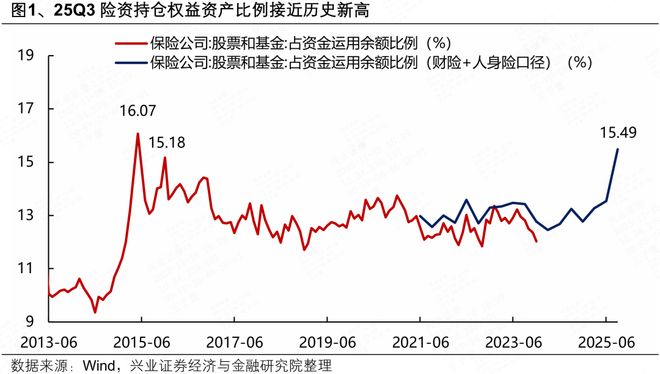
Core Insights - Insurance capital continues to increase its allocation to equity assets, with the proportion of equity assets reaching near historical highs in Q3 2025 [1] - The allocation structure shows a significant increase in technology and a reduction in high-end manufacturing sectors [5][6] - Insurance capital has accelerated its stake acquisitions in listed companies, particularly in Hong Kong stocks, with a notable increase in the number of acquisitions compared to previous years [9] Allocation Trends - In Q3 2025, the allocation of insurance capital to various asset classes is as follows: bank deposits (7.9%), bonds (50.3%), stocks (10.0%), funds (5.5%), long-term equity investments (7.9%), and other assets (18.4%) [1] - The investment proportions in bank deposits and bonds decreased by 0.7 percentage points and 0.8 percentage points, respectively, while the investment in stocks and funds surged to 15.5%, approaching the historical peak of 16.1% in H1 2015 [1] Sector and Stock Preferences - Insurance capital has significantly increased its allocation to banks, steel, and textile sectors, while reducing holdings in high-end manufacturing sectors such as new energy and military [5] - Key stocks that saw increased investment include Agricultural Bank of China, Postal Savings Bank, Industrial and Commercial Bank of China, and Hikvision, while reductions were noted in stocks like Goldwind Technology and Aviation Industry Corporation of China [6][8] Shareholding Activities - In 2025, insurance capital has made 30 stake acquisitions in listed companies, surpassing the total for the entire years of 2020 and 2024, with 25 of these acquisitions in Hong Kong stocks [9] - The trend indicates a shift towards acquiring dividend-yielding assets in Hong Kong due to declining bond yields and rising traditional dividend assets [9]




兴业银行成都分行:绿色减排“碳”出转型“兴”路子
Zhong Guo Jing Ji Wang· 2025-11-18 09:22
Core Insights - Under the "dual carbon" goals, China's green finance policy system is continuously improving, with Industrial Bank's Chengdu branch innovatively implementing "carbon reduction-linked loans" to support high-quality green development in Sichuan Province [1] Group 1: Carbon Reduction-Linked Loans - Carbon reduction-linked loans are an innovative green financing model that ties loan interest rates to various carbon emission metrics of borrowers, incentivizing low-carbon operations [1] - The loans are aimed at two types of enterprises: those in the renewable energy sector and high-carbon industries that are adopting green technologies [1] Group 2: Case Study - Sichuan Luobu New Materials Technology Co., Ltd. - Sichuan Luobu focuses on research and development of plant nutrition fertilizers for drones and has developed a series of fertilizers that significantly improve nutrient utilization [2] - The bank collaborated with Luobu to create a long-term transformation plan, linking loan interest rates to carbon reduction targets, resulting in a carbon reduction loan of 10 million yuan to support the company's green transition [2] Group 3: Case Study - Resource Recycling Company in Leshan - The bank issued a carbon reduction-linked loan of 79 million yuan to a leading new building materials manufacturer, encouraging green technology upgrades and linking loan rates to annual carbon emission intensity [3] - The company specializes in low-carbon cement alternatives made from industrial waste, addressing high upgrade costs and carbon asset valuation challenges [3] Group 4: Overall Impact of Green Financing - Industrial Bank's Chengdu branch has launched various innovative financial products, providing over 1.2 billion yuan in support for green initiatives, with a green loan balance of nearly 39 billion yuan as of July [3] - The expected annual savings from these initiatives include 67,300 tons of standard coal and a reduction of 219,800 tons of carbon dioxide emissions [3]
法国兴业银行股价下跌3.5%
Mei Ri Jing Ji Xin Wen· 2025-11-18 08:41
Group 1 - The stock price of Société Générale fell by 3.5% on November 18, making it the worst performer among the components of the French CAC 40 index [1]
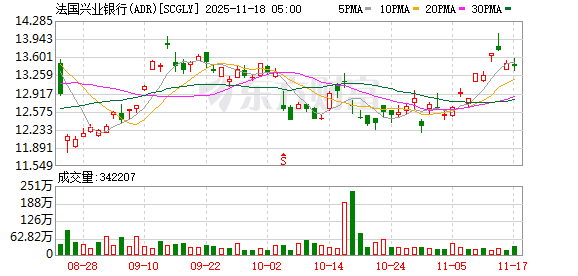
法国兴业银行股价下跌3.5%,在法国CAC 40指数成分股中表现垫底。
Xin Lang Cai Jing· 2025-11-18 08:36
Group 1 - The stock price of Société Générale fell by 3.5%, making it the worst performer among the components of the French CAC 40 index [1]
申万宏源:险资密集增配银行已验证趋势 期待2026年行业基本面新变化
Zhi Tong Cai Jing· 2025-11-18 08:25
Core Viewpoint - The report from Shenwan Hongyuan indicates a significant trend of long-term capital, represented by insurance funds, increasingly allocating to the banking sector, with a potential inflow space of approximately 600 billion yuan if 40% of new funds are allocated to bank stocks [1][2]. Group 1: Capital Inflow and Allocation - The unprecedented low interest rate environment is driving incremental capital towards dividend sectors, with the banking sector offering superior value. The current banking index dividend yield is about 4.3%, significantly higher than the ten-year government bond yield, making it an attractive investment option [1]. - Assuming that 40% of the new capital is allocated to OCI and 40% to bank stocks, this could lead to a potential inflow of around 600 billion yuan. Additionally, public fund reforms are expected to increase capital allocation to underrepresented sectors, with bank stock holdings in public funds dropping to a near ten-year low of 1.74% in Q3 2025, suggesting an additional potential inflow of over 370 billion yuan if allocations align with the CSI 300 [2]. Group 2: Expected Changes in Banking Fundamentals - The central bank has explicitly stated its support for stabilizing net interest margins, linking this to the expansion of monetary policy's counter-cyclical adjustment space. It is anticipated that by 2026, bank interest margins may reverse their downward trend and show a slight year-on-year increase, with banks that can improve deposit costs expected to perform better than their peers [3]. - The importance of "high provisioning" is becoming more pronounced as banks' provisioning capacity is gradually consumed. While systemic risks from real estate and platforms may ease, risks in retail sectors still require provisioning. Focus should be on banks with low non-performing loans and high loan-to-deposit ratios, as well as those with clear asset quality improvements [3]. - Some small and medium-sized banks may face revenue growth challenges due to high base pressures in their capital market operations, with reduced non-interest income growth and declining financial investment yields [3]. Group 3: Capital Focus and Investment Recommendations - Bank capital is becoming a focal point, with banks that have strong internal capital generation or substantial reserves being better positioned for stable lending and dividends. External financing remains challenging, making convertible bonds a scarce resource [4]. - The banking sector is entering a new cycle of stable profitability, with long-term capital inflows ongoing. If the macro environment sees a gradual recovery in PPI and marginal increases in long-term interest rates, this will create favorable operating conditions for banks. Even under economic pressure, banks with clear risk thresholds and stable dividend expectations remain attractive dividend assets [5]. - The report recommends focusing on a dual strategy of "leading banks (state-owned and China Merchants Bank) as the foundation" and "bottom-tier joint-stock banks and quality city commercial banks as the performers." Leading banks are expected to see valuation recovery, while quality small and medium-sized banks with improving fundamentals are likely to exhibit stock price elasticity in response to economic recovery [5].



兴业银行肇庆分行举办金融护航肇庆外贸企业高质量发展大会
Sou Hu Cai Jing· 2025-11-18 05:36
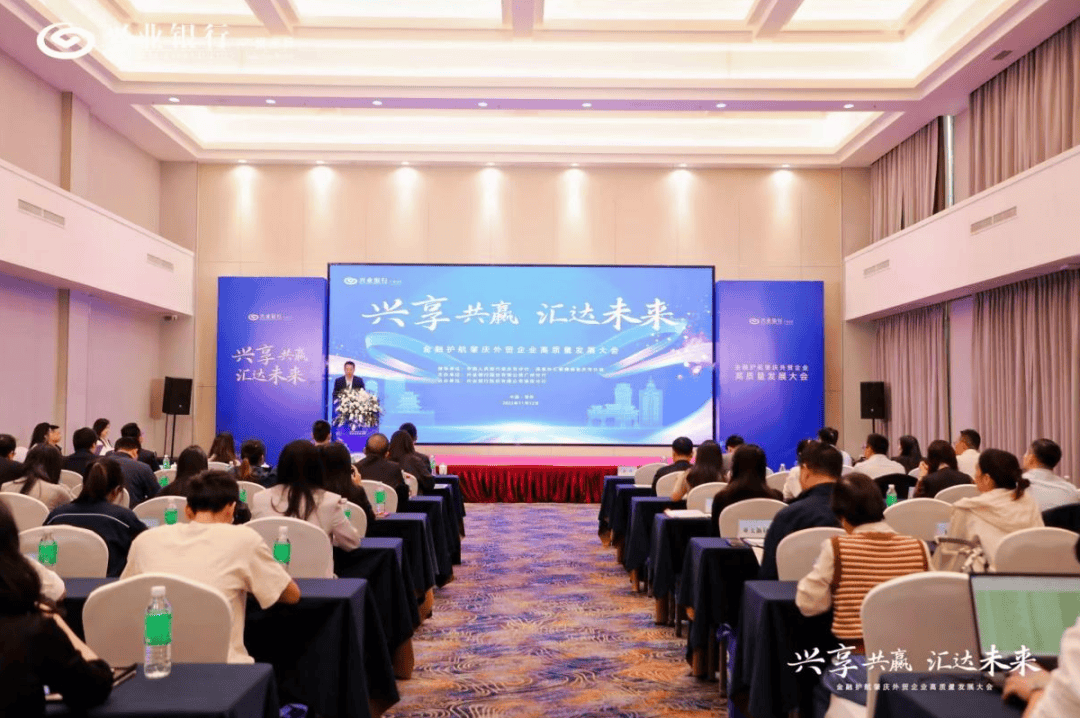
Group 1 - The core objective of the event is to promote high-quality development of foreign trade enterprises by providing professional foreign exchange risk management solutions and cross-border financial services [1][6] - The event attracted over 50 representatives from large state-owned enterprises and small to medium-sized import-export companies, indicating strong interest and participation from the local business community [1][5] - Experts from various divisions of the bank discussed three main themes: "Overseas Macroeconomic and Exchange Rate Outlook," "New Exchange Rate Risk Management Systems for Enterprises," and "Cross-Border Financial Service Solutions for Outbound Enterprises," providing in-depth analysis and practical strategies [2][3] Group 2 - The conference provided a clear path and strong support for enterprises to enhance their exchange rate risk management capabilities and optimize cross-border capital operations [6] - The bank emphasized its commitment to integrating resources and offering precise and efficient cross-border financial solutions through an "online + offline, integrated currency" service model [7] - The initiative aims to inject financial momentum into the high-quality development of the regional foreign trade economy and contribute to building a high-level open new pattern in Guangdong [7]
行业深度报告:2025Q4上市银行AC潜在兑现及回补债券评估
KAIYUAN SECURITIES· 2025-11-18 05:10
Investment Rating - The industry investment rating is optimistic (maintained) [1] Core Insights - The report highlights that listed banks have sold approximately 2 trillion yuan in bonds to realize floating profits from their available-for-sale (AC) accounts in the first three quarters of 2025 [13] - It is estimated that in Q4 2025, listed banks will need to sell about 900 billion yuan in bonds to support non-interest income [10] - The cumulative floating profit of listed banks' AC accounts is approximately 3.3 trillion yuan as of the end of H1 2025, accounting for 58.3% of the total revenue for the year 2024 [30] Summary by Sections Investment Growth - Since 2024, the investment growth rate of listed banks' AC accounts has consistently lagged behind the growth rate of financial investments, with a year-on-year growth of 11.5% in Q3 2025, which is 4.28 percentage points lower than that of financial investments [13][15] - The growth rates for different types of banks from Q2 2023 to Q2 2025 are as follows: state-owned banks 14.7%, joint-stock banks 2.8%, city commercial banks 9.7%, and rural commercial banks -3.8% [13] Bond Selling and Profit Realization - The report estimates that the floating profit realization ratio for listed banks' AC accounts in the first three quarters of 2025 is about 3.06%, with a bond selling scale of approximately 2.04 trillion yuan [36] - The selling proportions for different bank types are: state-owned banks 2.26%, joint-stock banks 5.29%, city commercial banks 5.57%, and rural commercial banks 9.65%, with rural commercial banks showing the highest selling intensity [36] Financial Performance - The floating profit from the sale of bonds in the first three quarters of 2025 is estimated to be 1,078 billion yuan, which represents 2.50% of the total revenue, an increase of 1.59 percentage points compared to 2024 [22][25] - The breakdown of floating profit realization ratios by bank type is as follows: state-owned banks 2.24%, joint-stock banks 2.44%, city commercial banks 3.79%, and rural commercial banks 5.52% [22] Investment Recommendations - The report suggests a bottom-line allocation to large state-owned banks, with beneficiaries including Agricultural Bank of China and Industrial and Commercial Bank of China [6] - Core allocations should focus on leading comprehensive banks such as China Merchants Bank, CITIC Bank, and Industrial Bank [6] - Flexible allocations can be made to banks like Jiangsu Bank, Chongqing Bank, and Chongqing Rural Commercial Bank [6]



兴业银行天津分行“天开创兴融” 综合金融服务方案成功入选 “2024年度金融服务实体经济优秀案例”
Jin Rong Shi Bao· 2025-11-18 04:58
兴业银行天津分行将持续优化金融产品体系和服务流程,做好金融五篇大文章和产业金融、航运金 融等特色金融,不断提升金融服务实体经济质效。 (数据来源:兴业银行天津分行) 责任编辑:韩胜杰 近期,天津市地方金融管理局会同人民银行天津市分行、天津金融监管局、天津证监局等单位以及 相关专家学者组织开展2024金融服务实体经济优秀案例评选工作,兴业银行天津分行"天开创兴融"综合 金融服务方案成功入选"2024年度金融服务实体经济优秀案例"。 自2023年天开园筹备建设以来,兴业银行天津分行始终高度关注园区的建设与发展,快速响应市委 市政府号召,积极配合天开管委会与天开集团工作,大力支持园区建设及园区企业服务,成为首批与天 开集团开展授信合作的银行之一,针对天开园特点推出一系列定制化产品。在天开集团的指导下,分行 与母基金管理人合作,形成对入园企业的投贷联动,最终实现了科技型企业从初创期到全生命周期的产 品与服务覆盖。 2024年5月,在天开高教科创园开园一周年来临之际,天津天开发展集团、天津科创天使投资有限 公司、天津北洋海棠基金与兴业银行天津分行成功举办天开高教科创园系列专项产品发布会。此次发布 会上推出的"天开创兴融 ...
2026年银行业投资策略:盈利新周期,估值新起点,迎银行长牛
Shenwan Hongyuan Securities· 2025-11-18 04:45
Core Viewpoints - The banking sector is at the beginning of a long-term recovery cycle, with current valuations around 0.7 times PB, significantly improved from the low of 0.49 times PB in 2018 [3][9] - The low interest rate environment is a key driver for capital inflow into dividend-paying stocks, with the banking sector offering a dividend yield of approximately 4.3%, which is over 250 basis points higher than the 10-year government bond yield [12][14] - The expectation for 2026 includes a stabilization and potential slight increase in net interest margins, driven by central bank policies aimed at supporting banks [3][4] Investment Highlights - The banking sector is expected to benefit from a new cycle of stable profitability, with long-term capital inflows continuing to support the sector [3][30] - The focus should be on leading banks and quality regional banks, as they are likely to outperform in terms of valuation recovery and profitability [3][30] - The report emphasizes the importance of high provisioning and capital adequacy for banks to navigate through economic challenges [4][30] Market Dynamics - The banking sector has seen a shift in risk perception, with systemic risks significantly alleviated, allowing for a more favorable outlook on bank valuations [27][28] - The report highlights that banks have actively managed their asset quality, with significant write-offs contributing to improved financial stability [27] - The structural changes in credit allocation are expected to resolve existing issues, with a focus on sectors that contribute positively to economic growth [25][27] Future Expectations - The banking sector is anticipated to enter a new phase of stable return on equity (ROE), with steady profit growth already being validated [30] - The report suggests that the valuation of banks is likely to trend towards 1 times PB, reflecting a return to more normalized risk assessments [23][28] - The potential for increased capital inflows from institutional investors, particularly insurance funds, is expected to further support the banking sector's recovery [3][12]