
AGRICULTURAL BANK OF CHINA(601288)

Search documents
农行内蒙古分行:金融赋能 文旅焕新
Zhong Guo Jin Rong Xin Xi Wang· 2025-12-01 08:33
Group 1 - Inner Mongolia is enhancing the integration of culture and tourism, leading to improved quality and brand influence in the industry [1] - Agricultural Bank of China (ABC) Inner Mongolia Branch is providing diverse financial products and professional services to support cultural and tourism projects in the region [1] - The Xiaozhuang River Cultural Tourism Leisure Street is a key national-level tourism project in Tongliao City, serving as an important platform for local economic and social development [1] Group 2 - The Xiaozhuang River Cultural Tourism Leisure Street project faced funding shortages for operational facilities by the end of 2024, prompting ABC Tongliao Branch to issue a short-term working capital loan of 10 million yuan to support its operations [1] - The street has become a popular destination for locals, enhancing its status as a cultural and tourism hub [1] Group 3 - Local entrepreneur Luo Gang has successfully expanded his business, including a car rental service and a farmhouse restaurant, with financial support from ABC since 2011, increasing his credit limit from 50,000 yuan to 500,000 yuan [2] Group 4 - ABC Inner Mongolia Branch has developed a comprehensive financial service plan to support the high-quality development of the cultural and tourism industry, focusing on various consumer scenarios such as dining, retail, parking, and accommodation [3] - As of June 2025, ABC Inner Mongolia Branch has issued a total of 1.603 billion yuan in loans to the cultural and tourism industry, supporting 164 clients and facilitating industry growth and upgrades [3]

农行内蒙古分行:高效服务 助力实现购车梦想
Zhong Guo Jin Rong Xin Xi Wang· 2025-12-01 08:33
转自:新华财经 "通过车商了解到农行限时免息购车福利后,果断选择农行办理了汽车分期。流程简便,只需几分钟, 我就拿到钱开始办理提车手续了。"鄂尔多斯市某汽车4S店内,正在购车的张女士满脸喜悦地说。 农行鄂尔多斯分行联合全市70余家主流车企及品牌4S店,推出"10%低首付""5年超长分期"等汽车分期 服务。所有服务都可在线上申请、审核,符合条件的客户最快10分钟内就能获得贷款。"看车看了这么 久,终于可以开着心爱的车回家了。"张女士充满期待地走出了汽车4S店。此外,鄂尔多斯分行针对重 点客群,实现"一张身份证"即可低首付快速提车。 鄂尔多斯分行的高效服务是农行内蒙古分行贯彻落实提振消费政策的缩影。农行内蒙古分行深化与优质 汽车经销商的战略合作,分类施策提供精准服务。通过制定专项分期服务方案,实施城区与县域差异化 管理模式,重点聚焦汽车下乡、新车促销、旧车置换、新能源补贴等核心领域,优化服务流程设计,高 效运用主干道审批策略,实现单笔业务审批省时提效。通过系统化推进各项创新举措,着力打造"购车 首选农行"的品牌口碑,切实提升金融服务实体经济质效。 截至11月末,农行内蒙古分行实现汽车分期交易额19.93亿元,同比 ...
应对净息差持续收窄压力,向质量效益型转变——多家银行下架五年期大额存单
Jing Ji Ri Bao· 2025-12-01 06:51
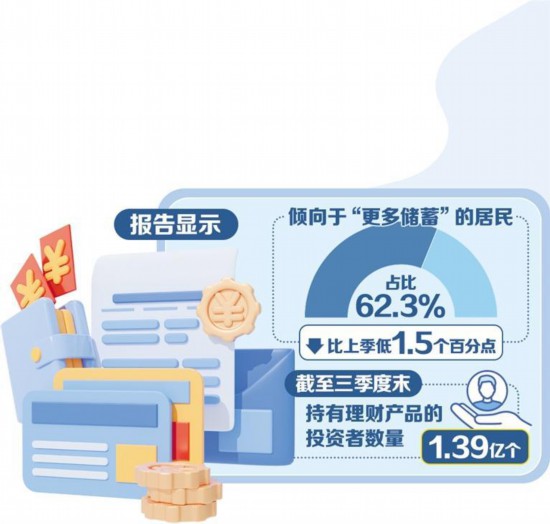
Core Viewpoint - Major state-owned banks in China, including Industrial and Commercial Bank of China, Agricultural Bank of China, and China Construction Bank, have collectively removed five-year large denomination time deposits from their offerings, shifting focus to shorter-term products in response to narrowing net interest margins [2][3]. Group 1: Changes in Deposit Products - Six major commercial banks have adjusted their deposit products by removing five-year large denomination time deposits, leaving only shorter-term options available for investors [2]. - This shift is seen as a strategic response to the ongoing pressure of declining net interest margins, which are currently at historical lows [2][3]. - The removal of long-term deposit products is aimed at shortening the average maturity of liabilities and enhancing the re-pricing flexibility of banks [2]. Group 2: Impact on Small and Medium Banks - Small and medium-sized banks are also accelerating adjustments to their deposit product structures due to increasing net interest margin pressures [3]. - These banks, which typically have weaker deposit-raising capabilities and brand trust compared to large banks, are moving away from high-interest long-term deposits that are no longer sustainable [3]. - The prevalence of interest rate inversion, where short-term deposit rates exceed long-term rates, is diminishing the attractiveness of medium to long-term deposits, prompting these banks to focus on short- to medium-term products [3]. Group 3: Investor Behavior and Market Trends - As deposit rates decline, there is a noticeable trend of "savings migration," with bank wealth management products gaining popularity due to their lower volatility [3][4]. - A survey indicates that 62.3% of urban savers prefer to save more, a decrease of 1.5 percentage points from the previous quarter [4]. - The number of investors holding wealth management products reached 139 million by the end of the third quarter, reflecting a year-on-year growth of 12.7% [4]. Group 4: Recommendations for Banks - Banks are advised to enhance asset yields by optimizing credit structures and improving risk pricing capabilities while also focusing on non-credit asset management [4]. - On the liability side, banks should strengthen their core deposit-raising capabilities by exploring service, product, and channel potentials, and optimizing customer segmentation strategies to enhance low-cost fund retention [4].



最近48小时内,工商银行、农业银行、中国燃气等18家港股上市公司公告分红预案!
Mei Ri Jing Ji Xin Wen· 2025-12-01 06:40
Group 1: Dividend Indices - The China Securities Hong Kong Stock Connect Central Enterprises Dividend Index (931233.CSI) includes 50 stable dividend-paying stocks with high dividend yields, achieving a 1-year dividend yield of 5.70%, surpassing the 10-year government bond yield of 3.85 [1] - The Hang Seng Mainland Enterprises High Dividend Yield Index (HSMCHYI.HI) consists of high dividend stocks listed in Hong Kong, with a 1-year dividend yield of 5.34%, also higher than the 10-year government bond yield of 3.49 [1] - The Non-Standard S&P Hong Kong Stock Connect Low Volatility Dividend Index (SPAHLVHP.SPI) includes 50 high dividend low volatility stocks, with the Hong Kong Stock Connect Dividend Low Volatility ETF (159118) being the lowest fee ETF tracking this index [1] Group 2: Company Dividend Announcements - Agricultural Bank of China announced a dividend of RMB 0.1195 per share, with an ex-dividend date of December 5, 2025, and a payment date of January 26, 2026 [2] - Industrial and Commercial Bank of China declared a dividend of RMB 0.1414 per share, with an ex-dividend date of December 4, 2025, and a payment date of January 26, 2026 [2] - Changan Minsheng Logistics announced a dividend of HKD 0.05493 per share, with an ex-dividend date of December 2, 2025, and a payment date of January 30, 2026 [2] Group 3: Additional Company Dividends - Perfect Medical announced a dividend of HKD 0.076 per share, with an ex-dividend date of December 12, 2025, and a payment date of December 31, 2025 [3] - Chongqing Bank declared a dividend of HKD 0.185075283 per share, with an ex-dividend date of December 2, 2025, and a payment date of January 16, 2026 [3] - Yihe Holdings announced a dividend of HKD 0.15 per share, with an ex-dividend date of December 12, 2025, and a payment date of December 31, 2025 [3] Group 4: Other Company Dividends - Huaxin Handbag International Holdings declared an interim dividend of HKD 0.04 and a special dividend of HKD 0.02 per share, with an ex-dividend date of December 15, 2025, and a payment date of January 9, 2026 [4] - Tianli International Holdings announced a dividend of HKD 0.0429 per share, with an ex-dividend date of February 4, 2026, and a payment date of February 27, 2026 [4] - China Keyway announced a dividend of HKD 0.06 per share, with an ex-dividend date of July 31, 2026, and a payment date of August 21, 2026 [4]
分红“港”知道|最近48小时内,工商银行、农业银行、中国燃气等18家港股上市公司公告分红预案!
Mei Ri Jing Ji Xin Wen· 2025-12-01 06:20
Group 1: Dividend Indices - The China Securities Central Enterprises Dividend Index (931233.CSI) includes 50 stable dividend-paying stocks controlled by central enterprises, with a one-year dividend yield of 5.70%, surpassing the 10-year government bond yield of 3.85. The largest investment vehicle tracking this index is the Central Enterprises Dividend ETF (513910) [1] - The Hang Seng High Dividend Yield Index (HSMCHYI.HI) consists of high dividend stocks from mainland companies listed in Hong Kong, with a one-year dividend yield of 5.34%, also higher than the 10-year government bond yield of 3.49. The only ETF tracking this index is the Hang Seng Dividend ETF (159726) [1] - The Non-Standard Poor's Hong Kong Low Volatility Dividend Index (SPAHLVHP.SPI) includes 50 high dividend low volatility stocks listed in Hong Kong, with the Hong Kong Dividend Low Volatility ETF (159118) being the lowest fee ETF tracking this index [1] Group 2: Company Dividend Announcements - Agricultural Bank of China announced a dividend of RMB 0.1195 per share, with an ex-dividend date of December 5, 2025, and a payment date of January 26, 2026. It is part of the 931233.CSI and HSMCHYI.HI indices [2] - Industrial and Commercial Bank of China declared a dividend of RMB 0.1414 per share, with an ex-dividend date of December 4, 2025, and a payment date of January 26, 2026. It is included in the 931233.CSI, HSMCHYI.HI, and SPAHLVHP.SPI indices [2] - Changan Minsheng Logistics announced a dividend of HKD 0.05493 per share, with an ex-dividend date of December 2, 2025, and a payment date of January 30, 2026. It is not part of the 931233.CSI, HSMCHYI.HI, or SPAHLVHP.SPI indices [2] - Perfect Medical declared a dividend of HKD 0.076 per share, with an ex-dividend date of December 12, 2025, and a payment date of December 31, 2025. It is not part of the 931233.CSI, HSMCHYI.HI, or SPAHLVHP.SPI indices [3] - Chongqing Bank announced a dividend of HKD 0.185075283 per share, with an ex-dividend date of December 2, 2025, and a payment date of January 16, 2026. It is not part of the 931233.CSI, HSMCHYI.HI, or SPAHLVHP.SPI indices [3] - Yihe Holdings declared a dividend of HKD 0.15 per share, with an ex-dividend date of December 12, 2025, and a payment date of December 31, 2025. It is not part of the 931233.CSI, HSMCHYI.HI, or SPAHLVHP.SPI indices [3] - Huaxin Handbag International Holdings announced a mid-term dividend of HKD 0.04 per share and a special dividend of HKD 0.02 per share, with an ex-dividend date of December 15, 2025, and a payment date of January 9, 2026. It is not part of the 931233.CSI, HSMCHYI.HI, or SPAHLVHP.SPI indices [4] - Tianli International Holdings declared a dividend of HKD 0.0429 per share, with an ex-dividend date of February 4, 2026, and a payment date of February 27, 2026. It is not part of the 931233.CSI, HSMCHYI.HI, or SPAHLVHP.SPI indices [4] - China Kapei announced a dividend of HKD 0.06 per share, with an ex-dividend date of July 31, 2026, and a payment date of August 21, 2026. It is not part of the 931233.CSI, HSMCHYI.HI, or SPAHLVHP.SPI indices [4] - Gaosheng Group Holdings declared a dividend of HKD 0.005 per share, with an ex-dividend date of December 11, 2025, and a payment date of January 9, 2026. It is not part of the 931233.CSI, HSMCHYI.HI, or SPAHLVHP.SPI indices [5] - Zhonghui Group announced a dividend of HKD 0.074 per share, with an ex-dividend date of March 20, 2026, and a payment date of May 29, 2026. It is not part of the 931233.CSI, HSMCHYI.HI, or SPAHLVHP.SPI indices [6] - Yingtong Holdings declared a mid-term dividend of HKD 0.046 per share and a special dividend of HKD 0.034 per share, with an ex-dividend date of December 11, 2025, and a payment date of December 30, 2025. It is not part of the 931233.CSI, HSMCHYI.HI, or SPAHLVHP.SPI indices [6] - Yongfa Properties announced a dividend of HKD 0.02 per share, with an ex-dividend date of December 17, 2025, and a payment date of January 9, 2026. It is not part of the 931233.CSI, HSMCHYI.HI, or SPAHLVHP.SPI indices [6] - Sihai Group declared a dividend of HKD 0.03 per share, with an ex-dividend date of December 15, 2025, and a payment date of January 16, 2026. It is not part of the 931233.CSI, HSMCHYI.HI, or SPAHLVHP.SPI indices [7] - China Gas announced a dividend of HKD 0.15 per share, with an ex-dividend date of January 5, 2026, and a payment date of February 6, 2026. It is part of the HSMCHYI.HI and SPAHLVHP.SPI indices [7] - China Water announced a dividend of HKD 0.13 per share, with an ex-dividend date of May 22, 2026, and a payment date of June 18, 2026. It is not part of the 931233.CSI, HSMCHYI.HI, or SPAHLVHP.SPI indices [7] - Xinxing Group declared a dividend of HKD 0.02 per share, with an ex-dividend date of December 31, 2025, and a payment date of January 28, 2026. It is not part of the 931233.CSI, HSMCHYI.HI, or SPAHLVHP.SPI indices [8] - Huitai Textile announced a dividend of HKD 0.05 per share, with an ex-dividend date of December 11, 2025, and a payment date of December 30, 2025. It is not part of the 931233.CSI, HSMCHYI.HI, or SPAHLVHP.SPI indices [8]
金融行业周报:全球重要性银行名单公布,资本市场投融资改革持续推进-20251201
Ping An Securities· 2025-12-01 05:35
Investment Rating - The industry investment rating is "Outperform the Market," indicating an expected performance that exceeds the CSI 300 index by more than 5% within the next six months [34]. Core Insights - The Financial Stability Board (FSB) has released the 2025 list of Global Systemically Important Banks (G-SIBs), with five Chinese state-owned banks included. Notably, the Industrial and Commercial Bank of China (ICBC) has moved to the third group, requiring an additional capital requirement increase from 1.5% to 2.0% [4][12]. - The China Securities Regulatory Commission (CSRC) has issued a draft announcement for the pilot of Commercial Real Estate Investment Trusts (REITs), aimed at revitalizing the commercial real estate market and filling the gap for quality investment targets [5][13]. - A joint announcement from six departments outlines a plan to enhance the adaptability of supply and demand for consumer goods, targeting significant improvements in the supply structure by 2027 and fostering a high-quality development pattern by 2030 [6][19]. Summary by Sections Global Systemically Important Banks - The FSB has categorized Chinese banks into different groups, with ICBC in the third group, Agricultural Bank of China, Bank of China, and China Construction Bank in the second group, and China Communications Bank in the first group. This classification reflects the banks' systemic importance and associated capital requirements [4][12]. Commercial Real Estate Investment Trusts - The CSRC's draft announcement outlines the framework for establishing Commercial REITs, which will allow investment in commercial real estate assets to generate stable cash flows. This initiative is expected to address challenges in the commercial real estate sector and enhance financing channels [5][13]. Consumer Goods Supply and Demand - The joint plan from six government departments aims to optimize the supply structure of consumer goods, with specific targets for 2027 and 2030. The focus is on creating significant consumer sectors and enhancing the quality of products available in the market [6][19]. Industry Data - The banking sector saw a net injection of 15,118 billion yuan through open market operations, while the SHIBOR rates showed mixed performance. The average daily trading volume in the stock market was 21,585 billion yuan, reflecting a decrease of 7.4% from the previous week [21][27][29]. - The insurance sector's ten-year government bond yield increased by 2.46 basis points, indicating a slight upward trend in interest rates [32].


今日沪指涨0.42% 有色金属行业涨幅最大
Zheng Quan Shi Bao Wang· 2025-12-01 04:35
证券时报·数据宝统计,截至上午收盘,今日沪指涨0.42%,A股成交量810.18亿股,成交金额12367.56 亿元,比上一个交易日增加26.14%。个股方面,3672只个股上涨,其中涨停66只,1592只个股下跌, 其中跌停5只。从申万行业来看,有色金属、通信、商贸零售等涨幅最大,涨幅分别为2.55%、2.51%、 1.46%;农林牧渔、银行、非银金融等跌幅最大,跌幅分别为0.39%、0.22%、0.21%。(数据宝) | 申万行业 | 行业涨跌(%) | 成交额(亿元) | 比上日(%) | 领涨(跌)股 | 涨跌幅(%) | | --- | --- | --- | --- | --- | --- | | 有色金属 | 2.55 | 934.05 | 83.34 | 亚太科技 | 10.06 | | 通信 | 2.51 | 981.99 | 34.40 | 广和通 | 20.01 | | 商贸零售 | 1.46 | 207.22 | 33.21 | 赫美集团 | 10.12 | | 社会服务 | 1.33 | 105.68 | 20.18 | 峨眉山A | 10.02 | | 国防军工 | 1.26 | ...


第七届金麒麟银行业最佳分析师第一名浙商证券梁凤洁最新观点:银行股Q4深蹲起跳 推荐稳健高股息大行
Xin Lang Zheng Quan· 2025-12-01 03:49
Core Insights - The article discusses the performance of the banking sector in October 2025, highlighting a decline in credit demand and a shift in deposit trends, indicating ongoing challenges in the financial landscape [1][2][3]. Credit Performance - Excluding non-bank financial institutions, credit showed a negative growth in October, with a decrease in both retail and corporate loans. Residential loans fell by 360.4 billion yuan, a year-on-year decrease of 520.4 billion yuan, indicating a contraction in consumer credit demand [1][2]. - Corporate loans saw an increase of 350 billion yuan, but short-term loans decreased by 190 billion yuan, reflecting limited demand for medium to long-term projects [2]. Social Financing - In October, social financing increased by 815 billion yuan, a year-on-year decrease of 597 billion yuan. Government bond issuance was 489.3 billion yuan, down 560.2 billion yuan from the previous year, suggesting a weakening support from government debt [3]. Deposit Trends - The M1 growth rate decreased to 6.2%, while M2 growth was at 8.2%. There is a continued trend of deposits moving towards non-bank financial institutions, with total deposits increasing by 610 billion yuan, but household deposits fell by 1.3 trillion yuan [4]. - The total scale of wealth management products reached a historical high of 33.2 trillion yuan, reflecting a significant increase of 1.1 trillion yuan from the previous month [4]. Banking Sector Performance - For the first three quarters of 2025, listed banks showed resilience with revenue growth of 0.9% and profit growth of 1.6%. State-owned banks performed well, while the performance of smaller banks varied [5][6]. - The net interest margin for listed banks stabilized at 1.37%, with a slight improvement in the interest spread for smaller banks, indicating a recovery in profitability [9]. Investment Recommendations - The article suggests that the banking sector may experience a rebound in Q4, driven by a rebalancing of market styles and increased interest in high-dividend stocks. Recommendations include both smaller banks in economically developed regions and larger, stable banks [12].





主力个股资金流出前20:工业富联流出9.20亿元、阳光电源流出7.95亿元



Jin Rong Jie· 2025-12-01 02:49
Core Viewpoint - The data indicates significant capital outflows from the top 20 stocks as of December 1, with notable amounts withdrawn from various companies [1] Group 1: Major Capital Outflows - Industrial Fulian experienced the highest outflow at -9.20 billion yuan [1] - Sunshine Power followed with an outflow of -7.95 billion yuan [1] - Shenghong Technology saw a capital outflow of -7.62 billion yuan [1] Group 2: Additional Notable Outflows - Qianzhao Optoelectronics had an outflow of -6.50 billion yuan [1] - Changxin Bochuang recorded -4.69 billion yuan in outflows [1] - Shannon Chip Creation experienced -4.47 billion yuan in capital outflows [1] Group 3: Other Companies with Significant Outflows - BlueFocus Media had an outflow of -3.86 billion yuan [1] - Dongfang Fortune saw -3.76 billion yuan in outflows [1] - Shanghai Electric experienced a capital outflow of -3.09 billion yuan [1] Group 4: Remaining Companies in the Top 20 - Dongxin Co. had an outflow of -2.79 billion yuan [1] - Zhongwei Company saw -2.76 billion yuan in outflows [1] - 360 Security Technology experienced a capital outflow of -2.65 billion yuan [1] - Other companies with notable outflows include Dongtian Micro (-2.40 billion yuan), Aerospace Power (-2.34 billion yuan), and Huagong Technology (-2.30 billion yuan) [1]
银行个人养老金推广打法升级
Jing Ji Wang· 2025-12-01 02:04
Core Insights - The personal pension marketing strategy has shifted from focusing on account openings to emphasizing actual contributions as the deadline approaches for the personal pension system [1][2][3] - The introduction of electronic savings bonds into the personal pension product lineup is expected to enhance investment options and attract more funds [4][5] - The overall investment configuration in personal pensions remains conservative, with a need for further optimization to balance long-term returns and risks [6][7] Group 1: Marketing Strategies - Banks are intensifying their promotional efforts for personal pensions, focusing on "retaining customers" and "encouraging contributions" rather than just "acquiring new accounts" [2][3] - Various banks are utilizing smart tools like tax calculators and pension benefit estimators to enhance customer awareness and encourage timely contributions [2] - Incentives such as lotteries and discounts are being offered to attract contributions, reflecting a strategic shift in marketing focus [3] Group 2: Product Offerings - The inclusion of electronic savings bonds in the personal pension product range is a significant development, expected to be available for purchase by June next year [4] - The interest rates for savings bonds are higher than current deposit rates, making them an attractive option for investors [4] - The introduction of dedicated quotas for savings bonds is anticipated to improve the contribution rates in personal pension accounts [5] Group 3: Investment Performance - As of November 27, 2025, the total number of personal pension products exceeds 1200, with a variety of options including savings, insurance, and fund products [6] - Many personal pension financial products have achieved positive returns, with some products yielding over 10% annualized returns since inception [6] - Despite the variety of products, the investment configuration is still heavily weighted towards fixed-income products, indicating a cautious approach among investors [6][7]