AGRICULTURAL BANK OF CHINA(601288)

Search documents
华顿在沪发布2025年世界500强企业排行榜
Guo Ji Jin Rong Bao· 2025-12-23 07:32
Core Insights - The "Wharton Version 2025 World 500 Companies Ranking" was released, focusing on profit as the ranking criterion, differing from the Fortune magazine's revenue-based ranking [1] - The total profit of the world's top 500 companies reached approximately $4.02 trillion, a 5% increase from the previous year [1] - The median profit increased from $4.47 billion to $4.58 billion, reflecting a growth of 2.4% [1] - The threshold for inclusion in the ranking rose from $2.17 billion to $2.31 billion, marking a 6.8% year-on-year increase [1] - The total revenue of all listed companies was about $33.41 trillion, with a year-on-year growth of approximately 4% [1] Company Rankings - Apple topped the profit ranking with $112.01 billion, followed by Saudi Aramco at $104.98 billion [2] - Other notable companies in the top ten include Microsoft ($101.83 billion), Alphabet ($100.12 billion), and Berkshire Hathaway ($88.99 billion) [2] - Among the top 20, seven companies are from China, including China Construction Bank and China Agricultural Bank [2] Industry Trends - The 2025 ranking reflects a core pattern of "U.S. dominance, followed by China, with Europe and Japan diversifying and emerging forces rising" [3] - The industry distribution is concentrated in technology, finance, and energy sectors, indicating pressures for traditional industries to transform [3] - The top 100 companies contributed 57% of total profits, with the top 10 accounting for 20%, highlighting a structural characteristic of "head concentration and tail pressure" [3] Regional Insights - The U.S. has 191 companies on the list, an increase of 9 from the previous year, generating a total profit of approximately $1.77 trillion, which is 44% of the total profits of the top 500 [3] - China (including Hong Kong, Macau, and Taiwan) has 114 companies, accounting for 22.8% of the total, with a total profit of $989.28 billion, representing 24.6% of the total [4] - The financial sector is significant in China, with 39 financial companies listed, 13 of which are in the top 100 [4]






中信建投基金管理有限公司关于旗下部分基金在中国农业银行股份有限公司开通基金转换业务的公告
Zhong Guo Zheng Quan Bao - Zhong Zheng Wang· 2025-12-23 06:55
Core Viewpoint - Citic Construction Investment Fund Management Co., Ltd. has decided to launch fund conversion services for certain funds through Agricultural Bank of China to meet the investment needs of investors [1]. Group 1: Applicable Fund Range - The fund conversion service will be available for specific funds managed by Citic Construction Investment [2]. Group 2: Applicable Investor Range and Processing Locations - The conversion service is limited to investors who process transactions through Agricultural Bank of China [2]. Group 3: Opening Time - The fund conversion service will be available starting from December 23, 2025, and the processing time will align with the fund subscription and redemption times [3]. Group 4: Fund Conversion Business Rules - Fund conversion allows holders to convert part or all of their shares from one fund to another managed by the same fund management company [4]. - Conversions must occur within the same sales institution, and both funds must be registered with the same registration agency [4]. - Applications for fund conversion are processed based on the net asset value of the funds on the day of application [4]. - The conversion process follows a "first in, first out" principle regarding the holding period of the shares [5]. Group 5: Fund Conversion Fees and Calculation - Fund conversion fees consist of the difference in subscription fees and redemption fees of the funds involved [7]. - The calculation of conversion fees is based on the net asset value of the funds on the day of conversion [7]. Group 6: Situations for Suspending Fund Conversion - Fund conversion may be suspended due to force majeure, abnormal trading halts, significant redemptions, or other circumstances deemed detrimental to existing fund holders [8][9][10][11]. Group 7: Special Notes - Any restrictions on large subscriptions for a fund will also apply to the fund conversion services mentioned [13].

农行陕西省分行:金融活水浇灌“致富果”
Xin Lang Cai Jing· 2025-12-23 06:41
Core Insights - The apple industry in Shaanxi is a key driver for local economic development, supported by comprehensive financial services from Agricultural Bank of China Shaanxi Branch [1][2] - The bank has established a financial support system covering all aspects of the apple industry, with innovative loan products tailored to various stakeholders [1][5] Financial Support and Products - Agricultural Bank of China Shaanxi Branch has launched a series of loan products such as "Fruit Farmer Loan," "Leading Enterprise Loan," and "Fruit Storage Loan," achieving a loan balance of 86 billion yuan for the "Golden Spike Shaanxi Fruit Loan" by November 2025 [1] - The apple industry loan balance reached 66 billion yuan, with 34 billion yuan disbursed in the current year, indicating significant financial support effectiveness [1] Regional Focus and Growth - In 2024, the total apple planting area in Yan'an City reached 3.335 million acres, producing over 5 million tons, making it the largest apple planting area among Chinese prefecture-level cities [2] - Agricultural Bank of China Yan'an Branch reported an apple industry loan balance of 5.2 billion yuan, with a net increase of 3 billion yuan over the past three years [2] Support for Farmers - Farmers are crucial to the apple industry's development, with financial products like "Huinong e-loan" providing low-interest, high-amount loans to support their operational needs [4] - The bank has optimized loan approval processes and offers on-site services to ensure financial support reaches farmers effectively [4] Corporate Engagement - The bank focuses on connecting with leading enterprises and cooperatives, offering tailored financial solutions to address their specific needs, such as a 3 million yuan credit for a company facing seasonal funding shortages [5] - The bank's support extends to enhancing the operational capabilities of enterprises, facilitating exports, and addressing storage expansion needs [5] Industry Transformation and Upgrading - The bank is actively supporting the transformation of the apple industry towards high-end, intelligent, and branded development, with increased financial backing for new varieties and technologies [7] - Initiatives include funding for modern agricultural practices and the establishment of financial service teams to provide direct support to farmers and enterprises [7] Commitment to Rural Development - Agricultural Bank of China Shaanxi Branch aims to continue enhancing credit investments and innovating financial products to further empower the apple industry and contribute to rural revitalization [7]


服务“暖流”御寒冬
Jin Rong Shi Bao· 2025-12-23 05:13
随着近期一股强冷空气席卷全国,多地气温骤降。在这寒风凛冽的冬日里,一股来自农行新疆兵团分行 的"金融暖流"在持续涌动——精准、高效的金融服务为保障民生、支持生产筑起了一道坚实的"温暖屏 障"。 守护万家灯火 供暖是北方地区冬季最重要的民生大事之一。面对激增的供热需求与能源采购压力,当地部分供暖企业 资金周转紧张。农行新疆区内各级分支机构迅速响应,主动对接区域重点供暖公司,开启信贷审批绿色 通道,优先保障其购煤、设备维护等资金需求。 新疆塔里木热力有限公司是铁门关市的一家热力供应公司,主要向当地群众提供热力生产和供应服务。 为解决该公司锅炉维护、管道改造及天然气等燃料储备引发的资金需求,农行铁门关兵团分行主动上门 对接,近两年已累计为该公司提供信贷支持超百万元,支持企业发展。"这两年多亏了农行的贷款,解 决了公司发展的资金问题,让我们及时完成设备升级等工作,保障大家温暖过冬。"该热力公司负责人 说道。 让牲畜越冬无忧 在农行塔城兵团分行营业部ATM室里,前不久发生了一段平凡却温暖人心的故事。清晨,该网点工作 人员在早间巡查时看到ATM室内有一位倚墙而坐的环卫工作者,立刻上前轻声询问:"你是不是不舒 服,低血糖了 ...
中国银行、建设银行、工商银行、农业银行、交通银行、邮储银行,集体调整中长期存款产品!
Mei Ri Jing Ji Xin Wen· 2025-12-23 03:53
Core Viewpoint - Major Chinese banks, including Bank of China, China Construction Bank, Industrial and Commercial Bank of China, Agricultural Bank of China, Bank of Communications, and Postal Savings Bank, have collectively adjusted their deposit products, particularly reducing the availability of medium to long-term deposit offerings as year-end savings demand increases [1][3]. Group 1: Changes in Deposit Products - Many customers, such as a resident in Beijing, have reported difficulties in finding suitable 5-year large-denomination certificates of deposit (CDs) as these products are no longer displayed by major banks [3]. - The interest rates for 3-year related products have dropped to between 1.5% and 1.75% across various banks [3]. - Smaller banks are also following suit, with institutions like Meizhou Commercial Bank and Yilian Bank removing 5-year fixed deposit products from their offerings [5]. Group 2: Reasons for Adjustments - The withdrawal of long-term deposit products is a response to the ongoing decline in banks' net interest margins, driven by falling loan rates that have significantly reduced asset yields [5]. - Analysts suggest that banks are compelled to eliminate high-interest long-term products to avoid severe interest margin losses or potential deficits, which could threaten their long-term stability and pose systemic risks [5]. Group 3: Implications for the Banking Sector - The adjustments in deposit products are expected to enhance the certainty of banks' profit forecasts, providing fundamental support for valuation recovery, particularly for large banks with low-cost liabilities and high dividend yields [6]. - The reduction in deposit rates may lead to a "deposit migration" effect, where funds seeking higher returns move from the banking system to capital markets, potentially benefiting direct financing markets [6].

中国银行、建设银行、工商银行、农业银行、交通银行、邮储银行,集体调整!
Mei Ri Jing Ji Xin Wen· 2025-12-23 03:45
Core Viewpoint - The recent decrease in medium to long-term deposit products in the market is attributed to banks' responses to the ongoing decline in net interest margins, leading to a reduction in the availability of five-year large certificates of deposit (CDs) and lower interest rates on three-year products [3][5][6]. Group 1: Market Trends - There is a noticeable reduction in the availability of five-year large CDs among major banks, with interest rates for three-year products dropping to between 1.5% and 1.75% [3]. - Smaller banks are also adjusting their deposit offerings, with some, like Meizhou Commercial Bank, announcing the removal of five-year fixed deposit products [5]. - The trend of withdrawing long-term deposit products is not limited to national banks but is also seen in local and private banks [5]. Group 2: Banking Sector Implications - The withdrawal of long-term deposit products is a necessary response to the challenges posed by declining bank net interest margins, as banks face significant risks of interest margin losses if they do not eliminate high-interest long-term products [5]. - Analysts suggest that this shift will enhance the certainty of banks' profit expectations, particularly benefiting large banks with low-cost liabilities and high dividend yields, making them more attractive to long-term investors [6]. - The reduction in deposit rates may lead to a "deposit migration" effect, where funds move from the banking system to capital markets, potentially increasing liquidity in stocks, bonds, and funds, which could positively impact direct financing markets [6].

半两财经|六大国有银行下架五年期大额存单 居民投资理财方式在变
Sou Hu Cai Jing· 2025-12-23 03:06
Core Viewpoint - The six major state-owned banks in China have collectively withdrawn high-interest five-year large-denomination certificates of deposit (CDs), marking a significant shift in the savings market as they adjust to ongoing pressure on net interest margins [2][3]. Group 1: Changes in Deposit Products - The five-year large-denomination CDs have been completely removed from sale, with searches on banking apps returning results indicating "no products available" or "sold out" [2]. - The minimum investment for three-year large-denomination CDs has increased significantly, with thresholds rising from the traditional 200,000 yuan to between 1 million and 5 million yuan, while the interest rate for a 1 million yuan three-year product is only 1.55%, narrowing the gap with regular savings accounts [3]. Group 2: Impact on Banking Sector - Data from the National Financial Regulatory Administration shows that the net interest margin for commercial banks was only 1.42% in Q3 2025, with predictions indicating a slight narrowing of the decline to around 4 basis points in 2026, marking the first time since 2022 that the annual decline will be in single digits [4]. - The continuous narrowing of net interest margins has been a significant factor affecting bank profitability, prompting banks to withdraw high-interest long-term deposit products to stabilize their margins [5]. Group 3: Shifts in Savings Behavior - The withdrawal of high-interest CDs has led to a migration of funds estimated to be in the hundreds of billions, as the market loses "risk-free high-yield" products [6]. - Despite 62.3% of residents still preferring to save more, this figure has been declining for two consecutive quarters, with a noticeable increase in the willingness to invest [6]. - Different types of savers are adjusting their strategies: conservative savers are sticking to deposit products, while moderate investors are moving towards bank wealth management and "fixed income plus" products, and aggressive investors are beginning to allocate funds to high-dividend stocks and gold ETFs [6].



小红日报 | 科技领跑慢牛强化!标普A股红利ETF华宝(562060)标的指数收跌0.32%
Xin Lang Cai Jing· 2025-12-23 01:45
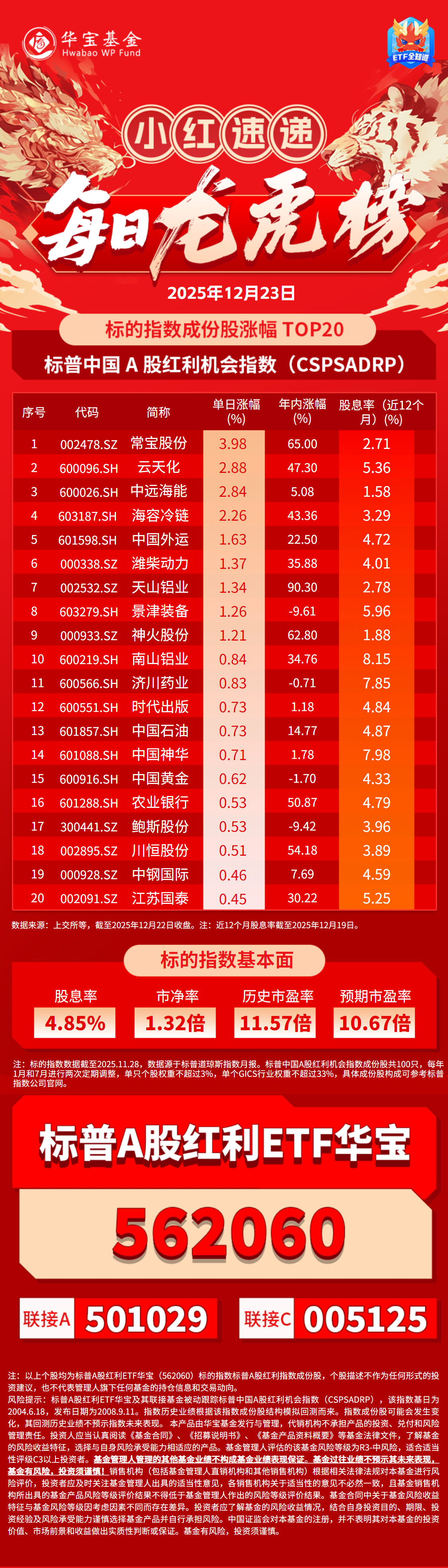
Core Viewpoint - The article highlights the top-performing stocks in the S&P China A-Share Dividend Opportunity Index, showcasing significant price increases and dividend yields as of December 22, 2025. Group 1: Top Gainers - The top stock, 常宝股份 (Changbao Co., Ltd.), experienced a daily increase of 3.98% and a year-to-date increase of 65.00%, with a dividend yield of 2.71% over the past 12 months [1][9]. - 云天化 (Yuntianhua Co., Ltd.) ranked second with a daily increase of 2.88% and a year-to-date increase of 47.30%, offering a dividend yield of 5.36% [1][9]. - 中远海能 (COSCO Shipping Energy Transportation Co., Ltd.) saw a daily increase of 2.84% and a year-to-date increase of 5.08%, with a dividend yield of 1.58% [1][9]. Group 2: Dividend Yields and Performance - The index's average dividend yield is reported at 4.85%, with a historical price-to-earnings ratio of 11.57 times and a price-to-book ratio of 1.32 times [3]. - The stocks listed in the index are subject to a weight limit of 3% per stock and a maximum of 33% per GICS industry, ensuring diversified exposure [4]. Group 3: Additional Notable Stocks - Other notable performers include 天山铝业 (Tianshan Aluminum Co., Ltd.) with a year-to-date increase of 90.30% and a dividend yield of 2.78% [1][9]. - 南山铝业 (Nanshan Aluminum Co., Ltd.) achieved a year-to-date increase of 34.76% and a high dividend yield of 8.15% [1][9]. - 农业银行 (Agricultural Bank of China) reported a year-to-date increase of 50.87% with a dividend yield of 4.79% [1][9].




“百千万工程”推进路上的坚实金融后盾 ----农行广东分行倾力服务“百千万工程”
2 1 Shi Ji Jing Ji Bao Dao· 2025-12-23 00:58
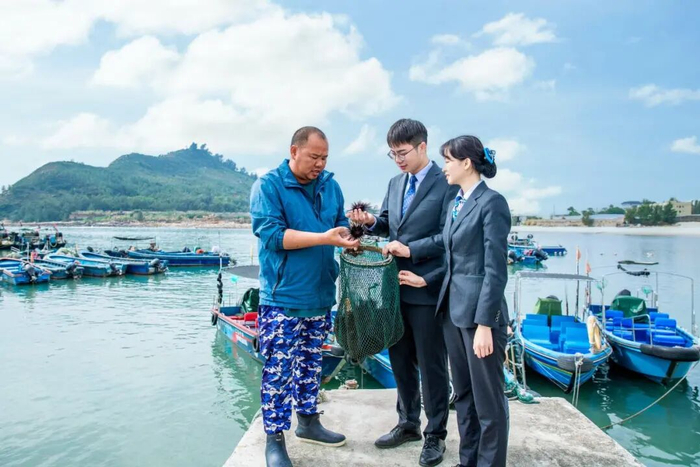
Core Viewpoint - The Agricultural Bank of China Guangdong Branch is actively supporting the "Hundred Counties, Thousand Towns, and Ten Thousand Villages High-Quality Development Project" by providing substantial financial resources to promote rural revitalization and regional development in Guangdong Province [1][14]. Group 1: Financial Support and Achievements - As of October 2025, the Agricultural Bank of China Guangdong Branch has provided over 600 billion yuan in county loans and over 500 billion yuan in agricultural loans, with increases of 210 billion yuan and 160 billion yuan respectively since the project's initiation [1]. - The bank has been recognized as "Excellent" in the People's Bank of China's evaluation of financial services for rural revitalization for five consecutive years, establishing itself as a solid financial support for the "Hundred Counties, Thousand Towns" initiative [1]. Group 2: Systematic Approach and Collaboration - The bank has developed a comprehensive service system to ensure financial resources are effectively allocated to every corner of counties, towns, and villages, implementing four major actions tailored to the project's goals [2]. - It has established a regular communication mechanism with provincial departments to align financial services with policy directions and project needs, resulting in the issuance of 1 billion yuan in loans across 12 pilot counties [3]. Group 3: Focus Areas for Development - The bank is concentrating its credit resources on three key areas: industrial development, urban-rural construction, and increasing farmers' income, thereby enhancing the economic vitality of counties and towns [4]. - In the industrial development sector, the bank has provided over 32 billion yuan in loans for grain security, with a 38% increase since the beginning of the year, and has supported marine ranching projects with over 21 billion yuan in loans [4][6]. Group 4: Service Accessibility and Innovation - The bank is enhancing service accessibility by establishing 200 rural revitalization service stations and mobile service teams to reach underserved areas, ensuring that financial services are available to farmers [9]. - It has developed a diverse range of over 100 tailored financial products to meet the specific needs of rural industries, including customized loans for marine ranching and agricultural development [9]. Group 5: Case Studies and Impact - In Meizhou, the bank has supported the pomelo industry with 11.1 billion yuan in loans, benefiting over 5,700 farmers and contributing to an annual output value of nearly 10 billion yuan [11]. - In Qingyuan, the bank's "White Pigeon Loan" has facilitated the expansion of the local meat pigeon industry, with loans exceeding 28 million yuan, significantly boosting local farmers' incomes [13]. - The bank has also provided 1.5 billion yuan in credit to support the development of a comprehensive tourism resort in Huizhou, creating over 100 jobs and stimulating local economic activity [13].
多地促消费兴文旅 银行如何以未来收益唤醒旅游资源
Mei Ri Jing Ji Xin Wen· 2025-12-22 22:49
Core Viewpoint - The recent loan of 90 million yuan to the operation of the Zhuangxu Longdong Scenic Area by Postal Savings Bank, utilizing a "guarantee + revenue pledge" model, highlights a practical approach to addressing financing bottlenecks in the cultural tourism industry in China [1][2][3] Group 1: Financing Model - The loan issued by Postal Savings Bank has a term of 29 years and an annual interest rate of 4.4%, with a reduction of 60 basis points to lower financial costs for the enterprise by approximately 8 million yuan over the loan's duration [2] - The "revenue pledge" model allows the future cash flows from ticket sales and parking fees to be used as collateral, transforming expected revenues into recognizable and assessable financing assets [3][6] Group 2: Policy Support - The People's Bank of China has established a 500 billion yuan service consumption and pension re-loan to encourage financial institutions to increase support for key sectors, including cultural tourism [4] - Local governments are also promoting financial support for the cultural and tourism industries, with various policies aimed at attracting social capital and enhancing financial services [5][6] Group 3: Industry Challenges - The cultural tourism sector faces challenges such as low asset utilization and high management costs, which complicate financing efforts [2][3] - Issues like the difficulty in valuing revenue rights and the reluctance of high-quality scenic enterprises to engage in revenue pledge financing have been identified as barriers to the widespread adoption of this financing model [7]