PICC(601319)

Search documents
保险板块11月26日跌0.56%,中国人保领跌,主力资金净流出1.98亿元
Zheng Xing Xing Ye Ri Bao· 2025-11-26 09:05
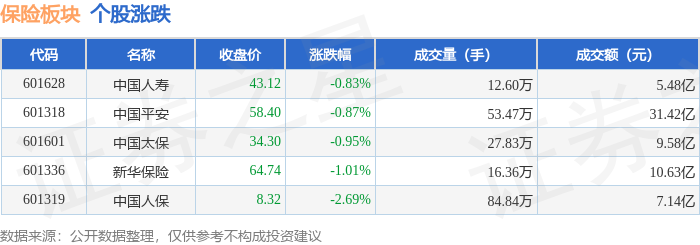
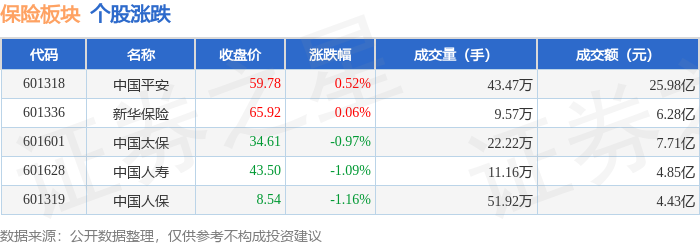
Core Viewpoint - The insurance sector experienced a decline of 0.56% on November 26, with China Life Insurance leading the losses, while the overall market showed mixed results with the Shanghai Composite Index down by 0.15% and the Shenzhen Component Index up by 1.02% [1] Summary by Category Market Performance - The Shanghai Composite Index closed at 3864.18, down 0.15% - The Shenzhen Component Index closed at 12907.83, up 1.02% [1] Insurance Sector Performance - The insurance sector saw a net outflow of 198 million yuan from main funds, while retail funds experienced a net inflow of 266 million yuan [1] - Individual stock performances included: - China Ping An (601318) closed at 59.78, up 0.52% with a trading volume of 434,700 shares and a transaction value of 2.598 billion yuan - New China Life Insurance (601336) closed at 65.92, up 0.06% with a trading volume of 95,700 shares and a transaction value of 628 million yuan - China Pacific Insurance (601601) closed at 34.61, down 0.97% with a trading volume of 222,200 shares and a transaction value of 771 million yuan - China Life Insurance (601628) closed at 43.50, down 1.09% with a trading volume of 111,600 shares and a transaction value of 485 million yuan - China Reinsurance (601319) closed at 8.54, down 1.16% with a trading volume of 519,200 shares and a transaction value of 443 million yuan [1] Fund Flow Analysis - The fund flow analysis for individual stocks showed: - China Pacific Insurance had a main fund net inflow of 29.7664 million yuan, with a retail net outflow of 20.0910 million yuan - New China Life Insurance had a main fund net inflow of 19.6665 million yuan, with a retail net outflow of 26.0477 million yuan - China Reinsurance had a main fund net outflow of 16.4563 million yuan, with a retail net inflow of 14.2729 million yuan - China Life Insurance had a main fund net outflow of 60.9273 million yuan, with a retail net inflow of 38.4305 million yuan - China Ping An had a main fund net outflow of 170.1 million yuan, with a retail net outflow of 74.5134 million yuan [2]






第十九届金洽会“园区行”收官 推动金融服务精准直达
Xin Hua Cai Jing· 2025-11-26 05:00
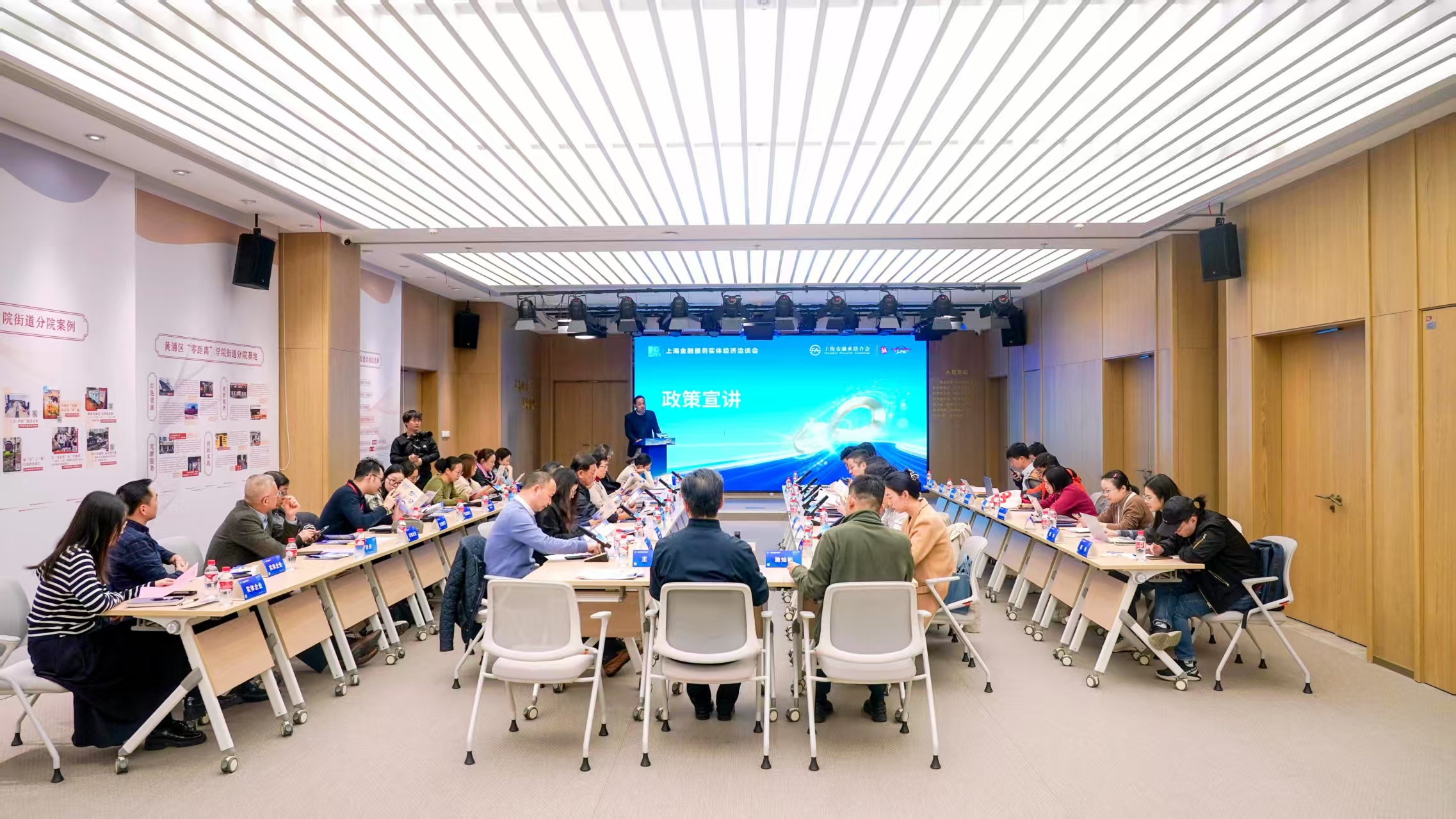
Core Insights - The 19th Golden Fair's "Park Tour" event in Huangpu's Wuliqiao Street aims to deliver financial services directly to enterprises, marking the conclusion of this year's series of activities [1] - The event highlights the importance of the Golden Fair as a platform for financial services to support the real economy in Shanghai, aligning with Huangpu District's goals of optimizing the business environment and promoting high-quality development [1] Group 1 - The event focused on addressing the financial needs of small and micro enterprises, which remain largely untapped, with discussions on optimizing financial costs for companies like Shanghai KooBan Biotechnology Co., Ltd. and Shanghai Wind Leader New Energy Co., Ltd. [1] - Financial consultants from various institutions provided insights on supporting small and micro enterprises through comprehensive financial solutions, including debt financing and policy-backed guarantees [2] - The Golden Fair has evolved its format to enhance the connection between financial institutions and real enterprises, emphasizing the commitment of Shanghai's financial sector to serve the real economy [2]


打通金融惠企“最后一公里”,金洽会“园区行”深入黄浦把脉开方
Guo Ji Jin Rong Bao· 2025-11-25 13:59
Core Insights - The 19th Shanghai Financial Services for the Real Economy Conference (referred to as "Jinhui Conference") successfully held a special docking event in the Huangpu District, focusing on how financial services can empower the real economy [1] Group 1: Financial Support for SMEs - Representatives from companies such as Shanghai KooBan Biotechnology Co., Ltd. and Shanghai Wind Leading New Energy Co., Ltd. discussed challenges like high financing costs and difficulties in obtaining funds [3] - Financial advisors suggested that banks could provide comprehensive financial support for SMEs' debt financing needs before going public, including policy-backed guarantees and intellectual property pledge financing to reduce costs [3] - Online financing products with flexible repayment options can better match the cash flow needs of enterprises, enhancing capital efficiency [3] Group 2: Role of Insurance in Financing - Insurance companies can play a dual role in risk protection and credit enhancement, with research and development insurance creating a safety net for R&D investments [4] - Loan performance guarantee insurance can replace traditional collateral, effectively reducing banks' credit concerns and broadening financing channels for enterprises [4] Group 3: Integrated Financial Services Ecosystem - Financial institutions are leveraging diversified licenses to create an integrated service ecosystem, offering tailored financial services to SMEs [5] - The Shanghai Inclusive Finance Advisor system, launched in September 2022, aims to bridge the information gap between financial institutions and enterprises, providing professional consulting services [5] - The Jinhui Conference has been innovating its format and content to enhance the quality and effectiveness of financial services, reinforcing the commitment of Shanghai's financial sector to support the real economy [5]
人形机器人如何“放心用”?头部险企接连推专属产品,尚需跨越三大核心障碍
Mei Ri Jing Ji Xin Wen· 2025-11-25 11:08
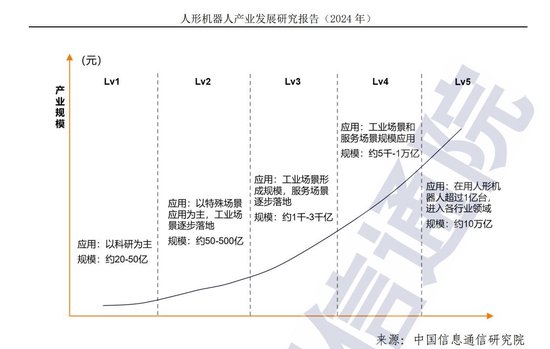
Core Viewpoint - The rapid advancement of artificial intelligence has led to a pressing need for humanoid robots, which are transitioning from laboratory demonstrations to commercial applications, indicating a new phase in industry development [1][3]. Industry Overview - The humanoid robot market in China is projected to reach a scale of 100 billion RMB by 2035, driven by applications in manufacturing, social services, and special operations [1][9]. - The insurance industry is responding to the emerging risks associated with humanoid robots by developing specialized insurance products to cover various dimensions such as property loss, third-party liability, cybersecurity, and data breaches [1][2]. Insurance Product Development - Major insurance companies like China Pacific Insurance and People’s Insurance Company of China have launched dedicated insurance products for humanoid robots, addressing risks from operational failures to third-party injuries [3][4]. - The "Smart Insurance" product by China Pacific Insurance offers integrated coverage for property loss, third-party liability, and flexible policy durations tailored to various commercial scenarios [3][4]. Risk Management Challenges - The application of humanoid robots faces significant challenges, including safety risks, property damage, and liability issues, which are critical for scaling their use [5][7]. - The complexity of humanoid robots, which integrate mechanical, electronic, and AI components, leads to multifaceted risks that traditional insurance products may not adequately cover [8][12]. Market Potential and Support - The humanoid robot market is expected to expand significantly, with projections indicating a market size of 1 trillion to 3 trillion RMB by 2040, and over 100 million humanoid robots in use by 2045 [9][11]. - Government initiatives are increasingly supporting the humanoid robot industry, including financial incentives for insurance premiums to encourage innovation and adoption [13][12]. Ethical and Regulatory Considerations - The industry faces ethical challenges and a lack of unified standards, complicating the insurance landscape and raising questions about liability in cases of malfunction or harm caused by humanoid robots [15][16]. - The need for new insurance products that address algorithmic responsibility and system failures is highlighted, along with the importance of establishing a risk database for accurate pricing [16][14].


非银金融行业11月25日资金流向日报
Zheng Quan Shi Bao Wang· 2025-11-25 09:09
资金面上看,两市主力资金全天净流入132.15亿元,今日有19个行业主力资金净流入,电子行业主力资 金净流入规模居首,该行业今日上涨2.14%,全天净流入资金50.00亿元,其次是通信行业,日涨幅为 3.54%,净流入资金为48.81亿元。 | 600927 | 永安期货 | 0.21 | 0.26 | -4.84 | | --- | --- | --- | --- | --- | | 600918 | 中泰证券 | -0.15 | 0.45 | 129.60 | | 603300 | 海南华铁 | 1.36 | 3.48 | 145.44 | | 600061 | 国投资本 | 0.27 | 0.40 | 172.63 | | 000567 | 海德股份 | 4.16 | 2.01 | 183.43 | | 002961 | 瑞达期货 | 1.04 | 1.55 | 248.90 | | 600369 | 西南证券 | 0.00 | 0.50 | 251.25 | | 300773 | 拉卡拉 | 1.91 | 2.26 | 379.20 | | 600999 | 招商证券 | 0.18 | 0.41 | ...



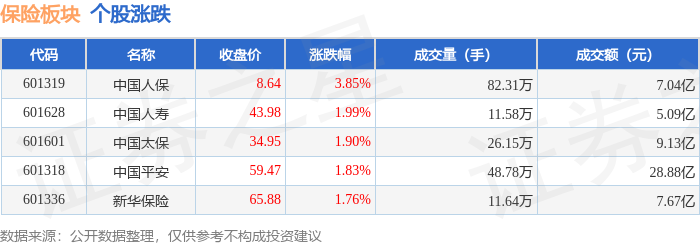
保险板块11月25日涨2.17%,中国人保领涨,主力资金净流入1.48亿元
Zheng Xing Xing Ye Ri Bao· 2025-11-25 09:09
Core Insights - The insurance sector experienced a rise of 2.17% on November 25, with China Pacific Insurance leading the gains [1] - The Shanghai Composite Index closed at 3870.02, up 0.87%, while the Shenzhen Component Index closed at 12777.31, up 1.53% [1] Insurance Sector Performance - China Life Insurance closed at 43.98, up 1.99%, with a trading volume of 115,800 shares and a transaction value of 509 million [1] - China Pacific Insurance closed at 34.95, up 1.90%, with a trading volume of 261,500 shares and a transaction value of 913 million [1] - Ping An Insurance closed at 59.47, up 1.83%, with a trading volume of 487,800 shares and a transaction value of 2.8887 billion [1] - New China Life Insurance closed at 65.88, up 1.76%, with a trading volume of 116,400 shares and a transaction value of 767.1 million [1] Fund Flow Analysis - The insurance sector saw a net inflow of 148 million from institutional investors, while retail investors experienced a net inflow of 40.68 million [1] - Major stocks like Ping An Insurance had a net inflow of 114 million from institutional investors but a net outflow of 54.29 million from retail investors [2] - China Life Insurance had a net inflow of 39.99 million from institutional investors, with retail investors showing a net outflow of 18.06 million [2]
青海金融监管局同意中国人保财险西宁市城西支公司贵南路营销服务部变更营业场所
Jin Tou Wang· 2025-11-25 09:04
一、同意中国人民财产保险股份有限公司西宁市城西支公司贵南路营销服务部将营业场所变更为:青海 省西宁市东川工业园区科技孵化器大厦8层。 2025年11月19日,青海金融监管局发布批复称,《关于中国人民财产保险股份有限公司西宁市城西支公 司贵南路营销服务部变更营业场所的请示》(宁人保财险发〔2025〕80号)收悉。经审核,现批复如 下: 二、中国人民财产保险股份有限公司西宁市城西支公司应按照有关规定及时办理变更及许可证换领事 宜。 ...
玉溪金融监管分局同意撤销中国人保财险新平支公司营销服务部等3家营销服务部
Jin Tou Wang· 2025-11-25 09:04
一、同意撤销中国人民财产保险股份有限公司新平支公司营销服务部、中国人民财产保险股份有限公司 澄江支公司九村镇营销服务部、中国人民财产保险股份有限公司澄江支公司龙街镇营销服务部。 2025年11月20日,玉溪金融监管分局发布批复称,《中国人民财产保险股份有限公司玉溪市分公司关于 撤销新平营销服务部、九村镇营销服务部、龙街镇营销服务部的请示》(玉人保财险发〔2025〕85号) 收悉。经审核,现批复如下: 二、接此批复文件后,上述被撤销机构应立即停止一切经营活动,于15个工作日内向玉溪金融监管分局 缴回许可证,并按照有关法律法规要求办理相关手续。 ...
南平监管分局同意中国人保寿险南平市中心支公司建阳营销服务部变更营业场所
Jin Tou Wang· 2025-11-24 09:17
Group 1 - The National Financial Supervision Administration of Nanping approved the relocation of China People's Life Insurance Co., Ltd. Nanping Central Branch's Jianyang Marketing Service Department [1] - The new business location is specified as: 10 Building, 10501-10503, 10505, 10506, Gaojia Xicheng International, No. 259 Jingxian Road, Jianyang District, Nanping City, Fujian Province [1] - China People's Life Insurance Co., Ltd. Fujian Branch is required to handle the relocation and license renewal in accordance with relevant regulations [1]
保险板块11月24日跌1.12%,中国人保领跌,主力资金净流出1.62亿元
Zheng Xing Xing Ye Ri Bao· 2025-11-24 09:12
| 代码 | 名称 | 主力净流入(元) | 主力净占比 游资净流入 (元) | | 游资净占比 散户净流入 (元) | | 散户净占比 | | --- | --- | --- | --- | --- | --- | --- | --- | | 601318 中国平安 | | = 170.25万 | 0.05% | -8620.72万 | -2.74% | 8450.47万 | 2.69% | | 601628 中国人寿 | | -1301.28万 | -2.37% | 2832.46万 | 5.17% | -1531.18万 | -2.79% | | 601319 中国人保 | | -3669.59万 | -5.14% | 1798.55万 | 2.52% | 1871.03万 | 2.62% | | 601601 中国太保 | | -4434.85万 | -4.63% | 6462.75万 | 6.74% | -2027.91万 | -2.12% | | 601336 新华保险 | | -6998.32万 | -6.58% | 7.75万 | 0.01% | 6990.57万 | 6.57% | 以上内容 ...