
NCI(601336)

Search documents
港股异动 | 新华保险(01336)续涨近5% 投资收益高增驱动净利润继续高增
智通财经网· 2025-10-15 03:19
Core Viewpoint - New China Life Insurance (01336) has seen a nearly 5% increase in stock price, currently trading at 50.6 HKD, with a transaction volume of 938 million HKD. The company expects a significant rise in net profit for the first three quarters of 2025, projecting a year-on-year growth of 45% to 65% [1] Financial Performance - The company anticipates a net profit attributable to shareholders for Q3 2025 to be between 29.986 billion to 34.122 billion CNY, reflecting a year-on-year increase of 55.90 to 97.26 billion CNY, which translates to a growth rate of 58.2% to 101.3% [1] - The strong growth is attributed to a high equity position and a growth-oriented investment strategy [1] Future Outlook - For the first half of 2025, the company is expected to lay a solid foundation for achieving over 50% growth in new business value (NBV) on a comparable basis [1] - With positive expectations in the equity market, the company forecasts an annual profit growth rate of over 40% [1]
滚动更新丨A股三大指数小幅高开,贵金属、稀土板块重启涨势
Di Yi Cai Jing Zi Xun· 2025-10-15 01:40
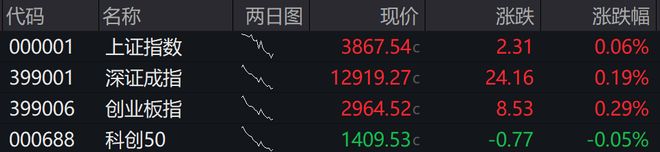
Group 1 - Guangda Special Materials opened down over 9% due to the implementation of detention measures against its actual controller and chairman Xu Weiming [1] - The A-share market opened with slight gains, with the Shanghai Composite Index up 0.06%, Shenzhen Component Index up 0.19%, and ChiNext Index up 0.29% [2][3] - The market saw a resurgence in precious metals and rare earth sectors, while technology stocks continued to adjust, with significant declines in storage chips, photolithography machines, and consumer electronics concepts [3] Group 2 - The Hong Kong stock market opened with the Hang Seng Index up 1.08% and the Hang Seng Tech Index up 1.31%, indicating a stabilization in tech stocks [6][7] - ASMPT rose over 3%, while financial and real estate sectors generally opened higher, with New China Life Insurance up nearly 2% and Midea Real Estate up nearly 4% [6] - Shandong Gold opened down over 5% after disclosing its third-quarter earnings forecast [6]



29股获券商买入评级 新华保险目标涨幅达29.45%
Xin Lang Cai Jing· 2025-10-15 00:47
数据显示,10月14日,共有29只个股获券商买入评级,其中2只个股公布了目标价格。按最高目标价计 算,新华保险、徐工机械目标涨幅排名居前,涨幅分别达29.45%、17.65%。 ...
29股获券商买入评级,新华保险目标涨幅达29.45%
Di Yi Cai Jing· 2025-10-15 00:34
Group 1 - On October 14, a total of 29 stocks received buy ratings from brokerages, with 2 stocks announcing target prices [1] - Based on the highest target price, Xinhua Insurance and Xugong Machinery ranked first in target price increase, with expected increases of 29.45% and 17.65% respectively [1] - Among the rated stocks, 25 maintained their ratings, while 4 received initial ratings [1] Group 2 - Two stocks, Zhongchong Co. and Xinhua Insurance, attracted attention from multiple brokerages, receiving the highest number of ratings at 4 and 3 respectively [1] - In terms of industry distribution, the sectors with the most buy-rated stocks were Healthcare Equipment and Services, Food, Beverage and Tobacco, and Capital Goods, with 6, 6, and 4 stocks respectively [1]
东吴证券晨会纪要-20251015
Soochow Securities· 2025-10-14 23:30
Macro Strategy - The report identifies three main policy directions for economic stabilization: early use of debt quota, introduction of 500 billion yuan in policy financial tools, and monetary easing [1][7][8] - It predicts that the economic growth rate for the third quarter will be between 4.7% and 4.9%, with an annual target of around 5.0% achievable if the fourth quarter growth exceeds 4.5% [7][8] - The report suggests that the new round of growth stabilization policies will be moderate, focusing on support rather than strong stimulus [8][9] Public REITs Market - The development of public REITs in China has gone through several stages: exploration (2005-2019), initial formation (2020-2021), innovation (2021-2024), and steady expansion (from July 2024 to present) [1][10] - As of September 2025, there are 75 public REITs with a total issuance of 194.33 billion yuan, indicating a growing market [10] - The report highlights that city investment platforms have played a crucial role in the public REITs market, helping to optimize capital structures and reduce debt through asset securitization [1][10] Company-Specific Insights Smoore International (06969.HK) - The company reported a revenue of 10.21 billion yuan for the first three quarters of 2025, a year-on-year increase of 21.8%, with a net profit of 1.13 billion yuan [2][12] - The third quarter saw a revenue increase of 27.2% year-on-year, driven by the successful iteration of new products and local marketing efforts [12] - The company maintains a "buy" rating with projected net profits of 1.33 billion, 2.22 billion, and 2.89 billion yuan for 2025-2027 [2][12] New China Life Insurance (601336) - The company expects a significant increase in net profit for the third quarter, with estimates ranging from 30 billion to 34.1 billion yuan, reflecting a year-on-year growth of 45% to 65% [3][13] - The increase is primarily attributed to improved investment returns and a favorable stock market environment [13] - The report raises the profit forecast for 2025-2027 to 38.7 billion, 40.2 billion, and 41.8 billion yuan, maintaining a "buy" rating [3][13] Chipone Technology (688049) - The company anticipates a revenue increase of 54.5% year-on-year for the first three quarters of 2025, with a net profit growth of 112.94% [4][16] - The focus on AI chip development has led to significant market penetration and revenue growth in various audio products [16] - The report maintains a "buy" rating, adjusting revenue forecasts slightly for 2025-2027 [4][16] Zhongchong Co., Ltd. (002891) - The company reported a 21.1% year-on-year revenue increase for the first three quarters of 2025, with a net profit of 330 million yuan [5][18] - The growth is driven by strong performance in self-owned brands and a stable customer base in overseas markets [18] - The report maintains a "buy" rating with profit forecasts of 450 million, 550 million, and 650 million yuan for 2025-2027 [5][18] Zhenyu Technology (300953) - The company expects a net profit of 600 million to 620 million yuan for the third quarter, reflecting a year-on-year increase of 364% to 413% [6][19] - The report highlights the successful expansion into robotics and the development of new products [19] - The profit forecast for 2025-2027 is raised to 600 million, 900 million, and 1.3 billion yuan, maintaining a "buy" rating [6][19]

2025上半年寿险公司保险业务收入排名榜:老六家提速,新华增速超20%,中邮和友邦增速超10%,建信、农银、大都会等排名上升!
13个精算师· 2025-10-14 14:07
Core Insights - The insurance industry in China is experiencing a significant increase in premium income, with a total exceeding 2.7 trillion yuan in the first half of 2025, reflecting a continuous upward trend in growth rates [8][9][11]. Group 1: Premium Growth and Rankings - The "old six" insurance companies, including Xinhua, are seeing accelerated premium growth, particularly in individual and bank insurance channels [16][19]. - China Life, Ping An Life, and other leading insurers have reported premium growth rates exceeding 10% in the second quarter of 2025 [19][21]. - Xinhua Insurance has achieved a remarkable premium growth rate of 22.7%, driven by both individual and bank insurance channels [24][25]. Group 2: Emerging Players and Market Dynamics - Zhongyou Life and AIA have consistently outperformed the industry average, with premium growth rates above 10% [26][29]. - Companies like Jianxin Life and Nongyin Life are also experiencing rapid premium growth and improved rankings, benefiting from strong bank insurance channel performance [30][33]. - Smaller insurance companies are facing a slowdown in growth, with an increasing number reporting negative growth, highlighting a growing divide in the market [35][37]. Group 3: Product Performance and Channel Contributions - Traditional insurance products are showing a premium growth rate of 36%, contributing significantly to overall premium increases [25]. - The bank insurance channel has become a crucial growth driver, with major insurers reporting over 30% growth in this segment [21][22]. - The performance of dividend insurance products has been particularly strong, with some companies reporting growth rates exceeding 100% [24][29].


新华保险(601336):2025年前三季度业绩预增公告点评:投资收益持续向好,利润增长提速
GUOTAI HAITONG SECURITIES· 2025-10-14 13:54
Investment Rating - The report maintains an "Accumulate" rating for the company with a target price of 77.49 CNY, corresponding to a 2025 P/EV of 0.85 times [6][13]. Core Insights - The company is expected to see a significant increase in net profit attributable to shareholders for the first three quarters of 2025, projected to grow by 45%-65% year-on-year, primarily driven by continued high growth in investment income [2][13]. - The report highlights that the improvement in profitability is expected to be supported by a resonance between assets and liabilities, leading to sustained growth in value [13]. - The company is actively optimizing its asset allocation structure, which is anticipated to enhance investment returns, benefiting from a recovering capital market and improved equity asset yields [13]. Financial Summary - The company's projected financial performance shows a substantial increase in operating revenue from 71,547 million CNY in 2023 to 173,350 million CNY in 2025, reflecting an 85% increase in 2024 and a 31% increase in 2025 [4][14]. - Net profit attributable to shareholders is expected to rise from 8,712 million CNY in 2023 to 38,992 million CNY in 2025, marking a 201% increase in 2024 and a 49% increase in 2025 [4][14]. - The earnings per share (EPS) is projected to increase significantly, reaching 12.50 CNY in 2025, up from 8.41 CNY in 2024 [4][14]. Investment Drivers - The report identifies two main drivers for the anticipated growth in investment income: the recovery of the Chinese capital market and the company's proactive asset allocation strategy [13]. - The report notes that the company's core equity allocation (stocks and funds) is at 18.6%, which is ahead of its listed peers, indicating a strong positioning in the market [13]. - The expected growth in new business value (NBV) is projected at 52.8% year-on-year for the first three quarters of 2025, driven by both demand and supply-side factors [13].
银行、保险,全线飘红!联动效应增强
Zhong Guo Zheng Quan Bao· 2025-10-14 11:51
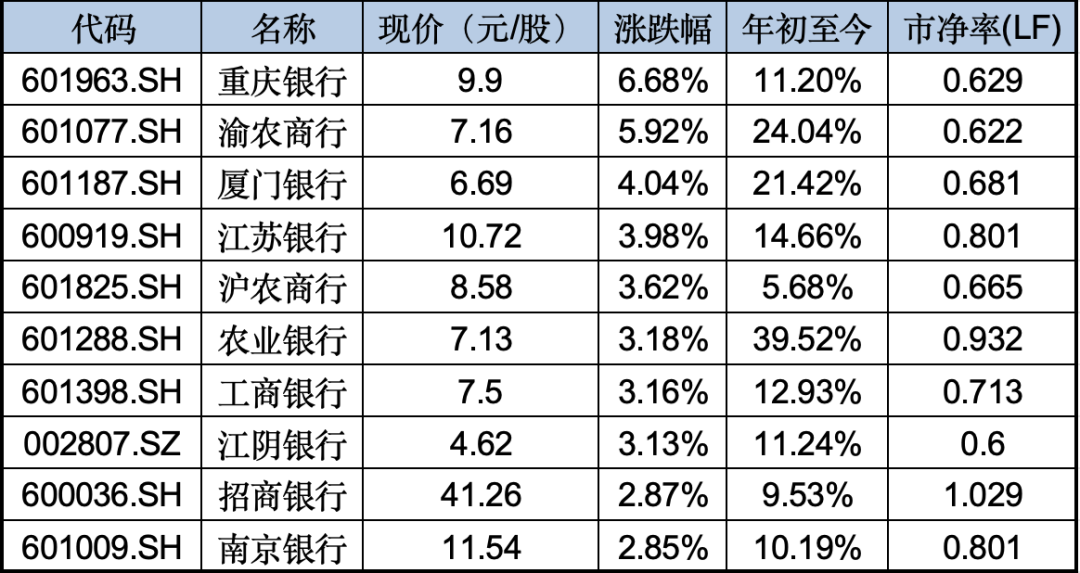
10月14日,A股银行、保险板块飘红。截至收盘,银行指数涨超2.54%,保险指数涨超2.77%。其中,重庆银行(601963)上涨6.68%,渝农商行 (601077)、新华保险(601336)涨逾5%。 业内人士认为,银行股防御性配置需求上升,保险股则受消息面和政策端多重利好因素催化。此外,银行股作为保险资金重仓的核心板块,银行股与保险 股联动效应逐渐增强。 多重因素推动板块配置价值 | 代码 | 名称 | 现价(元/股) | 涨跌幅 | 年初至今 | 市净率(LF) | | --- | --- | --- | --- | --- | --- | | 601963.SH | 重庆银行 | ರಿ.9 | 6.68% | 11.20% | 0.629 | | 601077.SH | 渝农商行 | 7.16 | 5.92% | 24.04% | 0.622 | | 601187.SH | 厦门银行 | 6.69 | 4.04% | 21.42% | 0.681 | | 600919.SH | 江苏银行 | 10.72 | 3.98% | 14.66% | 0.801 | | 601825.SH | 沪农商行 | ...


半导体,大跳水
Zheng Quan Shi Bao· 2025-10-14 10:55
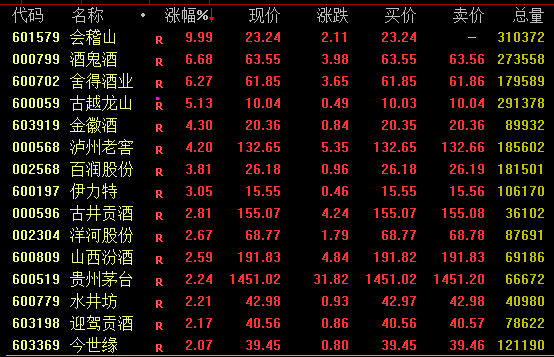
Market Overview - On October 14, A-shares collectively retreated, with the ChiNext Index and STAR 50 Index dropping approximately 4%, indicating a shift in market style [1] - The Hang Seng Index also fell significantly, with a nearly 2% decline, and the Hang Seng Technology Index dropping close to 4% [1] - Major indices opened higher but experienced volatility, with the Shanghai Composite Index down 0.62% to 3865.23 points and the Shenzhen Component Index down 2.54% to 12895.11 points at the close [1] Sector Performance Semiconductor Sector - The semiconductor sector faced a significant pullback, with stocks like Yandong Micro and Chipone falling over 10%, and Huahong Semiconductor dropping more than 9% [1][10] - AI-related stocks also declined, with Newyeason and Zhongji Xuchuang dropping over 8% [1][10] Insurance and Banking Sectors - The insurance sector saw a strong rally, with New China Life Insurance rising over 5% and China Pacific Insurance increasing by more than 3% [4] - The banking sector also performed well, with Chongqing Bank up nearly 7% and Agricultural Bank of China rising over 3% [4][5] - New China Life Insurance reported a projected net profit of 29.986 billion to 34.122 billion yuan for the first three quarters, representing a year-on-year growth of 45% to 65% [4] Resource Stocks - Resource stocks, including coal, gas, and oil, collectively rose, with Baotailong achieving three consecutive trading limits [1] - The photovoltaic industry saw a resurgence, with Longi Green Energy and JA Solar reaching trading limits during the session [1] Alcohol Sector - The alcohol sector rebounded, with stocks like Kweichow Moutai and Shanxi Fenjiu rising over 2% [7] - The overall consumption environment for the liquor industry has shown signs of improvement, with inventory accumulation marginally easing [8] Investment Insights - Institutions suggest that the insurance sector currently presents significant allocation value due to policy benefits and asset improvements [5] - The banking sector is favored by insurance funds due to its high dividend characteristics, with expectations for increased holdings in bank stocks [4][5] - The alcohol sector is anticipated to experience a valuation shift and recovery as the market adjusts to external disturbances and the importance of domestic demand increases [8]



A股三季报预告超八成预喜,鲁股韧性凸显
Qi Lu Wan Bao Wang· 2025-10-14 10:31
Core Insights - The overall performance of A-share listed companies for the first three quarters of 2025 is positive, with over 84% of companies reporting favorable earnings forecasts, indicating a recovery in profitability amid supportive economic policies and structural optimization [1][2]. Group 1: Earnings Performance - As of October 14, 2025, 72 companies have released earnings forecasts, with 18 companies expecting slight increases, 4 companies turning losses into profits, and 41 companies forecasting significant profit growth [2]. - Notably, 22 companies are projected to achieve profits exceeding 500 million yuan, with New China Life Insurance leading at a net profit of 32.05 billion yuan, a year-on-year increase of 45%-65% [2]. - Other companies with substantial profits include Luxshare Precision at 11.12 billion yuan (20%-25% growth), Salt Lake Industry at 4.5 billion yuan, and Yuexiu Capital at 3.008 billion yuan [2]. Group 2: Profit Growth Rates - 22 companies are expected to see a year-on-year profit growth of over 100%, with 5 companies exceeding 300% growth [3]. - Chujiang New Materials is highlighted as the "profit growth king," with an estimated net profit of 350-380 million yuan, reflecting a staggering increase of 2057.62%-2242.56% [3]. - Other notable performers include Yinglian Co. (1602.05% growth), Guangdong Mingzhu (964.95%), and Liming Co. (659.48%) [3]. Group 3: Sector Performance - The semiconductor industry is experiencing a significant recovery, with the global semiconductor market reaching $346 billion in the first half of 2025, a year-on-year increase of 18.9% [3]. - Changchuan Technology, a leading semiconductor equipment company, anticipates a net profit of 827-877 million yuan, marking a year-on-year increase of 131.39%-145.38% [3]. - Yangjie Technology expects a net profit of 937-1,004 million yuan, driven by strong growth in automotive electronics, artificial intelligence, and consumer electronics [3]. Group 4: Regional Performance - Shandong stocks have shown resilience, particularly in traditional industries and resource-based enterprises, achieving growth through internal reforms and cost reductions [4]. - Jinling Mining reported a revenue of 1.247 billion yuan, a 12.98% increase, with a net profit of 220 million yuan, up 47.09% [4]. - Shandong Steel successfully turned losses into profits by implementing cost control measures, achieving a gross margin increase to 6.02%, up 4.15 percentage points [4]. Group 5: Market Trends and Opportunities - The current market is entering a "policy + performance" window, with earnings becoming the core criterion for selecting stocks [5]. - The technology sector is experiencing a broad rally, with significant growth in computing power and AI-related stocks, although there is internal differentiation based on earnings support [5]. - The gaming sector is also highlighted, with expectations of recovery driven by normalized issuance of game licenses and strong product pipelines from leading companies [5][6].


