NCI(601336)

Search documents
保险股历史行情复盘:哪些因素是保险股行情的催化剂?
Soochow Securities· 2025-10-14 10:26
Investment Rating - The report maintains an "Overweight" rating for the insurance sector [2] Core Insights - The insurance sector has seen improvements on both asset and liability sides, with valuations and public fund holdings still at low levels. The asset side has been the main driver of the sector's performance in 2024, significantly influenced by the stock market. The fundamentals of the sector are improving, with expectations for steady profit growth in Q3 due to a strong stock market and stable long-term interest rates. The sector's valuation remains attractive compared to historical levels, and the overall new business value (NBV) is expected to maintain a rapid growth rate [2][5][11]. Summary by Sections Historical Performance - Since the listing of insurance stocks in 2007, the insurance index has increased by 165%, outperforming the market by 55%. Notably, in years like 2014, 2017, 2022, and 2024, the sector achieved over 20% excess returns [5][11][12]. Catalysts for Insurance Stock Performance - The three main factors influencing insurance stock performance are stock market trends, long-term interest rates, and liability performance. The correlation between the insurance index and the stock market is strong, with bull markets acting as key catalysts for insurance stock performance. Long-term interest rates significantly impact the insurance companies' profit margins and product sales, while liability performance is assessed through new business premiums and NBV [5][16][19]. Historical Market Trends - The report identifies five significant market trends for the insurance sector since 2014, highlighting the importance of stock market performance, interest rate movements, and liability improvements in driving excess returns. For instance, the 2014-2015 period was characterized by a bull market and high growth in the liability side, while the 2017 period saw a combination of rising interest rates and value transformation leading to significant excess returns [5][42][45]. Current Investment Value - The report indicates that insurance stocks have shown significant excess returns since 2024, with a notable narrowing of the A-H share price gap. Future catalysts for upward price movement in the insurance sector are anticipated [5][11].



新华保险借牛市“腾飞”,前三季度预盈或超300亿元
Huan Qiu Lao Hu Cai Jing· 2025-10-14 10:25
Group 1 - The core viewpoint of the articles is that Xinhua Insurance is expected to report significant profit growth for the first three quarters of 2023, driven by favorable conditions in the capital market and increased investment returns [1][2] - Xinhua Insurance anticipates a net profit attributable to shareholders of between 29.986 billion and 34.122 billion yuan for the first three quarters, representing a year-on-year increase of 9.306 billion to 13.442 billion yuan, or 45% to 65% [1] - The company expects its net profit for the third quarter alone to be between 15.186 billion and 19.322 billion yuan, indicating a quarterly growth rate of 58% to 101% [1] Group 2 - The increase in profits is attributed to the recovery of the Chinese capital market, which has led to a substantial rise in investment income for Xinhua Insurance [1] - The annualized total investment return for Xinhua Insurance in the first half of the year was 5.9%, up 1.1% year-on-year, positioning it among the top four insurance companies [1] - Xinhua Insurance's total assets reached 1.78 trillion yuan by the end of June, a 5% increase from the previous year, with stock investments amounting to 199.248 billion yuan, reflecting a 10.2% growth since the beginning of the year [1] Group 3 - Since last year, Xinhua Insurance has been actively investing in the capital market, acquiring stakes in companies such as China National Pharmaceutical Group and Shanghai Pharmaceuticals, focusing on high-dividend assets [2] - The company has established the Honghu Fund in collaboration with China Life, which has successfully completed its initial investment phase and is now progressing with subsequent phases [2] - From April 2025 to September 2023, the A-share market has experienced a "slow bull" trend, with the CSI 300 index rising approximately 18%, creating favorable conditions for insurance capital investments [2] Group 4 - On the liability side, Xinhua Insurance has benefited from adjustments in predetermined interest rates, leading to a continuous increase in premium income [2] - From January to August 2023, Xinhua Insurance reported original insurance premium income of 158 billion yuan, a year-on-year increase of 21%, with August alone generating 20.3 billion yuan, up 10.2% year-on-year [2]

研报掘金丨中泰证券:维持新华保险“买入”评级,高基数下业绩持续大增彰显权益业绩弹性
Ge Long Hui A P P· 2025-10-14 09:44
Core Viewpoint - Xinhua Insurance has announced a significant increase in its net profit for the first three quarters of 2025, with projections indicating a rise of 45% to 65% year-on-year, driven by a recovering capital market and improved investment returns [1] Financial Performance - The estimated net profit for the first nine months of 2025 is projected to be between 29.986 billion yuan and 34.122 billion yuan, with a central estimate of 31.555 billion yuan [1] - The expected net profit for the third quarter of 2025 is 17.255 billion yuan, reflecting a year-on-year growth rate of 79.8% [1] Market Conditions - The recovery of the Chinese capital market has led to substantial growth in investment income, contributing to the overall increase in net profit [1] - The "slow bull" market has positively impacted equity investments, allowing the company to realize gains from bottom-fishing strategies [1] Investment Outlook - The significant improvement in investment spreads has resulted in net profit exceeding expectations, highlighting the resilience of equity performance [1] - The company has raised its expectations for investment returns and maintains a "buy" rating based on the anticipated dual impact of valuation and performance in the insurance sector [1]

险资入市驱动投资收益大增!新华保险上涨5.34%,A股保险股全线飘红
Mei Ri Jing Ji Xin Wen· 2025-10-14 09:41
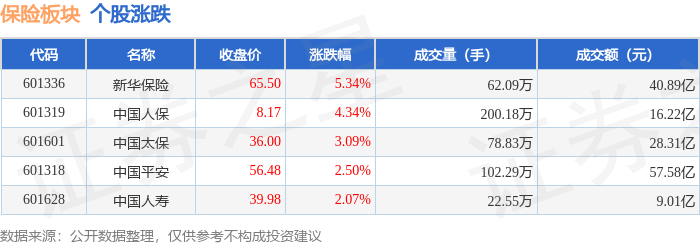
Core Viewpoint - The insurance sector in A-shares has shown strong performance, with New China Life Insurance leading the gains, reflecting a positive market sentiment and potential for valuation and earnings growth in the sector [1][2]. Group 1: Stock Performance - On October 14, the A-share insurance sector rose significantly, with New China Life Insurance's stock price increasing by 5.34% to close at 65.5 yuan per share, resulting in a market capitalization of 204.33 billion yuan [1]. - Other major insurers also saw stock price increases, with China Pacific Insurance up 3.09% and China Life Insurance up 2.07% [1]. - The positive performance in A-shares also influenced Hong Kong-listed insurance stocks, with New China Life Insurance (HK) rising by 2.75% [1]. Group 2: Earnings Forecast - New China Life Insurance projected a net profit increase of 45% to 65% for the first three quarters of 2025, estimating a profit range of 29.986 billion to 34.122 billion yuan [2]. - The company expects its net profit excluding non-recurring items to grow by 40% to 60%, with an estimated range of 28.998 billion to 33.141 billion yuan [2]. - The growth is attributed to a focus on enhancing the value and quality of insurance business, optimizing asset allocation, and responding to the call for insurance capital to enter the market [2][3]. Group 3: Investment Strategy - The insurance sector has been encouraged to increase equity investments, with policies aiming for large state-owned insurance companies to allocate 30% of new premiums to A-shares starting in 2025 [4]. - As of mid-2023, the total investment balance of insurance companies exceeded 36 trillion yuan, with a notable increase in stock investments [4]. - The shift towards equities is driven by the need to improve investment yields in a low-interest-rate environment, with a focus on balancing risk and return through diversified investment strategies [5][6].
半导体,大跳水!
Zheng Quan Shi Bao· 2025-10-14 09:30
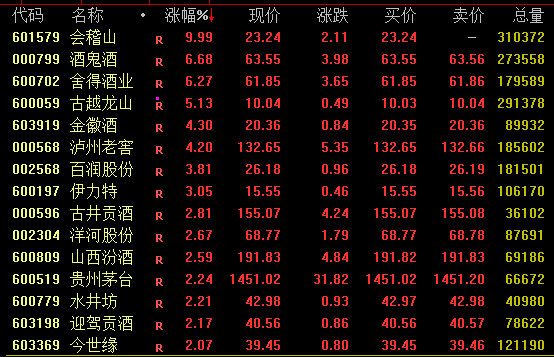
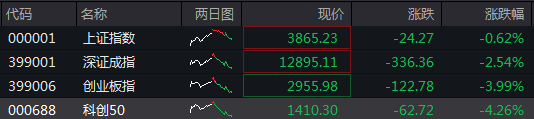
Market Overview - A-shares experienced a collective decline on October 14, with the ChiNext Index and the STAR 50 Index dropping approximately 4% [1] - The Hang Seng Index fell nearly 2%, while the Hang Seng Tech Index dropped close to 4% [1] - Major indices opened high but faced downward pressure throughout the day, with the Shanghai Composite Index closing down 0.62% at 3865.23 points and the Shenzhen Component down 2.54% at 12895.11 points [1] Sector Performance - Over 3500 stocks in the market turned negative, with the semiconductor sector experiencing a significant pullback, including stocks like Yandong Micro and Chipone falling over 10% [2][8] - The AI industry chain stocks also declined, with companies such as New Yisheng and Zhongji Xuchuang dropping over 8% [2][8] - The non-ferrous metals sector saw a sharp decline, with Tengyuan Cobalt falling over 10% [2] - Conversely, the insurance and banking sectors showed resilience, with Chongqing Bank rising nearly 7% and New China Life Insurance increasing over 5% [2][4] Insurance and Banking Sector Insights - The insurance sector saw strong performance, with New China Life Insurance forecasting a net profit of 29.986 billion to 34.122 billion yuan for the first three quarters, representing a year-on-year growth of 45% to 65% [4] - The banking sector also performed well, with several banks, including Chongqing Bank and Agricultural Bank of China, seeing gains of over 3% [4] - Analysts suggest that the current policy environment and macroeconomic conditions favor increased equity investments by insurance funds, particularly in bank stocks due to their high dividend yields [5] Alcohol Sector Recovery - The liquor sector rebounded, with stocks like Kweichow Moutai and Shuijingfang seeing gains of over 2% [6] - The overall consumption environment for liquor has been under pressure, but recent adjustments in growth targets by several companies indicate a potential recovery [7] Technology Sector Decline - The technology sector, particularly semiconductors, faced significant declines, with companies like Huahong Semiconductor and Chipone dropping over 9% [3][8] - The market sentiment in the tech sector remains cautious due to recent fluctuations and geopolitical tensions [10]

新华保险(601336):2025Q3业绩预增:受益于投资收益提升,Q3单季归母净利润同比增长58%-101%
Soochow Securities· 2025-10-14 09:04
Investment Rating - The investment rating for the company is "Buy" [1] Core Views - The company is expected to benefit from increased investment income, with a projected year-on-year growth in net profit attributable to shareholders for Q3 ranging from 58% to 101% [1] - The report anticipates a significant increase in net profit for the first three quarters of 2025, estimated between 30 billion to 34.1 billion yuan, reflecting a year-on-year growth of 45% to 65% [1] - The report highlights that the growth in net profit is primarily driven by improved investment returns due to a recovering domestic capital market [1] Financial Forecasts - Revenue projections for the company are as follows: - 2023: 71,547 million yuan - 2024: 132,555 million yuan (up 85.3% YoY) - 2025: 148,303 million yuan (up 11.9% YoY) - 2026: 154,262 million yuan (up 4.0% YoY) - 2027: 160,653 million yuan (up 4.1% YoY) [1] - Net profit attributable to shareholders is forecasted as: - 2023: 8,712 million yuan - 2024: 26,229 million yuan (up 201.1% YoY) - 2025: 38,702 million yuan (up 47.6% YoY) - 2026: 40,210 million yuan (up 3.9% YoY) - 2027: 41,832 million yuan (up 4.0% YoY) [1] - The estimated enterprise value (EV) per share is projected to increase from 80.30 yuan in 2023 to 106.88 yuan in 2027 [1] Market Data - The closing price of the company's stock is 62.18 yuan, with a market capitalization of approximately 193,973.41 million yuan [5] - The price-to-book ratio (P/B) is reported at 2.33 [5] - The company has a total share capital of approximately 3,119.55 million shares, with 2,085.44 million shares in circulation [6]
保险板块10月14日涨2.83%,新华保险领涨,主力资金净流入1.13亿元
Zheng Xing Xing Ye Ri Bao· 2025-10-14 08:41
证券之星消息,10月14日保险板块较上一交易日上涨2.83%,新华保险领涨。当日上证指数报收于 3865.23,下跌0.62%。深证成指报收于12895.11,下跌2.54%。保险板块个股涨跌见下表: | 代码 | 名称 | 收盘价 | 涨跌幅 | 成交量(手) | 成交额(元) | | | --- | --- | --- | --- | --- | --- | --- | | 601336 | 新华保险 | 65.50 | 5.34% | 62.09万 | | 40.89 Z | | 601319 | 中国人保 | 8.17 | 4.34% | 200.18万 | | 16.22 乙 | | 601601 | 中国太保 | 36.00 | 3.09% | 78.83万 | | 28.31亿 | | 601318 | 中国平安 | 56.48 | 2.50% | 102.29万 | | 57.58 Z | | 601628 | 中国人寿 | 39.98 | 2.07% | 22.55万 | | 9.01亿 | 从资金流向上来看,当日保险板块主力资金净流入1.13亿元,游资资金净流出2.95亿元,散户资金净流入 ...

收盘丨创业板指高开低走跌近4%,半导体、通信板块全线下挫
Di Yi Cai Jing· 2025-10-14 07:17
Market Overview - The total trading volume in the Shanghai and Shenzhen markets reached 2.58 trillion yuan, an increase of 221.5 billion yuan compared to the previous trading day, with over 3,500 stocks declining [1][4] - Major indices experienced declines, with the Shanghai Composite Index down 0.62%, the Shenzhen Component Index down 2.54%, the ChiNext Index down 3.99%, and the STAR Market 50 Index down over 4% [1][2] Sector Performance - Technology stocks, particularly in the semiconductor and communication sectors, saw significant pullbacks, with stocks like Tongfu Microelectronics hitting the daily limit down and several others dropping over 10% [3] - Conversely, traditional sectors such as liquor, finance, and coal showed resilience, with notable gains in stocks like Chongqing Bank, which rose over 6% [3][2] Capital Flow - Main capital flows indicated net inflows into banking, food and beverage, and coal sectors, while semiconductor, communication equipment, and battery sectors experienced net outflows [6] - Specific stocks with net inflows included Longi Green Energy, Shanzhi High-Tech, and Industrial and Commercial Bank of China, attracting 1.527 billion yuan, 1.032 billion yuan, and 757 million yuan respectively [6] - In contrast, companies like SMIC, Northern Rare Earth, and CATL faced significant sell-offs, with outflows of 2.598 billion yuan, 1.905 billion yuan, and 1.815 billion yuan respectively [6] Institutional Insights - Qianhai Bourbon Fund noted that despite short-term financing impacts, the market remains stable, with potential for breaking the consolidation structure and challenging new highs in October [8] - CITIC Securities highlighted that the liquor industry is stabilizing on the demand side, awaiting the next growth cycle [8] - Guotai Junan pointed out that the third-quarter reports are beginning to be released, with the non-ferrous metals and chemical industries showing strong performance, suggesting investors focus on companies with early disclosures and exceeding profit expectations [8]




新华保险(601336):9M25业绩预增点评:高基数下业绩持续大增彰显权益业绩弹性
ZHONGTAI SECURITIES· 2025-10-14 07:02
保险Ⅱ 新华保险 9M25 业绩预增点评: 高基数下业绩持续大增 彰显权益业绩弹性 新华保险(601336.SH) 证券研究报告/公司点评报告 2025 年 10 月 14 日 | 评级: | 买入(维持) | 公司盈利预测及估值 | | | | | | | --- | --- | --- | --- | --- | --- | --- | --- | | | | 指标 | 2023A | 2024A | 2025E | 2026E | 2027E | | 分析师:葛玉翔 | | 归母净利润(百万元) 增长率 | 8,712 | 26,233 | 24,062 | 25,560 | 25,600 | | | | yoy% | -59.5% | 201.1% | -8.3% | 6.2% | 0.2% | | 执业证书编号:S0740525040002 | | 每股收益(元) | 2.79 | 8.41 | 7.71 | 8.19 | 8.21 | | Email:geyx01@zts.com.cn | | 每股净资产 | 33.68 | 30.85 | 34.94 | 41.11 | 47.16 | | | ...
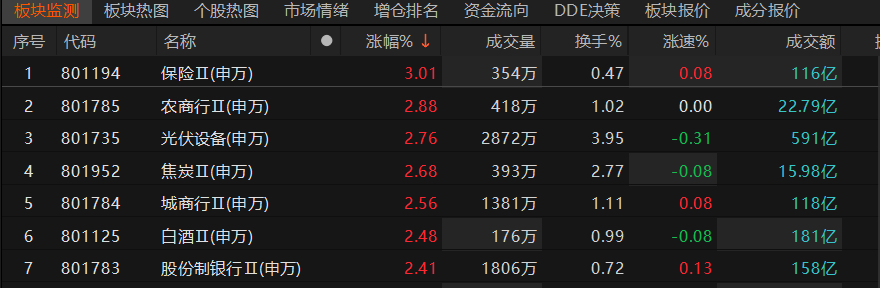
保险股走强一度领涨A股,新华保险盘中涨超7%
Di Yi Cai Jing· 2025-10-14 06:55
Core Viewpoint - The insurance sector has shown strong performance, driven by both asset and liability factors, with significant gains observed in stock prices on October 14, 2023 [1][4]. Group 1: Market Performance - As of October 14, the insurance sector's stock prices increased by over 3%, leading the A-share market, with a slight decline to 2.88% later in the afternoon [1]. - Notable individual performances included New China Life Insurance, which saw its stock price rise by over 7% at one point, and China Life and China Pacific Insurance, which also experienced gains exceeding 4% and 3%, respectively [4]. Group 2: Financial Results - New China Life Insurance announced a projected net profit for the first three quarters of 2023 between 299.86 billion and 341.22 billion yuan, representing a year-on-year growth of 45% to 65% [4]. - The company's profit for the first three quarters of 2023 has already surpassed the total profit for the entire year of 2024, indicating strong financial performance [4]. Group 3: Policy and Market Drivers - Recent favorable policies in the insurance industry, including guidelines for the development of health insurance and regulations for non-auto insurance, are expected to support the stable growth of leading insurance companies [5]. - The overall performance of the A-share market since 2025 has improved, with the CSI 300 index showing a cumulative increase of over 17%, enhancing investment return expectations for insurance companies [5]. Group 4: Investment Trends - Insurance capital has shown a significant preference for bank stocks, which constitute 36.63% of the total market value of A-share stocks held by insurance funds [6]. - There has been an increase in insurance capital acquisitions, with 31 instances of stake increases in 2025, of which 41.9% were in bank stocks [6].