NCI(601336)

Search documents
保险行业12月保费:产寿25Q4保费增速均有所放缓,看好寿险2026年新单增长
Soochow Securities· 2026-02-01 00:45
Investment Rating - The report maintains an "Overweight" rating for the insurance industry, indicating a positive outlook for the sector in the next 6 months [1]. Core Insights - In December 2025, the growth rate of insurance premiums for both life and property insurance slowed down, but there is optimism for new business growth in life insurance by 2026 [1]. - The total premium income for personal insurance companies in 2025 reached CNY 46,491 billion, reflecting a year-on-year increase of 9.1%, while the fourth quarter saw a significant slowdown in growth to just 0.3% [5]. - The report anticipates a strong performance for listed insurance companies in the 2026 New Year, driven by the ongoing trend of "deposit migration" and the attractiveness of insurance products compared to bank deposits [5]. - Health insurance premiums grew by 2% in 2025, but the fourth quarter saw a slight decline of 0.1% year-on-year [5]. - Property insurance premiums reached CNY 17,570 billion in 2025, with a year-on-year increase of 3.9%, but the growth rate in the fourth quarter dropped to 0.5% [5]. - The report highlights that the liability side and asset side of insurance companies are continuously improving, with significant upward potential in valuations [5]. Summary by Sections Personal Insurance - The original premium income for personal insurance companies in 2025 was CNY 46,491 billion, with a year-on-year growth of 9.1% [5]. - The fourth quarter saw a premium income of CNY 5,191 billion, with a growth rate of only 0.3%, a decline of 24.7 percentage points from the previous quarter [5]. - December 2025 saw a monthly premium income of CNY 2,152 billion, marking a year-on-year increase of 6.0% [5]. Health Insurance - Health insurance premiums in 2025 increased by 2.0%, but the fourth quarter experienced a slight decline of 0.1% [5]. - The report notes that the health insurance market has significant growth potential due to product innovation and scientific pricing [5]. Property Insurance - Property insurance premiums totaled CNY 17,570 billion in 2025, with a year-on-year increase of 3.9% [5]. - The fourth quarter saw a growth rate of only 0.5%, a decline of 4.1 percentage points from the previous quarter [5]. - December 2025 recorded a monthly premium income of CNY 1,413 billion, with a year-on-year increase of 4.4% [5]. Market Outlook - The report suggests that the market demand remains strong, and the optimization of liability costs will alleviate pressure from interest rate spreads [5]. - The valuation of insurance stocks is currently at historical lows, with the insurance sector's estimated valuation for January 30, 2026, ranging from 0.67 to 0.88 times PEV and 1.15 to 2.38 times PB [5].





新华保险与新风天域达成战略合作!“保险+医疗健康”融合模式升级
Sou Hu Cai Jing· 2026-01-30 13:02
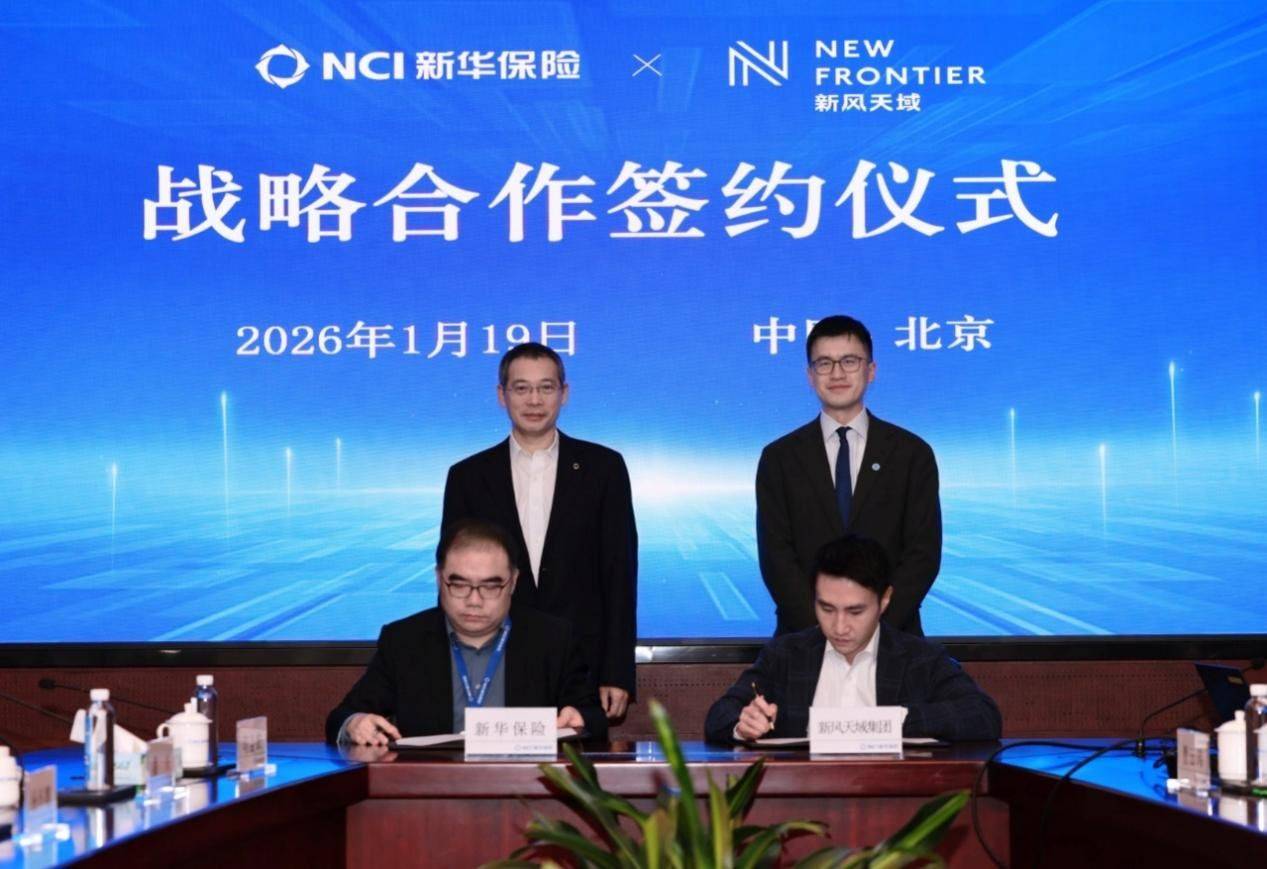
Group 1 - Xinhua Insurance is accelerating the integration of insurance protection and medical services in response to the "Healthy China" strategy, having formed strategic partnerships with various institutions including Fosun Group and others [2] - The traditional model of separating insurance protection from medical services is no longer sufficient to meet the public's comprehensive health needs, prompting Xinhua Insurance to develop a "superior medical" and "superior health" service system [2] - The signing of the strategic cooperation with New Wind Tianyu Group signifies Xinhua Insurance's commitment to enhancing its health and elderly care ecosystem [2] Group 2 - New Wind Tianyu Group is a comprehensive medical and life sciences group based in Hong Kong, rapidly becoming a leading integrated private medical group in China, with diverse business operations including international medical services and health insurance [4] - The collaboration will enrich Xinhua Insurance's home-based elderly care and health services, effectively linking insurance risk protection with professional medical services, thereby improving the health service guarantee system throughout the life cycle [4] - Both companies aim to innovate and develop "service payment-type health insurance" products, providing safer, more professional, and convenient medical health services for Xinhua Insurance's clients [4] Group 3 - Xinhua Insurance aims to become a leading financial service group centered on insurance, focusing on the synergy of "insurance + service + investment" [5] - The strategic partnership with New Wind Tianyu Group is seen as a new starting point to deepen the "insurance + health care" model, enhance resource integration, and expand the medical service network [5] - The initiative is expected to contribute new momentum to the construction of "Healthy China" by optimizing health management service loops and building a "superior medical" service system [5]

非银行业持仓占比提升,保险获配显著增加:25Q4公募基金持仓点评
Hua Yuan Zheng Quan· 2026-01-30 07:41
Investment Rating - The report maintains a "Positive" investment rating for the non-bank financial sector [4][7]. Core Viewpoints - The report highlights an increase in the proportion of non-bank financial holdings by public funds, with a significant increase in insurance allocations. The current holdings in the non-bank financial sector remain underweight compared to the market [4][5]. - Public funds' holdings in the non-bank financial sector rose by 0.96 percentage points to 1.97% in Q4 2025, with insurance seeing the most notable increase [5][10]. - The report suggests that the insurance sector is expected to achieve good growth in 2026, driven by improved net premium income and reduced asset allocation pressure due to rising long-term bond yields [7][8]. Summary by Sections Public Fund Holdings - In Q4 2025, the total holding of non-bank financials by public funds reached 370.64 billion, with an allocation of 1.97%, up from 1.00% in Q3 2025 [9][10]. - The breakdown of holdings shows insurance at 1.32%, securities at 0.58%, and diversified finance at 0.06%, with significant increases in insurance holdings [5][9]. Individual Stocks - The top five A-share stocks held by public funds in the non-bank financial sector are China Ping An (158.14 billion), China Pacific Insurance (47.88 billion), CITIC Securities (37.26 billion), Huatai Securities (25.21 billion), and New China Life Insurance (20.37 billion) [6][13]. - The report notes that the largest increases in holdings were also seen in these stocks, particularly China Ping An and China Pacific Insurance [6][13]. Investment Recommendations - The report recommends China Life Insurance, China Ping An, and China Pacific Insurance for their strong growth potential and favorable market conditions [7][8]. - For the brokerage sector, it suggests focusing on CITIC Securities, Huatai Securities, and Industrial Securities due to their growth prospects and market positioning [8].

保险观点更新:把握宽基抛压缓释后的顺周期龙头机会-20260130
ZHONGTAI SECURITIES· 2026-01-30 07:25
Investment Rating - The industry investment rating is maintained at "Overweight" [2][19]. Core Insights - The report emphasizes the cyclical recovery of the insurance sector, driven by improved market conditions and a favorable interest rate environment. It highlights the potential for significant profit elasticity and value growth in the sector [5]. - The report suggests that the insurance stocks are currently the preferred choice within cyclical sectors, with expectations of valuation catalysts due to the recovery of the cyclical market [5]. - The report anticipates that the average growth rate of embedded value (EV) for listed insurance companies will be 10.6%, 10.9%, and 10.8% for the years 2025 to 2027, respectively [5]. Summary by Sections Basic Conditions - The total market capitalization of the industry is approximately 37,536.73 billion [2]. Market Trends - The report notes a significant net outflow from major broad-based ETFs, with a cumulative outflow exceeding 10 billion during the specified period, indicating a shift in market dynamics [5][8]. - The report identifies that the insurance sector's valuation is currently misaligned with the improving fundamentals of assets and liabilities [5]. Investment Recommendations - The report recommends focusing on leading insurance companies such as China Pacific Insurance, Ping An Insurance, China Life Insurance, New China Life Insurance, and China Property & Casualty Insurance, citing their attractive valuations and growth potential [5].
机器学习因子选股月报(2026年2月)
Southwest Securities· 2026-01-30 07:20
Investment Rating - The report does not explicitly state an investment rating for the industry or specific companies [3]. Core Insights - The top five sectors with the highest excess returns for long positions in January 2026 (excluding comprehensive) are Defense and Military, Communication, Agriculture, Home Appliances, and Electric Equipment & New Energy, with excess returns of 11.41%, 8.40%, 7.85%, 6.01%, and 4.98% respectively [2]. - Over the past year, the sectors with the highest average monthly excess returns (excluding comprehensive) are Real Estate, Home Appliances, Retail, Construction, and Defense and Military, with excess returns of 2.17%, 2.09%, 1.69%, 1.69%, and 1.58% respectively [2]. - The GAN_GRU factor has shown a mean Information Coefficient (IC) of 0.1107 and an annualized excess return of 22.36% from January 2019 to January 2026 [41]. - As of January 28, 2026, the latest IC for the GAN_GRU factor is 0.0003, with a one-year mean IC of 0.0553 [41]. - The top five sectors based on the recent IC performance of the GAN_GRU factor are Defense and Military, Construction, Real Estate, Banking, and Communication, with IC values of 0.3498, 0.2478, 0.2165, 0.1993, and 0.1976 respectively [41]. - The long position combination based on the GAN_GRU factor has shown the highest excess returns in the sectors of Defense and Military, Communication, Agriculture, Home Appliances, and Electric Equipment & New Energy [45]. Summary by Sections GAN_GRU Model Overview - The GAN_GRU model utilizes Generative Adversarial Networks (GAN) for processing time-series features and GRU for encoding these features into stock selection factors [4][13]. GAN_GRU Factor Performance - The GAN_GRU factor has demonstrated significant performance metrics, including a mean IC of 0.1107 and an annualized excess return of 22.36% [41]. - The recent IC rankings for various sectors indicate strong performance in Defense and Military, Construction, and Real Estate [41][45]. Long Position Combinations - The report lists the top ten stocks selected based on the GAN_GRU factor, including companies like Xinhua Insurance, Guanghong Technology, and Guangdong Expressway [50].


葫芦岛金融监管分局同意新华保险葫芦岛中心支公司营业场所变更
Jin Tou Wang· 2026-01-30 06:34
2026年1月28日,葫芦岛金融监管分局发布批复称,《新华人寿保险股份有限公司辽宁分公司关于变更 葫芦岛中心支公司营业场所的请示》(新保辽字〔2026〕4号)收悉。经审核,现批复如下: 一、同意将新华人寿保险股份有限公司葫芦岛中心支公司营业场所变更为:辽宁省葫芦岛市龙港区龙湾 大街48号国美大厦A座16层。 二、新华人寿保险股份有限公司应按照有关规定及时办理变更及许可证换领事宜。 ...
新华保险股价创历史新高;中国太平去年末总资产达1.8万亿元|金融早参
Mei Ri Jing Ji Xin Wen· 2026-01-29 23:48
Group 1: Insurance Sector Performance - The insurance sector showed strong performance with New China Life Insurance rising over 3%, reaching a historical high, while China Pacific Insurance increased nearly 5%, and China Ping An also saw significant gains [1] - Analysts suggest that the continuous deepening of dividend insurance is driving structural improvements, and the expansion of bank insurance channels is empowering new business growth, with an expected new business value growth rate of over 15% for listed insurance companies by 2026 [1] Group 2: Global Gold Demand - The World Gold Council reported that global gold demand is projected to reach a record high of 5002 tons in 2025, driven by ongoing geopolitical and economic uncertainties, resulting in a total demand value of $555 billion for the year [2] - The first month of the year saw gold prices surpassing $5000 per ounce, highlighting gold's status as a safe-haven asset amid persistent economic and geopolitical risks [2] Group 3: China Taiping Insurance Group - China Taiping Insurance Group announced that by the end of 2025, total assets are expected to reach 1.8 trillion yuan, reflecting an 11.7% increase from the beginning of the year, with operating income projected at 172.62 billion yuan, a 1.1% year-on-year growth [3] - The management investment assets are anticipated to grow to 2.5 trillion yuan by the end of 2025, marking a 4% increase, while the company's stock price surged over 60% throughout the year [3] Group 4: Leadership Changes - The approval of Song Shaofu as the general manager of Jintai Property Insurance has been granted by the Sichuan Regulatory Bureau of the National Financial Regulatory Administration [4] Group 5: Federal Reserve Interest Rate Decision - The Federal Reserve decided to maintain the federal funds rate target range at 3.5% to 3.75%, reflecting stable unemployment rates and persistent high inflation levels [5]

人均产能提升50%!在新华保险,代理人可以实现企业家梦想
Xi Niu Cai Jing· 2026-01-29 10:49
Core Insights - The insurance industry is transitioning towards high-quality development, with Xinhua Insurance exemplifying this shift through its professional agents and commitment to service [2][3][4] - Xinhua Insurance achieved a total original insurance premium income of nearly 195.9 billion yuan in 2025, marking a 15% year-on-year increase, driven by significant growth in individual insurance channels [2][6] - The "XIN Generation" initiative launched in 2024 has evolved into a comprehensive training system for Whole Life-cycle Planners (WLP), reflecting a strategic shift from quantity to quality in agent recruitment and development [4][5] Industry Transformation - The Chinese insurance industry is undergoing a deep transformation, moving from rapid growth to high-quality development, necessitated by changing economic conditions and consumer demands [3][4] - The number of insurance agents in China has decreased from 9.12 million in 2019 to over 2.6 million by the end of 2024, indicating a significant decline in the "human sea tactics" approach [3] - The introduction of the new "National Ten Policies" has accelerated the consensus on marketing system reforms within the industry, prompting Xinhua Insurance to lead in transforming its sales force [3][4] Training and Development - The "XIN Generation" plan focuses on providing agents with multidimensional career growth opportunities, moving away from the previous model that emphasized sheer numbers [4] - By the end of 2024, Xinhua Insurance had conducted approximately 18,000 professional training sessions under the WLP system, with over 1.19 million participants and a total training duration exceeding 4.87 million hours [4] - The upgraded WLP 2.0 system aims to create a comprehensive planning service framework, integrating various aspects of life insurance, health, retirement, wealth, and education [4][5] Performance and Growth - Xinhua Insurance's dual strategy of enhancing product offerings and service ecosystems has led to improved agent performance and customer satisfaction [5][6] - The company has introduced new insurance products that align with market demands, resulting in reduced communication costs for agents and shorter client signing cycles [5] - In 2025, Xinhua Insurance added over 30,000 new agents, achieving a 140% year-on-year increase, with a 50% rise in per capita productivity [6][7] Financial Impact - The integration of health and wellness services has generated nearly 20 billion yuan in premium income, demonstrating the effectiveness of the dual empowerment model [7] - Xinhua Insurance's policy retention rate improved, with a decrease in the cancellation rate to 1.2%, and a significant 50.8% increase in new business value year-on-year [7] - The company aims to establish itself as a leading financial service group centered on insurance, focusing on sustainable growth across multiple dimensions [7]

刚刚!大面积涨停!三大原因!
天天基金网· 2026-01-29 09:12
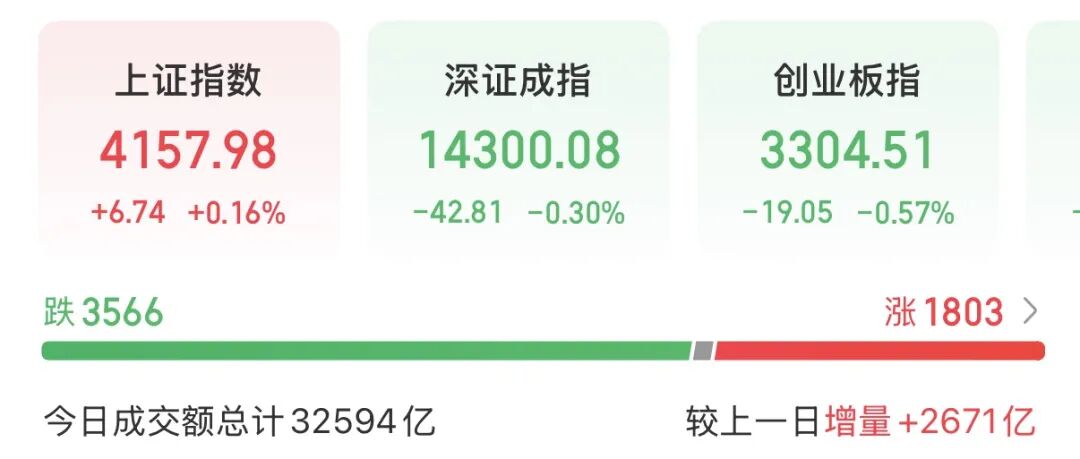
Core Viewpoint - The A-share market is experiencing a sideways trend with differentiated performance among the three major indices, while consumer stocks, particularly in the liquor sector, are showing strong activity [2][3]. Group 1: Liquor Sector Performance - The liquor sector has seen a significant surge due to three main reasons: the trading logic of recent hot sectors has been fully played out, the liquor sector is at a cyclical bottom, and there is an inherent market demand for "high-low switching" [2]. - The wholesale price of Feitian Moutai has been gradually recovering, with the price for 2025 and 2026 Moutai increasing by 20 yuan per bottle to 1620 yuan and 1610 yuan respectively [2]. - The recent trend of price increases in commodities and upstream semiconductor industries is expected to benefit the liquor sector, which is becoming a new trading expectation in the market [2]. Group 2: Market Indices and Sector Performance - As of the market close, the Shanghai Composite Index rose by 0.16%, while the Shenzhen Component Index and the ChiNext Index fell by 0.3% and 0.57% respectively [3]. - The white liquor, oil and gas extraction and services, precious metals, cultural media, and AI application sectors led the gains, while sectors like photolithography machines, semiconductors, components, and storage chips experienced adjustments [5]. Group 3: Consumer Stocks and Investment Opportunities - Consumer stocks remain active, with significant gains in the liquor sector and related concepts such as Xiaohongshu, beverage manufacturing, and retail [8]. - Institutions believe that the liquor sector is at a bottoming phase, with a clear recovery trend expected, particularly as the Spring Festival approaches in 2026, which is anticipated to boost liquor sales [11]. - Open-source Securities suggests focusing on high-quality companies in the emotional consumption theme, particularly in gold and jewelry, offline retail, and cosmetics sectors [12]. Group 4: Insurance Sector Performance - The insurance sector saw a strong rally, with China Ping An rising over 5% and New China Life Insurance reaching a historical high [14]. - Institutions view the insurance sector as being in a historically undervalued range, recommending attention to large listed insurance companies with significant competitive advantages [15]. - Donghai Securities notes that the transformation of life insurance liabilities is progressing, and there is a significant improvement in production capacity, which should be monitored [16].

午后爆发,“涨停潮”!三大原因
Zhong Guo Zheng Quan Bao· 2026-01-29 08:27
二是最近飞天茅台市场批发价格逐步回暖。1月29日,第三方平台数据显示,53度、500ml飞天茅台酒批发价格继续上涨。其中,2025年飞天茅台原箱较 上一日上涨20元/瓶,至1620元/瓶。此外,2026年飞天茅台原箱亦较上一日上涨20元/瓶,至1610元/瓶。 三是"涨价"是最近市场的潜在主线,主要集中在大宗商品、半导体产业链上游等领域,涨价趋势向下游传导,以白酒板块为代表的大消费有望受益,成为 市场新的交易预期。 今天,A股市场横盘震荡,三大指数走势分化,消费股表现活跃,资源股延续强势。 午后,白酒股爆发,分析人士表示,白酒板块大涨,主要有三个原因:一是近期热点板块各自的交易逻辑已经充分演绎,与此同时,商业航天、存储芯片 等板块处于相对高位,市场有"高低切"的内在需求。白酒股处于周期底部,成为最贴合当前市场要求的板块。 截至收盘,上证指数涨0.16%,深证成指跌0.3%,创业板指跌0.57%。 板块方面,白酒、油气开采及服务、贵金属、文化传媒、AI应用等板块涨幅居前,光刻机、半导体、元件、储存芯片等板块调整。 个股方面,白银有色(601212)走出"8连板",四川黄金(001337)、豫光金铅(600531 ...