CPIC(601601)

Search documents
多重因素促保险股逆势上涨
Bei Jing Ri Bao Ke Hu Duan· 2025-12-15 16:09
Core Viewpoint - The insurance sector is experiencing a significant upward trend, driven by multiple factors including market recovery, favorable asset conditions, and ongoing liability transformation [1][3][4]. Group 1: Market Performance - On December 15, insurance stocks collectively rose, with China Ping An increasing by over 5%, leading the sector alongside China Life, China Pacific Insurance, and New China Life [3][5]. - Year-to-date performance shows substantial gains for insurance stocks, with New China Life up over 45%, China Ping An up over 33%, China Pacific Insurance up over 19%, and China Life up over 12% [5][6]. Group 2: Regulatory and Policy Support - Recent favorable policies include a joint notice from the Ministry of Commerce, the People's Bank of China, and the financial regulatory authority aimed at boosting consumption through the development of various insurance products [3][4]. - The adjustment of risk factors for insurance companies' holdings, such as lowering the risk factor for certain index stocks, is expected to relieve solvency pressure and encourage long-term investment in the market [4][6]. Group 3: Future Outlook - Analysts predict that insurance stocks may enter a prolonged bull market, contingent on overall market conditions improving, which would enhance investment returns for insurance companies [6]. - International investment banks and domestic brokerages have recently issued "buy" and "overweight" ratings for several insurance stocks, indicating positive sentiment towards the sector's future performance [6].





保险股五巨头市值涨超千亿
2 1 Shi Ji Jing Ji Bao Dao· 2025-12-15 14:57
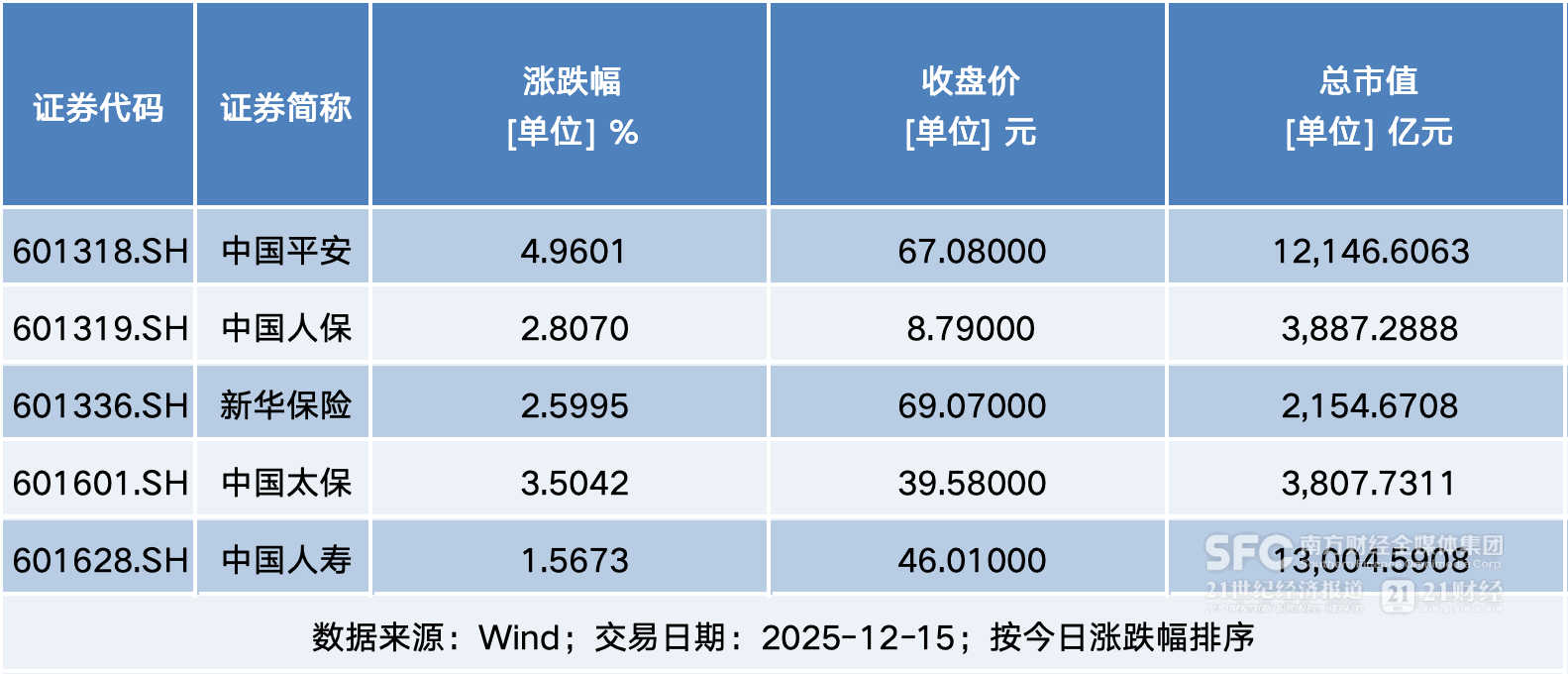
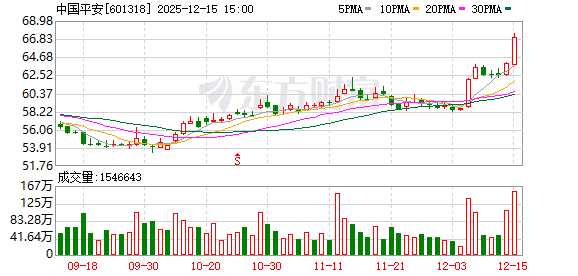
Core Viewpoint - The insurance sector has shown strong performance against the market trend, driven by favorable policies, improved industry fundamentals, and positive institutional outlooks, leading to a valuation recovery [5]. Group 1: Market Performance - The insurance industry index rose approximately 5%, closing up 4.31%, making it the top-performing sector [1]. - The total market capitalization of the five major insurance companies reached approximately 3.50 trillion yuan, an increase of about 106.43 billion yuan from the previous trading day [2]. - China Ping An led the gains with a rise of 4.96%, closing at 67.08 yuan per share, marking a four-year high for both A-shares and H-shares [2][3]. Group 2: Policy Impact - On December 5, the National Financial Regulatory Administration announced adjustments to risk factors for certain insurance company businesses, which is expected to guide long-term investments and stabilize the capital market [5]. - The adjustments are projected to release a minimum capital of approximately 19.8 billion yuan, potentially bringing about an additional 72.6 billion yuan in funds if fully allocated to stock investments [5]. Group 3: Industry Fundamentals - As of November 30, China Life reported total premiums exceeding 700 billion yuan, raising market expectations for the insurance industry's annual performance [6]. - The reduction in preset interest rates and the transformation of dividend insurance are expected to optimize the liability costs for the insurance industry [6]. Group 4: Analyst Outlook - Several international investment banks and domestic brokerages have recently issued reports favoring insurance stocks, raising target prices and providing positive ratings [7]. - Morgan Stanley included China Ping An in its key focus list, raising its target price for A-shares to 85 yuan and H-shares to 89 Hong Kong dollars [7]. - Analysts predict that the life insurance industry will enter a golden development period by 2026, with a shift in investment logic towards growth potential [7].


保险股五巨头市值涨超千亿
21世纪经济报道· 2025-12-15 14:49
Core Viewpoint - The insurance sector has shown strong performance against the market backdrop, driven by favorable policies, improved industry fundamentals, and positive institutional outlooks leading to valuation recovery [2][3]. Group 1: Market Performance - The insurance industry index rose approximately 5%, closing up 4.31%, making it the top-performing sector [1]. - The total market capitalization of the five major listed insurance companies reached about 3.50 trillion yuan, an increase of approximately 106.43 billion yuan from the previous trading day [1]. - China Ping An led the gains with a rise of 4.96%, reaching 67.08 yuan per share, marking a four-year high for both A-shares and H-shares [1][2]. Group 2: Policy Impacts - On December 5, the National Financial Regulatory Administration adjusted risk factors for certain insurance company business lines, which is expected to release a minimum capital of about 19.8 billion yuan, potentially bringing in around 72.6 billion yuan in incremental funds if fully allocated to stock investments [3]. - A subsequent policy on December 14 aimed to enhance the alignment of financial services with consumer needs, promoting the development of various insurance products [4]. Group 3: Industry Fundamentals - As of November 30, China Life reported total premiums exceeding 700 billion yuan, raising market expectations for the insurance sector's annual performance [4]. - The industry is experiencing a positive shift in liabilities due to lower preset interest rates and a transition in dividend insurance, which is expected to alleviate pressure on profit margins [4]. - Recent reports from international investment banks and domestic brokerages have shown increased optimism for insurance stocks, with target prices being raised for major companies like China Ping An [4]. Group 4: Future Outlook - CICC predicts that the life insurance industry will enter a golden development period by 2026, with a more favorable trend in liabilities and a shift in investment logic towards growth capabilities [5]. - CITIC Securities has indicated that the insurance industry is transitioning from a narrative of balance sheet recession to healthy expansion, with an upward trend expected to strengthen by 2026 [5].

新周期下险资如何投资?中国太保另类投资涵盖四大主题
Mei Ri Jing Ji Xin Wen· 2025-12-15 14:22
Core Insights - China Pacific Insurance emphasizes a core strategy of dividend value in equity investments, which provides stability across market cycles and addresses net investment income pressures [1] - The company is focusing on diversified equity investment strategies to enhance returns and better cover customer guarantee costs [1] Group 1: Investment Strategies - The company has iterated its methodology for dividend insurance account configurations, establishing multiple layers of investment return targets to ensure sustainable allocation plans [1] - A "core + satellite" investment strategy is maintained, with a focus on optimizing equity allocation structures to achieve competitive investment returns [4] Group 2: Duration Management - Duration gap management has reached a new stage, with a significant increase in the allocation of long-term government bonds to compress duration gaps effectively [2] - The company believes that a reasonable duration gap can help create better long-term returns rather than pursuing an absolute zero gap [2] Group 3: Alternative Assets - The inclusion of alternative assets is seen as a way to enhance long-term returns and hedge against market volatility, with a focus on strategic emerging industries and innovative opportunities [5][6] - The alternative investment sector covers themes such as healthcare, technology innovation, mergers and acquisitions, and infrastructure, forming a resilient combination for steady returns [6] Group 4: Global Asset Allocation - Global asset allocation is essential for achieving long-term cost coverage, with a focus on building capabilities through platforms established in Hong Kong [7] - Effective risk management, particularly regarding currency fluctuations, is crucial for successful overseas investments [7] Group 5: Gold Investment - Gold is viewed as a niche product for risk diversification rather than a significant contributor to long-term returns, enhancing the company's diversified investment capabilities [8]
中国太保详解低利率下发展之策:以保险产品为原点的资产负债管理
2 1 Shi Ji Jing Ji Bao Dao· 2025-12-15 12:56
Core Viewpoint - The insurance industry is facing significant challenges due to a prolonged low interest rate environment, which affects both asset management and liability costs, leading to a structural transformation necessity [1][3]. Group 1: Current Economic Environment - The yield on China's 10-year government bonds has dropped to a historical low of 1.7% to 1.9%, indicating a potential long-term downward trend [1]. - The insurance business's nature results in a rigid liability cost structure, particularly with long-term policies locking in predetermined rates, creating a conflict between declining asset yields and fixed liability costs [3]. Group 2: Traditional Investment Strategies - Traditional "fixed income plus" strategies, which previously provided stable spreads, are becoming ineffective in the current low-rate environment [3]. - The supply of high-quality non-standard assets, such as infrastructure debt plans, is rapidly shrinking, leading to an "asset scarcity" phenomenon [4]. Group 3: Need for Structural Change - The industry consensus is that superficial adjustments are insufficient; a comprehensive overhaul of asset-liability management is required [4]. - A return to the core principles of insurance management—safety, profitability, and liquidity—is essential, with a focus on matching yield costs, duration structure, and liquidity [5]. Group 4: Changes in Fixed Income Asset Allocation - China Pacific Insurance has increased its allocation to long-term government bonds from 12.5% to 46.2% over the past eight years [6]. - There is a need for a balanced approach to duration management, as excessively pursuing a zero duration gap could increase asset pressure during market rebounds [6]. Group 5: Alternative and Equity Investments - The insurance asset management sector is increasingly incorporating alternative and equity assets to enhance long-term returns and mitigate inflation impacts [9]. - In the first three quarters of this year, the primary market for new fund raising reached 1.16 trillion yuan, a year-on-year increase of 8% [10]. Group 6: Global Investment Strategies - Global asset allocation is deemed essential, with a focus on building teams and managing foreign exchange risks effectively [12][13]. - The insurance industry must develop capabilities in foreign exchange risk management to succeed in overseas investments [14].

新周期下险资如何投资? 中国太保另类投资涵盖四大主题
Mei Ri Jing Ji Xin Wen· 2025-12-15 12:46
Core Insights - China Pacific Insurance emphasizes a core strategy of dividend value in equity investments, which provides stability across market cycles and addresses net investment income pressures [1] - The company is iterating its methodology for dividend insurance account allocations, focusing on differentiated investment return targets to ensure sustainable configurations [1] - The management discussed various topics including asset-liability duration strategies, equity investment configurations, long-term assessments, and global asset allocation [1] Equity Investment Strategy - The company maintains a "core + satellite" investment strategy, with a focus on dividend value that can withstand market cycles, while also diversifying satellite strategies [4] - The equity allocation is viewed as a scarce resource, requiring careful optimization to balance long-term sustainability against volatility risks [4] Duration Gap Management - Duration control is a critical aspect of fixed-income asset management, with a significant increase in long-term government bonds to effectively manage duration gaps [2] - The company believes that a reasonable duration gap can enhance long-term returns rather than pursuing an absolute zero gap [2] Alternative Assets - Alternative assets are seen as a means to enhance long-term returns and hedge against market volatility, with a focus on diversifying the investment portfolio [5] - The company is exploring various themes in its alternative investment sector, including healthcare, technology innovation, mergers and acquisitions, and infrastructure [6] Global Asset Allocation - The company recognizes the importance of global asset allocation for achieving long-term cost coverage and capitalizing on growth in emerging markets [7] - A comprehensive global allocation framework is necessary to manage risks, including currency risks, which have become increasingly important in overseas investments [7] Gold Investment - Gold is considered a niche product for insurance funds, primarily serving as a risk diversification tool rather than a significant contributor to long-term returns [8]
科技股大跌,消费股、保险股等逆市上涨
Zhong Guo Ji Jin Bao· 2025-12-15 11:06
Market Overview - The Hong Kong stock market experienced a collective decline on December 15, with the Hang Seng Index falling by 1.34% to close at 25,628.88 points, the Hang Seng China Enterprises Index down 1.78% to 8,917.70 points, and the Hang Seng Tech Index dropping 2.48% to 5,498.42 points [2] Technology Sector - Major technology stocks saw significant declines, with Baidu Group-SW down over 5%, Kuaishou-W down over 4%, SenseTime-W and Alibaba-W down over 3%, and Xiaomi Group-W and Tencent Holdings down over 2% [3] - Semiconductor stocks mostly fell, with InnoCare Pharma down over 9%, Hua Hong Semiconductor down over 6%, and SMIC down over 4% [3] Biotechnology Sector - Biotechnology stocks weakened, with BeiGene down over 8%, CanSino Biologics down over 6%, and WuXi Biologics down over 3% [3] Consumer Sector - Consumer stocks collectively rose, with Li Ning leading the blue-chip stocks with a gain of over 5%, closing at HKD 18.64 per share and a total market capitalization of HKD 48.2 billion [6] - The rise in consumer stocks is attributed to the opening of Li Ning's first "Dragon Store" and the launch of the new "Honor Gold Standard" product series, marking a significant milestone for the brand [6] Insurance Sector - Insurance stocks performed well against the market trend, with New China Life Insurance rising over 4%, China Pacific Insurance and Ping An Insurance both up over 2%, and China Life Insurance nearly 1% higher [7] - Ping An Insurance's A-shares and H-shares both reached four-year highs [7] - Recent regulatory changes by the National Financial Regulatory Administration have lowered risk factors for insurance companies, allowing for more long-term investment funds [9] - Market demand remains high, and the combination of stable interest rates and improved equity markets is expected to support investment returns [9]


保险股逆市走强,中国平安涨幅接近5% 行业近期有啥好消息?
Mei Ri Jing Ji Xin Wen· 2025-12-15 10:50
Core Viewpoint - The insurance sector in A-shares has shown resilience, with major companies experiencing significant stock price increases due to favorable policy signals and reduced capital pressure from regulatory changes [2][6]. Group 1: Market Performance - As of the market close on December 15, major insurance stocks such as China Ping An (SH601318) rose by 4.96% to 67.08 CNY, China Pacific Insurance (SH601601) increased by 3.5% to 39.58 CNY, and China Life (SH601628) saw a rise of 1.57% to 46.01 CNY [3][4]. - The overall market was in a low-level fluctuation, but the insurance and retail sectors managed to rise against the trend [3][6]. Group 2: Policy and Regulatory Environment - The Financial Regulatory Authority has lowered risk factors for insurance companies, easing capital pressure and encouraging investment in the insurance sector [2][9]. - A joint notice from the Ministry of Commerce, the People's Bank of China, and the Financial Regulatory Authority aims to enhance financial products for small and micro enterprises, promoting various insurance products to boost service consumption [6]. Group 3: Industry Outlook - Analysts predict that the life insurance industry may enter a golden development period again, with improvements in the liability side and a shift in investment logic towards growth capability valuation premiums [7]. - The insurance industry reported a premium income of 5.48 trillion CNY in the first ten months of 2025, marking an 8% year-on-year increase, with life insurance premiums growing by 9.63% [8]. Group 4: Investment Trends - The insurance sector is expected to see an influx of 550 billion to 600 billion CNY in new funds due to regulatory changes and the upcoming maturity of fixed deposits, making insurance products attractive for long-term wealth preservation [9]. - The shift towards dividend insurance products is helping insurance companies reduce liability costs and mitigate risks associated with interest rate spreads [8][9].
19种创新药“入编”商保目录 险企仍面临定价、合规等挑战
2 1 Shi Ji Jing Ji Bao Dao· 2025-12-15 10:21
Core Insights - The national medical insurance work conference emphasized the support for the development of commercial health insurance by 2026, aiming to establish a multi-tiered medical security system and promote the "医保+商保" one-stop settlement service for innovative drug products [1][4] Group 1: Policy and Implementation - The first edition of the "Commercial Health Insurance Innovative Drug Directory" includes 19 high-value drugs, focusing on advanced therapies and rare diseases, set to be implemented on January 1, 2026 [1][2] - The release of the directory marks a significant step for commercial health insurance in addressing the accessibility and affordability of innovative drugs, although challenges remain in translating the directory into marketable insurance products [2][3] Group 2: Challenges for Insurance Companies - Insurance companies face three main challenges: pricing, risk control, and compliance, particularly in obtaining accurate data from pharmaceutical companies and hospitals for effective pricing models [3][5] - The inclusion of Alzheimer's disease treatments in the directory raises concerns about adverse selection risks, necessitating strict eligibility review mechanisms to mitigate potential high payout risks [3][6] Group 3: Data Sharing and Settlement - The "医保+商保" one-stop settlement aims to break down data silos, facilitating data sharing to enhance claims processing and improve patient experience [4][5] - Concerns exist regarding the transparency of the settlement process, as a "black box" approach could hinder compliance with regulatory data reporting requirements [5][6] Group 4: Investment in Innovative Drugs - The policy encourages insurance funds to invest in the upstream of the pharmaceutical industry, positioning them as "patient capital" for innovative drug development [6][7] - Major insurance companies are already investing in health industry funds, supporting numerous innovative drug companies, although they remain cautious due to the high risks associated with drug development [7][8] Group 5: Future Outlook - There is potential for insurance companies to become shareholders in large pharmaceutical groups to mitigate investment risks, while maintaining a cautious approach towards smaller innovative firms [8]

金融活水润胶林,精准赔付惠边陲——东证期货“保险+期货”模式助力孟连县橡胶产业振兴
Qi Huo Ri Bao· 2025-12-15 09:37
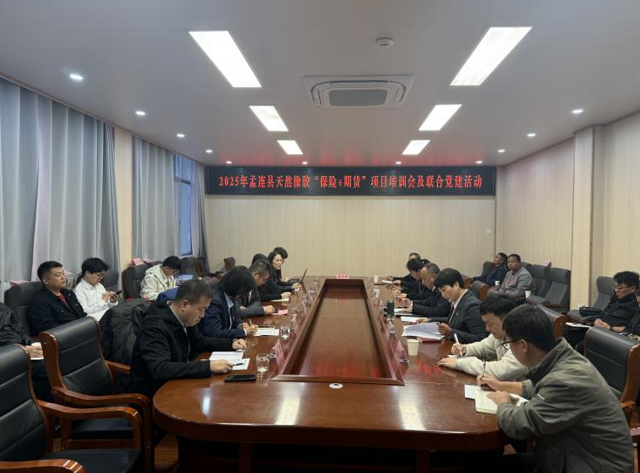
深入一线,夯实工作根基。2025年11月底,东证期货联合中国太保(601601)产险云南分公司,赴孟连 县勐马镇天然橡胶林实地勘察。作为当地重要支柱产业,孟连县天然橡胶种植面积达30.33万亩、从业 人员逾1.9万,覆盖人口2.8万余人。然而近年来橡胶价格波动剧烈,胶农收入不稳,种植意愿骤减,严 重制约产业可持续发展。 为深入贯彻落实国家关于巩固拓展脱贫攻坚成果、全面推进乡村振兴的决策部署,2025年10月底,在上 海期货交易所的大力支持下,东证期货天然橡胶"保险+期货"项目再次顺利落地云南省孟连傣族拉祜族 佤族自治县(以下简称"孟连县")。 党建引领,凝聚发展合力。自2018年起,东证期货与孟连县开启乡村振兴战略合作。2024年,东证期货 党委与孟连县茶叶和特色生物产业发展中心党支部签订党建共建协议,连续2年开展实地调研与共建交 流,以"项目推进+党建引领+知识培训"组合拳,总结经验、优化方案、凝聚合力,推动"保险+期货"业 务扎实落地,助力孟连县天然橡胶产业发展实现新突破。 金融护航,激发产业活力。2025年,东证期货携子公司东证润和,与太保云南分公司通力合作,采取增 强亚式看跌结构期权方案,实现投保面积 ...