GWMOTOR(601633)

Search documents
汽车股跌幅扩大 金属及存储芯片等价格急升 短期内或为车企来显著成本压力
Zhi Tong Cai Jing· 2026-01-30 06:48
Core Viewpoint - The automotive sector is experiencing significant stock declines due to rising costs from raw materials, particularly affecting electric vehicle manufacturers [1] Group 1: Stock Performance - GAC Group (601238) shares fell by 3.69%, trading at HKD 3.65 [1] - Great Wall Motors (601633) shares decreased by 2.66%, trading at HKD 13.19 [1] - Li Auto-W (02015) shares dropped by 2.58%, trading at HKD 65.95 [1] Group 2: Cost Pressures - HSBC's report indicates a sharp increase in prices for metals and storage chips, leading to significant cost pressures for automakers [1] - Lithium prices have surged approximately 127% over the past three months, contributing to increased production costs [1] - The estimated cost increase per vehicle is between RMB 3,000 to RMB 5,000 due to rising metal prices, with an additional RMB 1,000 to RMB 3,000 from storage chip price hikes [1] Group 3: Industry Response - The price increases are primarily attributed to supply bottlenecks, making it difficult for automakers to pass costs onto price-sensitive consumers [1] - Companies may need to adopt vertical integration and technological upgrades to absorb additional costs [1] - Operational strategies may include negotiating larger annual price reductions with suppliers [1]



顺周期回暖+内需消费分层,现金流ETF嘉实(159221)备受市场关注
Xin Lang Cai Jing· 2026-01-30 03:25
Group 1 - The Guozheng Free Cash Flow Index fell by 2.86% as of January 30, 2026, with mixed performance among constituent stocks, led by Fostar, while Nanshan Aluminum experienced the largest decline [1] - CICC pointed out that the supply-demand gap for electrolytic aluminum continues to widen, and with global fiscal and monetary policies resonating, aluminum prices are expected to reach new highs, with profit per ton of aluminum likely to expand as prices rise [1] - Guotai Junan Securities noted that while copper prices are currently affected by macro sentiment and AI-related demand adjustments, the long-term outlook remains strong due to ongoing tight supply of copper mines and declining spot processing fees [1] Group 2 - The National Grid's fixed asset investment for the "14th Five-Year Plan" is expected to reach 4 trillion yuan, a 40% increase compared to the previous plan, which supports the copper price outlook [1] - Yingda Securities emphasized the importance of following the "14th Five-Year Plan" and subsequent policy directions, suggesting a focus on technology growth stocks with earnings support, as well as cyclical varieties, domestic consumption, dividend stocks, and sectors with improving economic conditions [1] - The top ten weighted stocks in the Guozheng Free Cash Flow Index as of December 31, 2025, include China National Offshore Oil Corporation, SAIC Motor, Gree Electric Appliances, and others, accounting for 51.95% of the index [2]




长城汽车:全球首个原生AI平台,开启全新产品周期-20260130
HUAXI Securities· 2026-01-30 00:25
Investment Rating - The investment rating for the company is "Buy" [7] Core Insights - The company has launched the world's first native AI all-power platform, named the "Guiyuan Platform," which supports five types of powertrains: FCEV hydrogen fuel, ICE efficient fuel, BEV pure electric, HEV hybrid, and PHEV plug-in hybrid, allowing for flexible adaptation of multiple power types and vehicle categories [1][13] - The company plans to introduce over 50 models based on the Guiyuan Platform, covering five power types and seven categories, with the first seven models set to debut [5][18] - The company has adjusted its profit forecast due to the delay of new products from 2025 to 2026, while maintaining a positive outlook on sales structure optimization [6][29] Financial Performance - Revenue projections for 2025-2027 are estimated at 2325.25 billion, 2762.39 billion, and 3093.88 billion respectively, with net profit estimates of 118.02 billion, 156.00 billion, and 181.73 billion [10][29] - The earnings per share (EPS) is projected to be 1.38, 1.82, and 2.12 for the years 2025-2027 [10][29] - The price-to-earnings (PE) ratios for 2025-2027 are expected to be 15.29, 11.57, and 9.93 respectively, indicating a favorable valuation [10][29] Sales Performance - In 2025, the company sold 1.3237 million vehicles, a year-on-year increase of 7.33%, with new energy vehicle sales reaching 403,700 units, up 25.44% [21] - The sales of the company's high-end brands, such as Wei and Tank, have shown strong performance, contributing to the upward trend in sales structure [21][29]
第十二届金轩奖颁奖 揭晓年度汽车营销标杆案例
2 1 Shi Ji Jing Ji Bao Dao· 2026-01-29 10:29
Group 1 - The importance of marketing in the automotive industry is emphasized, highlighting that effective marketing is essential for reaching target users and driving sales growth [1] - The Jin Xuan Award aims to recognize innovative marketing practices and their market impact, with a total of 20 gold awards, 6 annual awards, and 43 excellent case awards across various categories [2] - The 12th Jin Xuan Award has selected 20 gold award winners, including Volkswagen Group (China) and Toyota China for public welfare and sustainable development, and Great Wall Motors for personalized marketing [3] Group 2 - The 12th Jin Xuan Ceremony took place on January 23, 2026, in Beijing, providing insights into automotive marketing trends and solutions for the year [4] - Marketing in the new automotive era transcends the product itself, focusing on user experience and the integration of AI technology to enhance value [4] - The current Chinese consumers are characterized by their demand for quality and experience, presenting a challenge for marketers to redefine marketing significance and reconstruct value [4]
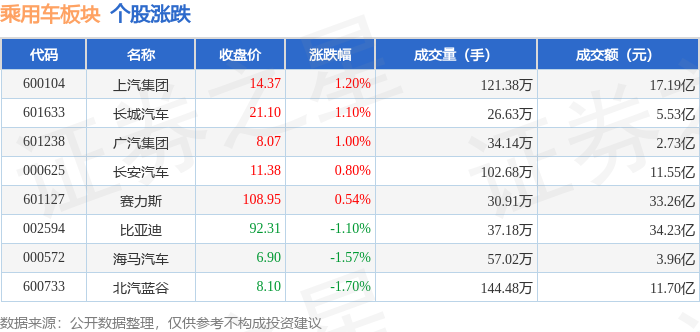
乘用车板块1月29日涨0.12%,上汽集团领涨,主力资金净流出7.09亿元
Zheng Xing Xing Ye Ri Bao· 2026-01-29 09:03
Group 1 - The passenger car sector increased by 0.12% on January 29, with SAIC Motor leading the gains [1] - The Shanghai Composite Index closed at 4157.98, up 0.16%, while the Shenzhen Component Index closed at 14300.08, down 0.3% [1] - Key stocks in the passenger car sector showed varied performance, with SAIC Motor closing at 14.37, up 1.20%, and BYD closing at 92.31, down 1.10% [1] Group 2 - The net outflow of main funds in the passenger car sector was 709 million yuan, while retail investors saw a net inflow of 501 million yuan [1] - Detailed fund flow data indicates that major stocks like GAC Group and Great Wall Motors experienced significant net outflows from main funds [2] - Retail investors showed positive net inflows in several stocks, including GAC Group and Haima Automobile, despite overall sector outflows [2]




崔东树:2025年国内商用车交强险数据强势增长 12月商用车国内销量同比增5%
智通财经网· 2026-01-29 07:46
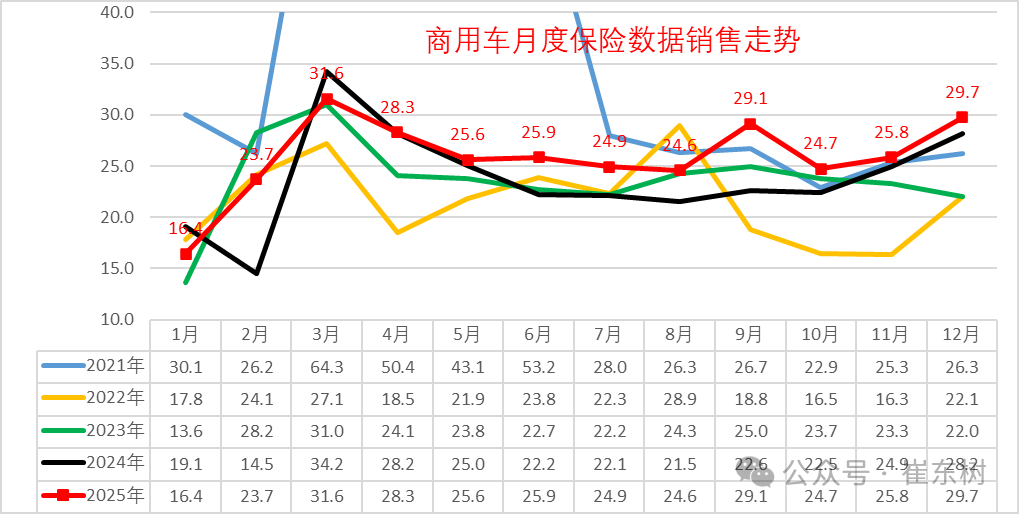
Core Insights - The commercial vehicle market in China is expected to see significant growth in 2025, driven by the strong performance of new energy vehicles (NEVs) and supportive policies for vehicle upgrades [1][7][12] - In December 2025, the sales of commercial vehicles reached 300,000 units, marking a 5% year-on-year increase and a 15% month-on-month increase [7][12] - The penetration rate of new energy commercial vehicles is projected to reach 46% by December 2025, a substantial increase from 29% in December 2024 [12][14] Commercial Vehicle Market Analysis - The total sales of commercial vehicles in China for 2025 are forecasted to be 3.1 million units, representing a 9% year-on-year growth compared to the stable period since 2022 [1][7] - The market showed a strong upward trend from March to December 2025, with December achieving a historical high for the month [5][7] - The sales of new energy commercial vehicles in December 2025 are expected to hit 140,000 units, reflecting a 71% year-on-year increase and a 49% month-on-month increase [1][8] New Energy Vehicle Performance - The penetration rate of new energy commercial vehicles has increased significantly, from approximately 3% in 2019-2021 to 46% in December 2025 [12][14] - The sales of new energy commercial vehicles for the entire year of 2025 are projected to reach 910,000 units, a 57% increase compared to the previous year [1][8] - The growth in new energy vehicle sales is attributed to strong demand and government incentives, particularly in the commercial vehicle sector [10][12] Market Structure and Competition - The market for commercial vehicles is characterized by a stable structure, with significant contributions from light and heavy-duty trucks [14][18] - Key players in the commercial vehicle market include Beiqi Foton, SAIC-GM-Wuling, and China National Heavy Duty Truck Group, which dominate the light truck, heavy truck, and bus segments respectively [15][18] - The performance of heavy-duty trucks has improved significantly due to subsidy policies, with notable growth in electric heavy-duty trucks in regions like Beijing, Tianjin, and Shanghai [16][17] Regional Market Dynamics - The light truck market is particularly strong in regions such as East China and South China, with increasing sales in these areas [18][19] - The penetration of new energy vehicles in the truck segment reached 38% in December 2025, while the bus segment saw a penetration rate of 78% [14][18] - The market for new energy light trucks is primarily concentrated in East China and South China, with significant growth observed in these regions [19][21]


长城汽车申请屏幕共享状态下的语音控制方法专利,实现可见即可说在共享屏幕状态下能正常使用
Jin Rong Jie· 2026-01-29 01:16
Group 1 - The core point of the article is that Great Wall Motors Co., Ltd. has applied for a patent related to a voice control method and system for screen sharing in vehicles, which aims to enhance user experience by allowing voice commands to be executed while the screen is in a shared state [1] Group 2 - The patent application, titled "Voice Control Method and System under Screen Sharing State, Storage Medium, Vehicle," was published with the number CN121415775A and was filed on October 2025 [1] - The method involves registering keywords in response to user voice commands when the first screen is in a shared state, allowing for voice control commands to be matched and executed accordingly [1] Group 3 - Great Wall Motors was established in 2001 and is located in Baoding City, primarily engaged in the automotive manufacturing industry [1] - The company has a registered capital of approximately 8.56 billion RMB and has invested in 75 enterprises, participated in 2,962 bidding projects, and holds 5,000 trademark and patent records, along with 640 administrative licenses [1]
比俄乌冲突时期更差,俄罗斯汽车市场销售额10年来首降
Di Yi Cai Jing· 2026-01-28 12:36
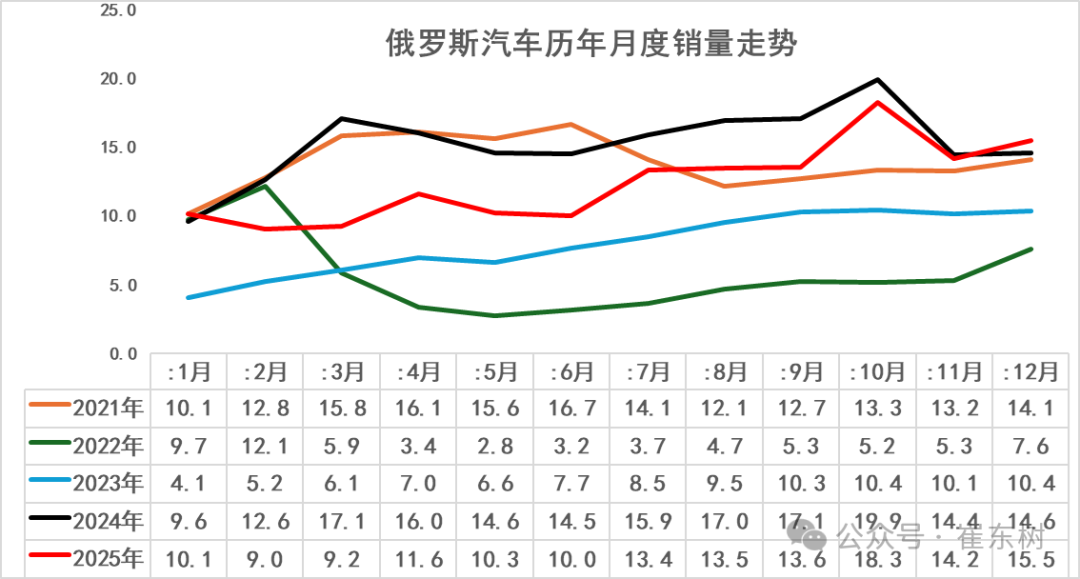
Group 1 - The core viewpoint is that the Russian automotive market is experiencing a significant decline in sales, with a total market size of 13.8 trillion rubles in 2025, down 7.8% from 2024, marking the first negative growth since 2015 [1] - In 2025, the new car market in Russia is projected to generate 4.6 trillion rubles, a decrease of 18.4% year-on-year, while the used car market is expected to reach 9.2 trillion rubles, down 1.4% [1] - The decline in the Russian automotive market is attributed to high benchmark interest rates increasing loan costs and weak market demand, along with policy changes such as increased vehicle scrappage taxes [1][3] Group 2 - In 2025, new cars will account for 33% of the market's monetary value in Russia, while used cars will represent 67%, highlighting the higher share of used cars in the market [2] - Chinese automotive brands are experiencing a decline in market share in Russia, with sales of new cars dropping to 68.5 million units in 2025, a 25% decrease, resulting in a market share reduction from 58.5% in 2024 to 51.7% [2] Group 3 - Before the Ukraine conflict, European car manufacturers dominated the Russian market, holding about 30% of the market share, while local manufacturers had only 25% [3] - Following the conflict, Western car manufacturers exited the market, allowing local manufacturers to increase their market share to 40%, while Chinese brands surged from around 5% to over 50% by 2023 [3] - In 2024, Russia became the top destination for Chinese automotive exports, but the market showed signs of decline at the beginning of 2025 due to tightening export policies and rising tariffs [3][4] Group 4 - A significant turning point occurred in 2024 when new taxes and increased scrappage fees were implemented, affecting the cost of imported vehicles [4] - The number of Chinese brand showrooms in Russia is expected to decrease significantly, with 643 showrooms closing by 2025, reflecting a cooling market for Chinese vehicles [6] - The competitive landscape for Chinese automotive brands in Russia has intensified, leading to lower profit margins and increased price competition due to market saturation [5][6]

崔东树:2025年1-12月俄罗斯的中国自主车企份额回升到57.2%
智通财经网· 2026-01-28 12:26
Group 1 - The core viewpoint of the articles indicates that the Russian automotive market is experiencing a complex recovery, with significant fluctuations in sales and a notable increase in the market share of Chinese automotive brands [1][8][14] - In December 2025, Russian automotive sales are projected to reach 150,000 units, reflecting a year-on-year increase of 6%, while the total sales for the year are expected to decline by 19% to 1.49 million units [1][8] - Chinese automotive companies have significantly increased their market share in Russia, reaching 57.2% in December 2025, with a notable recovery from previous lows [1][16] Group 2 - The Russian automotive market has shown volatility, with sales dropping to around 30,000 units during the peak of the Ukraine crisis in 2022, but recovering to approximately 100,000 units per month in 2023 [5][8] - The market is undergoing a transformation due to policy changes, including increased import tariffs and local production incentives, which have reshaped the competitive landscape [6][12] - Chinese automotive companies are adapting to the Russian market by enhancing local production, improving supply chain resilience, and developing products suited for extreme weather conditions [2][12] Group 3 - The sales of Chinese automotive brands in Russia have surged from 157,000 units in 2021 to 1.28 million units in 2024, indicating a strong response to the market gap left by exiting foreign brands [11][14] - The local production strategy has been emphasized, with Chinese companies establishing regional production bases and increasing local parts sourcing to mitigate tariff impacts [2][12] - The overall market dynamics are shifting towards lower-powered models and domestic brands due to the rising costs of imported vehicles and changing consumer preferences [6][12]


创近五年新低 2025年汽车行业销售利润率仅4.1%
经济观察报· 2026-01-28 12:24
Core Viewpoint - The automotive industry is experiencing a significant decline in profitability, with upstream components showing steady growth, while vehicle manufacturing and downstream dealerships face considerable pressure [1][2]. Group 1: Profitability Trends - In 2025, the automotive industry achieved a profit of 461 billion yuan, a year-on-year increase of 0.6%, but the sales profit margin dropped to 4.1%, lower than the average of 5.9% for downstream industrial enterprises [2]. - The profit margin for the automotive industry fell to 4.1% in 2025, marking a five-year low, with December profits plummeting to 20.7 billion yuan, a year-on-year decrease of 57.4% [2][3]. - The overall profit margin for the automotive industry in December 2025 was the lowest in five years, with a significant decline from 4.1% in December 2024 to 1.8% [2]. Group 2: Performance of Different Segments - Among 129 A-share automotive parts companies, 80 reported a year-on-year profit increase, indicating over 60% had both revenue and profit growth [3]. - In the vehicle manufacturing segment, 16 out of 22 A-share car manufacturers were profitable, but major players like BYD and GAC Group saw significant profit declines, with GAC Group's profit dropping by 3691.33% [3]. - The downstream dealership segment is under severe pressure, with only 28% meeting sales targets and a loss rate climbing to 55% [3]. Group 3: Cost Pressures - The overall unit cost for industrial enterprises has increased significantly, with lithium carbonate prices doubling and raw material costs rising for midstream and downstream sectors [3][4]. - The cost of a typical mid-sized smart electric vehicle has increased by 4,000 to 7,000 yuan due to rising prices of lithium, aluminum, and copper, which are difficult for manufacturers to pass on to consumers [4]. - Starting in 2026, a 5% purchase tax on new energy vehicles and changes to subsidy policies will further increase consumer costs, complicating demand and supply dynamics in the automotive market [4]. Group 4: Strategic Responses - Some automotive companies are accelerating collaboration with upstream suppliers to address challenges, as seen in the strategic discussions between China Aluminum Group and China FAW Group [5].