
PSBC(601658)

Search documents
下阶段金融工作“路线图”来了,明确六大工作重点
2 1 Shi Ji Jing Ji Bao Dao· 2025-10-27 07:37
Core Insights - The report emphasizes the importance of implementing a moderately loose monetary policy to support economic recovery and create a suitable financial environment [1][2] - It outlines six key work directions for the next phase, including enhancing financial regulation, providing high-quality financial services, and preventing systemic financial risks [1][6] Monetary Policy - The People's Bank of China (PBOC) has committed to maintaining liquidity in the banking system, with a recent announcement of a 900 billion yuan medium-term lending facility (MLF) operation [2][3] - The PBOC aims to align social financing scale and money supply growth with economic growth and price level expectations [2][3] Financial Regulation - The report highlights the need to strengthen and improve financial regulation, enhancing regulatory quality and effectiveness [3][4] - Major banks have expressed a commitment to risk management and compliance, indicating a shift towards a more robust risk control framework [4][7] Support for the Real Economy - The report indicates that from November 2024 to September 2025, 98 companies raised 91.8 billion yuan through initial public offerings, with 86% being private enterprises [5] - Loans in sectors such as technology, green finance, and digital economy have seen significant year-on-year growth, indicating a focus on supporting strategic industries [5] Financial Risk Management - The report stresses the importance of preventing and mitigating financial risks in key areas, aiming to avoid systemic financial risks [6][7] - Banks are increasingly prioritizing comprehensive risk management and compliance in their operations [4][7] Financial Opening and Internationalization - Chinese banks are actively pursuing international competitiveness and enhancing global service capabilities, contributing to the internationalization of the yuan [9] - The emphasis on high-level financial openness reflects a commitment to both "going out" and "bringing in" strategies in the financial sector [9]






确保“十五五”各项部署 落到实处、取得实效
Jin Rong Shi Bao· 2025-10-27 06:56
Group 1 - The Fourth Plenary Session of the 20th Central Committee of the Communist Party of China was held from October 20 to 23 in Beijing, where the "15th Five-Year Plan" for national economic and social development was approved, outlining China's development blueprint for the next five years [1] - The session emphasized the importance of focusing on the real economy, enhancing the vitality of various business entities, and improving people's livelihoods to promote common prosperity [1] - Financial institutions expressed their commitment to support key areas such as technological innovation, green and low-carbon initiatives, and rural revitalization, aligning their services with the goals of the "15th Five-Year Plan" [1][2] Group 2 - The Bank of China in Guangdong plans to leverage regional advantages to enhance resource allocation and innovate service models in areas like financial connectivity and modern industrial construction [2] - The session highlighted the need for a strong domestic market and a new development pattern, focusing on expanding domestic demand and promoting effective investment [3] - Agricultural modernization and rural revitalization were identified as key components for supporting economic recovery and high-quality development [3][4] Group 3 - Financial institutions are encouraged to transform traditional services into value-creating platforms that integrate digital empowerment and community services [3] - The Agricultural Development Bank of China aims to support food security and urban-rural integration as part of its commitment to the agricultural strong nation goal [3] - The importance of financial support for rural revitalization and the development of new agricultural productivity was emphasized by various banking representatives [4]
行业深度报告:零售风险及新规影响有限,兼论信贷去抵押化
KAIYUAN SECURITIES· 2025-10-27 05:44
Investment Rating - The investment rating for the industry is "Positive" (maintained) [1] Core Insights - The report highlights that retail non-performing loan (NPL) rates and generation rates are currently high, indicating ongoing pressure on bank profitability. Despite a low overall NPL rate, the retail sector shows signs of risk, with a marginal increase in the NPL rate to 1.28% [14][15] - The transition period for new risk regulations is nearing its end, with concerns about the impact on banks' provisioning levels. However, the report suggests that the actual impact may be less severe than market expectations [16] - The trend of de-collateralization in bank lending is evident, driven by both business characteristics and strategic choices made by banks to reduce reliance on collateralized loans [17] Summary by Sections 1. Retail NPL and Generation Rates - The retail NPL rate has increased to 1.28%, with a steepening curve indicating ongoing risk. The generation rate for retail loans remains high, with significant increases noted in certain banks [14][18] - The report indicates that while the overall NPL rate is low, the divergence between overdue and NPL indicators suggests underlying risks in the retail sector [19] 2. Impact of New Risk Regulations - The new risk regulations will require banks to classify impaired loans as NPLs, potentially increasing reported NPL rates. However, the report anticipates that the actual provisioning pressure may be manageable [16][17] 3. De-Collateralization in Lending - The report notes a significant decline in the proportion of collateralized loans, with banks shifting towards non-collateralized lending strategies. This shift is influenced by the need to manage risk more effectively [17][18] 4. Investment Recommendations - The report recommends certain state-owned banks due to their customer base advantages and manageable retail risk pressures. It also highlights specific banks such as CITIC Bank and Agricultural Bank of China as beneficiaries of this trend [6]




邮储银行跌2.00%,成交额2.08亿元,主力资金净流出3777.02万元
Xin Lang Cai Jing· 2025-10-27 03:08
Core Viewpoint - Postal Savings Bank of China (PSBC) has experienced fluctuations in its stock price, with a year-to-date increase of 8.34% and a recent decline in trading activity, indicating mixed investor sentiment [1][2]. Company Overview - PSBC, established on March 6, 2007, and listed on December 10, 2019, is headquartered in Beijing and provides a range of banking and financial services in China [2]. - The bank's main business segments include personal banking (65.15% of revenue), corporate banking (22.71%), and funding operations (12.10%) [2]. - The bank operates in the categories of state-owned large banks and is associated with concepts such as low price-to-earnings ratio and net asset value [2]. Financial Performance - As of June 30, 2025, PSBC reported a net profit of 49.228 billion yuan, reflecting a year-on-year growth of 0.85% [3]. - The bank has distributed a total of 137.796 billion yuan in dividends since its A-share listing, with 77.395 billion yuan distributed over the past three years [4]. Shareholder Structure - As of June 30, 2025, the number of shareholders decreased by 10.31% to 164,100, while the average number of circulating shares per person increased by 11.66% to 415,086 shares [3]. - Major shareholders include Hong Kong Central Clearing Limited and various ETFs, with significant increases in their holdings compared to previous periods [4].
银行股三季报陆续披露 多家银行业绩均有改善 银行业净息差或企稳(附概念股)
Zhi Tong Cai Jing· 2025-10-27 02:12
Core Viewpoint - The A-share listed banks are expected to show overall revenue and net profit growth in the third quarter of 2025, with improvements in asset quality and a narrowing decline in net interest margins [1][2][3]. Group 1: Financial Performance - Huaxia Bank reported operating income of 64.881 billion yuan, a year-on-year decrease of 8.79%, and net profit attributable to shareholders of 17.982 billion yuan, down 2.86%, with a narrowing decline of 5.09 percentage points compared to the first half of the year [1]. - Chongqing Bank achieved operating income of 11.740 billion yuan, a year-on-year increase of 10.40%, and net profit of 5.196 billion yuan, up 10.42% [2]. - Ping An Bank reported operating income of 100.668 billion yuan, a year-on-year decrease of 9.8%, and net profit of 38.339 billion yuan, down 3.5%, with a narrowing decline compared to the first half of the year [2]. Group 2: Market Trends - Ten banks have seen shareholding increases from shareholders and executives this year, indicating a positive outlook for the banking sector amid macroeconomic stabilization and easing monetary policy [3]. - Analysts expect cumulative revenue and net profit for listed banks in the first three quarters of 2025 to grow by 0.4% and 1.1% year-on-year, respectively, driven by a narrowing decline in net interest margins and reduced credit costs [3]. Group 3: Interest Margin Outlook - Zhongtai Securities suggests that the net interest margin for banks may stabilize in the third quarter due to reduced re-pricing pressure on assets and a greater decline in deposit rates compared to the Loan Prime Rate (LPR) [4]. - The projected increase in net interest margin for the third and fourth quarters is 0.7 basis points and 0.3 basis points, respectively, indicating stability in the banking sector [4]. Group 4: Related Stocks - Goldman Sachs reported that the A-shares and H-shares of major banks have recorded absolute returns of 12% and 21% year-to-date, driven by improvements in asset quality and narrowing declines in net interest margins [5]. - Ping An Insurance increased its stake in Postal Savings Bank, acquiring 6.416 million shares at an average price of 5.3638 HKD per share [6].


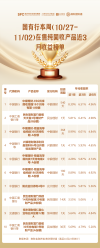
本周在售部分纯固收产品近3月年化收益率逼近10%
2 1 Shi Ji Jing Ji Bao Dao· 2025-10-27 01:20
Core Insights - The article emphasizes the abundance of bank wealth management products with similar names and vague characteristics, urging investors to carefully select and differentiate among them [1] - The South Finance Wealth Management team focuses on pure fixed-income products issued by wealth management companies, providing a performance ranking of these products to assist investors in making informed choices [1] Summary by Category Product Performance - The ranking showcases annualized performance over the past month, three months, and six months, sorted by the three-month annualized yield to reflect multi-dimensional performance amid recent market fluctuations [1] - A total of 28 distribution institutions are involved in the ranking, including major banks such as Industrial and Commercial Bank of China, Bank of China, and Agricultural Bank of China [1] Product Availability - The ranking is based on the "on-sale" status of wealth management products, which may vary due to factors like sold-out quotas or differences in product listings for different customers [1] - Investors are advised to refer to the actual display on the distribution bank's app for the most accurate information regarding product availability [1]




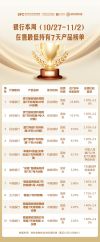
银行渠道本周在售最低持有期产品榜单(10/27-11/2)
2 1 Shi Ji Jing Ji Bao Dao· 2025-10-27 01:20
Core Insights - The article emphasizes the abundance of bank wealth management products with similar names and vague characteristics, urging investors to carefully select and differentiate among them [1] - The South Finance Wealth Management team aims to reduce investors' selection costs by focusing weekly on the performance of wealth management products available through various distribution channels [1] Summary by Category Performance Rankings - The current focus is on the performance of public offering products with a minimum holding period in RMB, categorized by holding periods of 7 days, 14 days, 30 days, and 60 days, with annualized returns as the performance metric [1] - The ranking includes 28 distribution institutions such as Industrial and Commercial Bank of China, Bank of China, Agricultural Bank of China, and others [1] Product Availability - The list of products is based on their "on-sale" status, which is determined by their investment cycle; however, actual availability may vary due to factors like sold-out quotas or differences in product listings for different customers [1] - Investors are advised to refer to the actual display on the distribution bank's app for the most accurate information [1] Weekly Updates - The article provides a weekly update on the performance of wealth management products, with specific attention to the lowest holding period products for the week of October 27 to November 2 [5][8][11]
为乡村振兴注入金融动能
Liao Ning Ri Bao· 2025-10-27 01:19
Core Insights - The article highlights the positive impact of financial services on local farmers in Xinbin Manchu Autonomous County, particularly in the ginseng cultivation sector, where prices have reached 34 yuan per kilogram, leading to significant income potential for farmers [1] - Postal Savings Bank of China (PSBC) is actively providing tailored financial solutions to support the local agricultural industry, focusing on the cultivation, processing, and sales of traditional Chinese medicine [4] Group 1: Financial Support Initiatives - PSBC has implemented a green loan channel to facilitate quick access to funds for farmers, with loans being processed and disbursed within half an hour during the ginseng harvest season [2] - The bank promotes flexible loan models such as "borrow and repay as needed" and offers no-repayment extension services for farmers with long cultivation cycles, effectively alleviating their financial pressure [2] Group 2: Long-term Partnerships - The relationship between farmers and PSBC is characterized by long-term support, as exemplified by a farmer who has transitioned from a simple cultivator to a small business owner through consistent financial backing over seven years [3] - The bank's financial assistance has enabled farmers to expand their operations, invest in infrastructure, and diversify their business activities, contributing to their overall economic growth [3] Group 3: Industry Development and Value Chain Enhancement - PSBC's financial support extends beyond cultivation to include processing and sales, thereby enhancing the entire value chain of the traditional Chinese medicine industry [4] - The cumulative financial loans provided by PSBC in the current year amount to 2.69 billion yuan, significantly contributing to the development of the local medicinal herb industry and supporting rural revitalization efforts [4]

个别银行“抢跑”年末揽储 负债成本管控精细化
Zheng Quan Shi Bao· 2025-10-27 00:22
Core Viewpoint - In the context of sustained pressure on net interest margins, many small and medium-sized banks are initiating a new round of interest rate cuts, actively lowering the upper limit of deposit rates to create space for profit growth [1][5]. Group 1: Deposit Rate Adjustments - Some banks have quietly started aggressive deposit collection efforts as the year-end approaches, combining this with refined and tiered customer management to stabilize general deposits while effectively controlling liability costs [1][2]. - Since early October, several small and medium-sized banks have held fourth-quarter operational meetings, emphasizing the importance of achieving a successful year-end while preparing for a strong start in the first quarter of the following year [2][3]. - The recent adjustment of deposit rates has led to most market deposit products entering the "1" range, with major state-owned banks' two-year, three-year, and five-year fixed deposit rates set at 1.05%, 1.25%, and 1.3% respectively [3][4]. Group 2: Competitive Strategies - Some banks are offering cash rewards for customers who meet core asset thresholds, with activities designed to encourage customers to keep their deposits [2][3]. - The actual execution rates for certain term deposits have seen some upward adjustments compared to the listed rates, indicating a competitive landscape among banks [4][6]. - Banks are increasingly adopting differentiated deposit strategies targeting specific customer segments, particularly offering higher rates and lower minimum deposit thresholds for older customers [7]. Group 3: Market Trends and Challenges - The continuous narrowing of net interest margins is a common challenge faced by the banking industry, prompting a focus on managing liability costs more effectively [4][5]. - The People's Bank of China has emphasized the need to lower overall bank liability costs to alleviate pressure on net interest margins, which has led to recent adjustments in deposit rates [5][6]. - The phenomenon of interest rate inversion, where shorter-term deposits offer higher rates than longer-term ones, is emerging as banks anticipate future cost pressures on long-term liabilities [6][7].
银行业周度追踪2025年第42周:房地产贷款三季度增速转负-20251027
Changjiang Securities· 2025-10-26 23:30
Investment Rating - The investment rating for the banking industry is "Positive" and is maintained [10] Core Insights - The A-share risk appetite has temporarily rebounded, with the banking index lagging behind, while H-shares of major banks have outperformed. The proportion of southbound holdings has increased, indicating a sustained interest in H-shares due to their undervaluation and high dividend characteristics [2][9] - The central bank's report for Q3 2025 indicates a negative growth rate for real estate loans, with a year-on-year decline of 0.1%. This marks the first negative growth in real estate development loans since Q2 2022, primarily driven by weak sales [6][7][39] - The performance of banks that have disclosed their Q3 results shows an upward trend in profit growth, with interest income rebounding. Chongqing Bank reported a surprising growth of over 10% in the first three quarters [8][49] Summary by Sections Banking Index Performance - The banking index rose by 1.3% this week, underperforming compared to the CSI 300 and ChiNext indices, which saw excess returns of -1.9% and -6.7% respectively. Agricultural Bank of China H-shares led the gains with a 7.9% increase, while the A/H share growth for Agricultural Bank reached 56.4% and 43.6% respectively [2][9][18] Loan Trends - The central bank's Q3 report shows that the proportion of corporate loans has increased, while industrial medium- and long-term loan growth has declined to 9.7%, down 1.5 percentage points from the previous quarter. Real estate loans have turned negative, with development loans down 1.3% year-on-year, reflecting weak sales [6][38][39] - Personal housing loans also saw a year-on-year decline of 0.3%, with a net decrease of 292.1 billion yuan in Q3, indicating ongoing weakness in the housing market [7][39] Bank Earnings Reports - As of October 24, banks such as Huaxia Bank, Ping An Bank, and Chongqing Bank have reported their Q3 earnings. Chongqing Bank's performance exceeded expectations with over 10% growth, while Huaxia and Ping An faced challenges due to non-interest income declines [8][49][51] Market Dynamics - The market dynamics indicate a recovery in trading volumes and turnover rates for bank stocks, with a notable increase in the turnover rate for joint-stock banks. The overall trading environment for bank stocks is expected to improve as previous funding pressures ease [29][30]