CEB BANK(601818)

Search documents
光大银行盐城分行营业部副总被罚 信贷业务管理不审慎
Zhong Guo Jing Ji Wang· 2025-11-06 07:27
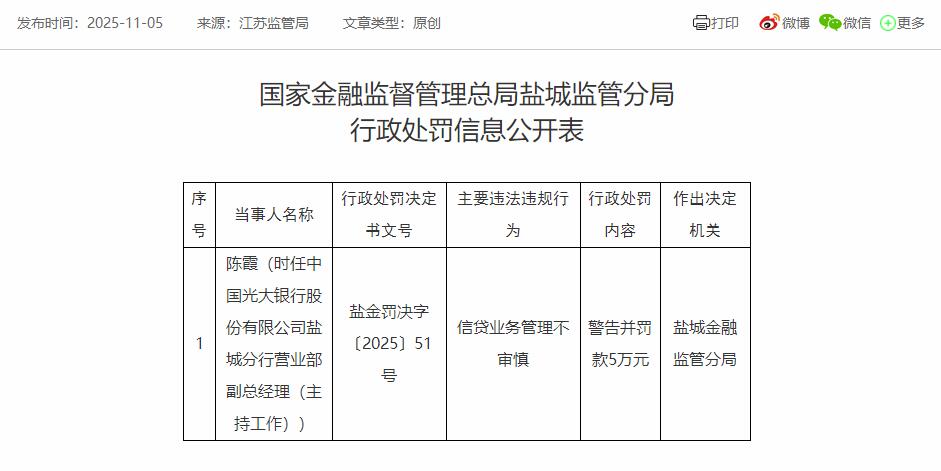
Core Points - The article reports on an administrative penalty imposed on Chen Xia, the former deputy general manager of the Yancheng branch of China Everbright Bank, for imprudent management of credit business [1][2] - The Yancheng Financial Supervision Bureau issued a warning and fined Chen Xia 50,000 yuan for the violation [1][2] Summary by Category Administrative Penalty - Chen Xia was penalized by the Yancheng Financial Supervision Bureau for failing to manage credit business prudently [1][2] - The penalty includes a warning and a fine of 50,000 yuan [1][2] Regulatory Authority - The decision was made by the Yancheng Financial Supervision Bureau, as indicated in the administrative penalty information [1][2]


翻遍9家银行财报,我发现行业洗牌的秘密藏在这些数字里
3 6 Ke· 2025-11-06 02:03
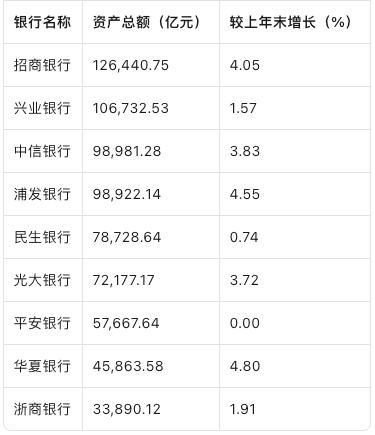
Core Insights - The overall performance of the nine listed joint-stock banks in China showed a decline in both revenue and net profit for the first three quarters of the year, with total operating income at 1.12 trillion yuan, down 2.56% year-on-year, and net profit at 406.1 billion yuan, down nearly 1% [1][3] Group 1: Performance Overview - Among the nine banks, four experienced declines in both revenue and net profit, while some banks managed to achieve growth in both metrics [1][4] - The top joint-stock banks by asset size are China Merchants Bank (12.64 trillion yuan), Industrial Bank (10.67 trillion yuan), and CITIC Bank, with Shanghai Pudong Development Bank showing the fastest growth rate at 4.55% [1][2] Group 2: Revenue and Profit Analysis - Only Minsheng Bank and Shanghai Pudong Development Bank reported year-on-year revenue growth, with increases of 6.74% and 1.88%, respectively; the remaining seven banks saw revenue declines, with Ping An Bank experiencing the largest drop at 9.8% [3][4] - In terms of net profit, only four banks, including Shanghai Pudong Development Bank, reported growth, with the latter achieving a 10.21% increase, making it the leader in profit growth among joint-stock banks [4] Group 3: Net Interest Income and Margin - Net interest income, a key indicator of banks' operating income, showed mixed results, with only three banks reporting growth; China Merchants Bank led with 160.04 billion yuan, up 1.74% [5][6] - The net interest margin (NIM) faced pressure, with most banks experiencing declines; China Merchants Bank maintained the highest NIM at 1.87%, while CITIC Bank saw the largest drop of 16 basis points [7] Group 4: Asset Quality and Risk Management - The non-performing loan (NPL) ratio improved for most banks, with China Merchants Bank having the lowest NPL ratio at 0.94% [9][10] - However, the provision coverage ratio decreased for seven banks, with Ping An Bank showing the largest decline of 21.11 percentage points; Shanghai Pudong Development Bank's coverage ratio increased by 11.08 percentage points, indicating enhanced risk mitigation [10][11]





机构关注风格切换,53只大盘价值股或被低估
Zheng Quan Shi Bao Wang· 2025-11-06 00:55
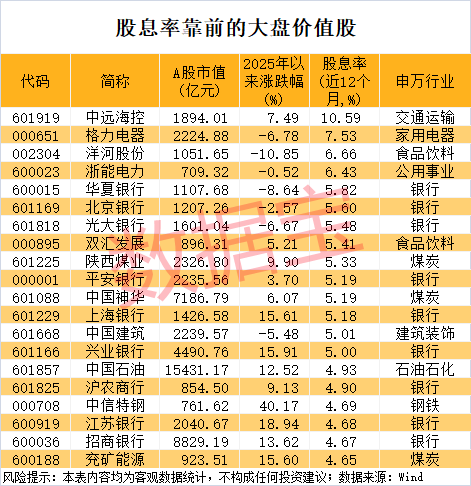
Group 1: Market Trends and Performance - On November 5, A-share market saw a significant surge in power and renewable energy sectors, with notable increases in high-voltage transmission, smart grid, virtual power plants, and various battery technologies [1] - The high-voltage transmission index led the gains, with stocks like Can Energy and Jin Guan Electric hitting their daily limit up [1] - TBEA (600089) reached a record closing price of 24.11 CNY per share, with a market capitalization exceeding 120 billion CNY, and reported a net profit of 5.484 billion CNY for the first three quarters, a year-on-year increase of 27.55% [1] Group 2: Stock Performance and Valuation - As of November 5, large-cap value stocks have averaged an 8.93% increase this year, underperforming the Shanghai Composite Index [3] - Transsion Holdings has seen a cumulative decline of 24% this year, with a net profit of 2.148 billion CNY for the first three quarters, down 44.97% year-on-year [3] - The average dividend yield for large-cap value stocks is 4.05%, significantly higher than the overall A-share market, with 13 stocks yielding over 5% [3][4] Group 3: Institutional Insights and Future Outlook - Over 80% of large-cap value stocks have a rolling P/E ratio below their industry average, indicating potential undervaluation [6] - Among these, 34 stocks have an upside potential exceeding 20% based on institutional target prices, with China Pacific Insurance showing the highest potential at 42.44% [7] - The market is expected to shift from high-volatility growth stocks to low-valuation, high-dividend value sectors as year-end profit-taking occurs [2][3]




债市成拖累?多家银行非息收入承压,央行重启国债买卖有何利好
Xin Lang Cai Jing· 2025-11-06 00:38
Core Viewpoint - The bond market's volatility has significantly impacted the non-interest income and overall revenue growth of listed banks in China during the first three quarters of the year [1][3][7]. Group 1: Non-Interest Income Decline - Among 42 A-share listed banks, 24 reported a year-on-year decline in non-interest income, with 8 banks experiencing a drop in net investment income [1][2]. - For instance, China Merchants Bank reported a 4.23% decrease in non-interest net income, primarily due to reduced bond and fund investment returns [3][4]. - Ping An Bank's revenue fell by 9.8%, influenced by declining loan rates and market volatility affecting non-interest income [3]. Group 2: Fair Value Changes - The significant drop in fair value changes has also been a major factor in revenue growth decline, with China Merchants Bank reporting a cumulative loss of 8.827 billion yuan in fair value changes for the first three quarters [4]. - Other banks like Everbright Bank and Huaxia Bank also reported losses in fair value changes, amounting to 4.982 billion yuan and 4.505 billion yuan, respectively [4]. - Analysts noted that fair value changes are highly influenced by bond market fluctuations, with smaller banks being more affected due to a higher proportion of FVTPL assets [4]. Group 3: Future Outlook and Central Bank Actions - The People's Bank of China announced the resumption of government bond trading operations, which is expected to help lower bond yields and benefit banks' non-interest income [11][12]. - Some bank executives expressed uncertainty about future non-interest income growth due to ongoing market volatility, suggesting that the bond market may remain in a fluctuating state [9][10]. - Analysts believe that the resumption of government bond trading will provide a safety net for the bond market, potentially stabilizing yields and supporting both bond and equity markets in the long term [12][13].



翻遍9家银行财报,我发现行业洗牌的秘密藏在这些数字里
凤凰网财经· 2025-11-05 13:27
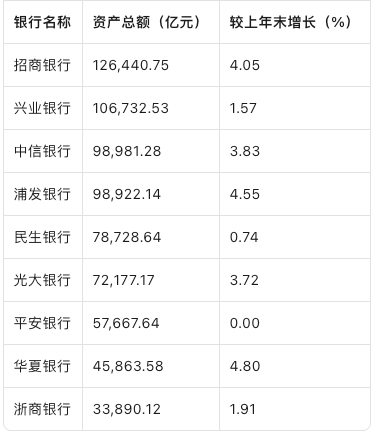
Core Viewpoint - The overall performance of the nine listed joint-stock banks in China showed a decline in both revenue and net profit for the first three quarters, indicating a challenging environment for the banking sector [2][5]. Group 1: Overall Performance - The nine joint-stock banks collectively achieved an operating income of 1.12 trillion yuan, a year-on-year decrease of 2.56%, and a net profit of 406.1 billion yuan, down nearly 1% year-on-year [2][5]. - There is a notable divergence in performance among the banks, with four banks experiencing declines in both revenue and profit, while others managed to achieve growth [2][5]. Group 2: Individual Bank Performance - As of the end of Q3, China Merchants Bank led with total assets of 12.64 trillion yuan, followed by Industrial Bank at 10.67 trillion yuan, with Shanghai Pudong Development Bank showing the fastest growth rate of 4.55% [3][4]. - Only Minsheng Bank and Shanghai Pudong Development Bank reported year-on-year revenue growth of 6.74% and 1.88%, respectively, while the remaining seven banks saw declines, with Ping An Bank experiencing the largest drop at 9.8% [7][8]. Group 3: Net Interest Income - Among the nine banks, only three reported an increase in net interest income, with China Merchants Bank leading at 160.04 billion yuan, a growth of 1.74% [11][12]. - The net interest margin pressure remains a common challenge, with most banks experiencing a decline in this metric, except for Minsheng Bank, which saw a slight increase [13][14]. Group 4: Asset Quality - Most banks reported a decrease in non-performing loan (NPL) ratios, with China Merchants Bank having the lowest at 0.94%, while the others ranged between 1% and 1.5% [15][16]. - The provision coverage ratio decreased for most banks, with Ping An Bank showing the largest decline of 21.11 percentage points [17]. Group 5: Future Outlook - The banks face challenges in narrowing net interest margins in a low-interest-rate environment, and the potential impact of "deposit migration" due to stock market recovery will test their adaptability [17].

翻遍9家银行财报,行业洗牌的秘密藏在这些数字里
Feng Huang Wang Cai Jing· 2025-11-05 13:19
Core Insights - The overall performance of the nine listed joint-stock banks in China showed a decline in both revenue and net profit for the first three quarters, with total operating income of 1.12 trillion yuan, down 2.56% year-on-year, and net profit of 406.1 billion yuan, down nearly 1% [1][4] Group 1: Performance Overview - Four banks experienced a decline in both revenue and net profit, while two banks, Minsheng Bank and Pudong Development Bank, achieved revenue growth [1][4] - Among the nine banks, only Pudong Development Bank reported both revenue and net profit growth, with a net profit increase of 10.21%, making it the leader in profit growth among joint-stock banks [5][11] Group 2: Asset Scale and Growth - As of the end of Q3, China Merchants Bank led with total assets of 12.64 trillion yuan, followed by Industrial Bank at 10.67 trillion yuan, with Pudong Development Bank showing the fastest growth rate of 4.55% [2][3] Group 3: Revenue and Profit Analysis - Revenue performance varied significantly, with only Minsheng Bank and Pudong Development Bank achieving positive year-on-year growth rates of 6.74% and 1.88%, respectively [4][5] - The largest revenue declines were observed in Ping An Bank and Everbright Bank, with decreases exceeding 6%, and Ping An Bank experiencing a 9.78% drop [4][5] Group 4: Net Interest Income and Margin - Net interest income showed a mixed performance, with only three banks reporting growth, while six banks saw declines, the largest drop being 8.25% at Ping An Bank [6][7] - The net interest margin pressure remains a challenge for all listed joint-stock banks, with only Minsheng Bank showing a slight increase in net interest margin [8] Group 5: Asset Quality - Most banks reported a decrease in non-performing loan (NPL) ratios, with China Merchants Bank having the lowest NPL ratio at 0.94% [9][10] - The provision coverage ratio declined for seven banks, with Ping An Bank experiencing the largest drop of 21.11 percentage points [10][11] Group 6: Future Outlook - The banks face challenges in narrowing net interest margins in a low-interest-rate environment, and the upcoming year-end performance will be critical for their strategies [11]
透视银行三季报:超30家净息差收窄 债市波动拖累非利息收入
Bei Ke Cai Jing· 2025-11-05 11:12
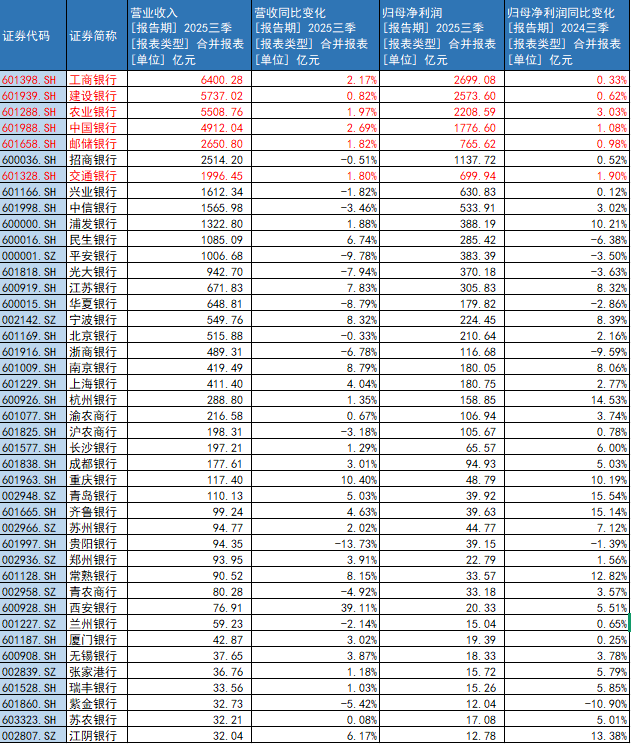
Core Insights - The overall performance of A-share listed banks in the first three quarters of the year is positive, with over 80% achieving year-on-year growth in net profit attributable to shareholders [2][3] - The growth in net profit is primarily driven by stable net interest income and improved asset quality, despite a decline in non-interest income due to bond market fluctuations [2][3] - The six major banks collectively reported over 1 trillion yuan in net profit, marking a significant milestone [3][4] Financial Performance - Among the 42 listed banks, 35 reported year-on-year growth in net profit, while only 7 experienced a decline [3][4] - The top four state-owned banks (Industrial and Commercial Bank of China, China Construction Bank, Agricultural Bank of China, and Bank of China) all achieved growth in both revenue and net profit [4][5] - Industrial and Commercial Bank of China led in revenue with 640.03 billion yuan, a 2.17% increase year-on-year, and a net profit growth of 0.33% [4][6] Non-Interest Income and Market Impact - Many banks faced a decline in non-interest income due to volatility in the bond market, with several banks reporting significant losses in fair value changes [9][10] - For instance, China Merchants Bank reported a fair value loss of 8.83 billion yuan, transitioning from profit to loss [10][12] - The decline in non-interest income is attributed to reduced earnings from bond and fund investments [10][13] Interest Income Trends - Some banks, particularly city commercial banks, saw substantial growth in interest income, with Xi'an Bank's interest income increasing over 60% [7][8] - Conversely, banks like Guiyang Bank and Capital Bank reported declines in interest income of 12.29% and 17.34%, respectively [8][9] Net Interest Margin - The overall net interest margin for listed banks has narrowed compared to the end of the previous year, although some banks have seen a recovery from the second quarter [16][20] - As of the end of the third quarter, Xi'an Bank's net interest margin was 1.79%, reflecting a 0.43% increase from the end of the previous year [16][17] - The stability of net interest margins in the fourth quarter will depend on the banks' ability to optimize their liability structures and find high-quality investment opportunities [20]



助力提振消费 光大信用卡联手淘宝上线“双十一”分期专区
Xin Hua Wang· 2025-11-05 07:32
Core Insights - The collaboration between Everbright Credit Card and Taobao aims to enhance consumer spending during the "Double Eleven" shopping festival by offering a "Double Eleven Everbright Interest-Free Installment" activity, featuring up to "24 months interest-free installments" and a maximum discount of "200 yuan" per transaction [1][2] Group 1: Promotional Details - The promotional campaign includes various discount tiers for single transactions: 25 yuan off for purchases over 500 yuan, 75 yuan off for over 1500 yuan, and 200 yuan off for over 5000 yuan, allowing consumers to benefit from both installment discounts and interest-free policies [2] - Popular product categories such as electronics, home appliances, and beauty products are included in the promotion, with installment options ranging from 3 to 24 months to cater to diverse consumer financial planning needs [2] Group 2: Additional Platforms and Offers - Everbright Credit Card has also launched similar installment payment promotions on Alipay and JD platforms, where users can enjoy random discounts and specific tiered reductions based on transaction amounts [3] - On Alipay, users can receive a random discount of up to 200 yuan for transactions over 101 yuan, while on JD, discounts range from 0.1 yuan to 220 yuan for orders over 100 yuan, along with additional tiered discounts for higher transaction amounts [3] Group 3: Strategic Alignment - The initiative aligns with national policies aimed at expanding domestic demand and promoting consumption, while also addressing consumer needs for affordability, convenience, and flexibility in payment options [3] - Everbright Credit Card plans to continue innovating in the integration of financial services with consumer scenarios to support consumption upgrades and economic circulation [3]
银行业2025年三季报综述:业绩稳健性凸显,引领银行价值回归
Shenwan Hongyuan Securities· 2025-11-04 14:41
Investment Rating - The report maintains a positive outlook on the banking sector, indicating a potential return to a valuation of 1 times net asset value [4][7]. Core Insights - The banking sector has demonstrated steady performance, with a year-to-date revenue growth of 0.8% and a net profit growth of 1.5% for the first nine months of 2025, reflecting a stable regulatory environment supporting bank profitability [10][14]. - The report highlights a shift in focus from scale to balance in credit growth, with banks increasingly pursuing a "quantity-price balance" strategy [4][7]. - The cost of liabilities has improved more significantly than the decline in asset pricing, leading to a stabilization of net interest margins, which is expected to continue into the next year [4][7]. - Asset quality remains stable but shows signs of divergence, particularly with rising risks in small and micro businesses [4][7]. - The report suggests that the current dividend yield of the banking sector has returned to an attractive range, indicating a significant disconnect between stable earnings and stock holdings, which could lead to a value recovery [4][7]. Summary by Sections Performance Overview - The banking sector's performance has been characterized by a steady increase in revenue and profit, with state-owned banks showing better-than-expected stability and regional banks leading in performance [11][12][15]. - The report notes that the revenue growth of state-owned banks has turned positive, with non-interest income contributing significantly to this growth [12][15]. Credit Growth and Strategy - The report indicates a gradual abandonment of scale-driven growth, with banks focusing on achieving a balance between volume and pricing in their lending practices [4][7]. - The credit growth rate for listed banks decreased by 0.3 percentage points to 7.7% in Q3 2025, with state-owned banks maintaining a growth rate of approximately 8.5% [4][7]. Profitability and Asset Quality - The net interest margin for listed banks remained stable at 1.5%, with a slight quarter-on-quarter increase of 3 basis points in Q3 2025 [4][7]. - The overall non-performing loan ratio remained stable at 1.22%, indicating manageable risk levels across the sector [4][7]. Investment Recommendations - The report recommends focusing on leading banks and undervalued regional banks as key investment opportunities, suggesting that the recovery in valuations is supported by stable earnings and attractive dividend yields [4][7].
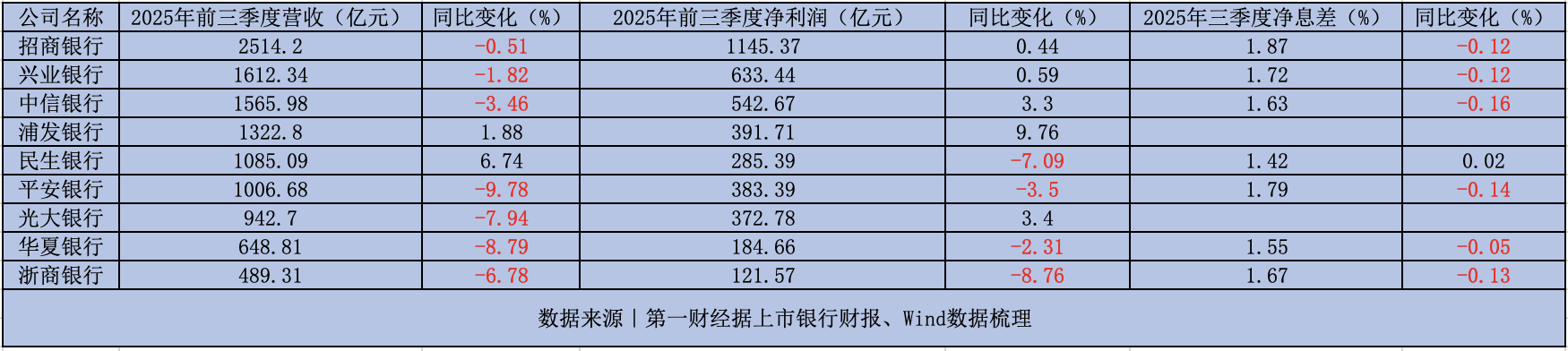
股份行前三季度盈利承压 4家营收净利双降
Di Yi Cai Jing· 2025-11-04 12:24
Core Insights - The overall profitability of A-share listed joint-stock banks faces significant pressure, with both revenue and net profit showing a year-on-year decline [1][2] - Among the nine listed banks, total revenue reached approximately 1.12 trillion yuan, down 2.56% year-on-year, while net profit was 406.1 billion yuan, with a nearly 1% decrease [1][2] Revenue and Profit Performance - The top-performing bank, China Merchants Bank, reported revenue of 251.42 billion yuan, a slight decline of 0.51%, and net profit of 114.54 billion yuan [3][5] - Shanghai Pudong Development Bank was the only bank to achieve "double growth," with revenue increasing by 1.88% to 132.28 billion yuan and net profit rising by 9.76% to 39.17 billion yuan [5] - Four banks, including Ping An Bank and Huaxia Bank, experienced a decline in both revenue and net profit [5][6] Net Interest Margin and Asset Quality - The net interest margin (NIM) remains under pressure but shows signs of stabilization, with most banks reporting a year-on-year decline [7][8] - The average non-performing loan (NPL) ratio for the nine banks was 1.24%, with China Merchants Bank having the lowest at 0.94% [10][11] - The overall asset quality remains stable, with five banks reporting a decrease in NPL ratios compared to the end of the previous year [1][11] Non-Interest Income and Market Trends - Non-interest income growth is uneven, with China Merchants Bank leading in wealth management, achieving a nearly 20% increase in fee and commission income [9] - The capital market's increased activity has positively impacted some banks' agency and custody businesses, although overall non-interest income growth remains weaker than that of state-owned banks [9] Risk Management and Future Outlook - The provisioning coverage ratio is under pressure, with seven out of nine banks showing a decline [12][13] - Analysts suggest that the asset quality of small and micro loans remains a concern, but overall risks are manageable due to ongoing policy support [13]