PETROCHINA(601857)

Search documents
伊朗地缘局势升级,关注相关化工品价格波动
INDUSTRIAL SECURITIES· 2026-03-03 05:21
Investment Rating - The industry investment rating is "Recommended (Maintain)" [1] Core Insights - The geopolitical situation in Iran is escalating, which may impact the supply expectations and fundamentals of related chemical products. Methanol and urea may face supply disruptions, as Iran's methanol production capacity is significant, accounting for 59.78% of the Middle East's total capacity and 22.86% of international capacity (excluding China) as of February 2026. Urea exports from Iran are projected to be around 4.5 million tons in 2024, making it the third-largest exporter globally [3][4] - Major chemical companies are raising prices for MDI and TDI products, indicating potential price increases in traditional peak seasons. For instance, Hunstman announced a price increase of $260 per ton for MDI in the U.S. market, effective immediately [3][4] - The U.S. government has signed an executive order to protect the supply of phosphorus and glyphosate, which may lead to a revaluation of phosphate resources. This strategic resource is expected to maintain high demand and price stability [3][4] - The chemical industry is anticipated to experience a cyclical recovery and industrial upgrade in 2026, driven by domestic growth policies and a potential easing of monetary policy by the Federal Reserve. This may lead to a moderate recovery in traditional chemical demand [5][6] Summary by Sections Geopolitical Impact - The Iranian geopolitical situation is causing concerns over supply disruptions for chemical products like methanol and urea, with significant production capacities in Iran [3] - Sulfur and aluminum carbonate, which have high import dependencies, may also be affected by geopolitical factors, leading to potential price increases [3] Price Trends - The price of TMP has continued to rise due to tight supply conditions, with a reported price of 12,750 RMB per ton as of February 27, 2026, reflecting a 6.3% increase week-on-week [8] - Prices for refrigerants are expected to rise due to supply constraints and increased demand post-holiday, with notable price increases reported for various refrigerants [4][8] Long-term Investment Recommendations - The chemical industry is expected to benefit from a cyclical recovery and industrial upgrades in 2026, with a focus on sectors like pesticides and tire manufacturing, which may see increased pricing opportunities due to trade barriers [5] - Emerging industries such as sustainable aviation fuel (SAF) and lithium battery materials are projected to grow significantly, driven by global decarbonization policies [5][6]






中国石油,创近17年新高!
证券时报· 2026-03-03 04:30
Core Viewpoint - The A-share market has seen a significant surge in oil stocks due to the impact of the US-Iran conflict, with the Shenwan Oil and Petrochemical Index reaching a 10-year high [1][3]. Group 1: Market Performance - On March 3rd, the A-share market's oil stocks experienced a substantial increase, with the Shenwan Oil and Petrochemical Index rising over 7% and surpassing its 2021 peak [3]. - China National Petroleum Corporation (CNPC) has reached a 10-year high in A-share price, and its adjusted price has hit a 17-year high since 2009 [1][6]. - China National Offshore Oil Corporation (CNOOC) has also seen its A-shares hit a historical high for the second consecutive trading day [4]. Group 2: Individual Stock Movements - The oil and petrochemical sector has witnessed a wave of stocks hitting the daily limit, including Tongyuan Petroleum and Qianeng Hengxin, with over ten stocks reaching the limit [5]. - China Petroleum's A-shares have also been on a limit-up streak for two consecutive days, achieving a recent 10-year high [6]. Group 3: Futures Market - Domestic oil-related futures have shown remarkable growth, with the main fuel futures contract hitting the daily limit with a 12% increase, totaling over 20% in two trading days [10]. - The main crude oil futures contract has also reached the daily limit with a similar 12% increase, accumulating over 20% in two days [11]. - Other related futures, such as low-sulfur oil and liquefied gas, have also experienced significant gains [12]. Group 4: Institutional Insights - Huazhang Futures believes that the US-Iran conflict has evolved into a regional crisis affecting global oil supply, with key variables including the production capacity of Iran and surrounding oil-producing countries, as well as the navigability of the Strait of Hormuz [15]. - Dongwu Securities suggests that while the initial phase of the conflict may exert downward pressure on global markets, the impact on the A-share market may be pulse-like and not lead to a systemic shift, with China's stable industrial trends continuing to drive A-share performance [16].






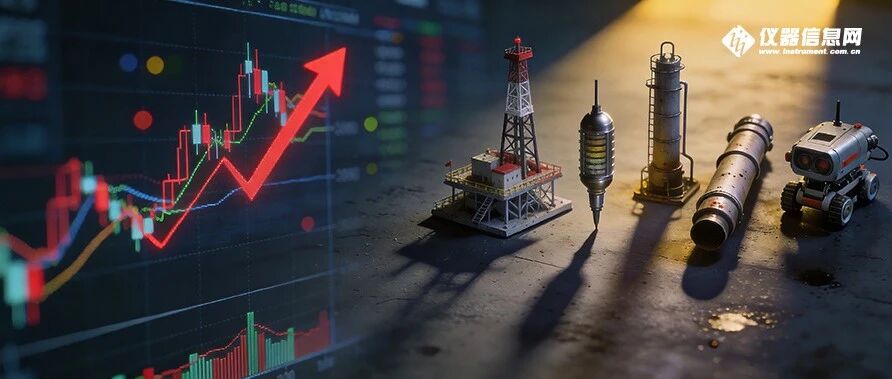
“三桶油”历史性涨停背后,石油行业仪器设备大起底!
仪器信息网· 2026-03-03 03:57
Core Viewpoint - The article highlights the historic collective surge of the "Big Three" oil companies in China, emphasizing the critical role of the oil industry in national energy security [2]. Industry Overview - Recent geopolitical tensions, particularly the attacks on Iran, have led to a spike in international oil prices, resulting in a significant rise in oil and gas equipment stocks [2]. - The collective surge of the "Big Three"—China National Petroleum Corporation (CNPC), Sinopec, and China National Offshore Oil Corporation (CNOOC)—marks a historic first, reflecting the capital market's response to the evolving energy landscape [2]. Key Instruments and Equipment in the Oil Industry Sample Preparation and Separation Equipment - Microwave Digestion Instrument - Rotary Evaporator - Solid Phase Extraction Device (SPE) - Liquid-Liquid Extraction Instrument - Nitrogen Blowing Instrument - Gas Chromatograph (GC) with configurations including FID, TCD, and MS [3]. Chromatography Analysis Equipment - High-Performance Liquid Chromatograph (HPLC) with configurations including UV-Vis detector, fluorescence detector, and LC-MS [3]. - Gel Permeation Chromatograph (GPC) - Ion Chromatograph (IC) [3]. Spectroscopy and Physical Property Testing Equipment - Fourier Transform Infrared Spectrometer (FTIR) - Ultraviolet-Visible Spectrophotometer (UV-Vis) - Atomic Absorption Spectrometer (AAS) - Inductively Coupled Plasma Mass Spectrometer (ICP-MS) - Differential Scanning Calorimeter (DSC) - Thermogravimetric Analyzer (TGA) [4]. Elemental and Industrial Analysis Equipment - Elemental Analyzer - Industrial Analyzer - Sulfur and Nitrogen Analyzer [6]. Environmental and Safety Monitoring Equipment - Total Organic Carbon Analyzer (TOC) - Gas Detector - Dust Concentration Detector - Flash Point Tester - Lubricating Oil Tester - Distillation Apparatus for Petroleum Products [7]. Laboratory General Equipment - Balance - Centrifuge - Ultrasonic Cleaner - Muffle Furnace - Purified Water Machine [7]. Data Processing and Software - Chromatography Workstation - Mass Spectrometry Analysis Software - Simulation Software [7].
综合晨报-20260303
Guo Tou Qi Huo· 2026-03-03 03:50
gtaxinstitute@essence.com.cn 综合晨报 2026年03月03日 (原油) 3月2日深夜,伊朗伊斯兰革命卫队司令顾问表示霍尔木兹海峡已被关闭,伊方将打击所有试图从霍 尔木兹海峡通过的船只。继2025年6月伊以12日战争后上周末中东再燃战火,地区局势由此前对特 迅速升级为全面军事对抗。在伊朗采取的众多反击措施中,关于伊朗宣布禁止任何船只通过霍尔木 兹海峡这一消息传出后引起市场关于中东产油国原油供应中断的恐慌情绪。在美以与伊朗军事对抗 持续、霍尔木兹海峡恢复通航之前,地缘风险将对原油价格形成持续支撑。 (责金属) 隔夜贵金属冲高回落,盘中波动较大。美伊战局激烈,特朗普表示如果有必要不排除向伊朗派遣美 国地面部队的可能性,伊朗方面称已为长期战争做好准备。短期避险情绪将持续摇摆,后续走势仍 需看战争是否向更大烈度扩张。数据方面美国公布2月1SM制造业PM152.4强于预期,市场等待本周 非农等重要数据发布。 【铜】 隔夜伦铜走低,尽管美欧2月制造业PMI在荣枯线上方,但伊朗军事冲突抬高能源价格增大经济增长 风险,且美元相对主要能源进口地区货币短线强势,拖累铜价。目前均线密集区继续尝试提供韧 ...
0302强势股脱水
2026-03-03 02:51
Summary of Conference Call Notes Industry Overview - **Oil Services**: The Middle East conflict has restricted shipping through the Strait of Hormuz, which previously accounted for over 25% of global maritime oil trade. The three major Chinese oil companies are expected to benefit from high capital expenditures and overseas business performance, potentially allowing them to navigate through oil price cycles [1][3][6] - **Optical Communication**: Anticipation for new chip releases and related solutions at the NVIDIA GTC conference, alongside rumors of increased orders for optical modules, is driving market interest. The demand for DCI networks is surging due to distributed computing needs, with a trend towards optical switching technology [1][10][13] - **Chemicals**: Iran is a major supplier of methanol and urea, with domestic methanol imports heavily reliant on the Middle East. Ongoing geopolitical tensions may disrupt supply, potentially raising international urea prices [1][15][20] Key Points and Arguments Oil Services - The Strait of Hormuz is critical, with daily oil flow of 20.9 million barrels, representing 20% of global liquid oil consumption, primarily directed towards Asia [3][6] - Historical conflicts in the Middle East have significantly impacted global energy supply, with past incidents causing oil prices to spike [6] - If the Strait is blocked, only Saudi Arabia and the UAE have alternative pipelines, which can only provide an additional 2.9 million barrels per day, insufficient to cover the shortfall [6] - The three major oil companies in China are expected to maintain high capital expenditures and enhance their natural gas market presence, indicating long-term growth potential [6][7] Optical Communication - The upcoming NVIDIA GTC conference is expected to showcase the next-generation Feynman chip and CPO solutions, which could significantly impact the optical communication market [10][13] - The demand for DCI networks is driven by the need for high bandwidth and low latency, with companies developing advanced optical engines and modules to meet these requirements [13][14] - The transition from traditional electrical switches to optical switches is becoming critical in the AI era, with companies focusing on developing high-speed optical switching products [14] Chemicals - Iran's methanol production capacity is significant, with 2025 estimates showing it will account for 9.4% of global production. The geopolitical situation may further impact supply, leading to increased international prices [15][19] - Iran is also a key player in the urea market, with potential supply disruptions due to ongoing conflicts, which could elevate prices globally [20] - China is projected to import a substantial amount of methanol, with 2025 estimates indicating that 60% of its imports will come from Iran [19][20] Additional Important Information - The performance of oil service companies is expected to improve due to increased capital expenditures and the release of overseas business performance [7] - The optical communication sector is experiencing a surge in demand for DCI devices, with companies entering small-scale production phases for new products [13] - The chemical sector is closely monitoring the impact of geopolitical tensions on supply chains, particularly for methanol and urea, which are critical for various downstream applications [19][20] Conclusion The conference call highlighted significant developments in the oil services, optical communication, and chemical industries, driven by geopolitical tensions and technological advancements. Investors should closely monitor these sectors for potential opportunities and risks associated with supply disruptions and market demand shifts.

A股今天有点强的离谱
表舅是养基大户· 2026-03-02 13:33
Core Viewpoint - The article discusses the recent market dynamics influenced by geopolitical tensions, particularly in the Middle East, and highlights the significant depreciation of currencies in countries like Iran and Venezuela, suggesting a need for a more reasonable valuation of Chinese assets in the current global context [3][6][10]. Group 1: Currency Depreciation and Market Context - The Iranian currency has depreciated by 3025.12% against the US dollar in the past three months, equating to a 30-fold increase in the dollar's value, which severely impacts the purchasing power of the Iranian people [3]. - In comparison, the Venezuelan currency has depreciated by 551% over the past year, illustrating a relative "happiness" in comparison to Iran's situation [6]. - Historical context is provided by referencing the Asian financial crisis, where the Thai baht depreciated by approximately 50%, indicating the severity of the current situation in Iran [7]. Group 2: Market Predictions and Observations - Predictions regarding oil prices indicate a likely increase, with the A-share oil and petrochemical sector expected to open significantly higher, although the potential for further price increases may be limited [13]. - Gold prices are anticipated to rise modestly, with expected gains of around 3-4%, as market sentiment leans towards a potential return to negotiations rather than escalating conflict [13]. - The A-share market experienced a significant trading volume of over 3 trillion yuan, reflecting a shift in investor sentiment towards risk aversion and leading to a low-open, high-close market behavior [18]. Group 3: Sector Performance and Trends - The A-share market saw a structural rally led by oil, gas, and precious metals, with oil prices increasing by over 10% and gold prices rising by over 4% since the previous Friday [26]. - The three major oil companies in A-share history collectively reached a trading halt, raising questions about potential overtrading in the sector [33]. - The article notes that the A-share oil companies outperformed their Hong Kong counterparts, with significant price discrepancies leading to increased premiums in related ETFs and LOFs [39]. Group 4: Investment Strategies and Recommendations - The article suggests a diversified investment approach in response to geopolitical tensions, emphasizing the importance of non-US markets and sectors outside of technology for better performance [44]. - It highlights the performance of various investment funds, indicating that non-US and non-tech sectors have yielded better returns compared to major US indices [44]. - The article warns against the risks associated with high-premium investments in popular sectors, advising caution and a focus on long-term strategies [39][40].

中东战火引爆A股油气股 这两大关键变量将决定油价高度
经济观察报· 2026-03-02 12:29
Core Viewpoint - The article highlights the unprecedented collective surge of China's "three oil giants" (Sinopec, CNOOC, and PetroChina) reaching their daily limit up, marking a historic moment in the A-share market amid escalating Middle East tensions and rising global oil prices [1][4]. Group 1: Market Reactions - On March 2, the A-share oil and gas sector experienced a significant rally, with multiple stocks hitting their daily limit up following military actions in the Middle East, particularly after the U.S. and Israel attacked Iran [2][3]. - The Brent crude oil futures surged by 13% to $82 per barrel, while WTI crude oil futures rose over 10% to $75 per barrel on the same day [3]. - The trading volume for Sinopec exceeded 7.4 billion yuan, contributing to the overall market sentiment despite the mixed performance of the three major indices [5][6]. Group 2: Historical Context - This event marks the first time in history that all three major oil companies in China reported a limit up on the same day, setting a record for the A-share market [1][4]. - PetroChina's market capitalization exceeded 2 trillion yuan, reaching a new high not seen in nearly 11 years, surpassing the combined market value of Sinopec and CNOOC [6]. Group 3: Geopolitical Factors - The potential closure of the Strait of Hormuz, through which approximately 20 million barrels of oil flow daily (accounting for about 19% of global oil supply), has been identified as a critical factor driving oil prices higher [6][10]. - The ongoing conflict has led to a significant decrease in oil tanker traffic in the region, with many shipping companies halting operations to avoid risks associated with the escalating situation [7][11]. Group 4: Future Outlook - Analysts predict that if the conflict continues, oil prices could rise significantly, with potential scenarios suggesting Brent crude could exceed $80 per barrel if shipping volumes through the Strait are halved [8][10]. - The market's future performance will largely depend on the duration of the conflict, the status of oil transportation through the Strait, and Iran's oil production levels [12].

3月的第一个交易日,你逃了还是抄底了
IPO日报· 2026-03-02 12:10
Market Overview - On March 2, the A-share market exhibited a stark contrast, with some investors bottom-fishing while others were fleeing [1] - A rare phenomenon occurred where the "three oil giants" (China National Petroleum, China National Offshore Oil, and Sinopec) all hit the daily limit, leading to a 12.23% surge in the oil and gas exploration and processing sector [2] - Despite only 1,142 stocks rising and over 4,000 stocks falling, the Shanghai Composite Index still managed to close up 0.47%, outperforming global markets [2] Sector Performance - The market's performance was influenced by geopolitical tensions, specifically the airstrikes by Israel on Iran, which heightened risk aversion and boosted precious metals and oil sectors [4] - The precious metals sector saw a significant increase of 10.69%, while traditional sectors like cultural media and gaming experienced declines of 4.12% and 4.07%, respectively [4] - The trading volume reached 30,456 billion yuan, a substantial increase of 5,403 billion yuan, but there was a net outflow of funds amounting to 1,192.54 billion yuan, indicating a fierce battle between bulls and bears [4] Future Outlook - The market is expected to see a calming of panic emotions following the recent trading day, with potential continued speculation in the oil and precious metals sectors, although sustainability may be challenging [5] - Investors are advised to closely monitor the developments of the Iran conflict, as any signs of de-escalation could lead to a decrease in speculative activities in these sectors [5] - The upcoming National People's Congress is anticipated to influence market sentiment, with expectations that this year's bull market will not be halted, providing opportunities for related sectors and stocks [5] Investment Strategy - For investors, any significant market downturn could present a good opportunity for bottom-fishing or portfolio adjustments, emphasizing the importance of maintaining appropriate position sizes [6]

历史首次!“三桶油”集体封板
格隆汇APP· 2026-03-02 10:13
Core Viewpoint - The article discusses the impact of the Middle East conflict on the Chinese stock market, highlighting significant movements in oil and related sectors, as well as the overall market sentiment and performance. Group 1: Market Performance - On Monday, the Shanghai Composite Index closed up 0.47%, with a trading volume reaching 30 trillion yuan [2] - The "three oil giants" in China all hit the daily limit for the first time in history due to the conflict [2] - Specific stocks like Zhonggang Petroleum, Baiqin Oil Services, and Shandong Molong saw intraday gains of 145%, 107%, and 116% respectively [4] Group 2: Sector Performance - Oil and gas, shipping, military, and precious metals sectors experienced a surge, while cultural media, software, and internet sectors declined [6] - The oil and gas extraction and service sector rose by 12.23%, precious metals by 10.69%, and military electronics by 3.23% [7] Group 3: Oil Price Dynamics - Brent crude oil opened at around $82, up nearly 13%, while WTI crude rose over 10% to $75 per barrel [8] - The closure of the Strait of Hormuz by the Iranian Revolutionary Guard has significantly impacted oil prices, as this strait is crucial for global oil transport [12][13] - Approximately 20%-30% of global oil consumption passes through the Strait, with China importing about 4.78 million barrels per day through this route, accounting for 43.5% of its total imports [14] Group 4: Future Implications - Goldman Sachs predicts that if the Strait remains closed for a month, the fair value of crude oil could rise by $15 per barrel [18] - The market's initial reaction to the conflict has been volatile, with oil prices fluctuating significantly within a short time frame [20][21] - As the situation evolves, the potential for a prolonged conflict appears to be decreasing, which may stabilize oil prices [24][25] Group 5: Impact on Chinese Assets - The article suggests that concerns over the stock market may be overstated, as the A-share market has shown resilience compared to global markets [33] - The Hong Kong stock market, being more sensitive to overseas liquidity changes, has experienced greater volatility and declines during geopolitical tensions [35] - The Hang Seng Technology Index has entered a technical bear market, reflecting broader market challenges [36]

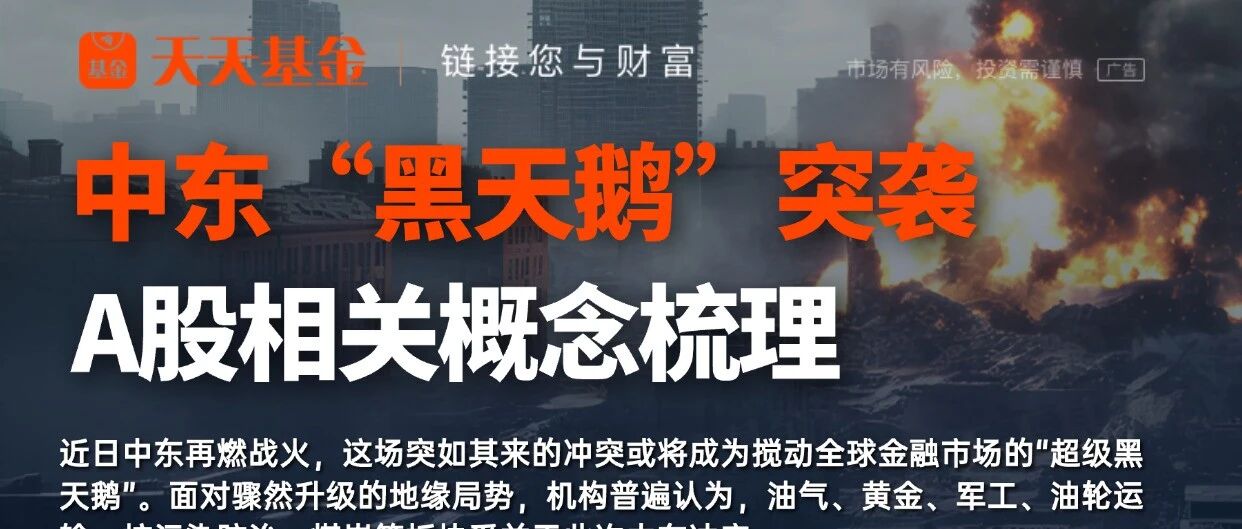
中东“黑天鹅”突袭!对A股哪些板块有影响?投资者如何应对?
天天基金网· 2026-03-02 10:07
Core Viewpoint - The recent escalation of conflict in the Middle East is seen as a potential "super black swan" event that could disrupt global financial markets, with sectors such as oil and gas, gold, military, shipping, nuclear pollution prevention, and coal expected to benefit from the situation [1][6]. Beneficial Sectors - Oil and Gas Exploration: The conflict has directly driven up oil prices, enhancing profits for upstream companies. High oil prices are expected to stimulate increased capital expenditure in oil and gas firms, benefiting oil service equipment [2][6]. - Gold: The military conflict is likely to heighten market risk aversion, which in turn is expected to push up gold prices [2][7]. - Defense and Military: The escalation of geopolitical tensions is anticipated to increase demand for military supplies, including missiles, drones, and air defense systems [2][8]. - Shipping: The conflict may impact oil transportation routes, such as the Strait of Hormuz, leading to increased shipping rates [2][9]. - Nuclear Pollution Prevention: The conflict's focus on nuclear issues is expected to drive demand for nuclear pollution monitoring and protective equipment [3][9]. - Coal: In the context of rising international oil prices and supply constraints, coal's value as an energy substitute is expected to increase significantly [3][10]. Institutional Insights - The impact of the Middle East conflict on equity assets is primarily seen in terms of risk preference and structural changes, with limited substantive effects on the fundamentals of the A-share market. As geopolitical shocks subside and domestic policy discussions intensify, risk preferences are expected to recover [4][11]. - In a scenario of a quick resolution, risk preferences may initially decline but then recover, with assets like gold, shipping, and military experiencing volatility. Conversely, if the conflict drags on, risk preferences may remain low, leading to sustained volatility in these assets [4][11]. - The military actions taken by the U.S. and Israel against Iran will significantly influence global markets and asset prices, depending on the objectives and duration of these actions [4][11]. Investor Recommendations - Investors are advised to maintain a rational approach and focus on structural opportunities, prioritizing sectors that directly benefit from the conflict, such as oil and gas, gold, and military [12]. - It is recommended to avoid sectors under pressure, such as aviation and oil refining, which may suffer from reduced profit margins due to rising oil prices [12]. - Long-term strategies should focus on domestic economic recovery and industry upgrades, using short-term volatility to invest in high-certainty core assets while balancing risk and return [12].