CCB(601939)

Search documents
银期合作共筑服务实体经济新范式(下)——“银期保”为农民打造全周期“安全网”
Qi Huo Ri Bao Wang· 2025-12-04 01:05
Core Viewpoint - The "Yinqi Bao" model developed by the Dalian Commodity Exchange addresses the long-standing issue of farmers facing difficulties in obtaining loans, which has hindered the modernization and scale of agriculture in China. This model creates a comprehensive safety net for farmers by integrating banks, insurance companies, futures companies, and leading enterprises, allowing for shared risks and benefits in the agricultural value chain [1][7]. Group 1: Loan Accessibility and Risk Management - Farmers have historically struggled with low loan limits, strict approval processes, and high interest rates due to a lack of effective collateral and unstable production [3]. - The "Yinqi Bao" model enhances farmers' creditworthiness by using income insurance policies and orders from leading enterprises as collateral, allowing banks to increase credit limits from around 500,000 yuan to 3 million yuan [3][4]. - The model shifts banks from being mere fund providers to integral partners in the agricultural value chain, thus improving risk management and financial support for farmers [2][7]. Group 2: Project Implementation and Financial Innovation - The "Yinqi Bao" project in Xinjiang's Tacheng covers 30,000 acres of corn cultivation with a project amount of 48 million yuan, increasing the insurance coverage to 1,600 yuan per acre [4]. - The project utilizes financial technology to ensure efficient fund flow, with a platform established for timely payments to farmers, thereby reducing operational costs and risks associated with traditional payment methods [5][6]. - The integration of data from various sources, including insurance and land transfer information, allows for a comprehensive assessment of farmers' credit profiles, facilitating better loan terms and conditions [4][6]. Group 3: Systematic Support for Agricultural Development - The "Yinqi Bao" model represents a shift from isolated financial support to a systematic approach that combines various financial instruments to support rural revitalization [7]. - By embedding a dual guarantee mechanism of "insurance + orders," the model fosters a cycle of risk-sharing, credit-building, and benefit-sharing among all stakeholders involved [6][7]. - The success of the Tacheng project illustrates the potential for replicating this financial model across different regions and agricultural sectors in China, promoting increased farmer income and industry efficiency [7].

国有行五年期大额存单集体“隐身”
Nan Fang Du Shi Bao· 2025-12-03 23:07
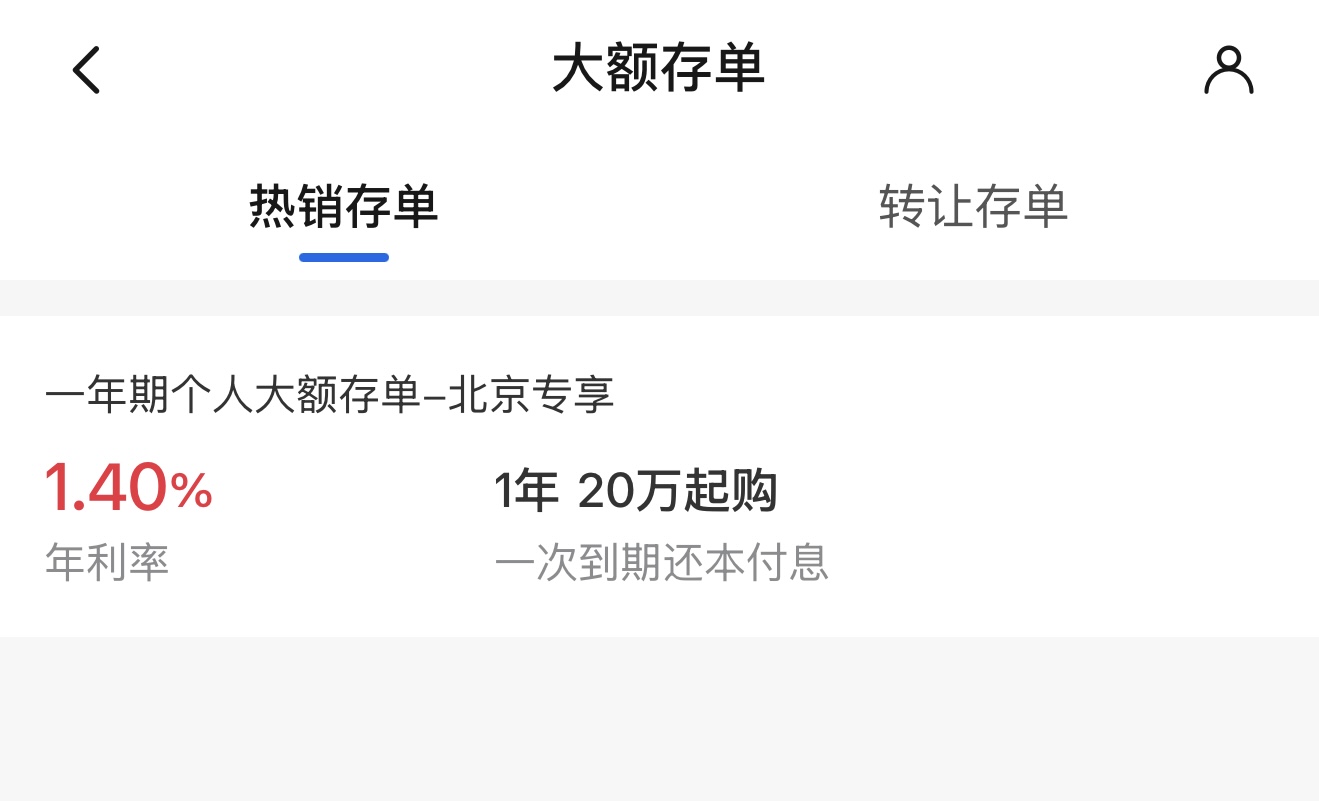
Core Viewpoint - The five-year large denomination certificates of deposit (CDs) have been collectively removed from the offerings of major state-owned banks in China, leaving only three-year products available, reflecting ongoing pressure on the banking sector's net interest margins [2][3][4]. Group 1: Market Changes - Major state-owned banks, including ICBC, ABC, and BOC, have removed five-year large denomination CDs from their online platforms, with the focus now on three-year and shorter-term products [3][4]. - The interest rate for three-year large denomination CDs has decreased to approximately 1.55%, while one-year and two-year products have been reduced to 1.20% [3][4]. - The removal of five-year products is part of a broader trend in the banking industry, which has been experiencing a tightening of available quotas for large denomination CDs since last year [4]. Group 2: Interest Rate Trends - The interest rates for large denomination CDs have been on a downward trajectory, with the three-year rate dropping from 2.15% to 1.55% over the past year, a decline of 60 basis points [4]. - The net interest margin for commercial banks was reported at 1.42% as of the end of Q3 this year, showing a year-on-year decrease of 11 basis points, indicating ongoing pressure on profitability [7]. Group 3: Product Differentiation - There is a common misconception among depositors that the removal of five-year large denomination CDs means the closure of all five-year deposit options; however, regular five-year fixed deposits remain available with a lower entry threshold [5][6]. - The minimum deposit for five-year fixed deposits is only 50 yuan, contrasting sharply with the 200,000 yuan minimum for large denomination CDs, providing a stable option for those with limited funds [6]. Group 4: Strategic Adjustments - The adjustments in the offerings of large denomination CDs reflect banks' strategies to manage liabilities and control costs in a low-interest-rate environment [7][8]. - Analysts suggest that banks are responding to the pressures of maintaining net interest margins by reducing the availability of high-cost large denomination CDs and increasing entry barriers for these products [7][8].







三年期大额存单门槛大幅提升,存银行与投资银行股谁更划算?
Sou Hu Cai Jing· 2025-12-03 22:58
Core Viewpoint - The article discusses the current low interest rate environment in China, highlighting the challenges for conservative investors in preserving asset value through traditional bank deposits and suggesting alternative investment strategies. Group 1: Interest Rate Environment - The five-year large-denomination certificates of deposit (CDs) have been gradually withdrawn, and three-year CDs have become scarce, with some state-owned banks raising the minimum investment to 1 million yuan and offering an annual interest rate of only 1.55% [2] - There is a general scarcity of investment products with annual interest rates above 3%, including money market funds, savings treasury bonds, fixed deposits, bank wealth management products, and pure bond funds, with most yielding between 1% and 2% [2] - The difficulty of preserving asset value in a low interest rate environment is increasing, prompting conservative investors to consider changing their investment strategies or risk preferences [2] Group 2: Investment Strategies - For risk-averse investors, bank deposits may be the best choice, but they are encouraged to diversify their investments into products like savings treasury bonds, money market funds, and pure bond funds to enhance overall returns [3] - Investors with a tolerance for risk and idle funds for over three years are advised to consider high-quality equities for better asset appreciation, defined as stocks with strong financial health, competitive industry positioning, and consistent dividend capabilities [4] - Value-type high-quality equities, characterized by low valuations and high dividends (average dividend yield above 3%), are suitable for price-sensitive investors seeking returns primarily through dividends [4] - Growth-type high-quality equities, which have growth expectations and provide both dividends and capital appreciation, are recommended for those not limited to dividend income [5] - The performance of leading bank stocks in the A-share market over the past three years suggests that investing in bank stocks may be more advantageous than traditional bank deposits, despite the current valuations of these stocks [5]

六大国有银行全面停售5年期大额存单
Mei Ri Shang Bao· 2025-12-03 22:55
Core Insights - The long-term large-denomination certificates of deposit (CDs) are gradually disappearing, with major state-owned banks ceasing to offer 5-year CDs, reflecting a shift in banks' liability management strategies in a low-interest-rate environment [1][2][4] Group 1: Changes in Product Offerings - Six major state-owned banks, including ICBC, ABC, BOC, CCB, BOCOM, and PSBC, have completely removed 5-year large-denomination CDs from their offerings [2][3] - The remaining products from these banks have shifted towards shorter terms, with ICBC offering rates of 1.55% for 3-year CDs and 1.20% for 1-year and 2-year CDs [2][3] - The absence of 5-year CDs has been noted across other banks, with Agricultural Bank of China also not listing any 5-year products in its catalog from 2018 to 2025 [3] Group 2: Impact on Interest Margins - The reduction of long-term high-cost CDs is seen as a direct method for banks to optimize their liability structure and stabilize net interest margins [4] - As of Q3 2025, the net interest margin for commercial banks in China was reported at 1.42%, remaining at a historical low [4] - Since the establishment of the market-oriented deposit rate adjustment mechanism in April 2022, major banks have reduced deposit rates in seven rounds, with the latest cuts occurring in May 2025 [4] Group 3: Shifts in Investment Behavior - With declining interest rates, there is a growing need for depositors to adopt rational expectations and consider diversified asset allocations, such as government bonds and low-risk investment products [5] - A survey indicated that 62.3% of urban residents preferred "more savings," a decrease of 1.5 percentage points from the previous quarter, while 18.5% favored "more investments," an increase of 5.6 percentage points [5] - The scale of the banking wealth management market reached 32.13 trillion yuan by the end of Q3 2025, reflecting a year-on-year increase of 9.42% [5]
既润“供给之木”又灌“需求之田” 建设银行双向发力激活消费市场
Zheng Quan Ri Bao· 2025-12-03 22:27
Core Viewpoint - The article emphasizes the role of consumption as a key driver of economic growth in China, highlighting the strategic initiatives by China Construction Bank (CCB) to enhance consumer finance and support national policies aimed at boosting consumption [1][3][12]. Group 1: Consumer Finance Initiatives - CCB has deployed POS terminals in over 4,200 key merchants in Chongqing to facilitate global card acceptance, resulting in over 16 million yuan in foreign card transactions [1]. - By the end of October 2025, CCB aims to exceed 1 trillion yuan in loans for key consumer sectors, with approximately 810 billion yuan in personal consumer loans projected for that year [2]. - CCB launched a "Consumer Finance Special Action" in February, focusing on integrating various financial services to support consumption and enhance the financial supply structure [3]. Group 2: Policy Implementation and Support - CCB has actively implemented government consumption subsidy policies, distributing over 20.9 billion yuan in consumer vouchers across 309 cities, which has directly stimulated consumption by 151.1 billion yuan [4]. - The bank has established a dedicated team to ensure the smooth implementation of fiscal subsidy policies, signing nearly 1 million agreements for interest subsidies and recognizing over 1.8 million transactions [4]. Group 3: Supply-Side Support - CCB is increasing credit support for key consumer sectors, including tourism, culture, sports, health, education, and elderly care, with loans in these areas growing over 60% since the end of 2022 [6]. - The bank has issued over 160 billion yuan in loans to modern logistics, enhancing the efficiency of the consumption flow system [7]. Group 4: Enhancing Consumer Experience - CCB is building a comprehensive consumer finance service system, with approximately 35 million personal consumer loan clients and a loan balance of 652.7 billion yuan by the end of October 2025 [8]. - The bank has introduced innovative payment solutions, such as quick payment functions for consumer loans, facilitating immediate access to funds [9]. Group 5: Collaborative Ecosystem Development - CCB is fostering a new consumption ecosystem by collaborating with various stakeholders, including e-commerce platforms, to enhance consumer experiences and drive consumption growth [11]. - The bank is focusing on providing integrated services to group chain customers, enhancing their operational efficiency and supporting the overall consumption ecosystem [12].
首批3家全国性股份制银行AIC获准开业—— 促进我国投融资体系多元发展
Jing Ji Ri Bao· 2025-12-03 21:51
Core Insights - The recent approval of three financial asset investment companies (AICs) marks the establishment of the first batch of national joint-stock bank AICs in China, expanding the total number of bank-affiliated AICs to nine [1][2] Group 1: AIC Establishment and Function - The newly approved AICs include Xinyin Financial Asset Investment Co., Xinyin Financial Asset Investment Co., and Zhaoyin Financial Asset Investment Co., with registered capitals of 150 billion yuan and 100 billion yuan respectively [1] - AICs were initially designed for market-oriented debt-to-equity swaps, serving as a "risk isolation wall" and "asset restructuring expert" within the banking system, aimed at reducing corporate leverage and mitigating financial risks [1][3] - The role of AICs has evolved to become a major player in equity investment, particularly following recent policy expansions that have increased their investment scope and intensity [1] Group 2: Comparison Between AICs - The newly established AICs share common features with state-owned bank AICs, including core functions, regulatory frameworks, policy guidance, and operational models [2] - Differences exist in shareholder backgrounds, resource endowments, capital scales, and regional layouts, with state-owned AICs benefiting from larger asset scales and nationwide networks, focusing on large state-owned enterprises [2] - In contrast, joint-stock bank AICs have a slightly lower capital scale and are more concentrated in their initial focus, primarily serving private and innovative small and medium-sized enterprises [2] Group 3: Impact on the Economy - The entry of AICs is expected to significantly promote enterprise transformation and high-quality development by alleviating corporate debt burdens through debt-to-equity swaps, thereby facilitating technological research and product innovation [3] - AICs are positioned to support specialized and innovative enterprises, as well as technology-driven small and medium-sized enterprises, while also restructuring and revitalizing companies in debt distress through market-oriented and legal means [3]


建设银行(00939.HK):12月3日南向资金减持4417.29万股
Sou Hu Cai Jing· 2025-12-03 19:38
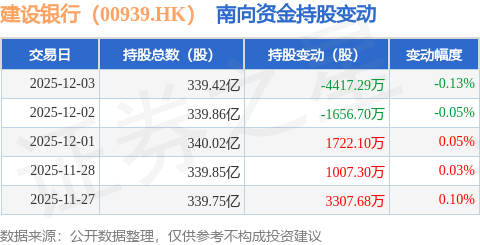
Group 1 - The core point of the news is that southbound funds have reduced their holdings in China Construction Bank (00939.HK) by 44.17 million shares on December 3, 2025, marking a decrease of 0.13% [1][2] - Over the past five trading days, there have been two days of net reductions in holdings, totaling 369,100 shares [1] - In the last 20 trading days, southbound funds have increased their holdings on 18 days, with a total net increase of 502 million shares [1] Group 2 - As of December 3, 2025, southbound funds hold a total of 33.942 billion shares of China Construction Bank, which represents 14.11% of the company's total issued ordinary shares [1][2] - The daily changes in shareholdings for the past few days show fluctuations, with the highest increase being 17.22 million shares on December 1, 2025, and the highest decrease being 44.17 million shares on December 3, 2025 [2] - China Construction Bank operates in both domestic and overseas markets, providing a range of services including corporate banking, personal banking, and fund services [2]
百万门槛!六大行五年期大额存单消失,三年期也高不可攀?
Sou Hu Cai Jing· 2025-12-03 17:13
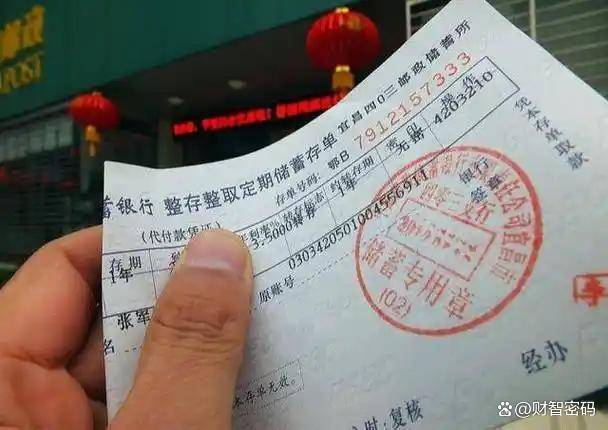
Core Viewpoint - The disappearance of long-term deposit products, particularly five-year large certificates of deposit (CDs), reflects the ongoing pressure on banks' net interest margins, leading to a reevaluation of their liability structures and product offerings [1][3][9] Group 1: Changes in Deposit Products - Major state-owned banks, including Industrial and Commercial Bank of China, Agricultural Bank of China, and others, have completely discontinued five-year large CDs, with some also reducing the availability of three-year products [3][5] - The current interest rate for a three-year large CD at Industrial and Commercial Bank is only 1.55%, with a minimum deposit requirement of 1 million yuan, contrasting sharply with the 50 yuan minimum for regular fixed deposits [5][17] - The trend of reducing long-term deposit products is not limited to large banks; some joint-stock banks and city commercial banks are also following suit, indicating a broader industry shift [3][7] Group 2: Impact on Customers - The increasing minimum deposit requirements for three-year products mean that large CDs are becoming exclusive to high-net-worth clients, moving away from their original target demographic of middle-class savers [5][11] - Ordinary depositors are facing challenges in asset allocation due to the scarcity of long-term deposit options, leading to a shift in savings behavior, with a notable decrease in the percentage of savers preferring to save more [13][17] - The current environment has prompted some depositors to seek higher returns or more diversified investment channels, reflecting a change in asset allocation strategies [13][15] Group 3: Industry Response - Banks are adjusting their product offerings in response to the pressure on net interest margins, with state-owned banks discontinuing five-year large CDs while smaller banks focus on shorter-term products [7][9] - The ongoing decline in loan rates and intense competition for deposits are squeezing banks' profit margins, necessitating a reevaluation of high-interest long-term deposit products [9][11] - Banks are increasingly using large CDs to attract high-quality new clients and as a stable asset for private banking clients, indicating a strategic shift in how these products are utilized [11][15]
既润“供给之木”又灌“需求之田”建设银行双向发力激活消费市场
Zheng Quan Ri Bao Zhi Sheng· 2025-12-03 16:10
Core Viewpoint - The article emphasizes the strategic importance of consumption as a "main engine" and "stabilizer" for economic growth in China, highlighting the need for policies that stimulate domestic demand and enhance consumer spending [1]. Policy Guidance - China Construction Bank (CCB) has initiated a consumption finance special action to support national policies aimed at boosting consumption and expanding domestic demand, integrating various financial services to create a comprehensive consumption finance ecosystem [2]. - CCB has implemented structural monetary policy tools to enhance credit support for consumption and elderly care, with over 100 billion yuan in loans allocated to these sectors since the policy's announcement [2]. Financial Support and Infrastructure - CCB has effectively utilized fiscal support policies, managing to distribute over 20.9 billion yuan in consumer vouchers across 309 cities, which has directly stimulated consumption by approximately 151.1 billion yuan [3]. - The bank has increased its credit support for key consumption sectors, with loans in tourism, culture, sports, health, education, and elderly care growing over 60% since the end of 2022 [5]. Demand Activation - CCB has developed a comprehensive consumer finance service system, responding to diverse consumer needs through personal loans, credit cards, and payment services, with a total of 35 million personal loan customers and a loan balance of 652.7 billion yuan as of October 2025 [7]. - The bank has enhanced the payment experience by integrating consumption loan features with payment services, facilitating immediate access to funds for consumers [8]. Ecosystem Co-construction - CCB is actively building a new consumption ecosystem by collaborating with various stakeholders, leveraging both online and offline channels to create a multi-faceted consumption environment [10]. - The bank has formed partnerships with leading e-commerce platforms to enhance consumer experiences and drive sales during key shopping events, fostering a positive interaction among banks, merchants, and customers [10]. Future Directions - CCB plans to continue implementing national strategies to boost consumption and expand domestic demand, focusing on emerging growth areas such as service consumption, green consumption, and digital consumption [11].
六大行集体下架五年期大额存单 低利率时代储户寻路多元配置
2 1 Shi Ji Jing Ji Bao Dao· 2025-12-03 13:31
Core Viewpoint - The recent collective removal of 5-year large denomination certificates of deposit (CDs) by major Chinese banks indicates a shift in banks' strategies towards more cautious interest margin management and a potential reduction in the supply of long-term fixed-rate deposits [1][11]. Group 1: Market Changes - Major state-owned banks have collectively removed 5-year large denomination CDs from their mobile banking platforms, with current offerings limited to terms of 3 years or less, and interest rates ranging from 1.20% to 1.55% [1][2]. - The trend of discontinuing 5-year large denomination CDs is not new, as some institutions had already begun this practice last year [1]. - The interest rates for 3-year large denomination CDs are approximately 1.55%, with minimum purchase amounts typically set at 200,000 yuan [2]. Group 2: Historical Context - The development of large denomination CDs spans nearly 40 years, with their initial issuance by the Bank of Communications in 1986, followed by a long hiatus until their reintroduction in 2015 [5][6]. - The popularity of large denomination CDs surged around 2018 due to changes in the banking landscape, including the relaxation of interest rate caps and increased demand for fixed-term deposits [6]. Group 3: Financial Implications - The discontinuation of long-term high-interest deposits is primarily driven by banks' need to manage net interest margins more effectively, as the current environment of low loan rates and high deposit costs creates pressure on profitability [11]. - As of the end of Q3, the net interest margin for commercial banks was reported at 1.42%, indicating a challenging environment for maintaining high-interest deposit products [11]. Group 4: Customer Behavior - The removal of 5-year large denomination CDs has prompted customers to reconsider their investment strategies, shifting from a focus on high-interest deposits to a more diversified asset allocation approach [12][15]. - A survey indicated that 18.5% of residents are inclined to invest more, with non-principal guaranteed bank wealth management products becoming increasingly popular [14].