CCB(601939)

Search documents
立减金、组合礼扎堆!银行个人养老金开启年末冲刺
Hua Xia Shi Bao· 2025-12-01 09:36
Core Insights - Banks are intensifying promotional activities for personal pension accounts, focusing on customer retention and active participation rather than just attracting new accounts [3][6][7] Group 1: Promotional Strategies - Major banks, including China Bank and Industrial and Commercial Bank, are offering various incentives such as WeChat discounts and cash rewards to encourage account opening and contributions [4][5] - The promotional focus has shifted from merely attracting new customers to enhancing customer experience and retention, as many accounts remain inactive after initial opening [3][6] Group 2: Customer Behavior and Market Trends - There is a prevalent issue of "high account openings but low contributions," with many customers opening accounts for short-term rewards but not actively contributing [7][8] - A report indicates that as of November 2024, only 21% of personal pension account holders are making contributions, despite a significant number of accounts being opened [7][8] Group 3: Regulatory and Competitive Landscape - The regulatory framework allows individuals to open only one personal pension account with a commercial bank, intensifying competition among banks to attract customers [5][8] - Banks are innovating their services, such as introducing appointment-based contribution options, to lower barriers for customers and encourage ongoing contributions [9][10]



建设银行(00939) - 截至2025年11月30日止股份发行人的证券变动月报表
2025-12-01 09:27
FF301 股份發行人及根據《上市規則》第十九B章上市的香港預託證券發行人的證券變動月報表 截至月份: 2025年11月30日 狀態: 新提交 致:香港交易及結算所有限公司 公司名稱: 中國建設銀行股份有限公司 呈交日期: 2025年12月1日 I. 法定/註冊股本變動 | 1. 股份分類 | 普通股 | 股份類別 | H | | 於香港聯交所上市 (註1) | | 是 | | | --- | --- | --- | --- | --- | --- | --- | --- | --- | | 證券代號 (如上市) | 00939 | 說明 | | | | | | | | | | 法定/註冊股份數目 | | | 面值 | | 法定/註冊股本 | | | 上月底結存 | | | 240,417,319,880 | RMB | | 1 RMB | | 240,417,319,880 | | 增加 / 減少 (-) | | | 0 | | | RMB | | 0 | | 本月底結存 | | | 240,417,319,880 | RMB | | 1 RMB | | 240,417,319,880 | | 2. 股份分 ...
我国5家银行入选2025年G-SIB名单 分析称未来继续看好银行板块
Zhong Guo Jing Ying Bao· 2025-12-01 09:21
Group 1 - The Financial Stability Board (FSB) announced the 2025 list of Global Systemically Important Banks (G-SIBs), with five Chinese banks included, maintaining the same number as the previous year [1] - Industrial and Commercial Bank of China (ICBC) has been upgraded to the third group with an additional capital requirement of 2.0%, while Bank of China, Agricultural Bank of China, and China Construction Bank remain in the second group with a requirement of 1.5%, and Bank of Communications stays in the first group with a requirement of 1% [1] - Following the upgrade, ICBC's core Tier 1 capital adequacy ratio regulatory requirement increases from 9% to 9.5%, with a current ratio of 13.6%, providing a buffer of 4.6 percentage points [1] Group 2 - Fitch Ratings noted that the scoring changes for Chinese G-SIBs in 2025 show that scale is no longer the primary driver for score increases, and exchange rate effects have positively influenced scores [2] - The Basel Committee plans to adjust the framework for identifying G-SIBs from year-end static data to annual average calculations, which may reduce data volatility and limit the impact on most banks, although institutions near threshold levels may experience changes [2] - The increase in global systemic importance reflects the fundamental strength of large banks, with scores for the five major banks rising between 9 to 33 points, and Bank of China is likely to be upgraded soon [2] Group 3 - The banking sector is viewed positively for long-term investment, with a high dividend strategy still having room for growth amid an "asset shortage" environment, suggesting a continuation of structural market trends [3]


从建行辞职,去房企领高额“安家费”!原泰禾集团一副总裁获刑14年
Mei Ri Jing Ji Xin Wen· 2025-12-01 09:19
据最高人民检察院11月28日消息,最高人民法院、最高人民检察院(以下简称"两高")联合发布6件依法惩治金融领域职务犯罪典 型案例。 值得注意的是,某国有大行部门负责人与某企业之间的新型受贿政商"旋转门"案件也被纳入典型。据第一财经,记者根据公开信息 对比发现,该案两大"主角"正是建设银行机构业务部原总经理黄曦(女),以及深处债务危机中的泰禾集团董事长黄其森。 据中央纪委国家监委2022年5月消息,黄曦涉嫌严重违纪违法,正接受中央纪委国家监委驻建设银行纪检监察组纪律审查和吉林省 监察委员会监察调查。同年11月,黄曦被开除党籍,涉嫌犯罪问题被移送检察机关。 当时通报提到,黄曦在职时"提前筑巢"为信贷客户企业谋取利益,离职后"权力变现"在信贷客户企业领取高额"安家费"和薪酬,是 银企"旋转门"式腐败的典型。 此次最高法、最高检的典型案例通报则进一步披露了相关细节:2016年1月至2018年7月,黄曦利用担任建设银行资产管理部、机构 业务部总经理职务上的便利,以及职权、地位形成的便利条件,直接或者通过其他国家工作人员职务上的行为,为黄其森实际控制 公司进入建设银行特定客户名单等事项提供帮助。 黄曦与黄其森约定,由黄其 ...


多因素催化银行股涨幅居前,地产风险可控:华创金融红利资产月报(2025年11月)-20251201
Huachuang Securities· 2025-12-01 09:13
Investment Rating - The report maintains a "Buy" rating for the banking sector, highlighting that multiple factors are driving the rise in bank stocks, while real estate risks are deemed manageable [2]. Core Insights - The report emphasizes that the balance between supply and demand is crucial for economic recovery, with recent policies aimed at boosting consumer demand expected to enhance this balance [2]. - The M1 growth rate peaked and has started to decline, indicating a shift in deposit flows towards non-bank deposits due to a buoyant capital market [2]. - The exposure to real estate risks is decreasing, with a notable reduction in the balance of real estate development loans, suggesting that banks are adopting a more cautious approach [2][7]. - The report notes that the non-performing loan ratio for real estate has decreased, indicating improved risk management within the banking sector [7]. Monthly Market Performance - In November 2025, the banking sector saw a cumulative increase of 2.99%, outperforming the CSI 300 index by 5.4 percentage points, ranking second among 31 sectors [11]. - The report indicates that institutional investors have increased their holdings in bank stocks, driven by a stable fundamental outlook and expectations of valuation recovery [11]. - The valuation of state-owned banks has shown significant improvement, with the price-to-book (PB) ratio rising from approximately 0.76X at the beginning of the month to 0.78X by the end [13]. Banking Sector Fundamentals - The report tracks monthly data indicating that the banking sector's core revenue-generating capacity has strengthened, with asset quality remaining stable [8]. - The report highlights that the banking sector's current valuation is at a historically low level, with a price-to-earnings (PE) ratio of 6.53 and a PB ratio of 0.56 [11]. Investment Recommendations - The report suggests a diversified investment strategy focusing on banks with high dividend yields and strong asset quality, particularly smaller banks with solid provisioning coverage [7]. - It also recommends attention to low-valuation joint-stock banks with potential for return on equity (ROE) improvement, such as CITIC Bank and Industrial Bank [7]. - The report indicates that banks with robust customer bases and excellent risk control are likely to have greater valuation elasticity in the context of economic structural transformation [7].

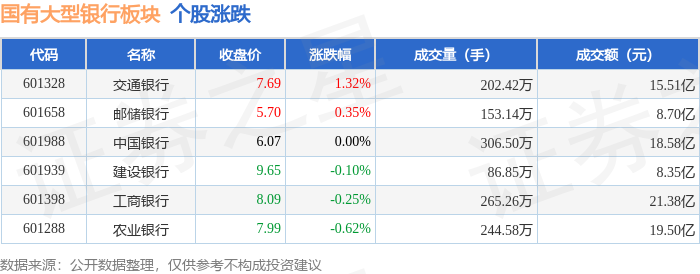
国有大型银行板块12月1日跌0.26%,农业银行领跌,主力资金净流出3.48亿元
Zheng Xing Xing Ye Ri Bao· 2025-12-01 09:09
证券之星消息,12月1日国有大型银行板块较上一交易日下跌0.26%,农业银行领跌。当日上证指数报收 于3914.01,上涨0.65%。深证成指报收于13146.72,上涨1.25%。国有大型银行板块个股涨跌见下表: | 代码 | 名称 | 收盘价 | 涨跌幅 | 成交量(手) | 成交额(元) | | | --- | --- | --- | --- | --- | --- | --- | | 601328 | 交通银行 | 7.69 | 1.32% | 202.42万 | | 15.51 Z | | 601658 | 邮储银行 | 5.70 | 0.35% | 153.14万 | | 8.70 Z | | 601988 | 中国银行 | 6.07 | 0.00% | 306.50万 | | 18.58 Z | | 666109 | 建设银行 | 9.65 | -0.10% | 86.85万 | | 8.35 Z | | 601398 | 工商银行 | 8.09 | -0.25% | 265.26万 | | 21.38 Z | | 601288 | 农业银行 | 7.99 | -0.62% | 244.58万 ...


从建行辞职,去房企领高额“安家费”!原泰禾集团一副总裁获刑14年,其涉及政商“旋转门”受贿案件,被纳入典型
Mei Ri Jing Ji Xin Wen· 2025-12-01 08:59
据最高人民检察院11月28日消息,最高人民法院、最高人民检察院(以下简称"两高")联合发布6件依法惩治金融领域职务犯罪典型案例。 值得注意的是,某国有大行部门负责人与某企业之间的新型受贿政商"旋转门"案件也被纳入典型。据第一财经,记者根据公开信息对比发现,该案两 大"主角"正是建设银行机构业务部原总经理黄曦(女),以及深处债务危机中的泰禾集团董事长黄其森。 据中央纪委国家监委2022年5月消息,黄曦涉嫌严重违纪违法,正接受中央纪委国家监委驻建设银行纪检监察组纪律审查和吉林省监察委员会监察调查。 同年11月,黄曦被开除党籍,涉嫌犯罪问题被移送检察机关。 当时通报提到,黄曦在职时"提前筑巢"为信贷客户企业谋取利益,离职后"权力变现"在信贷客户企业领取高额"安家费"和薪酬,是银企"旋转门"式腐败的 典型。 此次最高法、最高检的典型案例通报则进一步披露了相关细节:2016年1月至2018年7月,黄曦利用担任建设银行资产管理部、机构业务部总经理职务上的 便利,以及职权、地位形成的便利条件,直接或者通过其他国家工作人员职务上的行为,为黄其森实际控制公司进入建设银行特定客户名单等事项提供帮 助。 黄曦与黄其森约定,由黄其森 ...
应对净息差持续收窄压力,向质量效益型转变——多家银行下架五年期大额存单
Jing Ji Ri Bao· 2025-12-01 06:51
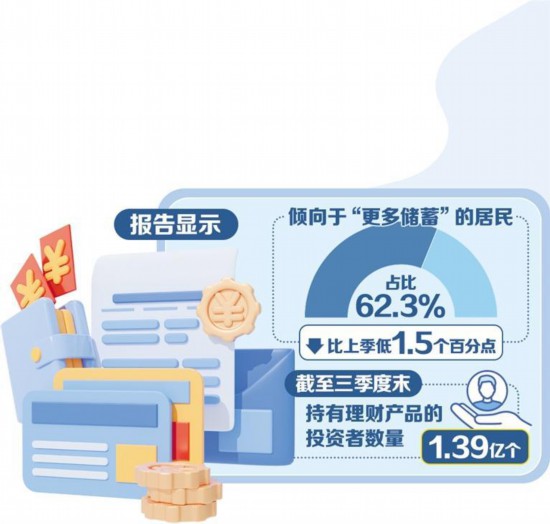
Core Viewpoint - Major state-owned banks in China, including Industrial and Commercial Bank of China, Agricultural Bank of China, and China Construction Bank, have collectively removed five-year large denomination time deposits from their offerings, shifting focus to shorter-term products in response to narrowing net interest margins [2][3]. Group 1: Changes in Deposit Products - Six major commercial banks have adjusted their deposit products by removing five-year large denomination time deposits, leaving only shorter-term options available for investors [2]. - This shift is seen as a strategic response to the ongoing pressure of declining net interest margins, which are currently at historical lows [2][3]. - The removal of long-term deposit products is aimed at shortening the average maturity of liabilities and enhancing the re-pricing flexibility of banks [2]. Group 2: Impact on Small and Medium Banks - Small and medium-sized banks are also accelerating adjustments to their deposit product structures due to increasing net interest margin pressures [3]. - These banks, which typically have weaker deposit-raising capabilities and brand trust compared to large banks, are moving away from high-interest long-term deposits that are no longer sustainable [3]. - The prevalence of interest rate inversion, where short-term deposit rates exceed long-term rates, is diminishing the attractiveness of medium to long-term deposits, prompting these banks to focus on short- to medium-term products [3]. Group 3: Investor Behavior and Market Trends - As deposit rates decline, there is a noticeable trend of "savings migration," with bank wealth management products gaining popularity due to their lower volatility [3][4]. - A survey indicates that 62.3% of urban savers prefer to save more, a decrease of 1.5 percentage points from the previous quarter [4]. - The number of investors holding wealth management products reached 139 million by the end of the third quarter, reflecting a year-on-year growth of 12.7% [4]. Group 4: Recommendations for Banks - Banks are advised to enhance asset yields by optimizing credit structures and improving risk pricing capabilities while also focusing on non-credit asset management [4]. - On the liability side, banks should strengthen their core deposit-raising capabilities by exploring service, product, and channel potentials, and optimizing customer segmentation strategies to enhance low-cost fund retention [4].
金融行业周报:全球重要性银行名单公布,资本市场投融资改革持续推进-20251201
Ping An Securities· 2025-12-01 05:35
Investment Rating - The industry investment rating is "Outperform the Market," indicating an expected performance that exceeds the CSI 300 index by more than 5% within the next six months [34]. Core Insights - The Financial Stability Board (FSB) has released the 2025 list of Global Systemically Important Banks (G-SIBs), with five Chinese state-owned banks included. Notably, the Industrial and Commercial Bank of China (ICBC) has moved to the third group, requiring an additional capital requirement increase from 1.5% to 2.0% [4][12]. - The China Securities Regulatory Commission (CSRC) has issued a draft announcement for the pilot of Commercial Real Estate Investment Trusts (REITs), aimed at revitalizing the commercial real estate market and filling the gap for quality investment targets [5][13]. - A joint announcement from six departments outlines a plan to enhance the adaptability of supply and demand for consumer goods, targeting significant improvements in the supply structure by 2027 and fostering a high-quality development pattern by 2030 [6][19]. Summary by Sections Global Systemically Important Banks - The FSB has categorized Chinese banks into different groups, with ICBC in the third group, Agricultural Bank of China, Bank of China, and China Construction Bank in the second group, and China Communications Bank in the first group. This classification reflects the banks' systemic importance and associated capital requirements [4][12]. Commercial Real Estate Investment Trusts - The CSRC's draft announcement outlines the framework for establishing Commercial REITs, which will allow investment in commercial real estate assets to generate stable cash flows. This initiative is expected to address challenges in the commercial real estate sector and enhance financing channels [5][13]. Consumer Goods Supply and Demand - The joint plan from six government departments aims to optimize the supply structure of consumer goods, with specific targets for 2027 and 2030. The focus is on creating significant consumer sectors and enhancing the quality of products available in the market [6][19]. Industry Data - The banking sector saw a net injection of 15,118 billion yuan through open market operations, while the SHIBOR rates showed mixed performance. The average daily trading volume in the stock market was 21,585 billion yuan, reflecting a decrease of 7.4% from the previous week [21][27][29]. - The insurance sector's ten-year government bond yield increased by 2.46 basis points, indicating a slight upward trend in interest rates [32].
今年以来定增累计募资8470.55亿元
Zheng Quan Shi Bao Wang· 2025-12-01 03:42
今年以来共有137家公司实施定增,合计募资金额8470.55亿元。 以增发上市日为基准统计,今年以来共有137家公司实施定向增发,合计定增记录150条,累计增发 1065.58亿股,增发金额合计8470.55亿元。 | 代码 | 简称 | 募资金额(亿元) | 行业 | 代码 | 简称 | 募资金额(亿元) | 行业 | | --- | --- | --- | --- | --- | --- | --- | --- | | 601988 | 中国银行 | 1650.00 | 银行 | 600027 | 华电国际 | 68.56 | 公用事业 | | 601658 | 邮储银行 | 1300.00 | 银行 | 688126 | 沪硅产业 | 67.16 | 电子 | | 601328 | 交通银行 | 1200.00 | 银行 | 000657 | 中钨高新 | 65.95 | 有色金属 | | 601939 | 建设银行 | 1050.00 | 银行 | 688065 | 凯赛生物 | 59.26 | 基础化工 | | 601456 | 国联民生 | 314.92 | 非银金融 | 600025 | 华能水 ...