
BANK OF CHINA(601988)

Search documents
从“首发”到“全勤”——中国银行八年护航进博会,以金融笔墨绘就开放新画卷
Di Yi Cai Jing· 2025-11-04 04:27
Core Insights - The eighth China International Import Expo (CIIE) is being held in Shanghai, showcasing global products and services, with Bank of China (BOC) as the sole strategic partner providing comprehensive financial support [1][2] Group 1: BOC's Role in CIIE - BOC has been deeply involved in CIIE activities over the past eight years, supporting nearly 150 overseas exhibition promotions and over 120 domestic investment roadshows [1] - BOC Shanghai Branch has initiated comprehensive service preparations months before the event, ensuring meticulous attention to detail in service delivery [1] Group 2: Global Outreach and Services - BOC Shanghai Branch has successfully organized nearly 30 overseas promotional events this year, collaborating with international branches to extend CIIE invitations globally [3] - The branch has created a "cross-border e-commerce zone" and hosted supply-demand matching meetings to facilitate global enterprises' access to the Chinese market [3][4] Group 3: Digital Innovation and Financial Technology - BOC has upgraded its digital service ecosystem for CIIE, introducing a "digital RMB hard wallet" for foreign participants, enhancing payment convenience [6][7] - The "Hui Ruyuan - BOC e-Enterprise Win" global cross-border matching system offers intelligent matching, online negotiations, and credit assessments, becoming an essential digital infrastructure for CIIE [4] Group 4: Commitment to Financial Services - Since the first CIIE in 2018, BOC has provided comprehensive financial services, recruiting over 31,000 domestic and foreign enterprises and facilitating cooperation intentions exceeding $50 billion [9] - BOC aims to extend its high-quality financial services beyond the event duration, ensuring continuous support for enterprises throughout the year [9]

从“首发”到“全勤”——中国银行八年护航进博会,以金融笔墨绘就开放新画卷
华尔街见闻· 2025-11-04 04:02
Core Viewpoint - The article highlights the significant role of the Bank of China in supporting the China International Import Expo (CIIE) over the past eight years, emphasizing its commitment to providing comprehensive financial services and facilitating international trade connections [1][11]. Group 1: Bank of China's Role in CIIE - The Bank of China has evolved from a "comprehensive service support bank" to the "only strategic partner" of the CIIE, leveraging its global network across 64 countries to provide specialized financial services [1][11]. - The Shanghai branch of the Bank of China has actively participated in various CIIE-related activities, supporting nearly 150 overseas exhibition promotions and over 120 domestic investment roadshows [2][11]. - The bank has established multiple service points, including a one-stop service center for foreign personnel at Pudong Airport and a centralized tax refund point, demonstrating its commitment to meticulous service preparation [2][11]. Group 2: Global Outreach and Digital Innovation - The Shanghai branch has collaborated with overseas branches to conduct nearly 30 overseas promotional events, effectively spreading the CIIE's invitation globally [4][11]. - The introduction of a "cross-border e-commerce zone" and a supply-demand matching conference aims to facilitate global enterprises' access to the Chinese market, transforming exhibition products into commodities [4][5]. - The upgraded "Hui Ruyuan·Bank of China e-Enterprise Win" system provides intelligent matching, online negotiations, and credit assessments, enhancing the digital infrastructure for the CIIE [5][11]. Group 3: Financial Services and Digital Currency - The Bank of China has launched a "CIIE-themed digital RMB hard wallet," allowing foreign guests to experience convenient payment options during the expo [7][11]. - The bank supports 36 currencies for exchange during the CIIE, ensuring comprehensive currency exchange services for international exhibitors [8][11]. - A dedicated mobile banking app for the CIIE integrates various financial services, providing a one-stop solution for exhibitors and attendees [9][11]. Group 4: Commitment to Innovation and Future Development - The article emphasizes the importance of digital technology in reshaping economic structures, with the CIIE serving as a platform for financial institutions to explore technological innovation [6][11]. - The Bank of China continues to innovate its services beyond the expo period, aiming to extend the benefits of the CIIE throughout the year [11][12]. - The bank's efforts contribute to China's transition from a participant to a driver in global trade, aligning with the country's broader economic strategies [11][12].


国有六大行交出稳健发展成绩单
Jin Rong Shi Bao· 2025-11-04 02:09
Core Insights - The six major state-owned banks in China have reported stable and improving operational performance for the first three quarters of 2023, effectively supporting key areas of the real economy [1] Financial Performance - All six major banks achieved growth in both operating income and net profit for the first three quarters of 2023, with total assets also showing steady growth [2] - Industrial and Commercial Bank of China (ICBC) reported operating income of 640.03 billion yuan, a year-on-year increase of 2.17%, and net profit of 269.91 billion yuan, up 0.33% [2] - Agricultural Bank of China (ABC) achieved operating income of 550.88 billion yuan, a 1.97% increase, and net profit of 220.86 billion yuan, up 3.03% [2] - Bank of China (BOC) reported operating income of 491.20 billion yuan, a 2.69% increase, and net profit of 177.66 billion yuan, up 1.08% [2] - China Construction Bank (CCB) had operating income of 573.70 billion yuan, a 0.82% increase, and net profit of 257.36 billion yuan, up 0.62% [2] - Bank of Communications (BCOM) reported operating income of 199.65 billion yuan, a 1.80% increase, and net profit of 69.99 billion yuan, up 1.90% [3] - Postal Savings Bank of China (PSBC) achieved operating income of 265.08 billion yuan, a 1.82% increase, and net profit of 76.56 billion yuan, up 0.98% [3] - BOC had the highest year-on-year growth in operating income, while ABC had the highest growth in net profit [3] Asset Quality - The non-performing loan (NPL) ratios of the six major banks showed overall improvement, with five banks reporting a decrease compared to the end of the previous year [4] - PSBC's NPL ratio slightly increased but remained the lowest among the six banks [4] - The provision coverage ratio showed a mixed trend, with ICBC, CCB, and BCOM seeing increases, while ABC, BOC, and PSBC experienced declines [4][5] Support for the Real Economy - The six major banks demonstrated steady credit growth and further optimized their loan structures, enhancing support for major projects and key sectors [6] - ICBC's loan and bond investments exceeded 400 billion yuan, setting a new record for the year [7] - ABC's county-level loans exceeded 1 trillion yuan, with a growth rate of 10.57%, surpassing the bank's average [7] - BOC actively supported consumer spending, with personal consumption loans growing by 26.11% year-to-date [7] - CCB reported significant growth in inclusive finance services, with small and micro enterprise loans increasing by 397.69 billion yuan [8] - BCOM focused on enhancing its financial capabilities in Shanghai, collaborating on major projects [8] - PSBC continued to improve its green finance services, with green loan balances growing by 16.32% [8]





重点领域贷款增量创新高 服务实体经济“挑大梁”
Jin Rong Shi Bao· 2025-11-04 02:06
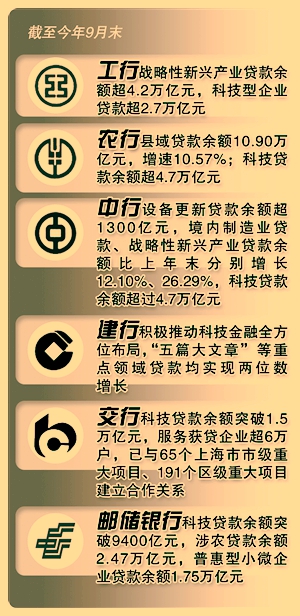
Core Insights - The six major state-owned banks in China reported stable loan growth and effective support for key sectors of the economy in their Q3 reports, demonstrating leadership in addressing weak links in the economy [1][2]. Loan Growth and Focus Areas - The total loan volume of the six major banks has shown steady growth, with targeted lending in key areas such as manufacturing, strategic emerging industries, and agriculture [4][5]. - Industrial and Commercial Bank of China (ICBC) reported a significant increase in loans, with RMB loans from domestic branches rising by 2.04 trillion yuan [4]. - Agricultural Bank of China (ABC) prioritized county-level resource allocation, with a loan balance of 10.90 trillion yuan and a growth rate of 10.57%, which is 2.21 percentage points higher than the bank's average [4]. - China Bank's loans for manufacturing and strategic emerging industries grew by 12.10% and 26.29%, respectively [4]. Support for Agriculture and Small Enterprises - Postal Savings Bank of China focused on agricultural finance, with an agricultural loan balance of 2.47 trillion yuan and inclusive finance loans exceeding 1 trillion yuan [5]. - ABC's loans for rural industries and construction reached 2.74 trillion yuan and 2.47 trillion yuan, with growth rates of 22.8% and 9.7% respectively [4]. Technology Loan Growth - The six banks have significantly increased their loan scales in the technology sector, with ICBC's loans for strategic emerging industries exceeding 4.2 trillion yuan and technology enterprise loans surpassing 2.7 trillion yuan [6]. - Agricultural Bank and China Bank also reported technology loan balances exceeding 4.7 trillion yuan [6]. AIC Equity Investment Development - Several banks have initiated AIC equity investment pilot projects, with ICBC covering 18 pilot regions and establishing 38 funds with a subscribed scale exceeding 45 billion yuan [7]. - China Bank has set up 16 equity investment funds focusing on key emerging industries, with a total subscribed scale of 11.76 billion yuan [7]. Risk Management and Control - The six banks have enhanced their risk management frameworks, particularly in agricultural loans, to ensure asset quality remains stable [8]. - ABC has integrated risk control measures throughout the loan process, utilizing financial technology to improve risk identification and management [8]. - Construction Bank has implemented monitoring measures for loan usage to prevent misuse of funds, ensuring compliance with policies [10].
普惠、绿色、科创三大领域信贷增量显著
Jin Rong Shi Bao· 2025-11-04 02:01
Core Viewpoint - The major state-owned banks in China have reported stable performance in Q3, with a focus on supporting high-quality development of the real economy through optimized credit allocation and increased lending in key sectors [1][2]. Group 1: Credit Allocation and Key Sectors - The overall trend in credit issuance for the year has been characterized by "total growth + structural optimization," with significant support directed towards inclusive small and micro enterprises, green development, and technological innovation [1][2]. - As of the end of Q3, the Agricultural Bank of China reported a balance of inclusive loans at 4.33 trillion yuan, with an increase of 731.1 billion yuan, while the balance of green loans reached 5.8 trillion yuan [2]. - The China Construction Bank's green loan balance stood at 5.89 trillion yuan, reflecting an 18.38% increase from the beginning of the year [2]. Group 2: Consumer Loans and Spending - There has been a notable increase in consumer loans, with the Industrial and Commercial Bank of China reporting a debit card transaction volume of 13.8 trillion yuan and credit card spending of 1.4 trillion yuan in the first three quarters [4]. - The China Bank's personal consumption loan balance grew by 26.11% year-on-year, reaching a significant increase in consumer spending [4][5]. - The Postal Savings Bank has implemented measures to boost consumption, resulting in a more than 10% year-on-year increase in loans for non-housing consumption [5]. Group 3: Digital Transformation and Future Outlook - Experts anticipate that the credit structure will continue to optimize, with a dual focus on consumption and inclusive finance, supporting stable growth in public enterprises and promoting domestic demand [6]. - The integration of digitalization in credit services is expected to enhance efficiency and precision in loan approvals, with the application of AI and big data technologies further reducing credit risks [7]. - Future credit allocations are likely to prioritize green, low-carbon, and digital economy sectors, aligning with national policy directions [6].
郭永航会见中国银行党委书记、董事长葛海蛟
Guang Zhou Ri Bao· 2025-11-04 01:41
Core Insights - The meeting between Guangzhou's Party Secretary Guo Yonghang and China Bank's Chairman Ge Haijiao focused on deepening government-bank cooperation to support Guangzhou's economic and social development [2] Group 1: Government Initiatives - Guangzhou is implementing the "14th Five-Year Plan" and leveraging its position as a core engine of the Guangdong-Hong Kong-Macao Greater Bay Area to drive high-quality development [2] - The city aims to build a modern industrial system referred to as "12218," emphasizing technological innovation and modern finance as key support [2] Group 2: China Bank's Role - China Bank is committed to expanding its business in Guangzhou, recognizing it as a strategic area for its operations [2] - The bank plans to innovate financial products and services to support Guangzhou's development, particularly in areas such as project financing and technology transfer [2]
中国银行紧扣展商客商需求 持续升级“进博专属服务”
Jin Rong Shi Bao· 2025-11-04 01:17
Core Viewpoint - The Bank of China has launched a comprehensive financial service plan for the 8th China International Import Expo (CIIE), focusing on enhancing services for exhibitors and buyers, and facilitating connections between global enterprises and the Chinese market [1] Group 1: Financial Services and Innovations - The Bank of China leverages its nearly 600 branches across 64 countries to provide tailored financial services for the CIIE, including a dedicated cross-border e-commerce area and a roundtable for global business associations [1] - The bank has developed a "point-to-point, end-to-end" closed-loop service system that supports exhibitors and buyers throughout the entire process from pre-registration to post-event fulfillment [1] - This year, the Bank of China introduced smart payment services for exhibitors at the National Exhibition and Convention Center, enabling 24-hour access for payment during setup [1] Group 2: Customized Solutions and Currency Services - The bank offers customized one-stop solutions for various sectors such as agricultural products, smart travel, technology equipment, medical supplies, and consumer goods, including settlement, financing, insurance, and foreign exchange services [1] - The Bank of China has optimized payment services for foreign exhibitors coming to China, providing cash settlement services in 33 foreign currencies, now available at 260 branches in Shanghai [1]
零售贷款增速显著跑输对公,民生兴业平安个贷增速为负!哪家对公强?
Xin Lang Cai Jing· 2025-11-04 01:00
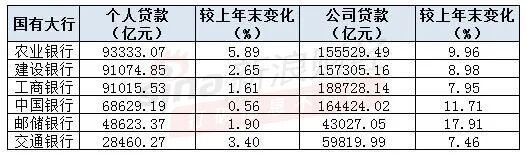
Core Viewpoint - The report highlights that corporate loans continue to drive the growth of bank credit, significantly outpacing retail loans in the first three quarters of 2025, with state-owned banks showing a notable increase in corporate lending compared to retail lending [1][5][11]. Group 1: State-Owned Banks Performance - Among state-owned banks, Agricultural Bank of China leads in personal loan size at 93,333.07 million yuan, with a growth of 5.89% compared to the end of the previous year [3][5]. - Postal Savings Bank shows a remarkable increase in corporate loans, with a growth rate of 17.91%, while its personal loans grew by only 1.90% [5][7]. - The overall trend indicates that personal loan growth is lagging behind corporate loan growth, with only Agricultural Bank exceeding a 5% increase in personal loans among the major banks [5][11]. Group 2: Joint-Stock Banks Performance - Several joint-stock banks, including Minsheng Bank, Industrial Bank, and Ping An Bank, reported negative growth in retail loans, while their corporate loans continued to grow positively [1][11]. - For instance, Ping An Bank's personal loans decreased by 2.10% to 17,291.92 million yuan, while its corporate loans saw a decline in bad debt rates [11][12]. - In contrast, China Merchants Bank reported a retail loan balance of 36,966.19 million yuan, with a modest growth of 1.43%, but its corporate loans grew significantly [9][13]. Group 3: Retail Asset Under Management (AUM) - Despite the challenges in retail loan growth, several banks reported strong growth in retail AUM. For example, China Merchants Bank's retail AUM reached 16.6 trillion yuan, growing by 11.19% [1][15]. - Shanghai Pudong Development Bank also reported a significant increase in personal financial assets, with a growth of 19.07% to 4.62 trillion yuan [15]. - Management teams from various banks emphasized their commitment to enhancing retail market share, indicating a long-term strategic focus on retail banking despite current market conditions [15][16].



中国银行收到成立来最大罚单
3 6 Ke· 2025-11-04 00:57
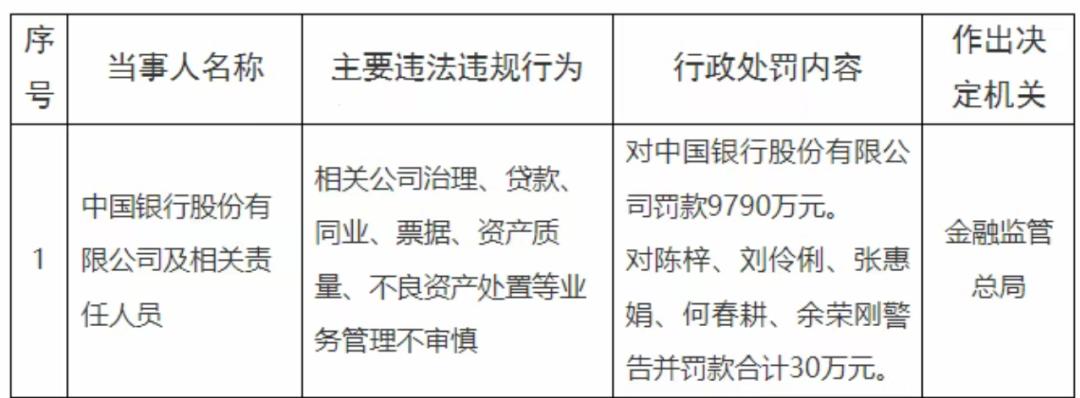
Core Viewpoint - The banking industry is undergoing a stringent regulatory cycle, highlighted by significant fines imposed on major banks for compliance failures and internal control shortcomings [2][12][16]. Summary by Sections Regulatory Environment - The regulatory landscape is tightening, with increasing demands for compliance in the banking sector, as evidenced by the record fines issued this year [2][12]. - The total number of fines and the amount imposed on banks have significantly increased, indicating a shift towards stricter enforcement of compliance standards [15]. Major Fines - China Bank received a fine of 97.9 million yuan, marking the largest fine in its history, due to issues related to loan management, asset quality, and internal controls [3][4]. - Other banks, including Agricultural Bank and Minsheng Bank, also faced substantial fines for various compliance failures, with amounts of 27.2 million yuan and 58.65 million yuan respectively [8][9]. Internal Control Issues - The fines reveal critical weaknesses in internal controls and compliance culture within major financial institutions, suggesting that compliance is not merely an option but a necessity for survival [13][16]. - China Bank's response to the fine indicates a commitment to rectify identified issues and enhance risk management and internal control systems [4][10]. Industry Implications - The trend of hefty fines serves as a warning to the entire banking sector, emphasizing the importance of robust internal controls and adherence to regulatory requirements [12][16]. - The regulatory focus on compliance is expected to evolve, with an emphasis on digitalization and intelligent compliance systems to meet the growing complexity of regulatory demands [19][20].
机遇“金闪闪” 银行贵金属业务规模大增
Shang Hai Zheng Quan Bao· 2025-11-03 18:11
Core Viewpoint - The strong international gold prices and rising global risk aversion are driving the growth of banks' precious metals businesses, with significant year-on-year increases reported in the third-quarter financial results of listed banks. However, the recent fluctuations in gold prices present new challenges for these banking operations [1]. Group 1: Growth in Precious Metals Business - The precious metals business of banks has rapidly expanded due to the sustained rise in gold prices, with smaller banks showing particularly impressive growth. As of the end of September, Nanjing Bank's precious metals business reached 7.201 billion yuan, a staggering increase of 11,914.36% compared to the end of 2024. Hangzhou Bank's precious metals business grew to 1.217 billion yuan, up 1,523.57% from the end of 2024 [2]. - Joint-stock banks also experienced significant growth in their precious metals business. By the end of September, compared to the end of 2024, the precious metals business of Shanghai Pudong Development Bank increased by over 350%, while China CITIC Bank saw an increase of over 200%. Other banks like Zhejiang Commercial Bank, Industrial Bank, China Merchants Bank, and Minsheng Bank all reported growth exceeding 100% [2]. - Major banks maintained steady growth from a high base, with the precious metals business of Bank of China, China Construction Bank, and Agricultural Bank of China all increasing by over 10% compared to the end of 2024 [2]. Group 2: Strategic Focus on Precious Metals - The precious metals business combines wealth management and increased intermediary income, potentially becoming a significant factor in banks' intermediary income. Precious metals, especially gold, are seen as irreplaceable in banks' wealth management offerings and are crucial for customer asset allocation [3]. - Analysts note that the demand for gold as a hedge and a store of value is rising among residents. Banks, as key channels for gold bar sales and coin distribution, are well-positioned to meet this demand through the continued popularity of online investment products like account gold and gold accumulation [3]. - The decline in gold jewelry consumption may lead banks to reduce reliance on traditional jewelry sales and instead focus on innovation and promotion of their precious metals business [3]. Group 3: Risk Management Amid Price Volatility - Despite the growth, the high volatility of precious metals, particularly gold and silver, poses challenges for banks. Since October, these metals have entered a period of high volatility, prompting banks to enhance their risk management strategies [4]. - In response to market fluctuations, banks have adjusted trading rules and increased the minimum purchase thresholds for gold accumulation products to a range of 950 to 1,200 yuan, compared to around 500 yuan last year. Additionally, some banks have modified their precious metals wallet services to align with real-time gold price fluctuations [4]. - Looking ahead, institutions expect gold to retain its upward potential, maintaining its importance in asset allocation. The profitability of banks' precious metals business will increasingly depend on their internal capabilities, including the establishment of robust risk management systems to mitigate price volatility risks and the optimization of asset allocation for stable returns [4].



