LBX(603883)

Search documents
国泰海通晨报-20251121
GUOTAI HAITONG SECURITIES· 2025-11-21 03:00
Group 1: Company Overview - Amer Sports - Amer Sports reported Q3 2025 revenue of $1.76 billion, exceeding guidance with a year-on-year growth of 30%, surpassing the high end of the guidance range of 20% [3][41] - The adjusted gross margin increased by 2.4 percentage points to 57.9%, while the adjusted operating margin rose by 1.3 percentage points to 15.7%, also exceeding guidance [3][41] - The net profit attributable to shareholders surged by 156% year-on-year to $140 million [3][41] Group 2: Segment Performance - The functional apparel segment saw a 31% year-on-year revenue increase, driven by strong performance in the women's business and footwear, with direct-to-consumer (DTC) sales up 46% [3][42] - The outdoor apparel segment experienced a 36% year-on-year revenue growth, primarily due to strong sales of Salomon footwear and apparel, with DTC sales increasing by 67% [4][42] - The ball sports segment reported a 16% year-on-year revenue increase, with significant growth potential through partnerships with leading distributors [4][43] Group 3: Strategic Outlook - The company maintains a positive long-term growth outlook, projecting a compound annual growth rate (CAGR) of low to mid-double digits for revenue from 2025 to 2030, with annual operating margin improvements [5][43] - The strategic plan includes continued investment in product development and marketing, particularly in expanding store presence in North America and Europe [5][43] - The company anticipates a significant increase in revenue from the recovery of its South Korean distribution business, expected to add approximately $25 million in Q4 2025 [3][42] Group 4: Industry Context - Retail and Pharmaceuticals - The retail sector, particularly in the pharmaceutical industry, is experiencing pressure, with the company reporting a 1% decline in revenue for the first three quarters of 2025 [6][8] - The company is focusing on store expansion in lower-tier markets, with a total of 15,492 stores as of Q3 2025, including 9,741 direct-operated stores [9][8] - The pharmaceutical retail business reported a revenue of $13.144 billion, a slight decline of 1.27% year-on-year, with a gross margin of 36.71% [8][9]

老百姓11月20日获融资买入1714.83万元,融资余额5.15亿元
Xin Lang Cai Jing· 2025-11-21 01:29
Core Viewpoint - The company, Lao Bai Xing, has experienced a decline in stock price and financial performance, with significant changes in shareholder structure and trading activity [1][2]. Group 1: Stock Performance - On November 20, Lao Bai Xing's stock price fell by 1.51%, with a trading volume of 197 million yuan [1]. - The financing buy-in amount for the day was 17.15 million yuan, while the financing repayment was 16.26 million yuan, resulting in a net financing buy of 890,200 yuan [1]. - As of November 20, the total financing and securities lending balance was 516 million yuan, with the financing balance at 515 million yuan, accounting for 4.15% of the circulating market value, which is below the 40th percentile level over the past year [1]. Group 2: Financial Performance - For the period from January to September 2025, Lao Bai Xing reported a revenue of 16.07 billion yuan, a year-on-year decrease of 1.00%, and a net profit attributable to shareholders of 529 million yuan, down 16.11% year-on-year [2]. - Since its A-share listing, the company has distributed a total of 2.175 billion yuan in dividends, with 1.097 billion yuan distributed over the past three years [2]. Group 3: Shareholder Structure - As of October 31, the number of shareholders for Lao Bai Xing increased to 63,700, up by 1.94%, while the average circulating shares per person decreased by 1.90% to 11,921 shares [2]. - Among the top ten circulating shareholders, Hong Kong Central Clearing Limited is the fifth largest, holding 7.76 million shares, a decrease of 7.32 million shares from the previous period [2].
老百姓:上市以来,公司累计现金分红总额21.75亿元
Zheng Quan Ri Bao Zhi Sheng· 2025-11-20 13:11
Core Viewpoint - The company emphasizes its commitment to shareholder returns through a structured dividend policy, ensuring a minimum cash dividend of 50% of the annual net profit attributable to shareholders from 2024 to 2026 [1] Group 1: Dividend Policy - The company has announced a shareholder return plan for the next three years (2024-2026), committing to a minimum cash dividend of 50% of the annual net profit attributable to shareholders, contingent on meeting cash dividend conditions and maintaining operational funding needs [1] - Since its IPO, the company has distributed a total cash dividend of 2.175 billion yuan, which is approximately 215% of the net funds raised during the IPO, reflecting a strong commitment to enhancing shareholder value [1]
专访中国能源研究会首席专家黄少中:可通过技术手段和机制创新 让“负电价”红利惠及老百姓
Mei Ri Jing Ji Xin Wen· 2025-11-19 17:04
Core Viewpoint - The recent publication of the "Suggestions on Formulating the 15th Five-Year Plan for National Economic and Social Development" emphasizes the need for high-quality development of clean energy, including the peak consumption of coal and oil, and the promotion of new energy storage solutions [1] Group 1: Coal and Oil Peak Consumption - China's coal consumption has decreased from 68.5% in 2000 to 53.2% in 2024, while oil consumption has dropped from 22% to 18.2%, but both still account for 71.4% of total energy consumption [2] - Achieving peak consumption for coal and oil by 2030 is challenging but feasible, with ongoing policy efforts showing gradual effectiveness [2] - The coal power sector is expected to reach its peak consumption before the coal sector overall, due to the reduction in coal use in industries like steel and cement [4] Group 2: Energy Transmission and Pricing Mechanism - The external transmission of electricity is deemed crucial for large-scale renewable energy consumption, especially in regions like Northwest China [5] - The establishment of a scientific and reasonable pricing mechanism for electricity transmission is essential, as current pricing often leads to disputes and inefficiencies [7] - Government intervention is necessary to enhance transmission capacity and coordinate interests among different stakeholders [9] Group 3: Renewable Energy Investment and Market Dynamics - As of September 2023, China's renewable energy capacity reached nearly 22 billion kilowatts, with a target of 36 billion kilowatts by 2035, necessitating an annual increase of 1.9 to 2 billion kilowatts [10] - The current low on-grid electricity prices are affecting investment enthusiasm in the renewable sector, particularly in solar energy [10][11] - The relationship between promoting investment and achieving targets is manageable, with expectations that the 2035 goal will be met or exceeded [12] Group 4: New Energy Storage Development - The new energy storage sector is experiencing rapid growth but faces challenges such as low-price competition and economic viability [15] - Recent policy changes have ended mandatory energy storage requirements for new renewable projects, leading to an oversupply in the market [16] - The government is working on reforms to improve market mechanisms for energy storage, including integrating it into capacity pricing systems [17]
专家说出了大实话:老百姓没钱了,为啥还要刺激消费?
Sou Hu Cai Jing· 2025-11-18 03:37
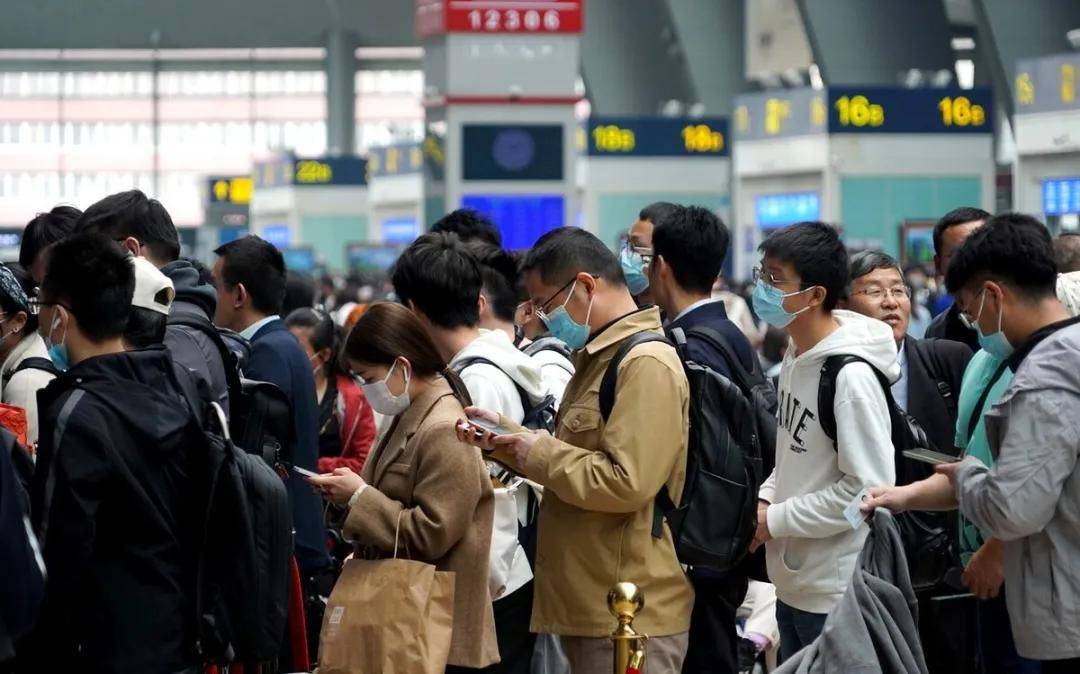
Core Viewpoint - The domestic consumption market in China is struggling, leading to economic slowdown, despite various stimulus measures being implemented by local governments and banks to encourage spending [2][4][5]. Group 1: Current Economic Situation - The consumption market has been weak, causing difficulties for businesses and potential layoffs for workers, which in turn affects overall economic growth [2]. - Local governments are issuing consumption vouchers and providing subsidies for home appliances to stimulate spending [2]. - Banks have lowered deposit interest rates to historical lows, encouraging people to spend or invest rather than save [4]. Group 2: Consumer Behavior and Challenges - Despite various stimulus efforts, consumer enthusiasm remains low, with many individuals choosing to save rather than spend due to financial insecurity [5]. - A significant portion of the population, approximately 5.6 billion people, have no savings in banks, indicating a lack of disposable income [5][7]. - The wealth distribution is highly uneven, with only 2% of depositors holding 80% of total savings, leaving the majority with limited financial resources [7][16]. Group 3: Recommendations for Stimulating Consumption - To effectively stimulate consumption, it is essential to increase household incomes through equitable wealth distribution and improved wage standards [12]. - Reducing the financial burdens related to housing, education, and healthcare can alleviate consumer anxiety and encourage spending [14]. - Addressing income inequality and promoting a more balanced social structure can enhance overall consumer confidence and spending capacity [16].

金价降了没人买,金店人潮不见了,老百姓为啥不喜欢黄金了?
Sou Hu Cai Jing· 2025-11-17 18:09
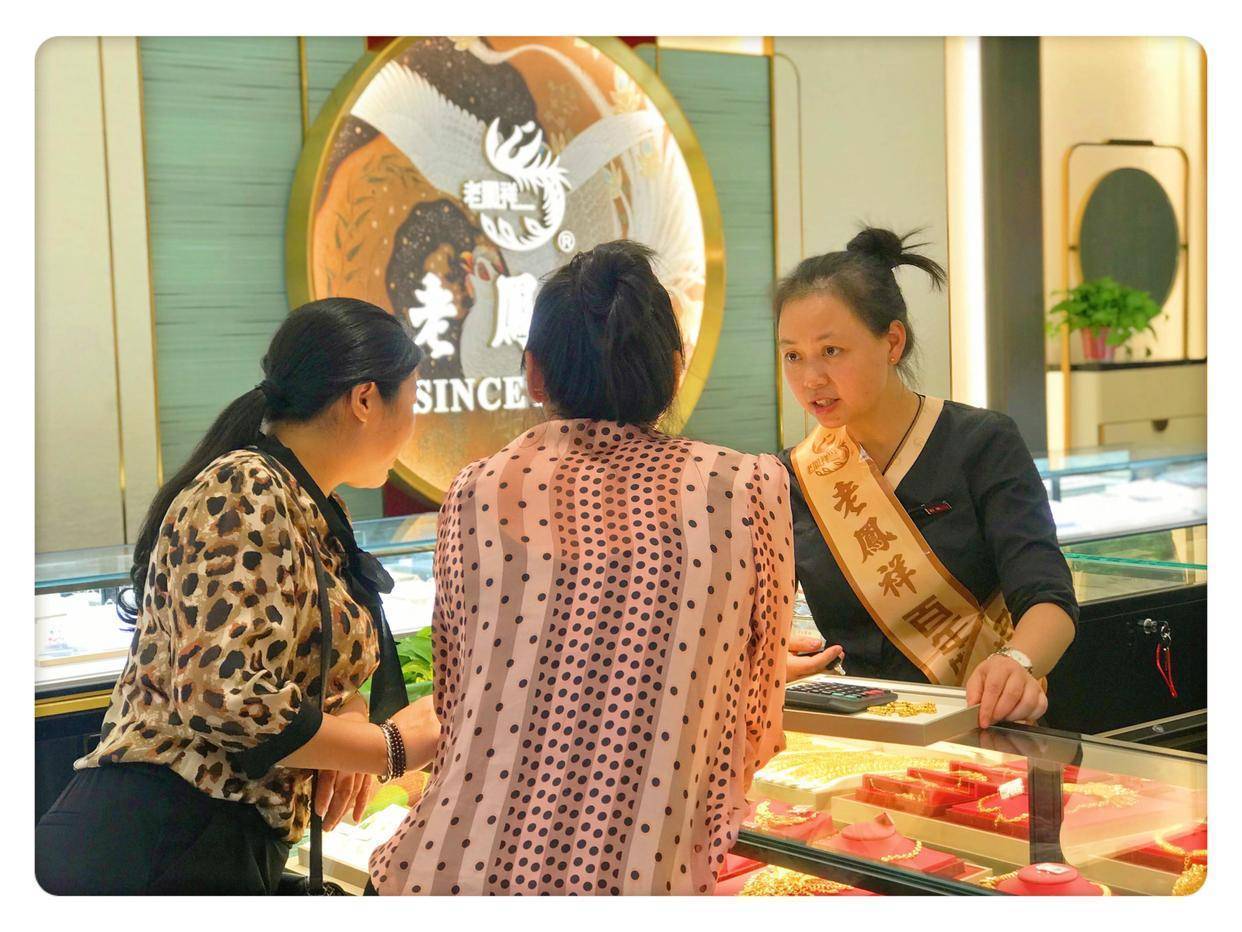
Core Viewpoint - The continuous interest rate hikes by the Federal Reserve and the strong rise of the US dollar index have put significant pressure on international gold prices, which have fallen from a peak of $2078.8 per ounce in March to a low of $1618.3 per ounce last month. However, contrary to previous trends, domestic gold stores in China are experiencing poor sales despite the drop in gold prices [1][3]. Group 1: Reasons for Poor Domestic Gold Sales - The decline in international gold prices has not translated into significant price drops in domestic gold stores due to the limited decrease in domestic gold prices, which are affected by the depreciation of the Chinese yuan against the US dollar [3][5]. - The majority of gold sold in domestic stores consists of jewelry, which includes high processing and design fees that do not adjust with international gold price fluctuations, resulting in minimal price reductions for consumers [3][5]. - Domestic demand for gold has decreased significantly due to the ongoing economic downturn and the impact of repeated COVID-19 outbreaks, leading consumers to cut back on non-essential spending, including gold jewelry [5][7]. Group 2: Changing Consumer Preferences - The younger generation shows a declining interest in gold jewelry, viewing it as outdated and preferring luxury items like designer bags and high-performance cars to express their personal style and economic status [7][9]. - Consumers are becoming increasingly savvy regarding the resale of gold, often facing unfavorable buyback prices compared to their purchase prices, which diminishes their willingness to invest in gold [9].
七大上市连锁药店三季报出炉 技源集团:HMB增长潜力可观|康·财
Sou Hu Cai Jing· 2025-11-17 11:59
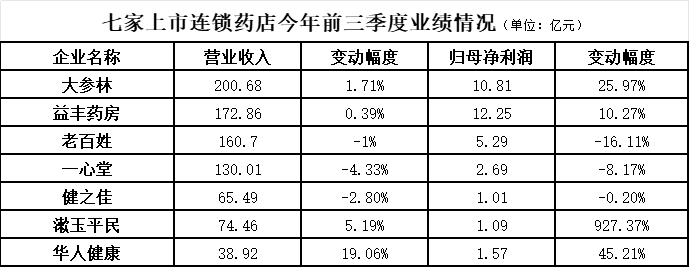
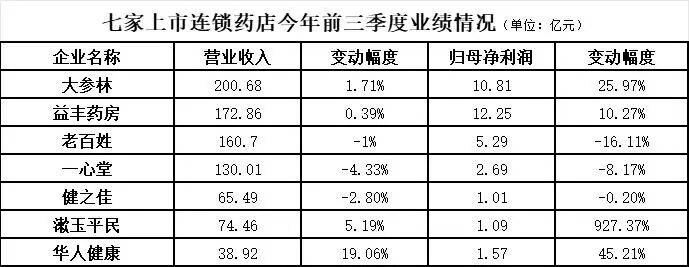
Group 1 - The number of listed companies disclosing data is steadily increasing, indicating the maturation of China's nutrition and health industry [1] - Jiyuan Group shows considerable growth potential for HMB [1] - Minsheng Health is promoting stable growth in its mineral business through the synergy of online and offline channels [1] Group 2 - The third-quarter reports of seven major listed chain pharmacies have been released, revealing that Dazhenlin, Yifeng Pharmacy, Shuyapingmin, and Huaren Health achieved both revenue and net profit growth, while Laobaixing, Yixintang, and Jianzhijia experienced declines in both metrics [1] - The overall expansion speed of chain pharmacies has noticeably slowed, with a shift in focus from scale expansion to quality improvement and efficiency [1] - Specific performance data for the seven listed chain pharmacies for the first three quarters of the year includes: - Dazhenlin: Revenue of 20.068 billion, up 1.71%; Net profit of 1.081 billion, up 25.97% - Yifeng Pharmacy: Revenue of 17.286 billion, up 0.39%; Net profit of 1.225 billion, up 10.27% - Laobaixing: Revenue of 16.07 billion, down 1%; Net profit of 529 million, down 16.11% - Yixintang: Revenue of 13.001 billion, down 4.33%; Net profit of 269 million, down 8.17% - Jianzhijia: Revenue of 6.549 billion, down 2.80%; Net profit of 101 million, down 0.20% - Shuyapingmin: Revenue of 7.446 billion, up 5.19%; Net profit of 1.09 billion, up 927.37% - Huaren Health: Revenue of 3.892 billion, up 19.06%; Net profit of 157 million, up 45.21% [1] Group 3 - The trademark dispute involving Tongrentang is expected to come to an end as the acquisition of Tianjin Tongrentang Group's shares by Beijing Tongrentang Group has entered the acceptance stage, allowing Beijing Tongrentang to hold 60% of Tianjin Tongrentang [2] Group 4 - Six stores of Laobaixing in Loudi, Hunan Province were penalized for insurance fraud, where they switched health products for insurance-covered medications, leading to a fine and the revocation of their insurance service agreements [3]


GDP全球第二,为何老百姓还是不敢花钱?刘元春揭秘消费低迷真相
Sou Hu Cai Jing· 2025-11-16 02:15
Core Insights - The essence of the issue is a strong government, wealthy enterprises, and impoverished residents, leading to high mandatory savings and low income distribution for residents, which directly results in low consumption rates [2][5]. Consumption Data Comparison - China's final consumption rate is approximately 55%, while developed countries average around 80%. Government consumption accounts for 30%, but private consumption is below 70%. The share of household consumption in GDP is less than 40%, lower than the global average of 55% [3]. Consumption Growth Performance - Despite a low consumption rate, consumption growth has been significant, with an average increase of 8.24% over the past 20 years, more than three times that of the U.S. In 2024, consumption is expected to contribute 44.5% to economic growth, remaining the primary driver of China's economy [5]. Distribution Imbalance - The core issue of low consumption is linked to a decline in consumption growth, which is becoming disconnected from GDP growth. The initial distribution of national income shows that the household sector accounts for only 60.6%, which is 5.5 percentage points lower than the global average, while the corporate sector is 5.6 percentage points higher [5][7]. Social Security and Wealth Gap - The inadequacy of the social security system contributes to a persistent wealth gap, with China's Gini coefficient reflecting a modest reduction of 12%, compared to a 40% reduction in Europe. High housing prices and insufficient affordable housing force low- and middle-income individuals to allocate savings to real estate, limiting funds available for daily consumption [5][7]. Short-term Consumption Weakness - Recent years have seen a worsening of consumption shortfalls, with household income growth lagging behind nominal GDP. Despite a GDP growth of 5.2% in the first three quarters, retail sales only grew by 4.5%, indicating a weak recovery in consumption [7]. Structural Reform Recommendations - To address the consumption gap, estimated at 6% of GDP (approximately 2.9 trillion yuan annually), structural reforms are necessary rather than temporary measures like vouchers or discounts [7][8]. Six Structural Reform Directions 1. Transition the government from an investment-focused model to a service-oriented one, enhancing social security, healthcare, education, and elderly care [8]. 2. Increase the return of state-owned enterprise profits to society, preventing excessive reinvestment of profits [8]. 3. Reform income distribution to raise the share of household income in national income [8]. 4. Strengthen social security systems to alleviate the pressure of precautionary savings on residents [8]. 5. Adjust housing policies to provide more affordable housing for low- and middle-income groups [8]. 6. Restore confidence in income and asset expectations, as all three elements are essential [8]. Historical Opportunity and Fundamental Path - The current period is seen as a critical window for China to transition from a wealthy nation to one that enriches its citizens. Improving household income and restoring consumption capacity are vital for making consumption the engine of China's economic internal circulation [10].

盘点上市连锁药店三季报:门店扩张速度放缓 四家业绩增长
Xin Jing Bao· 2025-11-15 05:30
Core Viewpoint - The performance of seven listed chain pharmacies in the third quarter of this year shows a mixed picture, with some achieving growth in both revenue and net profit, while others experienced declines. The overall trend indicates a slowdown in store expansion and a focus on improving quality and efficiency in the industry [1][12]. Revenue and Profit Summary - Dazhenglin reported revenue of 20.068 billion yuan, a year-on-year increase of 1.71%, and a net profit of 1.081 billion yuan, up 25.97% [2][3]. - Yifeng Pharmacy achieved revenue of 17.286 billion yuan, a slight increase of 0.39%, with a net profit of 1.225 billion yuan, growing by 10.27% [2][3]. - Laobaixing's revenue decreased by 1% to 16.07 billion yuan, with a net profit of 529 million yuan, down 16.11%, the largest decline among the seven pharmacies [2][4]. - Yixin Tang's revenue was 13.001 billion yuan, down 4.33%, and net profit was 269 million yuan, down 8.17% [2][4]. - Jianzhijia reported revenue of 6.549 billion yuan, a decrease of 2.8%, and net profit of 101 million yuan, down 0.2% [2][5]. - Shuyupingmin achieved revenue of 7.446 billion yuan, up 5.19%, and net profit of 109 million yuan, a significant increase of 927.37% [2][6]. - Huaren Health, listed in March 2023, reported revenue of 3.892 billion yuan, a growth of 19.06%, and net profit of 157 million yuan, up 45.21% [2][6]. Store Expansion and Market Trends - The rapid expansion of chain pharmacies has slowed, with many companies pausing new store openings. The total number of pharmacies in the country decreased by 0.5% in the third quarter of 2024, marking the first quarterly decline in recent years [7][8]. - Dazhenglin had 16,833 stores by the end of the reporting period, with a significant number of closures [8][10]. - Laobaixing had 15,492 stores, closing 304 and opening 756, while Yifeng Pharmacy had 14,666 stores, closing 440 [9][10]. - Yixin Tang closed more stores than it opened, with 430 closures and only 288 new stores [9][10]. - Shuyupingmin made strategic acquisitions, adding 754 stores in its core market of Shandong, while Huaren Health also expanded its store count through new openings and acquisitions [11][12]. Industry Challenges and Adjustments - The industry is facing multiple pressures, including regulatory changes and increased competition, leading to a decline in profitability for many chain pharmacies. Companies are focusing on closing underperforming stores and improving operational efficiency [12]. - The shift towards online and offline integration is expected to accelerate, with larger listed chains likely to benefit from increased market concentration [12].

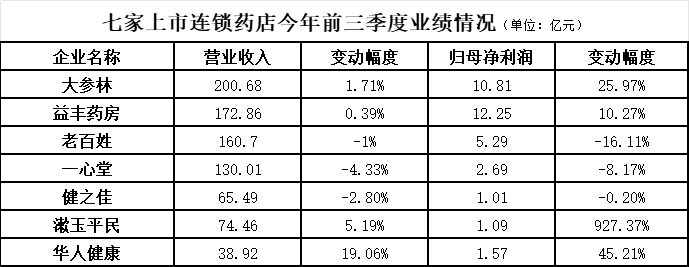
盘点上市连锁药店三季报:门店扩张速度放缓,四家业绩增长
Bei Ke Cai Jing· 2025-11-15 05:08
Core Insights - The performance of seven listed chain pharmacies in the third quarter of this year shows a mixed picture, with some achieving growth in both revenue and net profit, while others experienced declines [1][3][4]. Revenue and Profit Performance - Dazhenlin reported a revenue of 20.068 billion yuan, a year-on-year increase of 1.71%, and a net profit of 1.081 billion yuan, up 25.97% [2][3]. - Yifeng Pharmacy achieved a revenue of 17.286 billion yuan, a slight increase of 0.39%, and a net profit of 1.225 billion yuan, growing by 10.27% [2][3]. - Laobaixing's revenue decreased by 1% to 16.07 billion yuan, with a net profit of 529 million yuan, down 16.11%, the largest decline among the seven pharmacies [2][4]. - Yixin Tang's revenue was 13.001 billion yuan, down 4.33%, and net profit was 269 million yuan, down 8.17% [2][4]. - Jianzhijia reported a revenue of 6.549 billion yuan, a decrease of 2.8%, and a net profit of 101 million yuan, down 0.2% [2][5]. - Shuyupingmin achieved a revenue of 7.446 billion yuan, up 5.19%, and a net profit of 109 million yuan, a significant increase of 927.37% [2][6]. - Huaren Health, listed in March 2023, reported a revenue of 3.892 billion yuan, a growth of 19.06%, and a net profit of 157 million yuan, up 45.21% [2][6]. Store Expansion Trends - The rapid expansion of chain pharmacies has slowed down, with many companies pausing new store openings and focusing on improving efficiency [1][7]. - The total number of pharmacies in the country decreased by 0.5% in the third quarter of 2024, marking the first quarterly decline in recent years [7]. - Dazhenlin had 16,833 stores by the end of the reporting period, with a net increase of only 152 self-built stores and no new acquisitions [8][12]. - Laobaixing had 15,492 stores, closing 304 and opening 756, with a significant portion being franchise stores [9][12]. - Yifeng Pharmacy had 14,666 stores, closing 440 and opening 422, including franchises [10][12]. - Yixin Tang closed 430 stores while opening only 288, indicating a contraction in its store network [11][12]. - Shuyupingmin, however, expanded through acquisitions, adding 754 stores in the Shandong region [13][14]. Industry Challenges and Adjustments - The industry is facing multiple pressures, including regulatory changes and increased competition, leading to a decline in profitability for many pharmacies [15]. - Companies are focusing on closing underperforming stores and improving operational efficiency as part of their strategic adjustments [15].