LBX(603883)

Search documents
10月以后,中国有4类大东西将大降价?建议老百姓别囤货
Sou Hu Cai Jing· 2025-10-21 04:43
Core Insights - The article highlights a trend of declining prices in various consumer goods, contrary to public expectations of rising prices, particularly in food and automotive sectors [1][3][8]. Food Sector - National statistics indicate a year-on-year decrease in consumer prices, with food prices dropping by 4.4%, and pork prices specifically down by 17.0% [1][3]. - The decline in food prices is attributed to ample supply and stable demand, leading to lower prices for essential items like vegetables and fruits [3][6]. - Consumers are advised against stockpiling food items due to their perishable nature and the ongoing trend of price reductions [3][8]. Automotive Market - The automotive sector is experiencing significant price reductions, with fuel vehicles down by 4.6% and new energy vehicles down by 5.8% year-on-year [3][4]. - Increased competition, particularly from new energy vehicles, has led to aggressive pricing strategies among manufacturers, benefiting consumers [4][6]. - Some models have seen price cuts exceeding 100,000 yuan, making it an opportune time for potential buyers [4][6]. Home Appliances - Large home appliances have also seen a price decline of 2.2% year-on-year, with ongoing promotions and discounts in retail outlets [6][8]. - The price drop is driven by rapid technological advancements and the need for manufacturers to clear out older models [6][10]. - Consumers are encouraged to purchase based on need rather than stockpiling, as technology evolves quickly in this sector [6][10]. Real Estate-Related Products - Prices for real estate-related products, such as renovation materials and furniture, are also expected to decrease due to market adjustments [6][7]. - The overall trend reflects a broader economic shift towards more efficient and cost-effective consumption patterns [11][14]. Consumer Behavior Recommendations - Consumers are advised to adopt rational consumption habits, avoiding panic buying and focusing on actual needs [10][14]. - It is important to consider product quality alongside price, as significant discounts may correlate with reduced service or quality [10][12]. - Keeping an eye on market trends and being open to changes can help consumers make informed purchasing decisions [11][12].


努力稳股市让老百姓的消费底气更足
Xin Lang Cai Jing· 2025-10-21 01:50
Core Viewpoint - The stability of the stock market is crucial for enhancing consumer confidence and increasing household wealth, which in turn supports economic growth [1] Group 1: Stock Market Stability - The Central Committee of the Communist Party and the State Council issued a plan in March to stabilize the stock market, highlighting its importance in broadening residents' income channels and reinforcing consumer confidence [1] - As of October 13, the number of new A-share accounts exceeded 20 million, representing a year-on-year increase of over 50%, which has significantly boosted household wealth [1] Group 2: Economic Impact - According to the National Bureau of Statistics, the per capita consumption expenditure of residents in the first half of the year was 14,309 yuan, reflecting a real growth of 5.3% compared to the same period last year [1] - A stable stock market injects capital into the real economy and enhances consumption through wealth, psychological, and expectation effects, thereby strengthening the internal economic cycle [1]
学习时报刊文:努力稳股市让老百姓的消费底气更足
Sou Hu Cai Jing· 2025-10-21 01:46
Core Insights - The stock market serves as a barometer for economic development, significantly impacting household wealth and consumer confidence [1] - The Chinese government emphasizes stabilizing the stock market as a key measure to enhance consumer confidence and broaden channels for property income [1][2] - As of October 10, 2025, the Shanghai and Shenzhen stock exchanges have seen significant trading volumes and index increases, indicating a recovery in investor confidence [1] Market Performance - The Shanghai Composite Index, Shenzhen Component Index, and ChiNext Index have increased by 16.27%, 28.24%, and 45.37% respectively in 2025 [1] - Daily trading volumes have repeatedly exceeded 2 trillion yuan, reflecting a robust market environment [1] - New A-share accounts surpassed 20 million by October 13, 2025, marking a year-on-year increase of over 50% [1] Consumer Spending - Despite the stock market's rise, consumer spending growth remains lower than stock index increases, with per capita consumption expenditure rising by 5.3% year-on-year to 14,309 yuan [2] - The fluctuation in stock values directly affects household wealth and consumer willingness to spend, creating a psychological barrier to consumption [2] Stability Measures - To stabilize the stock market, four key areas need to be addressed: improving institutional frameworks, optimizing market mechanisms, enhancing investor protection, and strengthening policy coordination [2][3][4] - Institutional improvements should focus on transparent information disclosure and combating financial misconduct to build investor confidence [3] - Optimizing market mechanisms involves creating a multi-tiered capital market to facilitate financing for small and medium enterprises, thereby enhancing employment and income stability [3] Investor Protection - Strengthening investor protection is crucial to alleviate psychological burdens on consumers, including establishing compensation funds and promoting rational investment practices [4] - Enhanced investor confidence can lead to increased consumption, as individuals feel more secure in their financial investments [4] Policy Coordination - Coordinated monetary and fiscal policies are essential to ensure sufficient liquidity in the capital market and support for innovation and livelihoods [5] - A stable stock market aligned with macroeconomic policies can strengthen consumer confidence, transforming willingness to consume into actual spending [5]
老百姓大药房连锁股份有限公司关于股权激励限制性股票回购注销的实施公告
Shang Hai Zheng Quan Bao· 2025-10-20 19:22
Core Viewpoint - The company has decided to repurchase and cancel a total of 1,205,377 shares of restricted stock due to the departure of 32 employees and the failure to meet performance targets for the second vesting period of the stock incentive plan [2][10]. Summary by Sections Repurchase and Cancellation Reasons - The repurchase and cancellation of restricted stock is based on the company's 2022 stock incentive plan, which stipulates conditions for lifting restrictions and handling changes in the status of incentive recipients [10]. - A total of 1,205,377 shares will be repurchased, amounting to 14,889,399.25 yuan, funded entirely from the company's own resources [2][10]. Details of the Repurchase - The decision to repurchase was approved in multiple board and supervisory meetings throughout 2022 and 2023, with independent opinions provided by the company's independent directors [3][4][5][6]. - The repurchase involves 286 employees, representing 0.16% of the company's total shares prior to the repurchase [11]. Repurchase Arrangement - The company has established a dedicated securities account for the repurchase and submitted the necessary applications to the China Securities Depository and Clearing Corporation [12]. - The cancellation of the restricted stock is expected to be completed by October 23, 2025, with subsequent legal procedures for capital change registration to follow [12]. Changes in Share Structure - The repurchase will result in changes to the company's share structure, although specific details on the changes were not provided in the announcement [13]. Compliance and Commitments - The company assures that the decision-making process and information disclosure comply with relevant laws and regulations, and that the rights of the incentive recipients and creditors are not harmed [14]. - The company has confirmed the accuracy and completeness of the information regarding the repurchase and has informed the relevant incentive recipients without any objections raised [14]. Legal Opinion - The legal opinion confirms that the repurchase has received necessary approvals and complies with applicable regulations, and that the company will fulfill its obligations regarding capital changes and information disclosure [15].
老百姓(603883) - 湖南启元律师事务所关于老百姓大药房连锁股份有限公司2022年限制性股票激励计划回购注销剩余限制性股票及调整回购价格的法律意见书
2025-10-20 10:46
湖南启元律师事务所 关于老百姓大药房连锁股份有限公司 2022 年限制性股票激励计划首次授予部分第三个解除 限售期及预留授予部分第二个解除限售期解除限售条 件未成就及回购注销剩余限制性股票、调整回购价格 的 法律意见书 湖南省长沙市芙蓉区建湘路 393 号世茂环球金融中心 63 层 410000 电话:(0731)82953-778 传真:(0731)82953-779 网站:www.qiyuan.com 瞒、虚假或重大遗漏之处,所有资料上的签名及/或印章均系真实、有效。 致:老百姓大药房连锁股份有限公司 湖南启元律师事务所(以下简称"启元"或"本所")接受老百姓大药房连 锁股份有限公司(以下简称"老百姓""公司"或"上市公司")的委托,担任 老百姓 2022 年限制性股票激励计划(以下简称"本次激励计划""本激励计划" 或"激励计划")的专项法律顾问。 本所律师根据《中华人民共和国公司法》(以下简称"《公司法》")、《中 华人民共和国证券法》(以下简称"《证券法》")、《上市公司股权激励管理 办法》(以下简称"《管理办法》")等现行法律、法规和规范性文件以及《老 百姓大药房连锁股份有限公司章程》(以下简称" ...
老百姓(603883) - 关于股权激励限制性股票回购注销的实施公告
2025-10-20 10:46
证券代码:603883 证券简称:老百姓 公告编号:2025-053 老百姓大药房连锁股份有限公司 关于股权激励限制性股票回购注销的实施公告 本公司董事会及全体董事保证本公告内容不存在任何虚假 记载、误导性陈述或者重大遗漏,并对其内容的真实性、准确性 和完整性承担法律责任。 重要内容提示: ● 回购注销原因:老百姓大药房连锁股份有限公司(以下简称"公司") 2022 年限制性股票激励计划激励对象中 32 人已离职及首次授予第三个解除限售 期、预留授予第二个解除限售期公司层面业绩不达标,公司决定回购注销不得解 除限售的限制性股票合计 1,205,377 股。本次限制性股票回购总金额为 14,889,399.25 元(含利息),回购所需资金均来源于公司自有资金。 ● 本次注销股份的有关情况 | 回购股份数量 | 注销股份数量 | 注销日期 | | --- | --- | --- | | 1,205,377 | 1,205,377 | 2025 年 10 月 23 日 | 一、本次限制性股票回购注销的决策与信息披露 1、2022 年 7 月 31 日,公司召开第四届董事会第二十次会议,审议通过了 《关于公司<202 ...
医药商业板块10月20日涨1.19%,大参林领涨,主力资金净流出1154.79万元
Zheng Xing Xing Ye Ri Bao· 2025-10-20 08:27
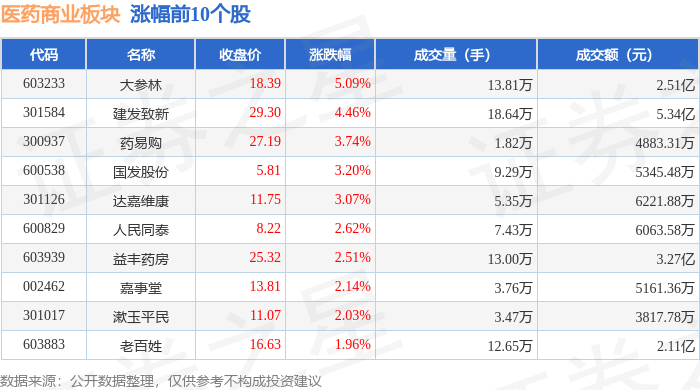
Market Overview - The pharmaceutical commercial sector increased by 1.19% on October 20, with Dazhenlin leading the gains [1] - The Shanghai Composite Index closed at 3863.89, up 0.63%, while the Shenzhen Component Index closed at 12813.21, up 0.98% [1] Stock Performance - Dazhenlin (603233) closed at 18.39, up 5.09%, with a trading volume of 138,100 shares and a turnover of 251 million yuan [1] - Jianfa Zhixin (301584) closed at 29.30, up 4.46%, with a trading volume of 186,400 shares and a turnover of 534 million yuan [1] - Yao Yigou (300937) closed at 27.19, up 3.74%, with a trading volume of 18,200 shares and a turnover of 4.88 million yuan [1] - Guofang Co. (600538) closed at 5.81, up 3.20%, with a trading volume of 92,900 shares and a turnover of 5.35 million yuan [1] Capital Flow - The pharmaceutical commercial sector experienced a net outflow of 11.55 million yuan from institutional funds, while retail investors saw a net inflow of 21.80 million yuan [2] - The main stocks with significant capital flow include Shanghai Pharmaceuticals (601607) with a net inflow of 16.68 million yuan from institutional funds [3] Individual Stock Capital Flow - Shanghai Pharmaceuticals (601607) had a net inflow of 16.68 million yuan from institutional funds, but a net outflow of 22.35 million yuan from retail investors [3] - Dazhenlin (603233) saw a net inflow of 11.68 million yuan from institutional funds, with a net outflow of 15.05 million yuan from retail investors [3] - Laobaixing (603883) had a net inflow of 6.98 million yuan from institutional funds, but also faced a net outflow of 1.86 million yuan from retail investors [3]


城市规划专家吴志强:城市建筑要有老百姓可感的“温度”
Chang Jiang Ri Bao· 2025-10-19 01:13
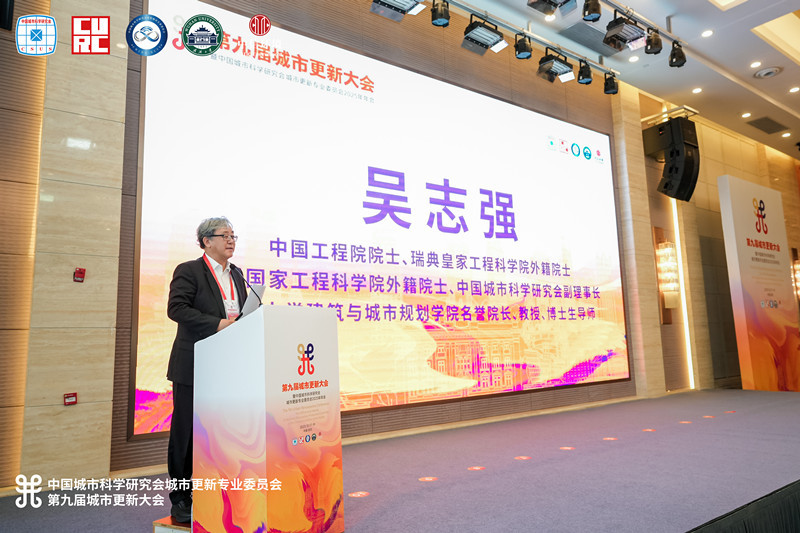
Core Insights - The core message emphasizes the need for humility in architecture, advocating for designs that resonate with the local community's aesthetic preferences rather than adhering strictly to architectural norms [2][4]. Group 1: Architectural Philosophy - "Architectural arrogance" is criticized as a significant issue in urban renewal, where architects prioritize their aesthetic principles over the preferences of the local populace [2]. - The disconnect between architects' ideals of symmetry and straight lines contrasts with the community's appreciation for natural beauty, such as flowers and greenery [2]. Group 2: Urban Renewal Strategies - Urban renewal should prioritize the historical and cultural narratives of a city, as these elements are deemed the most valuable attributes [4]. - The example of Paris illustrates how revitalizing an area through cultural storytelling can enhance its appeal and property values over time [4]. - Recommendations for urban renewal include treating cities with care akin to nurturing life, promoting smarter city designs, and leveraging AI technology to involve more community voices in the planning process [4].
金价破4220美元,央妈和老百姓为何都抢购?专家揭秘背后三重推力
Sou Hu Cai Jing· 2025-10-17 08:48
Core Insights - The price of gold jewelry brands such as Chow Tai Fook and Chow Sang Sang has surged to 1235 RMB per gram, marking a historic breakthrough above 1230 RMB [1] - International gold prices have skyrocketed, with London spot gold exceeding 4225 USD, reflecting a weekly increase of approximately 200 USD [3] - The Federal Reserve's anticipated interest rate cuts have significantly boosted the gold market, with the dollar index dropping to a multi-month low of 98.65, making gold more attractive to investors [3] Group 1: Market Trends - Global central banks are purchasing gold at the fastest pace in decades, with the People's Bank of China increasing its gold reserves for 11 consecutive months [5] - In Q2 2025, global central bank net gold purchases reached 166 tons, with 95% of surveyed central banks expecting to continue increasing their gold holdings in the coming year [5] - High gold prices have led to a 26% year-on-year decline in gold jewelry consumption in China during the first half of 2025, while sales of gold bars and coins increased by 23.69% [7] Group 2: Consumer Behavior - Consumers are increasingly viewing gold as a savings method rather than just for decoration, leading to a 249% year-on-year revenue increase for Lao Pu Gold [8] - The average transaction value at Beijing SKP stores rose from 25,000 RMB in 2024 to over 40,000 RMB in July 2025 [8] - The Shenzhen Shui Bei gold market faced turmoil with several gold merchants experiencing operational issues, prompting warnings from the Shenzhen Jewelry Association regarding high-leverage virtual betting activities [8] Group 3: Investment Adjustments - Several banks, including ICBC and Bank of China, have raised the minimum purchase threshold for gold investment products, now generally ranging from 750 to 1000 RMB [10] - The gold recycling market has seen a surge in activity, with reports of a 50% increase in customers returning gold for cash [11] - Despite the overall increase in gold prices, the gold repurchase business in the Shui Bei market showed lackluster performance during the recent holiday period [11] Group 4: Price Dynamics - As of October 16, 2025, London gold was reported at 4227.91 USD per ounce, with a daily high of 4234.36 USD [11] - The Shanghai gold futures contract was priced at 968.1 RMB per gram, reaching a peak of 969.62 RMB on the same day [11] - Analysts suggest that while gold prices may experience short-term volatility, the long-term outlook remains positive due to global economic conditions characterized by high debt and low growth [11]

对话复星联合健康保险赖晓辉:推动社商融合,能让老百姓用上创新药
Xin Lang Cai Jing· 2025-10-17 08:21
Core Insights - The 2025 Sustainable Global Leaders Conference will be held from October 16 to 18 in Shanghai, focusing on the integration of social security and commercial insurance to promote access to innovative drugs for the general public [1][3]. Group 1: Impact of AI on Innovative Drugs and Insurance - AI technology is enhancing the efficiency of innovative drug development, which allows more people to access these drugs [3]. - The accessibility of innovative drugs is a primary concern, ensuring that the public is aware of and can afford these medications [3]. Group 2: Challenges in the Chinese Pharmaceutical Market - Chinese pharmaceutical companies are leading in innovative drug development globally, but many rely on overseas markets for expansion [3]. - High research and development costs of innovative drugs lead to expensive sales, creating barriers for the general public to access these medications, especially under the current cost-control environment of China's healthcare system [3][4]. Group 3: Solutions for Improving Access to Innovative Drugs - The role of commercial insurance is crucial in addressing the accessibility issues of innovative drugs [4]. - There is a need for the integration of social security and commercial insurance, with ongoing research by the National Medical Insurance Center to innovate the catalog of commercial health insurance for innovative drugs [4].