
Eastroc Beverage(605499)

Search documents
研报掘金丨群益证券(香港):东鹏饮料全年业绩符合预期,维持“买进”建议
Ge Long Hui· 2026-01-16 07:17
Core Viewpoint - Dongpeng Beverage's annual performance meets expectations, with a focus on sales dynamics for the new year [1] Financial Performance - The company expects to achieve a net profit attributable to shareholders of 4.34 billion to 4.59 billion in 2025, representing a year-on-year increase of 30.5% to 38% [1] - For Q4 2025, the estimated net profit is projected to be between 580 million and 830 million, reflecting a year-on-year change of -6.5% to +34% [1] Strategic Outlook - In 2026, the company plans to strengthen its national strategy and explore multi-category development to facilitate its transformation into a platform-based company [1] - Short-term focus includes monitoring inventory buildup for the new year, holiday sales, and post-holiday channel expansion along with new product development trends [1] Cost Management - Currently, the prices of PET and sugar remain low, indicating a mild cost pressure for the new year [1] Long-term Growth Potential - The platform-based strategy and international expansion are expected to broaden the development space, indicating promising long-term growth prospects [1] Valuation - The current stock price corresponds to price-to-earnings ratios of 30x, 24x, and 20x for the upcoming years, maintaining a "buy" investment recommendation [1]

26股获推荐,冠豪高新、华立科技目标价涨幅超56%丨券商评级观察
2 1 Shi Ji Jing Ji Bao Dao· 2026-01-16 01:45
Group 1 - The core viewpoint of the article highlights that on January 15, brokerages set target prices for listed companies, with significant increases noted for certain companies [1] - The companies with the highest target price increases include Guanhao High-tech, Huali Technology, and Nengke Technology, with target price increases of 56.25%, 56.03%, and 40.34% respectively, belonging to the paper, entertainment products, and IT services industries [1] - A total of 26 listed companies received brokerage recommendations on January 15, with Citic Bank and Dongpeng Beverage each receiving two recommendations, while Guanhao High-tech received one recommendation [1]




东鹏能否海外市场再造一个东鹏
Bei Jing Shang Bao· 2026-01-15 16:32
Core Viewpoint - Dongpeng Beverage is on the verge of achieving its dual listing on the Hong Kong Stock Exchange, which is seen as a crucial step towards establishing a second growth curve for the company [1]. Group 1: Company Growth and Financial Performance - Dongpeng Beverage aims to cultivate a second growth curve within three years, as stated by its founder Lin Muqin [1]. - The company has shifted its listing strategy from considering a Swiss exchange to focusing on the Hong Kong Stock Exchange, submitting applications in April and October 2025 [1]. - Dongpeng Beverage's revenue growth has accelerated significantly, with a forecasted revenue of between 20.76 billion to 21.12 billion yuan for 2025, representing a growth rate of 31.07% to 33.34% [1]. - The company has achieved a remarkable revenue increase from 0 to 10 billion yuan in 29 years, and from 10 billion to 20 billion yuan in just 2 years [1]. Group 2: Market Position and Competitive Landscape - According to a report by Frost & Sullivan, Dongpeng Beverage ranks second in China's functional beverage industry with a market share of 23% as of 2024 [2]. - The company is the fastest-growing among the top five functional beverage companies in China, with a compound annual growth rate of 32.6% from 2022 to 2024 [2]. Group 3: IPO and Capital Utilization - The urgency for Dongpeng Beverage's IPO is partly driven by frequent share reductions by shareholders since the lifting of lock-up periods, with significant amounts cashed out [2]. - The IPO is expected to provide essential capital and a platform for expanding into overseas markets, enhancing international brand recognition and supporting global strategies [2]. - Part of the funds raised will be allocated to establishing supply chain infrastructure in key overseas markets, such as Indonesia, Vietnam, and Malaysia, to meet local demand [3]. Group 4: International Expansion Strategy - Dongpeng Beverage plans to invest $200 million in building a production base in Indonesia and use Hainan as an export hub for Southeast Asia [4]. - The company is currently in the early stages of international market expansion, exploring local partnerships and direct sales [4]. - Experts highlight the challenges Dongpeng Beverage faces in international compliance, supply chain construction, and local operational costs, emphasizing the need for a tailored approach rather than simply replicating domestic strategies [4].
东鹏,再造东鹏?
Bei Jing Shang Bao· 2026-01-15 12:48
Core Viewpoint - Dongpeng Beverage is preparing for an IPO on the Hong Kong Stock Exchange, aiming to expand its international presence and develop a second growth curve, as stated by its founder Lin Muqin [1][3]. Group 1: IPO and Market Strategy - Dongpeng Beverage has shifted its IPO strategy from considering a listing in Switzerland to focusing on the Hong Kong Stock Exchange, with two applications submitted in April and October 2025 [3]. - The company aims to raise funds for overseas supply chain development, brand building, channel expansion, and exploring potential investment and acquisition opportunities [1][4]. - The expected revenue for 2025 is projected to be between 20.76 billion and 21.12 billion yuan, reflecting a growth rate of 31.07% to 33.34% [3]. Group 2: Market Position and Competition - Dongpeng Beverage ranks second in China's functional beverage market with a market share of 23.0%, and it has the fastest retail sales growth among the top five companies in this sector, with a compound annual growth rate of 32.6% from 2022 to 2024 [3][4]. - The company faces challenges from increased competition in the domestic market and pressure from shareholders who have been frequently reducing their stakes since the lifting of the lock-up period in 2022 [4]. Group 3: International Expansion - Dongpeng Beverage's overseas revenue is currently minimal, accounting for approximately 0.14% of total revenue, indicating that its global expansion is still in the early stages [5]. - The company plans to invest $200 million in building a production base in Indonesia and aims to use Hainan as an export hub for Southeast Asia [6]. - The company is exploring local partnerships and direct sales in overseas markets, while also facing challenges related to compliance, supply chain adaptation, and local operational costs [6][7].

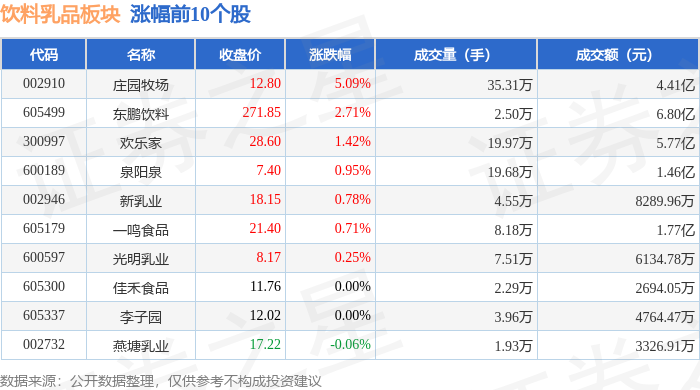
饮料乳品板块1月15日涨0.22%,庄园牧场领涨,主力资金净流入526.25万元
Zheng Xing Xing Ye Ri Bao· 2026-01-15 08:58
Group 1 - The beverage and dairy sector increased by 0.22% on January 15, with Zhuangyuan Pasture leading the gains [1] - The Shanghai Composite Index closed at 4112.6, down 0.33%, while the Shenzhen Component Index closed at 14306.73, up 0.41% [1] - Zhuangyuan Pasture's stock price rose by 5.09% to 12.80, with a trading volume of 353,100 shares and a transaction value of 441 million yuan [1] Group 2 - The beverage and dairy sector saw a net inflow of 5.26 million yuan from institutional investors, while retail investors experienced a net outflow of 33.19 million yuan [2] - The top individual stock performers included Zhuangyuan Pasture, which had a net inflow of 41.63 million yuan from institutional investors [3] - Other notable stocks included Yili Group and Dongpeng Beverage, with net inflows of 38.09 million yuan and 36.65 million yuan, respectively [3]



业绩预增三成背后的“东方大鹏”战略:东鹏饮料的多极增长与全球化蓝图
Sou Hu Wang· 2026-01-15 07:20
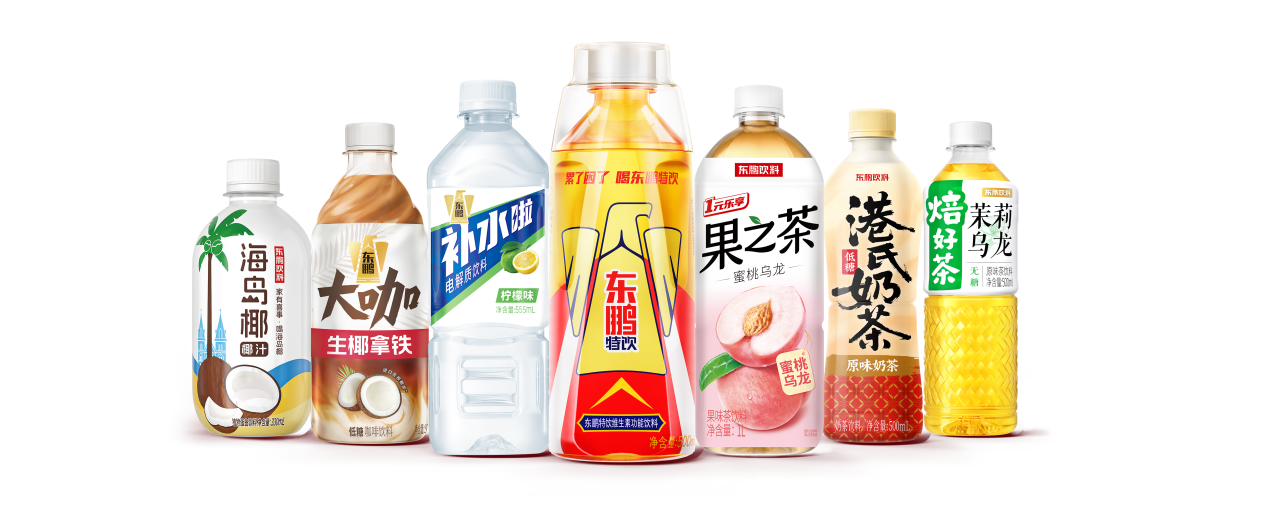
Core Viewpoint - Dongpeng Beverage is expected to achieve a net profit of 4.34 billion to 4.59 billion yuan for the fiscal year 2025, representing a year-on-year growth of 30.46% to 37.97%, with revenue projected to exceed 20.7 billion yuan, an increase of over 31% [1][2] Group 1: Company Growth and Strategy - Dongpeng Beverage's growth trajectory aligns with China's economic support for the real economy and the promotion of national brands, benefiting from a nationwide strategy and deep channel penetration [2] - The company has established over 4.3 million terminal outlets, covering nearly 100% of prefecture-level cities in China, which reflects the vitality of domestic demand and market depth [2] - Dongpeng's growth demonstrates how a brand can build a solid foundation through a deep understanding of the local market and refined operations in a large-scale market like China [2] Group 2: Industry Trends and Market Positioning - The global functional beverage market is evolving from a focus on "energy and fatigue relief" to a health-oriented, scenario-based, and segmented "function+" ecosystem [3] - In China, the market is shifting from scale expansion to value cultivation, with rapid growth in subcategories like electrolyte water, sugar-free tea, and energy coffee, driven by the diverse consumption scenarios of the Z generation [3] - Dongpeng Beverage is capitalizing on this structural opportunity by solidifying its leading position in energy drinks while expanding its product lines to include electrolyte water and other health-oriented beverages [3][8] Group 3: Digital and Strategic Innovations - Dongpeng Beverage has implemented a digital strategy that enhances channel management and operational efficiency, addressing traditional industry challenges such as information gaps and inventory issues [6] - The company has developed a comprehensive digital ecosystem that allows for precise marketing and promotional efforts, ensuring effective resource allocation and channel profitability [6] - The strategic expansion into multiple product categories is based on a thorough analysis of consumer needs, particularly targeting the lifestyle of younger demographics [7] Group 4: Global Expansion and Future Outlook - Dongpeng Beverage's products are currently exported to over 30 countries and regions, with overseas subsidiaries established in Indonesia and Vietnam to explore localized operations [8] - The upcoming factory in Indonesia is a crucial step in replicating its supply chain capabilities overseas, supporting its global strategy [8] - The company's future plans include leveraging capital market opportunities to expand its successful business model in Southeast Asia and other emerging markets, transitioning from "China's Dongpeng" to "World's Dongpeng" [8]
东鹏饮料(605499):全年业绩符合预期,关注新一年动销
CSC SECURITIES (HK) LTD· 2026-01-15 07:04
Investment Rating - The investment rating for the company is "Buy" with a target price of 335 CNY [1][7]. Core Insights - The company is expected to achieve a net profit of 4.34 billion to 4.59 billion CNY in 2025, representing a year-on-year growth of 30.5% to 38% [8]. - The company has shown strong revenue growth in its energy drink segment, with a 19.4% increase in revenue to 12.56 billion CNY in the first three quarters [12]. - The company is focusing on national expansion and multi-category development, with a strategic shift towards becoming a platform-type company [12]. Summary by Sections Company Basic Information - The company operates in the food and beverage industry, with a market capitalization of 137.64 billion CNY as of January 14, 2026 [2]. - The stock price on January 14, 2026, was 264.68 CNY, with a 12-month high of 336.11 CNY and a low of 205.24 CNY [2]. Recent Ratings - The company has received "Buy" ratings in recent evaluations, with the last rating issued on October 28, 2025 [3]. Performance Overview - The company is projected to maintain a net profit growth trajectory, with estimates of 4.45 billion CNY in 2025, 5.60 billion CNY in 2026, and 6.80 billion CNY in 2027, reflecting year-on-year growth rates of 33.8%, 25.8%, and 21.5% respectively [12]. Financial Projections - The company’s revenue is expected to grow from 21.14 billion CNY in 2025 to 31.73 billion CNY by 2027 [15]. - The earnings per share (EPS) are projected to increase from 8.56 CNY in 2025 to 13.08 CNY in 2027 [11]. Cash Flow Analysis - The net cash flow from operating activities is expected to rise significantly, reaching 12.37 billion CNY by 2027 [17].
朝闻国盛:出口量质齐升:2025回顾与2026展望
GOLDEN SUN SECURITIES· 2026-01-15 06:52
Core Insights - Despite a 20% decline in exports to the US, China's exports still grew by 5.5% in 2025, driven by rapid growth in high-tech products such as electronic intermediate goods, automobiles, and industrial robots [3] - The import growth rate fell to 0%, resulting in a trade surplus that exceeded $1 trillion for the first time, providing positive support for economic growth [3] - For 2026, China's exports are expected to maintain resilience with a projected growth rate of around 5%, supported by increased openness, stable exports to the US, and advantages in AI and "new three items" products [3] Industry Performance - The top-performing industries in January included Media (29.0%), Defense and Military (24.0%), and Computer (22.8%), while the bottom performers were Banking (-1.8%) and Food & Beverage (-1.3%) [2] - The overall performance of the media sector showed a remarkable annual increase of 63.7%, indicating strong market dynamics [2] Company-Specific Insights First Pacific (00142.HK) - First Pacific has a strong focus on the Asia-Pacific market, with four main business segments: consumer food, telecommunications, infrastructure, and natural resources [7] - In 2024, the company reported revenues of $10.057 billion, a year-on-year decrease of 4.31%, while net profit increased by 19.77% to $600 million, showcasing robust profitability [7][8] - The company is expected to see net profits of $649 million, $708 million, and $767 million from 2025 to 2027, reflecting growth rates of 8.2%, 8.9%, and 8.4% respectively [8] Dongpeng Beverage (605499.SH) - Dongpeng Beverage anticipates a revenue increase of 31.07% to 33.34% in 2025, with projected revenues between 20.76 billion and 21.12 billion yuan [10] - The company expects net profits to rise by 30.46% to 37.97%, with estimates ranging from 4.34 billion to 4.59 billion yuan [10] - The company is actively expanding its product lines and overseas markets, which is expected to contribute to significant profit growth in the coming years [11][12] Dingjie Intelligence (300378.SZ) - Dingjie Intelligence was recognized as one of the top 20 data intelligence service providers in China, indicating its leadership in AI manufacturing [9] - Revenue projections for Dingjie from 2025 to 2027 are set at 2.438 billion, 2.608 billion, and 2.841 billion yuan, with net profits expected to be 180 million, 204 million, and 263 million yuan respectively [9]


东鹏饮料(605499):收入符合预期,费用端前置投放积极
China Post Securities· 2026-01-15 05:42
Investment Rating - The report maintains a "Buy" rating for the company, expecting a relative increase in stock price of over 20% compared to the benchmark index within six months [5][13]. Core Insights - The company is projected to achieve a revenue of 20.76-21.12 billion yuan in 2025, representing a year-on-year growth of 31.07%-33.34%. The net profit attributable to the parent company is expected to be between 4.34-4.59 billion yuan, with a growth rate of 30.46%-37.97% [3][4]. - For Q4 2025, the company anticipates revenue of 3.916-4.276 billion yuan, a year-on-year increase of 19.35%-30.33%, and a net profit of 579-829 million yuan, with a growth range of -6.46% to 33.93% [3][4]. - The company plans to increase its investment in freezer placements and expand its overseas market presence over the next 5-10 years, aiming to enhance its global operational capabilities [4]. Financial Performance Summary - The estimated revenue for 2025 is 20.94 billion yuan, with a year-on-year growth of 32.21%. The estimated net profit attributable to the parent company is 4.465 billion yuan, reflecting a growth of 34.20% [4][5]. - The company forecasts revenues of 26.19 billion yuan and 30.92 billion yuan for 2026 and 2027, respectively, with growth rates of 25.13% and 18.08% [5][9]. - The projected earnings per share (EPS) for 2025, 2026, and 2027 are 8.59 yuan, 11.19 yuan, and 13.63 yuan, respectively, with corresponding price-to-earnings (P/E) ratios of 31, 24, and 19 [5][9].
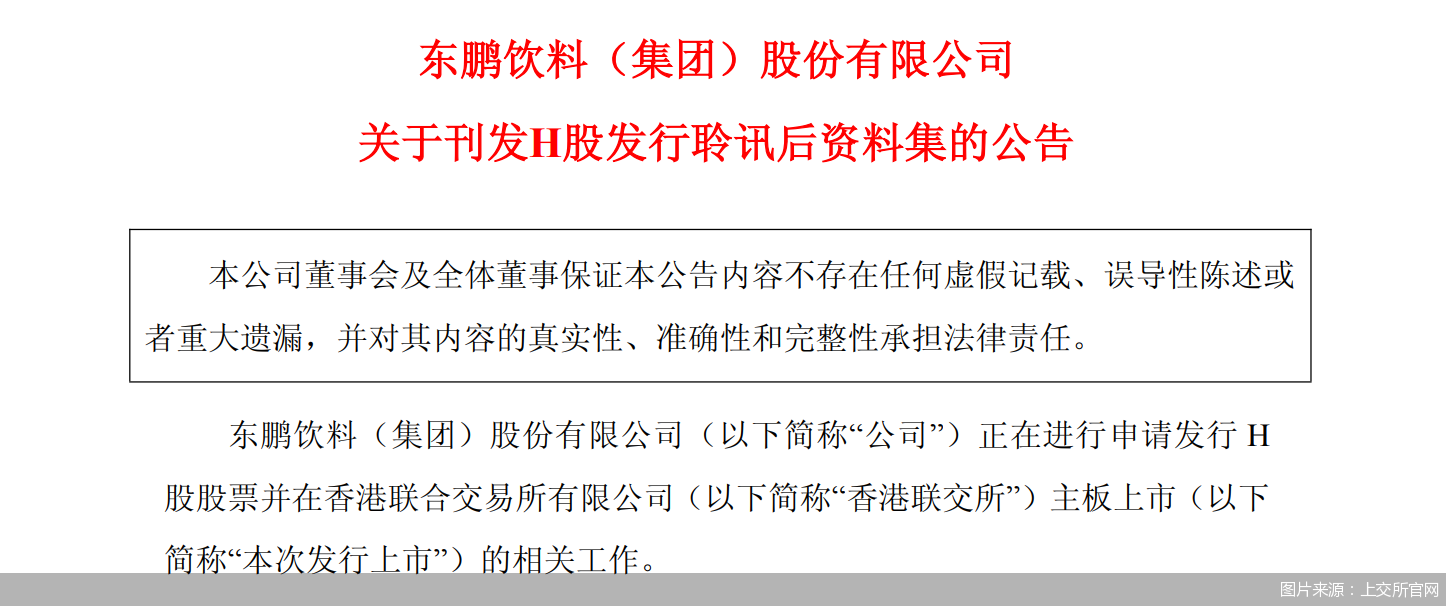
市场消息:东鹏饮料拟为超10亿美元的香港上市计划征集意向投资者。
Xin Lang Cai Jing· 2026-01-15 03:16
市场消息:东鹏饮料拟为超10亿美元的香港上市计划征集意向投资者。 ...