Piotech (688072)

Search documents
拓荆科技:上半年净利9428.80万元,同比下降26.96%
Ge Long Hui A P P· 2025-08-25 11:59
格隆汇8月25日|拓荆科技(688072.SH)公告称,2025年上半年实现营业收入19.54亿元,同比增长 54.25%;归属于上市公司股东的净利润为9428.80万元,同比下降26.96%。 ...

芯片股“霸屏”科创板涨幅榜,科创半导体ETF(588170)多个成分股在列!盛美上海上涨11.81%!
Mei Ri Jing Ji Xin Wen· 2025-08-25 03:21
Group 1 - The core viewpoint is that the domestic AI industry is transitioning towards a stage of hardware-software synergy, which presents investment opportunities in the domestic computing power industry chain [2] - The semiconductor materials and equipment theme index on the STAR Market has shown positive performance, with significant increases in constituent stocks such as Shengmei Shanghai and China Shipbuilding Special Gas [1] - The STAR Market semiconductor ETF (588170) has seen a notable increase of 11.21% over the past week, indicating strong market activity and liquidity [1] Group 2 - The semiconductor equipment and materials sectors are crucial areas for domestic substitution, characterized by low domestic replacement rates and high potential for growth [2] - The ETF tracking the semiconductor materials and equipment index focuses on upstream semiconductor companies, with a significant portion allocated to semiconductor equipment and materials [3]





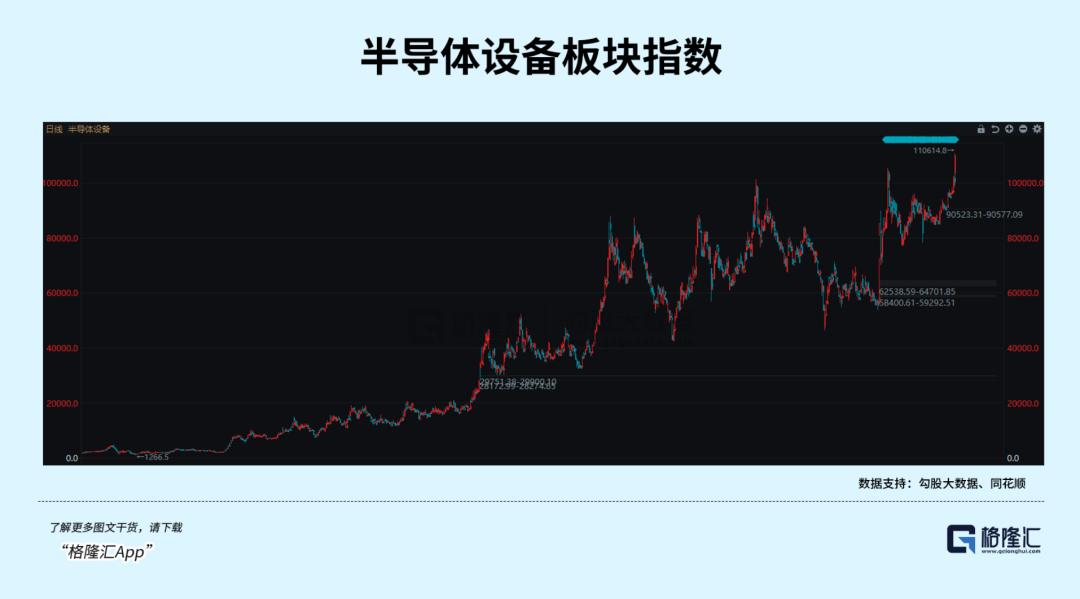
封锁越狠,爆发越强,半导体设备迎来投资风口?
3 6 Ke· 2025-08-25 03:07
Core Viewpoint - The semiconductor equipment industry is experiencing a significant growth phase driven by domestic demand, technological advancements, and supportive government policies, positioning it as a critical area in the global competition for semiconductor supremacy [1][6]. Group 1: Market Performance - The semiconductor equipment index in the A-share market has recently reached new highs, with leading companies like North Huachuang and Shengmei Shanghai breaking through previous resistance levels [1]. - In 2025, China's semiconductor equipment investment is projected to grow by 53.4%, contrasting with a 9.8% decline in total investment in the semiconductor industry [4]. - Major domestic equipment manufacturers are making significant strides in etching and deposition technologies, with North Huachuang and Tuojing Technology leading the market share gains [4]. Group 2: Policy Support - The establishment of the National Integrated Circuit Industry Investment Fund Phase III, with a registered capital of 344 billion yuan, focuses on semiconductor equipment and materials, providing long-term financial support for the industry [7]. - Local governments are also implementing policies to support the semiconductor industry, including significant funding initiatives in cities like Shanghai, Shenzhen, and Beijing [9]. Group 3: Technological Advancements - The demand for AI chips is driving the need for advanced semiconductor equipment, with domestic manufacturers transitioning from "usable" to "high-quality" equipment [10]. - Key breakthroughs have been achieved in various equipment categories, such as etching, thin film deposition, and cleaning, with notable successes from companies like Zhongwei and Shengmei Shanghai [10][11]. Group 4: Geopolitical Factors - The escalation of U.S. export controls on semiconductor equipment has accelerated the shift towards domestic suppliers, creating opportunities for local manufacturers [12]. - The suspension of production for NVIDIA's special H20 chips has opened a market window for domestic AI chip companies, enhancing their competitive position [12]. Group 5: Investment Strategies - The semiconductor equipment industry can be segmented into front-end (wafer manufacturing) and back-end (packaging and testing) equipment, with front-end equipment accounting for over 80% of the value [13]. - Investment strategies include focusing on leading equipment manufacturers for stable returns, identifying champions in niche markets for growth, and exploring undervalued back-end equipment firms for potential gains [15].



全球半导体资本设备:中国 7 月进口追踪(2025 年 7 月),年度月度新高,需求仍具韧性,年初至今进口增长 2%
2025-08-25 01:39
Summary of Key Points from the Conference Call Industry Overview - The conference call focuses on the **Global Semiconductor Capital Equipment** industry, specifically the **Wafer Fabrication Equipment (WFE)** imports to China for July 2025, which reached a record high for the year at **USD 3,761 million**, reflecting a **10% year-over-year (YoY)** and **11% month-over-month (MoM)** increase, with year-to-date (YTD) imports up **2% YoY** [2][27][26]. Core Insights and Arguments - **Dry Etch Segment Performance**: The Dry Etch segment showed significant growth, with imports totaling **USD 755 million**, marking a **30% MoM** and **232% YoY** increase. Notably, imports from Malaysia nearly doubled MoM to **USD 300 million** [3][28]. - **Lithography Weakness**: The Lithography segment continues to exhibit weakness, potentially indicating a normalization after previous strong demand. However, fluctuations suggest that this may be temporary, with expectations for a rebound in the second half of 2025 [3][34]. - **Regional Import Dynamics**: The import share by region indicates that the U.S. and Singapore combined account for **42%**, while Japan's share has decreased to **22%** from an average of **26%** last year. This decline is attributed to the lack of favorable foreign exchange conditions for Japanese vendors and a shift in purchasing priorities towards U.S. equipment [4][39]. - **Provincial Import Trends**: The largest buyers of WFE have shifted from Guangdong (21%) to Shanghai (32%) in July, suggesting a potential for sustained strength in these regions into the second half of 2025 and beyond [5][27]. Company-Specific Insights - **ASML**: Projected sales in China for Q3CY25 are estimated at **EUR 1.51 billion**, reflecting a **46% YoY decline** but flat compared to the previous quarter. The monthly import data is noted to be quite variable [6][65]. - **LRCX (Lam Research)**: Expected to see a **14% QoQ increase** in China revenues for the September quarter, with China exposure estimated to be in the high 30s percentage of total revenues [7][81]. - **AMAT (Applied Materials)**: Reported a **44% QoQ increase** in China revenues, aligning with regression analysis predictions of a **53% increase** [8][90]. - **Kokusai**: Anticipated to see a **41% YoY** and **37% QoQ increase** in China revenue, with a significant contribution expected in the September quarter [12]. - **Advantest**: Projected to experience a **38% YoY** and **32% QoQ decline** in China revenue, indicating potential challenges ahead [13]. Additional Important Insights - **Market Dynamics**: The overall WFE market in China is becoming increasingly significant, with global vendors still capturing approximately **84%** of the market share in 2024. The data on imports provides critical insights into demand trends [23]. - **Investment Implications**: Companies like NAURA, AMEC, and Piotech are positioned favorably due to their broad product portfolios and domestic market leadership, benefiting from the ongoing WFE domestic substitution in China [15][16][17]. - **Long-term Outlook**: The overall sentiment suggests that while there may be short-term fluctuations, the long-term growth trajectory for the WFE market in China remains positive, driven by domestic demand and technological advancements [20][22]. This summary encapsulates the key points discussed in the conference call, highlighting the current state and future outlook of the semiconductor capital equipment industry, particularly in relation to WFE imports to China.


半导体公司“ESG账本”:披露率超六成 三类议题受关注
Zhong Guo Zheng Quan Bao· 2025-08-24 20:10
Core Insights - The release of the new generation large language model DeepSeek-V3.1 has heightened market attention on the semiconductor industry [1] - ESG (Environmental, Social, and Governance) disclosure is crucial for the long-term competitiveness of the semiconductor sector, with a 66% disclosure rate among 50 selected companies [1][2] - Leading companies in the semiconductor industry tend to have better ESG ratings, with 9 out of the top 10 companies rated B+ or above [1][2] ESG Disclosure and Ratings - Among the 50 semiconductor companies, 33 disclosed their 2024 ESG reports, with top companies showing superior ESG ratings [1][2] - Chip design companies primarily have B ratings, with 17% rated A, indicating room for improvement in ESG information disclosure [2] - Notable companies with A- ratings include Zhongke Semiconductor, Jinghe Integrated, and Changdian Technology [2] Governance and Management Structures - Good corporate governance is essential for the long-term development of semiconductor companies, with many establishing robust governance structures [2] - For instance, Zhongke Semiconductor has a four-tier governance system led by a board of directors, while Cambrian has a three-tier governance structure [2] R&D Investment and Innovation - Cambrian's R&D investment for 2024 is 1.072 billion yuan, accounting for 91% of its revenue, the highest among the 50 companies [3] - Companies like Huada Jiutian and Jingjia Micro also show significant R&D investment ratios of 71% and 60%, respectively [3] - Cambrian leads in new patent authorizations with 314 in 2024, followed by Haiguang Information with 191 [3] Data Security and Privacy - Cambrian has established a comprehensive information security system focusing on people, technology, and operations [3] - However, many companies lack certification for their information security management systems, indicating a need for improvement [3] Employee Development - Companies like Northern Huachuang and Weir Shares have implemented comprehensive training systems to enhance employee skills [4] - Northern Huachuang conducted over 20 specialized training sessions in 2024, with more than 150 participants [4] Carbon Emissions and Resource Management - The semiconductor industry is energy and resource-intensive, with significant carbon emissions during manufacturing [6][8] - In 2021, semiconductor devices were projected to generate 500 million tons of CO2 equivalent over their lifecycle, with 15% from upstream processes [6] - Companies are increasingly disclosing their greenhouse gas emissions data, with Cambrian reporting 1,314.55 tons of CO2 equivalent for 2024 [5] Renewable Energy and Water Management - Companies like Zhongke Semiconductor and Northern Huachuang are making strides in renewable energy usage, with Zhongke purchasing 61,283 MWh of green electricity in 2024 [7] - Water resource management is also critical, with many companies implementing water-saving measures and monitoring usage [8] Market and Regulatory Pressures - The semiconductor industry faces pressure from downstream markets to reduce carbon footprints, with major companies like Apple and Google committing to supply chain carbon neutrality [8][9] - Regulatory frameworks such as the EU's Carbon Border Adjustment Mechanism are influencing semiconductor companies to enhance their sustainability practices [9] Conclusion - The semiconductor industry's sustainable development is vital for its future, with ongoing pressures from environmental challenges and resource constraints driving the need for transformation [9]


封锁越狠,爆发越强!半导体设备迎来投资风口?
Ge Long Hui A P P· 2025-08-23 10:05
Core Viewpoint - The semiconductor equipment industry is experiencing significant growth driven by domestic demand and geopolitical factors, positioning it as a critical area in the global competition for technology supremacy [2][4]. Group 1: Market Performance - The semiconductor equipment index in the A-share market has recently reached new highs, with leading companies like North Huachuang and Shengmei Shanghai breaking through previous resistance levels [2]. - In 2025, China's semiconductor equipment investment is projected to grow by 53.4%, contrasting with a 9.8% decline in total investment in the semiconductor industry [4][6]. Group 2: Company Performance - Key companies are showing strong financial results: - Zhongwei Company reported a 43.9% year-on-year revenue increase and a net profit growth of 31.6% to 41.3% [5]. - Shengmei Shanghai's revenue grew by 35.8% with a net profit increase of 57% [5]. - Tuo Jing Technology's revenue is expected to rise by 52% to 58%, with net profit growth of 101% to 108% [6]. Group 3: Policy and Government Support - The establishment of the National Integrated Circuit Industry Investment Fund Phase III, with a registered capital of 344 billion yuan, focuses on semiconductor equipment and materials, providing substantial financial backing [7]. - Local governments in Shanghai, Shenzhen, and Beijing are implementing supportive policies for the semiconductor industry, enhancing funding stability for equipment manufacturers [8][10][11]. Group 4: Technological Advancements - Domestic equipment manufacturers are making significant strides in critical areas: - Zhongwei's 5nm CCP etching equipment has been validated by leading domestic storage manufacturers [13]. - Tuo Jing's 14nm SACVD equipment has successfully replaced similar products from Applied Materials at SMIC [14]. - Shengmei's single-wafer megasonic cleaning equipment is exclusively used in TSMC's CoWoS production line [15]. - The first domestically produced commercial electron beam lithography machine, "Xizhi," has announced application testing, signaling a major industry milestone [16]. Group 5: Geopolitical Factors - The U.S. has escalated export controls on semiconductor equipment, which has accelerated the shift towards domestic suppliers in China, creating unprecedented opportunities for local equipment manufacturers [17][18]. Group 6: Investment Strategies - The semiconductor equipment industry can be segmented into front-end (wafer manufacturing) and back-end (packaging and testing) equipment, with front-end equipment accounting for over 80% of the value [19]. - Investment strategies include focusing on leading equipment manufacturers for stable returns, identifying champions in niche markets for growth, and targeting undervalued back-end equipment firms for potential gains [20][21][22].
国产半导体设备,动作频频
3 6 Ke· 2025-08-22 10:46
Core Viewpoint - The Chinese semiconductor equipment industry is experiencing significant growth and investment in 2025, driven by domestic innovation and government support, despite challenges from international restrictions and market dynamics [9][10][12]. Group 1: Investment and Funding - In early 2025, the National Integrated Circuit Industry Investment Fund injected a total of 1.64 billion yuan (approximately 710 million and 930 million yuan) into two funds to support wafer manufacturing and equipment materials [2]. - The semiconductor equipment sector saw a 53.4% increase in investment in the first half of 2025, contrasting with a 9.8% decline in total semiconductor industry investment [4]. - Companies like Yitang Semiconductor and Longchuan Technology are actively raising funds, with Yitang Semiconductor raising 2.497 billion yuan for advanced etching equipment and Longchuan Technology planning to raise 3.132 billion yuan for semiconductor testing equipment [5][11]. Group 2: Industry Developments - The first domestically produced commercial electron beam lithography machine, "Xizhi," has begun application testing, marking a significant milestone for the industry [1]. - Several companies, including Zhongwei and Tuojing Technology, are expanding their production and R&D capabilities, with investments totaling approximately 3.05 billion yuan planned for new facilities [3][8]. - New product launches at SEMICON China 2025 highlight advancements in semiconductor equipment, with companies like Northern Huachuang and Zhongwei Semiconductor introducing innovative technologies [8]. Group 3: Market Dynamics - The Chinese semiconductor equipment market is expected to see a capital expenditure of approximately 280 billion yuan in 2025, with domestic equipment manufacturers projected to achieve a 20% year-on-year growth [12]. - The demand for advanced packaging and testing equipment is increasing due to the growth of AI computing power and the expansion of advanced logic and memory chip manufacturers [12]. - The industry is benefiting from a favorable policy environment, with local governments providing financial support and incentives to bolster domestic semiconductor equipment development [10]. Group 4: Challenges and Future Outlook - Despite the positive growth trajectory, the semiconductor equipment industry faces challenges such as high R&D costs and long market validation cycles, which can hinder profitability [13]. - The ongoing geopolitical tensions and technology restrictions from the U.S. have prompted a stronger push for domestic innovation within the Chinese semiconductor sector [9].

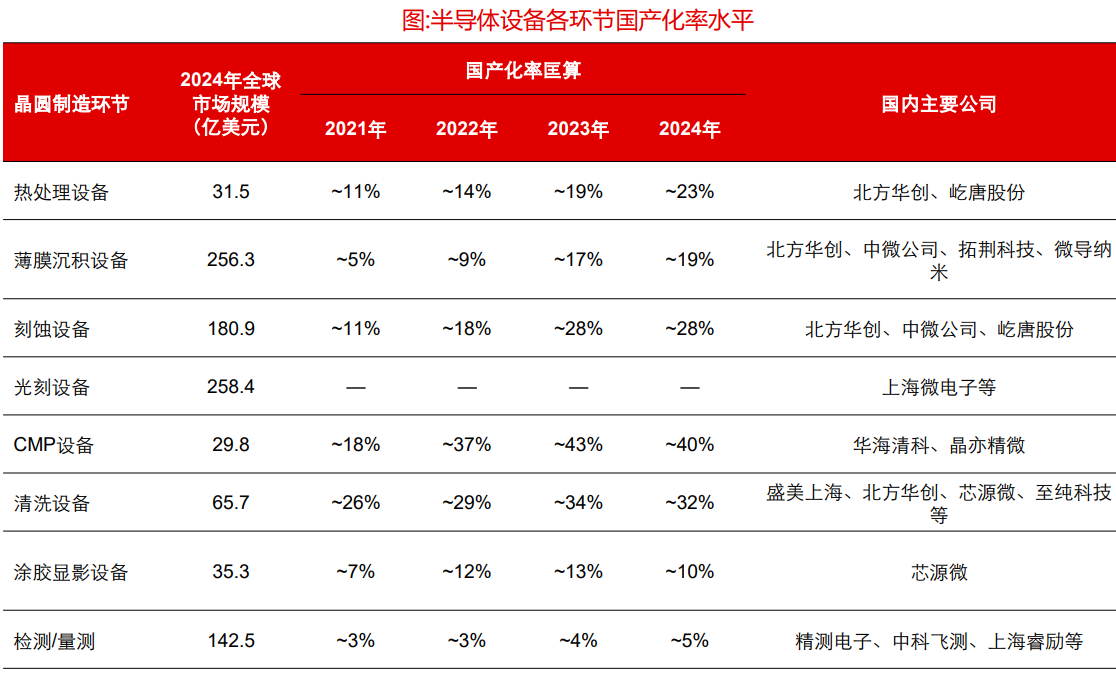
一图了解半导体设备各环节国产化率水平
Xuan Gu Bao· 2025-08-22 05:16
Group 1 - The global market size for wafer manufacturing equipment is projected to grow significantly from 2021 to 2024, with various equipment categories showing increasing domestic production rates [2] - The market for thermal processing equipment is expected to increase from $31.5 billion in 2021 to a domestic production rate of approximately 23% by 2024 [2] - The market for thin film deposition equipment is projected to grow from $256.3 billion in 2021, with a domestic production rate reaching around 19% by 2024 [2] Group 2 - The etching equipment market is anticipated to grow from $180.9 billion in 2021, maintaining a domestic production rate of 28% from 2023 to 2024 [2] - The photolithography equipment market is valued at $258.4 billion, with no specific domestic production rate data provided for the years 2021 to 2024 [2] - The chemical mechanical planarization (CMP) equipment market is expected to grow from $29.8 billion in 2021, with a domestic production rate projected to be around 40% by 2024 [2] Group 3 - The cleaning equipment market is projected to grow from $65.7 billion in 2021, with a domestic production rate expected to be approximately 32% by 2024 [2] - The photoresist coating and developing equipment market is expected to grow from $35.3 billion in 2021, with a domestic production rate of about 10% by 2024 [2] - The detection and measurement equipment market is valued at $142.5 billion, with a domestic production rate projected to reach 5% by 2024 [2]

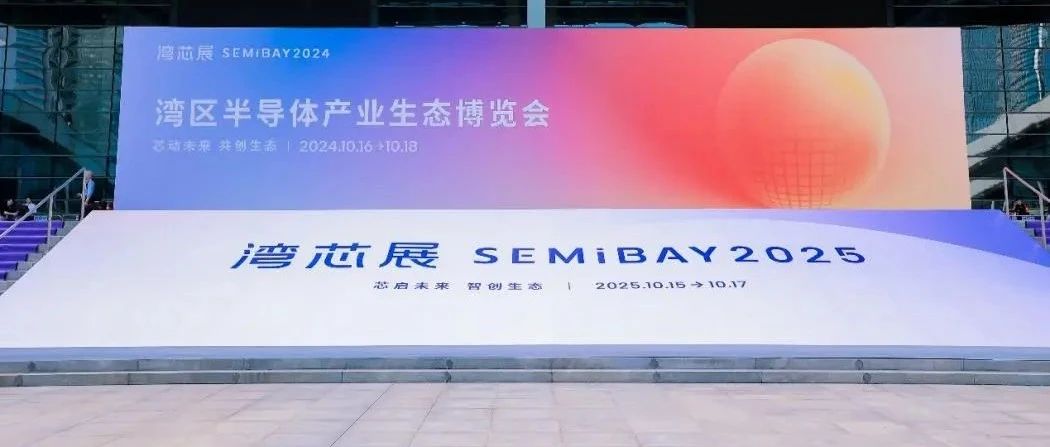
湾芯展2025再升级:展区扩容50%,百亿级产业机遇蓄势爆发
半导体行业观察· 2025-08-19 01:24
Core Viewpoint - The 2025 Bay Area Semiconductor Industry Eco-Expo aims to showcase the innovation and business opportunities within the global semiconductor industry, featuring a significant scale upgrade and a comprehensive industry ecosystem [1][17]. Group 1: Event Overview - The expo will take place from October 15 to 17, 2025, at the Shenzhen Convention Center, with a total exhibition area exceeding 60,000 square meters, which is equivalent to eight standard football fields [1]. - The event will gather over 600 leading industry companies and is expected to attract 60,000 professional visitors, along with hosting more than 20 cutting-edge technology summits and industry forums [1][9]. Group 2: Industry Coverage - The expo will feature four core exhibition areas: wafer manufacturing, compound semiconductors, IC design, and advanced packaging, covering the entire industry chain from upstream materials and equipment to downstream applications [4][7]. - Each exhibition area is meticulously planned to not only showcase the latest technological achievements but also to focus on practical application scenarios, providing an immersive industry experience for exhibitors and visitors [4]. Group 3: Innovative Display Modes - The expo introduces an innovative "technology + application ecosystem" display mode, with three ecological zones dedicated to AI chip ecosystems, RISC-V ecosystems, and Chiplet and advanced packaging ecosystems [6]. - This approach allows visitors to deeply experience semiconductor technology in various application scenarios, including AI computing centers, robotics, smart vehicles, smart cities, Industry 4.0, and consumer electronics [6]. Group 4: Business Opportunities - The wafer manufacturing exhibition area will showcase top global wafer manufacturing equipment and materials suppliers, presenting comprehensive solutions for the entire wafer manufacturing process, including key technological breakthroughs [7]. - The expo is expected to unlock over 10 billion yuan in industrial cooperation opportunities across various fields, including equipment procurement, technology licensing, production line construction, and material supply [9]. Group 5: Year-Round Service Ecosystem - The expo will establish a year-round service ecosystem, breaking the traditional three-day exhibition time limitation, and will include a demand database and supplier resource library for precise matching before, during, and after the event [10][19]. - An innovative "project procurement exhibition" model will be introduced, focusing on project demand to facilitate efficient matching between suppliers and buyers [11]. Group 6: Collaborative Development - The expo will connect six major semiconductor industry cities in China, leveraging local industrial characteristics and resource advantages to form a collaborative development pattern [12]. - It will provide a platform for global product launches, technical exchanges, and precise procurement matching, inviting key downstream purchasers from the industry [12][14]. Group 7: Comprehensive Professional Services - The organizers will offer a full range of professional services throughout the exhibition process, including pre-exhibition demand research, on-site business coordination, and post-exhibition project tracking [19]. - The expo aims to promote the deep integration of the global semiconductor industry ecosystem, contributing to the transition of China's semiconductor industry from "technology following" to "innovation leading" [17].