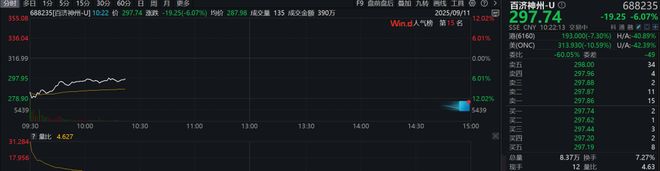
BeiGene(688235)

Search documents
70家创新药上市公司 3家靠自身造血盈利
经济观察报· 2025-09-11 08:19
Core Viewpoint - The innovative drug sector in China is experiencing a recovery, with over half of the companies having commercialized innovative drugs, despite many still not being profitable [1][2][12]. Group 1: Market Overview - As of the first half of 2025, 70 innovative drug companies have been listed on the Hong Kong Stock Exchange and the STAR Market, with 15 companies achieving profitability, including notable firms like BeiGene and Innovent Biologics [2][19]. - Among the 70 companies, 55 are still operating at a loss, representing approximately 79% of the total [6][19]. - Of the 55 unprofitable companies, 28 have commercialized innovative drug products, indicating that profitability may be achievable for some in the near future [4][12]. Group 2: Profitability Analysis - Only 3 companies are generating profits primarily from innovative drug sales, namely BeiGene, Innovent Biologics, and Elysium [23][22]. - The majority of profitable companies rely on other revenue streams, such as biosimilars or licensing agreements, rather than solely on innovative drug sales [23][25]. - For instance, Elysium achieved significant revenue from its lung cancer drug, while companies like WuXi Biologics and Hengrui Medicine have seen profitability through biosimilars and licensing deals [24][25]. Group 3: Company Performance - BeiGene reported a total revenue of 175.18 billion yuan in the first half of 2025, with a net profit of 4.5 billion yuan, largely driven by its innovative drugs [28]. - Innovent Biologics achieved revenue of 59.53 billion yuan, with 88.76% coming from product sales, reflecting strong performance in the oncology sector [29]. - Elysium's revenue for the first half of 2025 was 23.73 billion yuan, with over 99% derived from innovative drug sales, showcasing its successful product launch [23][20].


美股中概股盘前多数上涨,百济神州涨3%
Mei Ri Jing Ji Xin Wen· 2025-09-11 08:15
Group 1 - The majority of Chinese concept stocks in the US market saw an increase in pre-market trading on September 11, with notable gains for companies such as BeiGene, NIO, and Alibaba [1] - BeiGene experienced a rise of 3%, while NIO and Alibaba both increased by 2% [1] - Other companies like XPeng Motors and Trip.com rose by 1%, Pinduoduo increased by 0.6%, and JD.com saw a slight increase of 0.2% [1] Group 2 - Li Auto was the only company among the mentioned stocks that experienced a decline, with a drop of 0.8% [1]


科创100ETF基金(588220)涨超3.6%,最新规模位居全市场同类第一
Xin Lang Cai Jing· 2025-09-11 07:45
Group 1 - The core viewpoint is that the 科创100ETF fund has shown significant growth, with a 3.63% increase and a total scale of 57.64 billion, making it the largest in its category [1][2] - Semiconductor stocks are experiencing a strong performance, driven by Oracle's announcement of a 359% year-on-year increase in unmet performance obligations, reaching 455 billion [1] - The ongoing global AI computing power competition is expected to drive demand in the semiconductor and consumer electronics sectors, with a focus on innovation and recovery in demand [1] Group 2 - The 科创100ETF fund closely tracks the 上证科创板100 index, which selects 100 securities from the Sci-Tech Innovation Board based on market capitalization and liquidity [2] - As of August 29, 2025, the top ten weighted stocks in the 上证科创板100 index account for 23.82% of the index, including companies like 东芯股份 and 华虹公司 [2]





70家创新药上市公司 3家靠自身造血盈利
Jing Ji Guan Cha Wang· 2025-09-11 05:49
Core Viewpoint - The Chinese innovative drug sector is experiencing a stock market recovery in 2025, with 15 companies achieving profitability, although only 3 are profitable through innovative drug sales [2][3][4]. Group 1: Profitability and Performance - In the first half of 2025, 15 companies reported profitability, with 6 achieving their first profit [2][4]. - Among the 70 innovative drug companies listed, 55 remain unprofitable, accounting for approximately 79% [3][4]. - Of the 55 unprofitable companies, 28 have commercialized innovative drug products, indicating potential for future profitability [7][8]. Group 2: Revenue Sources - Only 3 companies, including Baijie Shenzhou and Xinda Biopharmaceuticals, achieved profitability primarily through innovative drug sales [12][15]. - Other profitable companies rely on alternative revenue sources, such as biosimilars or business development (BD) transactions [12][14]. - For instance, Ailisi's revenue in the first half of 2025 was largely driven by its self-developed lung cancer drug, achieving significant sales [12][13]. Group 3: Market Dynamics - Baijie Shenzhou's total revenue reached 17.518 billion yuan, with a significant portion derived from overseas markets [16]. - Xinda Biopharmaceuticals reported revenue of 5.953 billion yuan, primarily from its oncology products, benefiting from strong market demand [17]. - The innovative drug market is characterized by long R&D cycles and high risks, making profitability a critical milestone for listed companies [4][8].

提升肺癌患者生存期 百济神州亮出创新药临床获益数据
Bei Jing Ri Bao Ke Hu Duan· 2025-09-11 03:59
Group 1 - The core finding of the study indicates that the innovative drug Tislelizumab (百泽安) shows significant overall survival benefits for non-small cell lung cancer (NSCLC) patients, with a 4-year overall survival rate exceeding 72.3% for perioperative treatment and a 5-year overall survival rate of 20.1% for second/third-line treatment of advanced NSCLC [1][2] - The study highlights that the overall survival benefit is considered the "gold standard" for evaluating the efficacy of anti-tumor drugs, filling a data gap for Tislelizumab in perioperative treatment of NSCLC [2] - The research demonstrates that the neoadjuvant chemotherapy combined with Tislelizumab significantly reduces the risk of death by 35% for resectable NSCLC patients, with a notable 72.3% of patients surviving beyond 4 years [1][2] Group 2 - The "Healthy China Action - Cancer Prevention and Control Action Implementation Plan (2023-2030)" aims to achieve an overall cancer 5-year survival rate of 46.6% by 2030, emphasizing the critical need for improved lung cancer outcomes, as the current 5-year relative survival rate for all patients is only 28.7% [1] - The transition of PD-1 immune therapy, represented by Tislelizumab, from late-stage treatment to perioperative treatment for operable patients is expected to provide more cure possibilities for a broader lung cancer patient population, enhancing overall survival and quality of life [2]
创新药,突发!
Zheng Quan Shi Bao Wang· 2025-09-11 03:39
Core Viewpoint - The innovative drug sector experienced a significant drop in both Hong Kong and A-share markets, with declines exceeding 6% in various segments, including oncology and CXO [1][3]. However, research institutions view this downturn as a buying opportunity, suggesting that the upward trend in the pharmaceutical sector is likely to continue in the medium to long term [1][6]. Market Performance - Early trading saw a collective decline in the innovative drug sector, with notable stocks like BeiGene and Eucure Biopharma dropping over 10% [1]. The decline was later mitigated, with Eucure Biopharma turning positive and BeiGene's drop narrowing to under 5% [2]. External Factors - A sudden market downturn was attributed to concerns over potential U.S. government restrictions on drug imports from China, which could disrupt experimental therapies and impact the U.S. pharmaceutical industry [4]. However, the White House indicated that there was no active consideration of such a proposal [5]. Analyst Insights - Despite the negative news, analysts from Dongwu Securities and Guotai Junan believe that the downturn presents a buying opportunity, emphasizing the competitive advantage of Chinese innovative drug companies in the U.S. biotech landscape [6][7]. They argue that the profitability of multinational corporations (MNCs) from Chinese drug pipelines remains significant, with MNCs benefiting more from the profits generated [6]. Long-term Outlook - Analysts from Citic Securities maintain that the pharmaceutical sector's upward momentum is far from over, recommending a focus on innovation-driven and internationalization strategies, particularly in sectors with strong domestic demand [7]. The potential impact of any administrative orders is considered limited, given the historical challenges faced by similar policies in the U.S. judicial system [7].


A股、港股医药股大跌
Di Yi Cai Jing Zi Xun· 2025-09-11 03:32
Core Viewpoint - The article discusses the significant decline in Chinese pharmaceutical stocks following reports of potential U.S. government restrictions on experimental drugs and clinical data from China, which could impact the growth of Chinese biotech firms in the U.S. market [2][3]. Group 1: Market Reaction - After the news, over 80% of innovative drug concept stocks in A-shares and around 50 stocks in the Hong Kong healthcare sector fell by more than 4% [2]. - Leading companies such as BeiGene and HengRui Medicine experienced stock price declines exceeding 4% in both A-shares and Hong Kong markets [2]. Group 2: U.S. Policy Implications - The U.S. government is reportedly considering an executive order to impose strict limits on experimental drugs and clinical data from China, which includes mandatory reviews of U.S. acquisitions of Chinese new drugs by the Committee on Foreign Investment in the United States (CFIUS) [2][3]. - The proposed measures aim to raise the FDA review thresholds for Chinese clinical trial data and encourage domestic drug production and procurement in the U.S. [2]. Group 3: Impact on Chinese Pharmaceutical Companies - If the rumored restrictions are implemented, it would negatively affect both Chinese and U.S. pharmaceutical sectors, as Chinese companies rely on expanding into larger markets like the U.S. [3][4]. - The current trend of multinational pharmaceutical companies acquiring innovative drug pipelines from China may be hindered, potentially reducing competition between U.S. and European firms [4]. Group 4: Future Outlook - Experts suggest that the potential U.S. policy changes could pose challenges for Chinese innovative drug companies aiming to enter the U.S. market, emphasizing the need for these companies to strengthen their domestic market presence [5]. - The article highlights that while the U.S. remains the largest pharmaceutical market, the increasing complexity of international regulations may lead to a reduced dependency of Chinese companies on the U.S. market over time [5].


A股、港股医药股大跌
第一财经· 2025-09-11 03:23
Core Viewpoint - The article discusses the significant decline in Chinese pharmaceutical stocks due to potential U.S. government restrictions on experimental drugs and clinical data from China, which could impact the international expansion of Chinese innovative drugs [3][5]. Group 1: Market Reaction - Following reports of U.S. government plans to impose strict regulations, A-shares and Hong Kong stocks in the pharmaceutical sector saw a notable drop, with over 80% of innovative drug stocks in A-shares declining and around 50 stocks in Hong Kong dropping more than 4% [3]. - Leading companies such as BeiGene and Hengrui Medicine experienced stock price declines exceeding 4% in both A-shares and Hong Kong markets [3]. Group 2: Global Pharmaceutical Transactions - In the first half of 2025, global pharmaceutical transactions reached 456, a 32% year-on-year increase, with total upfront payments soaring to $11.8 billion, up 136% [4]. - The total transaction value hit $130.4 billion, reflecting a 58% year-on-year growth, with Chinese companies contributing nearly 50% of the total value and over 30% of the transaction volume [4]. Group 3: Implications of U.S. Regulations - If the rumored U.S. regulations are implemented, it would negatively affect both Chinese and U.S. pharmaceutical sectors, as Chinese companies rely on expanding into larger markets while U.S. firms may face increased costs and slower drug development [5][6]. - The potential restrictions could hinder U.S. pharmaceutical companies' access to lower-cost innovative drug pipelines from China, leading to competitive disadvantages against European firms [6]. Group 4: Future Challenges and Opportunities - The article highlights that the path for Chinese innovative drugs to penetrate the U.S. market is becoming increasingly challenging, necessitating a focus on expanding the domestic market [7]. - Despite the challenges posed by potential U.S. regulations, the long-term trend suggests that Chinese pharmaceutical companies may reduce their dependency on the U.S. market due to domestic policy reforms and the release of potential demand [8].

A股、港股医药股大跌,这则利空传闻对中国创新药出海影响多大?
Di Yi Cai Jing· 2025-09-11 03:08
Group 1 - The core viewpoint of the news is that the stock prices of major Chinese pharmaceutical companies, including BeiGene and HengRui Medicine, have significantly dropped due to reports of potential U.S. government restrictions on experimental drugs and clinical data from China [2][4]. - As of September 11, 2023, over 80% of innovative drug concept stocks in A-shares and around 50 stocks in the Hong Kong healthcare sector experienced declines exceeding 4% [2]. - The U.S. government's proposed measures include mandatory reviews of U.S. acquisitions of Chinese new drugs by the Committee on Foreign Investment in the United States (CFIUS) and raising the FDA review thresholds for Chinese clinical trial data [2][4]. Group 2 - According to data from Yao Medicine, the global pharmaceutical transaction volume is expected to reach 456 deals in the first half of 2025, a year-on-year increase of 32%, with total upfront payments soaring by 136% to $11.8 billion and total transaction value hitting $130.4 billion, up 58% year-on-year [3]. - Chinese companies contributed nearly 50% of the total transaction value and over 30% of the transaction volume in global innovative drugs, indicating a growing recognition of the value of Chinese enterprises in the global market [3]. - The potential U.S. restrictions could negatively impact both Chinese and U.S. pharmaceutical sectors, as Chinese companies seek to expand their market presence while U.S. firms may face increased costs and delays in bringing new therapies to market [4][5]. Group 3 - The current trend of multinational pharmaceutical companies, including those from Europe, acquiring innovative drug pipelines from China is driven by the need to replenish their pipelines amid patent cliffs [5]. - The proposed U.S. measures are seen as part of a broader pattern of restrictions on the Chinese pharmaceutical industry, which includes previous actions by the U.S. government to increase tariffs and promote domestic drug production [5][6]. - Despite the potential negative impact of the proposed U.S. policy, experts believe that the immediate effect on the market is limited, as the policy is still in early discussion stages and involves complex negotiations among various stakeholders [6][7]. Group 4 - The news serves as a warning for Chinese innovative drug companies, indicating that capturing the U.S. market will become increasingly challenging [6]. - It emphasizes the importance for Chinese pharmaceutical companies to continue developing the domestic market, as there remains a significant gap between China's pharmaceutical market and that of the U.S. [6][7]. - The long-term trend suggests that as domestic healthcare reforms progress and demand is released, Chinese companies may reduce their reliance on the U.S. market for growth [7].
百济神州半小时市值蒸发超300亿
Di Yi Cai Jing Zi Xun· 2025-09-11 02:43
Group 1 - The innovative drug concept stocks opened lower on September 11, with companies like BeiGene and Tigermed experiencing declines of over 10% [1] - WuXi AppTec fell by more than 7%, while other companies such as HengRui Medicine, Yuandong Bio, Huahai Pharmaceutical, and Saili Medical saw declines exceeding 5% [1] - After half an hour of trading, BeiGene's decline narrowed to below 7%, resulting in a market value loss of over 30 billion yuan compared to the previous trading day [1]