REMEGEN(688331)

Search documents
荣昌生物跌18.36% 营业部龙虎榜净卖出1.37亿元
Zheng Quan Shi Bao Wang· 2025-06-26 13:02
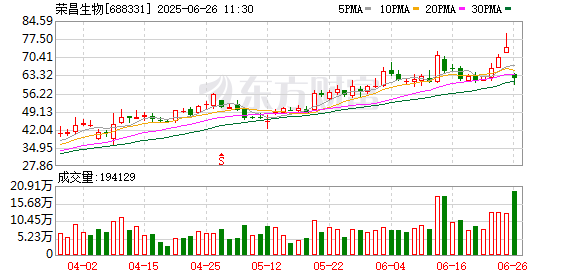
Summary of Key Points Core Viewpoint - Rongchang Biologics (688331) experienced a significant decline in stock price, closing at 60.70 yuan, down 18.36% on June 26, with a trading volume of 1.48 billion yuan and a turnover rate of 14.96% [2][3]. Trading Activity - The stock was listed on the daily trading list due to a price drop of 15% [2]. - The top five trading departments accounted for a total transaction of 607 million yuan, with buying transactions amounting to 235 million yuan and selling transactions totaling 372 million yuan, resulting in a net sell of 137 million yuan [2]. - Among the top buying departments, two were institutional special seats, with buying amounts of 629.26 million yuan and 545.06 million yuan respectively, while the Shanghai-Hong Kong Stock Connect was the third largest buyer with 495.44 million yuan [2][3]. - The selling departments included one institutional special seat with a selling amount of 857.04 million yuan, and the Shanghai-Hong Kong Stock Connect was the fourth largest seller with 635.25 million yuan [2][3]. Net Capital Flow - The stock saw a net outflow of 110 million yuan in main capital throughout the day [3].


超42亿美元授权协议落地,荣昌生物股价一度跌停
Huan Qiu Lao Hu Cai Jing· 2025-06-26 09:18
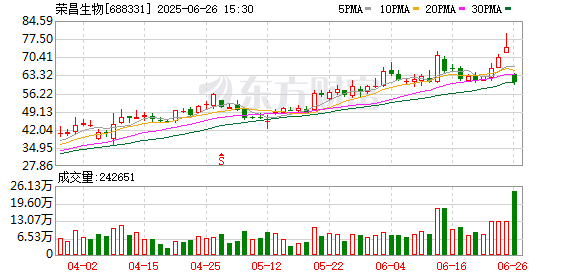
Group 1 - The core point of the article is that Rongchang Biologics has entered into a collaboration with VorBio, granting exclusive global rights (excluding Greater China) for the development, production, and commercialization of its proprietary drug, Tai Tasi Pi, which is a dual-target fusion protein [1][2] - The collaboration involves an upfront payment of $125 million, which includes a $45 million upfront payment and $80 million in warrants, potentially allowing VorBio to issue 320 million shares, representing 23% of its expanded share capital [1] - The total potential transaction value could reach $4.23 billion, including milestone payments of up to $4.105 billion and sales royalties in the high single to double-digit percentage range [1] Group 2 - The partnership is expected to accelerate the overseas market expansion of Tai Tasi Pi, providing innovative treatment options for global patients and enhancing the company's brand value and international influence [2] - Following the announcement, the market reacted negatively, with Rongchang Biologics' stock price dropping significantly, including an 18.36% decline in A-shares, despite a year-to-date increase of over 101% prior to the announcement [2] - Analysts noted that the upfront payment amount was perceived as low and that VorBio's smaller company size contributed to the market's disappointment regarding the collaboration's potential [2] Group 3 - Tai Tasi Pi is the world's first recombinant B lymphocyte stimulator (BLyS)/proliferation-inducing ligand (APRIL) dual-target fusion protein, designed to inhibit abnormal differentiation and maturation of B cells, thereby reducing pathogenic antibody production [1] - The drug has already been approved in China for the treatment of myasthenia gravis (MG), systemic lupus erythematosus (SLE), and rheumatoid arthritis (RA), with MG receiving fast track designation from the FDA and orphan drug status from both the US and EU regulatory agencies [1] - Sales of Tai Tasi Pi are projected to exceed 1.5 million units in 2024 [1]
细胞免疫治疗概念下跌1.41%,5股主力资金净流出超5000万元
Zheng Quan Shi Bao Wang· 2025-06-26 09:12
Market Performance - The cell immunotherapy sector declined by 1.41%, ranking among the top losers in the concept sector as of the market close on June 26 [1] - Notable declines were observed in companies such as Rongchang Biologics, Yuyuan Pharmaceutical, and Huahai Pharmaceutical, while ST Xiangxue, Shutai Shen, and Tailin Biologics saw gains of 4.19%, 1.71%, and 1.42% respectively [1] Capital Flow - The cell immunotherapy sector experienced a net outflow of 796 million yuan, with 43 stocks facing net outflows, and 5 stocks seeing outflows exceeding 50 million yuan [1] - Rongchang Biologics led the outflow with 110 million yuan, followed by Hengrui Medicine, Huahai Pharmaceutical, and Yuyuan Pharmaceutical with outflows of 104 million yuan, 75 million yuan, and 70 million yuan respectively [1] Top Gainers and Losers - The top gainers in the cell immunotherapy sector included ST Xiangxue, Shutai Shen, and Tailin Biologics, while the largest losers were Rongchang Biologics, Hengrui Medicine, and Huahai Pharmaceutical [1][3] - The trading volume for Rongchang Biologics was notably high, with a turnover rate of 14.96% and a significant drop of 18.36% in stock price [2][3]




融资1.75亿美元与裁员95%:荣昌生物这次押对了吗?
2 1 Shi Ji Jing Ji Bao Dao· 2025-06-26 08:36
Core Viewpoint - Rongchang Biopharma has entered a significant partnership with Vor Bio, involving a $4.2 billion risk-sharing agreement and a $175 million private investment in public equity (PIPE) deal, aimed at advancing clinical product lines and addressing liquidity issues [2][3][5]. Group 1: Financial Transactions - Rongchang Biopharma will receive $1.25 billion in cash and warrants from Vor Bio, including a $45 million upfront payment and $800 million in warrants, along with potential milestone payments totaling up to $4.1 billion [5][6]. - Vor Bio plans to issue 700 million warrants at a price of $0.25 per share as part of the PIPE, with expected net proceeds to be used for clinical development and operational expenses [2][8]. Group 2: Company Strategies and Challenges - Vor Bio is shifting its focus to autoimmune disease treatments, particularly the drug Tai Itasip, which has received various regulatory recognitions in China and the U.S. [8][9]. - Despite the immediate financial relief from the PIPE, Vor Bio's long-term prospects remain uncertain due to previous operational challenges, including a significant workforce reduction and halted clinical trials [6][10]. Group 3: Market Reactions and Future Outlook - Analysts express caution regarding Vor Bio's ability to execute its clinical and commercialization strategies effectively, given its reduced team size and the need for potential partnerships to enhance market reach [10][11]. - Rongchang Biopharma's financial health is under scrutiny, with a reported net loss of 1.468 billion yuan and a rising debt-to-asset ratio of 63.88%, indicating significant financial pressure [6][7].
荣昌、石药接连斩获大单背后:中国药企半年吸金近500亿美元,跨国巨头为何疯狂“扫货”|创新药观察
Hua Xia Shi Bao· 2025-06-26 07:58
Core Insights - Global pharmaceutical giants are increasingly turning Chinese laboratories into new drug "arsenals" as evidenced by significant licensing deals and collaborations with Chinese biotech firms [2][3][4] Group 1: Licensing Deals and Collaborations - Rongchang Biopharma licensed its self-developed product Taitasip to Vor Biopharma for $45 million upfront and potential total payments of up to $4.23 billion [2] - CSPC Pharmaceutical Group announced a strategic R&D collaboration with AstraZeneca, receiving $110 million upfront with potential total revenue reaching $5.33 billion [2] - In May alone, at least six Chinese pharmaceutical companies announced major business development (BD) deals, indicating a surge in interest from global players [3] Group 2: Market Growth and Trends - The total value of BD transactions in China's pharmaceutical sector reached $63.5 billion in 2024, a 22.59% increase from 2023, with 24 major deals accounting for $43 billion [3][4] - China's share of global BD transactions with upfront payments over $50 million surged from 5% in 2021 to 42% in the first five months of 2025 [4] - The trend indicates that Chinese innovative drug assets are becoming increasingly attractive to multinational corporations due to their high cost-effectiveness [8] Group 3: Competitive Advantages - Chinese drug development costs are significantly lower, with recruitment costs for clinical trials being one-third of those in Western countries, leading to faster drug development timelines [9] - The increasing number of original innovative drugs entering clinical trials in China, which reached 704 in 2024, positions China as a global leader in new drug development [10] Group 4: Future Outlook - The growth of BD transactions in China is expected to continue, driven by the need for innovative drugs amid the looming "patent cliff" faced by many global pharmaceutical companies [9][10] - Structural changes in the BD landscape are evident, with ADCs and bispecific/multispecific antibodies emerging as leading technologies in international markets [7][11]
荣昌生物的创新药出海交易为何带崩股价?
Xin Lang Cai Jing· 2025-06-26 07:46
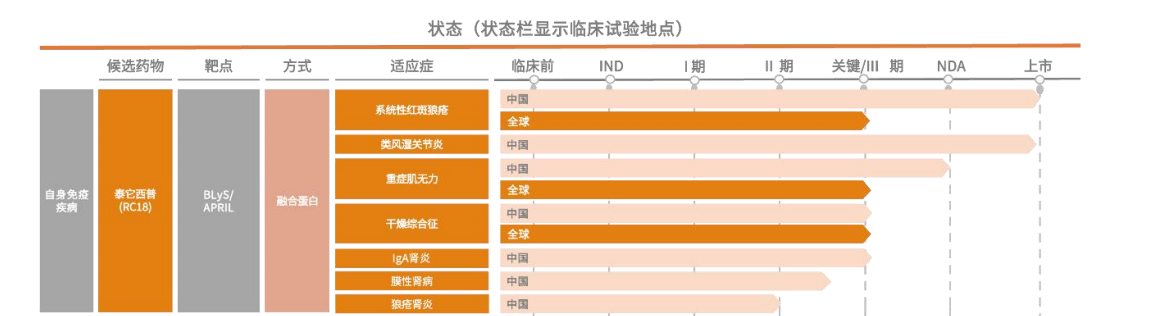
Core Viewpoint - Rongchang Biologics announced the licensing of its product Taitasip to Vor Bio, granting exclusive rights for development and commercialization outside Greater China, which has led to a significant drop in its stock prices despite the potential financial benefits from the deal [1][2][3] Group 1: Licensing Deal Details - Rongchang Biologics will receive $125 million in cash and warrants from Vor Bio, including an upfront payment of $45 million and $80 million in warrants, representing approximately 23% equity stake [1] - Vor Bio is also obligated to pay up to $4.105 billion in milestone payments based on clinical registration and commercialization, along with high single to double-digit sales royalties [1] - The deal structure follows a Newco model, where specific pipelines are separated and developed through a newly established company, allowing Rongchang to leverage Vor Bio's resources for overseas commercialization [4] Group 2: Market Reaction and Stock Performance - Following the announcement, Rongchang Biologics' A and H shares experienced significant declines, with A shares hitting a 20% limit down and H shares dropping over 25% [1][2] - The stock had previously surged by 34.37% from June 20 to June 25, reaching a high of 70.1 yuan per share, indicating a stark contrast between market expectations and the actual deal terms [3] Group 3: Product Background and Clinical Development - Taitasip was conditionally approved for market entry in March 2021 and is the first dual-target biologic for treating systemic lupus erythematosus [5] - The product has received additional approvals for rheumatoid arthritis and adult generalized myasthenia gravis, with ongoing global Phase III clinical trials for various indications [6][7][9]
A股收评:三大指数小幅回调,军工、银行股走强
Ge Long Hui· 2025-06-26 07:34
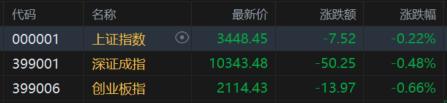
Market Overview - A-shares experienced a slight pullback after three consecutive gains, with the Shanghai Composite Index down 0.22% to 3448 points, the Shenzhen Component Index down 0.48%, and the ChiNext Index down 0.66% [1][2] - Total trading volume for the day was 1.62 trillion yuan, a decrease of 163 billion yuan from the previous trading day, with over 3600 stocks declining across the market [1] Sector Performance - The military and shipbuilding sectors saw gains, with stocks like Wanlima and Zhongguang Fanglei hitting the daily limit [2] - The digital currency sector surged in the afternoon, with stocks such as Xinan Century and Chutian Long also reaching the daily limit [2] - The banking sector continued its strong performance, with major banks like Industrial and Commercial Bank of China hitting new highs [2][11] Notable Stocks - Brokerage stocks experienced a pullback, with Guotai Junan down over 4% and Dongfang Caifu down over 3% [4][5] - Innovative drug concepts declined, with Rongchang Bio dropping over 18% and Yuekang Pharmaceutical down over 9% [6][7] - The brain-computer interface sector also showed weakness, with stocks like Beiyikang and Rongtai Health falling over 4% [8][9] Upcoming Events - A military parade is scheduled for September 3, showcasing domestically produced main battle equipment, including new-generation traditional weapons and advanced combat forces [10] Future Outlook - China Galaxy Securities anticipates a potential upward trend in the A-share market by the second half of 2025, driven by supply-side reforms and capital market financing reforms [14]

荣昌生物BD变局引爆17%闪崩!高波动常态下恒生医疗ETF(513060)成资金避风港
Xin Lang Cai Jing· 2025-06-26 06:34
Core Viewpoint - The Hong Kong stock market experienced a decline in major indices, with the Hang Seng Index and the Hang Seng China Enterprises Index falling by 0.48% and 0.51% respectively, ending a four-day rally, while the Hang Seng Tech Index remained flat. The decline was particularly pronounced in innovative drug stocks and coal stocks, with Rongchang Biopharmaceuticals dropping nearly 17% [1]. Group 1: Market Performance - The Hang Seng Medical ETF (513060) saw a nearly 3% drop during trading, with a transaction volume exceeding 1.2 billion and a turnover rate over 15%, indicating strong buying interest despite the decline [1]. - Most component stocks within the ETF experienced declines, with notable drops including Yidu Tech (over 12%), and several others like Medlive Technology, Green Leaf Pharmaceutical, and Innovent Biologics falling over 5% [1]. Group 2: Rongchang Biopharmaceuticals - Rongchang Biopharmaceuticals entered a significant overseas licensing agreement for Taitasip with Vor Bio, with a headline amount of $1.25 billion upfront plus up to $4.1 billion in milestone payments. However, the core terms fell short of market expectations [1][2]. - The upfront payment structure was less favorable than anticipated, with only $45 million in cash and the remainder in warrants, leading to lower actual cash inflow compared to previous licensing deals [2]. - The milestone payments of up to $4.1 billion are contingent on multiple conditions, including clinical and regulatory approvals, with high uncertainty regarding the development of Taitasip for U.S. SLE indications [2]. Group 3: Risk Factors - The unique risk structure of innovative drug companies makes their stock prices sensitive to single events, such as critical data releases for ongoing clinical trials [3]. - Rongchang Biopharmaceuticals reported a loss of nearly 1.47 billion in 2024, with Q1 2025 operating cash flow still negative at 188 million [4]. - The competitive landscape for Taitasip faces challenges from FcRn inhibitors and other therapies, raising questions about the sustainability of clinical advantages [4]. Group 4: Industry Insights - The volatility observed in individual stocks is not isolated, as similar fluctuations have been noted in the innovative drug sector, highlighting the sensitivity and fragility of stock prices to news [2]. - The Hang Seng Medical Healthcare Index, which includes 68 companies, limits the impact of individual stock volatility on the overall index performance [4]. - The Hang Seng Medical ETF (513060) serves as a diversified tool to mitigate individual stock event risks, with a significant concentration in the top ten component stocks [4][5]. - The index is currently at a historical low valuation, with a PE-TTM of 27.49, indicating a potential opportunity for investors to diversify through the ETF while sharing in the overall industry growth [5].
又见“纸面富贵”?荣昌生物“史诗级BD”吓崩股价
Ge Long Hui· 2025-06-26 05:55
Core Viewpoint - Rongchang Biopharma has entered a global licensing agreement with Vor Bio for its innovative drug Taitasip, with a total deal value exceeding $4.23 billion, but the market reacted negatively to the announcement, leading to significant stock price declines for both A-shares and H-shares [1][3][17] Financial Summary - Rongchang Biopharma will receive $125 million in cash and warrants from Vor Bio, including a $45 million upfront payment and $80 million in warrants, which can be converted into 320 million shares of Vor Bio, representing approximately 23% of its expanded total share capital [1] - The deal includes potential milestone payments of up to $4.105 billion and high single to double-digit sales royalties [1][8] - Despite the promising revenue growth, with projected revenue of 1.717 billion yuan in 2024 (up 58.54% year-on-year), the company still faces a net loss of 1.468 billion yuan [14][15] Market Reaction - Following the announcement, Rongchang Biopharma's A-shares hit the daily limit down, falling over 17% to 61.25 yuan, while H-shares dropped over 16% to 55.85 HKD [3][4] - The market's negative response indicates dissatisfaction with the deal's structure, particularly the low upfront payment and the uncertainty surrounding milestone payments [7][8] Strategic Implications - The agreement is seen as a significant step in Rongchang Biopharma's global expansion strategy, potentially allowing access to mainstream markets in Europe and the U.S. [17] - However, concerns about Vor Bio's financial stability and operational capacity raise doubts about the realization of future milestone payments and sales royalties [10][12][17]
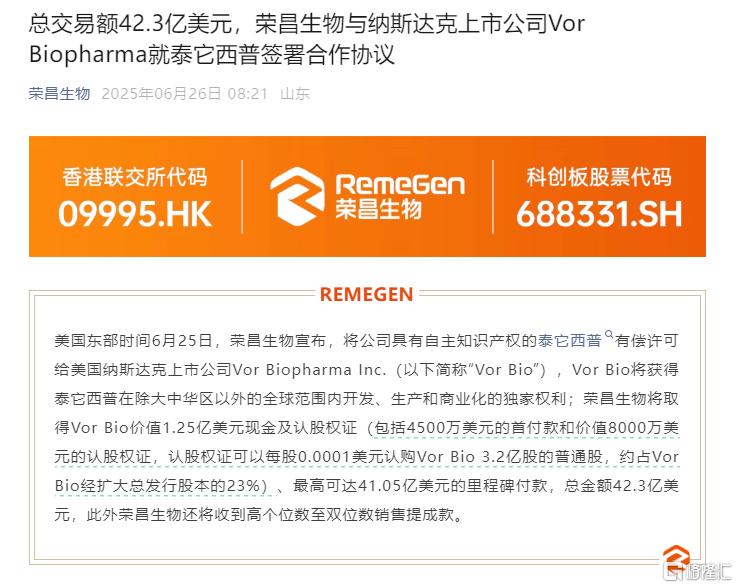
创新药授权金额超40亿美元,荣昌生物股价为何下跌?
2 1 Shi Ji Jing Ji Bao Dao· 2025-06-26 04:51
Core Viewpoint - Rongchang Biopharma has secured a significant licensing deal with Vor Biopharma, potentially worth over $4 billion, which includes milestone payments and sales royalties [2][3] Group 1: Licensing Agreement Details - The total transaction value of the licensing agreement is $4.23 billion, which includes an upfront payment of $125 million, consisting of $45 million in cash and $80 million in warrants [2][4] - Vor Biopharma will gain exclusive rights to develop, manufacture, and commercialize the drug Taitasip outside of Greater China [2][4] - Rongchang Biopharma will receive milestone payments that could reach up to $4.105 billion, in addition to high single to double-digit sales royalties [2][3] Group 2: Market Reaction - Following the announcement, Rongchang Biopharma's stock price fell significantly, with A-shares dropping by 16.65% and Hong Kong shares by 16.93% [5][6] - Investor skepticism is attributed to the relatively low upfront cash payment and doubts regarding Vor Biopharma's capabilities, given its market capitalization of approximately $69.22 million [5][6] Group 3: Industry Context - The licensing deal is part of a broader trend in the Chinese biopharmaceutical industry, where outbound licensing agreements have exceeded $2.5 billion, contributing to a total deal value surpassing $50 billion [8] - The innovation drug sector has seen a significant valuation increase, with the Tonghuashun Innovation Drug Index rising over 40% from its lowest point in April to its peak in June [8] - UBS highlights that a significant portion of clinical drug assets comes from Chinese companies, indicating a strong position in the global market [9]