TRINA(688599)

Search documents
年终盘点| 光伏产业从“内卷”走向“破卷”,但明年才是行业治理的攻坚期
Di Yi Cai Jing· 2025-12-20 11:57
Core Viewpoint - The photovoltaic industry is undergoing significant changes to address severe supply-demand mismatches and "involution" issues, with a focus on capacity integration and acquisition platforms to promote healthy competition and profitability by 2025 [1][10]. Group 1: Industry Challenges - The photovoltaic industry faced unprecedented losses in the first half of 2025, with 31 A-share listed companies reporting a total net loss of 12.58 billion yuan, a year-on-year increase of 274.3% [3]. - Major companies such as Longi Green Energy, Tongwei Co., and JA Solar reported substantial losses, with a combined loss of 17.26 billion yuan in the first half of 2025 [3]. - The industry has seen over 40 companies announce delistings, bankruptcies, or mergers since 2024 due to chaotic capacity expansion and severe supply-demand imbalances [3]. Group 2: Market Recovery Efforts - The establishment of the multi-crystalline silicon capacity integration acquisition platform marks a significant step towards addressing "involution" in the industry [1]. - The government and industry associations are actively promoting measures to combat low-price competition and enhance product quality, as highlighted in various government meetings and publications [6][11]. - By the second half of 2025, industry prices began to recover due to self-regulation and reduced production, leading to improved profitability for some upstream silicon material companies [7]. Group 3: Future Outlook - The photovoltaic industry is expected to enter a critical phase of governance in 2026, focusing on capacity regulation and the establishment of a unified national market [11]. - Analysts predict that the industry will undergo a continuous capacity clearing cycle, with measures to improve product quality standards and increase market concentration [11][12]. - The need for a holistic approach to "de-involution" across the entire supply chain, including silicon materials, wafers, cells, and modules, is emphasized to ensure sustainable profitability [12].








分时电价取消进行时,储能站收益转身
经济观察报· 2025-12-20 04:50
Core Viewpoint - The adjustment of time-of-use electricity pricing policies is pushing the energy storage industry to return to its role as a "flexible adjustment resource," transitioning from a passive arbitrage model to an active operation model that relies on technology and management capabilities to create diversified value [1][8]. Group 1: Electricity Market Development - The cancellation of time-of-use pricing is a significant step in the construction of the electricity spot market, shifting the price formation mechanism from government-led to market-led [3]. - As of December 2023, 28 provinces have initiated continuous spot trading, with 7 having transitioned to formal operations [2]. - The new policy primarily affects industrial and commercial users, while residential electricity pricing remains unchanged [2]. Group 2: Impact on Energy Storage - The adjustment of time-of-use pricing will primarily impact commercial energy storage stations, which have relied on peak-valley price differences for profitability [8]. - Energy storage companies are now required to enhance their electricity trading capabilities or collaborate with companies that possess strong trading abilities to adapt to the new market conditions [10]. - The cancellation of time-of-use pricing may lead to a decrease in predictable revenue for energy storage stations, necessitating a shift towards high-frequency charging and discharging strategies to improve profitability [9]. Group 3: Strategic Adjustments in the Industry - Many energy storage companies are shifting their focus from heavy asset project construction to operational service models, including providing electricity trading-related soft service products [10]. - The future role of user-side energy storage is expected to expand, with companies planning to leverage user-side storage as a core component in comprehensive energy projects and virtual power plants by 2026 [10]. - Companies like Trina Storage emphasize the importance of product safety and reliability, aiming to ensure higher cycle efficiency and faster response times to maintain profitability in a volatile revenue environment [10]. Group 4: Regional Policy Variations - Different provinces are progressing at varying speeds regarding the cancellation of time-of-use pricing, with Shaanxi being the first to implement this change [12]. - In contrast, Sichuan has opted to delay the cancellation due to its unique hydropower resources and the need for market participants to familiarize themselves with the new trading environment [12][13]. - The cancellation of time-of-use pricing may reduce profit margins for electricity sales companies, leading to a potential market exit for those with weaker trading capabilities [15].
银价上涨带动光伏组件涨价,业内预计明年价格继续上涨
经济观察报· 2025-12-19 12:43
Core Viewpoint - The rising silver prices have made silver paste the largest cost component in photovoltaic (PV) modules, surpassing silicon materials and glass [1][6]. Group 1: Cost Structure of Photovoltaic Modules - As of December 2025, silver paste is projected to account for 17% of the total cost of PV modules, while silicon materials and glass will account for 14% and 13%, respectively [1][6]. - The recent surge in silver prices has prompted leading PV manufacturers to increase module prices, with Longi Green Energy raising prices by 0.04 CNY/W for N-type modules and 0.02 CNY/W for BC modules [2][3]. Group 2: Market Dynamics and Price Adjustments - The price adjustments come during a year-end sales push, where manufacturers initially aimed to increase sales volume by lowering prices, but the unexpected rise in silver prices forced an earlier price hike [3][4]. - The current market price for PV modules is approximately 0.75 CNY/W following these adjustments [3]. Group 3: Industry Responses to Silver Price Increases - Manufacturers are attempting to mitigate the impact of rising silver prices by optimizing the silver content in silver paste and exploring alternative materials, although significant reductions in silver usage are limited due to quality assurance [6]. - The development of silver-coated copper technology is ongoing but not yet ready for large-scale application [6]. Group 4: Future Outlook and Recommendations - Analysts suggest that companies should enhance supply chain management to reduce the impact of raw material price fluctuations and consider entering the component recycling business to lower costs [7]. - Predictions indicate that PV module prices may continue to rise, potentially reaching between 0.88 CNY/W and 0.99 CNY/W next year, driven by the need for profitability across the supply chain [7].

银价上涨带动光伏组件涨价,业内预计明年价格继续上涨
Jing Ji Guan Cha Wang· 2025-12-19 12:15
Core Viewpoint - Major photovoltaic component manufacturers have started to raise prices due to a sudden increase in silver prices, with price hikes ranging from 0.02 to 0.05 yuan/W for various types of components [1][2]. Price Adjustments - As of December 17, 2023, leading manufacturers like Longi Green Energy and JinkoSolar have announced price increases for their photovoltaic components, with the adjusted prices approximately at 0.75 yuan/W [1][2]. - The price adjustments were accelerated due to unexpected silver price hikes, which were initially planned for January 2024 [2]. Silver Price Impact - The global silver price has seen a significant increase this year, rising from around 220 yuan/ounce at the beginning of the year to over 450 yuan/ounce, with the most notable increase occurring in the fourth quarter [4]. - Silver paste has become the largest cost component in photovoltaic modules, surpassing silicon materials, with silver paste accounting for 17% of total costs, while silicon materials account for 14% and photovoltaic glass for 13% [4]. Industry Responses - Manufacturers are attempting to mitigate the impact of rising silver prices by optimizing the silver content in silver paste and exploring alternative materials, although these alternatives are still in the development phase [5]. - Analysts suggest that companies should enhance supply chain management and consider component recycling to reduce raw material costs and create a closed-loop supply chain [5]. Future Price Expectations - Analysts predict that if effective price control measures are implemented, photovoltaic component prices could continue to rise, potentially reaching between 0.88 yuan/W and 0.99 yuan/W in 2024 [5]. - A low operating rate may be necessary for profitability across the industry, which could lead to increased fixed costs and further elevate component prices due to rising commodity prices [5].
破“内卷”、立标准、向未来,光伏行业领袖共话行业生态重塑之道
中国能源报· 2025-12-19 08:42
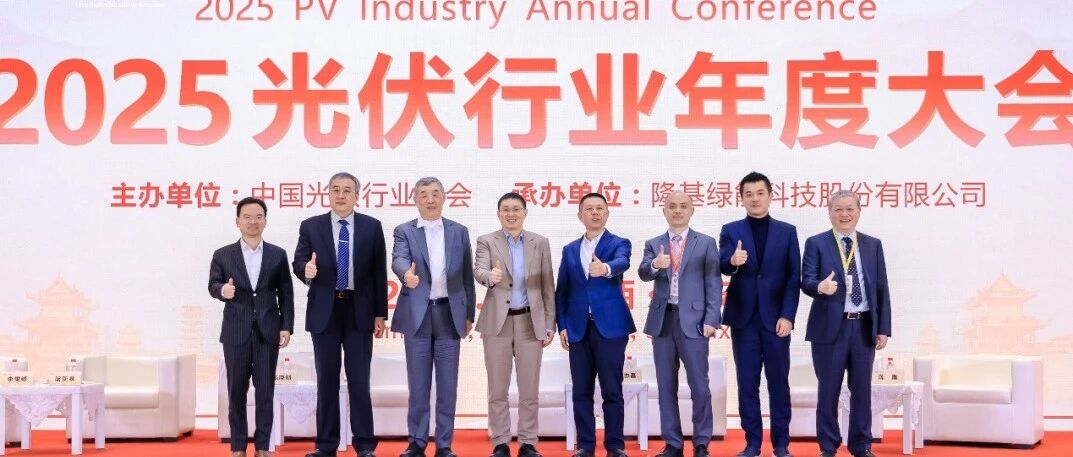
Core Viewpoint - The keyword "breaking the cycle" has become the strongest theme for the 2025 photovoltaic industry annual conference, emphasizing the need for high-quality development and the rejection of vicious competition in the industry [1][3]. Group 1: Industry Transformation - The photovoltaic industry is urged to move away from "involution" and focus on high-quality development, requiring collaboration among industry authorities, local governments, associations, media, and financial institutions [3]. - The essence of addressing "involution" is to promote competition based on technology and quality rather than price wars, as highlighted by industry leaders [3][4]. - There is a consensus that companies must rely on independent innovation and original technology to enhance product standards and quality, while the market should raise entry barriers to support advanced products [4][7]. Group 2: Global Supply Chain Resilience - The global trade environment is becoming increasingly complex, posing new challenges for Chinese photovoltaic companies as they seek to expand internationally [6]. - Companies are encouraged to shift from simple product output to creating value, building a more resilient global supply chain [6]. - Key agreements among industry leaders include raising export standards for photovoltaic products, integrating advanced technology and ESG performance into financial assessments, and establishing stricter quality standards with international recognition [7]. Group 3: Future Growth and Market Dynamics - The photovoltaic industry is transitioning from a phase of rapid installation to one focused on high-quality consumption and market-driven growth [9]. - The role of photovoltaic energy is becoming more prominent in the new power system, necessitating solutions for intermittency and demand-side response through "photovoltaic + energy storage" models [9]. - Despite current challenges, industry leaders maintain an optimistic outlook for the future, anticipating breakthroughs in quality and sustainability supported by policy and market forces [10].



87股连续5日或5日以上获融资净买入
Zheng Quan Shi Bao Wang· 2025-12-19 03:11
Core Viewpoint - As of December 18, a total of 87 stocks in the Shanghai and Shenzhen markets have experienced net financing inflows for five consecutive days or more, indicating strong investor interest in these stocks [1] Group 1: Stocks with Longest Net Inflows - The stocks with the longest consecutive net inflows are AVIC Jonhon Optronic Technology and Liyuan Heng, both achieving net inflows for 11 consecutive trading days [1] - Other notable stocks with significant net inflows include China Ping An, Shengmei Shanghai, Chuangzhong Technology, Changchun High-tech, Trina Solar, Aerospace Electric, Nocera Health, and China Shipbuilding Special Gas [1]





中国光伏出口大增,欧美政策“筑墙”
3 6 Ke· 2025-12-18 10:00
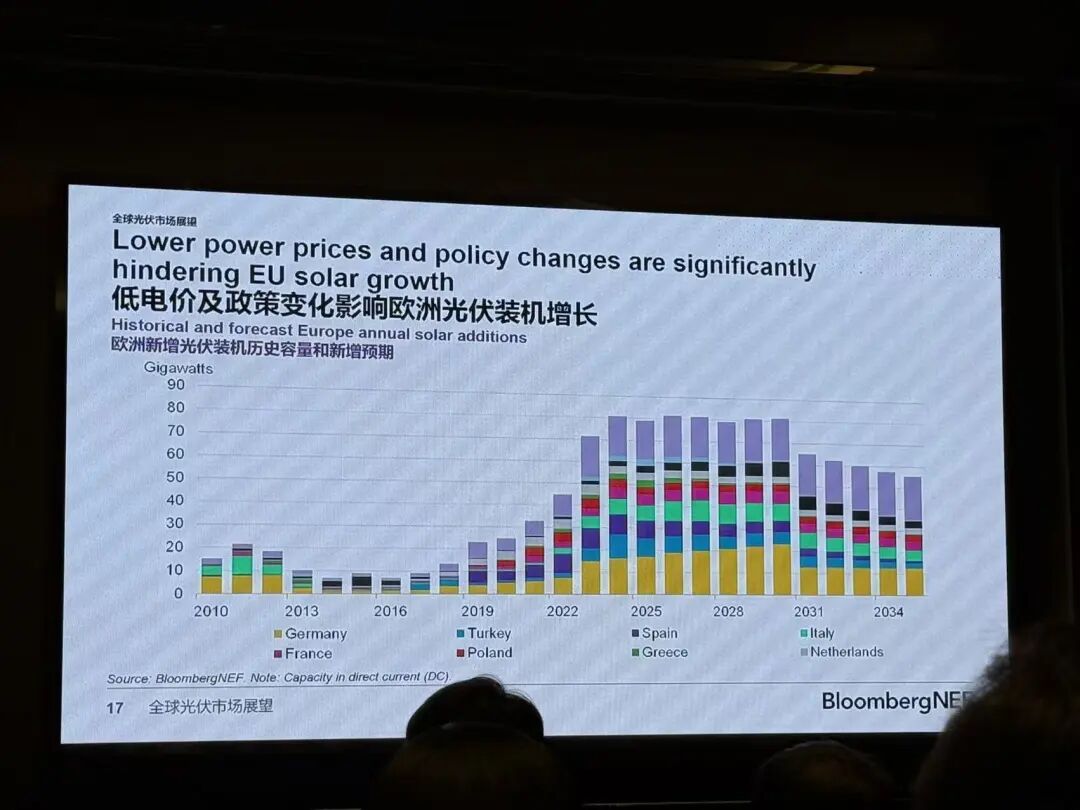
Core Insights - The overseas market is becoming a key focus for Chinese photovoltaic companies, with a shift towards emerging markets like South America, Africa, and Southeast Asia due to challenges in traditional developed markets [1] - The global investment in photovoltaic energy exceeds $500 billion annually, with nearly 600 GW of new installations expected in 2024, where China continues to lead in manufacturing and large-scale project deployment [1] - A new trend is emerging where Chinese photovoltaic companies are exploring a "technology licensing + localized production" model, potentially transforming them from "product manufacturers" to "technology exporters" [1] Group 1: Market Trends - The European photovoltaic market is expected to peak before 2030, driven by rapid policy changes and the EU's Net-Zero Industry Act, which aims for at least 40% of annual deployment needs to be met by local manufacturing [2] - The Indian government is promoting local manufacturing through the ALMM framework, which restricts participation in government-supported solar projects to approved manufacturers [3] - Emerging markets like Africa and South America are rapidly expanding, with Africa holding 40% of the world's solar energy resources, presenting significant opportunities for Chinese photovoltaic companies [4][5] Group 2: Export Opportunities - By 2025, China's photovoltaic exports to Africa are expected to surge, with projections of 2 GW of silicon wafers, 2.5 GW of batteries, and 15 GW of components, marking a significant growth highlight [5] - The European market, as the second-largest photovoltaic market after China, is projected to have a cumulative installation target of 600 GW by 2030, indicating clear growth potential [3] - The shift towards emerging markets is driven by the need to navigate high barriers in developed markets while capitalizing on the rapid growth and resource availability in regions like Africa and Southeast Asia [4][8] Group 3: Strategic Approaches - Chinese photovoltaic companies are adopting various strategies for overseas market entry, including capacity cooperation, localized manufacturing, direct exports, and transshipment trade [8] - The trend is shifting from "Made in China, sold globally" to "Globally manufactured, locally supplied," with capacity cooperation and localized manufacturing becoming the future focus [8]

天合光能跌2.04%,成交额4.96亿元,主力资金净流出1963.50万元
Xin Lang Cai Jing· 2025-12-18 06:57
Core Viewpoint - Trina Solar's stock has experienced a decline of 15.39% year-to-date, with a recent drop of 2.04% on December 18, 2023, reflecting ongoing challenges in the solar energy market [1][2]. Company Overview - Trina Solar, established on December 26, 1997, and listed on June 10, 2020, is located in Changzhou, Jiangsu Province. The company operates in three main business segments: photovoltaic products, photovoltaic systems, and smart energy [2]. - The revenue composition of Trina Solar includes photovoltaic products (64.66%), system solutions (21.23%), other services (5.54%), digital energy services (4.42%), and storage business (4.14%) [2]. Financial Performance - As of November 10, 2023, Trina Solar reported a total revenue of 49.97 billion yuan for the first nine months of 2025, a year-on-year decrease of 20.87%. The net profit attributable to shareholders was -4.20 billion yuan, reflecting a significant decline of 396.22% [3]. - The company has distributed a total of 3.49 billion yuan in dividends since its A-share listing, with 2.41 billion yuan distributed over the past three years [4]. Shareholder Information - As of November 10, 2023, Trina Solar had 54,800 shareholders, an increase of 16.75% from the previous period. The average number of tradable shares per shareholder decreased by 14.35% to 39,803 shares [3]. - Major shareholders include Hong Kong Central Clearing Limited, holding 130 million shares, and various ETFs, which have seen reductions in their holdings [4].
“奶茶新贵”牵手“光伏千金” 买霸王茶姬送天合光能优惠券?
Zhong Guo Xin Wen Wang· 2025-12-18 04:29
校友到家人 据媒体报道,天合光能方面表示,双方相识于青年企业家学习活动,已登记结婚。 公众号"混沌学园"15日发布的文章中,将二人称为"混沌学园两位校友",并提到混沌创始人李善友教授作为证婚人在婚礼现场送上祝福,表示"两位在混 沌相识、相知、相爱。" 虽一个是四期生、一个是二期生,但在2024年末混沌学园十周年老友回归活动上,两人的名字同时出现在了西塘会场的老学员名单上。 中新网北京12月18日电(记者 左宇坤)近日,一组喜庆的照片在互联网备受关注。霸王茶姬创始人张俊杰与天合光能联席董事长高海纯,在女方老家常州市 某酒店举办大婚仪式。 一边是新茶饮赛道新贵,一边是光伏产业"老钱",双方均处于各自行业的头部阵营,但面临的境遇并不相通。总市值约600亿的两大企业版图交汇,这场 婚姻在"人手一杯霸王茶姬"的热闹之外,也多了层商业视角上的互补考量。 图片来源:公众号"混沌学园" 活动上,张俊杰在独立演讲时复盘了霸王茶姬的过去几年,分享了公司的战略布局和组织文化。 2024年毫无疑问是霸王茶姬的高光时刻,GMV(商品交易总额)295亿元人民币,营收124.05亿元,净利润为25.15亿元,为其2025年在纳斯达克敲钟上 ...

天合储能再签储能大单!
鑫椤锂电· 2025-12-17 08:25
Core Viewpoint - Trina Storage has announced an expansion of its strategic partnership with Lightshift Energy, focusing on delivering over 1 GWh of energy storage projects across multiple states in the U.S. [1] Group 1: Partnership and Project Details - The collaboration aims to enhance grid stability and support utility companies and local communities through advanced energy storage solutions [1] - The projects will utilize Trina Storage's Elementa series, which is characterized by high energy density, performance, and safety [1] - Previous successful projects in Massachusetts demonstrate the effective planning and rapid delivery capabilities of both companies [2] Group 2: Market Context and Implications - The partnership is positioned to address the growing energy demand and increasing frequency of extreme weather events in the U.S., thereby improving grid resilience and reliability [1] - The completion of two energy stations ahead of schedule during a heatwave highlights the operational efficiency and reliability of Trina Storage's solutions [1]