ZTE(000063)

Search documents
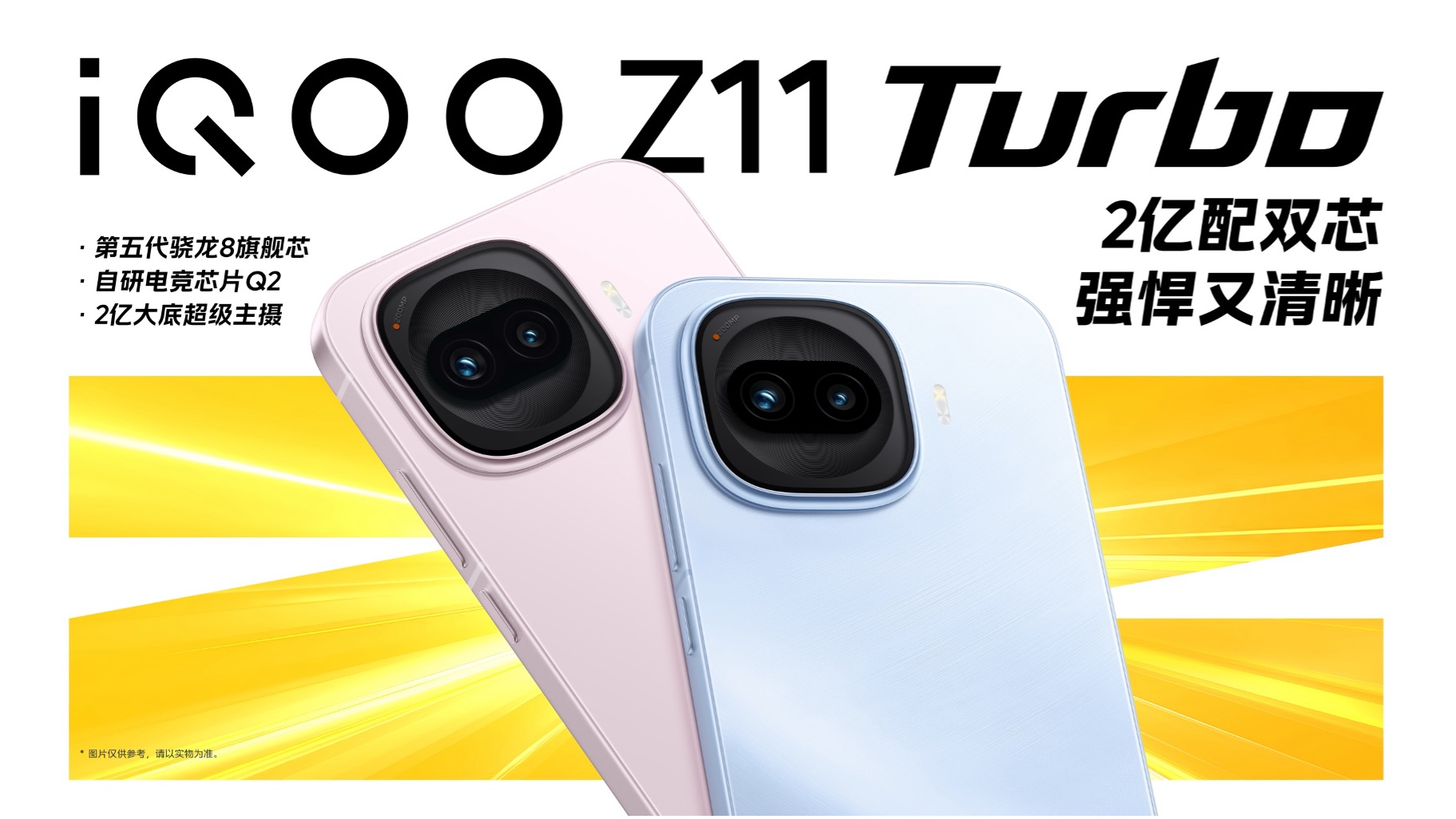
“战斗精灵”iQOO Z11 Turbo发布:特好看+爆能打+全场景全能
Jing Ji Wang· 2026-01-19 07:28
Core Viewpoint - iQOO has launched the iQOO Z11 Turbo, a mid-range smartphone that combines strong performance, high-quality imaging, and premium design, challenging the traditional perception that consumers must choose between these features in this price segment [1]. Design and Build - The iQOO Z11 Turbo features a flagship-grade material combination of a metal frame and glass/fiberglass back, moving away from traditional plastic, enhancing both visual and tactile experiences [3] - It has a 6.59-inch display with ultra-narrow bezels and a slim body width of 74.42mm, designed for better single-handed use and comfort during prolonged holding [3] - The device supports IP68 and IP69 ratings for dust and water resistance, along with an advanced ultrasonic 3D fingerprint recognition system for enhanced security [3] Performance - The smartphone is powered by the fifth-generation Snapdragon 8 flagship mobile platform, utilizing TSMC's 3nm process, resulting in a 36% increase in CPU performance and a 42% reduction in power consumption [5] - It features a self-developed gaming chip Q2, enabling PC-level texture super-resolution and 144FPS concurrent frame rates, significantly enhancing gaming quality and smoothness [5] - The "Ice Dome Dual Network Cooling System" effectively reduces core temperature by up to 15°C, ensuring sustained high performance during gaming sessions [5] Camera Capabilities - The iQOO Z11 Turbo is equipped with a 200MP main camera, supporting 4x lossless zoom and 40x digital zoom, significantly improving image clarity and detail restoration [7] - The front camera has been upgraded to 32MP with AI beautification algorithms, providing natural and realistic enhancements [7] - It offers multiple focal lengths for portrait photography and includes a macro feature for capturing fine details, catering to diverse creative needs [7] Battery and Connectivity - The device houses a 7600mAh battery with a high energy density of 860Wh/L, surpassing competitors in the same size category [10] - It supports 100W fast charging, allowing for quick recharges without overheating, achieving over 50% charge in the time it takes to drink a cup of coffee [10] - The "Universal E-sports Network System 2.0" features 24 antennas and an AI gaming network selection algorithm, ensuring stable connectivity in crowded areas [10] Software and User Experience - The iQOO Z11 Turbo runs on OriginOS 6, promising 60 months of smooth performance and enhanced AI functionalities for improved user interaction [12] - It supports various cross-device collaboration features, enhancing efficiency in daily tasks and social interactions [12] - The device is available in multiple storage configurations, with prices ranging from 2399 to 3699 yuan, and offers promotional discounts [12]


济南127个省级重点实施类项目完成投资约1160亿元
Qi Lu Wan Bao· 2026-01-19 01:50
Economic Performance - Jinan's GDP is expected to exceed 1.4 trillion yuan, with a public budget revenue of 109.34 billion yuan, where tax revenue accounts for 74.3%, maintaining the top position in the province for three consecutive years [1] - The industrial added value above designated size is projected to grow by 6.9%, while the total retail sales of social consumer goods are expected to increase by 4.4% [1] Project Development - The "Project Enhancement Year" initiative has shown significant results, with 127 provincial key projects completing investments of approximately 116 billion yuan, achieving a completion rate of 122.3% [3] - A total of 511 municipal key projects completed investments of about 258 billion yuan, with a completion rate of 120.4% [3] - Major infrastructure projects such as the Jinan North Station and various industrial projects like Ais Solar and Tianyue Silicon Carbide are accelerating construction [3] Consumption and Market Activity - Jinan has organized over 500 promotional activities for consumption, including the "Spring City Purchase" 2025 consumption season, and hosted 1,376 commercial performances and 143 exhibitions [3] - The city introduced 111 brand stores and flagship stores, with over 20,000 merchants joining the "Prepaid Treasure" program, and issued consumption vouchers worth 4.38 billion yuan, stimulating consumption by 43.88 billion yuan [3] - Jinan has been recognized as a pilot city for new consumption formats and sports consumption, with Pingyin County awarded as a leading county in commercial development [3] Investment Attraction - Jinan has successfully utilized major economic and trade events to host 54 city promotion and industry matchmaking meetings, landing 544 projects with investments exceeding 1 billion yuan, totaling 292.03 billion yuan [3] - New agreements were signed for 323 projects with investments over 1 billion yuan, amounting to 194.86 billion yuan, including partnerships with companies like ZTE, New H3C, and Bosch [3]


信创再迎变局!鸿蒙通过国家安全可靠测评
Guan Cha Zhe Wang· 2026-01-19 00:52
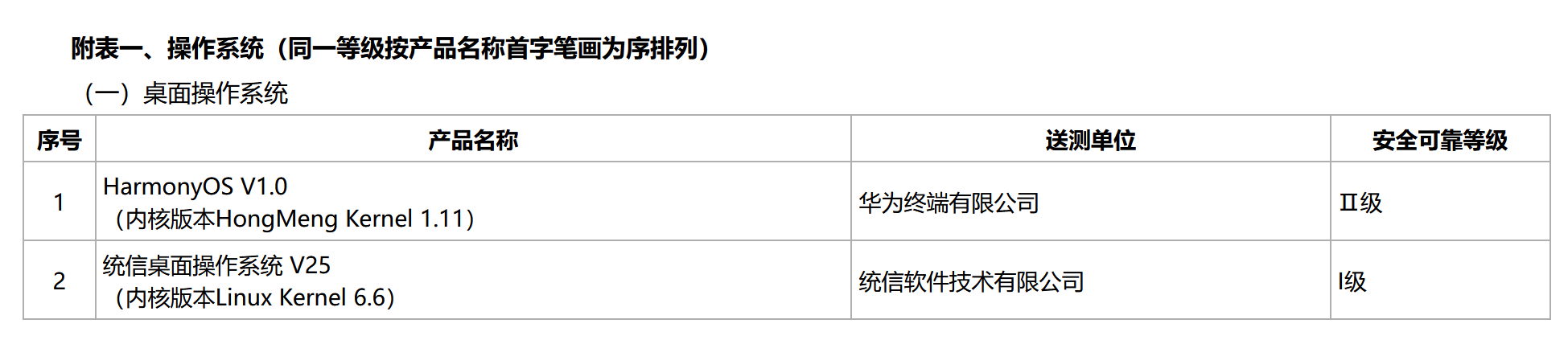
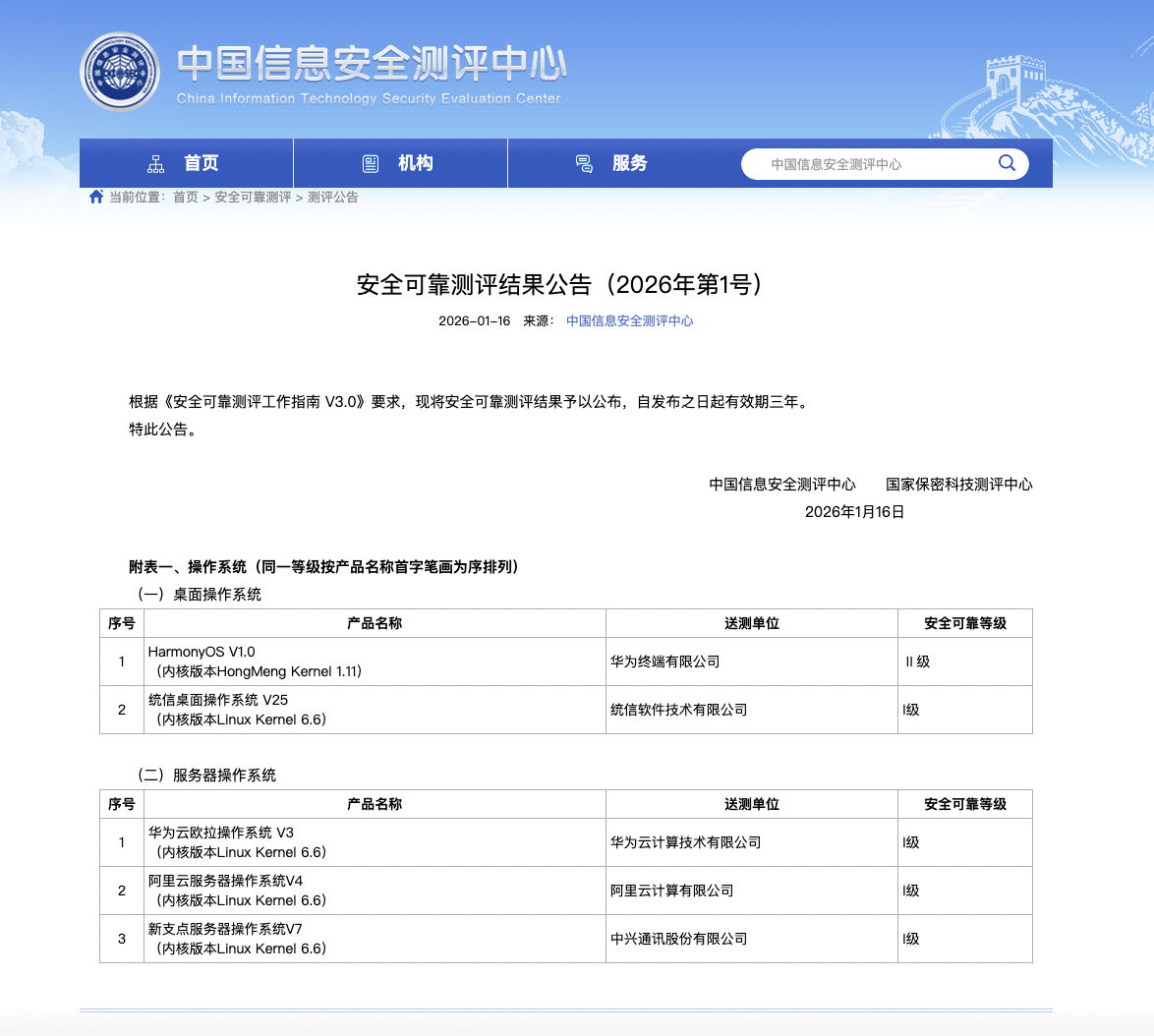
Core Insights - HarmonyOS V1.0 has passed the national security reliability assessment, marking its entry into critical industry procurement lists, which is essential for its adoption in sectors like government, finance, and energy [1][5] - HarmonyOS V1.0 is the first operating system to achieve a security reliability level of II, indicating a higher standard in core technology, security assurance, and sustainable development compared to other systems that achieved level I [2][6] - The Chinese "信创" (Xinchuang) industry is experiencing rapid growth, with market size expected to reach 26,559 billion yuan by 2026, driven by key sectors [3] Company Developments - Huawei has previously entered the Xinchuang market with Linux-based operating systems but has now launched the HarmonyOS for its professional computers, which is positioned as a core operating system for government and enterprise markets [4][5] - The competitive landscape in the domestic Xinchuang market is characterized by multiple strong players, but HarmonyOS is expected to leverage its superior application ecosystem and developer appeal to gain an advantage over established systems like Kirin and Tongxin [5][6] Industry Trends - The Xinchuang industry is in a phase of comprehensive promotion, with a predicted market growth rate of 17.84% in 2025 and 26.82% in 2026 [3] - The security reliability assessment results indicate that HarmonyOS is the only operating system with a level II certification, while other server operating systems tested, including those from Huawei and Alibaba, achieved level I [2][6]

硬来!“欧盟想强制成员国逐步淘汰中国设备”
Guan Cha Zhe Wang· 2026-01-17 12:11
Core Viewpoint - The European Union (EU) plans to ban Chinese suppliers from participating in critical infrastructure projects, particularly in telecommunications, solar systems, and security scanning equipment, as part of an upgrade to its "high-risk supplier" policy [1][4]. Group 1: EU Proposal and Implementation - The EU's upcoming cybersecurity proposal aims to replace the voluntary mechanism for excluding "high-risk" suppliers with mandatory rules for all member states [1][4]. - The timeline for phasing out Chinese equipment will depend on risk assessments and the characteristics of the supplier industries, as well as cost factors and the availability of alternative suppliers [3][5]. Group 2: Industry Impact and Reactions - Over 90% of solar panels installed in the EU are currently manufactured in China, which may lead to opposition from industry groups against the proposal [3]. - Telecom operators have warned that a direct ban could increase consumer prices for end devices [3][5]. Group 3: Political and Economic Context - The proposal is expected to face resistance from some EU member states due to the national security jurisdiction being under their control, which may complicate the implementation of a unified timeline for equipment removal [4][5]. - The EU's focus on Chinese telecom equipment manufacturers is intensifying amid deteriorating trade and political relations with China [4][6]. Group 4: Counterarguments from China - Chinese officials argue that the EU's claims of security risks associated with companies like Huawei and ZTE lack evidence and violate market principles [6]. - The Chinese government emphasizes that Chinese companies have contributed positively to the European economy and that forced removal of their equipment could hinder technological progress and economic development [6].
华为鸿蒙等操作系统通过国家安全可靠测评
Jing Ji Guan Cha Wang· 2026-01-16 14:22
Core Insights - Huawei's HarmonyOS desktop operating system and Huawei Cloud's Euler server operating system have officially passed the security reliability assessment [1] - Other systems that also passed the assessment include Tongxin desktop operating system, Alibaba Cloud server operating system, and ZTE's New Pivot server operating system [1] Group 1: Assessment Results - HarmonyOS V1.0, submitted by Huawei Terminal Co., Ltd., received a security reliability level of "Chuan" [3] - Tongxin Desktop Operating System V25, submitted by Tongxin Software Technology Co., Ltd., achieved a security reliability level of 132 [3] - Huawei Cloud Euler Operating System V3, submitted by Huawei Cloud Computing Technology Co., Ltd., also received a security reliability level of 132 [3] - Alibaba Cloud Server Operating System V4, submitted by Alibaba Cloud Computing Co., Ltd., received a security reliability level of "H" [3] - ZTE's New Pivot Server Operating System V7, submitted by ZTE Corporation, received a security reliability level of "H" [3]
养老金最新持仓曝光 电子行业最受青睐
Zheng Quan Shi Bao· 2026-01-16 07:23
Core Insights - The basic pension insurance fund, as a "national team," adheres to value investment principles, showing stable investment styles over time, with a record high of 191 stocks held and a market value of 33.865 billion yuan in 2022 [1] - As of the end of Q1 2023, the pension fund was involved in 173 stocks among the top ten circulating shareholders, with a total holding market value of 33.7 billion yuan, a decrease of 1.64 million yuan compared to the previous report [1] - The electronics industry had the highest market value held by the pension fund at 4.061 billion yuan, followed by the power equipment and basic chemicals industries at 3.675 billion yuan and 3.245 billion yuan, respectively [1] Stock Holdings - The pension fund favored two stocks with holdings exceeding 1 billion yuan: ZTE Corporation at 1.465 billion yuan and Zhejiang Chint Electrics at 1.301 billion yuan [2] - ZTE Corporation is a leading 5G communication company, achieving record high revenue and net profit in 2022, while Chint Electrics is a leader in low-voltage electrical and renewable energy sectors [2] Changes in Holdings - The pension fund entered 42 new stocks and increased holdings in 41 stocks compared to the previous report, with notable new entries including Sanrenxing, Pumen Technology, and Haiyou New Materials [3] - Sanrenxing had the highest holding proportion at 2.19% of circulating shares, with a net profit growth of 134.71% year-on-year in Q1 [3] - The stock with the largest increase in holding proportion was Tuojing Technology, which saw a rise of 2.1 percentage points to 3.81% [3] Valuation Insights - A total of 27 stocks had a market value exceeding 200 million yuan and a holding proportion over 2% by the pension fund, with an average increase of 14.84% this year, outperforming the Shanghai Composite Index [4] - Among these, five stocks, including Tuojing Technology and Pumen Technology, had net profit growth exceeding 10% [4] - 15 stocks within this group had a rolling price-to-earnings ratio below 30, with Changhai Co., Ltd. having the lowest at 8.4 times, held by the pension fund for 12 reporting periods [4]

53位抖音创作者独家探访12项大国重器,近距离呈现科技硬实力
Sou Hu Cai Jing· 2026-01-15 18:56
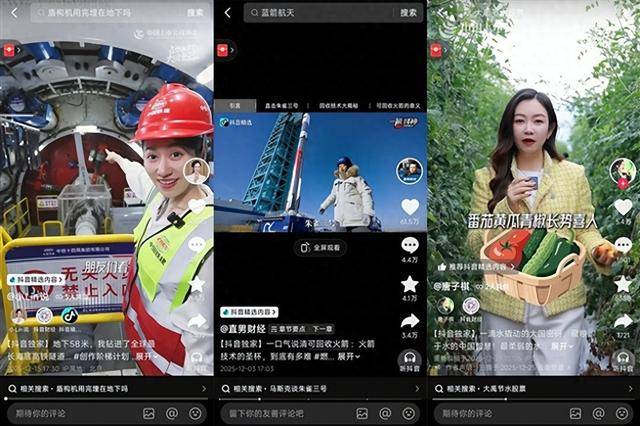
Core Insights - Douyin, in collaboration with the China Listed Companies Association, launched a special project titled "Burning Up! National Heavy Equipment" to showcase China's leading enterprises in various industries, aiming to present these technologies in a more relatable manner to the public [1][6] - The project features 53 content creators who have collectively garnered over 170 million followers, producing 56 exclusive in-depth exploration videos that have achieved over 4 billion views and 60 million likes within a month [1][8] Group 1: Project Overview - The initiative invites creators to explore 12 top-tier Chinese enterprises, including China Railway Construction and Blue Arrow Aerospace, providing unique insights into significant engineering projects [1][2] - Douyin supports creators through mechanisms like the "Creation Ladder Plan," offering access to rare filming locations, expert resources, and traffic incentives [1][6] Group 2: Content Highlights - Content creators have produced videos that detail the construction of the world's longest underwater high-speed rail tunnel, showcasing the advanced technology and capabilities of Chinese infrastructure [2][3] - Videos also cover various sectors, including agriculture, with creators documenting innovative irrigation techniques in Yunnan, recognized by the UN for drought resistance [3][5] Group 3: Audience Engagement - The project has resonated with viewers, with many expressing admiration for China's engineering prowess and technological advancements through comments on social media [8] - Douyin aims to continue promoting the "National Heavy Equipment" initiative, inviting more enterprises and creators to participate in showcasing China's technological achievements [8]




中国移动研究院邵春菊:低空、卫星是6G需要重点服务的场景
Xin Lang Cai Jing· 2026-01-15 10:18
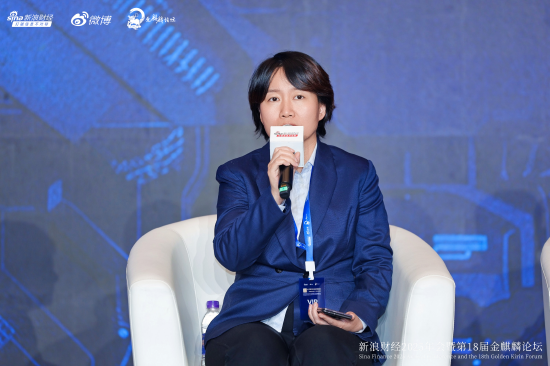
Core Viewpoint - The "2025 Technology Wind List" annual event highlighted the vision of 6G technology, emphasizing its role in defining the future and the need for practical implementation to achieve this vision [1][3]. Group 1: 6G Technology Insights - 6G is described as "integrating perception, intelligence, computing, and space," focusing on diverse capabilities to support the future's intelligent and interconnected society [1][3]. - The industry perspective indicates that 6G will not only pursue extreme speed and performance but will also address the needs of a digitized society [1][3]. - The discussion included the importance of expanding coverage domains, particularly in low-altitude and satellite communications, which are seen as critical areas for future 6G services [4].

2025中国企业ESG“金责奖”最佳公司治理G责任奖揭晓
Xin Lang Cai Jing· 2026-01-15 07:31
Core Viewpoint - The 2025 China Enterprise ESG "Golden Responsibility Award" aims to recognize companies that have made significant contributions to ESG (Environmental, Social, and Governance) practices, with over 5,000 enterprises participating in the evaluation process [1][4]. Group 1: ESG Services and Initiatives - Sina Finance ESG Rating Center offers 14 ESG services, including information, reports, training, and consulting, to help listed companies promote ESG concepts and enhance their sustainable development performance [1][4]. - In 2025, many quality enterprises in China are actively practicing their responsibilities in environmental, social, and governance aspects, while domestic financial institutions are steadily advancing in the field of ESG responsible investment [1][4]. Group 2: Award Selection and Winners - The award selection process involved over three months of competition, combining ESG performance, professional evaluation scores, and online voting results [1][4]. - The winners of the 2025 China Enterprise ESG "Golden Responsibility Award" for Best Corporate Governance include Zijin Mining, SF Holding, ZTE Corporation, Industrial Fulian, JA Solar, SANY Heavy Industry, Nanjing Steel, Bright Dairy, TCL Zhonghuan, and Fuyao Glass [2][5]. Group 3: ESG Rating Center Overview - The Sina Finance ESG Rating Center is the first Chinese ESG professional information and rating aggregation platform, dedicated to promoting sustainable development and responsible investment [3][6]. - The center aims to establish ESG evaluation standards suitable for China's characteristics and promote the development of ESG investment in the asset management industry [3][6].



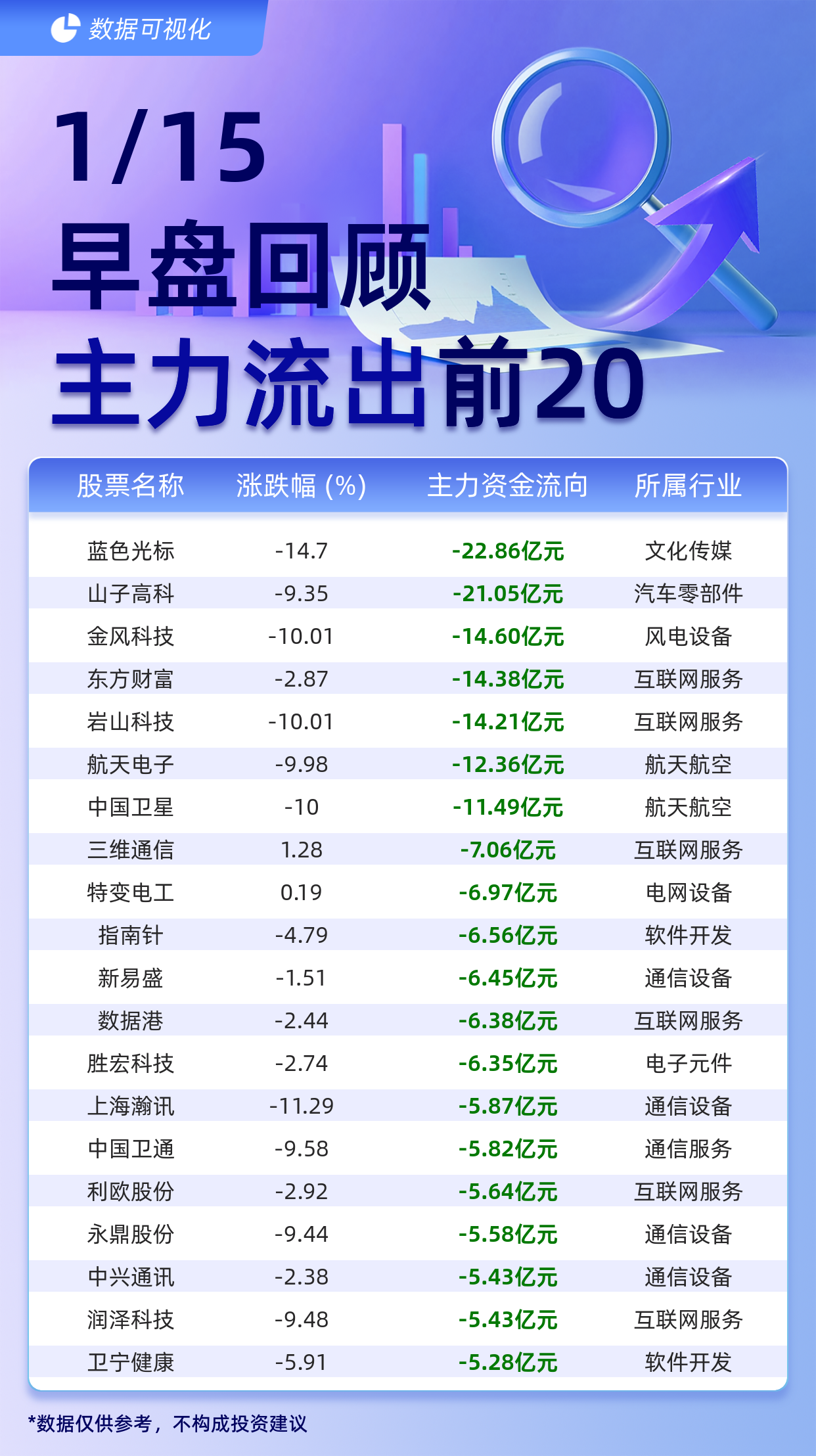
主力个股资金流出前20:蓝色光标流出22.86亿元、山子高科流出21.05亿元
Jin Rong Jie· 2026-01-15 03:50
Core Viewpoint - The data indicates significant outflows of main funds from various stocks, with notable declines in share prices across multiple sectors, particularly in cultural media, automotive parts, and wind power equipment [1][2][3] Group 1: Stock Performance and Fund Flow - Blue Cursor experienced a decline of 14.7% with a fund outflow of 2.286 billion [2] - Shanzi Gaoke saw a decrease of 9.35% with a fund outflow of 2.105 billion [2] - Goldwind Technology had a drop of 10.01% with a fund outflow of 1.460 billion [2] - Dongfang Fortune's stock fell by 2.87% with a fund outflow of 1.438 billion [2] - Yanshan Technology declined by 10.01% with a fund outflow of 1.421 billion [2] - Aerospace Electronics dropped by 9.98% with a fund outflow of 1.236 billion [2] - China Satellite's stock decreased by 10% with a fund outflow of 1.149 billion [2] - Sanwei Communication had a slight increase of 1.28% but still faced a fund outflow of 0.706 billion [2] - Tebian Electric experienced a minor increase of 0.19% with a fund outflow of 0.697 billion [2] - Compass saw a decline of 4.79% with a fund outflow of 0.656 billion [2] Group 2: Additional Stock Data - Xinyisheng's stock fell by 1.51% with a fund outflow of 0.645 billion [3] - Dataport experienced a decline of 2.44% with a fund outflow of 0.638 billion [3] - Shenghong Technology's stock decreased by 2.74% with a fund outflow of 0.635 billion [3] - Shanghai Huanxun saw a significant drop of 11.29% with a fund outflow of 0.587 billion [3] - China Satellite Communications experienced a decline of 9.58% with a fund outflow of 0.582 billion [3] - Leo Holdings' stock fell by 2.92% with a fund outflow of 0.564 billion [3] - Yongding's stock decreased by 9.44% with a fund outflow of 0.558 billion [3] - ZTE Corporation saw a decline of 2.38% with a fund outflow of 0.543 billion [3] - Runze Technology experienced a drop of 9.48% with a fund outflow of 0.543 billion [3] - Weining Health's stock fell by 5.91% with a fund outflow of 0.528 billion [3]