TCL TECH.(000100)

Search documents
涨超2.0%,光伏ETF基金(516180)再创年内新高
Xin Lang Cai Jing· 2025-09-25 02:47
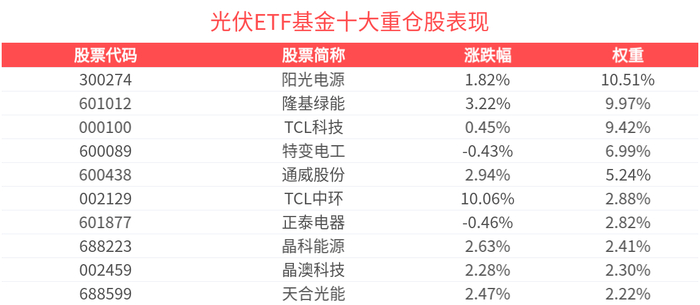
Core Insights - The Zhongzheng Photovoltaic Industry Index (931151) has shown a strong increase of 1.69% as of September 25, 2025, with notable gains in constituent stocks such as TCL Zhonghuan (10.06%) and Jingsheng Mechanical Electrical (5.20%) [1] - The Photovoltaic ETF Fund (516180) has also risen by 1.86%, with a latest price of 0.77 yuan, reflecting a 0.27% increase over the past week [1] - The index comprises up to 50 representative listed companies involved in the photovoltaic industry chain, aiming to reflect the overall performance of these securities [1] Company Performance - The top ten weighted stocks in the Zhongzheng Photovoltaic Industry Index as of August 29, 2025, include Yangguang Electric (10.51%), Longi Green Energy (9.97%), and TCL Technology (9.42%), collectively accounting for 56.14% of the index [2] - The performance of individual stocks shows varied results, with TCL Zhonghuan leading with a 10.06% increase, while TBEA (−0.43%) and Zhengtai Electric (−0.46%) experienced declines [4]




中国银河证券:中企引领Mini LED彩电升级 科技消费相关公司涨幅更好
Zhi Tong Cai Jing· 2025-09-25 02:04
Group 1 - The report from China Galaxy Securities indicates that overseas television demand is expected to peak in the second half of the year, which may mitigate some impacts from domestic subsidy reductions [1] - Panel procurement is showing positive signals as global television brands prepare for the upcoming promotional seasons, with global TV panel shipments expected to reach 22.3 million units in August 2025, reflecting a year-on-year increase of 7.6% and a quarter-on-quarter increase of 4.9% [1] - The shift towards Mini LED technology is anticipated to drive global television upgrades, with a projected penetration rate of 6.6% by 2025 [2] Group 2 - Chinese brands are leading the global market in Mini LED television, with significant increases in market share; Hisense's share rose from 6.2% in 2016 to 14.4% in 2025, while TCL's share increased from 5.8% to 14.8% [2] - The competitive landscape is shifting as Chinese companies gain ground in the high-end market, causing Samsung and LG to reassess their strategies for the first time since 2015 [2][3] - The technology upgrade in the television industry has shifted from being dominated by Japanese and Korean companies to Chinese firms, with advancements in RGB Mini LED technology being led by Hisense and TCL [3] Group 3 - Retail sales of televisions in China have begun to decline due to the reduction of government subsidies, with online retail sales dropping by 34.7% and 30.5% year-on-year in the first two weeks of September [4] - The overall retail growth rates for televisions have slowed down, with online retail growth at 3.4% and 8.5%, and offline retail growth at 13.6% and 25.7% in July and August respectively [4]



TCL在广州投下全球首创项目 “世界显示之都”诞生“新物种”
2 1 Shi Ji Jing Ji Bao Dao· 2025-09-24 12:21
Core Insights - The new display industry has become a focal point in global technology competition, with increasing penetration in flexible, foldable displays, and AI glasses [2] - Chinese display panel manufacturers have achieved nearly 50% of the global OLED market share in Q2 this year, marking a historical high [2][6] - TCL's investment in the world's first 8.6-generation printed OLED production line in Guangzhou is expected to significantly enhance China's position in the new display industry [3][8] Industry Developments - Major cities like Guangzhou, Hefei, and Beijing are emerging as winners in the new display industry, with TCL's T8 project set to commence in November with an investment of approximately 29.5 billion yuan [3][10] - The competition among leading panel manufacturers is increasingly focused on high-end display technologies like OLED, with Samsung and LG Display shutting down LCD factories to pivot towards OLED [4] - The investment in the T8 project is seen as a critical move for Guangzhou to develop a high-end display industry and to address long-standing issues of high costs and low yield in medium-sized OLED production [8][10] Market Trends - The IT device OLED market is experiencing a "gold rush," prompting accelerated construction and mass production of display production lines, with investments exceeding 50 billion yuan in the first half of the year [5] - Major Chinese panel manufacturers, including BOE and Visionox, have announced investments in 8.6-generation OLED production lines, totaling 63 billion yuan and 55 billion yuan respectively [6] - The T8 project aims to process approximately 22,500 glass substrates monthly, positioning China as a leader in high-generation AMOLED technology [8] Future Outlook - The T8 project is expected to achieve mass production between 2027 and 2028, coinciding with a surge in demand for medium-sized OLEDs, thereby enhancing Guangzhou's display industry ecosystem [12] - The display industry's future will involve deeper integration with various sectors, moving beyond traditional screens to applications like flexible displays and smart glasses [13][14] - Guangzhou's strategy to become a "world display capital" involves attracting major projects and fostering industry clusters, with a focus on technological innovation and market competitiveness [15][16]
千亿资金“竞逐”中尺寸IT面板
经济观察报· 2025-09-24 12:20
Core Viewpoint - The Chinese display panel industry has seen significant investments in the 8.6-generation OLED production lines, totaling approximately 150 billion yuan, driven by the demand for high-end IT panels such as laptops and tablets [2][5][10]. Investment Landscape - Major players like BOE, Visionox, and TCL Huaxing are heavily investing in the 8.6-generation OLED production lines, with investments of 630 billion yuan, 550 billion yuan, and 295 billion yuan respectively [2][3]. - TCL Huaxing's recent announcement of a 295 billion yuan investment contrasts with its previous statement indicating no plans for new 8.6-generation lines [2][3]. Technology Choices - Companies are adopting different technological routes: BOE and Samsung Display are focusing on the mature "evaporation" process, while TCL Huaxing is investing in the "printing" process, and Visionox is pursuing its proprietary "ViP" technology [3][18][20]. - The 8.6-generation line's larger glass substrate size (2290mm x 2620mm) allows for more efficient cutting of mid-size IT panels compared to the previous 6-generation lines [5][6]. Market Dynamics - The shift from LCD to OLED in the high-end IT market was catalyzed by Apple's launch of the OLED iPad Pro, prompting manufacturers to invest heavily in OLED technology [7][10]. - Despite initial optimism, LG Display has expressed caution regarding the demand for 8.6-generation OLEDs, delaying its investment plans until 2026 due to market uncertainties [9][21]. Competitive Strategies - Companies are adopting different strategies based on their financial health and market outlook: - BOE and Samsung Display are betting on established technologies for certainty and speed [15]. - TCL Huaxing and Visionox are seeking to leverage new technologies for cost advantages [18][20]. - Deepinma and LG Display are focusing on maintaining profitability in existing operations while cautiously evaluating new investments [21][22]. Financial Performance - As of mid-2025, major Chinese panel manufacturers reported improved financial results, with BOE achieving a revenue of 101.28 billion yuan, a year-on-year increase of 8.45% [13]. - In contrast, LG Display faced a complex financial situation, with a slight revenue decline despite a significant reduction in losses [13][21]. Conclusion - The competition in the mid-size IT panel market is intensifying, with various companies pursuing distinct paths based on their assessments of technology, market potential, and financial stability [22].



TCL在广州投下全球首创项目,“世界显示之都”诞生“新物种”
2 1 Shi Ji Jing Ji Bao Dao· 2025-09-24 12:12
Core Insights - The new display industry is becoming a focal point of global technological competition, with increasing penetration in flexible, foldable, and AI glasses applications [1] - Chinese display panel manufacturers have achieved nearly 50% of the global OLED market share in Q2 this year, marking a historic high [1] - TCL's investment in the world's first 8.6-generation printed OLED production line in Guangzhou is expected to significantly enhance China's competitive position in the new display industry [2] Industry Developments - TCL's T8 project, with an investment of approximately 29.5 billion yuan, aims to support Guangzhou's strategic position in the global new display industry [2] - Major Chinese panel manufacturers like BOE and Visionox are also investing heavily in OLED production lines, with total investments reaching 63 billion yuan and 55 billion yuan respectively [4] - The overall investment in emerging fields like MLED and silicon-based OLED has exceeded 50 billion yuan in the first half of the year [4] Market Trends - The demand for OLED panels is driven by consumer preferences for high-quality visual experiences in IT products such as laptops and tablets [3] - The competition among leading panel manufacturers is increasingly focused on high-end display technologies like OLED, with Samsung and LG Display shutting down LCD factories to invest in OLED [2] Technological Advancements - TCL's printed OLED technology is the only domestically led technology route in the industry, positioning it as a leader in high-generation AMOLED production [4] - The successful operation of the T8 project is seen as a critical opportunity for Chinese manufacturers to surpass foreign competitors in high-generation AMOLED technology [4] Regional Development - Guangzhou has established itself as a key player in the new display industry, having attracted major companies and built a complete industrial chain covering upstream materials to downstream applications [6] - Despite its strengths, Guangzhou faces challenges in technology iteration and high-end product development compared to cities like Hefei and Shenzhen [7] Future Outlook - The T8 project is expected to enhance Guangzhou's display industry ecosystem and align with the anticipated surge in demand for mid-size OLED applications by 2027-2028 [8] - The integration of display technology with other industries, such as semiconductors and smart vehicles, is seen as a pathway for future growth [9] - The success of the T8 project will be a key indicator of the evolution of the global OLED industry landscape [12]
千亿资金“竞逐”中尺寸IT面板
Jing Ji Guan Cha Wang· 2025-09-24 11:48
Core Viewpoint - Major panel manufacturers are heavily investing in the 8.6-generation OLED production lines, with total investments reaching approximately 150 billion yuan, aiming to dominate the mid-size IT panel market for laptops and tablets [1][4]. Investment Overview - BOE is investing 63 billion yuan, Visionox 55 billion yuan, and TCL Huaxing 29.5 billion yuan in the 8.6-generation OLED production lines [1]. - TCL Huaxing's recent announcement marks a significant shift from its previous stance of not planning new investments in OLED production lines [1][2]. Market Dynamics - The shift towards 8.6-generation OLED production is driven by the need for larger glass substrates that enhance cutting efficiency for mid-size IT panels [3]. - The new 8.6-generation glass substrate size of 2290mm x 2620mm allows for more efficient production of larger displays compared to the previous 6-generation lines [3]. Technological Pathways - Different manufacturers are adopting varied technological approaches: - BOE and Samsung Display are using the mature "evaporation" process [2][10]. - TCL Huaxing is focusing on "printing" technology, which aims to reduce costs and improve yield rates [12][13]. - Visionox is investing in its proprietary "ViP" technology, which utilizes semiconductor lithography [15]. Market Potential - The release of Apple's OLED iPad Pro in May 2024 has catalyzed the transition from LCD to OLED in the high-end IT market, prompting significant investments from manufacturers [4][5]. - Despite initial optimism, the actual sales of the iPad Pro fell short of expectations, leading to cautious approaches from some manufacturers like LG Display [5][16]. Competitive Landscape - Manufacturers are divided into three strategic paths: - **Path 1**: Companies like BOE and Samsung Display are betting on established technologies for certainty and speed [10][18]. - **Path 2**: TCL Huaxing and Visionox are pursuing innovative technologies to gain cost advantages [12][15]. - **Path 3**: Companies like LG Display and Deep Tianma are opting for a conservative approach, focusing on existing profitable segments while delaying large investments [16][18]. Financial Performance - As of mid-2025, major Chinese panel manufacturers reported improved financial results, with BOE achieving a revenue of 101.28 billion yuan, a year-on-year increase of 8.45% [9]. - In contrast, LG Display faced a complex financial situation, with a slight revenue decline despite a significant reduction in losses [9].
多种技术路线G8.6 IT OLED产线相继落地,IT市场成重要增长点
CINNO Research· 2025-09-24 07:36
Core Viewpoint - The article discusses the significant advancements in the G8.6 IT OLED production lines and highlights the IT market as a crucial growth point for the OLED display industry [2]. Group 1: Investment and Production Developments - TCL Huaxing announced the construction of a G8.6 printed OLED production line, indicating a strategic move to enhance production capabilities in the OLED sector [2]. - A summary of global high-generation IT OLED production line investments is provided, showcasing the industry's expansion and technological advancements [2]. Group 2: Technological Advancements - The article outlines three concurrent technological routes in high-generation IT OLED display technology, emphasizing the competitive landscape [2]. - Detailed introductions to RGB evaporation tandem OLED technology, lithography OLED technology, and printed OLED technology are included, providing insights into the various methods being developed [2]. Group 3: Market Forecasts and Trends - Predictions for the shipment area trends of medium-sized OLED display panels in the coming years are discussed, indicating a growing demand in this segment [2]. - The penetration rates of OLED panels in major application fields are forecasted, highlighting the increasing adoption of OLED technology across different markets [2].

TCL华星与Vuzix加强Micro LED、光波导技术合作
WitsView睿智显示· 2025-09-24 06:10
Core Viewpoint - The article discusses the rising interest and developments in Micro LED technology, particularly in the AR near-eye display sector, highlighting the strategic partnership between Vuzix and TCL to advance Micro LED and waveguide technology solutions for smart glasses [3][4][5]. Summary by Sections Partnership and Collaboration - Vuzix and TCL have established a long-term strategic partnership to create an integrated optical display solution combining TCL's advanced Micro LED microdisplays with Vuzix's waveguide technology, aimed at providing a modular option for global smart glasses OEMs and consumer electronics brands [4][5]. - Prior to the announcement, Vuzix and TCL successfully integrated a single green Micro LED display engine with a high-transparency, rainbow-free waveguide, showcasing this achievement at the recent CIOE 2025 [4]. Development and Market Impact - The collaboration is expected to accelerate the commercialization of Micro LED technology, making AR glasses more cost-effective and facilitating broader industry adoption [5][7]. - TCL, as a leading panel manufacturer, possesses the capability for large-scale production of various display technologies, which will help reduce the production costs of Micro LED microdisplays [5][6]. Financial Backing and Resource Allocation - Vuzix has received a full investment of $20 million from Quanta, enhancing its waveguide production capabilities [6]. Industry Trends and Future Projections - The month of September saw significant activity in the Micro LED microdisplay sector, with Vuzix also partnering with other companies to develop high-performance Micro LED waveguide solutions [8]. - TrendForce forecasts that as Micro LED full-color technology matures, the shipment of AR glasses equipped with Micro LED will reach 20.9 million units by 2030, with a technology penetration rate of 65% [10].


TrendForce集邦咨询:十一长假将至 LCD电视面板大厂计划调降稼动率稳运维
Zhi Tong Cai Jing· 2025-09-24 05:49
Group 1 - TrendForce's latest survey indicates that demand for LCD TV panels is expected to slow down by Q4 2025, prompting major manufacturers like BOE, CSOT, and HKC to implement production breaks during China's National Day holiday [1][2] - The estimated production utilization rate for October is projected to decrease by six percentage points from the manufacturers' August plans, dropping to 79% [1] - The holiday strategy is aimed at maintaining low inventory levels before the end of October and reducing operational costs [1] Group 2 - BOE, CSOT, and Sharp plan to take a production break of five to seven days for their 10.5-generation production lines during the holiday, with an estimated utilization rate of around 74% for October [2] - HKC's main production lines are expected to implement a five-day holiday, leading to an estimated utilization rate of approximately 77.5% for the 8.6-generation panels [2] - Demand for October is supported by preparations for the Double 11 shopping festival, but is still expected to decrease by 4.8% compared to September, prompting manufacturers to control production to alleviate potential supply-demand pressure [2]

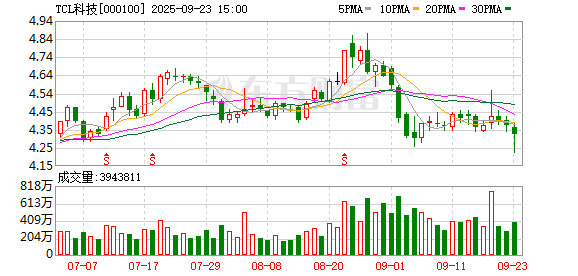
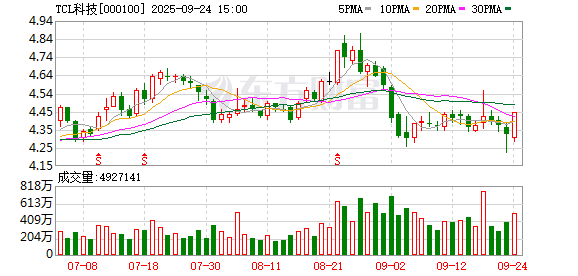
TCL科技:生产经营一切正常
Zheng Quan Ri Bao· 2025-09-23 10:44
证券日报网讯 TCL科技9月23日在互动平台回答投资者提问时表示,公司生产经营一切正常。 (文章来源:证券日报) ...