Midea Group(000333)

Search documents
美的成立电商新公司,含智能机器人销售业务
Bei Ke Cai Jing· 2025-09-15 02:42
Group 1 - Midea Group has established a new company named Guangzhou Yuexiu E-commerce Co., Ltd. with a registered capital of 10 million yuan [1] - The new company's business scope includes sales of intelligent robots, unmanned aerial vehicles, semiconductor lighting devices, and artificial intelligence hardware [1] - The company is wholly owned by Midea Group through indirect shareholding [1]



自由现金流ETF(159201)近1月日均成交3.43亿元,排名可比基金第一
Xin Lang Cai Jing· 2025-09-15 02:14
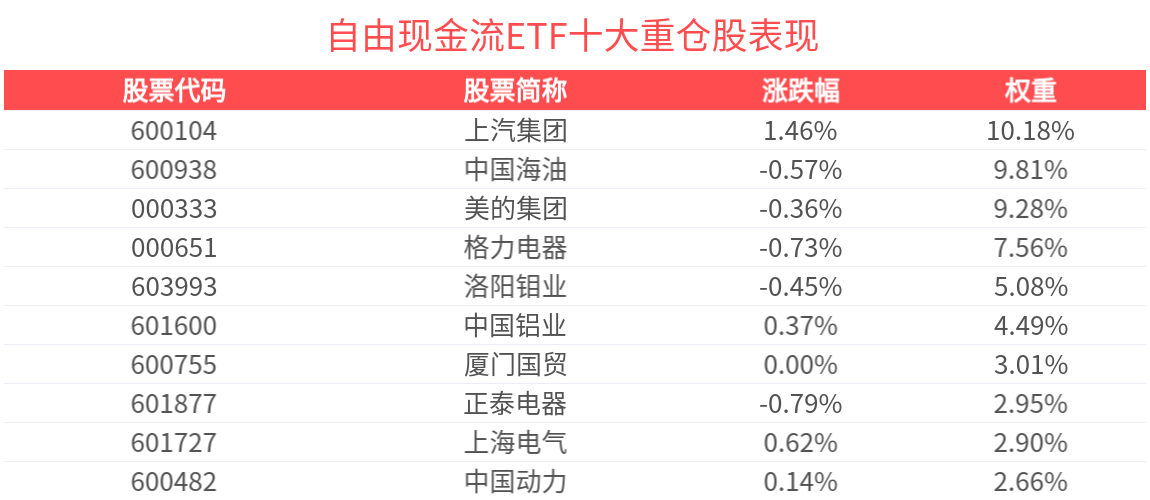
Group 1 - The core viewpoint of the news is the performance and characteristics of the National Index of Free Cash Flow and its corresponding ETF, highlighting the positive trends in liquidity and returns [1][2] - As of September 12, 2025, the Free Cash Flow ETF has seen a net inflow of 97.92 million yuan over the last 10 trading days, with 7 days of net inflow [1] - The Free Cash Flow ETF has achieved a net value increase of 12.46% over the past 6 months, with a maximum monthly return of 7% since its inception [1] Group 2 - The National Index of Free Cash Flow closely tracks the performance of companies with high and stable free cash flow levels in the Shanghai and Shenzhen stock exchanges [2] - The top ten weighted stocks in the National Index of Free Cash Flow as of August 29, 2025, include SAIC Motor, China National Offshore Oil Corporation, Midea Group, and others, accounting for 57.95% of the index [2] - The performance of individual stocks within the top ten includes SAIC Motor with a 1.46% increase and China National Offshore Oil Corporation with a 0.57% decrease [4]






中国家电行业:A 股会议及消费者调研关键要点-China Consumer Appliances Sector_ Key takeaways from A-Share Conference and consumer tour
2025-09-15 01:49
Summary of Key Points from the Conference Call Industry Overview - **Industry**: China Consumer Appliances Sector - **Event**: A-Share Conference and consumer tour held on September 1-4, 2025, involving major companies like Midea, Haier, Hisense, and Gongniu [2][3] Core Insights 1. **Intensified Domestic Competition**: - Midea has shifted its strategy from profitability to top-line growth, indicating increased competition in the air conditioning (AC) sector for the second half of 2025, which may pressure margins for smaller brands and Gree [3][6] - Hisense also noted heightened competition and potential pricing adjustments [3][6] 2. **Focus on Premiumization**: - Premium brands from Midea and Haier are experiencing robust sales growth, with Midea's premium brands generating a 60% year-over-year revenue increase to approximately RMB 10 billion in the first half of 2025 [3][6] 3. **Direct-to-Consumer (DTC) Transformation**: - Midea is enhancing customer engagement and traffic acquisition to improve operating profit margins (OPM) after establishing infrastructure [3][7] - Haier is leveraging digital inventory management to improve channel turnover and reduce stock-keeping units (SKUs) [3][12] 4. **Investor Interest in Arashi (Insta360)**: - Arashi, a leader in 360/action cameras, is gaining attention due to its software advantages in image processing, which are seen as a competitive edge over DJI [3][20][21] - Sales of Insta360 products surged following DJI's launch of a competing product, indicating a positive market response [3][20] 5. **Cautious Outlook for Appliance Sector**: - The overall outlook for China's appliance sector is cautious, anticipating a post-subsidy downcycle from Q3 2025 to 2027, with intensified competition impacting profitability [4][6] Company-Specific Highlights Midea - **Overseas Growth**: Midea is optimistic about its growth prospects in 2H25 and 2026, particularly in overseas markets, despite the diminishing impact of trade-in subsidies [6][8] - **Premium Brand Performance**: Revenue from premium brands is expected to grow by 10-20% even as subsidy benefits fade [6] Haier - **Retail Transformation**: Haier is focused on improving its retail operations and expects to benefit from the ongoing retail transformation in China [10][12] - **US Market Performance**: Haier reported low-single-digit revenue growth in the US, driven by price increases and market share gains [13][14] Hisense - **Stable Margins**: Despite price drops in the HVAC sector, Hisense anticipates stable margins in 2H25 due to reduced material costs and improved manufacturing efficiency [15][16] Gongniu - **Channel Transformation**: Gongniu plans to expand its flagship stores from 2,200 to approximately 3,000 by the end of 2025, focusing on improving store efficiency [17][18] - **New Product Development**: The company is exploring new energy solutions and smart lighting products, aiming to enhance its market presence [19] Additional Insights - **Ziel Home Furnishing**: Ziel is experiencing strong overseas sales, particularly in Europe and North America, despite challenges from rising US tariffs [23][24] - **Aqara's Smart Home Solutions**: Aqara is leveraging AIoT for product innovation, which could drive growth in the smart home segment [26][27] Risks and Considerations - **Market Risks**: The main risks for the consumer appliances sector include potential impacts from China's property market curbs, raw material price increases, and changes in US tax policy affecting exports [29]



破局与重构:2025 空调行业趋势与消费需求白皮书
艾瑞咨询· 2025-09-15 00:05
Core Viewpoint - The air conditioning industry is undergoing a critical phase of "breaking through and restructuring," driven by policies promoting low-carbon transformation, extreme high temperatures, and consumer subsidy policies, leading to increased market demand. The consumer focus is shifting from basic temperature control to "comfort + health + high-end" upgrades, with comfort and health-oriented air conditioners emerging as clear new growth points [1]. Group 1: Environmental Factors - The dual drivers of policy and technological innovation are reshaping the air conditioning market, emphasizing energy efficiency and low-carbon transformation, which is expected to stabilize the industry's lifecycle development [2]. - National subsidy policies have reduced consumer purchase costs, while extreme high temperatures have directly stimulated market demand, enhancing air conditioning sales and positively impacting the related supply chain [3]. Group 2: Market Dynamics - The air conditioning market is entering a mature phase with stable growth, where online sales account for 60% of the market, and traditional e-commerce remains the core traffic entry point. Price differentiation is evident, with low-priced and high-priced segments both seeing increased market share [5]. Group 3: Consumer Demand - Social media discussions reflect the evolving demands for air conditioning, with energy efficiency, comfort, cooling performance, aesthetics, and health becoming the top ten topics of interest for 2025 [9]. - The evolution of air conditioning from a "single temperature regulator" to a "quality lifestyle hub" that integrates comfort, health, and aesthetics is evident, with a focus on improving air quality and harmonizing with home decor [11]. - The high-end air conditioning market is evolving towards a comprehensive experience that combines "extreme comfort + health purification + aesthetic integration + smart connectivity" [13]. Group 4: Opportunities and Trends - The transition from "selling products" to "selling lifestyles" is a significant opportunity, focusing on specific living scenarios, spatial functions, and emotional needs of users [15]. - The demand for air conditioning is shifting towards comfort, health, and high-end features, indicating a deeper consumer need for quality and experience [17]. - The main consumer groups for air conditioning are shifting towards younger generations, particularly those born in the 2000s and 1990s, with a focus on comfort in family settings [19]. Group 5: Purchase Behavior - Consumers are increasingly motivated by the need for functionality and quality of life improvements, moving from basic needs to higher quality and better experiences [21]. - The primary information channel for consumers is e-commerce platforms, with JD.com recognized as the leading source for appliance information and purchases [24]. - Performance and quality are critical factors in purchase decisions, with consumers becoming more rational and focused on comprehensive experiences rather than just price sensitivity [28]. Group 6: Product Features and User Feedback - High satisfaction rates (over 99%) for features like "no-wind" and "soft wind" indicate strong consumer preference for comfort and health functionalities in air conditioning products [58]. - The integration of health features, such as air purification and self-cleaning technologies, is becoming a key selling point, enhancing the overall value of air conditioning products [57]. Group 7: Collaborative Innovations - JD.com collaborates with major air conditioning brands to promote comfort and health technologies, successfully driving sales of various air conditioning products that meet evolving consumer demands [61].




美的回应“一天工作14小时离职被欠薪”:工时正常,薪资已结清
Xin Lang Cai Jing· 2025-09-14 13:00
Group 1 - The core issue revolves around a social media post alleging that an employee at Midea worked 14-hour shifts and faced unpaid wages, which garnered significant public attention [1] - Midea conducted a thorough investigation and found that the employee, Mr. Zhang, worked normal hours from September 8 to September 11, 2023, and voluntarily resigned on September 12 without any irregularities [2][3] - The company reported that there were issues with the employee's bank account during the wage transfer process, but Mr. Zhang's salary was settled in person on September 13, 2023, negating claims of wage withholding [2][3] Group 2 - Following the viral post, Midea attempted to contact the poster, Ms. Zhang, to clarify the situation but was unable to reach her, leading the company to involve law enforcement due to the significant misinformation and reputational damage caused [3] - Ms. Zhang later acknowledged that her claims regarding overtime and unpaid wages were false, deleted the misleading post, and apologized to the factory representatives [3]
格力、小米,谁是“空调二哥”
2 1 Shi Ji Jing Ji Bao Dao· 2025-09-14 00:35
Core Viewpoint - The home appliance industry is experiencing a shift from stable competition among traditional giants to a more dynamic landscape, with Xiaomi emerging as a significant challenger to established players like Midea, Haier, and Gree [1][3]. Group 1: Company Performance - Midea Group reported a revenue of 252.3 billion yuan for the first half of the year, a year-on-year increase of 15.7%, with a net profit of 26.7 billion yuan, up 26% [4]. - Xiaomi's IoT and lifestyle products revenue surged by 50.7% to 71.05 billion yuan, driven by strong sales in major appliances [5]. - Gree Electric's revenue for the first half was 97.33 billion yuan, a decline of 2.46%, with a notable drop in the second quarter compared to the first [6][7]. Group 2: Market Dynamics - The home appliance market in China saw a retail total of 453.7 billion yuan in the first half of 2025, reflecting a year-on-year growth of 9.2% [3]. - The air conditioning segment experienced a retail revenue of 126.3 billion yuan, a significant increase of 12.4% [3]. - The competition is intensifying, with Xiaomi's market share in online air conditioning sales increasing, while Gree's share has slightly decreased [10]. Group 3: Strategic Initiatives - Midea is focusing on a "technology leadership" strategy, with R&D investments exceeding 43 billion yuan from 2022 to 2024, and 8.8 billion yuan in the first half of this year [4][5]. - Xiaomi's strategy emphasizes integrating its appliances into a broader ecosystem, aiming to become a top brand in major appliances by 2030 [1][6]. - Gree is facing challenges in diversifying its business and adapting to market changes, which has impacted its performance [7][9]. Group 4: International Expansion - Midea's overseas revenue reached 107.2 billion yuan in the first half of the year, a growth of 17.7%, with a shift towards self-owned brands [13][14]. - Gree's overseas revenue was 16.33 billion yuan, growing by 10.19%, but still represents less than 20% of its total revenue [15]. - The global market presents significant opportunities for growth, with many countries lacking dominant brands, allowing for potential entry by Chinese manufacturers [13].

格力、小米,谁是“空调二哥”
21世纪经济报道· 2025-09-14 00:21
Core Viewpoint - The home appliance industry is experiencing a shift from stable competition among traditional giants to a more dynamic landscape influenced by digital transformation and new entrants like Xiaomi, which is aggressively pursuing market share in the major appliance sector [1][3]. Group 1: Performance of Major Players - Midea Group reported a revenue increase of 15.68% year-on-year, with total revenue reaching 252.3 billion yuan and net profit growing by 26% to 26.7 billion yuan [3][5]. - Haier's revenue grew by 10.22% year-on-year, while Gree Electric Appliances saw a revenue decline of 2.66% [1][3]. - Xiaomi's IOT and lifestyle products segment experienced a remarkable 50.7% growth, driven by increased sales of major appliances [1][5]. Group 2: Market Dynamics and Competition - The home appliance market is entering a phase of stock competition, with Xiaomi's entry disrupting the traditional market structure dominated by Midea, Haier, and Gree [1][3]. - Gree's core business, primarily air conditioning, faced a 5.09% decline, while its industrial products segment grew by 17.13% [6][8]. - The competition for the title of "second in air conditioning" is intensifying between Gree and Xiaomi, with Xiaomi's online air conditioning sales surpassing Gree's in recent months [8][9]. Group 3: Strategic Initiatives - Midea is focusing on R&D, with cumulative investments exceeding 43 billion yuan from 2022 to 2024, and a 14.4% increase in R&D spending in the first half of the year [4][5]. - Xiaomi's strategy emphasizes hardware sales at lower prices to build an ecosystem, contrasting with traditional models that prioritize hardware profit [9]. - Gree is facing challenges in diversifying its business and adapting to market changes, which has affected its performance [6][8]. Group 4: International Expansion - The overseas market is becoming a crucial growth area for home appliance giants, with Midea's overseas revenue growing from 116.78 billion yuan in 2019 to 169.03 billion yuan in 2024, reflecting a compound annual growth rate of 7.68% [11][12]. - Gree's overseas revenue also increased, but its contribution remains below 20% of total revenue, indicating a need for improvement in this area [13]. - Midea's global strategy includes establishing production bases in various countries, enhancing its brand presence and reducing costs [12][13].

【投融资动态】三星保险股权转让融资
Sou Hu Cai Jing· 2025-09-13 11:23
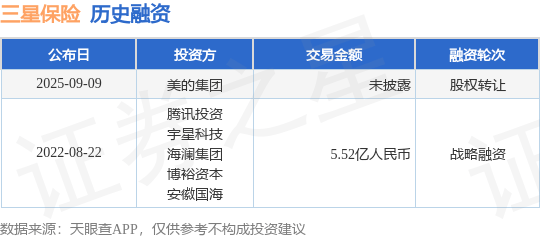
证券之星消息,根据天眼查APP于9月9日公布的信息整理,三星财产保险(中国)有限公司股权转让融 资,交易额未披露。 | 公布日 | 投资方 | 交易金额 | 融资轮次 | | --- | --- | --- | --- | | 2025-09-09 | 美的集团 | 未披露 | 股权转让 | | 2022-08-22 | 腾讯投资 | 5.52亿人民币 | 成龍龍路 | | | 宇星科技 | | | | | 海浦集团 | | | | | 博裕资本 | | | | | 安徽国海 | | | 三星财产保险(中国)有限公司原名为三星火灾海上保险(中国)有限公司,是韩国三星火灾海上保险 公司在中国设立的具有法人资格的独资财产保险公司。隶属于韩国三星集团。母公司是韩国最大的财产 保险公司,具有50余年的经营历史,连续多年获得Standard & Poor's以及A.M.Best等机构A+(Stable) 的评级,并于2011年荣升至A.M.Best最高评级A++。 数据来源:天眼查APP 以上内容为证券之星据公开信息整理,由AI算法生成(网信算备310104345710301240019号),不构成 投资建议。 ...

美的再现组织架构重大调整:市场体系定位转变,取消智小运营中心,全国29个运总兼任新职
Sou Hu Cai Jing· 2025-09-12 14:03
Core Points - Midea has undergone significant organizational restructuring, shifting its market system from a support-oriented model to a professional one, focusing on traffic acquisition and user operations [1] - The internal document outlines changes in the market system's organizational structure and responsibilities, including the renaming of the regional operations center's user and market department to the traffic and user operations department [1] - The smart small appliances organizational structure has been adjusted to fully online operations, merging the smart small appliances operations center into the domestic marketing of the home appliance division [1] Organizational Changes - The regional operations center's responsibilities have been redefined, with the termination of the terminal experience module, which will now be managed by regional business units [1] - Headquarters' offline business promotion responsibilities have been integrated into the brand and user operations department, aligning with the new traffic and user operations department [1] - The first batch of appointments includes part-time general managers for kitchen and heating products, indicating potential layoffs for existing general managers in these categories [3] Personnel Adjustments - This marks the third adjustment of the operations center within the year, following previous announcements to reduce the number of provincial sales companies from 35 to 29 [4] - The consolidation of regional operations centers into six core marketing platforms has resulted in an estimated reduction of around 900 employees [5] - Recent personnel changes include the promotion of key executives within the company, reflecting ongoing leadership adjustments [6] Financial Performance - In the first half of the year, Midea reported a revenue of 251.12 billion yuan, a year-on-year increase of 15.58%, and a net profit of 26.01 billion yuan, up 25.04% [6] - The smart home business generated revenue of 167.20 billion yuan, growing by 13.31% year-on-year, despite a decline in gross margin to 28.52% [6] - The domestic air conditioning market saw a retail value of 126.3 billion yuan, with a year-on-year growth of 12.4%, indicating competitive pricing pressures in the industry [6]
独家|美的再现组织架构重大调整:市场体系定位转变,取消智小运营中心,全国29个运总兼任新职
Sou Hu Cai Jing· 2025-09-12 13:50
Core Viewpoint - Midea has undergone significant organizational restructuring, focusing on transforming its market system from a support-oriented model to a professional one, emphasizing user operation and traffic acquisition [3][4]. Organizational Changes - The internal document outlines a reorganization of the market system, with the user and market department renamed to the traffic and user operation department, which will take over responsibilities related to marketing activities and user acquisition [3]. - The terminal experience module has been abolished, with responsibilities transferred to regional business units, including standardization and training for stores [3]. - Responsibilities related to offline business promotion have been integrated into the brand and user operation department, aligning with the new traffic and user operation department [4]. Personnel Appointments - Midea aims to ensure a simple and agile organization, with operational managers directly responsible for business outcomes [5]. - The first batch of appointments includes part-time general managers for kitchen and heating products, indicating potential layoffs for existing product managers [6]. - A total of 15 city operation center general managers have been reassigned to oversee air conditioning and kitchen product management [6]. Previous Restructuring Efforts - This marks the third adjustment of the operation center within the year, following earlier announcements in February about the reduction of provincial sales companies from 35 to 29, resulting in approximately 900 job cuts [7][8][9]. - Midea has consolidated its regional operation centers into six core marketing platforms, merging several centers across different cities [10]. Financial Performance - In the first half of the year, Midea reported a revenue of 251.12 billion yuan, a year-on-year increase of 15.58%, and a net profit of 26.01 billion yuan, up 25.04% [10]. - The smart home business generated revenue of 167.20 billion yuan, reflecting a growth of 13.31% [10]. - Despite revenue growth, the gross margin for the smart home business declined to 28.52%, down 0.84 percentage points year-on-year [12]. Market Context - The domestic air conditioning market saw retail sales of 126.3 billion yuan in the first half of the year, a growth of 12.4%, with increased competition leading to price reductions and a shift in consumer purchasing behavior [11].