Midea Group(000333)

Search documents
2025Q4家电板块基金持仓点评:行业重仓仍处低位,白电持仓环比提升
Guolian Minsheng Securities· 2026-01-26 06:04
Investment Rating - The report maintains an "Outperform" rating for the home appliance industry [3] Core Insights - The home appliance sector's fund holding ratio remains low at 2.40% for Q4 2025, with a slight increase of 0.08 percentage points from the previous quarter, which is still at a low level compared to historical data since 2010 [6][9] - The white goods segment saw an increase in holdings, while the vacuum cleaner segment experienced a reduction in allocation [17][21] - There is a divergence in northbound holdings, with some companies like Hisense Home Appliances and Bull Group seeing increases, while others like Vatti and Roborock saw declines [42] Summary by Sections Home Appliance Sector Fund Holding Ratio - The fund holding ratio for the home appliance sector in Q4 2025 is 2.40%, ranking 12th among all sectors, with a cumulative increase of 4.09% in the CITIC home appliance index, also ranking 12th in absolute returns [6][9][14] White Goods Increase and Vacuum Cleaner Reduction - The fund holding ratios for sub-segments in Q4 2025 are as follows: white goods at 1.88% (+0.24 percentage points), small appliances at 0.71% (+0.08 percentage points), upstream appliances at 0.27% (-0.16 percentage points), black goods at 0.08% (-0.03 percentage points), kitchen appliances at 0.03% (-0.01 percentage points), and lighting at 0.03% (stable) [17][21] Northbound Holdings Divergence - The northbound holdings for the home appliance sector showed mixed results in Q4 2025, with increases for Hisense Home Appliances (+0.78 percentage points), Bull Group (+0.41 percentage points), and Yitian Smart (+0.41 percentage points), while declines were noted for Vatti (-2.31 percentage points), Roborock (-1.69 percentage points), and XGIMI (-1.47 percentage points) [42][44] Investment Recommendations - The report recommends leading white goods companies such as Midea Group, Haier Smart Home, Gree Electric Appliances, and Hisense Home Appliances, as well as TV leader Hisense Visual and cleaning appliance leaders Roborock and Ecovacs [57]




中国消费行业:2026 年 GCC 会议要点 -估值仍具吸引力,消费复苏迹象显现-China Consumer Sector_ 2026 GCC takeaways_ Sector valuation remains attractive with signs of consumption recovery
2026-01-26 02:50
Summary of Key Points from the Conference Call Industry Overview - **Sector**: China Consumer Sector - **Key Insights**: The sector shows signs of consumption recovery despite a near-term property market downturn. Valuation remains attractive, approximately 1 standard deviation below 10-year averages, indicating that a consumption recovery is not yet priced in [2][21]. Consumer Staples - **Baijiu**: Anticipated demand support for mid-end baijiu due to easing alcohol bans and private consumption growth. Companies are expected to accelerate channel transformations for sustainable EPS growth [3][8]. - **Beer**: Premiumization continues through product diversification and in-home channel expansion, despite on-trade softness. CR Beer expects low-single-digit volume growth in 2025, with Heineken volumes projected to grow by 20% YoY [3][8]. - **Dairy**: Liquid milk sales are expected to recover modestly in 2026, driven by marketing and innovation, despite a weak 2025. Fresh milk shows resilience with double-digit growth [3][8]. - **Freshly-Made Beverages (FMB)**: Guming is expected to maintain steady SSSG in 2026 through category expansion and dine-in growth, despite the phase-out of delivery subsidies [3][8][19]. - **Condiments**: Sequentially improving demand is expected, with Haitian focusing on multi-product categories and Jonjee anticipating a cleaner 2026 after a weak 4Q25 [3][8]. Consumer Discretionary - **Home Appliances**: Companies like Midea and Haier expect higher overseas growth compared to domestic markets in 2026. Strategies include price hikes and operational efficiencies [4][10]. - **Jewelry**: Brands with unique designs may consolidate post-VAT reform. Laopu is expected to achieve strong sales growth due to increased focus on value-added services [4][10]. - **Restaurants**: Intense competition leads to divergent strategies, with some companies lowering prices while others upgrade offerings. DPC Dash is on track for expansion despite market uncertainties [4][10]. Stock Implications - **Most Preferred Stocks**: CR Beer, Guming, MIXUE, China Foods, YUM China, among others, are highlighted as preferred investments due to their growth potential [5]. - **Least Preferred Stocks**: Companies like Swellfun, Nongfu, and Gree are noted as less favorable due to various challenges [5]. Key Risks - Risks include demand recovery uncertainties, cost inflation or deflation, and changes in the competitive landscape. These factors could significantly impact the consumer sector's performance [21]. Additional Insights - **Pet Food**: The industry is shifting towards online sales, with over 85% of sales occurring digitally. Competition is intensifying, pushing brands towards innovation and product differentiation [13]. - **Snack Sector**: Rapid category diversification and channel restructuring are creating growth opportunities, particularly through snack discounters [9][12]. This summary encapsulates the essential insights and projections from the conference call, providing a comprehensive overview of the current state and future outlook of the China consumer sector.



6万家企业上云百余家5G工厂落地 荆楚制造加速焕新“荆楚智造”
Xin Hua Wang· 2026-01-26 02:35
Core Viewpoint - Hubei's manufacturing industry is undergoing a significant transformation driven by technology and innovation, leading to a comprehensive restructuring of the industrial landscape and a shift in development momentum [1][3]. Group 1: Technological Integration in Manufacturing - Hubei's manufacturing sector is integrating AI and big data, exemplified by Midea's refrigerator factory, which has achieved full-process digital and intelligent management, producing a refrigerator every 13 seconds [2][3]. - The textile industry in Tianmen has adopted AI for rapid clothing production, reducing the production cycle from three days to four hours, enhancing both capacity and quality [3]. - The Lantu automobile factory in Wuhan utilizes over 900 industrial robots and advanced technologies, achieving a vehicle production rate of one every 63 seconds [3]. Group 2: Industrial Growth and Digital Transformation - Over 60,000 industrial enterprises in Hubei have adopted cloud services, with a significant increase of 10,000 from the previous year, covering nearly 60% of the province's industrial firms [4]. - Hubei aims to promote digital transformation among small and micro enterprises, establishing a framework of "lighthouse factories" and "demonstration smart factories" [4]. - The province has initiated over 4,590 projects exceeding 100 million yuan in the first half of 2025, reflecting a strong push for early construction and production [6]. Group 3: Supply Chain and Industrial Clusters - Hubei is developing a modern industrial system with five trillion-level pillar industries and numerous smaller clusters, effectively reducing costs and ensuring stable production [7]. - Midea's refrigerator factory collaborates with over 120 local suppliers, achieving a local procurement rate of over 60% [7]. - Lantu has established partnerships with over 300 local companies, with a supply chain localization rate of 41%, expected to reach 60% by 2026 [7]. Group 4: Economic Impact and Export Growth - Hubei's manufacturing sector has seen significant export growth, with high-tech product exports reaching 114.84 billion yuan in 2025, a 25.9% increase from the previous year [10]. - The export growth rates for new materials, high-end equipment, and integrated circuits were 183.3%, 90.1%, and 47.1%, respectively [10]. - Hubei's manufacturing is positioned to serve both domestic and international markets, contributing to its strategic importance in the central region of China [10].
政企“双重补贴”激发消费热潮:汉阳一场新春活动三天吸引近万人参与
Sou Hu Cai Jing· 2026-01-25 17:43
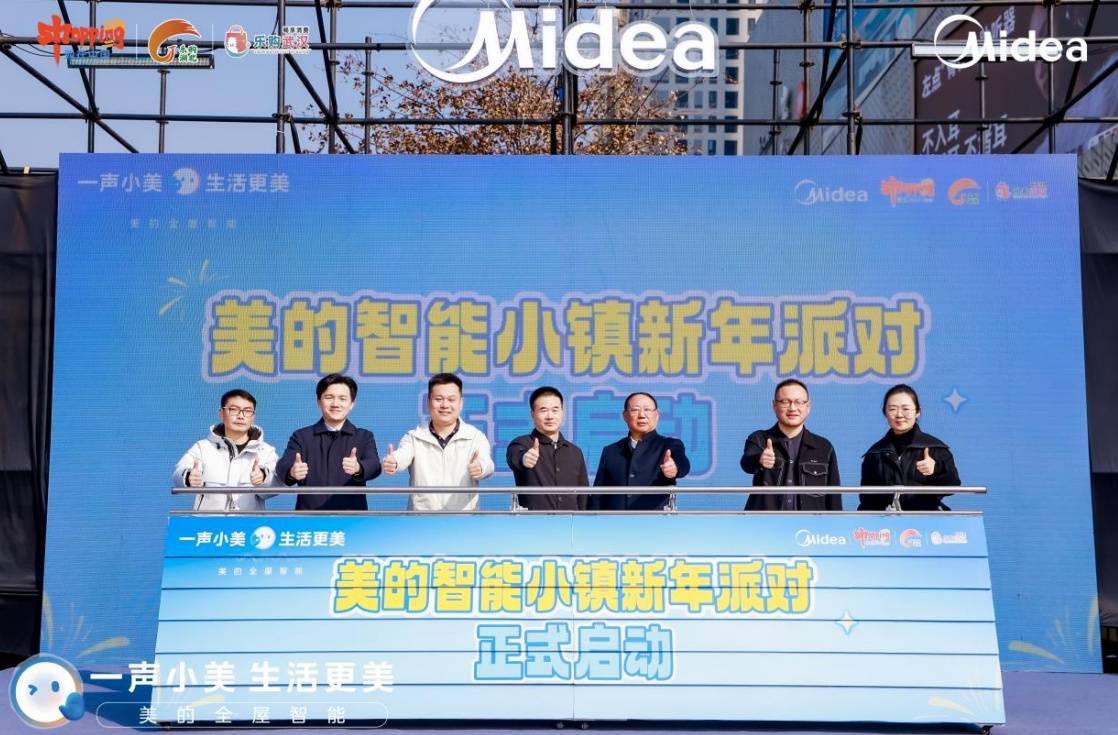
Core Insights - The event "Hanyang New Year Flavor · Midea New Home" was held from January 23 to 25, 2023, in Hanyang District, Wuhan, attracting nearly 10,000 participants and generating sales of approximately 3,000 smart appliances, amounting to nearly 30 million yuan [1][5]. Group 1: Event Overview - The event was a collaboration between the Hanyang District Business Bureau and Midea Group, utilizing a dual subsidy model of "government + enterprise" to stimulate consumer spending [1][3]. - The event featured immersive experiences, including the "Smart Life New Year Experience Hall," "Warm Winter Interactive Experience Zone," and "Trendy New Year Music Festival," enhancing consumer engagement and breaking traditional appliance sales models [3][5]. Group 2: Economic Impact - The event not only boosted smart appliance sales but also stimulated surrounding sectors, generating an additional 3 million yuan in restaurant and retail consumption, demonstrating significant consumer and business synergy [5][7]. - The dual subsidy approach allowed consumers to benefit from both national and local incentives, effectively lowering the barriers to upgrading to smart home technology [3][6]. Group 3: Future Implications - Officials indicated plans to continue such collaborative consumer promotion activities to maintain market vitality and support consumer spending [6][7]. - Industry leaders emphasized the event as a replicable model for promoting green and smart transformation in the appliance sector, focusing on user experience and integrating policy incentives with market forces [6][7].

解码公募基金2025年四季报:主动权益基金重仓电子、医药生物等行业
Zheng Quan Ri Bao Zhi Sheng· 2026-01-25 17:07
Group 1 - The core focus of the news is on the performance and trends of actively managed equity funds, highlighting their significant stock positions and preference for value style investments [1][2][4] - As of the end of 2025, the total scale of actively managed equity funds reached 3.91 trillion yuan, with equity mixed funds dominating both in number (2,770 products) and scale (2.41 trillion yuan), accounting for over 61% of the total [1][2] - The number of new actively managed equity fund products launched in Q4 2025 was 112, with a total scale of 570.83 billion yuan, maintaining stability compared to Q3 2025 [2] Group 2 - The top three sectors favored by actively managed equity funds as of the end of 2025 were electronics, pharmaceuticals and biology, and power equipment, with the electronics sector having the highest holding ratio at 23.76% [4] - The top three individual stocks held by actively managed equity funds were Zhongji Xuchuang, Xinyi Sheng, and Ningde Times [4] - The overall performance of actively managed equity funds in Q4 2025 was weaker compared to Q3 2025, although flexible allocation mixed funds outperformed the CSI 300 index with a quarterly return of 0.26% [2][3] Group 3 - The stock positions of actively managed equity funds remained high in Q4 2025, with equity investment funds at 90.54%, equity mixed funds at 87.82%, and flexible allocation mixed funds at 74.20% [3] - The market outlook for 2026 is optimistic, with expectations of a shift from valuation-driven growth to fundamental-driven growth as corporate earnings stabilize [5][6] - The current low interest rate environment enhances the attractiveness of equity assets, with potential for significant capital inflow into A-shares and Hong Kong stocks [6]






周观点 | 特斯拉计划2027年销售机器人 关注机器人板块【国联民生汽车 崔琰团队】
汽车琰究· 2026-01-25 13:40
Market Performance - The automotive sector outperformed the market this week, with a 2.6% increase in A-share automotive stocks from January 19 to January 25, ranking 14th among Shenwan sub-industries, compared to a decline of 0.6% in the CSI 300 index [1] - Sub-sectors such as automotive services, commercial vehicles, automotive parts, motorcycles, and others saw increases of 6.9%, 4.8%, 4.0%, 1.4%, and 0.7% respectively, while passenger vehicles decreased by 1.4% [1] Investment Recommendations - Recommended core stocks include Geely Automobile, Xpeng Motors, BYD, Bertley, Top Group, New Spring Co., and Chunfeng Power [2] - For passenger vehicles, Geely, Xpeng, and BYD are recommended, with Jianghuai Automobile suggested for attention [5] - In the parts sector, recommendations include Bertley and Horizon Robotics for intelligent driving, and Top Group and New Spring Co. for new forces in the industry chain [5] - For motorcycles, recommended companies are Chunfeng Power and Longxin General [6] - In the tire sector, SAILUN and Senqilin are recommended [7] - For commercial vehicles, recommended companies include Weichai Power and China National Heavy Duty Truck for heavy trucks, and Yutong Bus for passenger vehicles [8] Strategic Collaborations - Changan Automobile signed a comprehensive strategic cooperation agreement with Midea Group to deepen the "people-car-home" smart ecosystem collaboration, allowing users to control 20 types of Midea smart appliances via voice and to check vehicle status remotely [4][11] Robotics Sector Insights - Tesla plans to sell humanoid robots to the public by 2027, with deliveries to enterprises expected to start in the second half of 2026. This development is anticipated to catalyze the robotics sector [3][10] - The focus is on the production and technological iteration of Tesla's robots, with domestic manufacturers like Yushutech expected to enter the IPO phase soon, which could serve as a strong catalyst for the sector [3][10] - Key hardware segments such as dexterous hands and lightweight components are expected to see significant changes, and the valuation of leading automotive robotics manufacturers is anticipated to undergo reconstruction [3][10][23] Policy and Market Trends - The new national subsidy policy for 2026 aims to stimulate demand by extending the scope of vehicle replacement subsidies, which is expected to improve the structure of subsidized models [12][18] - The subsidy for scrapping and replacing vehicles will be based on a percentage of the vehicle price, with electric vehicles receiving up to 20,000 yuan and fuel vehicles up to 15,000 yuan [14][16] - The overall discount rate for vehicles in December 2025 increased compared to November, indicating a competitive market environment [53][54] Motorcycle Market Dynamics - The sales of motorcycles above 250cc reached 69,000 units in December 2025, showing a year-on-year increase of 1.8% and a month-on-month increase of 12.9% [30] - The domestic sales of motorcycles above 250cc in December were 28,000 units, up 32.8% year-on-year, while exports showed a decline [31] Heavy Truck Market Recovery - The heavy truck market saw sales of approximately 95,000 units in December 2025, a year-on-year increase of about 13%, supported by the expanded scope of the vehicle replacement subsidy policy [34] - The average subsidy for scrapping and updating eligible trucks is 80,000 yuan, which is expected to stimulate demand significantly [34][36]




家电行业 2026W04 周报:家电基金持仓略有下降,欧盟对割草机进口展开登记
GUOTAI HAITONG SECURITIES· 2026-01-25 10:45
Investment Rating - The report assigns an "Overweight" rating to the home appliance industry [4]. Core Insights - The report highlights a slight decline in fund holdings in the home appliance sector, with a 2.6% allocation in actively managed equity funds for Q4 2025, down 0.2 percentage points from Q3 [2][4]. - December retail sales for home appliances showed a year-on-year decline of 18.7%, indicating ongoing pressure despite a high base in the previous year [2][4]. - The European Union has mandated registration for imports of robotic lawn mowers from China, with potential anti-dumping duties estimated between 21.4% and 57.4% [2][4]. Summary by Sections Investment Recommendations - The report suggests that national subsidies are expected to transition smoothly, and leading companies in both black and white appliances are recommended for their stable operations and high dividends, including Midea Group (13.1X PE), Haier Smart Home (11.4X), TCL Electronics (12.7X), and Hisense Visual (12.7X) [4]. - It emphasizes the core drivers of smart home appliances' overseas expansion, recommending leading robotic vacuum manufacturers Roborock (20.3X) and Ecovacs (22.5X) [4]. - Companies with stable performance and upward potential include Ninebot (19.9X), Anfu Technology (56.8X), Hailong Cold Chain (15.9X), and Beiding Co. (35.3X) [4]. - The report also notes that home appliance companies are diversifying into new areas, recommending Rongtai Health (21.3X) and Wanlong Magnetic Plastic (21.9X) [4]. Market Data - In December 2025, the production of home air conditioners was 14.782 million units, down 18.7% year-on-year, with domestic sales at 5.397 million units, down 26.7% [2][4]. - The total domestic sales for the year reached 10.521 million units, a slight increase of 0.7% year-on-year, while total exports were 9.318 million units, down 3.4% [2][4]. - The overall retail sales for home appliances in December 2025 amounted to 97.1 billion yuan, with a cumulative annual total of 1,169.5 billion yuan, reflecting an 11.0% year-on-year increase [2][4].



家电周报:亿田智能发布2025年业绩预告,石头科技发布新品-20260125
Shenwan Hongyuan Securities· 2026-01-25 09:28
Investment Rating - The report maintains a positive outlook on the home appliance industry, particularly on leading companies in the white and black goods sectors, highlighting their low valuations, high dividends, and stable growth potential [2][3]. Core Insights - The report identifies three main investment themes: 1. **Dividend and Growth**: Leading companies in the white and black goods sectors are characterized by low valuations, high dividends, and stable growth, providing a high safety margin and significant price elasticity. The impact of the trade-in policy is expected to continue positively into 2026 [2][3]. 2. **Technological Transition**: Key upstream component manufacturers are diversifying into emerging technology sectors such as robotics, data center temperature control, and semiconductors, seeking cross-industry transformation [2][3]. 3. **Market Demand**: Both domestic and international markets show promising demand, with established companies expanding production bases globally to mitigate trade fluctuations and capture growth in emerging markets [2][3]. Sales Data Summary - **Air Conditioning**: In December 2025, online retail sales volume was 720,000 units, a year-on-year decrease of 38.5%, while offline sales volume was 162,000 units, down 42.9%. The average online retail price decreased by 4.2% to 2,981 yuan per unit, and the offline average price fell by 20.1% to 3,801 yuan per unit [2][3][35]. - **Kitchen Appliances**: - **Range Hoods**: Online sales volume was 443,000 units, down 16.8%, while offline sales were 57,000 units, down 32.1%. The online average price increased by 14.4% to 1,739 yuan per unit, while the offline average price decreased by 14.4% to 3,813 yuan per unit [3][41]. - **Dishwashers**: Online sales volume was 49,000 units, down 10.2%, and offline sales were 5,000 units, down 44.2%. The online average price decreased by 1.1% to 4,245 yuan per unit, while the offline average price increased by 1.4% to 7,990 yuan per unit [3][41]. Company Updates - **Yitian Intelligent**: Forecasts a net loss of 186 to 152 million yuan for 2025, compared to a profit of 26.54 million yuan in 2024 [5][11]. - **Roborock Technology**: Launched new products including the G30S Pro and P20 Ultra, featuring advanced cleaning technologies and high efficiency [5][12]. - **Stock Performance**: The home appliance sector outperformed the CSI 300 index, with notable gains from companies like Aojiahua (10.1%) and Hisense Visual (5.7%) [5][6][8]. Macro Economic Environment - As of January 23, 2026, the USD to RMB exchange rate was 6.9929, reflecting a decrease of 0.51% since the beginning of the year [46][48]. - In December 2025, the total retail sales of consumer goods reached 45,135.90 billion yuan, a year-on-year increase of 0.86% [48][49].

家电行业 2026W04 周报:家电基金持仓略有下降,欧盟对割草机进口展开登记-20260125
GUOTAI HAITONG SECURITIES· 2026-01-25 07:47
Investment Rating - The report assigns an "Accumulate" rating for the home appliance industry [4]. Core Insights - The report highlights a slight decline in fund holdings in the home appliance sector, with a 2.6% allocation in actively managed equity funds for Q4 2025, down 0.2 percentage points from Q3 [2][4]. - The report notes that the production of household air conditioners in December 2025 was 14.782 million units, a year-on-year decrease of 18.7%, with domestic sales down 26.7% and exports down 13.2% [2][4]. - The report mentions that the EU has mandated registration for imports of robotic lawn mowers from China, with potential anti-dumping duties estimated between 21.4% and 57.4% [2][4]. Summary by Sections Investment Recommendations - The report suggests that national subsidies are expected to transition smoothly, and recommends several companies for investment based on their stable operations and high dividends, including Midea Group (13.1X), Haier Smart Home (11.4X), TCL Electronics (12.7X), and Hisense Visual (12.7X) [4]. - It highlights the core drivers for smart home appliances' overseas expansion, recommending leading robotic vacuum companies Roborock (20.3X) and Ecovacs (22.5X) [4]. - The report also recommends companies with stable performance and upward potential, such as Ninebot (19.9X), Anfu Technology (56.8X), Hailong Cold Chain (15.9X), and Beiding Co. (35.3X) [4]. - Additionally, it points out companies expanding into new business lines, recommending Rongtai Health (21.3X) and Wanlong Magnetic Plastic (21.9X) [4]. Market Data - The report provides data on the top five holdings in the home appliance sector, with Midea Group valued at 19.9 billion, Haier Smart Home at 6 billion, and others showing varying changes in market value [4]. - It notes that the overall retail sales of home appliances in December 2025 were 97.1 billion, a year-on-year decrease of 18.7% [2][4]. - The report indicates that the total domestic sales volume for the air conditioning industry in 2025 was 10.521 million units, a slight increase of 0.7% year-on-year, while total exports were 9.318 million units, down 3.4% [2][4].
美的集团亚太区域总裁蒋轩:广货家电如何在东南亚争第一
2 1 Shi Ji Jing Ji Bao Dao· 2026-01-23 23:08
Core Insights - Midea aims to become a global leader in white goods and HVAC, targeting over 400 billion yuan in revenue by 2024 [1] - The company has significantly increased its overseas OBM revenue, which now accounts for over 45% of its TO C business, with notable contributions from the Asia-Pacific region [1] - Midea's manufacturing base in Thailand has become its largest overseas facility, with nine factories, and is positioned as a key hub for both manufacturing and sales in the ASEAN market [8] Group 1: Global Expansion Strategy - Midea's transition from product export to a full-chain approach of R&D, manufacturing, and branding is a strategic upgrade to enhance its global presence [2] - The company has established Thailand as its "second home" for manufacturing due to favorable political and labor conditions, as well as its ability to serve both local and export markets [7] - Midea's acquisition of Toshiba's local factories has facilitated its manufacturing expansion in Thailand, allowing it to address tariff challenges and diversify its supply chain [7] Group 2: Cost and Efficiency - Production costs in Thailand are higher than in China, but Midea has found that the overall cost advantage lies in local manufacturing due to tariff differences [4][6] - The company is focusing on local talent development to improve operational efficiency and reduce costs associated with expatriate management [6] Group 3: Market Penetration and Brand Strategy - Midea's multi-brand strategy is crucial for penetrating diverse ASEAN markets, leveraging both its own brand and acquired international brands like Toshiba [9] - The company is investing significantly in after-sales service to build brand reputation and customer trust, learning from past experiences of other Chinese brands in the region [10] Group 4: Sales and Distribution Channels - Midea is employing a tiered approach to build its after-sales service network, including authorized service points and exclusive service providers to ensure quality and efficiency [11][12] - The company is focusing on enhancing brand awareness and conversion rates through targeted marketing strategies, with a current investment split of 50% on awareness, 30% on consideration, and 20% on conversion [14][15] Group 5: Future Global Strategy - Midea's future global strategy will emphasize regional operations to meet local demands while ensuring inter-regional collaboration [18][19] - The company recognizes the need to adapt its R&D, supply chain, and product quality to align with local market requirements, moving beyond a purely export-oriented mindset [18][19]